
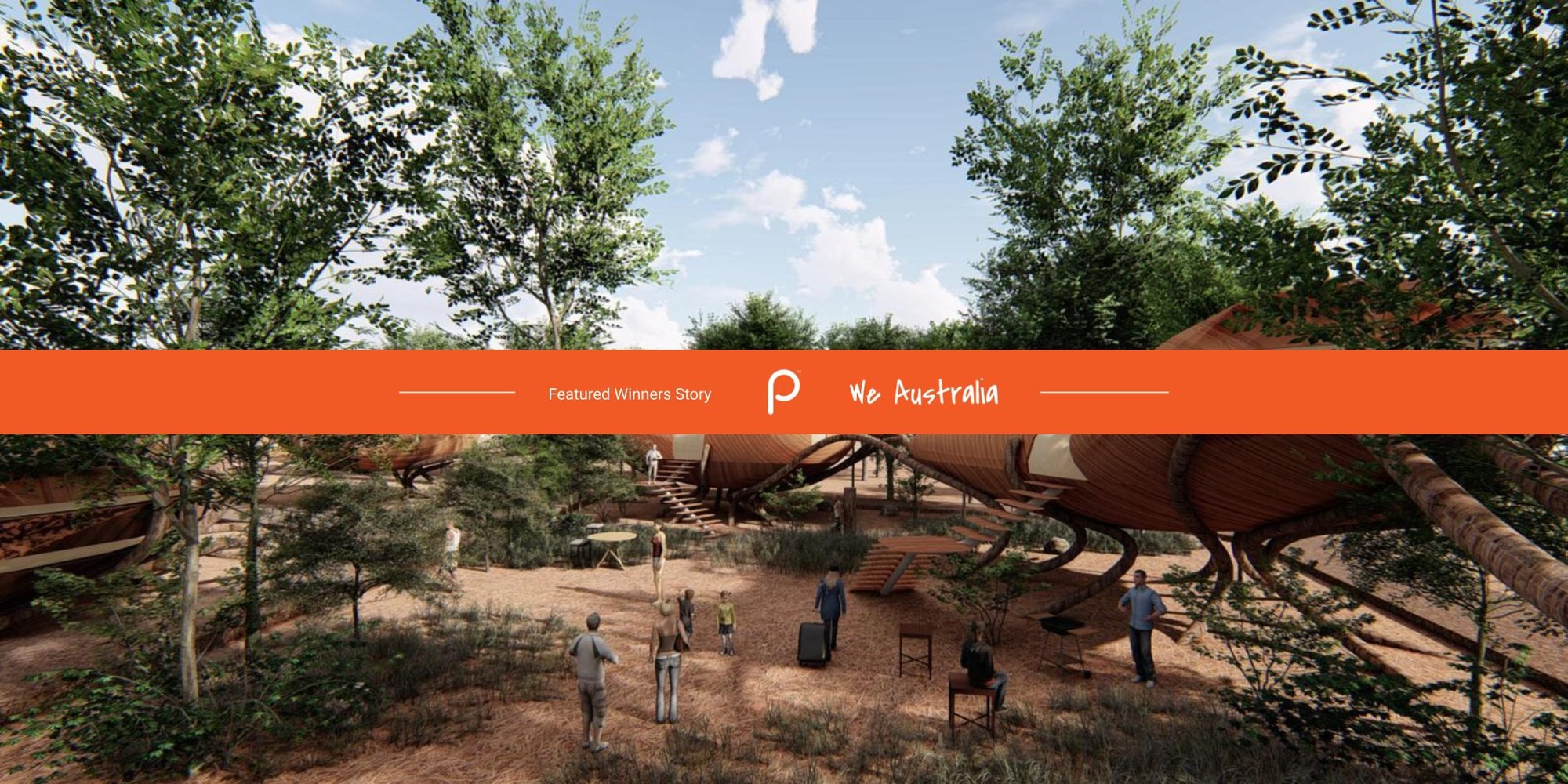
Tourism Village of the Human Evolution
Joining the gap between Humans and Nature

The evolution and history of civilization have come a really long way beyond consciousness as they have moulded the identity of humans as a species. A term like ‘manmade’ holds a different meaning today even though a man was made by nature and we see a distinct ideological gap between the two. One of the evidence places where we saw these two ideologies go against each other was the continent of Australia, which was one of the last countries to be colonized by the Britain Empire. It is a country that stands today as a crucible of globalization in the face of the modern world. The history of Australia goes way beyond this perception.
The history of Indigenous Australians began at least 65,000 BC years ago when humans first populated Australia, which is familiarly known as aboriginals. About 500 of these miniature countries, were traditionally organized in semi-nomadic small tribes each with its own language, land, and varied culture. Australia attempting to find its real identity between its origins and present is a place of opportunity. A chance to speak for all the sprouting cultures that existed, species that walked this continent, landscapes that are constantly changing, the technology that has evolved and the global impression as a country. The thread that really brings all these entities in one single frame is the path evolution.
The Brief for this competition sought a tourism village designed based on the history of human evolution which not only sensitizes but spreads awareness between nature, natives and the country of Australia.
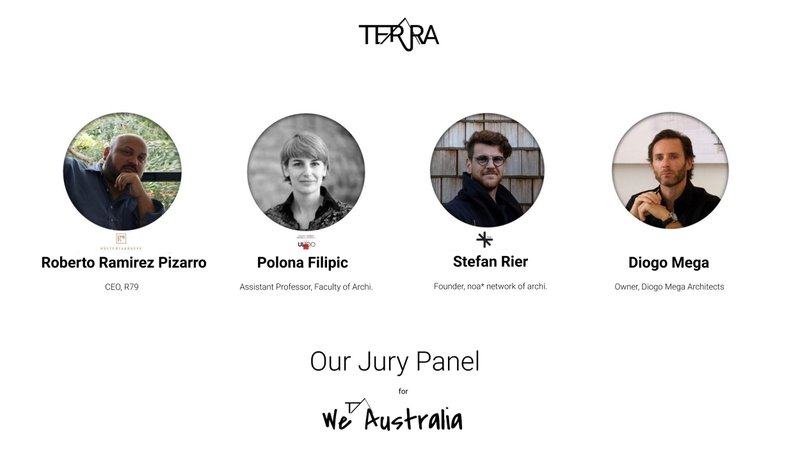
The jury for the competition consisted of esteemed designers, professionals and academicians from around the world. The Lead Jurors for the competitions were as follows:
Polona Filipic, Assistant Professor, Faculty of Architecture, University of Ljubljana, Slovenia
Stefan Rier, Architect & Founder, noa* network of architecture, Italy
Roberto Ramirez Pizarro, Director General, R79, Mexico
Diogo Mega, Owner, DIOGO MEGA ARCHITECTS, Portugal
Some of the Best of competition projects are as follows:
Winning Project: Kultura Village
By: Yesim Serdar
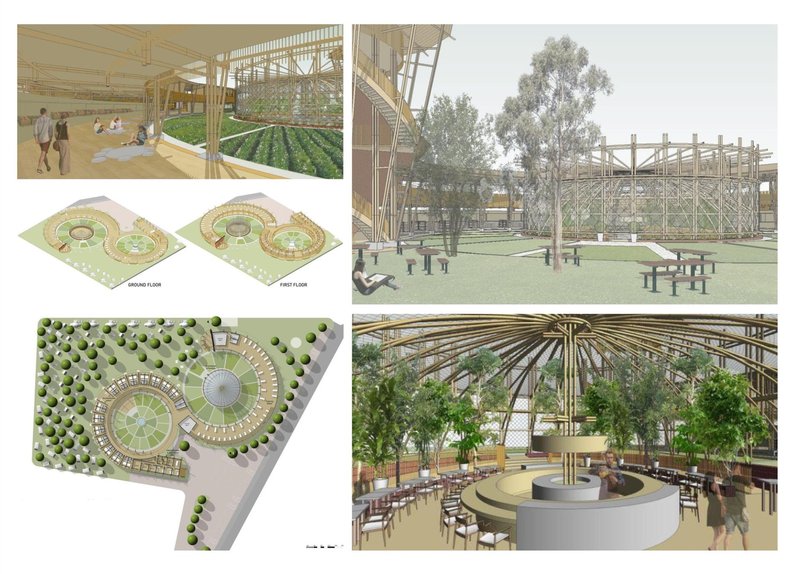
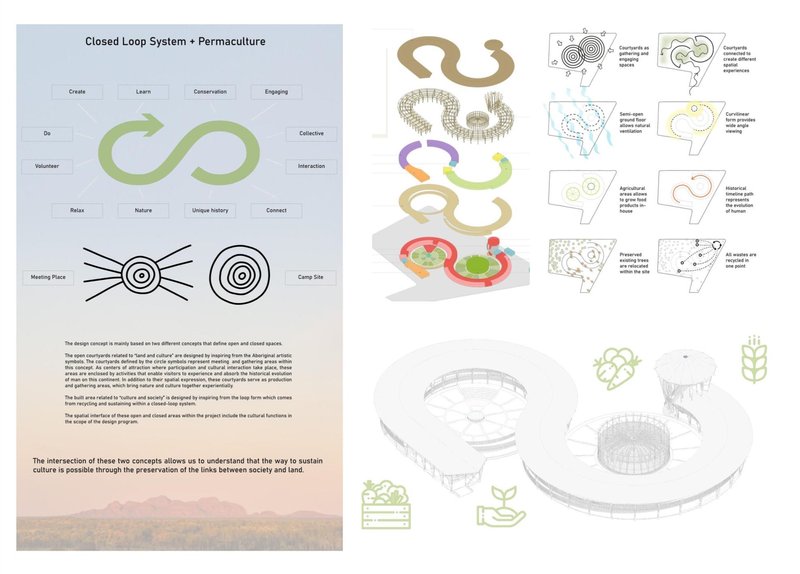 Description: Emphasizing the importance of rebuilding broken links between food, culture, and land to create sustainable societies. The design concept is mainly based on two different concepts that define open and closed spaces. The open courtyards related to land and culture are designed by inspiring from the Aboriginal artistic symbols. The courtyards defined by the circle symbols represent meeting and gathering areas within this concept. As centres of attraction where participation and cultural interaction takes place, these areas are enclosed by activities that enable visitors to experience and absorb the historical evolution of man on this continent.
-----------------
Runner-Up: Oasis of the Kakadu
By: Sahar Sadegh and Seyed Mohammad Ahmadshahi
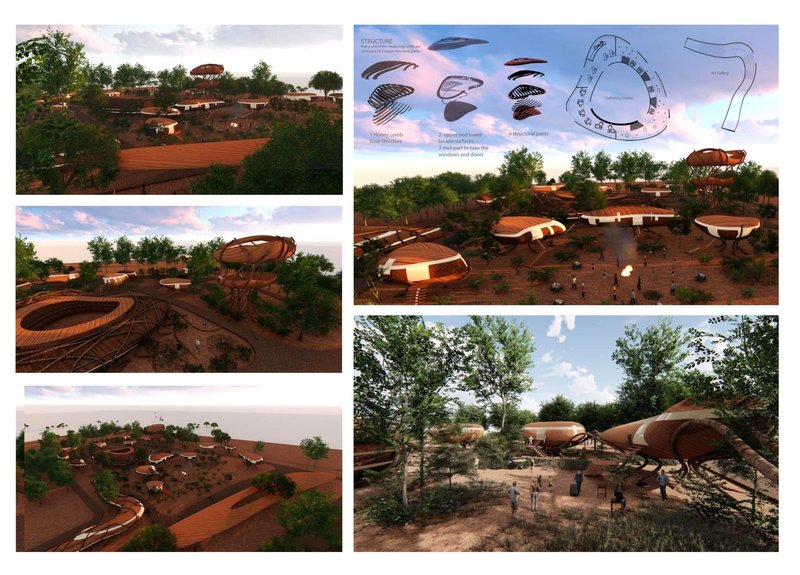
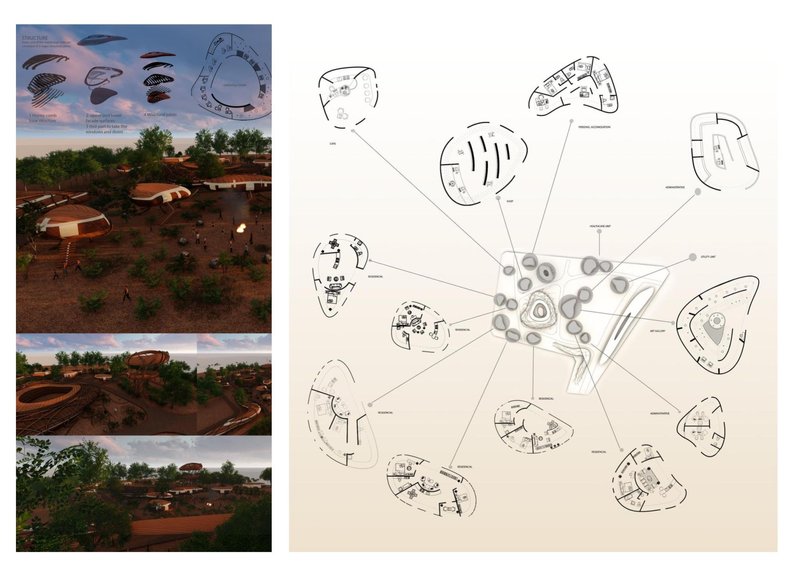 Description: We are trying to define a space in which people can feel like real aboriginals and learn about their ways of living and their unique attitude towards life and nature. The primary approach in form-finding and planning for this project is based on the shape of aerial roots (residential buildings) and is also getting impressions from bird’s nests ( bird watching tower). The reason behind employing this strategy is to keep as much as existing plants as possible by taking all the buildings into the air and making it easier for the native plants to grow in their natural situation.
-----------------
Runner-Up: CONSTELLATION - A link between Human, Nature and Culture
By: Serge Atallah
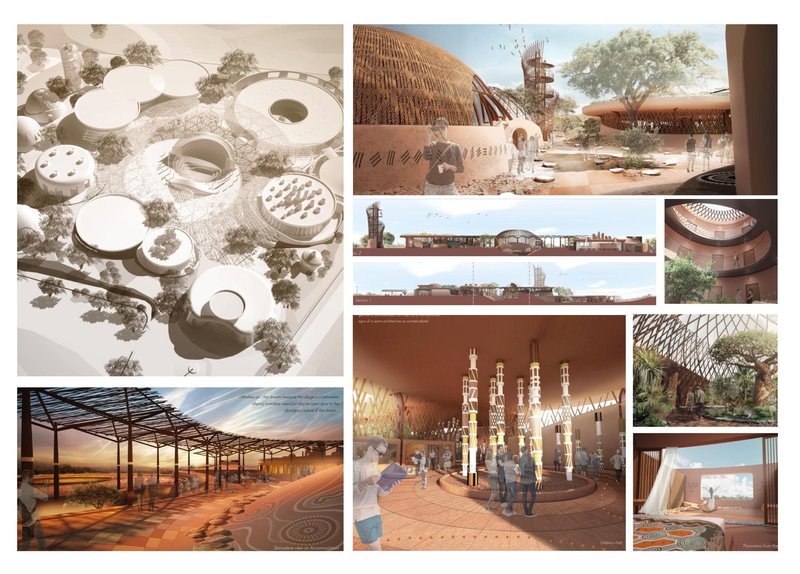
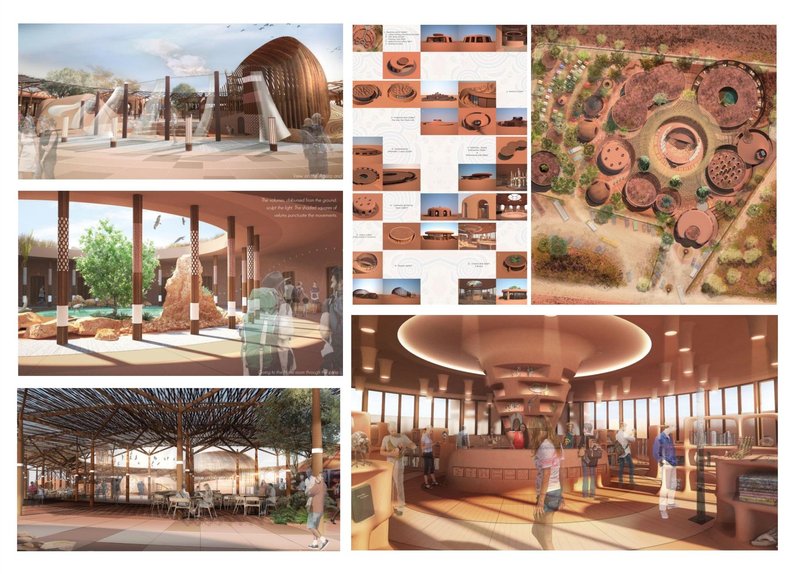 Description: The sky and the stars are a common denominator of all civilization, the link that unites a man to nature, to dream. Conceived symbolically as a constellation, the project is a sequence of invisible links between the pavilions, a program of concentric clusters that allows the visitor to freely explore the site and by peregrinations encourage discoveries.
-----------------
People’s Choice: Evolution through Emotions
By: Viral Golakiya, Raghav Agrawal, Viswesh Warrier
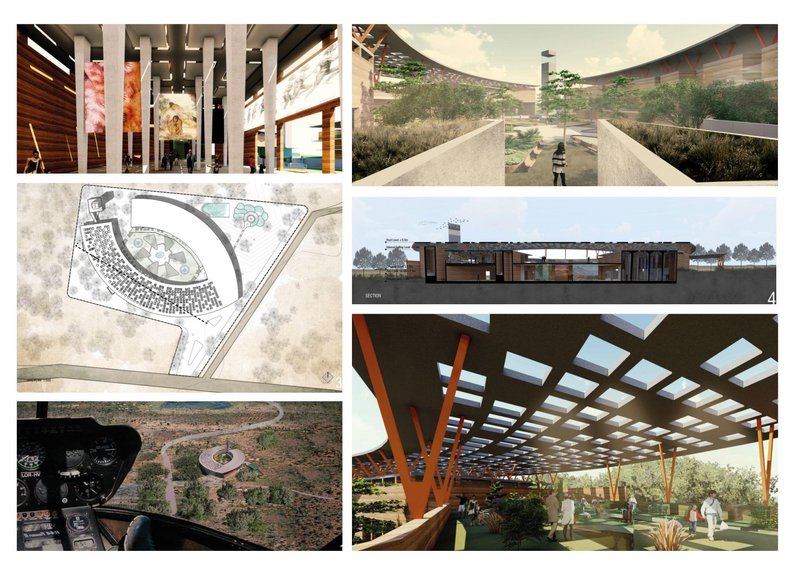
Description: Australia as a country became known to the rest of the world pretty late compared to other regions around the globe. In order to allow people to fully appreciate and absorb the events of the past, we have proposed a journey of evolution with architectural spaces and emotions that take the audience through different stages of the timeline.
-----------------
People’s Choice: Re-live the history
By: Saeed Garachorllu, Bahareh Torabi, Tarlan Poursoti
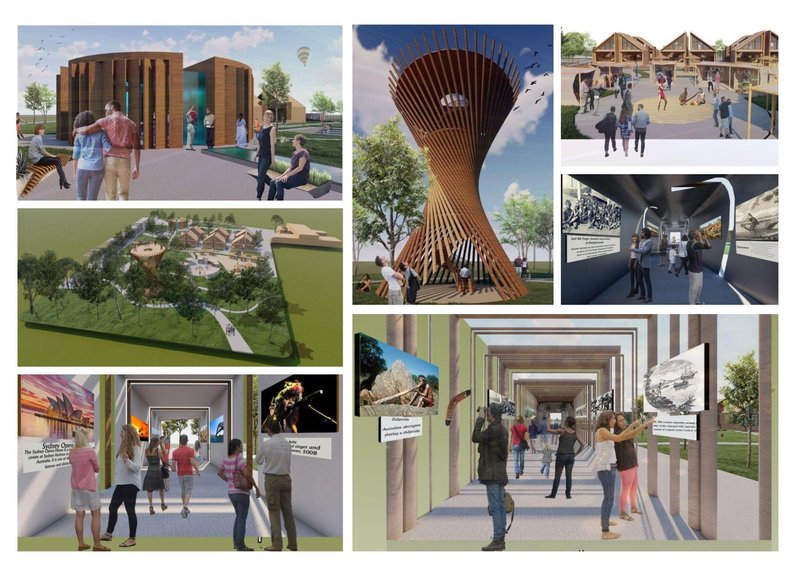
In order to efficiently narrate the history of Australia to the tourists, we’ve got two strategies in our project:
1. To narrate using all of the senses
2. To narrate visually
To achieve these two goals we’ve divided the site to respectively four zones: Pre-human and humanization era zone, aboriginal Australia zone, colonial Australia zone and global Australia zone. We’ve thought of a new way of narrating history. It led us to invite people to live that history. Of course, besides this idea we need to narrate the history directly too; so we added the time path too.
------------------
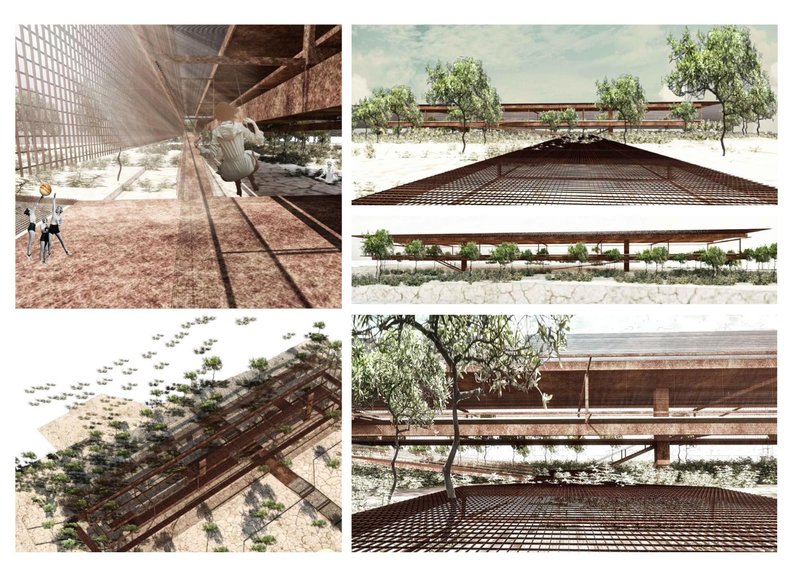
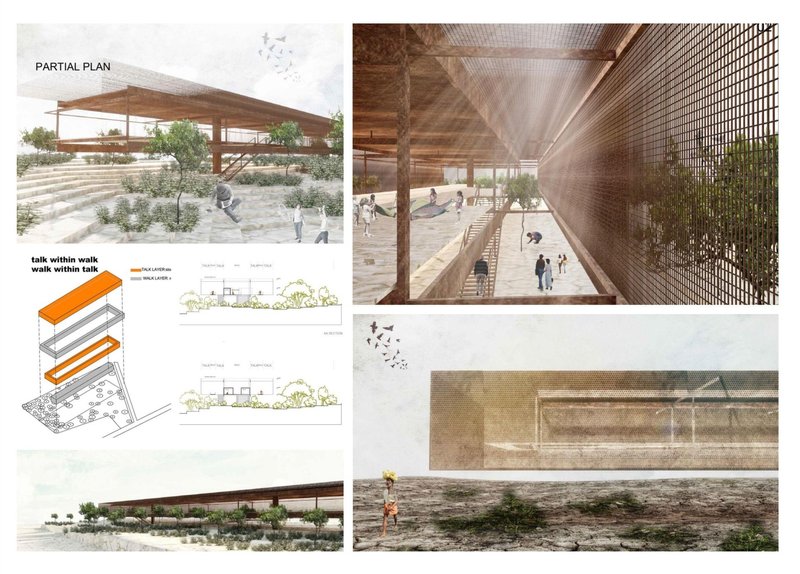
Editorial Choice: Walk & Talk Hub
By: Din Sns
------------------
Editorial Choice: be-NATIVE
By: Sami Khatami Hamidreza Majnooni
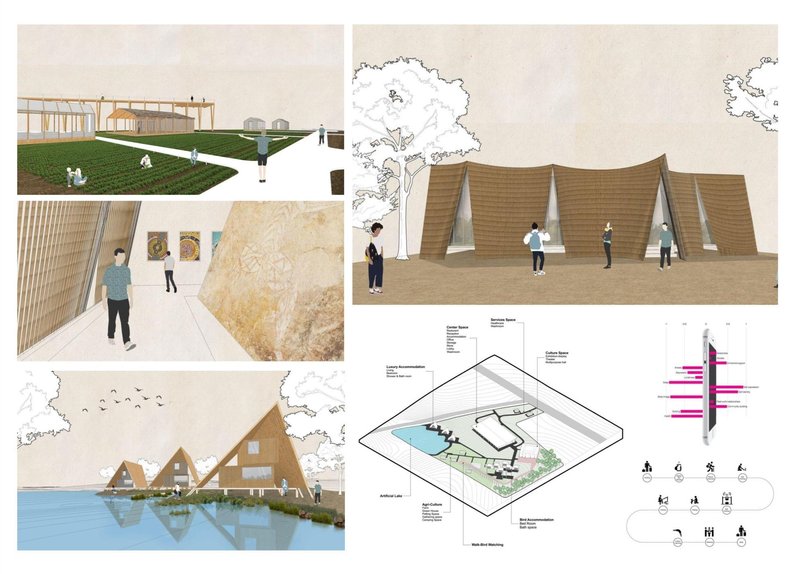
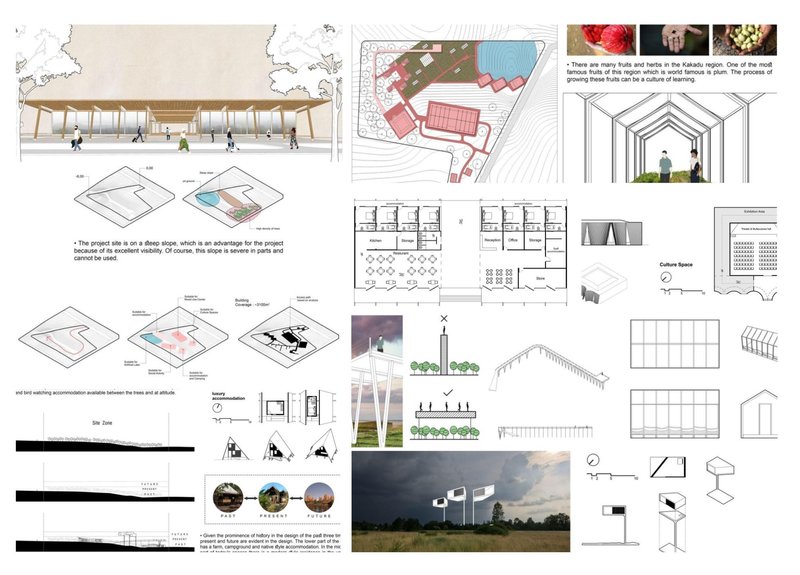 Description: The concerns of today's life have caused acute problems in human societies. Depression, stress, self-destruction, inactivity and many other problems have reduced the quality of human life. The tourist proposal is not just a viewer, it is an activist in the native. In the proposal, the tourist is a native.
Discover the full results https://uni.xyz/competitions/we-australia/entries
Discover the design brief here: https://uni.xyz/competitions/we-australia/info/about
Follow us on social media: Facebook | Instagram | LinkedIn | Twitter | Youtube
Discover other design competitions to participate here: https://uni.xyz/competitions




Popular Articles
Popular articles from the community

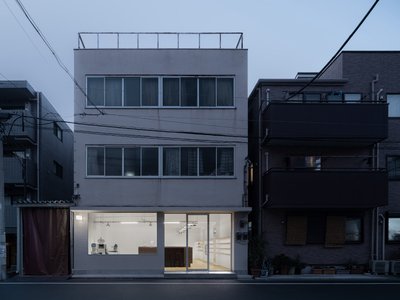
Atelier Macri Concept Store Interior Design by CASE-REAL
Atelier Macri store features a "ko" counter, walnut wood details, cork displays, blending retail, gallery, and seamless customer experiences.
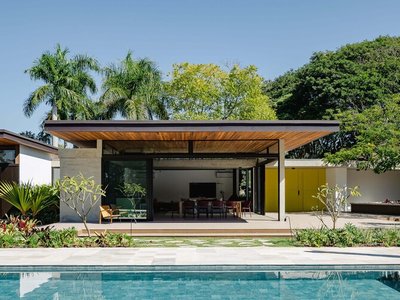
Flamboyant House by Juliana Camargo + Prumo Projetos
Modern Brazilian house integrating existing tree, pool, and volumes with glass, wood, and transitional spaces blending interior, exterior, and landscape seamlessly.
Solar Steam: A Climate-Responsive Architecture That Redefines the Monument
A climate-responsive memorial architecture that transforms heat, decay, and time into a living system reflecting humanity’s ecological impact.
On the Brooks House by Monsoon Collective – A Contemporary Kerala Home Rooted in Tradition
Kerala home blending tradition and modernity with water-inspired design, brick architecture, courtyard planning, and sustainable rainwater harvesting strategies.

Similar Reads
You might also enjoy these articles
ORACLE: A Sustainable Memorial Architecture Responding to Climate Urgency
A sustainable memorial architecture in Cairo that transforms climate urgency into spatial experience, urging collective reflection and action
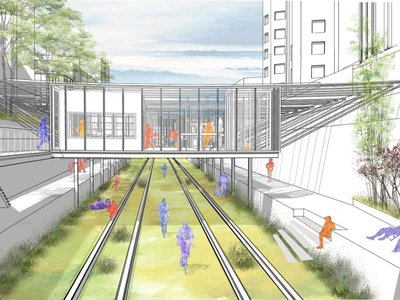
Suspended: Reimagining Paris Through Adaptive Reuse Architecture
A suspended intervention transforms abandoned Paris railways into inclusive, adaptive reuse architecture bridging heritage, mobility, and public life.
Solar Steam: A Climate-Responsive Architecture That Redefines the Monument
A climate-responsive memorial architecture that transforms heat, decay, and time into a living system reflecting humanity’s ecological impact.
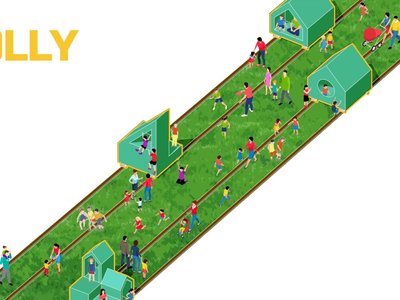
Rolly: A Modular Approach to Urban Regeneration Architecture on Paris’ Petite Ceinture
A modular urban regeneration architecture project transforming Paris’ abandoned railway into a dynamic, movable and community-driven public space





Comments (0)
Please login or sign up to add comments
No comments yet. Be the first to comment!