
Urban Meal Formicary: Sustainable Architecture for Urban Farming
Redefining urban farming with sustainable architecture that blends community, ecology, and design innovation.

The Urban Meal Formicary reimagines how architecture can merge with urban farming to create resilient, sustainable communities. This innovative project provides a blueprint for cities seeking to solve food insecurity, reduce supply chain inefficiencies, and foster stronger community ties through design. Conceived as a modern response to the disconnection between food production and urban living, the project explores how public architecture can serve both ecological and social needs.
Designed by Ahmed Kaisi, Anastasia Semenova, and Anastasiia Orlova, the Urban Meal Formicary received an Honorable Mention in the Urban Meal Mine competition. Their vision demonstrates how architecture can act as an adaptive system, much like an ant colony, fostering collaboration, adaptability, and long-term sustainability.
Concept and Inspiration
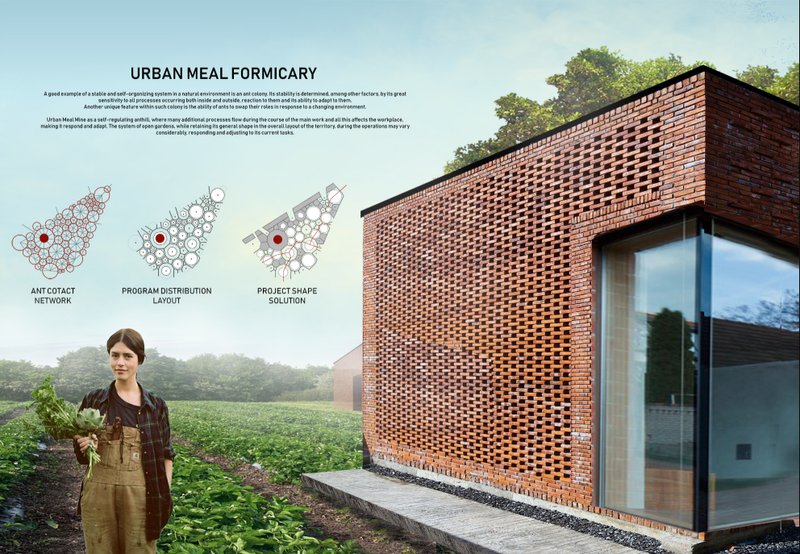
The project draws inspiration from the structure of ant colonies, which are known for their resilience, adaptability, and collaborative organization. Ant colonies maintain balance between order and flexibility—qualities essential for sustainable urban growth. Similarly, the Urban Meal Formicary architecture integrates agricultural production into a dynamic, flexible environment where the community itself becomes both producer and consumer.
This bio-inspired approach highlights architecture as a living system—one that is responsive to environmental changes, economic demands, and social interactions.
Design and Site Planning
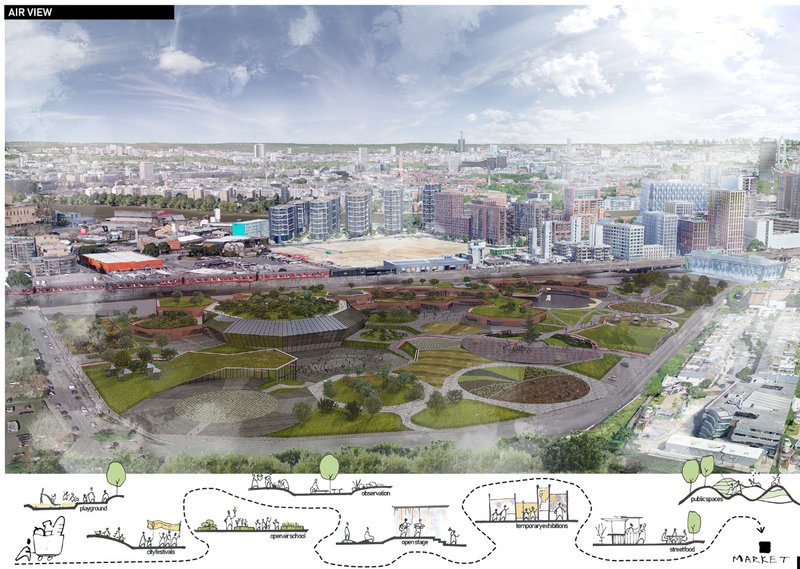
The site plan reveals a carefully orchestrated urban ecosystem. Divided into interconnected circular zones, the design incorporates:
- Culinary workshops where visitors learn about food preparation and sustainability.
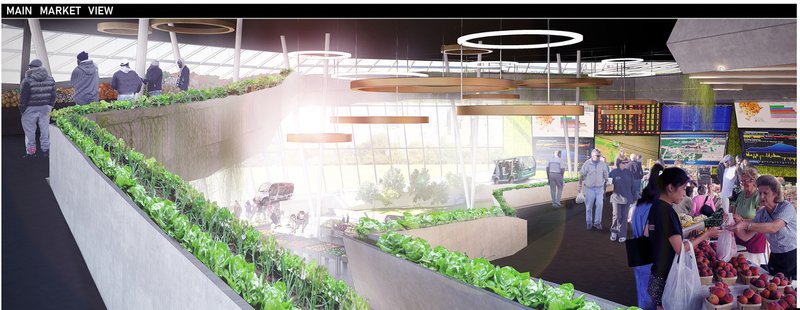
- Open-air markets offering locally grown produce.
- Community gardens that encourage participation in cultivation.
- Educational spaces promoting awareness of ecological cycles.
- Leisure and cultural zones including yoga centers, playgrounds, and exhibition areas.
By combining agricultural, social, and recreational spaces, the design creates a seamless integration of architecture and public life.
Architectural Features
The architectural expression emphasizes materiality and environmental harmony:
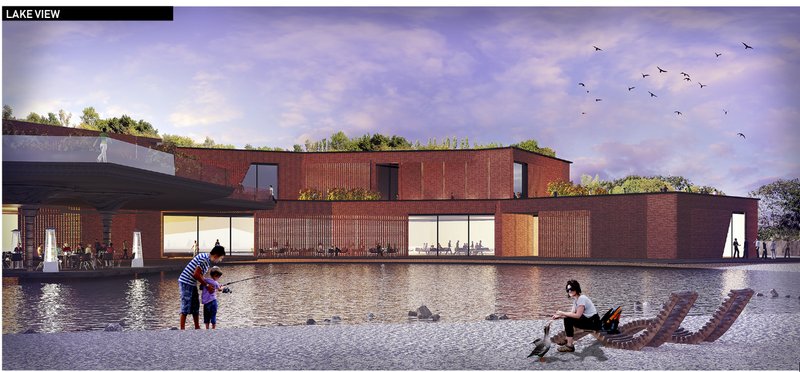
- Brick facades with perforated patterns ensure ventilation, aesthetics, and contextual relevance.
- Green roofs add ecological value, regulate microclimates, and promote biodiversity.
- Waterfront views enhance community engagement while supporting ecological balance.
- Sustainable construction methods reduce the project’s carbon footprint.
Through these design strategies, the Urban Meal Formicary demonstrates how sustainable architecture can be both functional and culturally meaningful.
Sustainability and Community Impact
The project addresses challenges typical of urban environments, such as limited agricultural space, high food transportation costs, and weak community ties. Its architectural framework provides:
- Local food production, reducing reliance on global supply chains.
- Shared spaces that build community resilience.
- Environmental stewardship, reinforcing the importance of ecological design in urban development.




Popular Articles
Popular articles from the community


Solar Steam: A Climate-Responsive Architecture That Redefines the Monument
A climate-responsive memorial architecture that transforms heat, decay, and time into a living system reflecting humanity’s ecological impact.
On the Brooks House by Monsoon Collective – A Contemporary Kerala Home Rooted in Tradition
Kerala home blending tradition and modernity with water-inspired design, brick architecture, courtyard planning, and sustainable rainwater harvesting strategies.


The Ken Roberts Memorial Delineation Competition (Krob)
As the most senior architectural drawing competition currently in operation anywhere in the world, it draws hundreds of entries each year, awarding the very best submissions in a series of medium-based categories.
Treehouse Apartment: A Warm Timber Interior Blending Craft, Play, and Contemporary Living
Warm timber apartment with integrated treehouse, combining natural materials, craftsmanship, and playful design to create a flexible, family-oriented living environment.

Similar Reads
You might also enjoy these articles

Top 15 Architecture Competitions to Enter in 2026
From student-friendly idea competitions to prestigious international awards, here are the best architecture competitions open for entries in 2026. Updated regularly.

DIY & Engineering in Computational Design : Enter the BeeGraphy Design Awards
Showcase Your Creativity with Computational Design and Open Source Projects
Innovative Design Solutions: Award-Winning Projects from Recent Architecture Competitions
Exploring award-winning architectural projects shaping the future of design, sustainability, and community.

Explore Architecture Competitions
Discover active competitions in this discipline




The International Standard for Design Portfolios


The Global Benchmark for Architecture Dissertation Awards


The Global Benchmark for Graduation Excellence


Challenge to reimagine the Iron Throne
Comments (0)
Please login or sign up to add comments
No comments yet. Be the first to comment!