

3D-Printed Cabin Architecture: Universidad del Bío-Bío's Revolutionary Project
This article explores Universidad del Bío-Bío's groundbreaking 3D-printed cabin, highlighting its innovative construction technology and sustainable design.


The realm of architecture is witnessing a significant shift with the advent of 3D printing technology. Among the pioneers in this field is the Universidad del Bío-Bío, which has introduced the first 3D-printed construction in Chile and the southern cone of Latin America. This groundbreaking project, a small surveillance cabin, showcases the potential of additive manufacturing technology to revolutionize construction practices.


Project Overview
Key Details
- Location: Concepción, Chile
- Architects: Universidad del Bío-Bío
- Area: 4 m²
- Year: 2023
- Lead Architects: Rodrigo García Alvarado, Pablo Banda, Kevin Mendez
- Manufacturers: Sika, CBB, CITEC-UBB
- Photography: Victor Cárcamo


The Innovative Approach
Technology and Materials
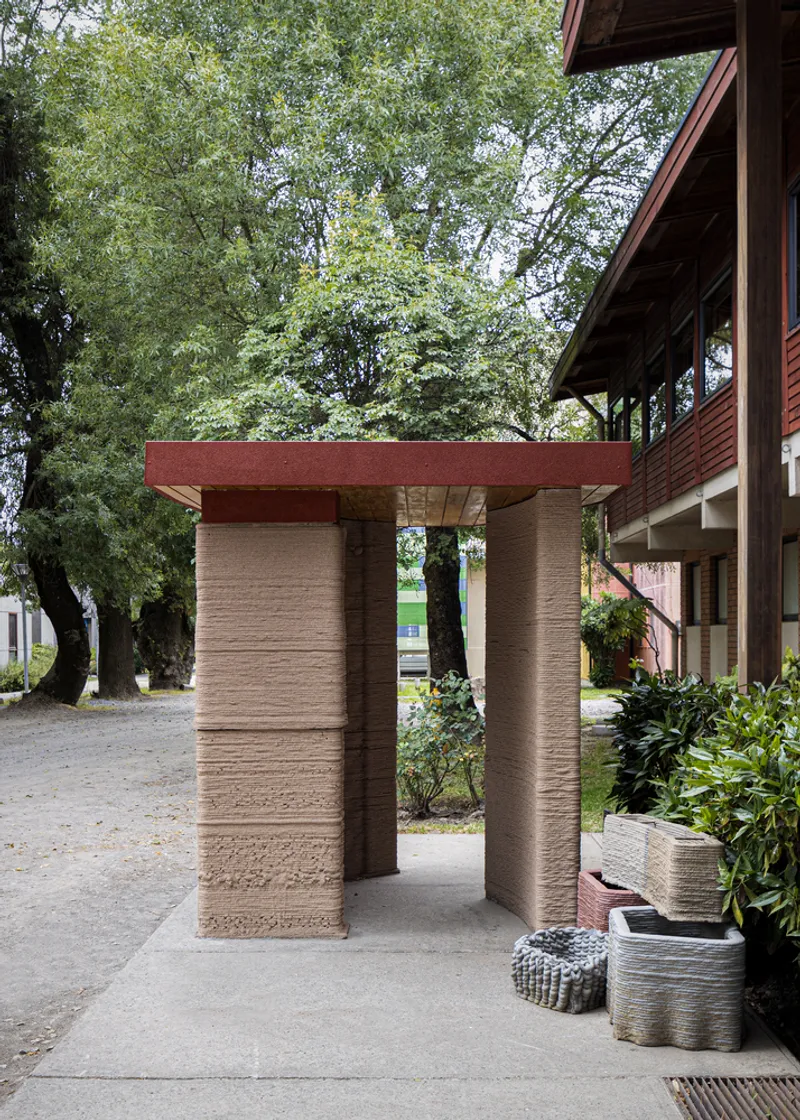
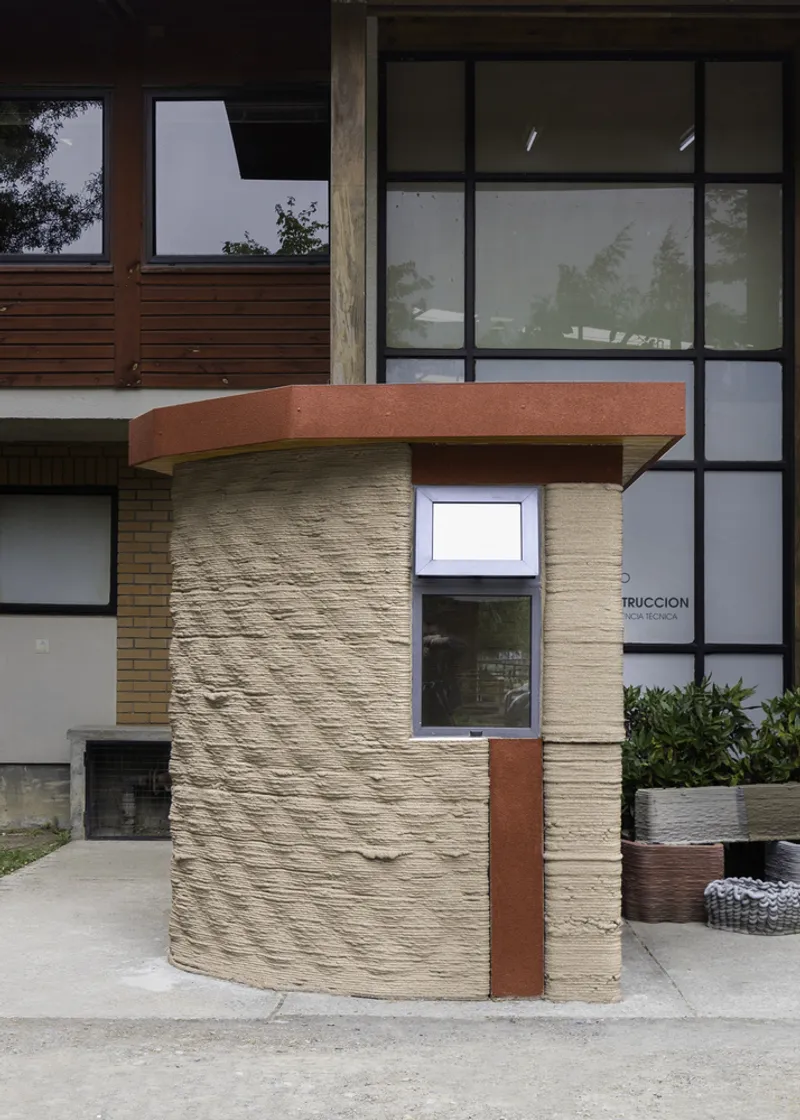
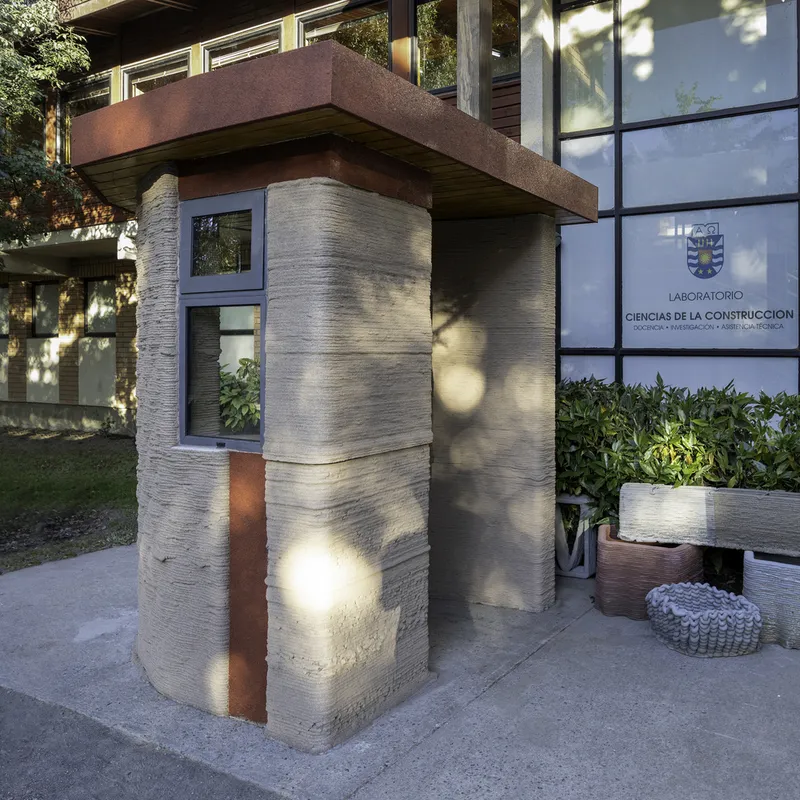
The 3D-printed cabin is a testament to the advances in construction technology at Universidad del Bío-Bío. Utilizing a mixture optimized for printing with local materials and constructing elements with an industrial robot, the university has expanded its capabilities with a large-format printer. This technology not only facilitates the construction of small structures like this cabin but also has the potential to build complete houses.
Efficiency and Sustainability
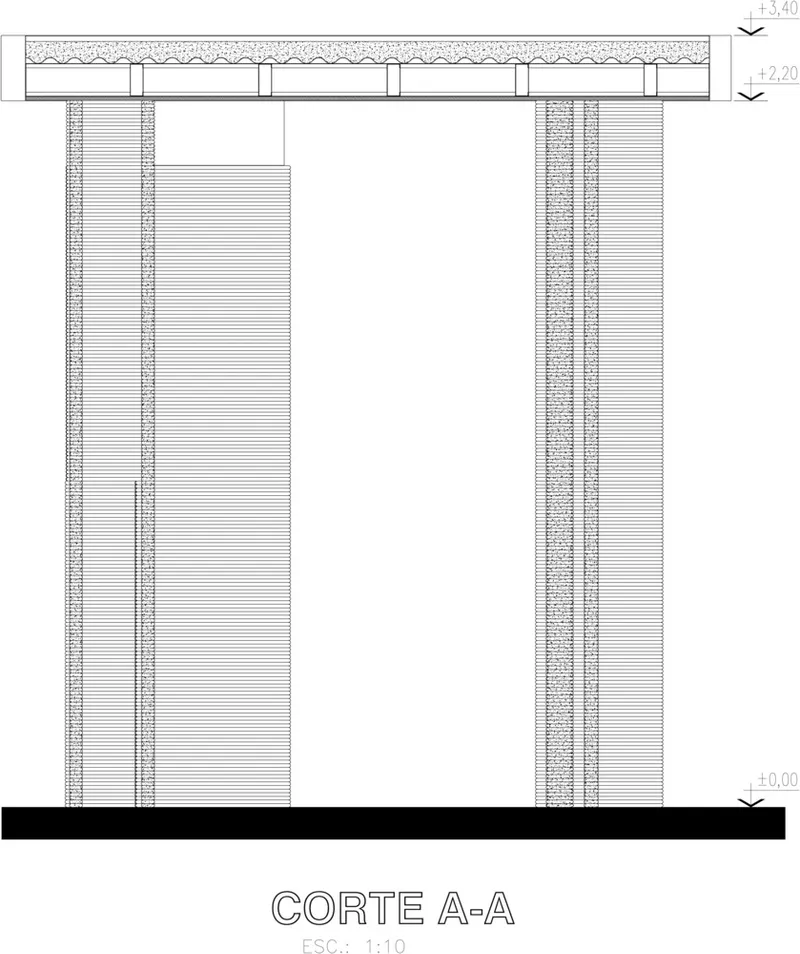
One of the primary advantages of 3D-printed cabin architecture is the efficiency it brings to the construction process. Each printed concrete wall took approximately 40 minutes to produce, significantly reducing execution time compared to traditional methods. This approach minimizes the use of resources, waste, management, and transportation, contributing to greater eco-efficiency and sustainability. The printed structures exhibit great durability, incorporating windows, seals, reinforcements, roofs, finishing coatings, and thermal insulation to meet quality and habitability standards.


Design and Structural Stability
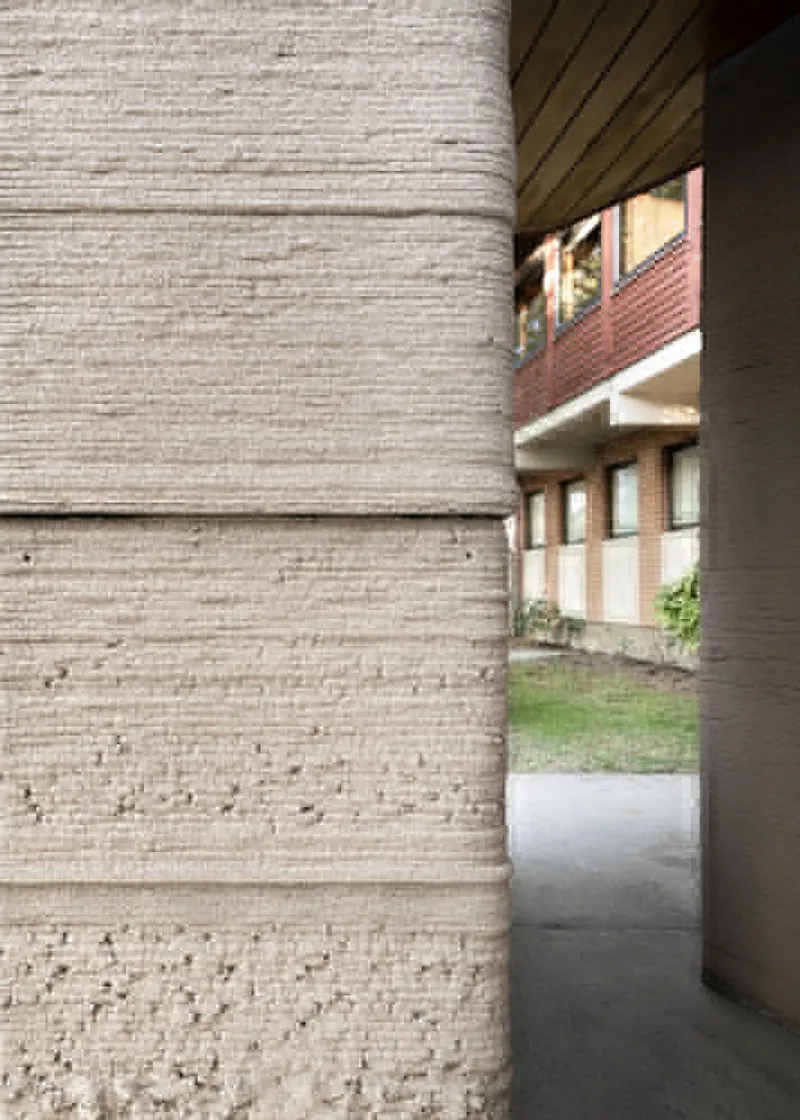
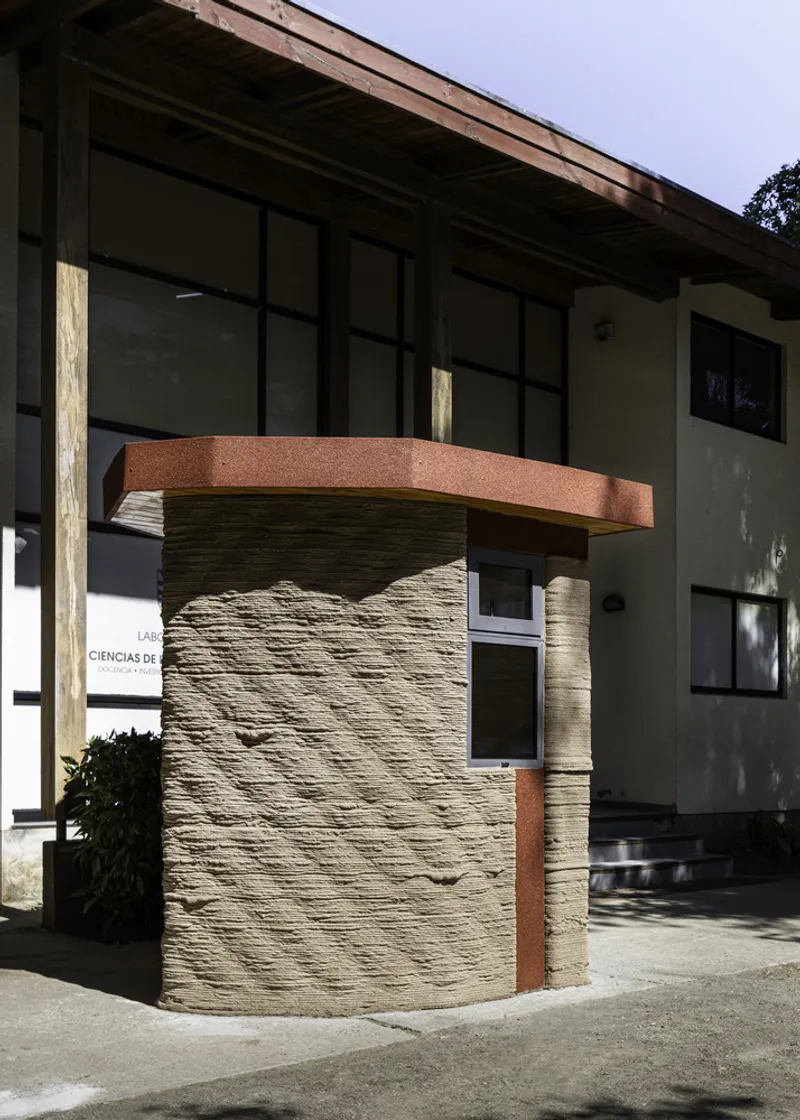
The architects experimented with various design elements to enhance the cabin's functionality and aesthetic appeal. Curved shapes were integrated for greater structural stability, while textured surfaces were employed for improved thermal and acoustic dissipation. These features not only enhance the cabin's durability but also add to its architectural expression.

Overcoming Regional Challenges
Seismic and Climatic Considerations
Chile's severe seismic conditions and diverse climates pose unique challenges for construction. Most 3D-printed buildings globally have been constructed without considering such stringent requirements. However, Universidad del Bío-Bío's Additive Manufacturing Group for Construction (MACO-UBB) has adapted the technology to local conditions. This adaptation ensures that the printed structures can withstand the region's seismic activity and climatic variations, making them suitable for widespread use in Chile and beyond.


Promoting Industrialized Solutions
The university's efforts extend beyond this single project. By equipping itself and collaborating with national companies, Universidad del Bío-Bío aims to promote 3D-printed construction throughout Latin America. This initiative is geared towards meeting the growing demand for housing and urbanization with innovative industrialized solutions tailored to different regional realities.
Future Prospects
Expanding 3D-Printed Construction
The 3D-printed cabin by Universidad del Bío-Bío represents a significant step towards the broader adoption of this technology in architecture. As the first of its kind in Chile, it paves the way for more ambitious projects, including residential buildings and larger structures. The integration of traditional construction components with advanced printing techniques promises to deliver high-quality, efficient, and sustainable buildings.
Architectural Innovation
This project underscores the potential for 3D printing to bring about a paradigm shift in architectural design and construction. The flexibility in design, rapid production times, and sustainability benefits position 3D-printed cabin architecture as a viable solution to contemporary construction challenges.
Universidad del Bío-Bío's 3D-printed cabin marks a milestone in the evolution of construction technology in Chile and Latin America. By harnessing the power of 3D printing, the university has demonstrated a commitment to innovation, efficiency, and sustainability. This project not only showcases the capabilities of 3D-printed architecture but also sets the stage for future developments that could transform the construction industry worldwide.
All the photographs are work of Victor Cárcamo


Popular Articles
Popular articles from the community


LT2A and OPEN Architectes Thread a Brick and Glass High School Through a Wooded Belgian Campus
In Braine-l'Alleud, a 3,000 m² wing for Collège Cardinal Mercier pairs pale brick with a glazed colonnade, deferring to a small chapel and a dense wood.

Cube Design Draws an Ecological Corridor Between Two Shenzhen Hills with the Nankai Building
Beside Shenzhen's container docks, the Nankai Building pairs stacked balconies with a climbing green screen to connect two hillsides across its height.

graciastudio Turns a Viewless Tijuana Lot Inward Around a Courtyard of Concrete, Timber and Trees
In Tijuana, Jorge Gracia's GA2 House stacks a timber-clad private floor over exposed concrete and replaces a missing view with a planted interior patio.

Juan García Correa, John González and Claudia Rueda Sink a Circular Amphitheater into a Manizales Engineering Building
On the La Nubia campus in Manizales, Colombia, the S1 Building folds labs and offices into a hillside of ramped lawns that double as a campus route.

Similar Reads
You might also enjoy these articles


Hodi-Mandai Geram
Project Function: Preservation and revitalization of the Intangible heritage and socio-spatial identity of the Hodi by Housing, Cultural Memory Center, Sacred Grove, landscape, local tourism economy


Olio Towers: A Mid-Rise for Performers That Fuses Housing, Rehearsal, and Stage
Located blocks from Houston's Theater District, this modular tower stacks living units around a central performance atrium.

Oasis: Modular Green Housing Carved into Dhaka's Urban Fabric
A shortlisted Plugin Housing entry reclaims unauthorized settlements in Dhaka with stepped concrete volumes, green roofs, and ventilation-driven design.

Black Hole: A Floating Megastructure for the Post-Physical Era
Emiliano Mazzarotto envisions a spherical, self-scaling arena where e-sports, digital hotels, and holographic stadiums replace traditional public space.

Explore 3D Printing Competitions
Discover active competitions in this discipline

Challenge to reimagine the Iron Throne

Photograph architecture without architects

Illustrate the lost glory of Angkor Wat - Render Challenge

Design challenge to reuse E-waste
Comments (0)
Please login or sign up to add comments
No comments yet. Be the first to comment!