
3XN and SRA Architectes Stack a Lenticular Hotel and Office Over Paris Railway Tracks
A 16,000 square meter mixed-use building anchors the emerging Les Groues district in Nanterre with self-shading checkerboard facades.


Building over active railway infrastructure is a thankless proposition. The structural gymnastics alone would discourage most clients, and the acoustic challenges multiply from there. Yet in Nanterre, on the western edge of La Défense, 3XN and SRA Architectes have delivered InDéfense and Hôtel OKKO: a 16,000 square meter hybrid of 4-star hotel, grade-A offices, and ground-floor retail, all cantilevered on a parking podium above SNCF tracks with two of four platforms running directly beneath the building.
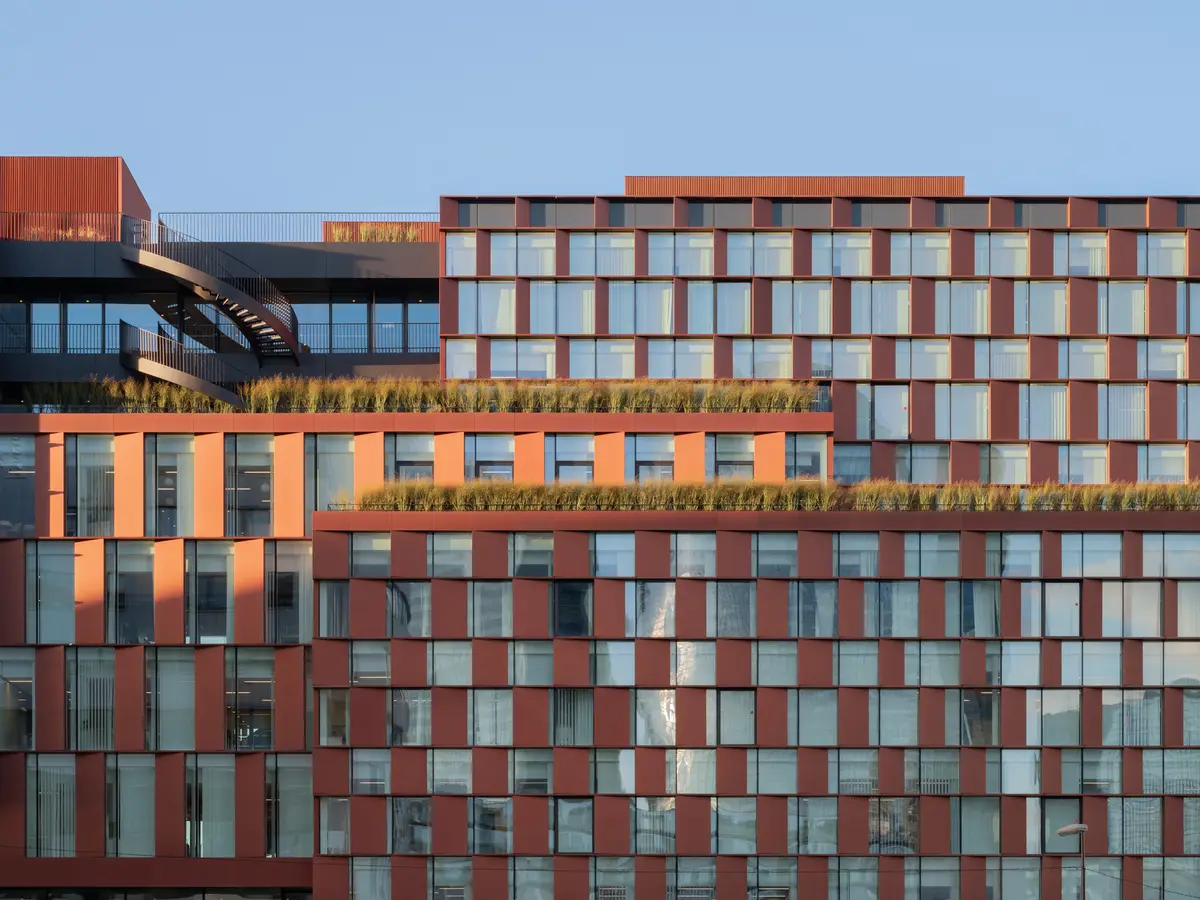
What makes the project genuinely interesting is not that it straddles a railway, but how the architects weaponize the facade to solve multiple problems at once. The checkerboard composition of angled aluminum cassettes, matte bronze on the office side and semi-reflective anodized aluminum on the hotel, produces a lenticular effect that shifts between transparent and metallic depending on time of day, viewer angle, and season. Those same angled panels self-shade the interiors, changing pitch from floor to floor to calibrate direct sunlight. It is a rare case where the visual identity of a building and its environmental performance are genuinely the same system.
Two Buildings, One Address
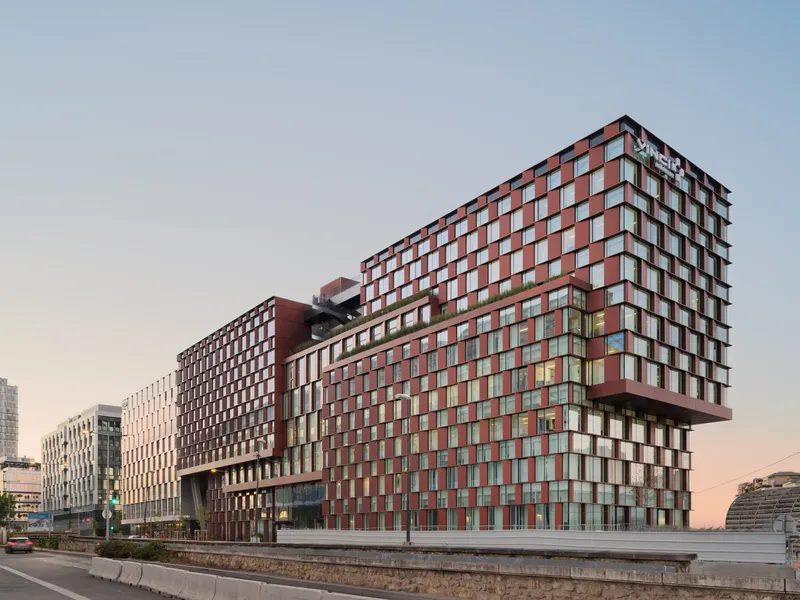
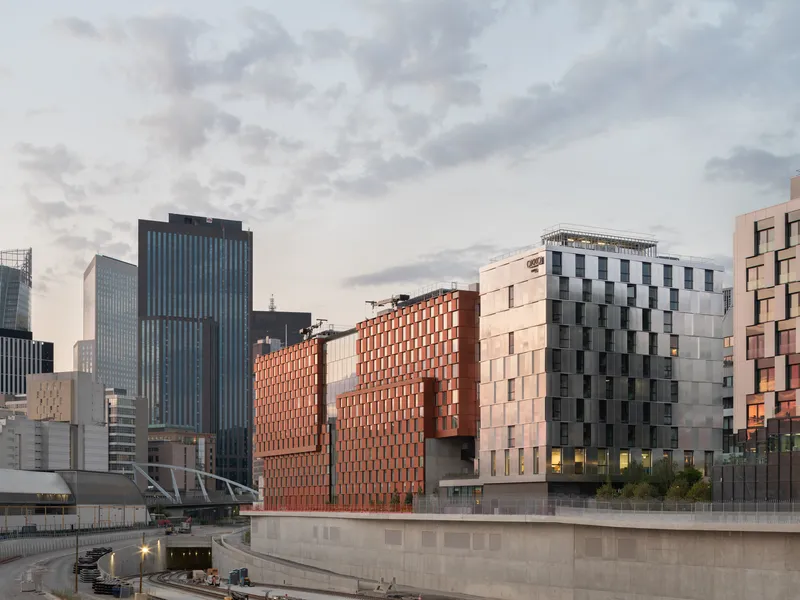
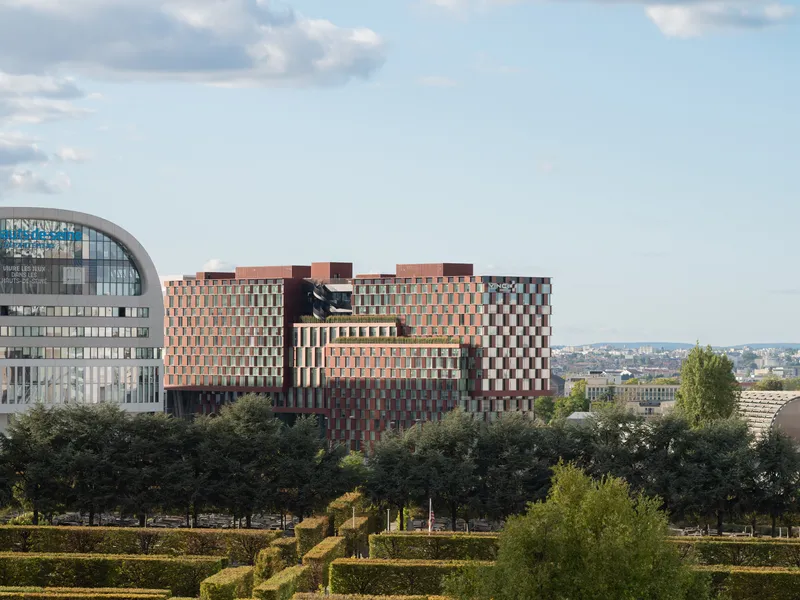
The project reads as a single composition from a distance, but it is actually two distinct structures adjoined along an east-west axis. The hotel rises as an unbroken mass across nine floors, while the office building is deliberately fractured into smaller volumes, pushed in or extruded to break up the bulk of a narrow site. At dusk, the terracotta-toned panels glow against the La Défense skyline, and the stacked volumes register as a geological formation rather than a conventional slab.
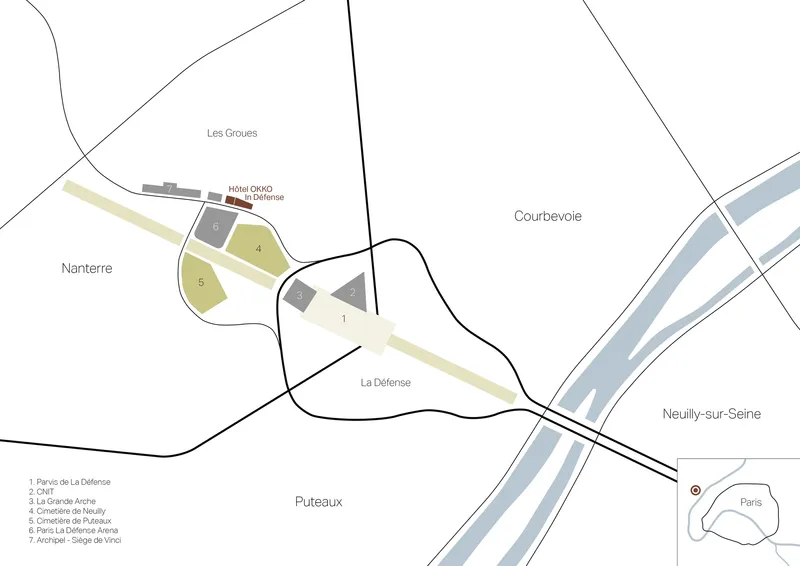
Sitting on former railway wastelands, the building anchors the Les Groues district, one of the first completed projects in an area that will eventually be linked to Greater Paris by the new M15 metro line and an extension of the RER E. The architects had to design for a future neighborhood that does not yet exist, which partly explains the building's outward generosity: a sheltered agora at ground level, glazed lobbies, and planted terraces that offer something to pedestrians today, not only to future tenants.
The Checkerboard Envelope
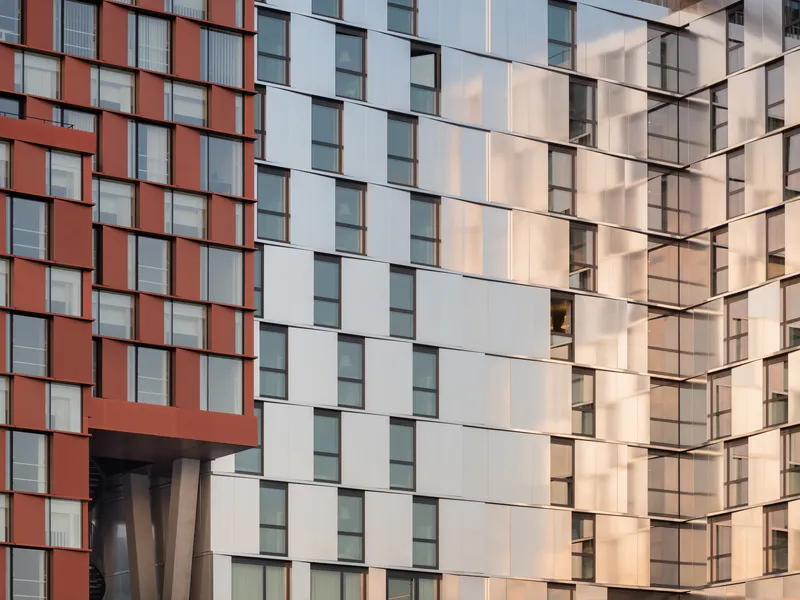
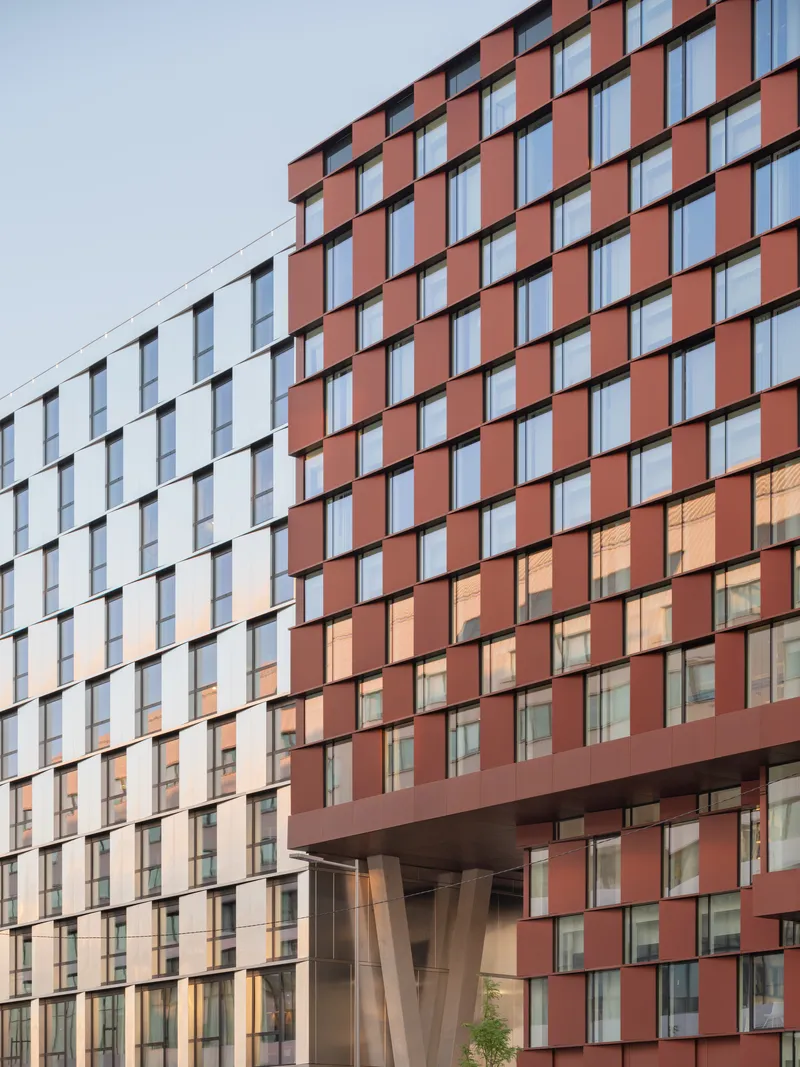
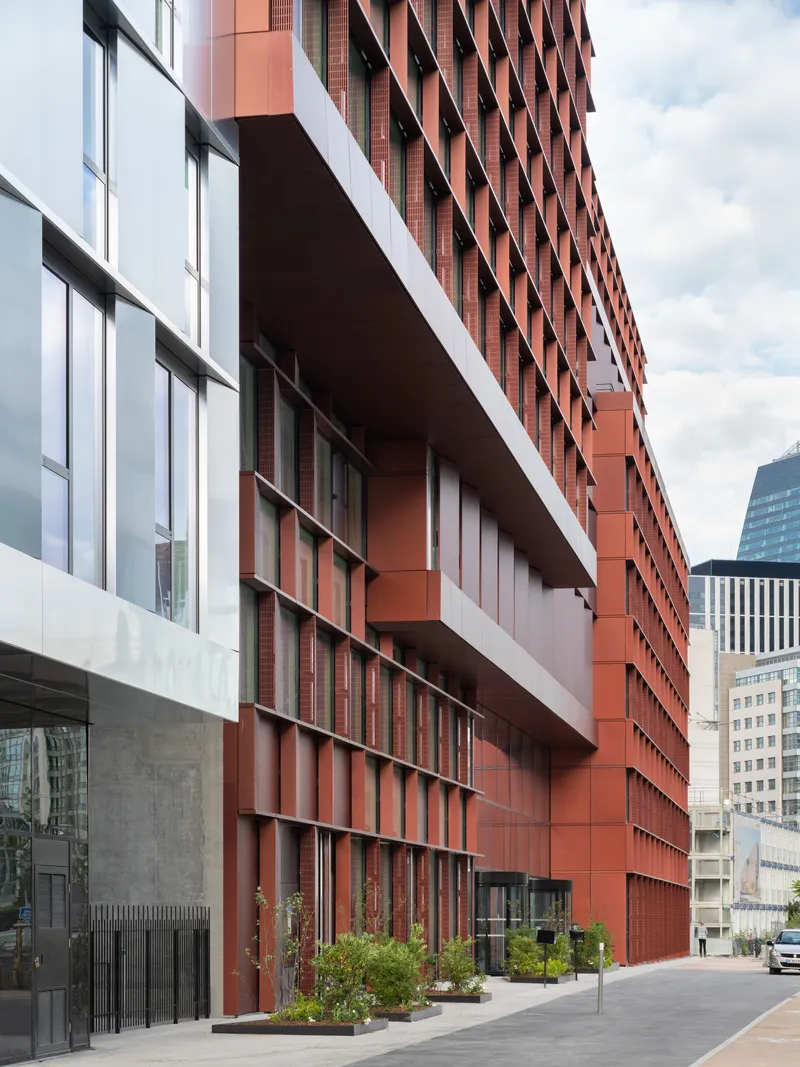
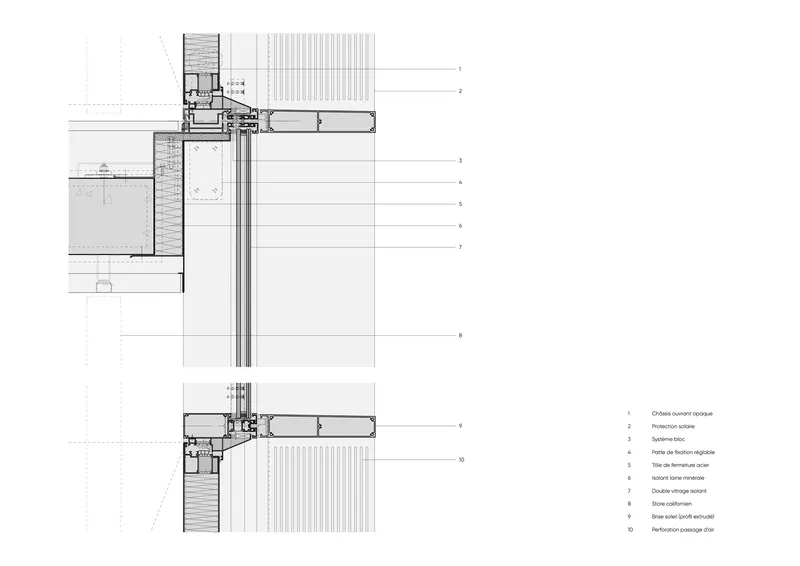
The facade is the project's signature move and its most technically ambitious component. Manufactured by Rinaldi Structal, a French specialist in high-performance envelopes, the system uses prefabricated cassettes assembled into unitized panels: ten types for the office building, three for the hotel, with additional modules for the roof, corners, terraces, and ground floor. Ventilation cuts are integrated within the opaque cassettes through perforated side panels, so fresh air enters without compromising the visual rhythm of the grid.
The checkerboard pattern is not decorative. Each cassette is angled at a pitch calibrated to its specific floor level, creating a gradient of self-shading that limits solar gain without blanket opacity. From the street, the effect is a shifting surface that catches light differently across its height. California-style blinds behind the glass allow occupants further manual control, but the heavy lifting is done by the envelope itself.
The Spiral Staircase as Social Infrastructure
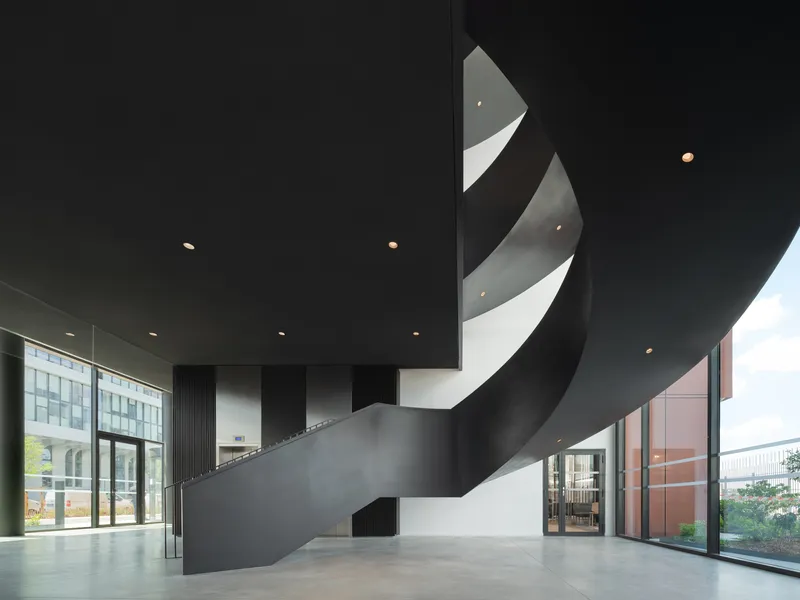
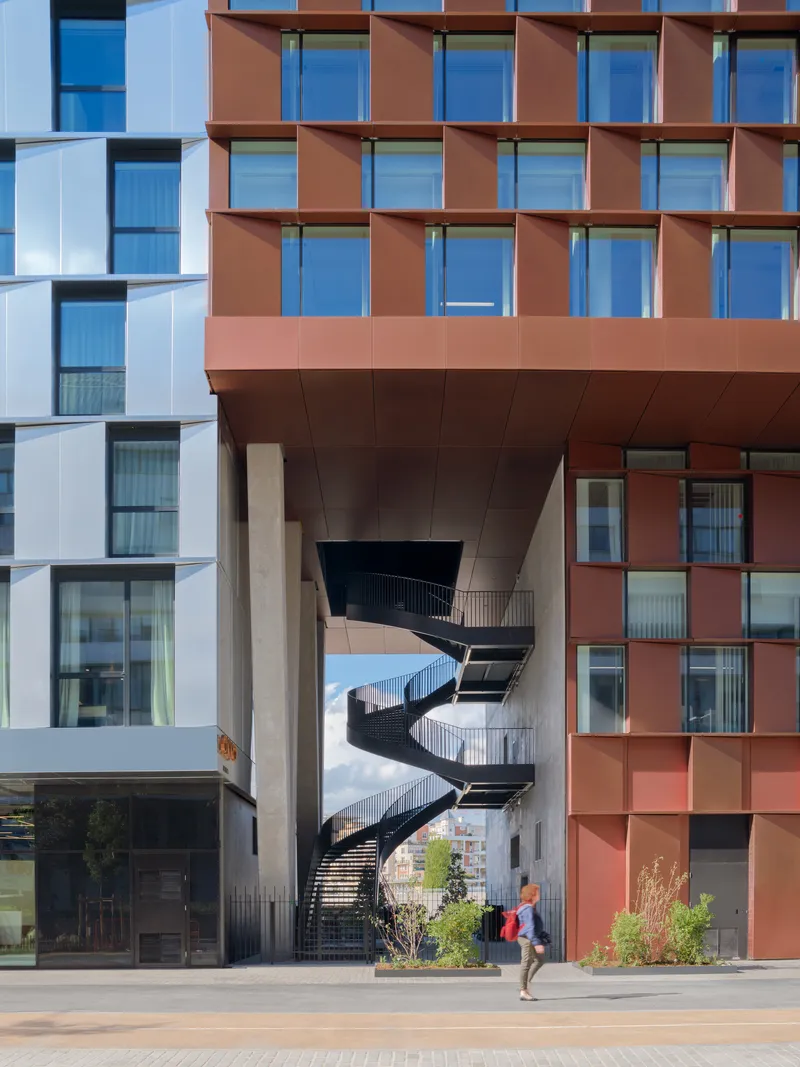
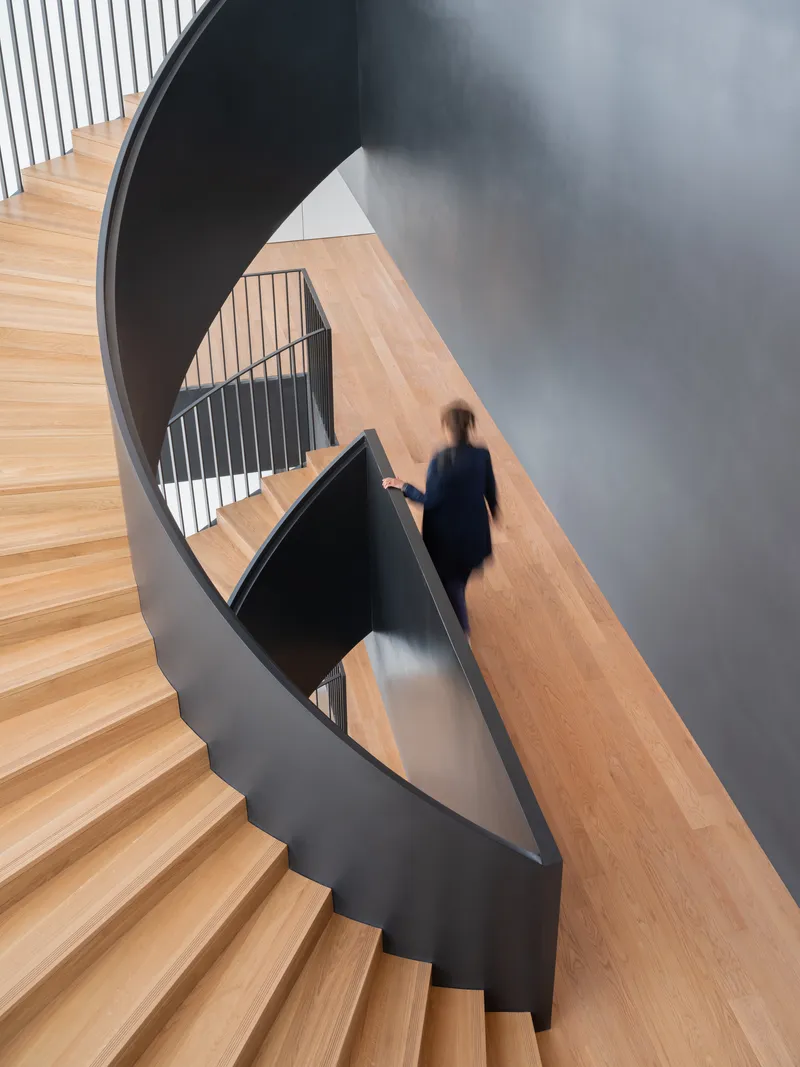
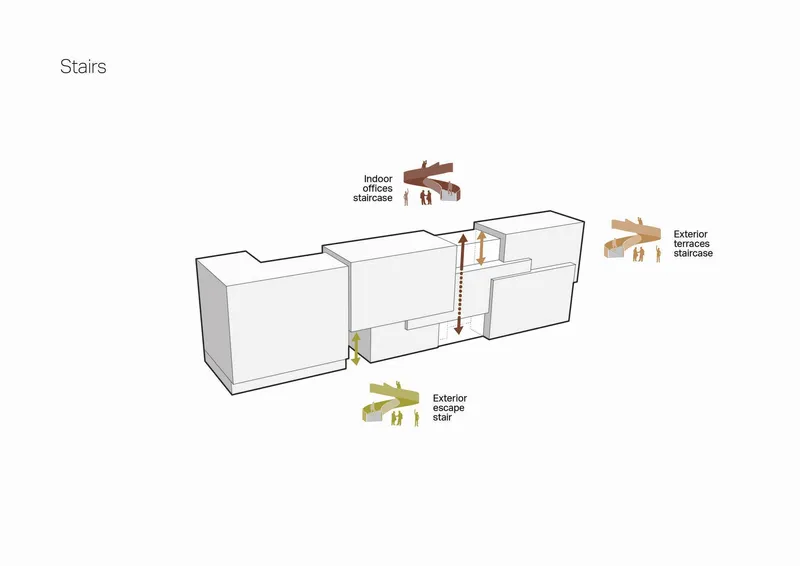
At the heart of the office building, a sculptural black steel spiral staircase winds upward adjacent to the fully glazed north facade. It is more than circulation. The architects designed shared landings that occupants must pass through on every floor, manufacturing the kind of casual encounters that open-plan offices promise but rarely deliver. The stair sits within a central glazed atrium, flooding the core of the building with natural light and turning vertical movement into a visible, social act.
A second exterior staircase connects the planted terraces on the hotel side, reinforcing the idea that stairs in this building are not secondary to elevators but parallel experiences. The ground-level agora, sheltered between the two volumes, doubles as a bike parking zone punctuated by the base of the spiral stair, pulling the building's interior logic out to the street.
Terraces and Biophilic Strategy
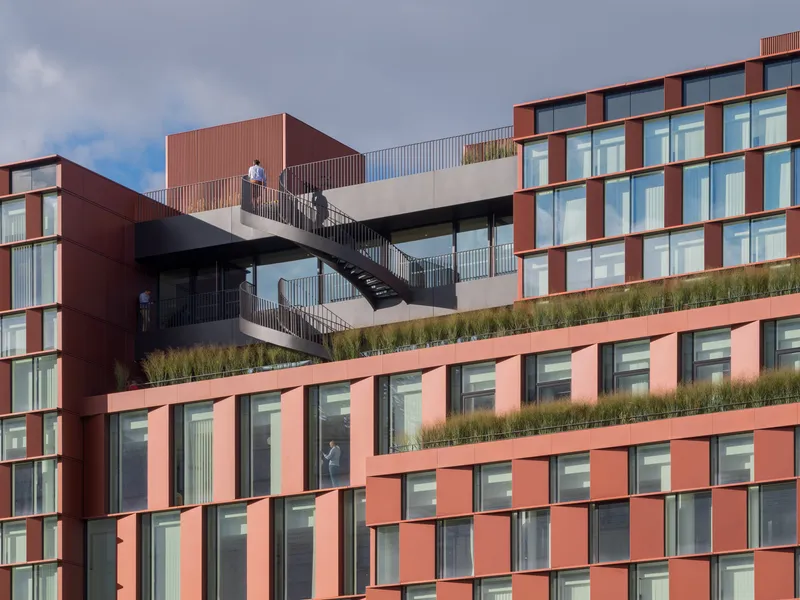
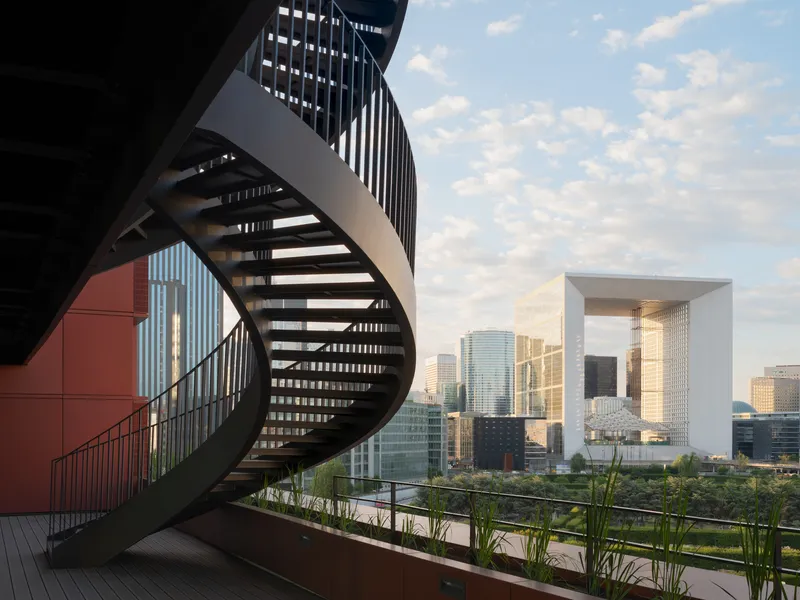
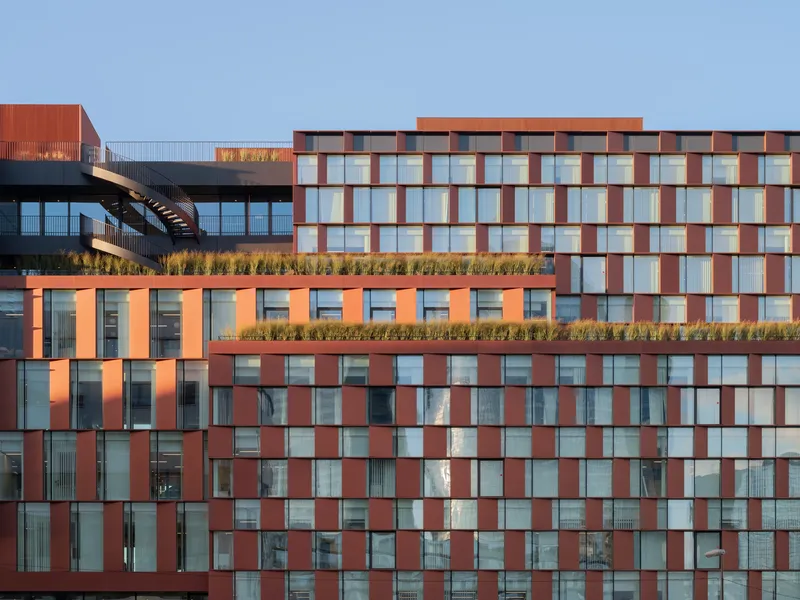
The extruded and receding volumes are not only a massing strategy. They produce shaded overhangs above and daylit terraces below, distributing planted outdoor spaces across multiple levels with native planting. The rooftop terrace, equipped with a curved steel staircase and generous planters, commands views of the Grande Arche and the La Défense cluster. On the hotel's first floor, a 300 square meter lounge opens onto a dedicated terrace that gives guests something most Parisian hotels cannot: unobstructed sky.
3XN frames these terraces as biophilic features with measurable benefits for productivity and wellness, and the certification bodies apparently agree. The office building earned HQE Exceptionnel, BREEAM Excellent, and Effinergie+ ratings, while the hotel received BREEAM Very Good. For a building perched above a railway, these are not trivial accomplishments; the structure and facades were specifically engineered to counter vibration and acoustic transmission from the trains below.
Interior Atmosphere
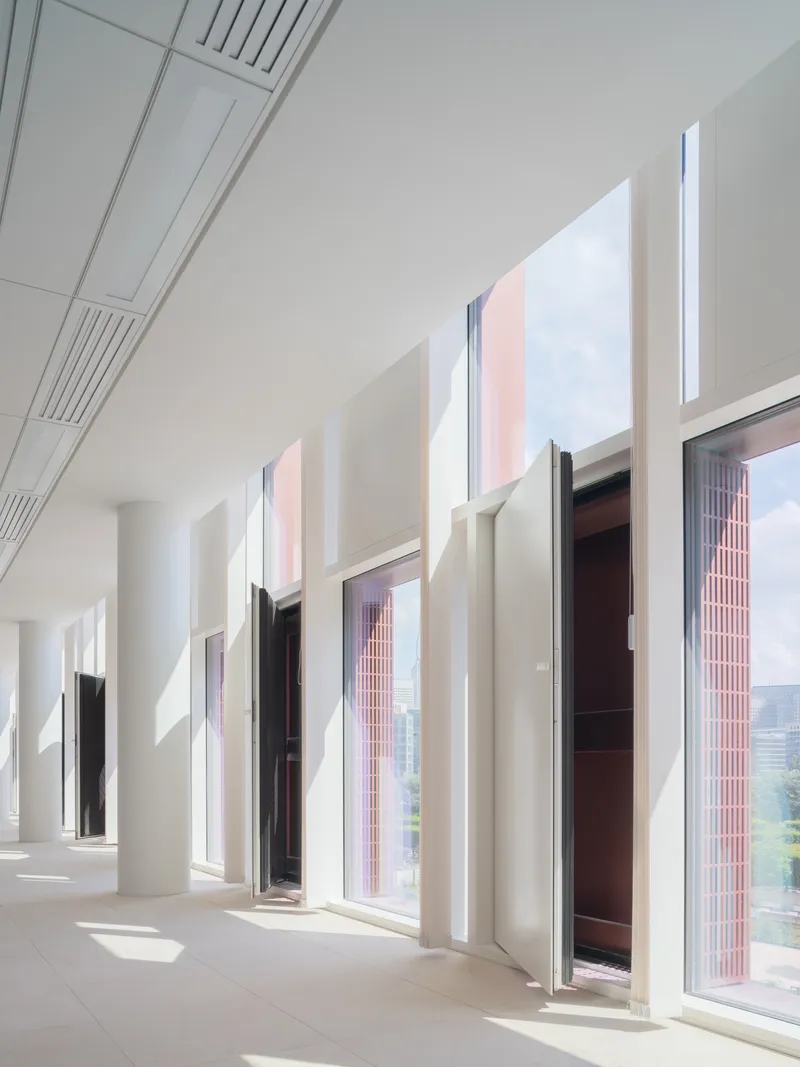
Inside, the palette strips back to exposed concrete walls, white corridors, and deep-set windows that cast sharp afternoon shadows across the floor. The restraint is deliberate. With a facade this active on the outside, the interiors benefit from calm. Column coffers and recessed glazing give the corridors a monastic quality that contrasts with the bronze shimmer visible through every window.
The hotel program includes a brasserie and the restaurant Noccio with 110 seats and an open kitchen, positioning the ground and first floors as genuinely public. Reception is placed on the first floor rather than at grade, freeing the street level for the agora and retail that the emerging neighborhood needs.
Plans and Drawings
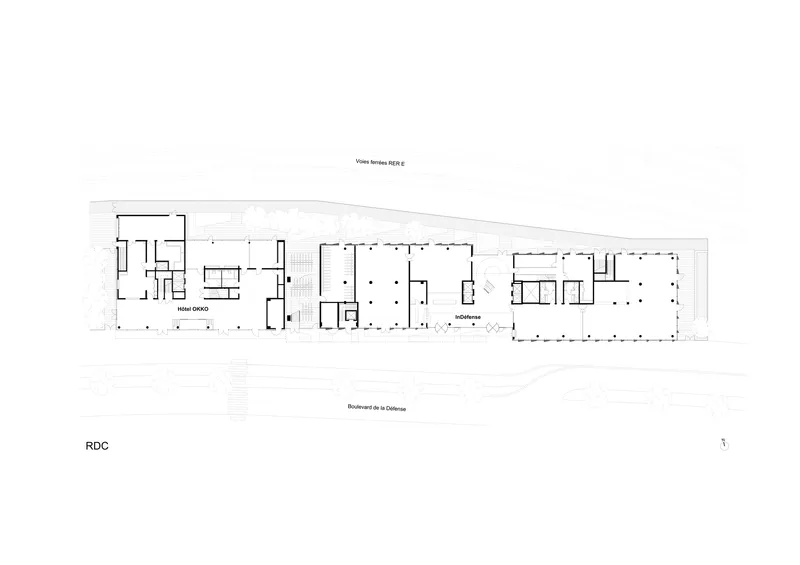
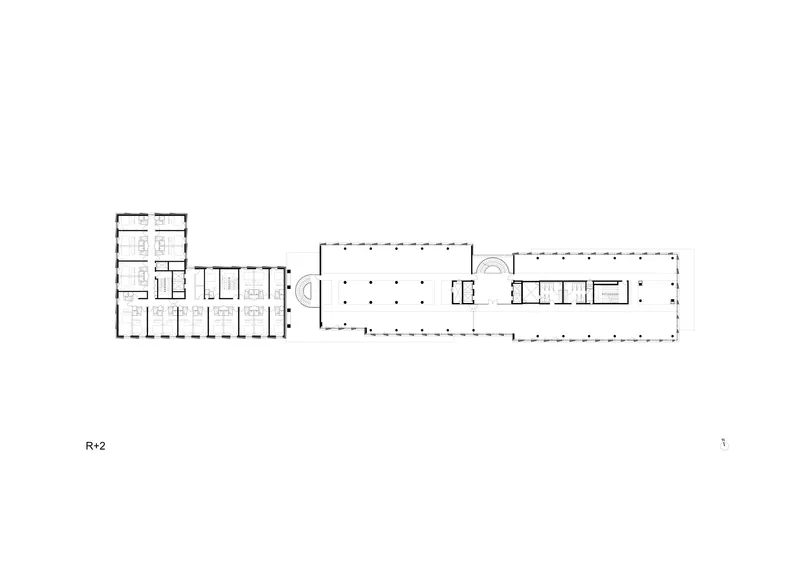
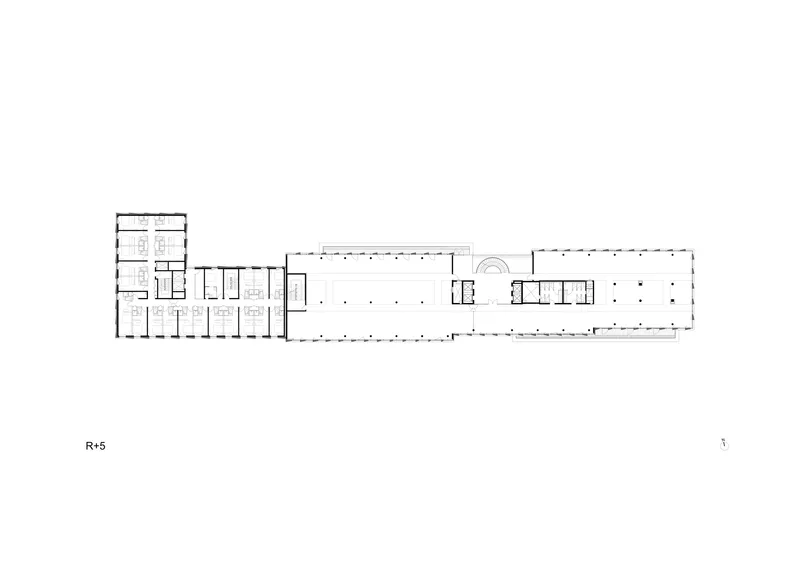
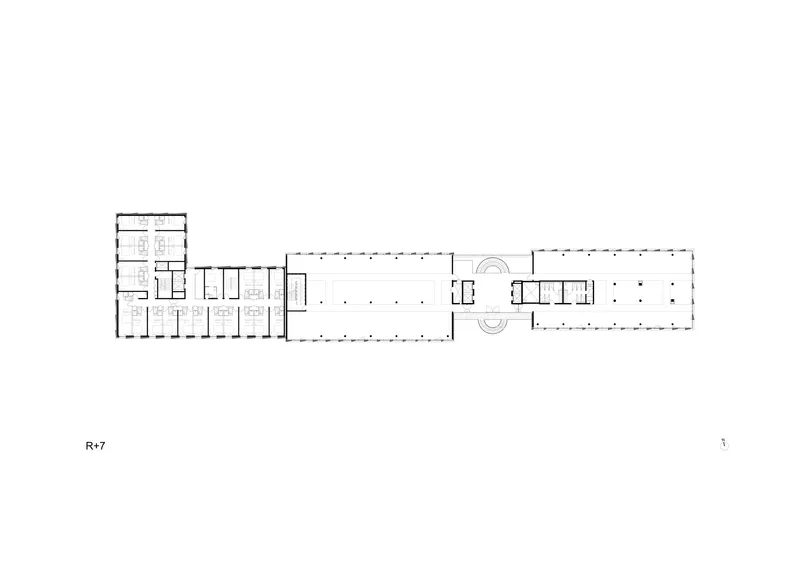
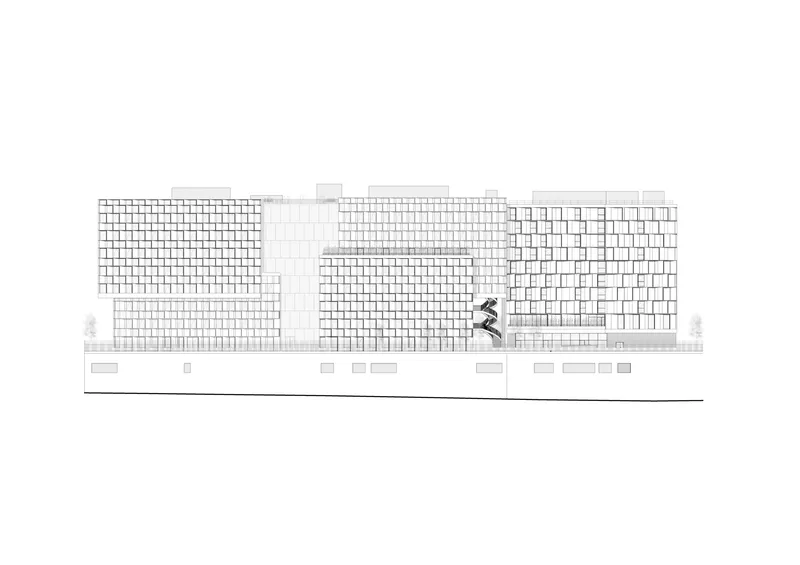
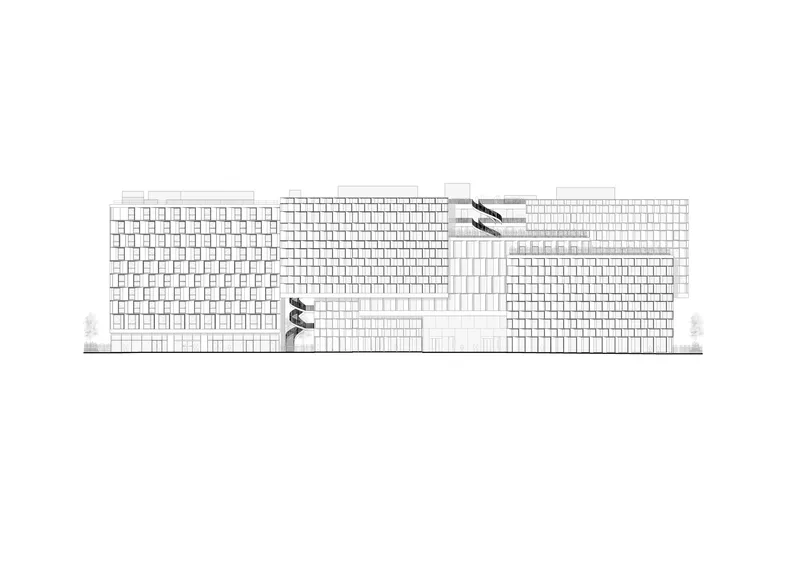
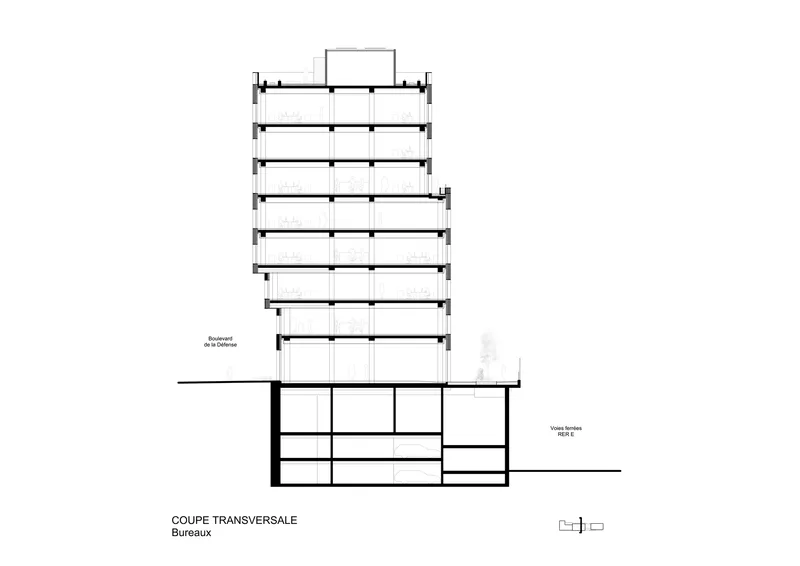
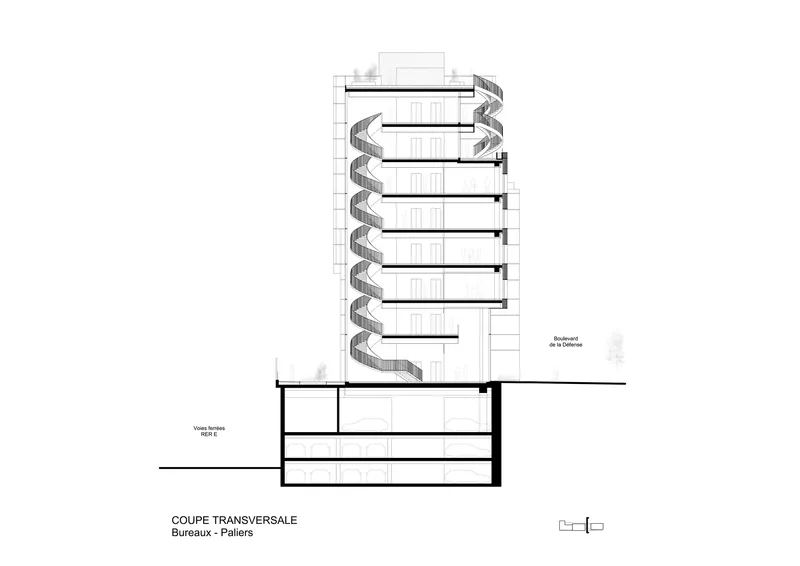
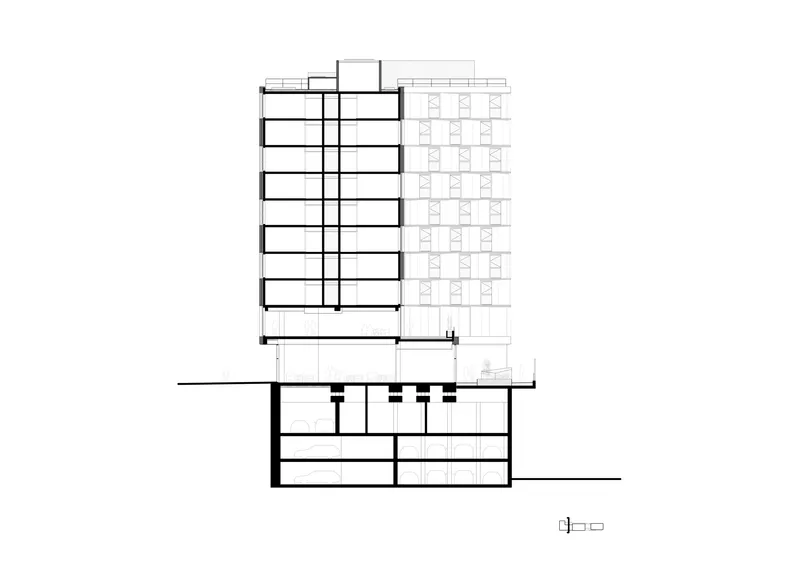
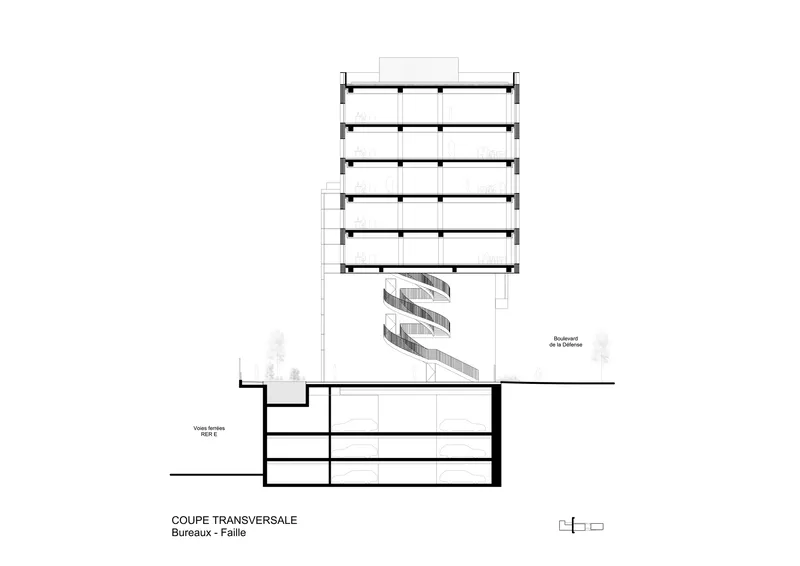
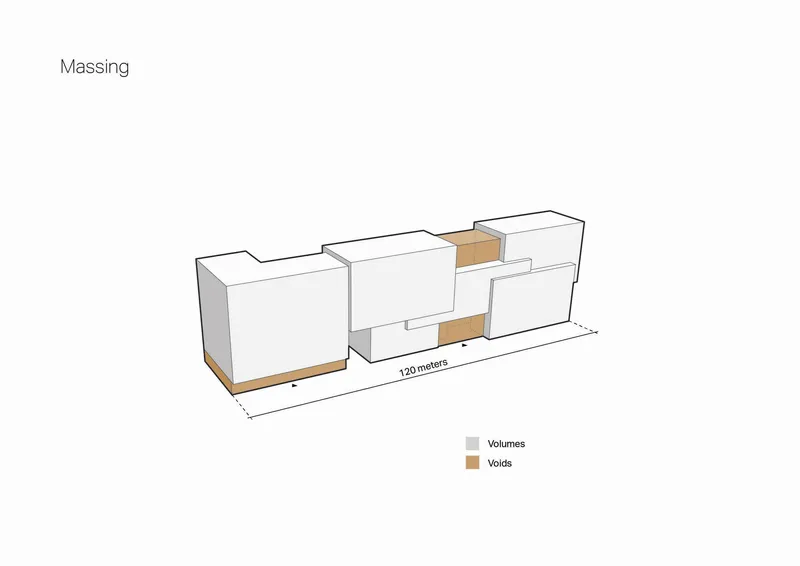
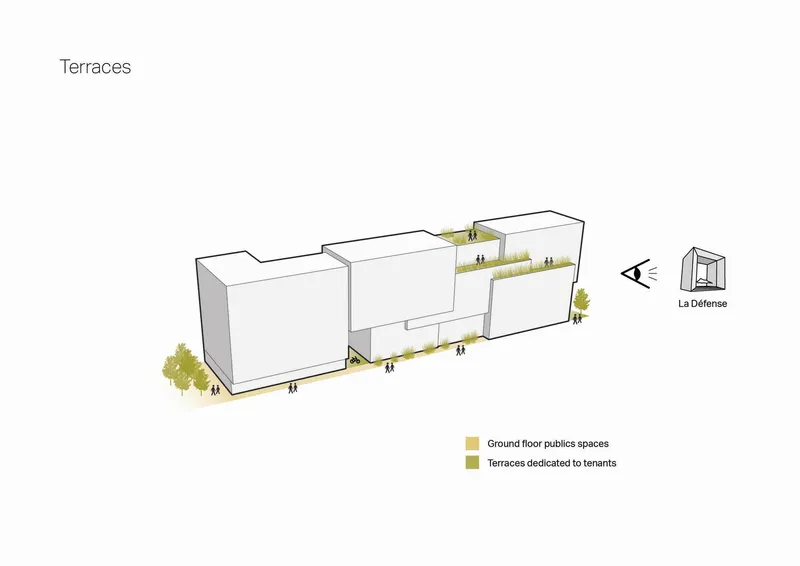
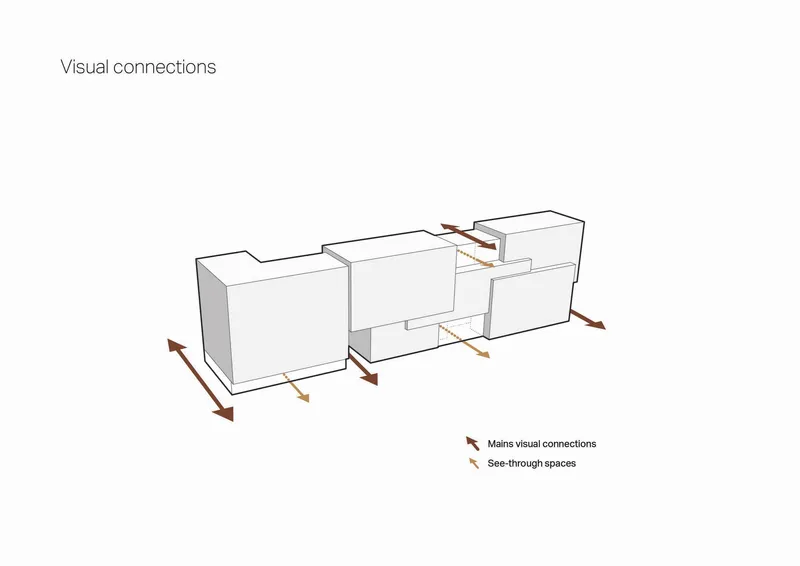
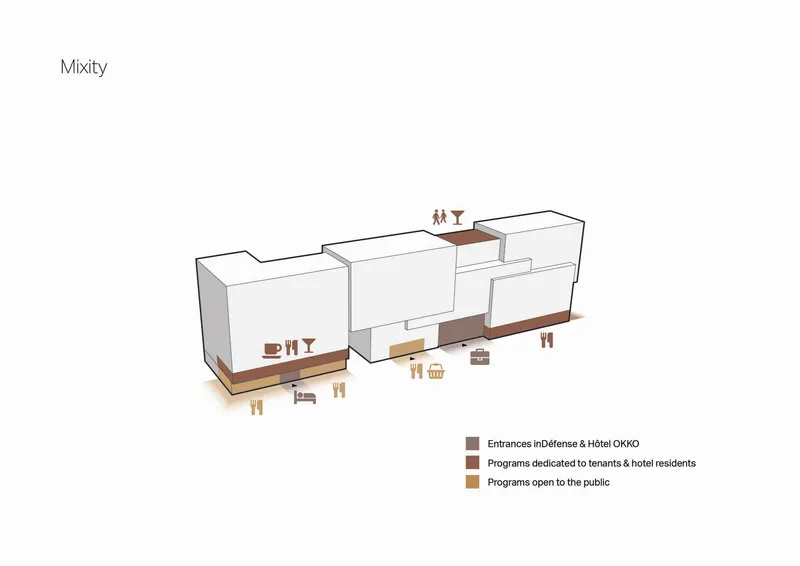
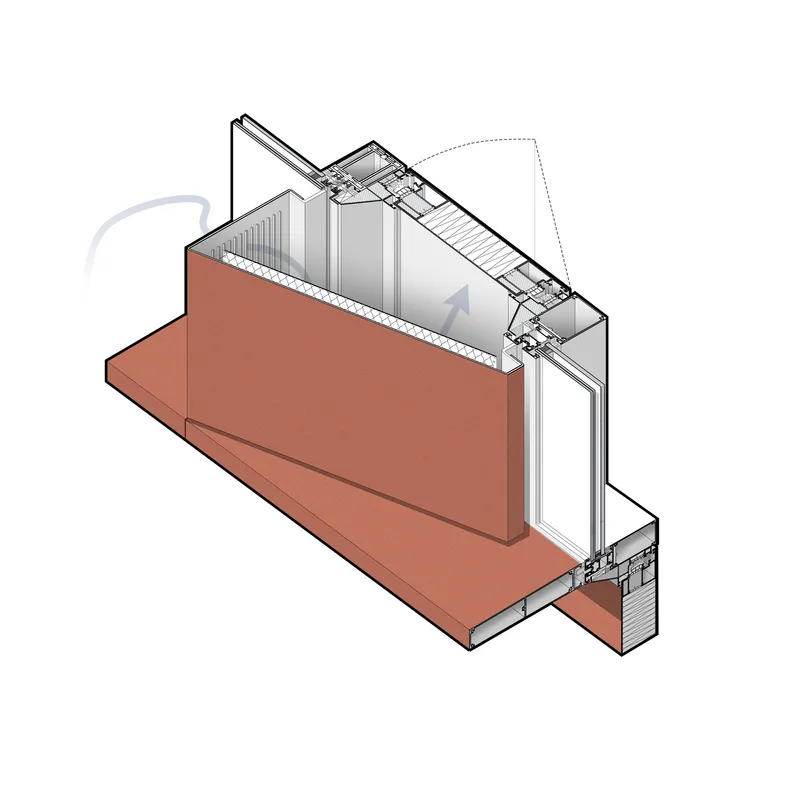
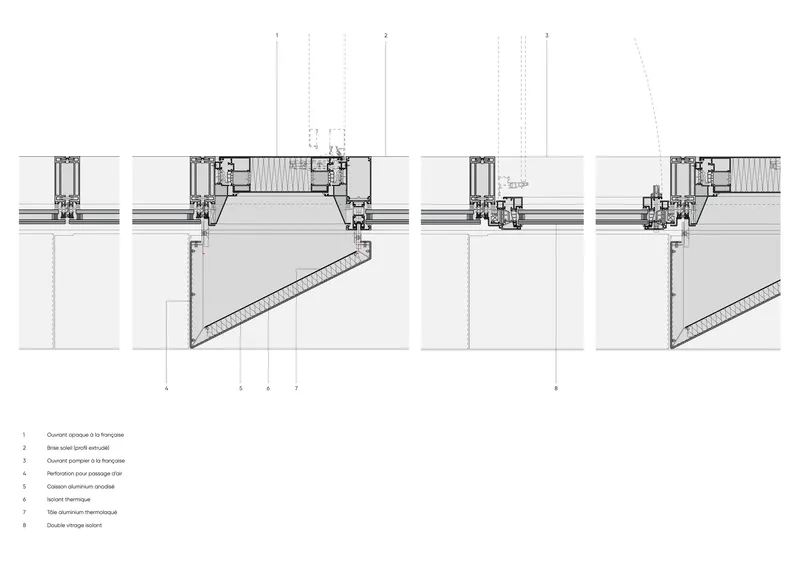
The drawings reveal how the 120-meter-long building negotiates its constrained site. The ground floor plan shows the agora threading between the two volumes, with the office wing's open-plan floors wrapping around the central atrium and core. Upper-level plans demonstrate how the massing shifts floor by floor, with the office portion narrowing and stepping back while the hotel maintains its continuous volume. Sections confirm the three-level underground parking structure, the cantilever over the railway, and the careful separation of hotel and office circulation.
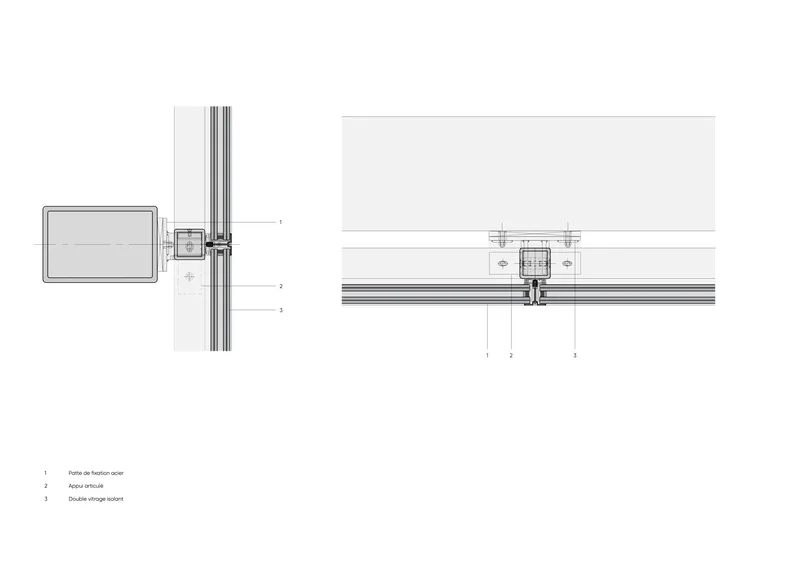
The axonometric diagrams are particularly revealing. One isolates the void spaces between building masses, showing how visual connections and see-through gaps prevent the 16,000 square meter program from reading as a wall. Another traces interior and exterior stair circulation paths, making clear that the architects designed movement through the building as a branching network rather than a single vertical core. The facade details, with their thermal breaks, ventilation arrows, and cladding layers, show the engineering density packed into what appears from the street to be a simple checkerboard.
Why This Project Matters
InDéfense and Hôtel OKKO is a building that had every reason to be mediocre. The site is difficult, the program is a developer's spreadsheet of hotels, offices, retail, and parking, and the context is an unfinished district that will not fully materialize for years. What 3XN and SRA Architectes delivered instead is a proof of concept for how mixed-use buildings on infrastructure sites can be both technically rigorous and formally generous. The self-shading facade is not an applied pattern; it is a climate device that happens to produce a compelling urban presence.
More importantly, the building makes a bet on the public realm before the public arrives. The agora, the street-level transparency, and the planted terraces are all gestures aimed at a neighborhood that barely exists. In the cynical world of transit-adjacent development, where buildings often turn their backs to the infrastructure they depend on, this project faces outward. It is the kind of first move that can define a district, or be forgotten if nothing follows. For now, it stands as one of the more intelligent mixed-use buildings on the western edge of Paris.
InDéfense & Hôtel OKKO by 3XN and SRA Architectes. Paris, France. 16,000 m². Completed 2022. Photography by Jared Chulski.
About the Studio
Share Your Own Work on uni.xyz
If projects like this are the kind of work you want to make, uni.xyz is a place to publish your own, find collaborators, and enter design competitions.


Popular Articles
Popular articles from the community


Co-Life: Senior Housing Design That Reconnects Older Adults With the City
Co-Life reimagines senior housing design through healing gardens, shared streets, workshops, and a sustainable community across generations.

Conexión: Biophilic Design Reimagines High-Rise Living in Hong Kong
Conexión reimagines high-rise living in Hong Kong through biophilic design, green facades, shared spaces, daylight, water and nature within.

Co-life: Sustainable Architecture for Age-Friendly Community Living
Co-life reimagines sustainable architecture for seniors through courtyards, rammed earth, shared gardens, and spaces designed for belonging.

The Musturak Paradise: Senior Living Architecture for a Connected Future in Temara, Morocco
The Musturak Paradise reimagines senior living architecture in Temara via private homes, social spaces, culture, community, and shared care.

Similar Reads
You might also enjoy these articles

Bao Huynh Watercolor Atelier: A Serene Art Retreat in Hội An
Bao Huynh Watercolor Atelier in Hội An blends multifunctional art spaces, sustainable design, local materials, and family-friendly living in a serene environment.

Atelier Macri Concept Store Interior Design by CASE-REAL
Atelier Macri store features a "ko" counter, walnut wood details, cork displays, blending retail, gallery, and seamless customer experiences.

Manuel Vargas Izquierdo Stadium and High-Performance Sports Center: Architectural Excellence in Jalpa de Méndez
The Manuel Vargas Izquierdo Stadium blends sustainable design, inclusive sports facilities, and cultural-inspired architecture, revitalizing Jalpa de Méndez’s public spaces.

KAKR Buluh Awar Hall: Revitalizing Community and Ecology Through Bamboo Architecture
Community built bamboo hall revitalizes Buluh Awar village, empowering youth, restoring ecology, celebrating vernacular craftsmanship through sustainable architecture and culture.

Comments (0)
Please login or sign up to add comments
No comments yet. Be the first to comment!