
60×60: A Modular Framework for Rebuilding Aleppo After Conflict
Reclaimed materials and a simple 60x60 module become the basis for social healing, craft economies, and collective memory in post-conflict Aleppo.


What does reconstruction look like when the goal is not to erase a city's wounds but to build around them? In Aleppo, where years of conflict shattered the physical and social fabric of one of the world's oldest continuously inhabited cities, the answer might begin with something deceptively simple: a 60-centimeter by 60-centimeter concrete block. Repeated, clustered, and arranged through participatory methods, this module becomes a framework for public space, craft workshops, educational wings, and underground memory. It is architecture reduced to its most honest unit, then scaled up to address civic life at its most complex.
60×60 is a project by Eyad Rabadi, published on uni.xyz. The design proposes a new model for post-conflict urban architecture, one rooted in reclaimed materials, modular construction logic, and deep engagement with Aleppo's traditions of souq commerce, filtered light, and communal gathering. Rather than offering a singular monument to recovery, the project distributes its programme across research and educational clusters, a central circular auditorium, and commercial zones that reconnect the city to its craft economy.
Filtered Light and the Memory of Souqs
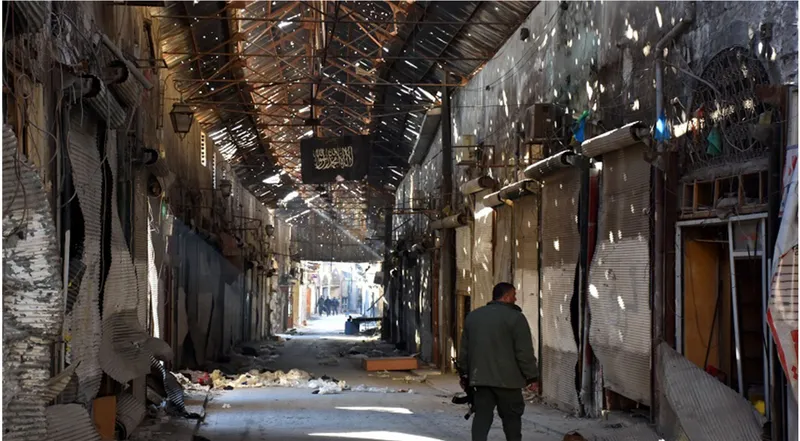

Walk through Aleppo's historic covered markets and you encounter a specific quality of light: soft, intermittent, carved by perforated roofs and stone arches. 60×60 recreates this condition through a shaded overhead grid designed to support climbing plants. The result is not mere decoration. As vines mature, they produce dappled shadow patterns that soften harsh sunlight, create microclimates within plazas and walkways, and trigger collective memory of the souq experience. The covered corridor shown here, with its perforated metal roof channeling daylight toward the far end, demonstrates how the project translates traditional spatial character into contemporary construction. Adjacent courtyards, where vine trellises cast intricate shadows onto textured concrete walls, extend this logic into open-air gathering spaces.
The integration of greenery is not incidental. It represents renewal and resilience. In a city where so much has been stripped away, the slow growth of plants through a steel armature becomes a visible metaphor for recovery, one that residents can tend and watch change with the seasons.
Construction as Community Act


A worker assembles a branching rebar sculpture under open sky. The image captures something essential about 60×60: construction here is not a black-box process managed by contractors but a participatory method that rebuilds trust alongside walls. The project specifies reclaimed materials and simple construction techniques, deliberately lowering the barrier to community involvement. Gabion walls filled with rubble, steel frames that local fabricators can weld, planting components that residents can install: these are not budget compromises. They are design strategies that restore agency to people who have had theirs stripped away.
The modular street furniture diagram makes this legibility explicit. Each component, from gabion base to timber seat to planting trough, is designed as a discrete element that can be combined in different configurations. The system accommodates varying site conditions and programmatic needs without requiring specialized labour or imported materials. It is a kit of parts for civic space.
Gabion Landscapes and Accessible Ground Planes

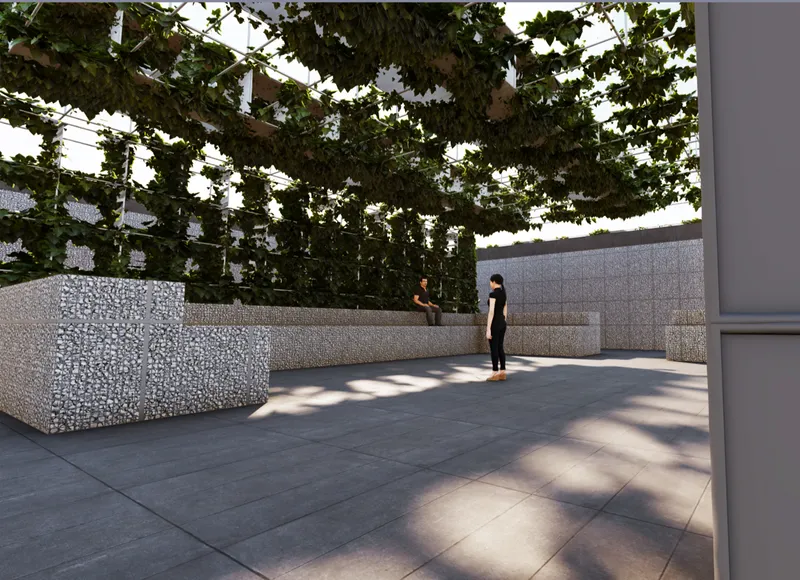
The curving gabion seating walls that descend alongside cobblestone pathways reveal how 60×60 handles topography and accessibility. Sections of the project show a deliberate strategy of maintaining most programme at ground level for universal access, while the underground gallery containing memory exhibitions sits below the central auditorium. Above ground, the gabion walls do multiple jobs at once: they retain earth, provide seating with timber bench tops, and create planting pockets that soften the hardscape. The material honesty is striking. Wire cages filled with stone fragments make no attempt to conceal their construction; they celebrate the act of assembly.
In the courtyard view, two figures stand beneath a vine-covered pergola flanked by gabion planter walls. The scene is quiet and ordinary, which is precisely the point. Post-conflict architecture often defaults to the dramatic gesture. Here, the ambition is the everyday: a shaded place to stand, a bench to sit on, a plant growing through a steel frame. The underground memory layer, separated from daily life, allows the surface to be devoted entirely to living, working, and gathering. Remembrance happens below; renewal happens above.
Programme Distributed, Identity Restored
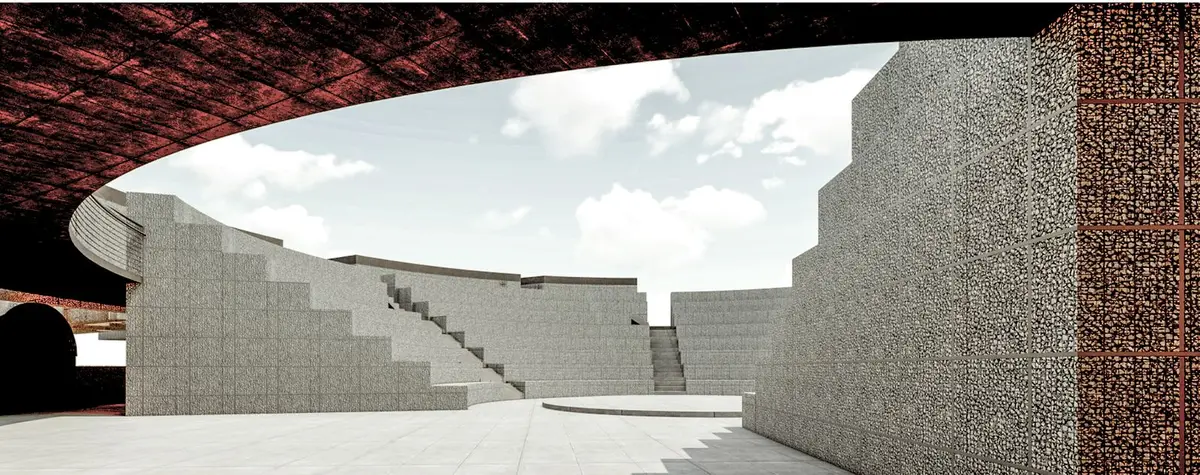
The site plan organizes three primary components: research and educational wings arranged in modular clusters, a central circular auditorium that symbolizes collective voice, and commercial and craft areas that reconnect to the souq tradition. This distribution matters. Rather than concentrating civic functions into a single landmark building, 60×60 spreads them across the site so that movement between zones reproduces the experience of navigating a market town. The circular auditorium becomes a centrepiece not because of its height or material extravagance, but because of its geometry: a form with no hierarchy, where every seat faces the centre.
The underground gallery beneath the auditorium is perhaps the project's most carefully considered move. Memory in post-conflict cities requires sensitivity. By placing exhibitions about lived experiences below grade, the project avoids monumentalizing trauma while still acknowledging its weight. Visitors descend to remember; they ascend to re-enter civic life. The vertical separation is both spatial and psychological.
Why This Project Matters
Post-conflict reconstruction is too often framed as either emergency response or grand vision. 60×60 occupies the productive middle ground. Its module is small enough to be built by hand, its materials are drawn from the rubble of what came before, and its programme is shaped by the social patterns that existed long before the conflict. Eyad Rabadi's project demonstrates that architecture can rebuild trust, stimulate public life, restore traditional craft economies, enable civic participation, and shape safer, more inclusive urban environments, all without relying on imported expertise or monumental form.
In a discipline that often rewards spectacle, 60×60 makes a case for something harder to achieve: quiet, systemic, community-driven repair. The 60-centimeter module is not a limitation but a declaration, that reconstruction begins at the scale of a single block, placed by a neighbour's hands, in a city learning to gather again. As a prototype for post-conflict urbanism, it is meaningful, buildable, and deeply human.
View the Full Project
About the Designers
Designer: Eyad Rabadi
Enter a Design Competition on uni.xyz
uni.xyz runs architecture and design competitions year-round that reward proposals with spatial conviction and real site intelligence.
Project credits: 60 X 60 by Eyad Rabadi.


Popular Articles
Popular articles from the community


Cube Design Draws an Ecological Corridor Between Two Shenzhen Hills with the Nankai Building
Beside Shenzhen's container docks, the Nankai Building pairs stacked balconies with a climbing green screen to connect two hillsides across its height.

Juan García Correa, John González and Claudia Rueda Sink a Circular Amphitheater into a Manizales Engineering Building
On the La Nubia campus in Manizales, Colombia, the S1 Building folds labs and offices into a hillside of ramped lawns that double as a campus route.

longwave studio Reorganizes a 112 m² Tainan Apartment Around the Daily Routines of a Family and Two Cats
In Tainan, Taiwan, birch plywood, rust-red furniture and a freestanding plaster wall link arrival, storage, work and family life in one apartment.

Jaramillo Van Sluys Arquitectura and Urbanismo Turn a Demolished Registry Lot in Quito into an Orchard Plaza
In Quito's Centro Histórico, a 2,800 m² plaza exposes the San Agustín convent wall and redraws its lost Augustinian orchard in volcanic stone.

Similar Reads
You might also enjoy these articles


Aquadapt: An Underwater Habitat That Rewrites Its Rooms by the Hour
Curved modules ring the seabed while one shell shifts from breakfast room to cinema, farm and football pitch as residents' needs change.

Play: Fragments of Their World: Remembered Architecture Rebuilt as a Modular Playground for Refugee Camps
Tom Gardner abstracts domes, arches and towers from the homelands of displaced families into a kit of child-scaled play parts for camp settlements.
REBIRTH: A Circular Settlement Where Afghan Widows and Their Children Rebuild Life Together
A shortlisted Resile entry turns the circle into a protective ring of timber and brick, gathering homes, classrooms and gardens around a shared landscape.
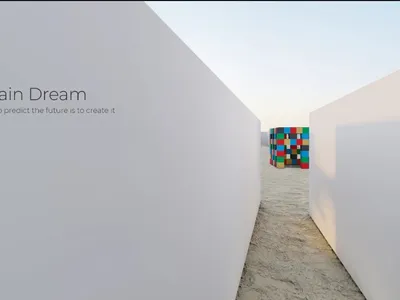
The Main Dream: A Recycled Plastic Kit That Lets Refugee Children Build Their Own Playground
Thirty-centimetre interlocking cubes that connect on three axes turn play into construction, letting children author the spaces they occupy.

Explore Tactical Urbanism Competitions
Discover active competitions in this discipline

Challenge to reimagine the Iron Throne

Photograph architecture without architects

Illustrate the lost glory of Angkor Wat - Render Challenge

Design challenge to reuse E-waste
Comments (0)
Please login or sign up to add comments
No comments yet. Be the first to comment!