
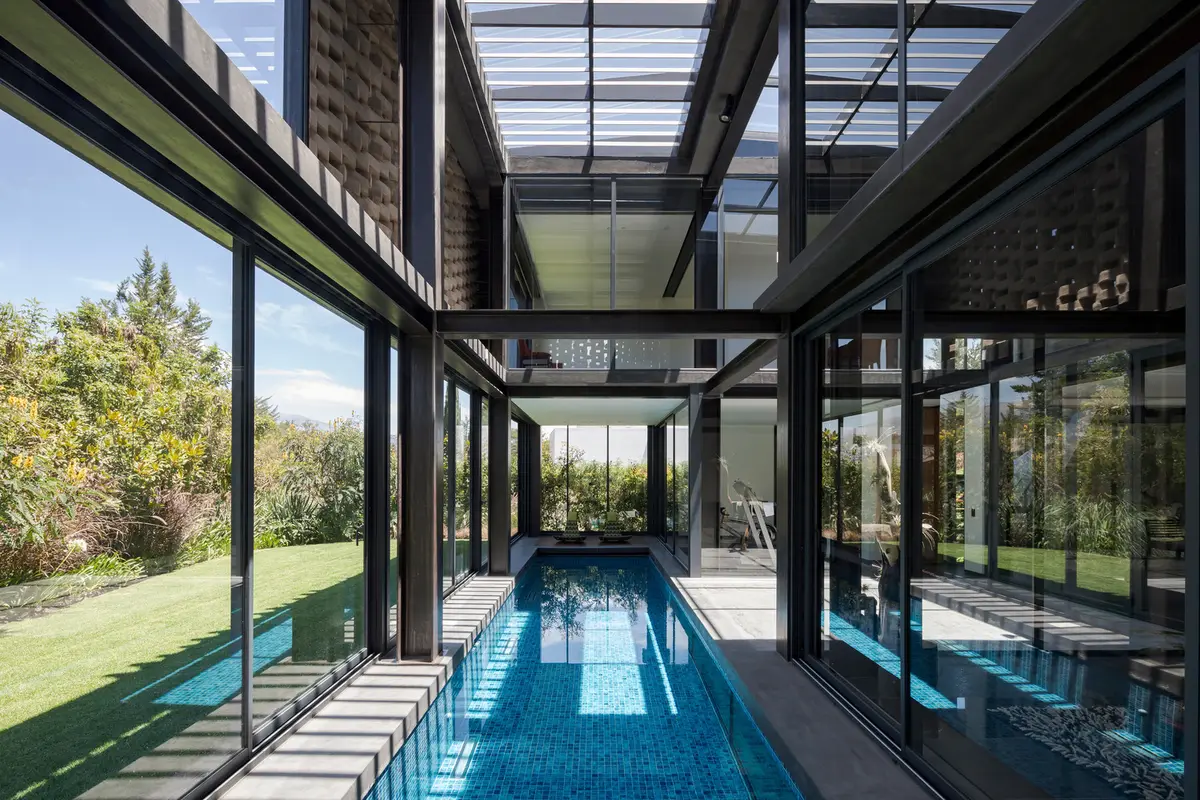
A House in the Andes by ODD ARCHITECTS: A Sculptural Rammed Earth House Design Rooted in the Ecuadorian Highlands
A sculptural rammed earth house in Ecuador that merges landscape, tradition, and mobility into a deeply contextual Andean dwelling.


An Architectural Dialogue with the Andean Landscape
In Puembo, Ecuador, A House in the Andes by ODD ARCHITECTS emerges from the ground like a geological formation, embodying the essence of rammed earth house design. More than a home, it is a sculptural interpretation of site, terrain, and tradition—built with materials extracted from its own land and structured through deep sectional thinking. The result is a residence that dissolves the boundary between architecture and landscape, offering a model for sustainable living at altitude.

Form Shaped by Land and Memory
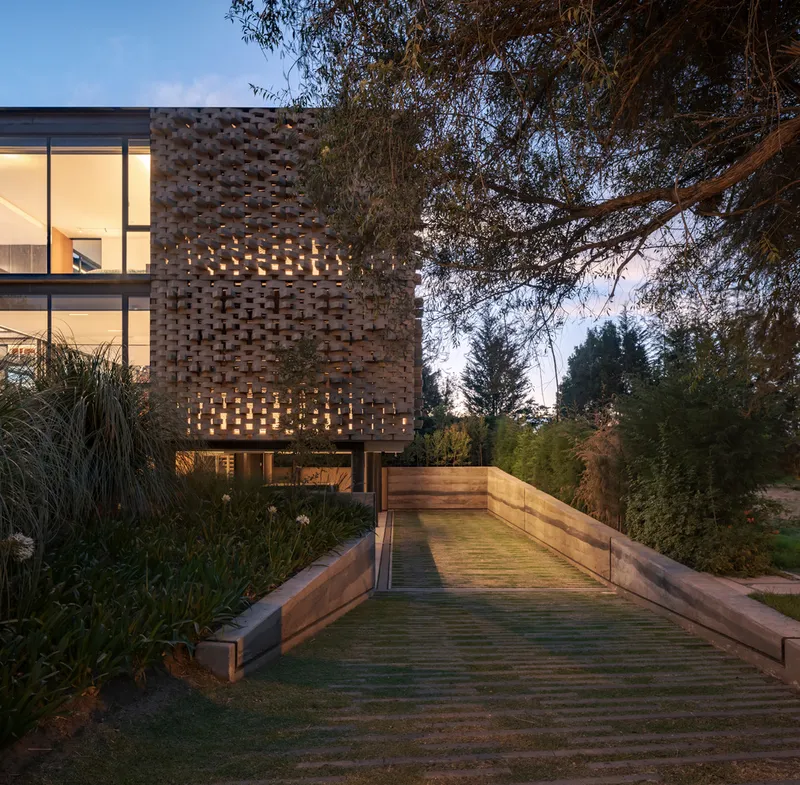
The project begins not with the house, but with the land itself. Sculpted mounds of native vegetation organize the site into a processional experience, guiding movement through the terrain much like the ancient Chaquiñán trails once did across the Andean highlands. These topographic gestures are not decorative—they carve access, frame thresholds, and anchor the home into place.
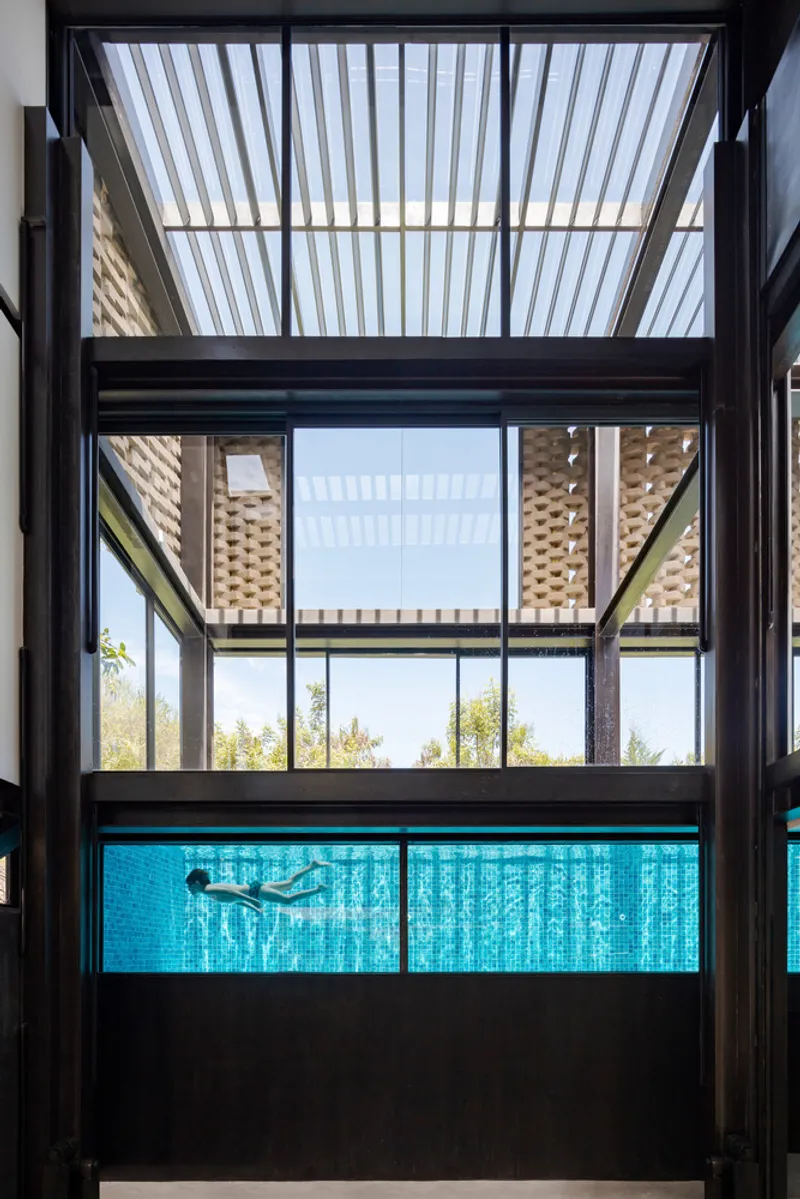
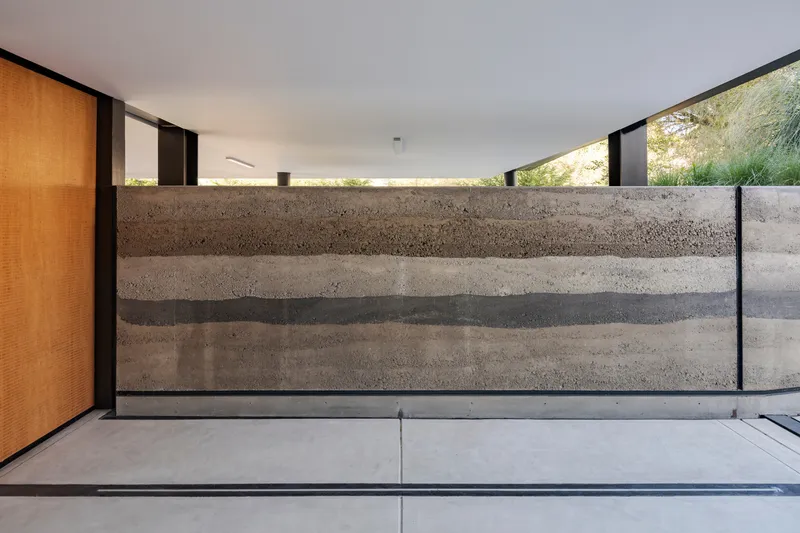
The entry sequence is choreographed through these mounds, arriving at a sunken threshold where the first encounter with rammed earth walls feels immersive, even ceremonial. The architecture doesn’t sit on the land—it descends into it.

A Vertical Monolith with Moving Interiors
From afar, the house appears as a compact vertical mass—simple, discreet, and grounded. But inside, its spatial organization is dynamic and fluid. The internal core revolves around a mobile platform that connects all three levels, enabling functional areas to shift, merge, and evolve over time.
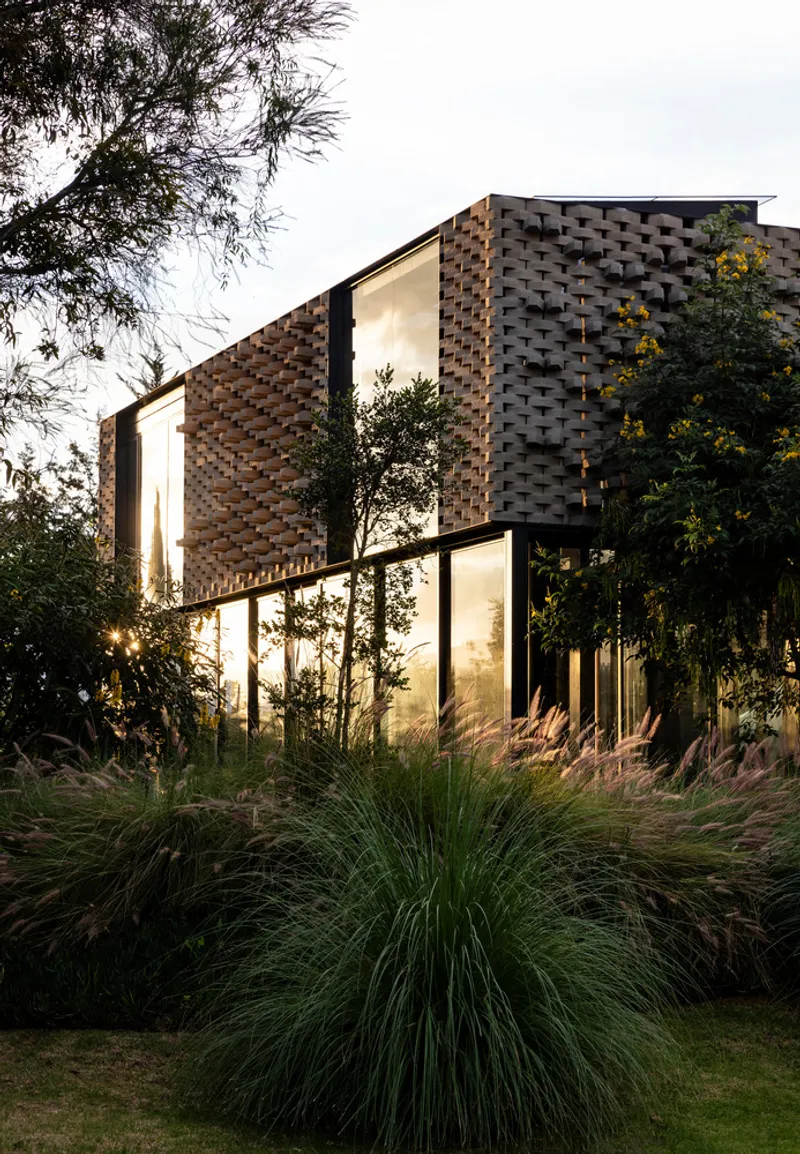
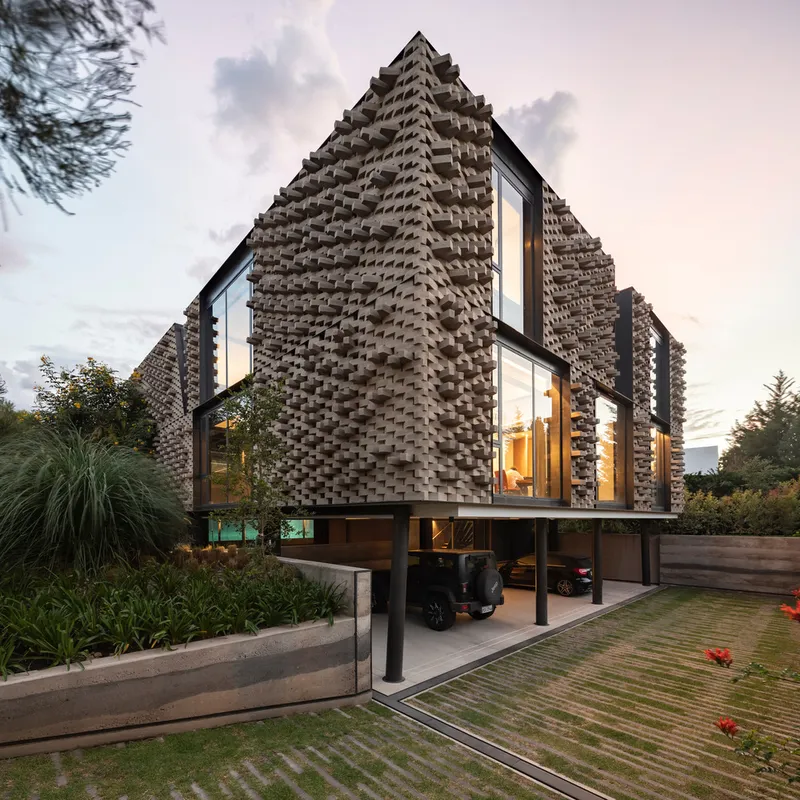
At the second level, the structure opens outward into a plateau of green and water. An interior pool and exterior lawn are separated only by operable glass, merging landscape and domestic life in a seamless gesture. Here, the design dissolves architectural boundaries, allowing nature to become part of the home’s interior logic.
Material Strategy Rooted in Earth
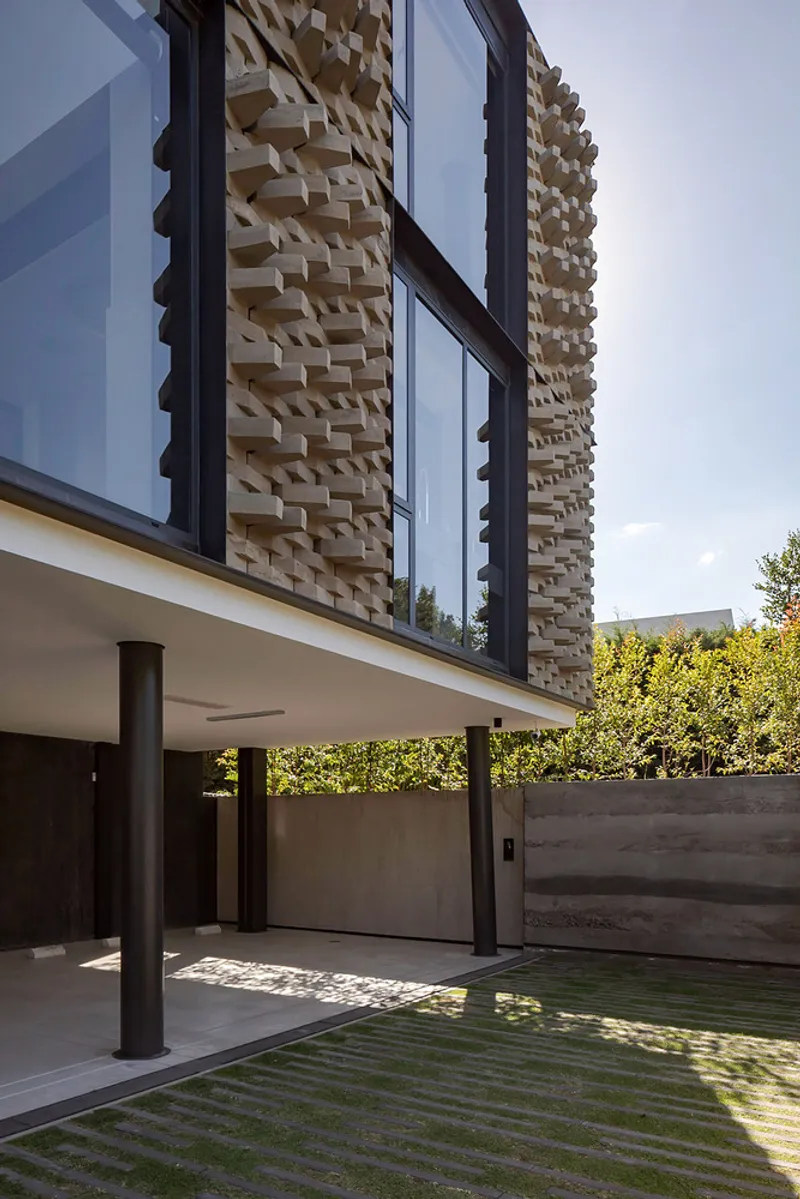
Materiality is central to the house’s identity. Earth excavated during construction is compacted into rammed earth walls and formed into a custom adobe module, which becomes both structure and skin. These breathable, thermally massive walls regulate temperature while allowing light to filter through delicately. During the day, they cast shifting shadows; at night, they emit a soft, ambient glow, transforming the structure into a glowing monolith.

This is not just material honesty—it is material continuity with the land, reinforcing a sustainable ethos where the architecture belongs not only visually, but geologically, to its context.

A Home Defined by Context, Not Convention
The house is not an object set atop a plot, but a spatial system born from the site's contours and climatic logic. Every decision—from sectional cut to material palette—is guided by an intimate understanding of place. The result is an architecture of quiet strength, where form, rhythm, and atmosphere arise directly from the surrounding landscape.


Rather than resisting the mountain, the house becomes part of it. This is the defining quality of its rammed earth house design—not just sustainable in construction, but spiritually and physically integrated into the highland terrain.


All Photographs are works of BICUBIK


Popular Articles
Popular articles from the community


Architekt Andreas Gruber Scatters 23 Dark Timber Chalets Across a South Tyrolean Forest Edge
In Molini di Tures, Amonti Chalets breaks a resort into a hamlet of gabled timber houses, with parking, storage and services pushed into the slope.

Cube Design Draws an Ecological Corridor Between Two Shenzhen Hills with the Nankai Building
Beside Shenzhen's container docks, the Nankai Building pairs stacked balconies with a climbing green screen to connect two hillsides across its height.

Juan García Correa, John González and Claudia Rueda Sink a Circular Amphitheater into a Manizales Engineering Building
On the La Nubia campus in Manizales, Colombia, the S1 Building folds labs and offices into a hillside of ramped lawns that double as a campus route.

Jaramillo Van Sluys Arquitectura and Urbanismo Turn a Demolished Registry Lot in Quito into an Orchard Plaza
In Quito's Centro Histórico, a 2,800 m² plaza exposes the San Agustín convent wall and redraws its lost Augustinian orchard in volcanic stone.

Similar Reads
You might also enjoy these articles

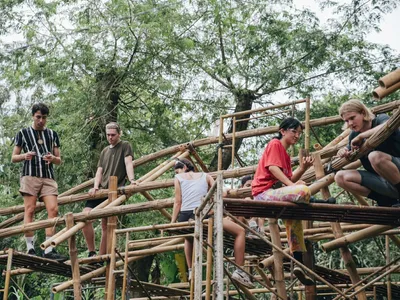
Bamboo Housing Challenge 2026: Design Affordable, Sustainable Homes Using Bamboo
An international design competition by Bamboo U and IBUKU inviting architects and designers to reimagine affordable housing using bamboo — with the winning design built full-scale in Bali.

Computational Design & Education: Beegraphy Design Awards Introduces 7th Category (Featuring Jiyun's Innovative Approach)
Dive into Beegraphy’s 7th Design Awards category, where computational design meets education to create immersive, interactive learning tools, inspired by Jiyun’s work.
From Parametric Lighting to Urban Furniture: Join the 2nd Workshop in Beegraphy’s Computational Design Series
Dive into Cutting-Edge Design Techniques and Practical Applications with Industry Experts

Last Call: Unleash Your Architectural Genius in SHAK's Kindergarten Design Competition
Urgent call for architects to join SHAK's kindergarten design competition before the looming deadline

Explore Rammed Earth Competitions
Discover active competitions in this discipline

Challenge to reimagine the Iron Throne

Photograph architecture without architects

Illustrate the lost glory of Angkor Wat - Render Challenge

Design challenge to reuse E-waste
Comments (0)
Please login or sign up to add comments
No comments yet. Be the first to comment!