

A Reborn Scenic Field Above Waves: Transforming Taizhou’s Seawall into a Vibrant Riverside Public Space
A Reborn Scenic Field Above Waves in Taizhou transforms the seawall into a vibrant riverside public space blending culture, nature, and community.


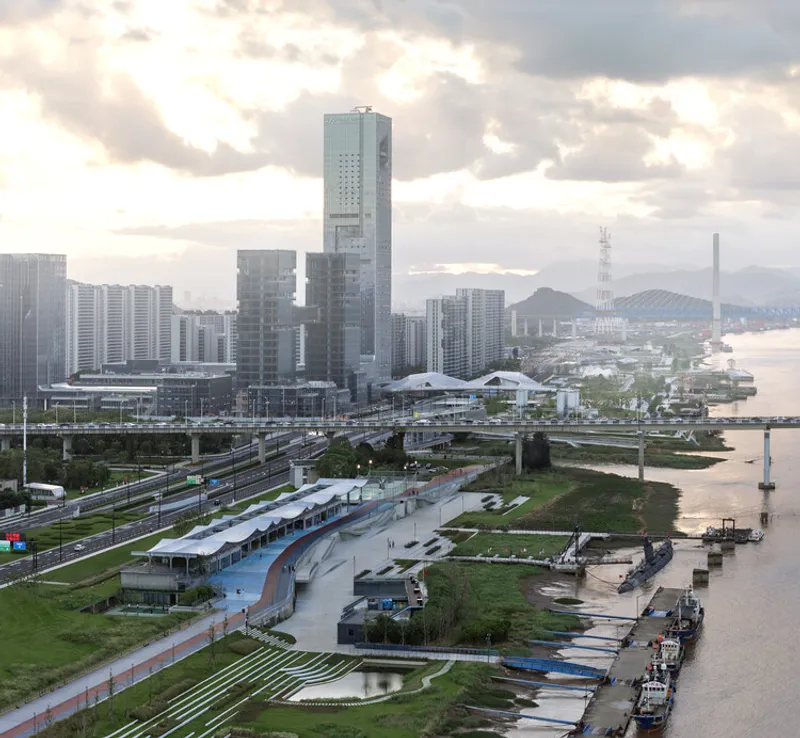
A Reborn Scenic Field Above Waves is an innovative urban regeneration and public infrastructure project that revitalizes the southern bank of the Jiaojiang River in Taizhou, China. Located near the Taizhou Bay estuary, adjacent to Jiaojiang Bridge, Hehe Avenue, and the Submarine Sightseeing Base, the project transforms brownfield waterfront areas into accessible, green, and multifunctional riverside spaces, harmonizing the city with its riverfront and cultural heritage.
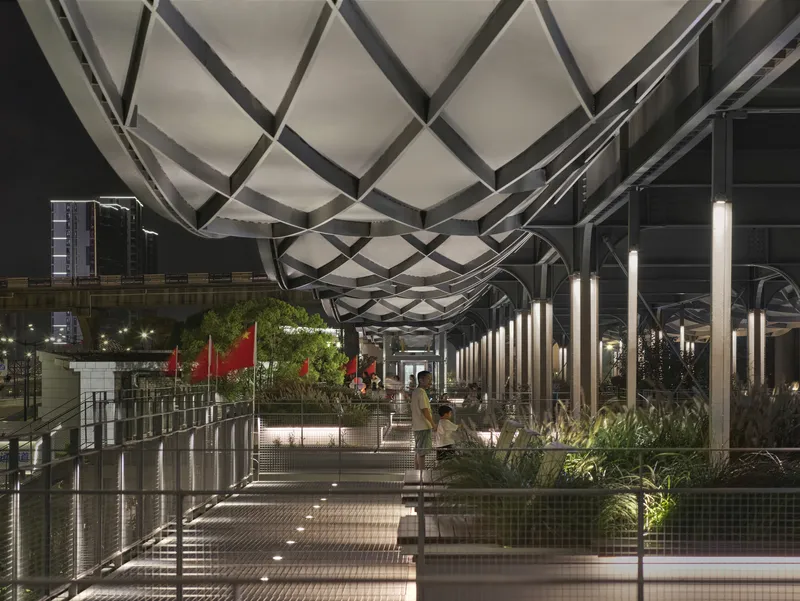
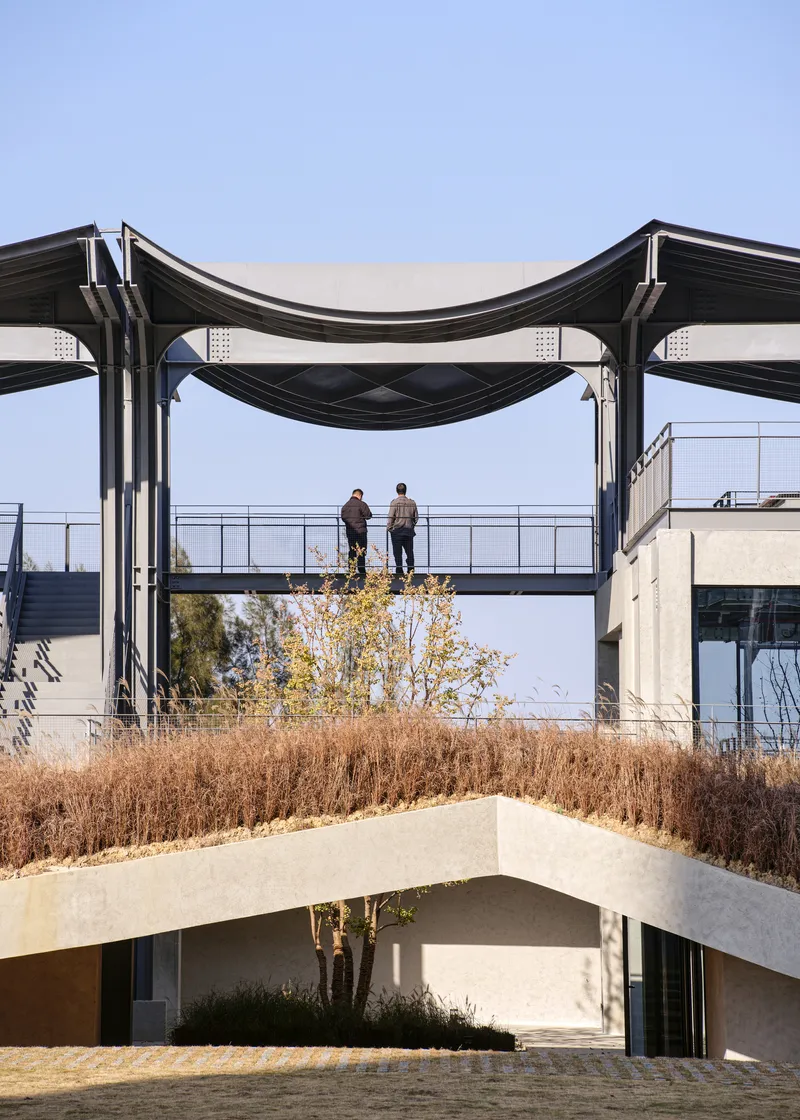
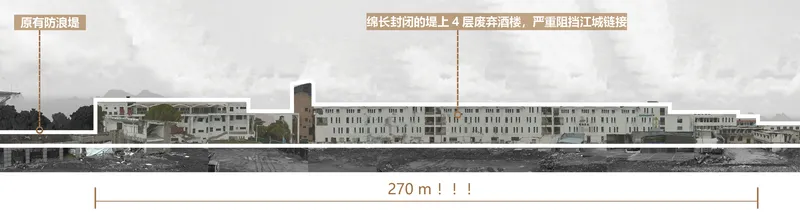
The project responds to the historical detachment of the hydraulic infrastructure from urban life. Previously, the seawall featured narrow crests, isolated breakwaters, and abandoned four-story buildings spanning 270 meters, creating poor connectivity between the city and riverfront. TJAD Original Design Studio aimed to reopen, reconnect, relayer, and relight the seawall, transforming it into a vibrant public realm.
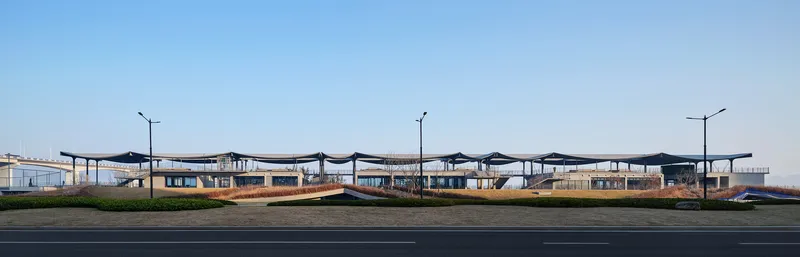
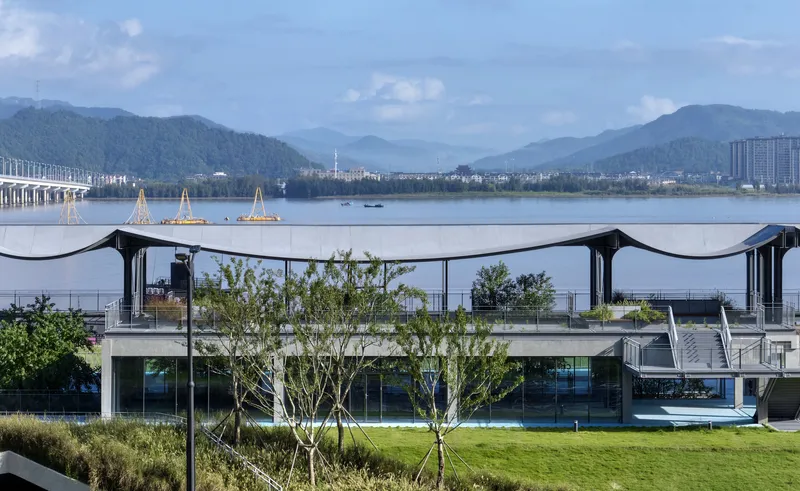
1. Reopening the Seawall to the City
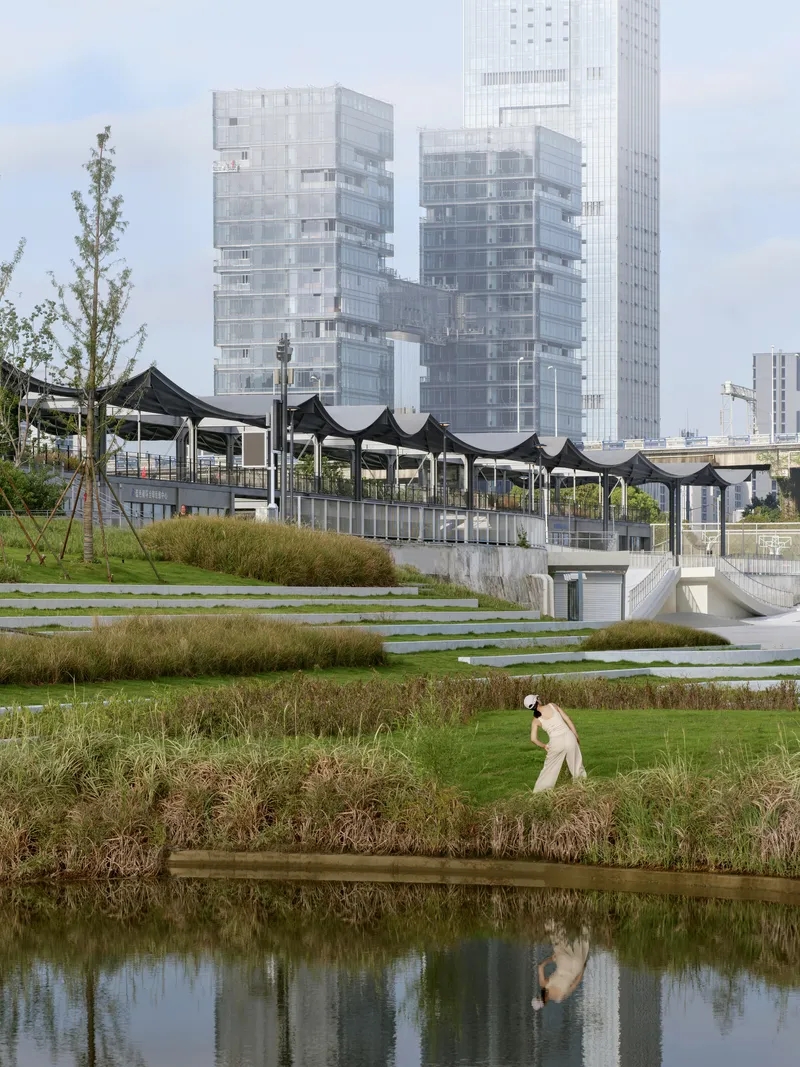
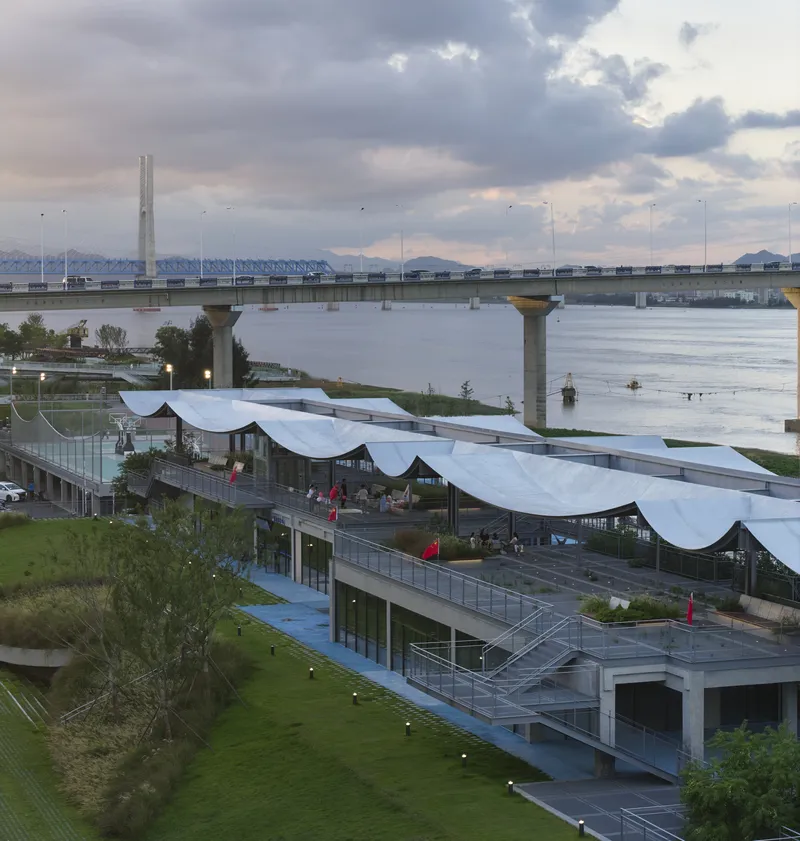
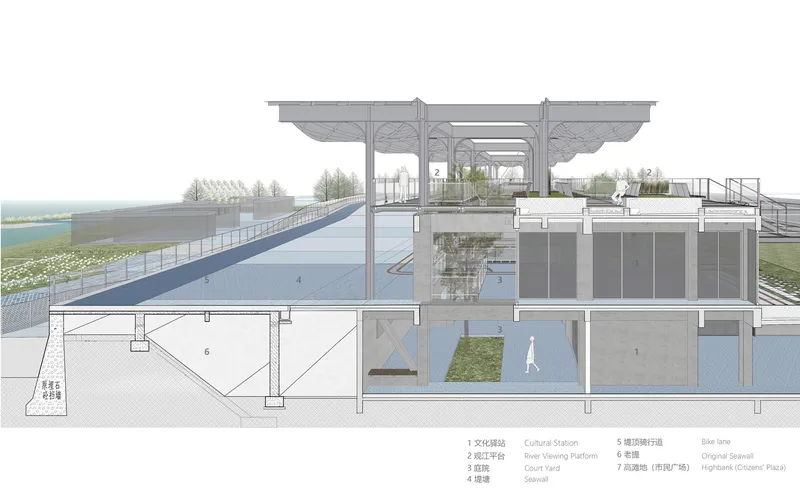
The design elevates and widens the floodwalls, expanding the crest to over 12 meters and introducing multiple circulation pathways. Parking areas were relocated to the southern end under a gently sloping roof that integrates with traffic on Hehe Avenue. Sports facilities anchor both ends of the site, while the area outside the embankment was repurposed into a public plaza. Courtyards and platforms were introduced within the preserved structures to retain historical and material value, seamlessly merging public infrastructure, greenery, and community amenities.
2. Reconnecting Seawall with Time
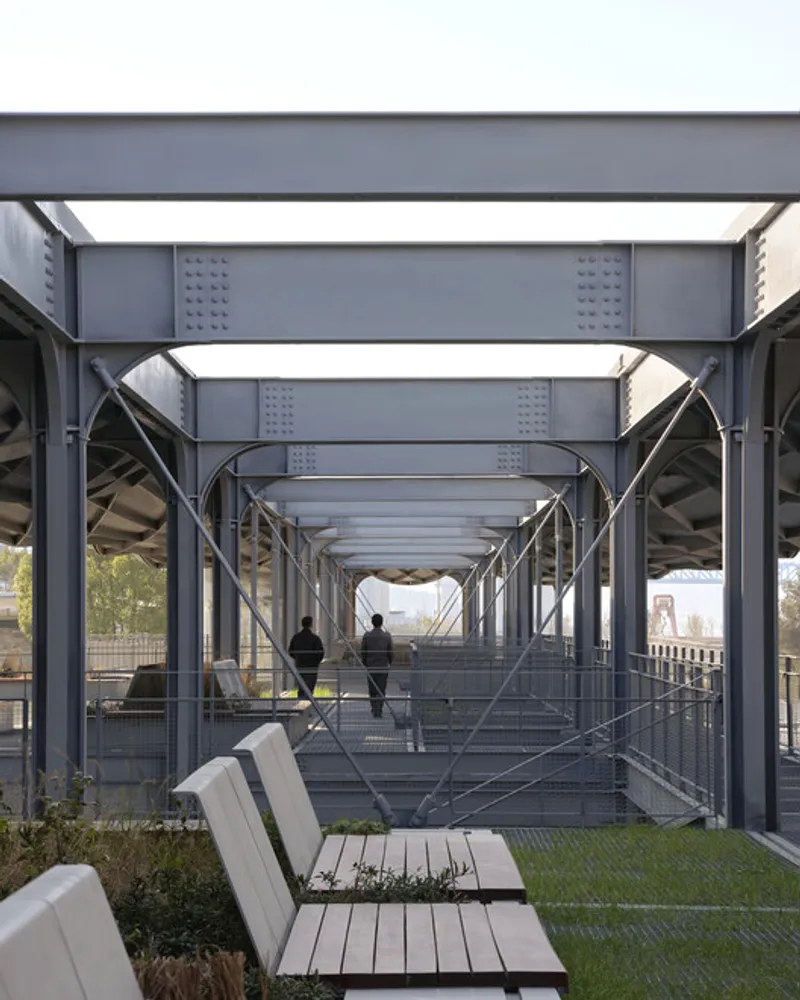
The existing four-story buildings were horizontally sliced to two stories, with six vertical river passageways and seven courtyard spaces created. The spaces accommodate functions including water conservancy, cultural exhibitions, sports facilities, public rest areas, offices, and parking. Partial demolition preserved sections of concrete walls and beams, which interact with the new steel structures, framing light, shadow, and greenery while highlighting the historical essence of the site.
3. Re-layering the Seawall via Scenic Design
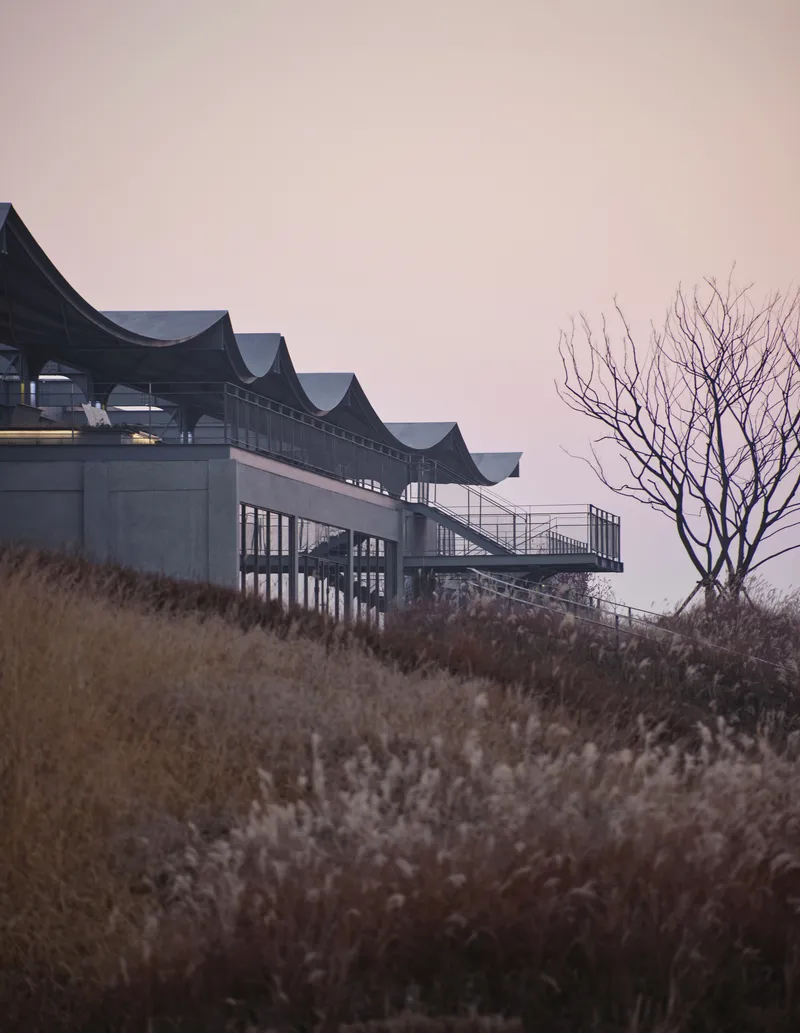
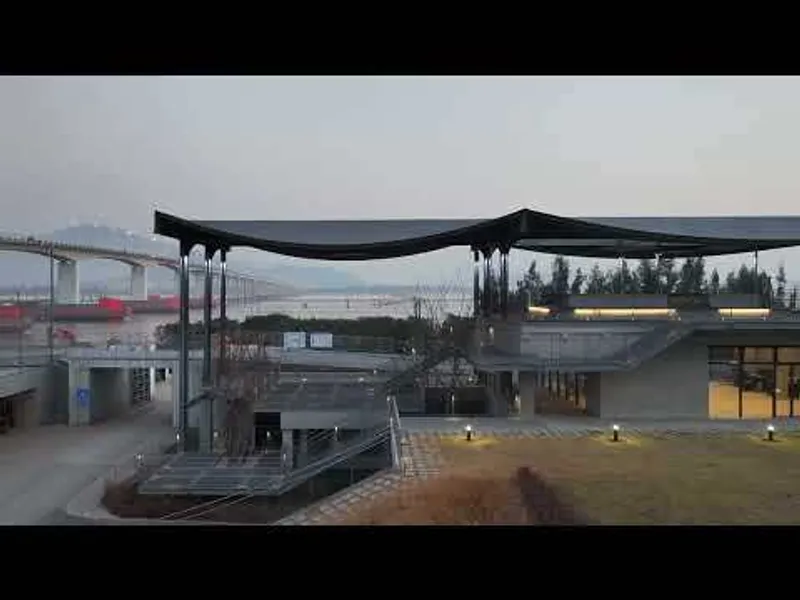
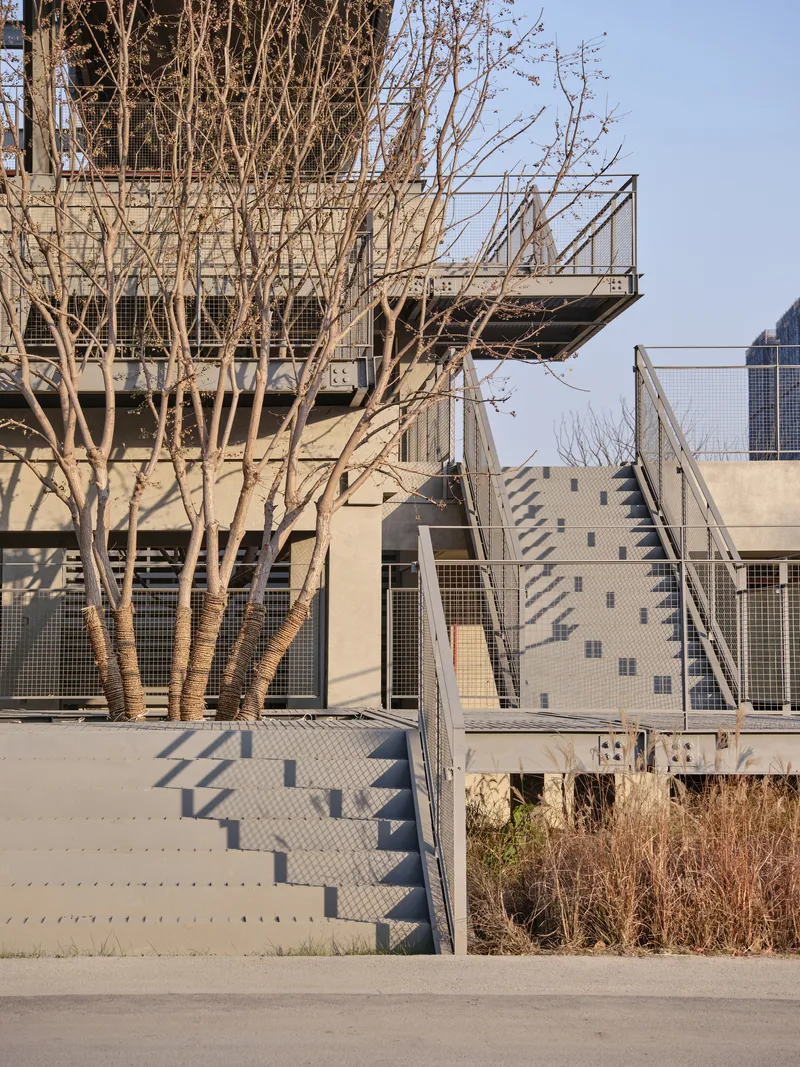
A lightweight, undulating roof constructed with ribbed steel sheets spans 8–24 meters, supported by cross-shaped I-columns and double-channel trusses. The roof and new steel platforms hover above the preserved concrete structure, integrating grass and green spaces between steel and concrete to reflect the ecological transformation from brownfield to riverfront greenery. Multi-tiered platforms and staircases create a three-dimensional promenade that allows visitors to experience light, nature, and movement along the embankment.
4. Relighting the Seawall for the Public
The design celebrates the cultural heritage of local fishing communities. The roof's undulating form evokes fishing nets drying along the riverbank, while the green slope mimics a fishing shuttle. Steps and fences echo river ripples, creating a playful and welcoming public atmosphere. This "city living room" encourages residents and visitors to linger, interact, and engage with the riverside environment.
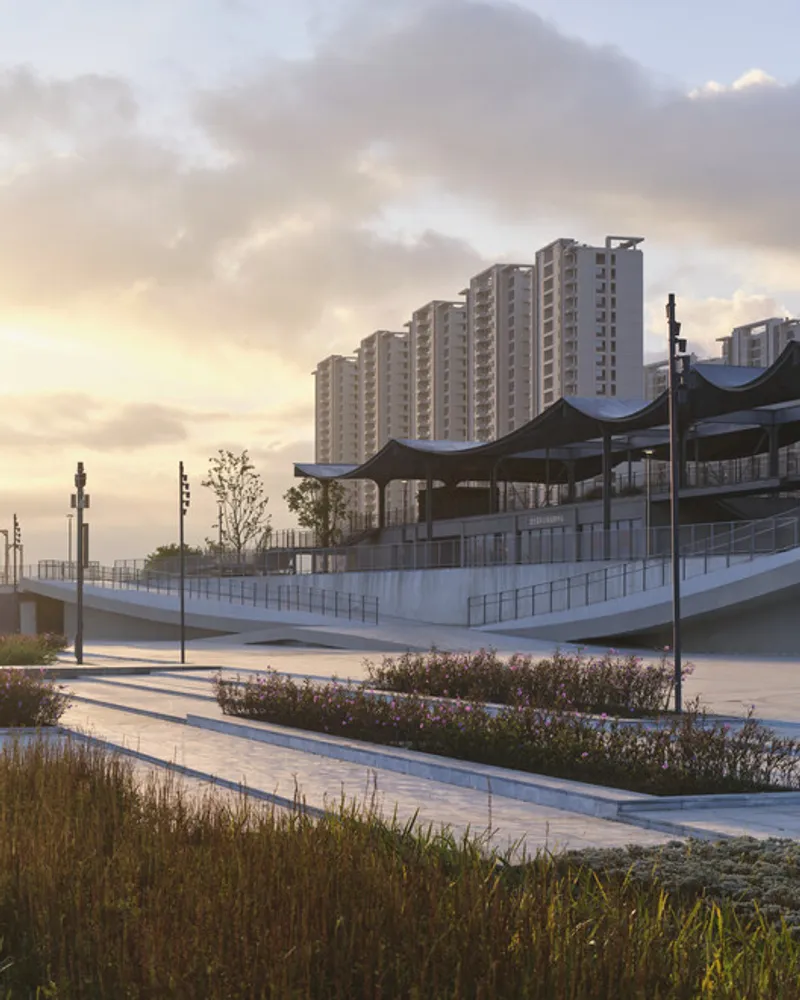
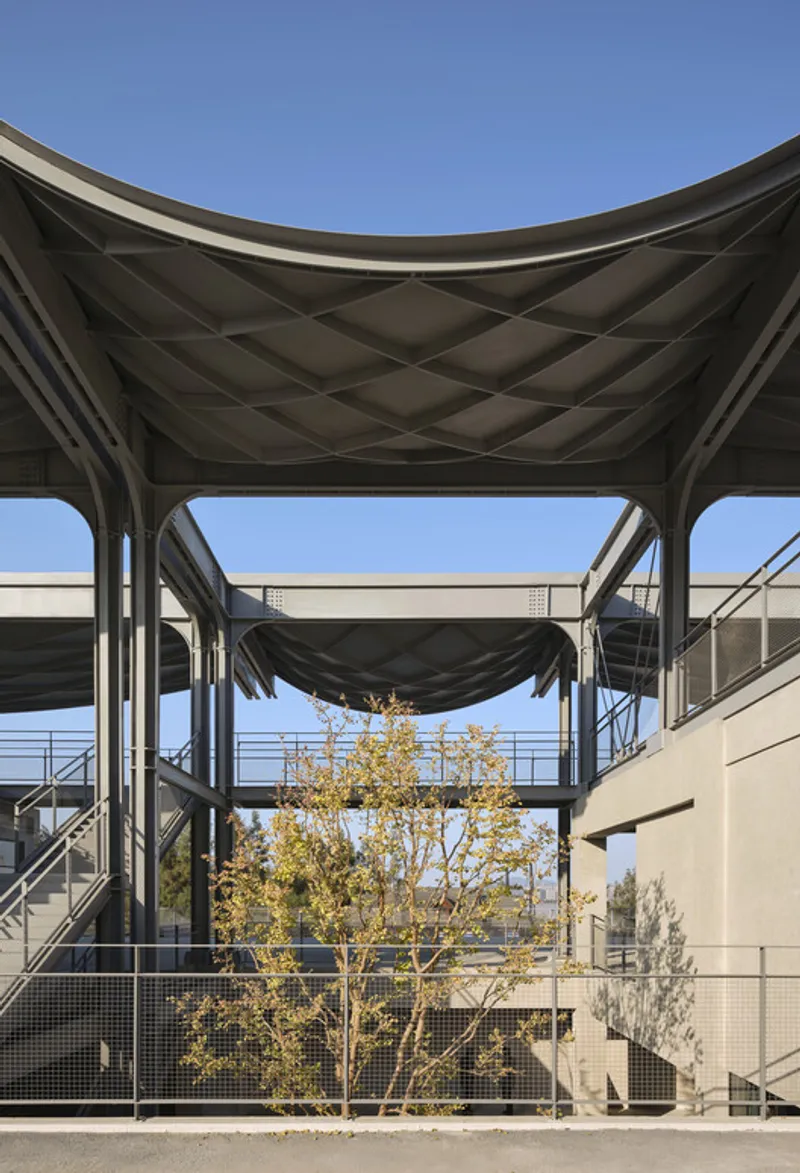
The riverside promenade hosts both national cultural events—such as the ‘Sending the Great Heat Boat’ ceremony—and daily activities, including square dance gatherings and recreational sports. The design seamlessly connects areas inside and outside the embankment, becoming a popular destination for leisure, sightseeing, and community interaction.
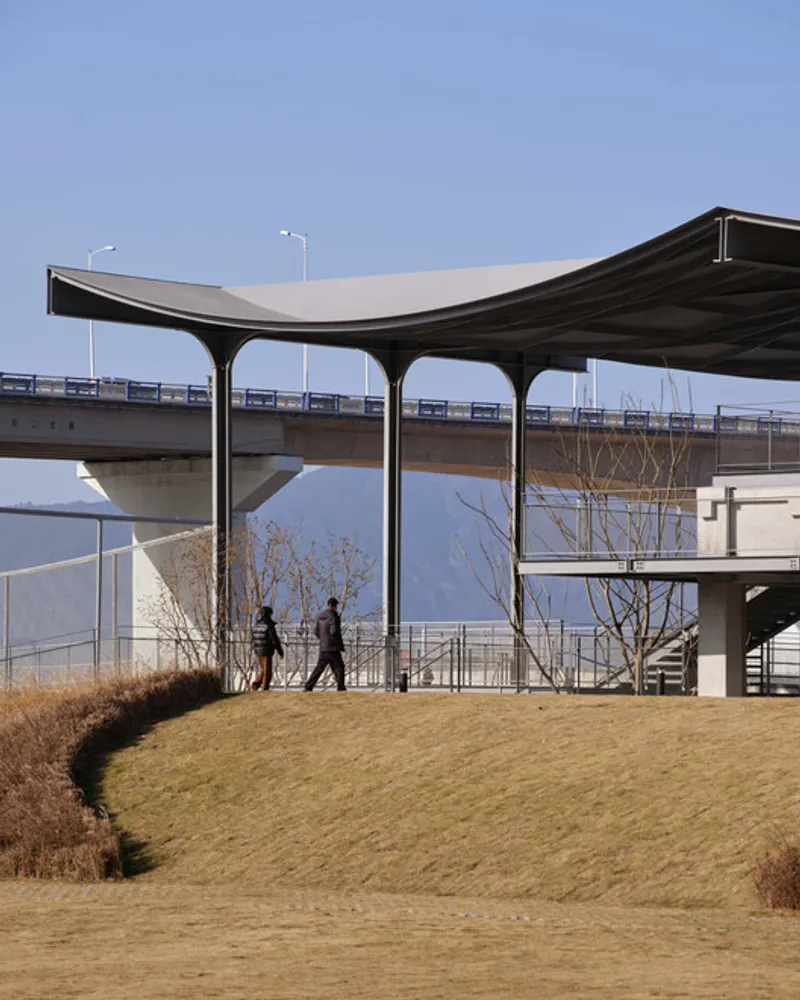
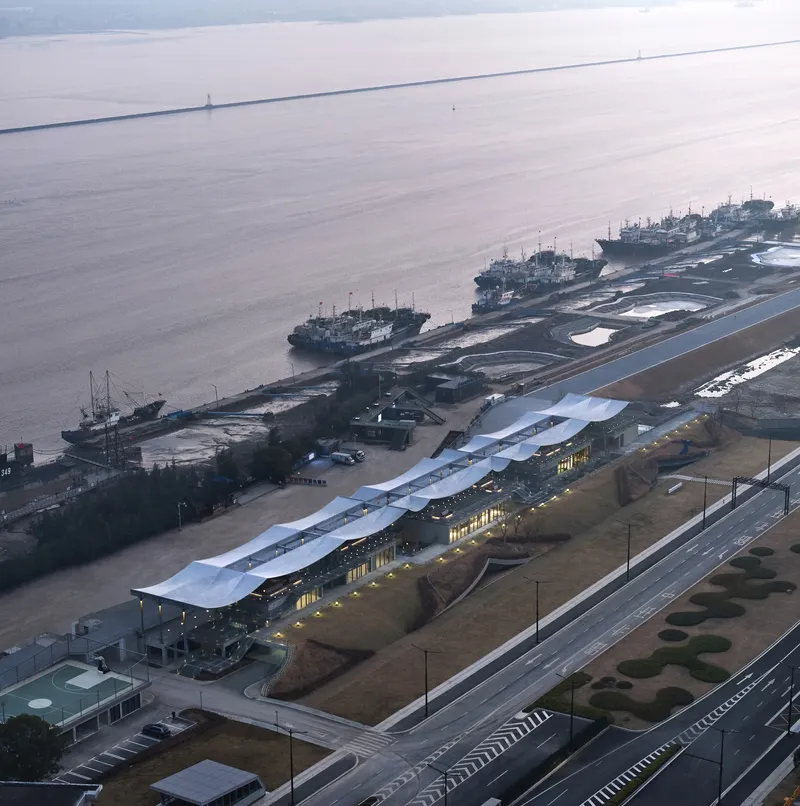
As dusk falls, the lights illuminate the embankment, highlighting the river breeze, local culture, and vibrant community life. Residents engage visitors, sharing stories of the fishing culture, enjoying seafood, and participating in sports and dance, making the project feel like an integral part of the city’s everyday life.
All the photographs are works of ZY Architectural Photography, Original Design Studio


Popular Articles
Popular articles from the community


Singing Woman: An Opera House That Performs Before the Curtain Rises
Ovidiu Cristian Pavel's conceptual opera house translates Estonia's choral identity into a sculpted waterfront landmark facing the Baltic Sea.


ETEH Reworks the Shared Spaces of São Domingos School in Brazil Around Timber, Color and Hanging Plants
At São Domingos School in Brazil, 436 m² of hall, refectory and library are recast with timber joinery, a yellow and blue code and trailing greenery.

graciastudio Turns a Viewless Tijuana Lot Inward Around a Courtyard of Concrete, Timber and Trees
In Tijuana, Jorge Gracia's GA2 House stacks a timber-clad private floor over exposed concrete and replaces a missing view with a planted interior patio.

The Amber Palace Opera: A Geological Fiction Surfaces on Tallinn's Baltic Waterfront
Pierre Brillard reimagines a Baltic legend as a public landscape, opera house, and waterfront promenade rooted in Tallinn's coastal identity.

Similar Reads
You might also enjoy these articles


Hodi-Mandai Geram
Project Function: Preservation and revitalization of the Intangible heritage and socio-spatial identity of the Hodi by Housing, Cultural Memory Center, Sacred Grove, landscape, local tourism economy


Olio Towers: A Mid-Rise for Performers That Fuses Housing, Rehearsal, and Stage
Located blocks from Houston's Theater District, this modular tower stacks living units around a central performance atrium.

Oasis: Modular Green Housing Carved into Dhaka's Urban Fabric
A shortlisted Plugin Housing entry reclaims unauthorized settlements in Dhaka with stepped concrete volumes, green roofs, and ventilation-driven design.

Black Hole: A Floating Megastructure for the Post-Physical Era
Emiliano Mazzarotto envisions a spherical, self-scaling arena where e-sports, digital hotels, and holographic stadiums replace traditional public space.

Explore Riverfront Development Competitions
Discover active competitions in this discipline

Challenge to design locus for the upliftment of human rights

Challenge to reimagine the Iron Throne

Photograph architecture without architects

Illustrate the lost glory of Angkor Wat - Render Challenge
Comments (0)
Please login or sign up to add comments
No comments yet. Be the first to comment!