
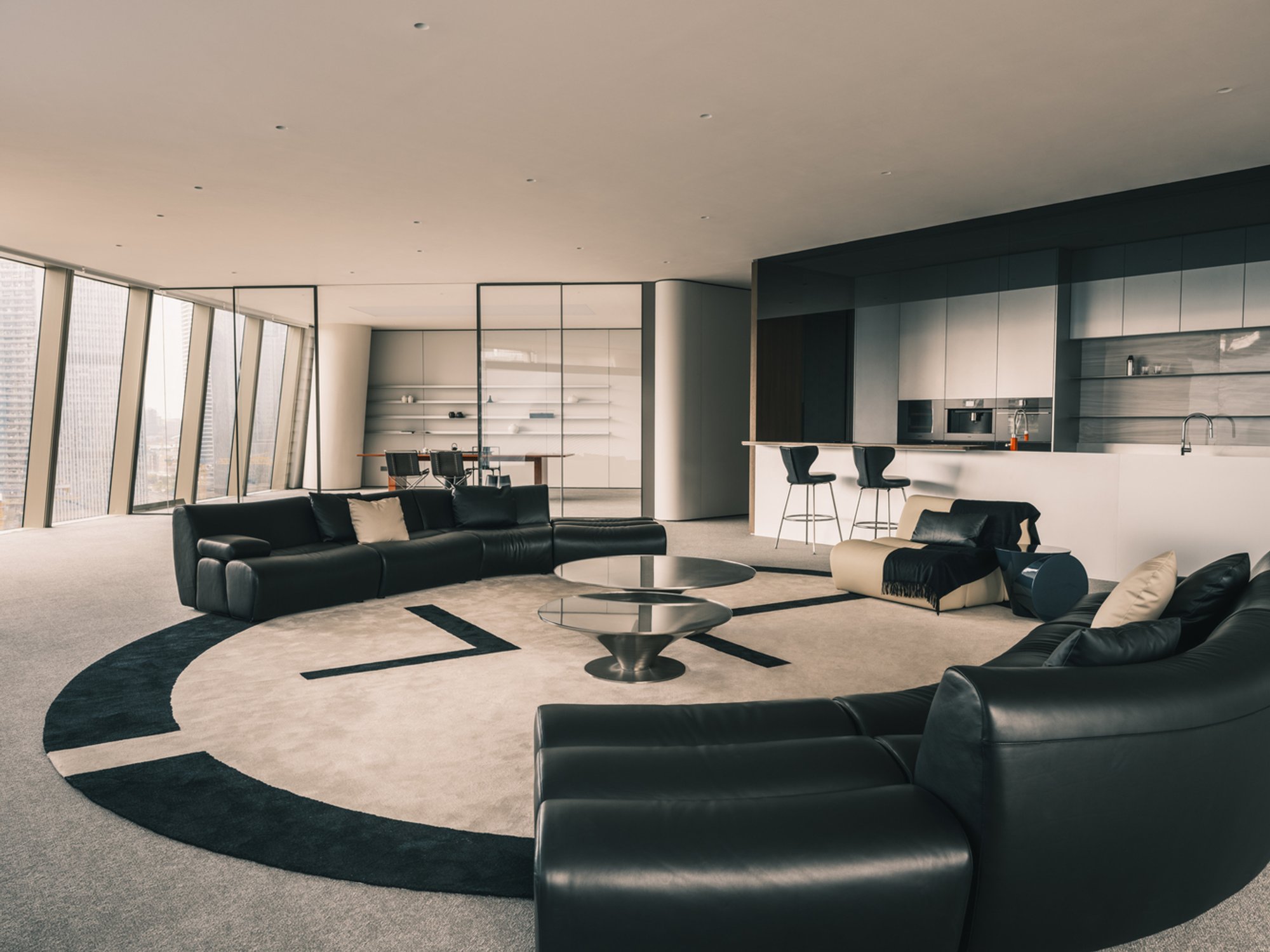
SAY Architects Turns a Diamond-Shaped Tower Floor into a Hybrid Living and Working Landscape
Inside a faceted glass high-rise, domestic comfort and corporate function share a single open plan overlooking the city skyline.

Most flexible office projects start with an open floor plate and divide it into predictable zones: desks here, meeting rooms there, a kitchen pod somewhere in between. SAY Architects took a different route. Working inside the diamond-shaped footprint of a curtain-walled tower, the studio treated the entire floor as a single domestic landscape, one where living rooms, kitchens, dining counters, and private workspaces dissolve into each other without the usual corridor logic. The result reads less like an office and more like an exceptionally well-organized apartment that happens to host professional life.
What makes the project genuinely interesting is the way the angular geometry of the building becomes the organizing principle rather than a constraint to fight. The octagonal core anchors circulation at the center, and every zone radiates outward toward the perimeter glazing, so daylight and skyline views reach every room. Partitions, where they exist at all, are transparent: steel-framed glass, vertical timber screens, or sliding wood panels that can open or close a space in seconds. The whole floor breathes.
The Building as Frame
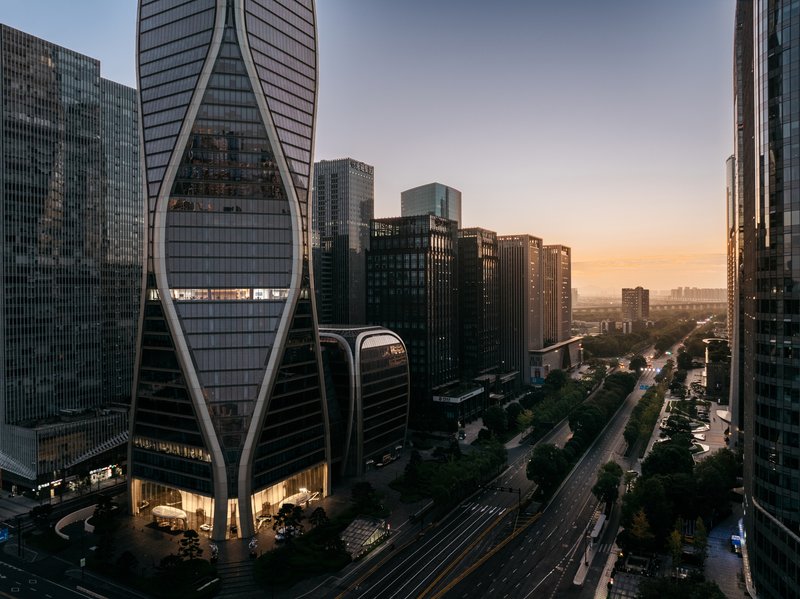

Before stepping inside, the tower itself sets expectations. The curved glass curtain wall and exposed diagonal bracing give the exterior a structural expressiveness that few commercial buildings bother with. At dusk the illuminated double-height facade turns the occupied floors into a lantern against the city, advertising the interior life within. SAY Architects understood that this envelope was not neutral: its angled mullions and faceted geometry would throw light and shadow across every interior surface throughout the day.
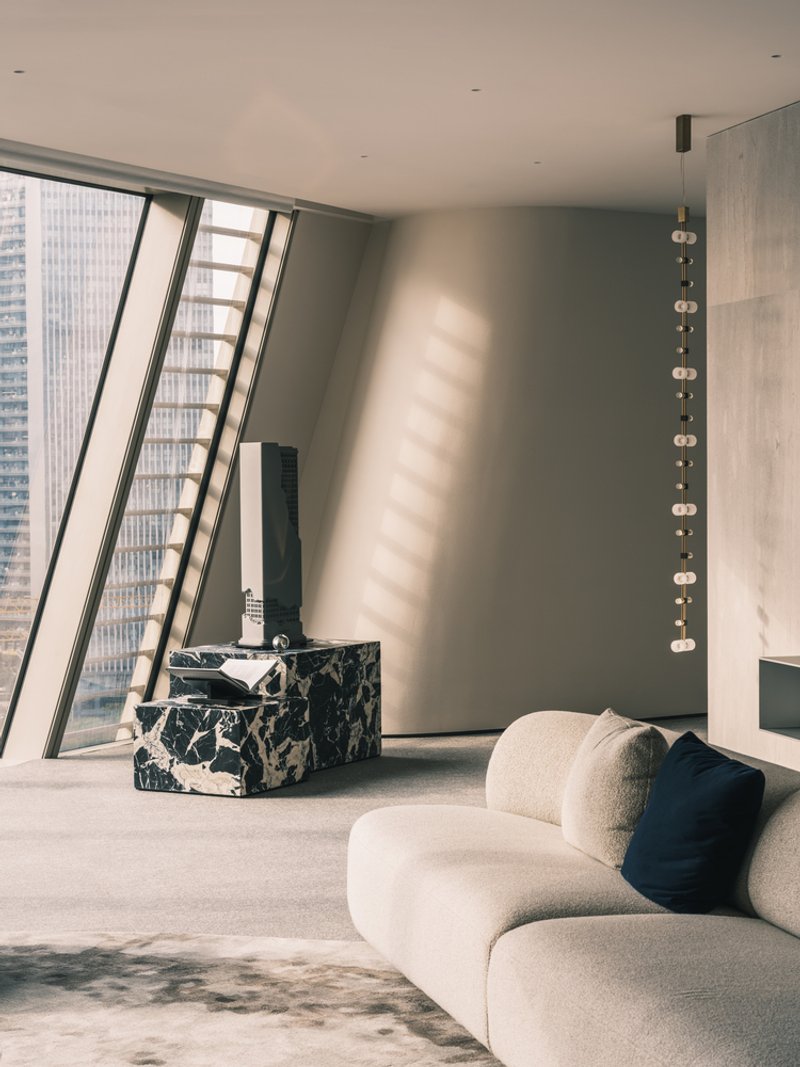
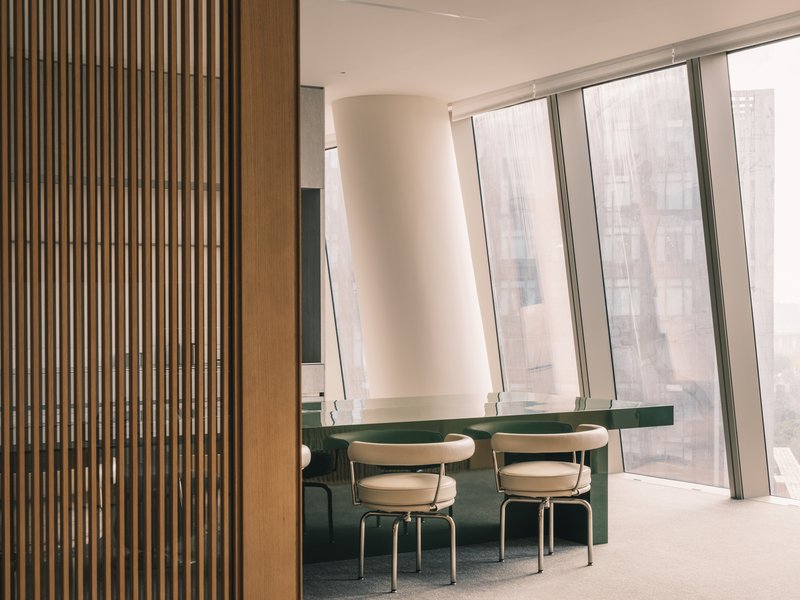
Rather than suppressing those effects with blinds or dropped ceilings, the design leans into them. Shadows from the curtain wall's diagonals stripe the carpet, shift across marble tabletops, and animate timber screens hour by hour. The building becomes a collaborator in the interior atmosphere.
Lobby and Reception: A Domestic Threshold
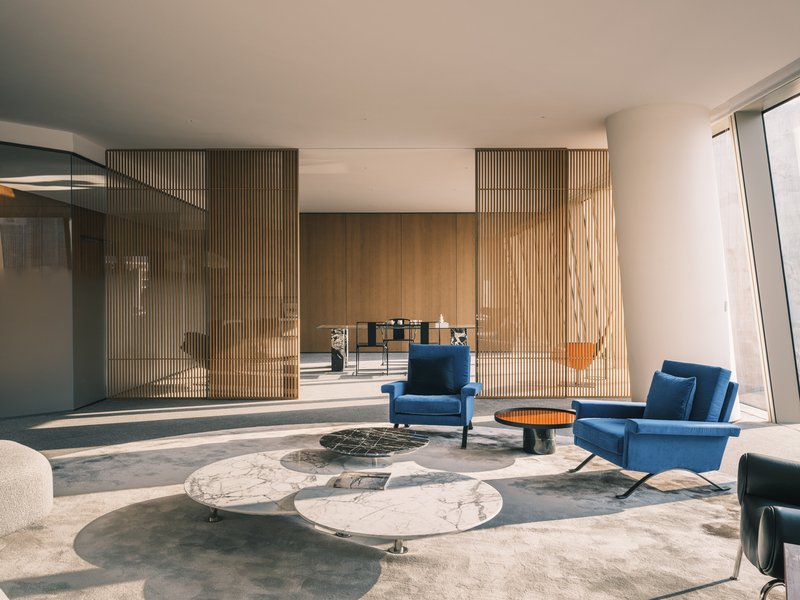
The arrival sequence immediately signals that this is not a conventional office. A floating stone reception desk sits behind a bronze fluted glass partition that catches and diffuses daylight. Vertical timber slat screens divide the lobby seating area without blocking sight lines, and circular marble coffee tables replace the predictable rectangular desk cluster. The materials, stone, bronze, solid timber, carry a tactile warmth that corporate lobbies rarely achieve.
Beyond the reception, a lounge zone with glass partition walls and soft carpeting extends toward the perimeter. It functions as a decompression chamber between the elevator core and the working zones, a threshold that shifts the visitor's mindset from transit to engagement.
Living Rooms That Work
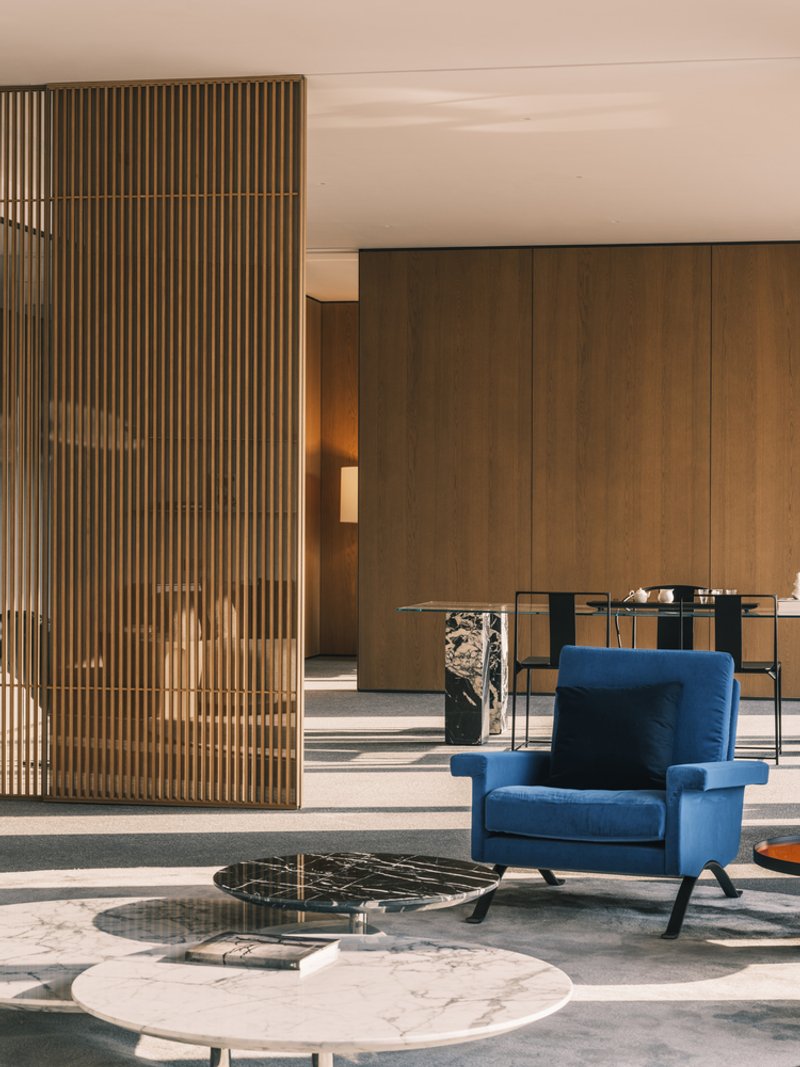
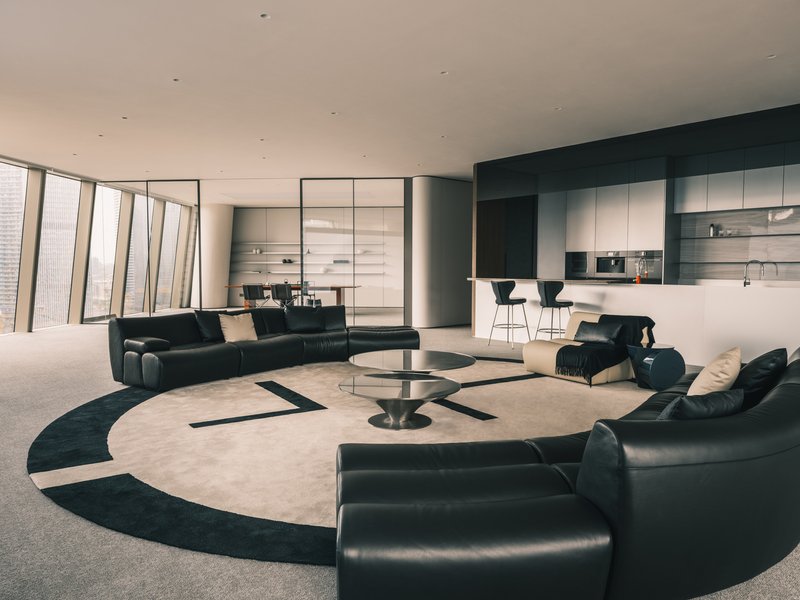
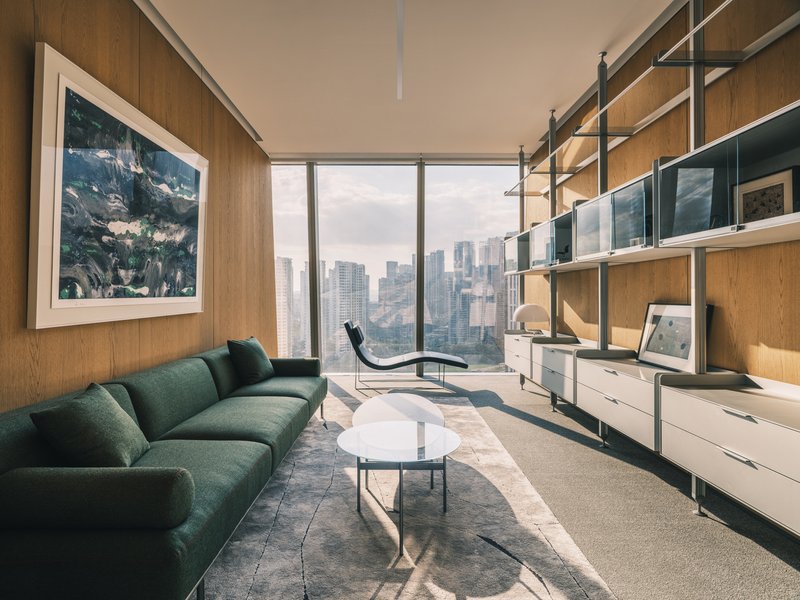
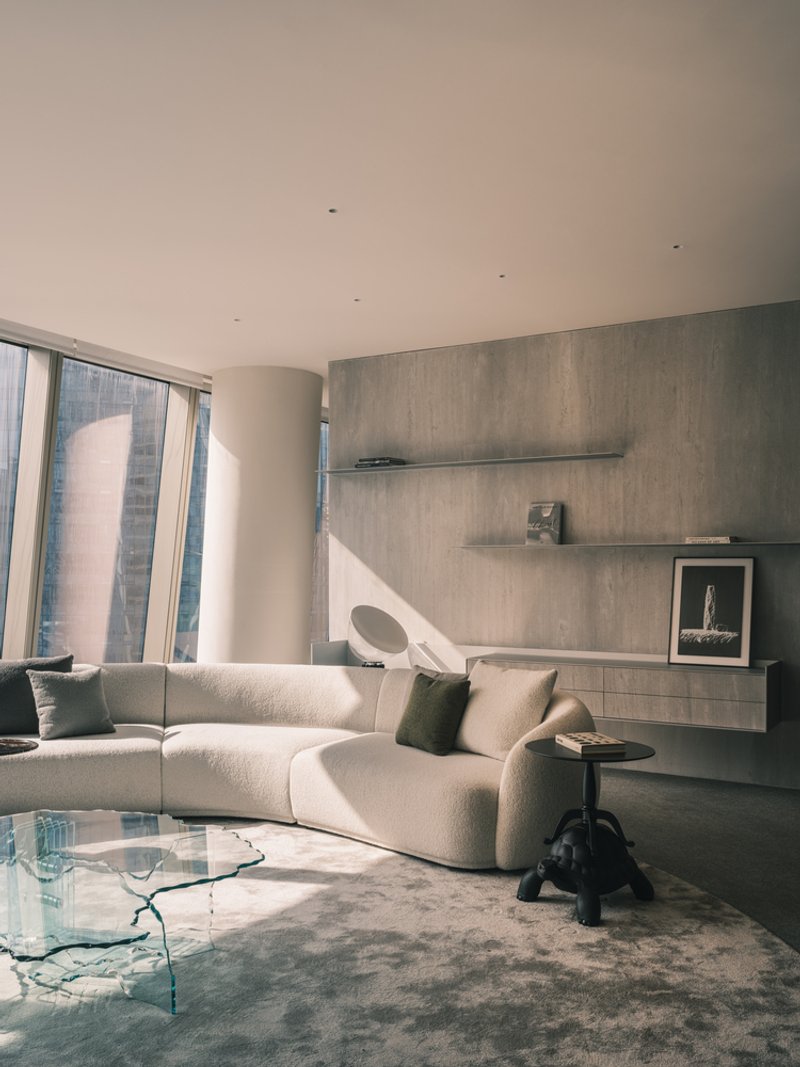
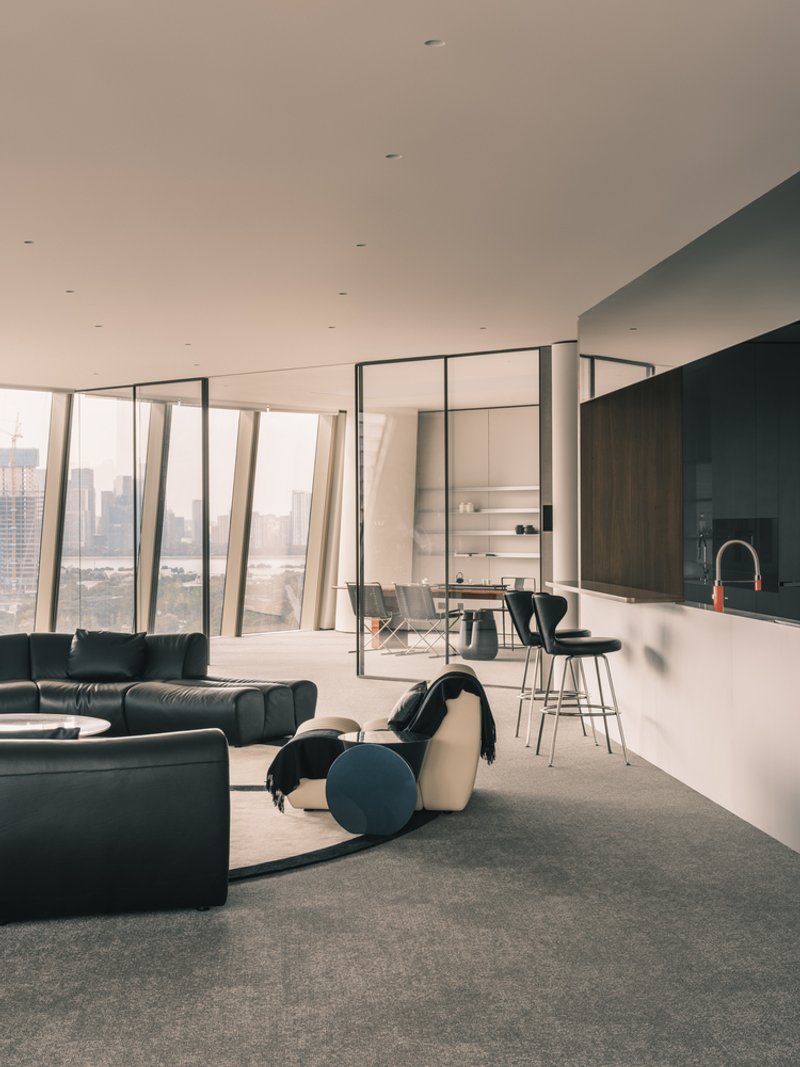
The open living areas occupy the most generous stretches of perimeter glazing. Curved sofas, textured wall-mounted shelving, and circular patterned carpets establish zones of comfort without rigid boundaries. A wood-paneled shelving system in one area frames panoramic views of the skyline, turning the bookcase into a picture window. In another, a vertical timber slat partition creates a visual filter between the social seating and the quieter desk zones.
These rooms are designed for conversation and informal collaboration rather than heads-down focus. The furniture is soft and low, the lighting is warm and ambient, and the views do the heavy lifting. SAY Architects bets that the most productive meetings often happen on a sofa, not around a boardroom table.
Glass Enclosures and Private Workspaces
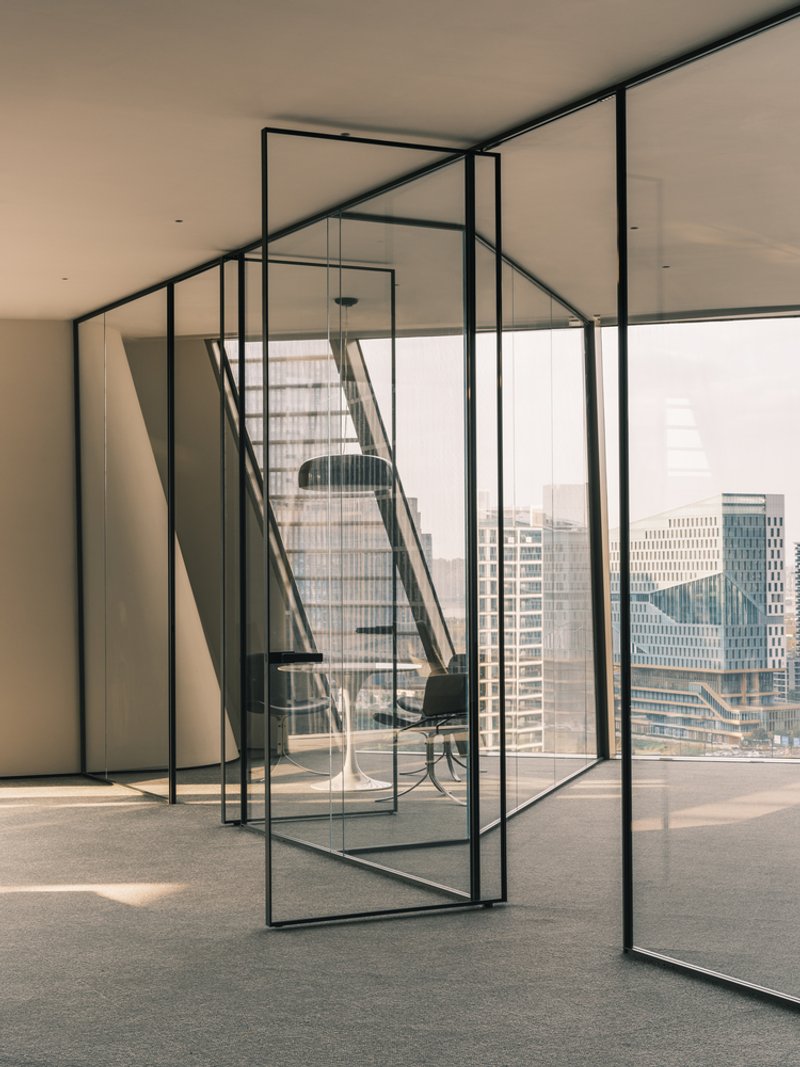
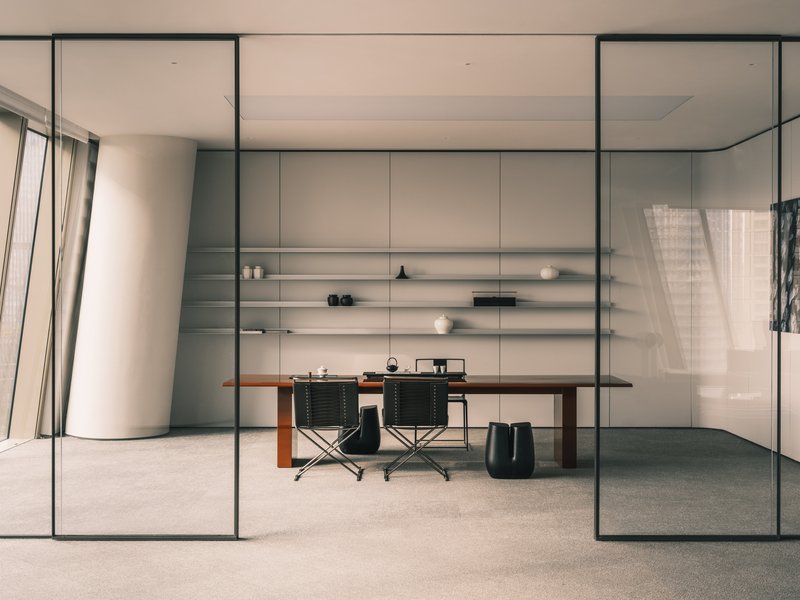
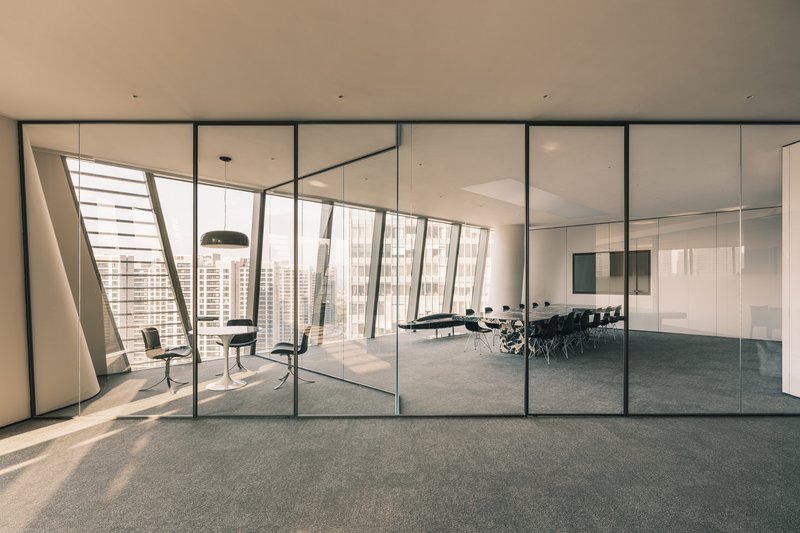
When privacy is needed, freestanding steel-framed glass enclosures provide it without severing the visual connection to the rest of the floor. One enclosure opens directly toward the cityscape through floor-to-ceiling windows, so the occupant sits inside a room within a room, enclosed but never isolated. Inside, horizontal floating shelves and a timber desk keep the palette consistent with the rest of the space.
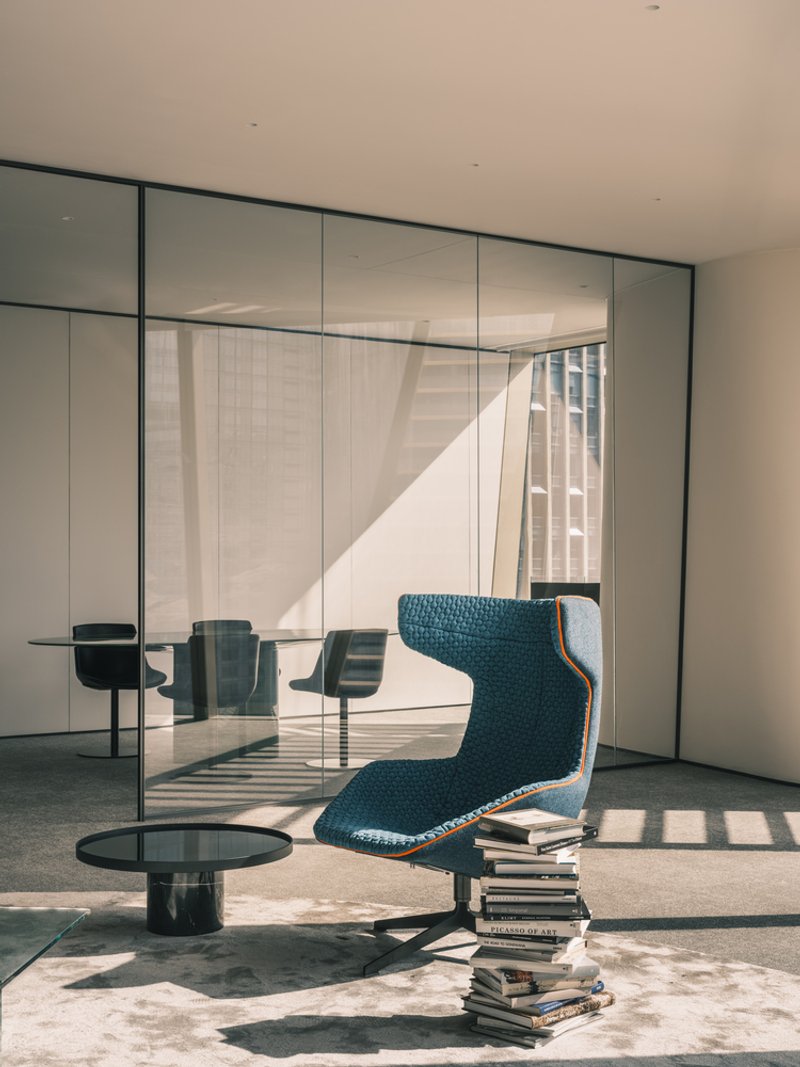
A glass-walled conference room visible through frameless partitions handles the more formal functions. Its marble-base table reflects in the polished floor, and full-height glazing overlooks the neighboring towers. The transparency is deliberate: even during a closed-door meeting, occupants remain part of the larger spatial experience.
Kitchen, Dining, and the Social Core
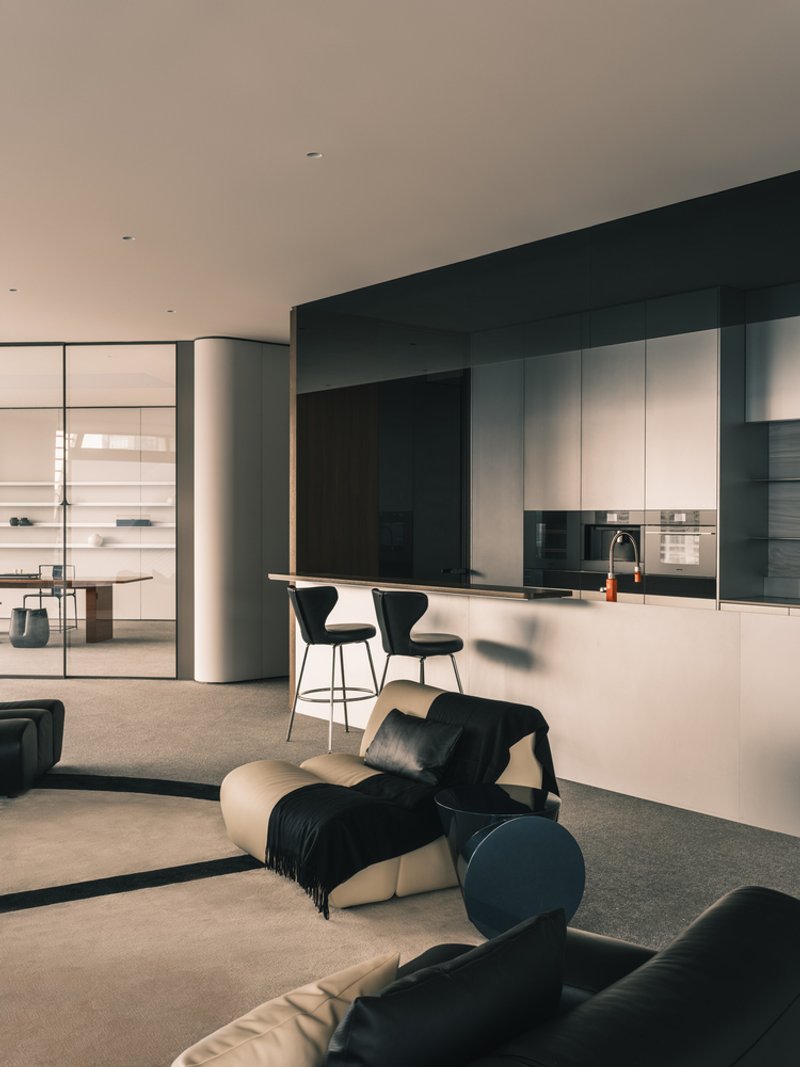
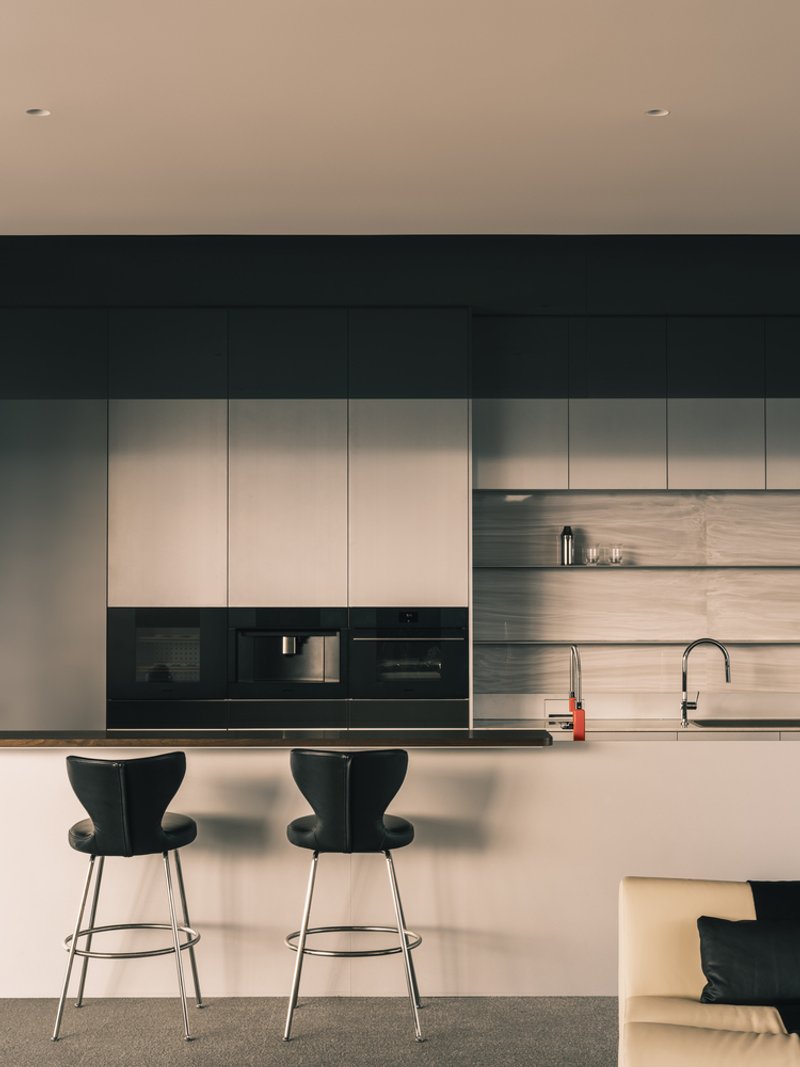
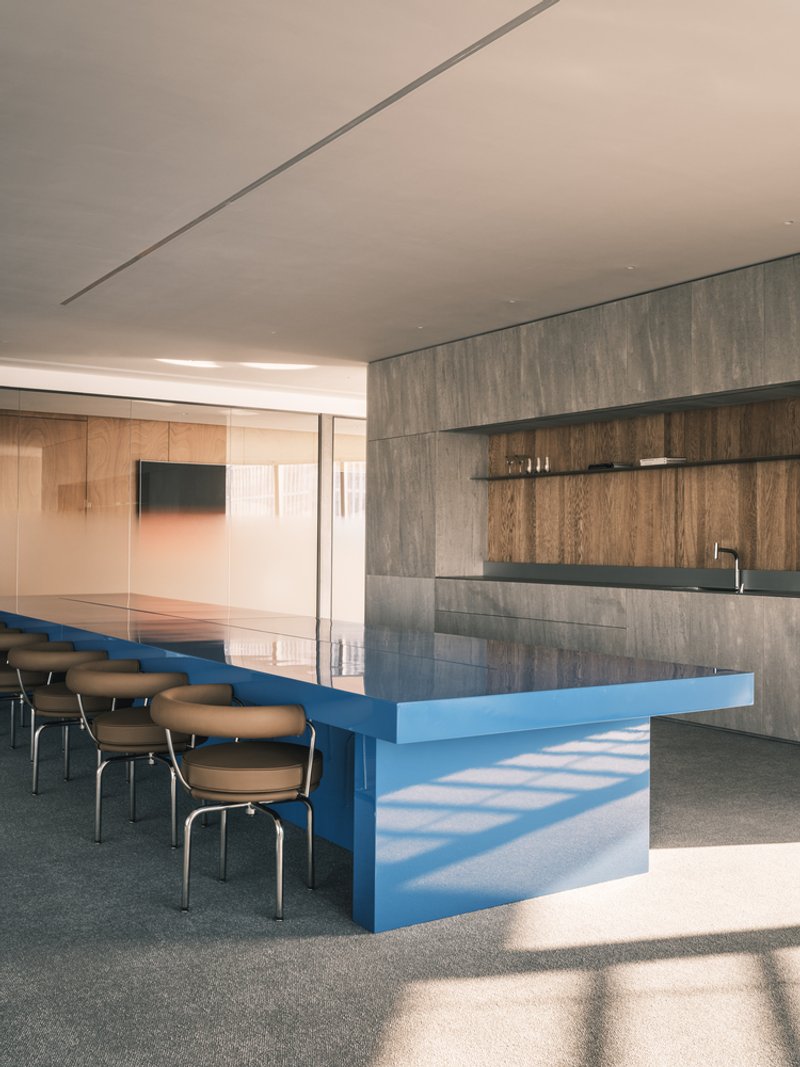
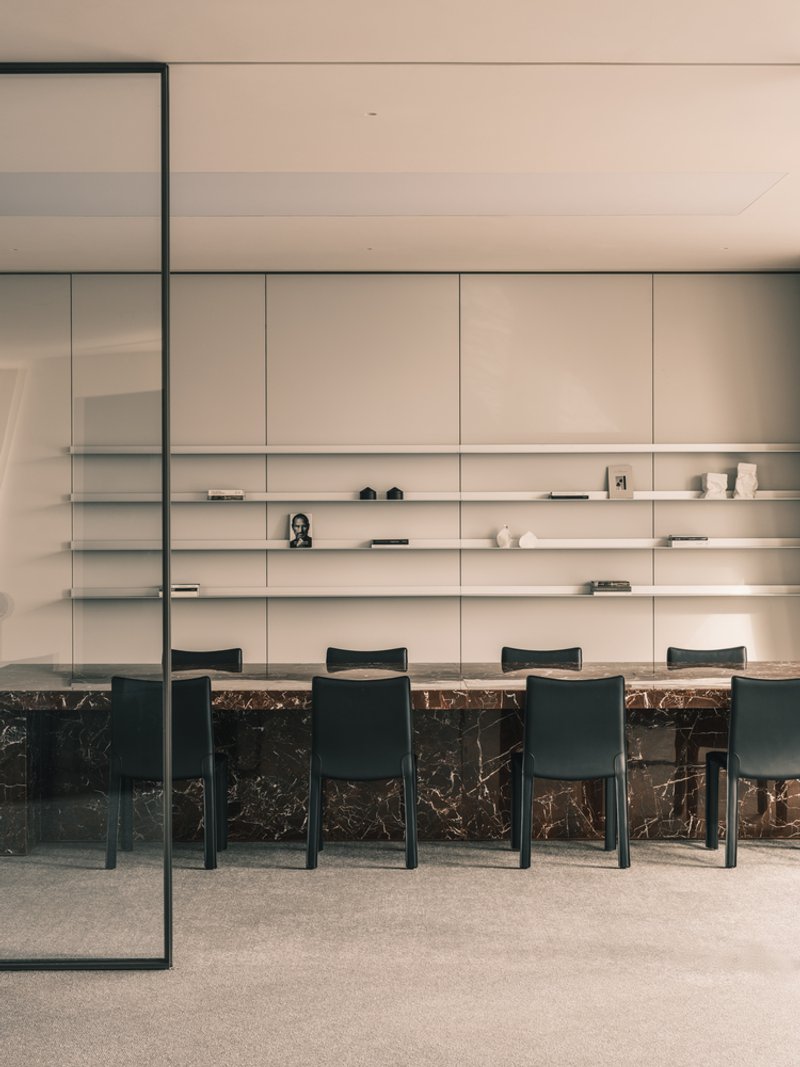
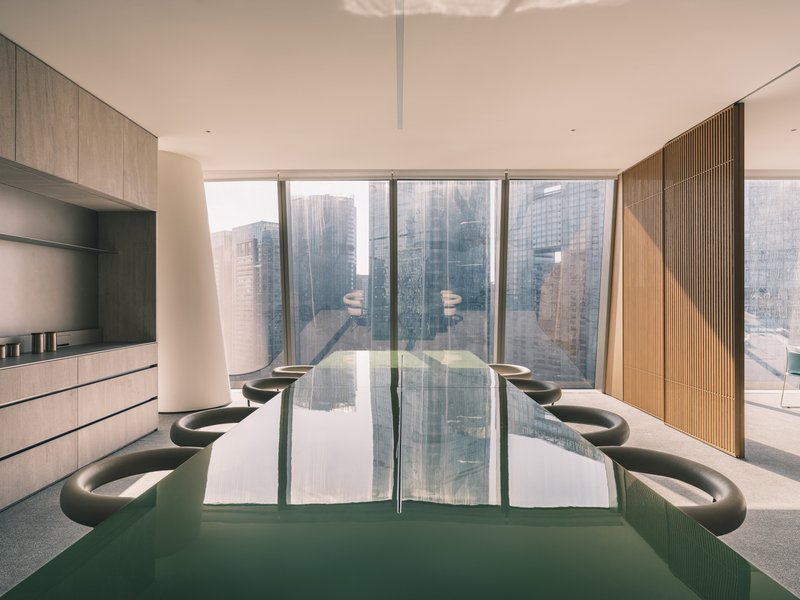
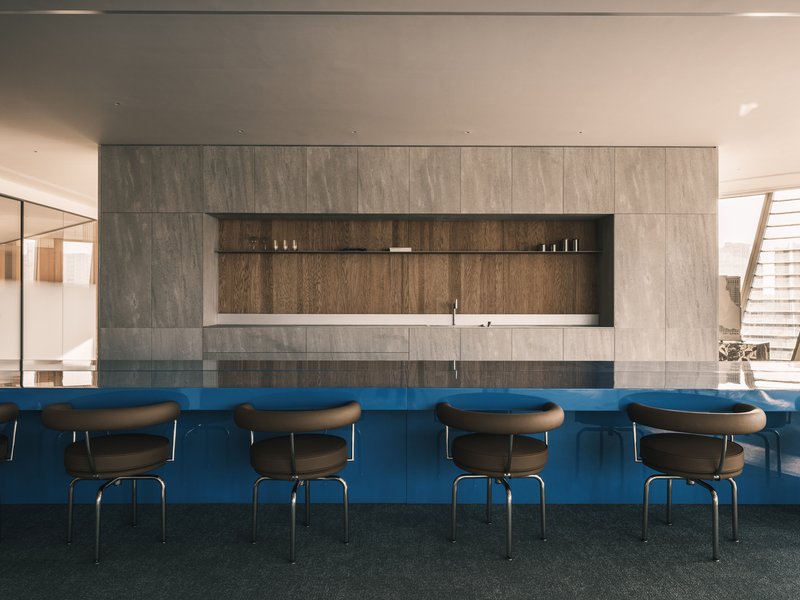
The kitchen and dining zones form the social core of the plan. An open kitchen island with bar seating sits adjacent to a glass-walled study, blurring the line between cooking and working. Flat panel cabinetry with a horizontal wood-grain backsplash keeps the kitchen from reading as utilitarian, while a recessed wood niche with a floating shelf adds a moment of craft to the countertop edge.
A blue cantilevered dining counter, one of the most striking elements in the project, casts shadow patterns across the polished floor in the afternoon. Elsewhere, a reflective green table sits centered beneath floor-to-ceiling windows and the urban skyline, turning lunch into a kind of event. A communal counter with stools faces a recessed bar wall clad in stone and timber, providing yet another register of informal gathering. SAY Architects understood that eating together is itself a form of collaboration.
Texture, Material, and Detail
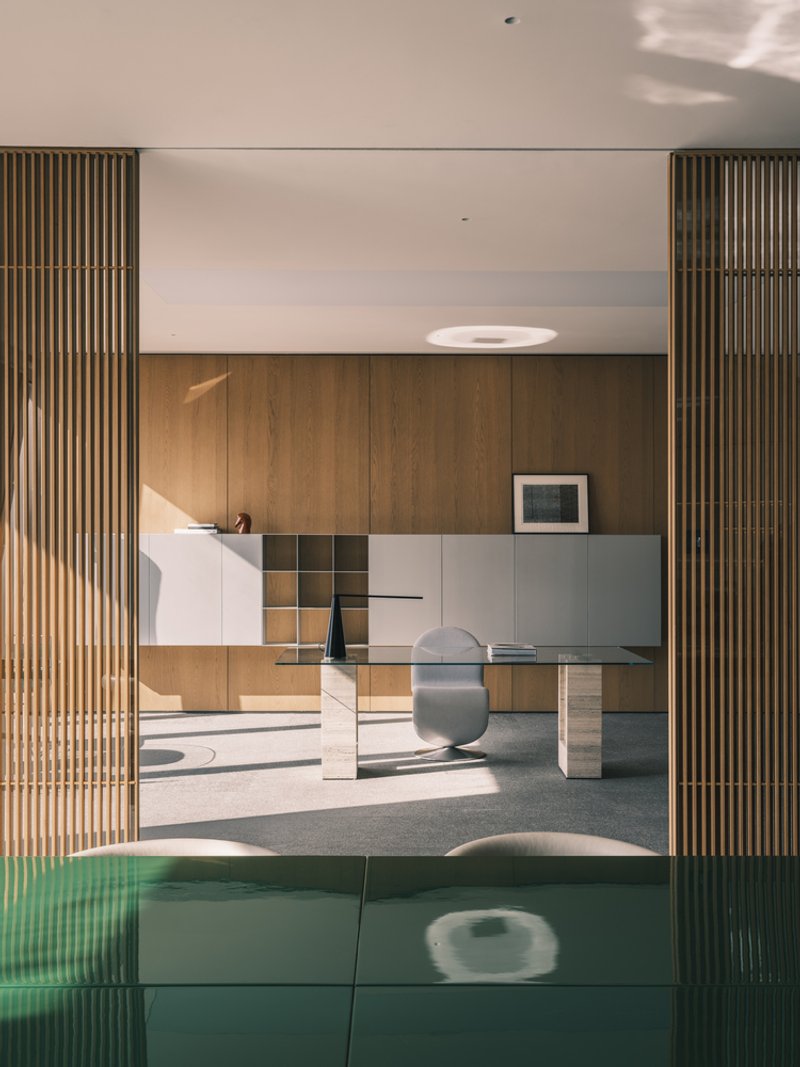
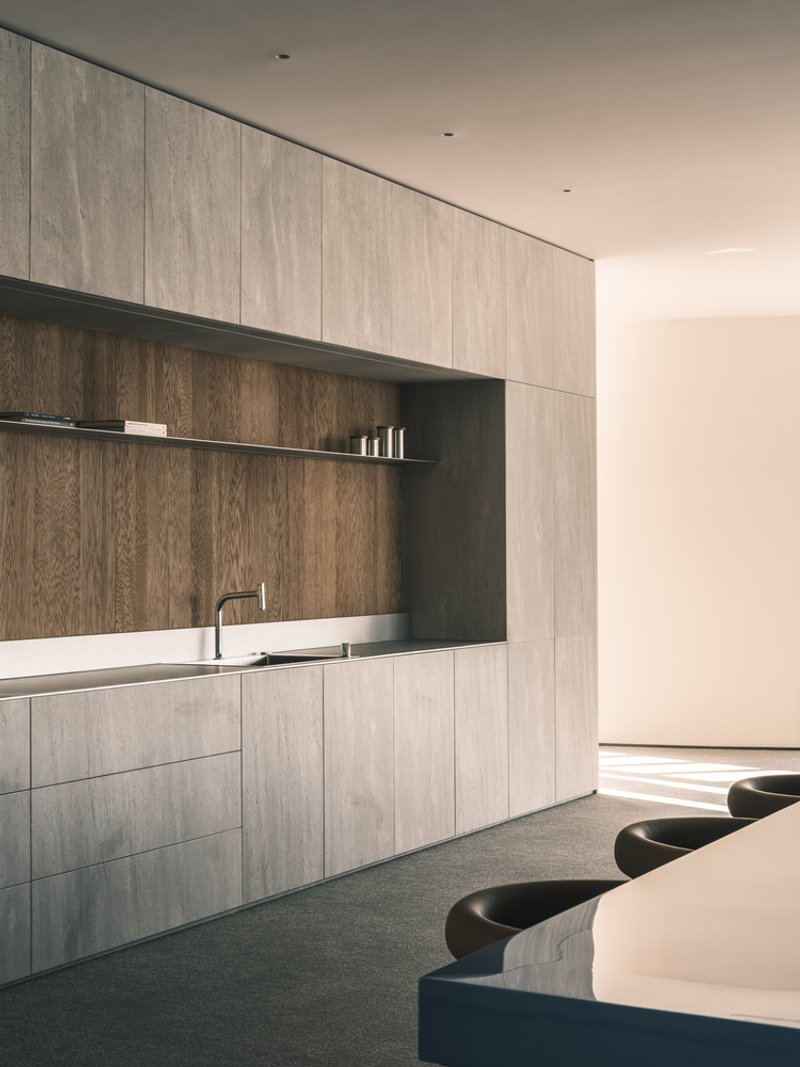
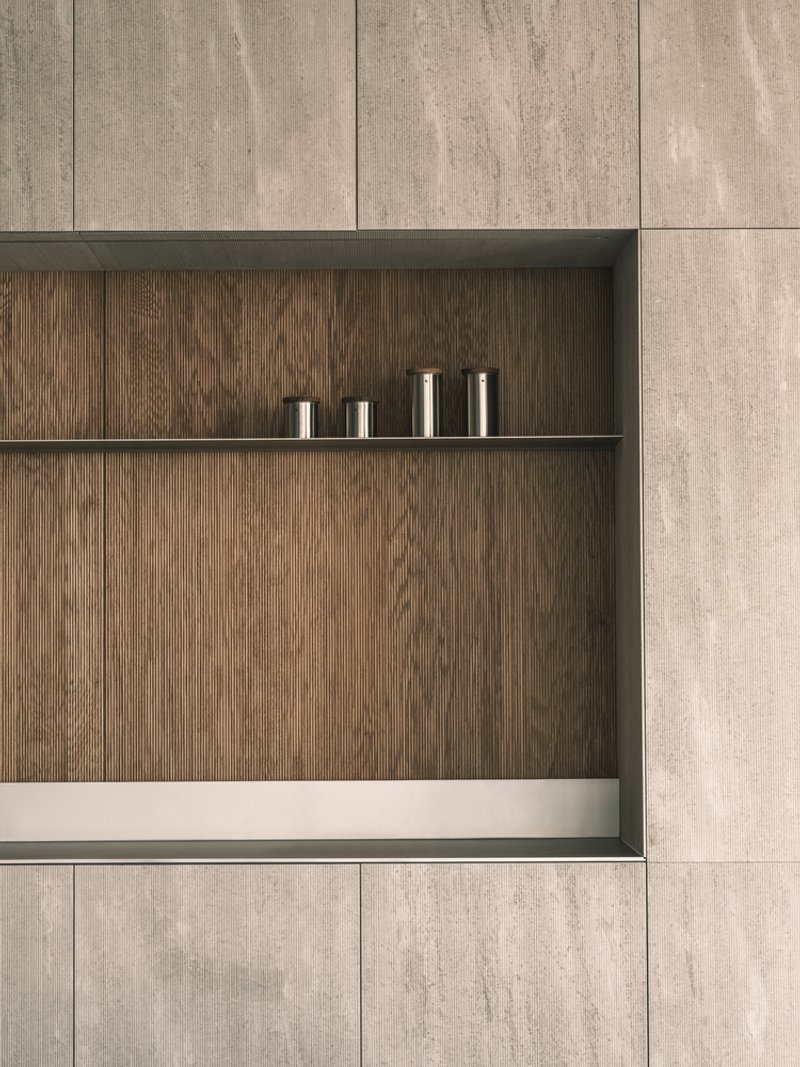
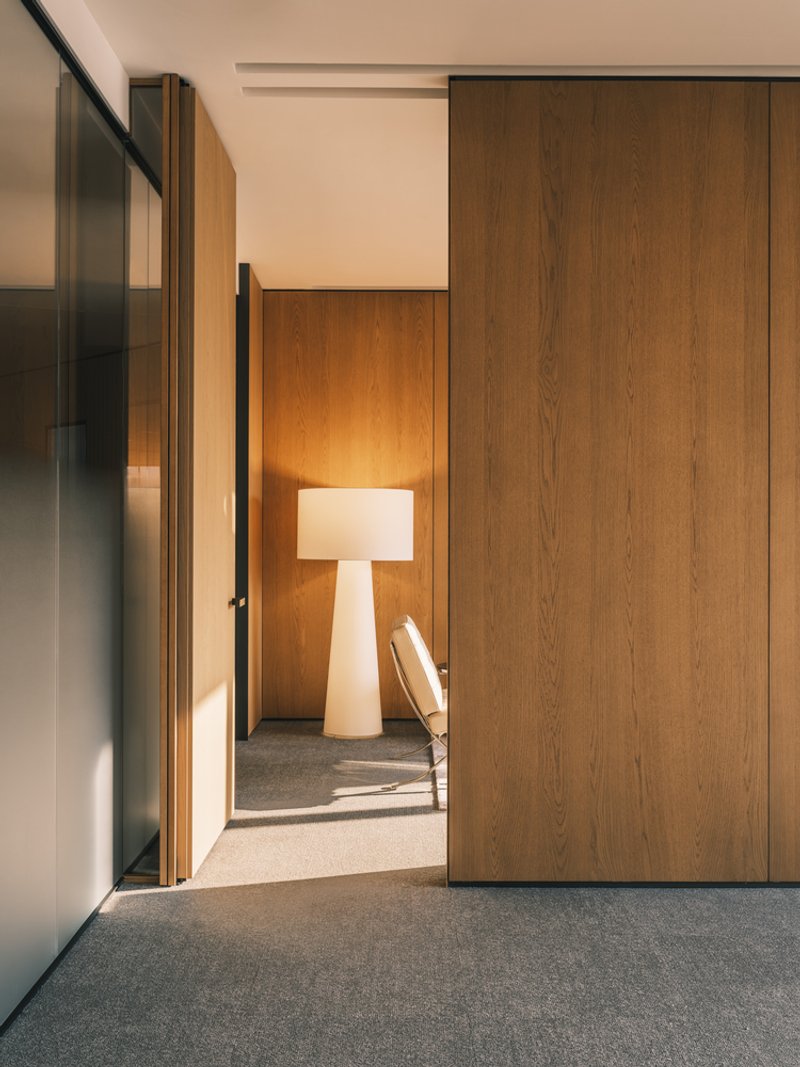
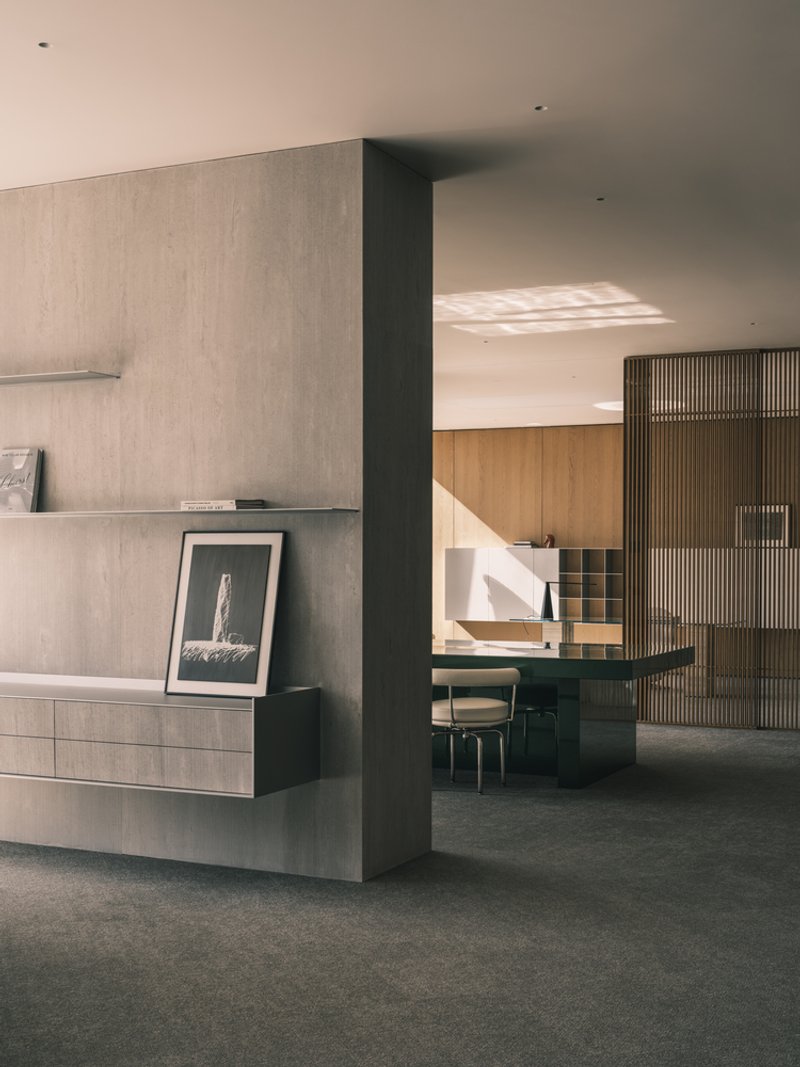
The material palette holds the entire project together. Vertical timber screens, tiled paneling, concrete, bronze glass, and dark marble recur across every zone, giving the floor a coherent identity without repetition. A sliding wood panel doorway reveals an illuminated corridor alcove with a floor lamp, turning a simple threshold into a cinematic moment. Elsewhere, a recessed wall niche displays metal canisters against textured wood and concrete panels, a still life embedded in the architecture.
The detailing is restrained but precise. Edges are clean, junctions are flush, and every niche and shelf appears to have been placed after careful consideration of what would eventually sit on it. The curved sofa in the living room with its textured wall-mounted shelving and the black marble vanity beside angled windows both demonstrate the same discipline: materials selected for how they age and how they catch light, not for novelty.
Leisure and Retreat
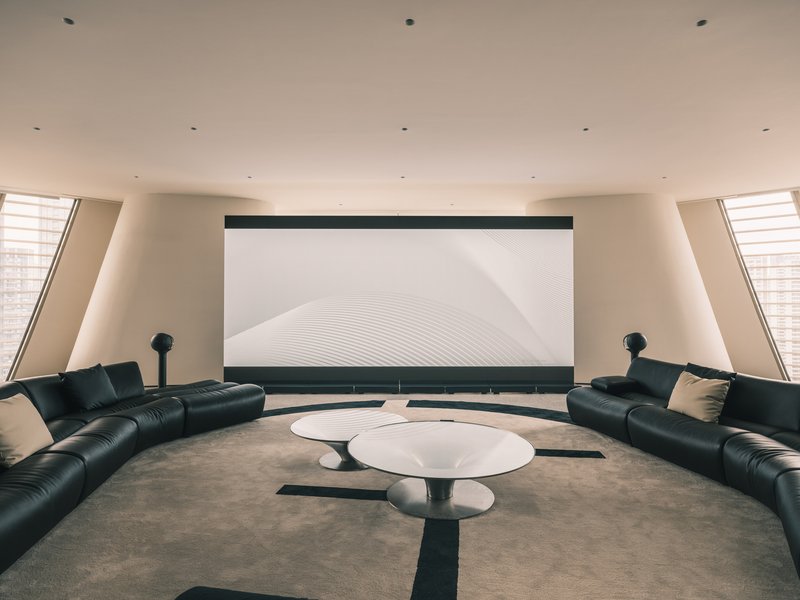
A home theater space with angled skylights and a projection screen flanked by two black sofas provides a genuine retreat from the open plan. It is dark, enclosed, and deliberately introverted, the one room where the skyline disappears. Nearby, a green velvet banquette with tubular chairs sits beside angled windows overlooking neighboring buildings, offering a more casual withdrawal point with a coffee-shop register.
An open-plan living space with angled floor-to-ceiling windows overlooking the waterfront rounds out the leisure zones. Under overcast skies the room takes on a quieter character, proving that the design works across weather conditions, not just in golden-hour photography. The variety of moods across the floor is not accidental: SAY Architects designed a gradient from extroversion to introspection, and every occupant can find the register they need.
Conference and Formal Settings

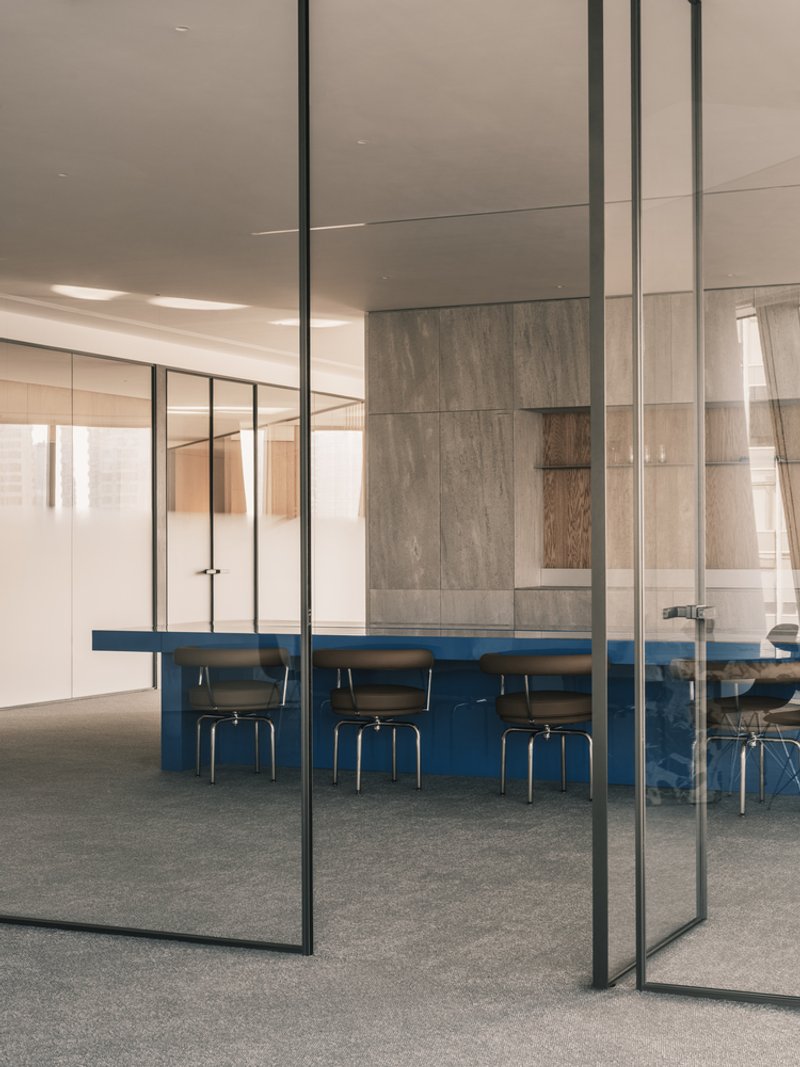
The conference room with its marble-base table and polished floor is the most formal space on the floor, yet it never feels corporate. Full-height glazing overlooking the towers keeps the room connected to the city, and the reflections in the floor double the perceived volume. Through floor-to-ceiling glass doors, a blue dining table and wood-paneled wall are visible, collapsing the distance between the boardroom and the kitchen.
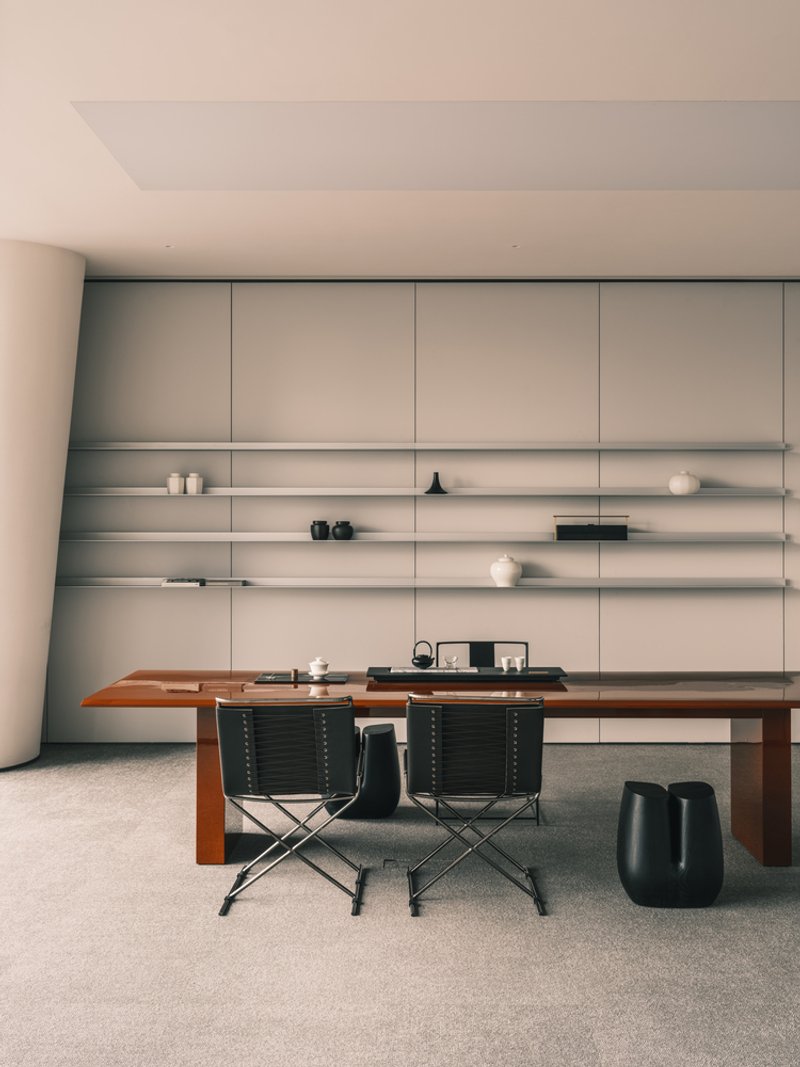
An office area with a horizontal shelf system above a timber table provides a quieter counterpart, a space for focused individual work that borrows daylight from the perimeter without competing for views. The neutral afternoon light here is steady and even, the kind of illumination that lets you work for hours without fatigue.
Plans and Drawings
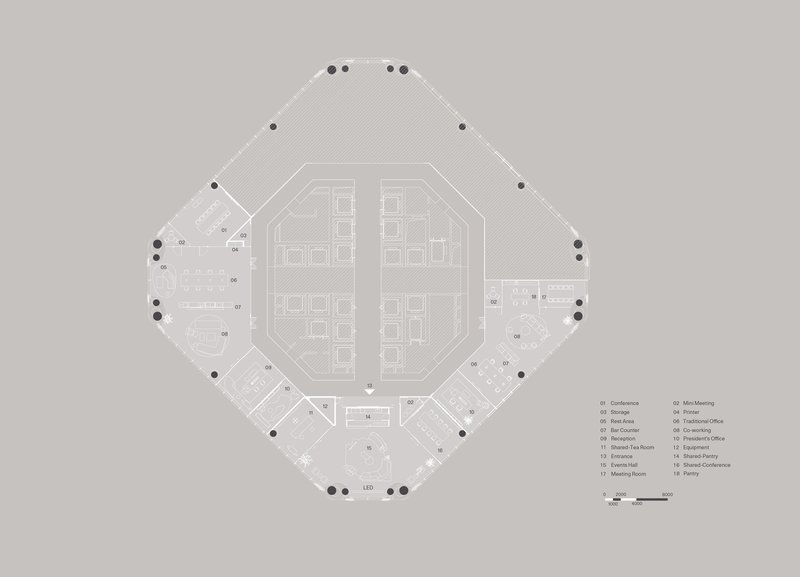
The floor plan reveals the project's secret weapon: the diamond-shaped layout with its octagonal central core. Perimeter circulation wraps the entire plan, ensuring that every programmed zone, living room, kitchen, conference room, theater, touches the curtain wall. There are no interior corridors in the conventional sense. You move through the plan by passing from one furnished zone to the next, each defined by material and furniture rather than by walls.
The geometry also explains the angled shadows and oblique views that appear throughout the photography. Because no wall runs parallel to its neighbors for long, every vista terminates at a slightly unexpected angle. The plan is not orthogonal, and the experience of the space is richer for it.
Why This Project Matters
Flexible office design has become a tired phrase, usually meaning nothing more than movable desks and writable walls. SAY Architects redefined the term by treating an entire tower floor as a domestic interior, one where the rituals of home, cooking, lounging, watching a film, coexist with the rituals of work. The success lies in the fact that neither program dominates. You can host a formal client meeting and then walk thirty seconds to a kitchen counter for an espresso without leaving the atmosphere the architects created.
The project also demonstrates that a building's geometry, even an unconventional diamond plan, can be an asset rather than an obstacle. By aligning every zone with the perimeter glazing and letting the angular floor plate generate oblique views and shifting light, SAY Architects produced spaces that feel dynamic without relying on spectacle. It is a quiet argument for designing with the building rather than against it, and it is convincing.
A Visionary Approach to Flexible Office Design by SAY Architects. Photography by Wen Studio.
About the Studio
Share Your Own Work on uni.xyz
If projects like this are the kind of work you want to make, uni.xyz is a place to publish your own, find collaborators, and enter design competitions.




Popular Articles
Popular articles from the community

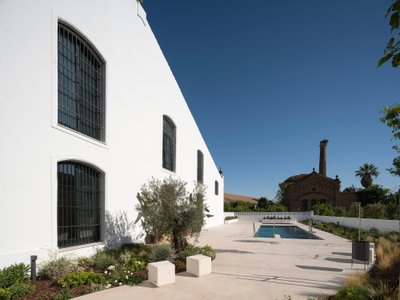
De la Riva Sherry Homes By Juan Vega Arquitectos
De la Riva Sherry Homes transform a historic winery into unique residences, blending industrial heritage, modern comfort, and community-focused courtyard living.

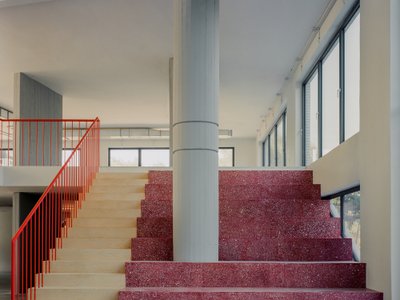
Art 1 Office Strips Athens Back to Its Bones
Neiheiser Argyros transforms a 40-year-old Athens office building into a vivid, materially rich workplace anchored by red steel, exposed concrete, and roof
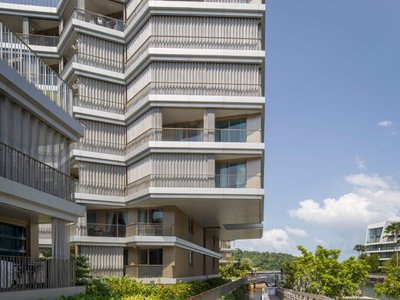
KCAP and DCA Architects Build a Stepped Urban Village on Singapore's King's Dock Waterfront
A 26,000 square meter residential development in Singapore trades tower isolation for terraced courtyards and a planted promenade along the harbor.

CTA | Creative Architects Designs Triangular Floating Shelters for Vietnam's Flood-Ravaged Communities
A timber-louvered triangular shelter rises on concrete pontoons to keep Vietnamese families safe and together when floodwaters come.


Similar Reads
You might also enjoy these articles

Filtering Space: A Gradual Spatial Experience
From urban intensity to spatial calm.


The Ken Roberts Memorial Delineation Competition (Krob)
As the most senior architectural drawing competition currently in operation anywhere in the world, it draws hundreds of entries each year, awarding the very best submissions in a series of medium-based categories.


Waterfront Redevelopment and Urban Revitalization in Mumbai: Forging a New Dawn for Darukhana
A transformative waterfront redevelopment project reimagining Darukhana’s shipbreaking heritage into an inclusive urban future.

OUT-OF-MAP: A Call for Postcards on Feminist Narratives of Public Space
Rhizoma Design and Research Lab invites artists, designers, architects, researchers, and students to reflect on how feminist perspectives can reshape public space. Selected works will be exhibited in Barcelona, October 2026. Submissions open until 15 April 2026.


Explore Architecture Competitions
Discover active competitions in this discipline




The International Standard for Design Portfolios


The Global Benchmark for Architecture Dissertation Awards


The Global Benchmark for Graduation Excellence


Challenge to reimagine the Iron Throne
Comments (0)
Please login or sign up to add comments
No comments yet. Be the first to comment!