
Adaptive Reuse Architecture: Thermal Pool “Depot” by Polina Romanova
Adaptive reuse architecture transforms Moscow’s abandoned depot into a thermal wellness space, merging heritage, water therapy, and spatial continuity.

In contemporary architectural discourse, adaptive reuse architecture has emerged as a critical strategy for sustainable urban transformation. Rather than demolishing obsolete industrial structures, architects are increasingly reinterpreting them through new programs that respond to present-day social, environmental, and spatial needs.
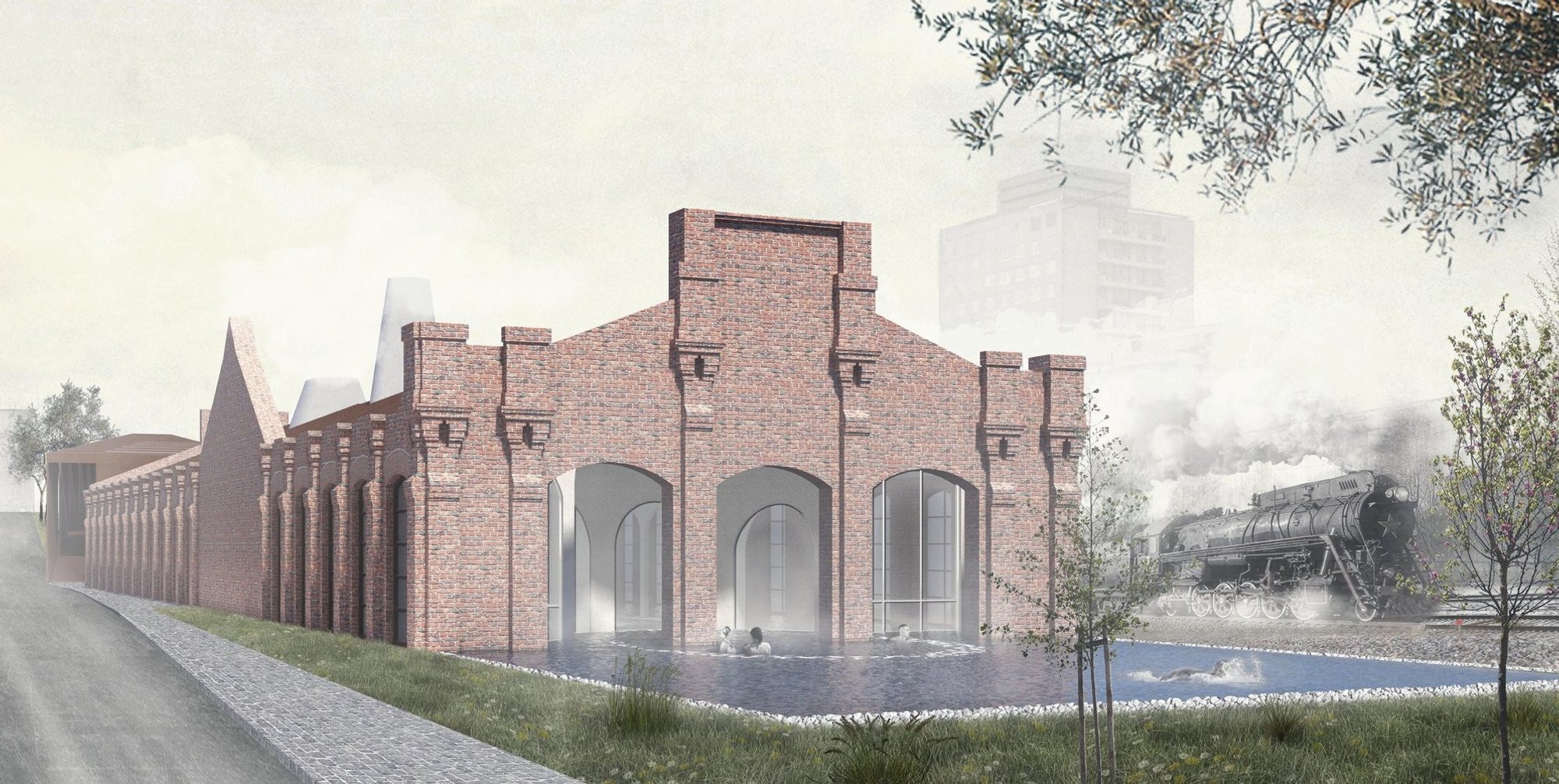
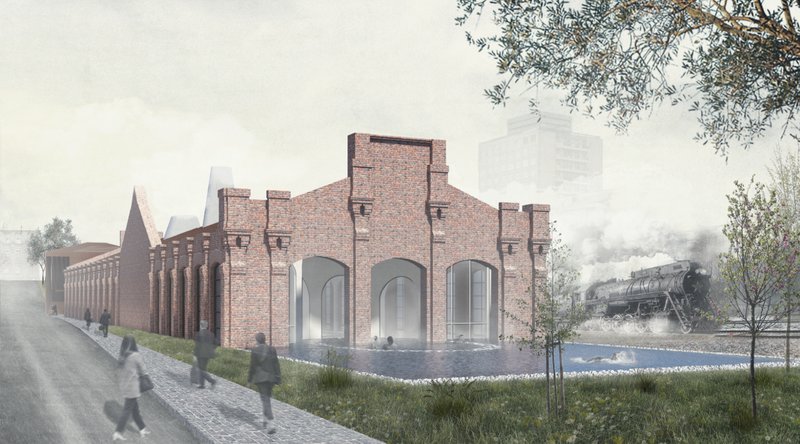
The project Thermal Pool “Depot” by Polina Romanova exemplifies this approach. Located in Moscow, the proposal reimagines an abandoned steam engine house as a thermal wellness facility. The intervention is not merely functional but deeply conceptual, drawing from the building’s industrial legacy to inform a spatial experience centered on healing, movement, and restoration.
Site Context: Industrial Heritage within an Urban Fabric
The project is situated in the central district of Moscow, where the historic steam engine house “Moscow-Kursk,” built in 1906, once served as a repair hub for trains. With the transition to diesel locomotives, the structure gradually lost its relevance and fell into disuse by 2000.
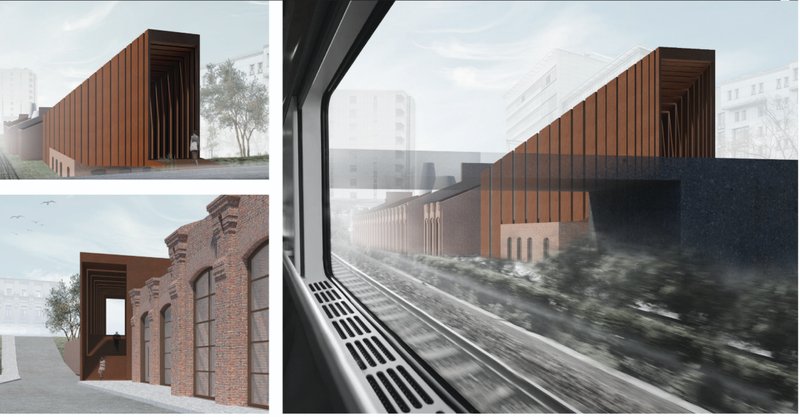
Today, the site exists in a dense urban condition, surrounded by office buildings and infrastructural networks. The building sits lower than its surroundings, almost submerged within the terrain and visually overshadowed by contemporary development. Its eastern facade aligns with railway lines, forming a boundary between infrastructure and the business district.
This condition frames the project’s central challenge: how can adaptive reuse architecture reintroduce spatial and social relevance to a forgotten industrial artifact while preserving its identity?
Concept: From Industrial Machine to Healing Landscape
The conceptual foundation of the project is rooted in the symbolic reinterpretation of the engine house. Historically perceived as a “hospital” for trains, the building is reimagined as a place for human recovery.
Drawing inspiration from Sebastian Kneipp’s water therapy, the design introduces a sequence of hot and cold baths, where users move through alternating thermal conditions. This cyclical experience mirrors the rhythm and movement of trains, translating mechanical motion into bodily sensation.
Water becomes the primary architectural medium. Variations in temperature, depth, and flow generate a dynamic spatial narrative, transforming the interior into a continuous therapeutic landscape. The project reframes infrastructure not as static relics but as systems capable of hosting new forms of life and activity.
Spatial Strategy: Continuity and Transformation
The adaptive reuse strategy operates through two key architectural approaches:
- Insertion within the Existing Envelope A new bottom landscape is introduced within the historic shell. This intervention creates a subtle separation between old and new elements while maintaining visual continuity. The existing brick walls act as a container for the new thermal program.
- Addition of Contemporary Volumes New architectural forms are added to accommodate administrative and entry functions. These volumes contrast with the historic fabric through simplified geometry and material expression, establishing a dialogue between past and present.
The longitudinal nature of the original engine shed is preserved, reinforcing directional movement. The interior is organized into three parallel zones, guiding users through a sequence of experiences defined by water conditions and spatial variation.
Architectural Form: Arches, Domes, and Sectional Relief
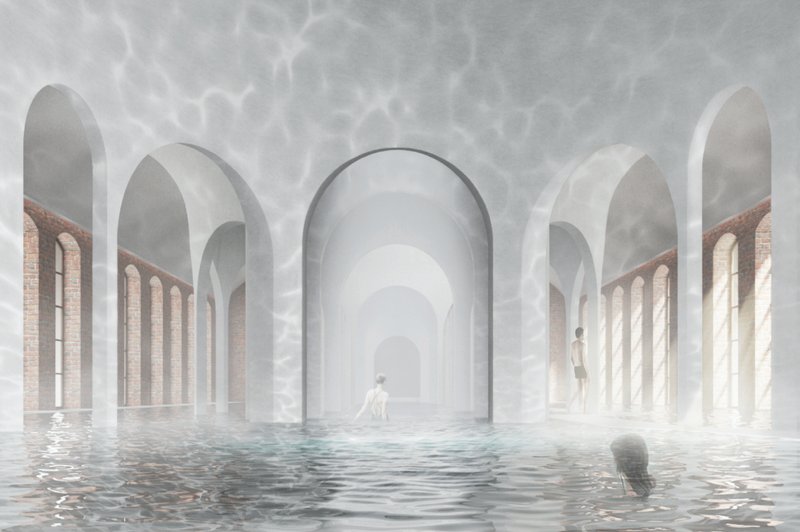
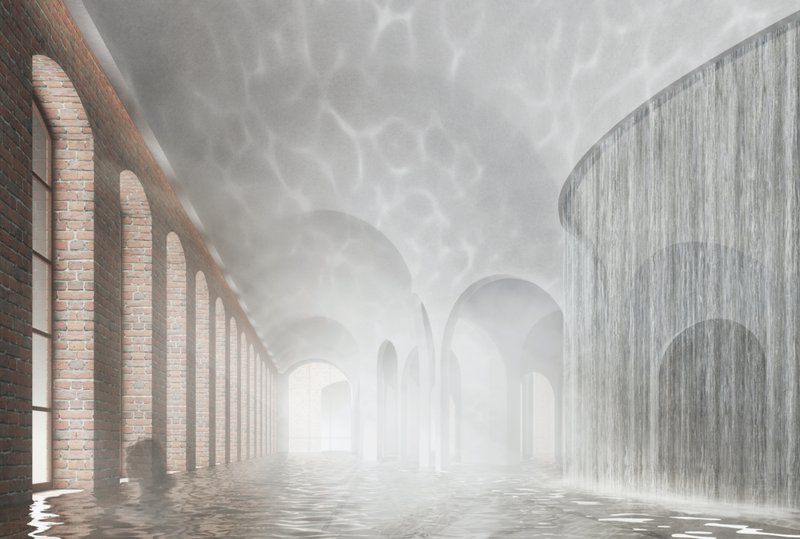
The project derives its formal language from the existing structure. The repetitive rhythm of arches is retained and amplified, becoming a defining spatial motif. Above, a series of domes and vaulted ceilings reflect the topography of the thermal pools below.
This inversion of geometry, where the floor’s bathymetric contours are echoed in the ceiling, creates a cohesive spatial system. The architecture is experienced both horizontally and vertically, with sectional variation playing a crucial role in shaping perception.
The result is a sequence of interconnected chambers that balance monumentality with intimacy, allowing users to navigate between open and enclosed atmospheres.
Materiality and Atmosphere
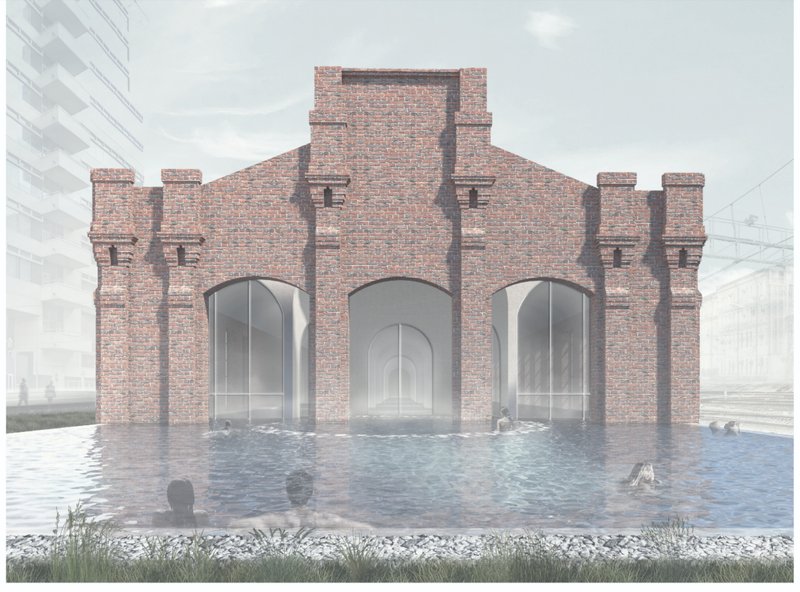
Material selection reinforces the project’s adaptive reuse ethos. The original brick structure is preserved as the most valuable component of the building, maintaining its tactile and historical presence.
New interventions are deliberately restrained, using smooth surfaces and minimal detailing to contrast with the textured masonry. Water, light, and vapor become primary atmospheric elements. Reflections ripple across surfaces, diffusing boundaries and softening the spatial experience.
The interplay between solid and fluid, heavy and ephemeral, defines the sensory quality of the project.
Program and User Experience
The building primarily serves office workers from the surrounding district, along with students and nearby residents. In a high-pressure urban environment, the thermal pool functions as a space for decompression and recovery.
The program includes:
- Thermal pools with varying temperatures and depths
- Changing rooms and wellness facilities
- Administrative and service spaces
- Circulation paths designed as experiential journeys
Users move through a carefully choreographed sequence, transitioning between heat and cold, light and shadow, enclosure and openness. This experiential layering transforms the building into a restorative environment that addresses both physical and emotional well-being.
Construction and Technical Strategy
The project employs prefabricated modules to construct the pool geometry. A metal frame supports a series of panels, which are shaped using reinforced fabric and finished with shotcrete. This method allows for smooth, continuous forms while maintaining structural efficiency.
Existing brick walls are stabilized using pipe pile systems and reinforced beams during construction. The integration of new technical floors and waterproofing systems ensures the building meets contemporary performance standards while preserving its historic fabric.
Rainwater collection and drainage systems are integrated into the roof design, contributing to the project’s environmental responsiveness.
Adaptive Reuse Architecture as Cultural Continuity
The significance of Thermal Pool “Depot” lies in its ability to reinterpret industrial heritage without erasing it. Rather than imposing a completely new identity, the project builds upon the existing narrative of the engine house.
By transforming a space once dedicated to mechanical repair into one focused on human restoration, the design establishes a powerful continuity between past and present. The building remains recognizable, yet its meaning evolves.
Thermal Pool “Depot” by Polina Romanova demonstrates the potential of adaptive reuse architecture to generate meaningful, context-sensitive interventions. Through careful preservation, strategic insertion, and experiential design, the project transforms an obsolete industrial structure into a contemporary wellness environment.
It stands as a compelling example of how architecture can bridge history and innovation, creating spaces that are not only functional but deeply resonant with their context and users.



Popular Articles
Popular articles from the community


Solar Steam: A Climate-Responsive Architecture That Redefines the Monument
A climate-responsive memorial architecture that transforms heat, decay, and time into a living system reflecting humanity’s ecological impact.
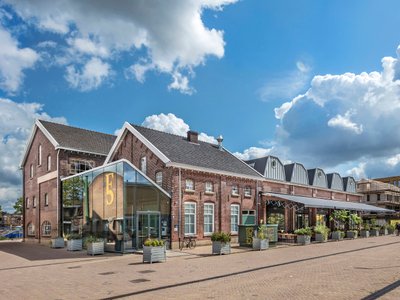
Fifth NRE Jazz Club – De Bever Architecten: Eindhoven’s Revitalized Cultural Hub
Historic gas factory transformed into Fifth NRE Jazz Club blending modern sustainability, jazz culture, dining, and heritage architecture seamlessly.
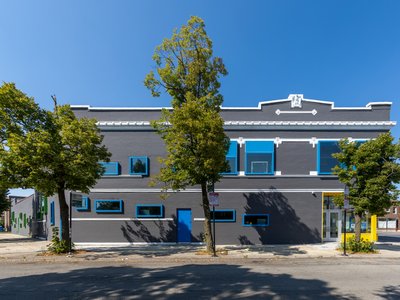
Gads Hill Early Learning Center by JGMA: Adaptive Reuse Shaping Community-Focused Educational Architecture
Adaptive reuse transforms fragmented structure into vibrant early learning center with playful façade, natural light, and community-focused sustainable design.
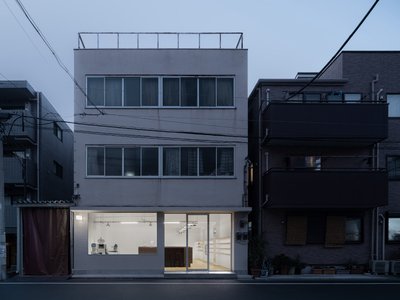
Atelier Macri Concept Store Interior Design by CASE-REAL
Atelier Macri store features a "ko" counter, walnut wood details, cork displays, blending retail, gallery, and seamless customer experiences.

Similar Reads
You might also enjoy these articles

Digital Façade Design for our cities’ urban fronts
Prima Facie - Result Story
Protecting avian biodiversity: Bird observatories to help spread awareness & save rare bird species.
Results for ‘Fly’ - Landscape design competition out now
Connecting with nature: Forest interpretation center in Australia's Wollemi National Park
‘Asatti’ - Landscape design competition - Result story


Explore Architecture Competitions
Discover active competitions in this discipline




The International Standard for Design Portfolios


The Global Benchmark for Architecture Dissertation Awards


The Global Benchmark for Graduation Excellence


Challenge to reimagine the Iron Throne
Comments (0)
Please login or sign up to add comments
No comments yet. Be the first to comment!