

Adaptive Reuse Office Design: Skylab Headquarters and SkylabSHOP in Portland
Skylab Architecture transforms 1940s industrial warehouses into an adaptive reuse office with integrated fabrication shop, fostering creativity, sustainability, and innovation.


Redefining the Modern Workplace Through Adaptive Reuse
In Portland’s Northwest Industrial District, Skylab Architecture has transformed two prefabricated steel warehouses from the 1940s into a cutting-edge headquarters and fabrication hub. This project exemplifies the principles of adaptive reuse office design, merging the raw authenticity of industrial architecture with innovative spatial strategies that foster creativity, collaboration, and sustainability. Spanning 10,752 square feet with an additional 1,000-square-foot fabrication shop, Skylab’s new campus is both a design studio and a platform for experimentation.
Site Context and Vision
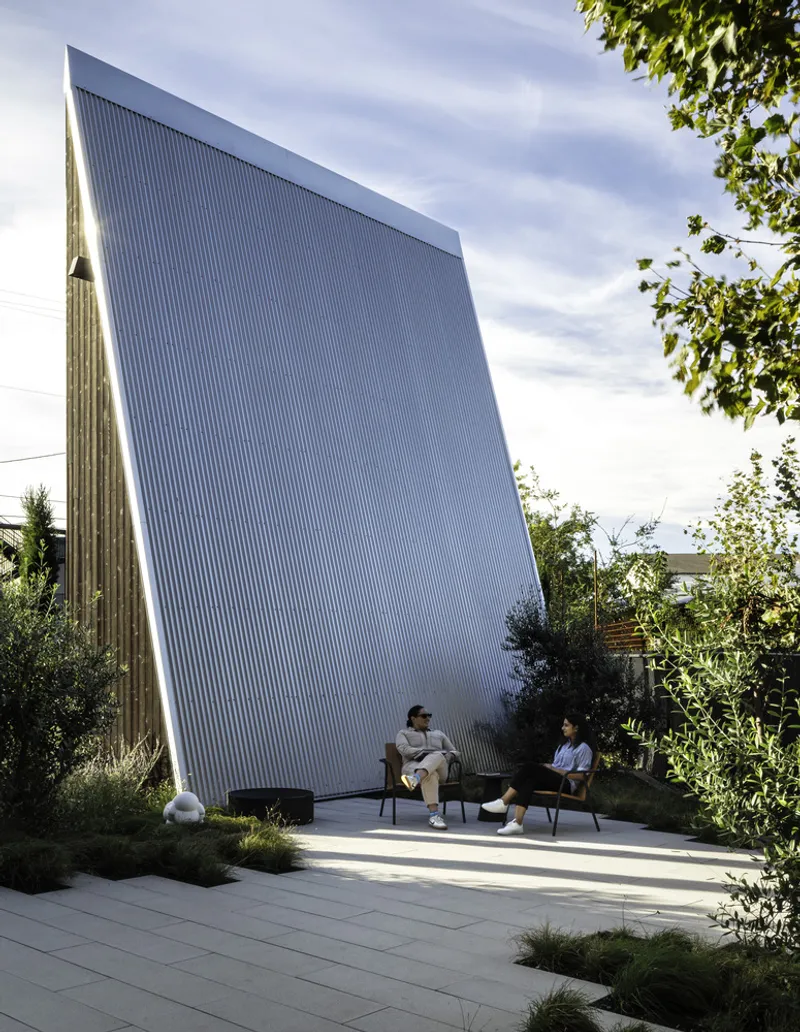
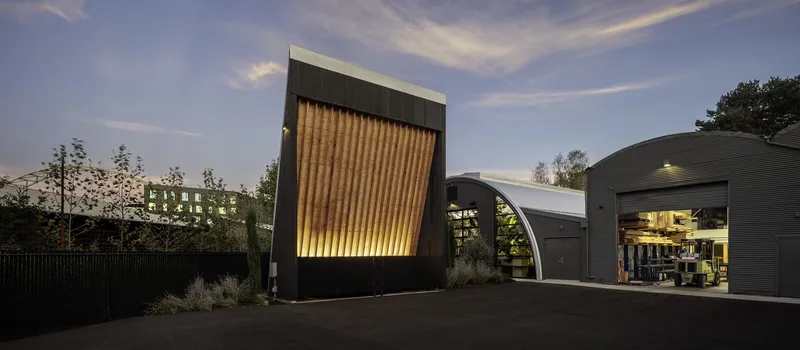
The relocation was driven by Skylab’s need for a larger, more versatile workspace capable of integrating design, prototyping, and community engagement. The triangular lot offered the perfect canvas for a bold reimagining of industrial heritage. Rather than demolish and rebuild, Skylab opted to preserve the character of the original warehouses, embracing their arched steel frames and spatial openness while introducing contemporary upgrades.
Preserving Heritage with Modern Interventions
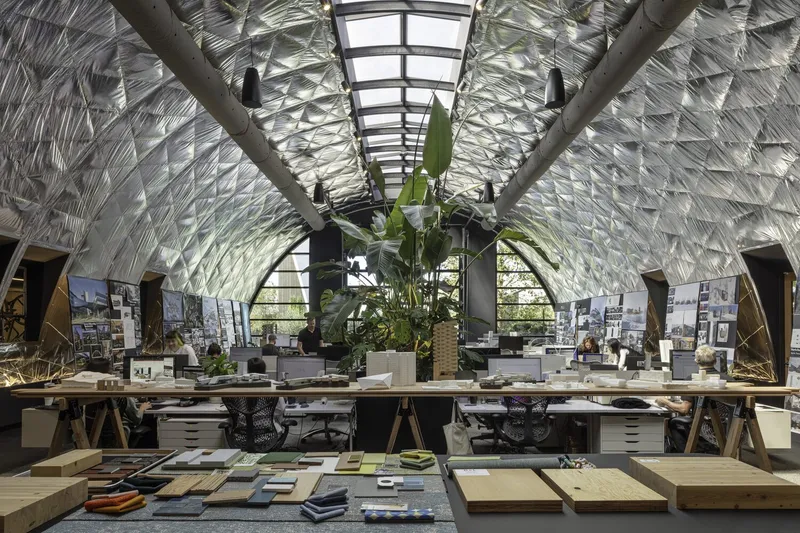
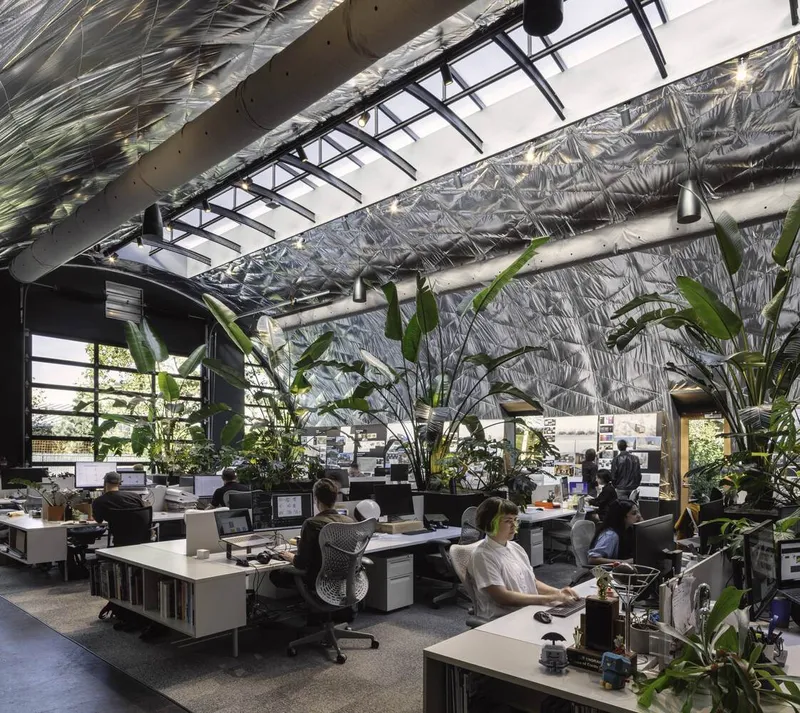
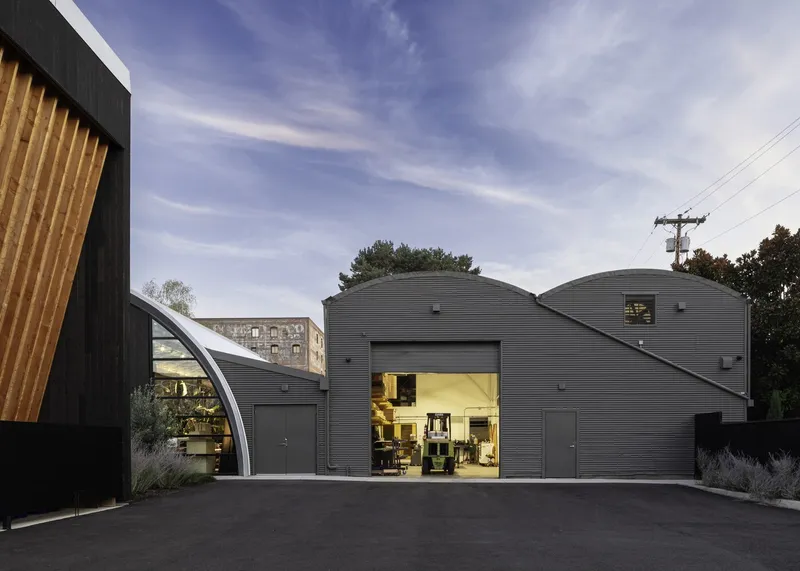
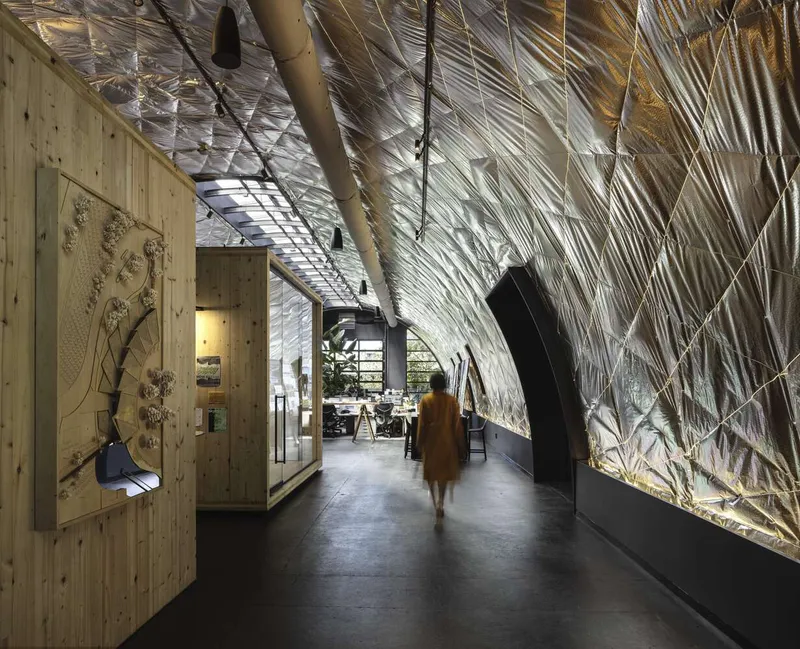
The original warehouses, built for the Titan Metal Products Corp in the 1940s, provided a durable structure but required extensive reprogramming for a modern office. Skylab retained key industrial elements—exposed steel arches, aluminum windows, and concrete floors—and complemented them with modern insertions. Large operable glazing walls and a 60-foot central skylight flood the interiors with daylight, improving energy efficiency and creating strong visual connections to the surrounding landscape.
Interior Design: A Balance of Raw and Refined
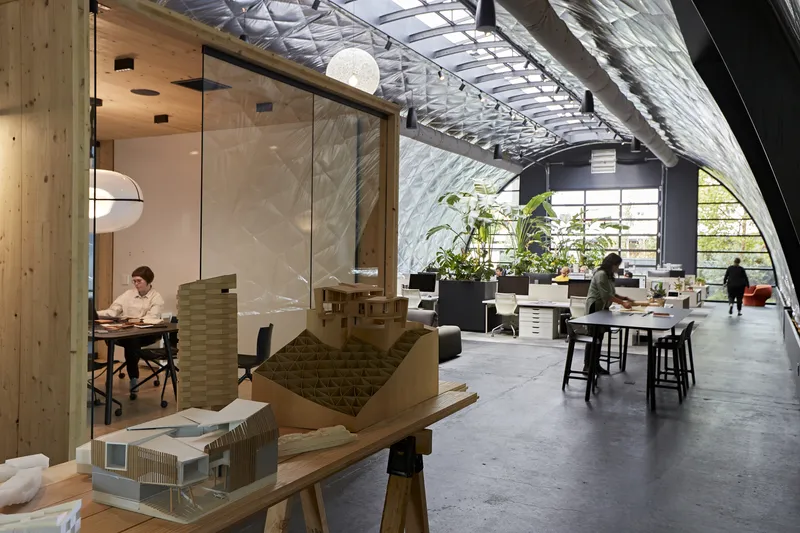
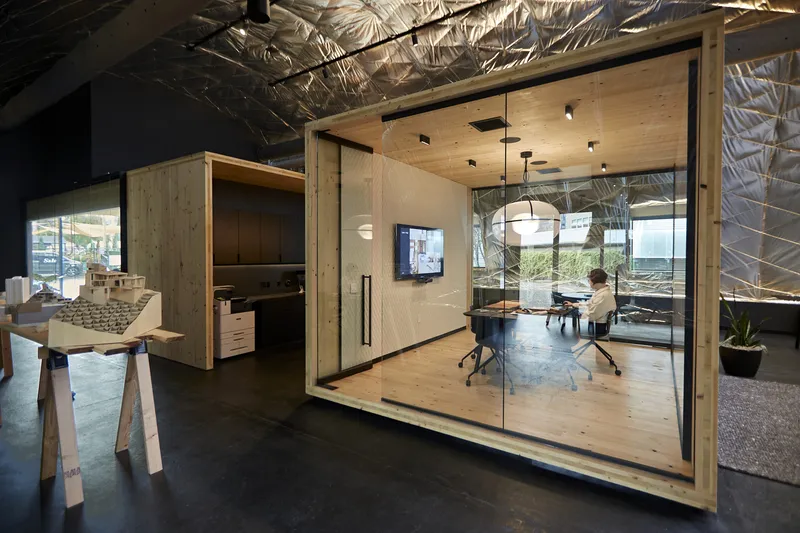
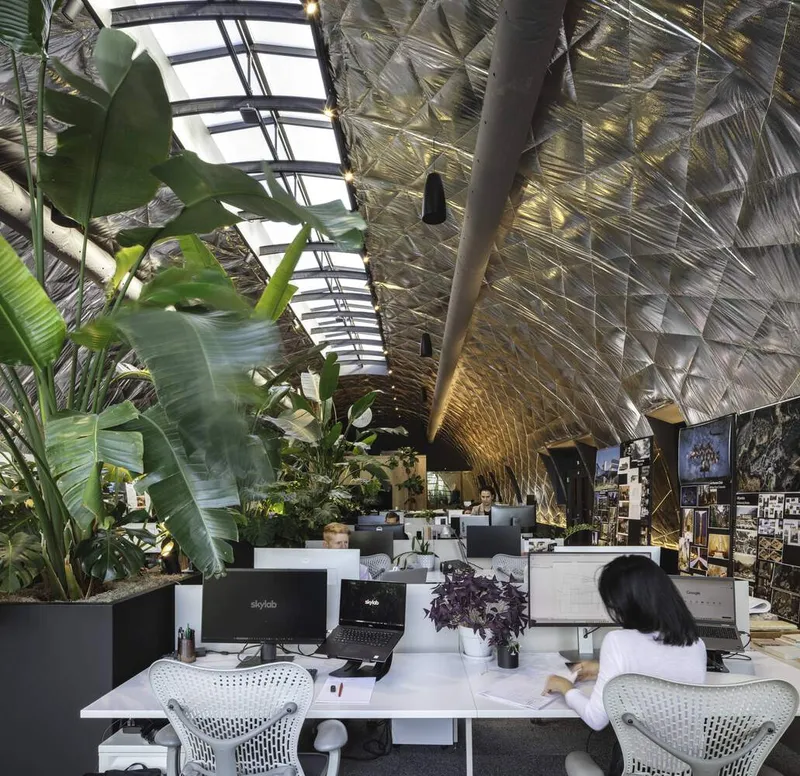
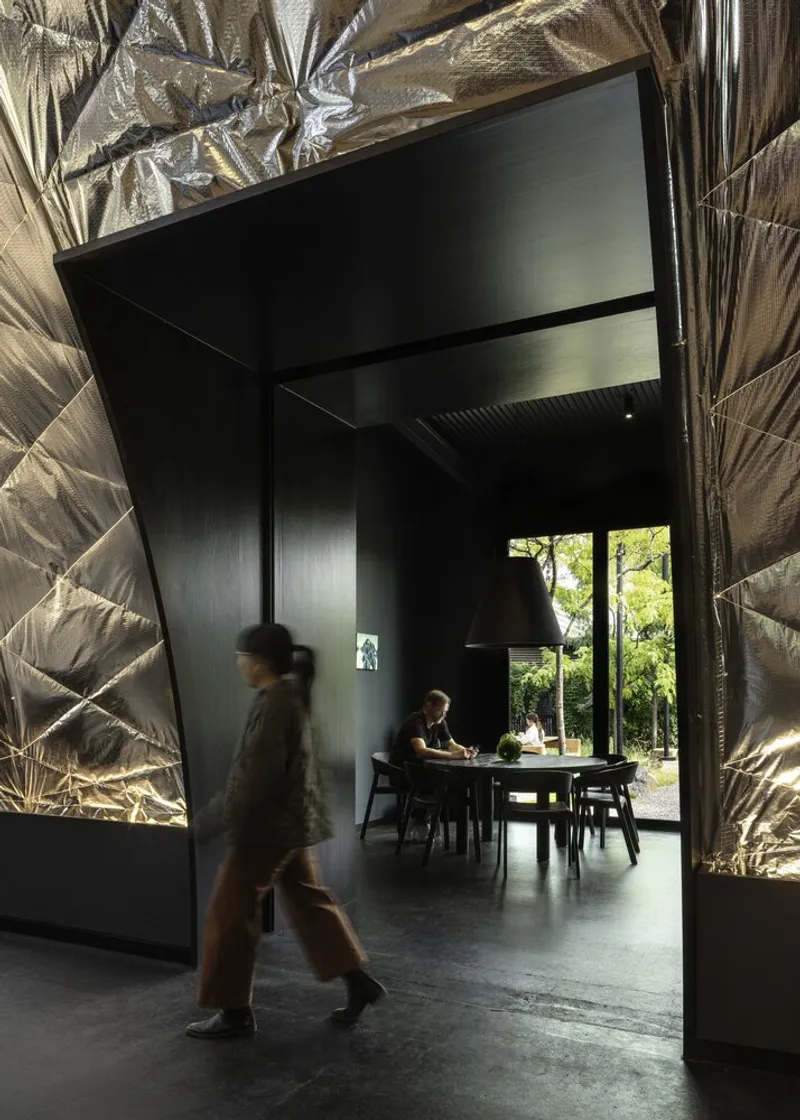
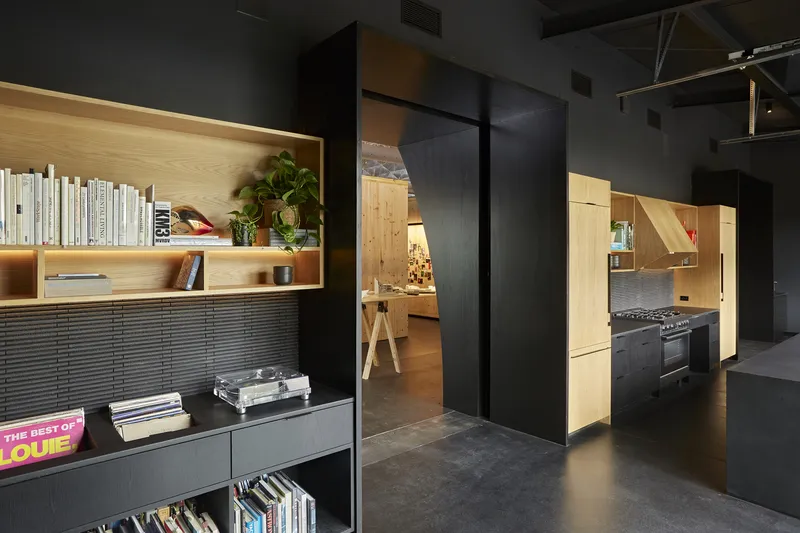
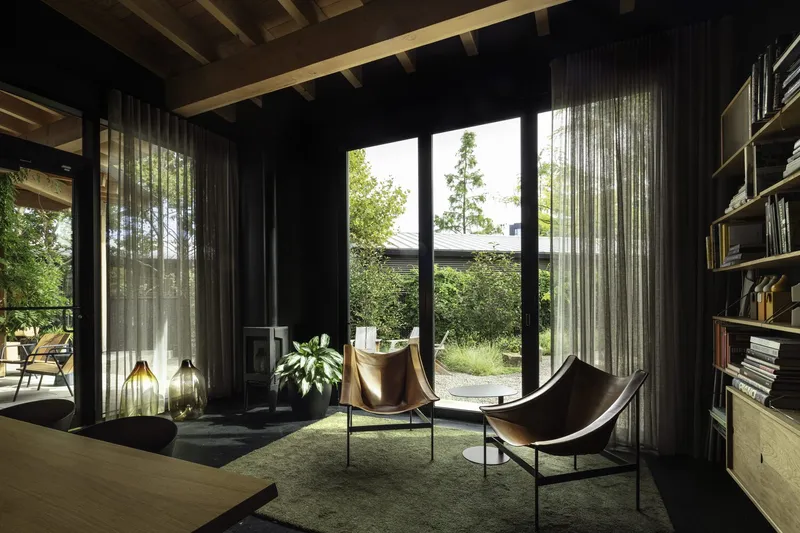
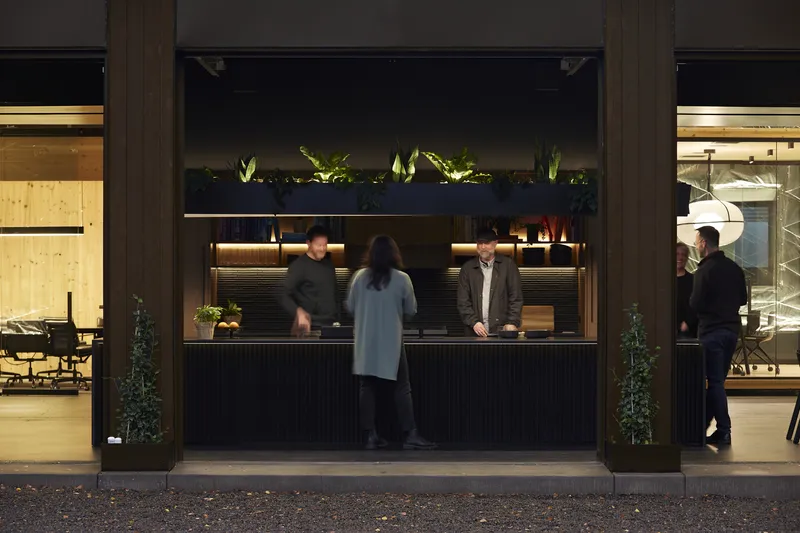
Inside, the headquarters blends industrial grit with warm, human-centered details. Exposed concrete floors and mylar-backed insulation echo the building’s industrial past, while cross-laminated timber conference rooms, custom wood cabinetry, and indoor greenery with 15-foot trees introduce warmth and biophilic comfort. The program supports a dynamic work culture with open work areas, private meeting spaces, a full kitchen, a dining zone, and a listening lounge—creating an environment where collaboration and focus coexist.
Innovation Hub: SkylabSHOP Fabrication Facility
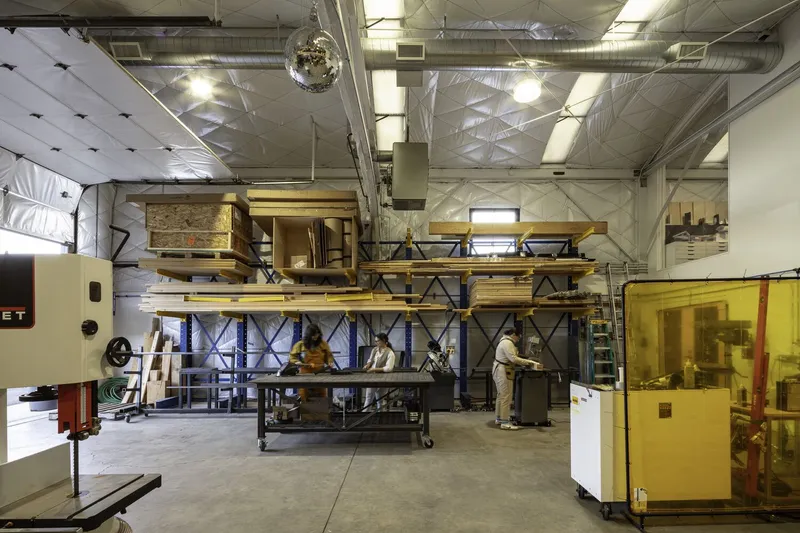
Adjacent to the main office, SkylabSHOP serves as a 1,000-square-foot fabrication lab dedicated to design experimentation and prototyping. This hands-on facility enables woodworking, metal fabrication, laser cutting, plastic casting, and furniture finishing, allowing the team to refine concepts and craft custom components in-house. Supported by a skilled team and specialized partners for CNC machining, waterjet cutting, and foundry work, SkylabSHOP turns the office into a true innovation ecosystem where design and making converge.
Outdoor Integration and Community Engagement
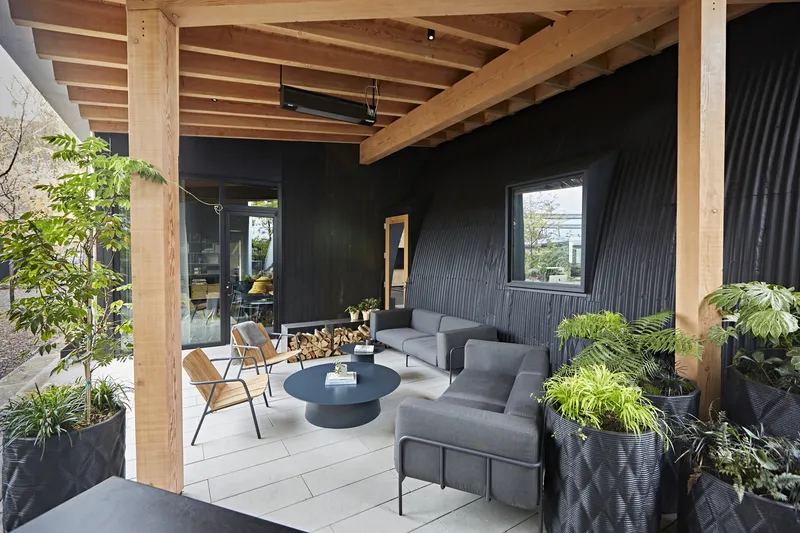
The campus extends beyond the buildings with 13,148 square feet of multifunctional outdoor space. Gardens, fire pits, an outdoor kitchen, and flexible gathering areas enhance employee well-being while accommodating public events such as food truck markets, installations, and performances. This landscape-driven approach underscores the adaptive reuse philosophy—reviving underutilized industrial land for community-oriented, sustainable purposes.
Sustainability and Adaptive Reuse Principles
This project demonstrates how adaptive reuse office design can deliver sustainability without sacrificing aesthetics or performance. By repurposing existing structures, Skylab minimized demolition waste, reduced embodied carbon, and preserved cultural heritage. Strategic daylighting, energy-efficient systems, and durable material choices ensure long-term environmental and operational benefits.
A Model for Future Workspaces
The Skylab Headquarters and SkylabSHOP set a benchmark for future adaptive reuse office design. More than a workplace, the project is a creative campus where architecture, craftsmanship, and community intersect. It proves that industrial heritage, when thoughtfully reimagined, can support the evolving demands of contemporary work culture—flexibility, innovation, and sustainability.
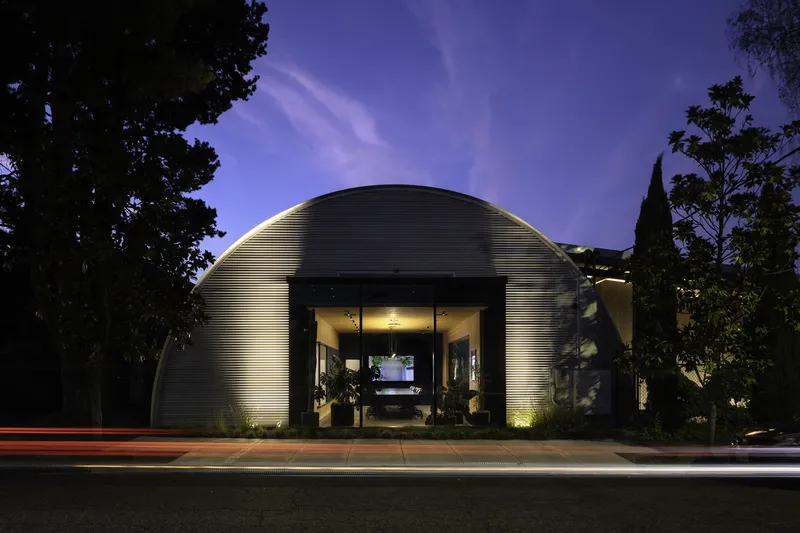
All the photographs are works of Stephen Miller, Eric Fortier


Popular Articles
Popular articles from the community


Manzana Morphosis: Stretching Barcelona's Grid into a Living Landscape for 2050
A radical reworking of the Eixample manzana turns density into a tool for generous public space, vertical ecology, and environmental performance.

Opera by the Sea Estonia: Three Shells Dissolving Architecture into Tallinn's Coastline
A winning opera house proposal replaces monumental form with interconnected shells that blur the boundary between building, park and Baltic Sea.

Cloaked Colonization: A Mobile Underwater Habitat That Moves Like a Fish
Micah Abaya's shortlisted EHC Pacific entry reimagines ocean settlement as a dispersed network of self-sustaining architectural organisms.

Extended Shell: Retrofitting Kolkata's Balconies as Living Urban Thresholds
A modular retrofit system recovers the social and environmental intelligence of Kolkata's historic verandas for contemporary Park Street residents.

Similar Reads
You might also enjoy these articles

Bamboo Housing Challenge 2026: Design Affordable, Sustainable Homes Using Bamboo
An international design competition by Bamboo U and IBUKU inviting architects and designers to reimagine affordable housing using bamboo — with the winning design built full-scale in Bali.

Computational Design & Education: Beegraphy Design Awards Introduces 7th Category (Featuring Jiyun's Innovative Approach)
Dive into Beegraphy’s 7th Design Awards category, where computational design meets education to create immersive, interactive learning tools, inspired by Jiyun’s work.
From Parametric Lighting to Urban Furniture: Join the 2nd Workshop in Beegraphy’s Computational Design Series
Dive into Cutting-Edge Design Techniques and Practical Applications with Industry Experts

Last Call: Unleash Your Architectural Genius in SHAK's Kindergarten Design Competition
Urgent call for architects to join SHAK's kindergarten design competition before the looming deadline

Explore Adaptive Reuse Competitions
Discover active competitions in this discipline

Challenge to reimagine the Iron Throne

Photograph architecture without architects

Illustrate the lost glory of Angkor Wat - Render Challenge

Design challenge to reuse E-waste
Comments (0)
Please login or sign up to add comments
No comments yet. Be the first to comment!