
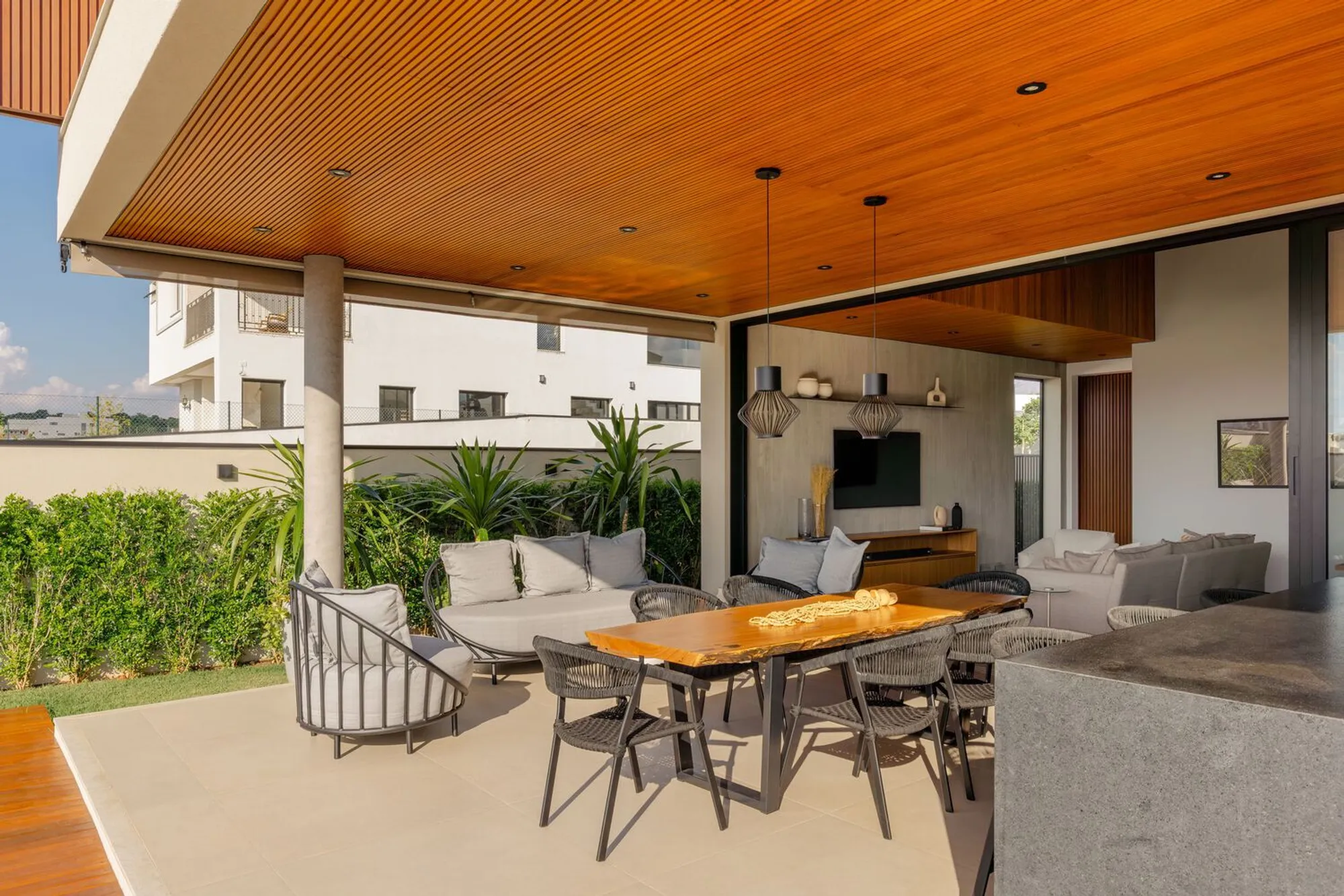
AL House: A Contemporary Approach to Modern Brazilian House Design with Indoor-Outdoor Integration
A modern Brazilian home that blends privacy and openness through indoor-outdoor integration, spatial clarity, and a refined material palette.


A Home That Balances Privacy, Comfort, and Connection
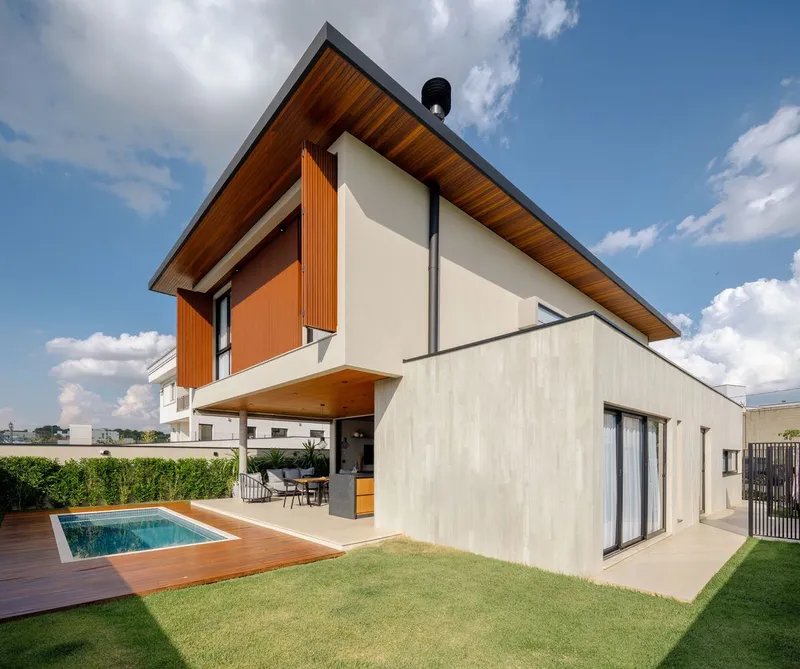
Situated on a 450-square-meter plot in Brazil, the AL House by Taguá Arquitetura represents a thoughtful approach to modern Brazilian house design with indoor-outdoor integration. Architects Thiago Brugnolo and Mariana Rotta envisioned a residence that seamlessly blends functionality, privacy, and openness—encouraging family interaction while offering spaces for reflection and seclusion. Designed in 2024, the 3660-square-foot residence reflects a deep understanding of spatial fluidity and environmental responsiveness.
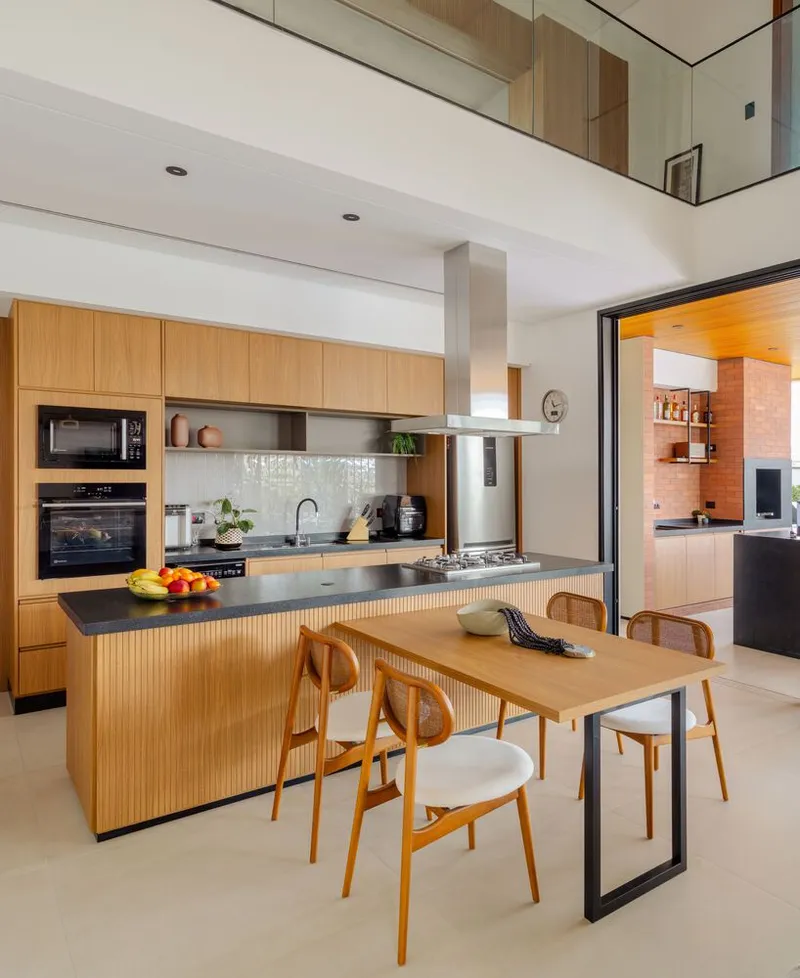
Social Heart Anchored in the Center
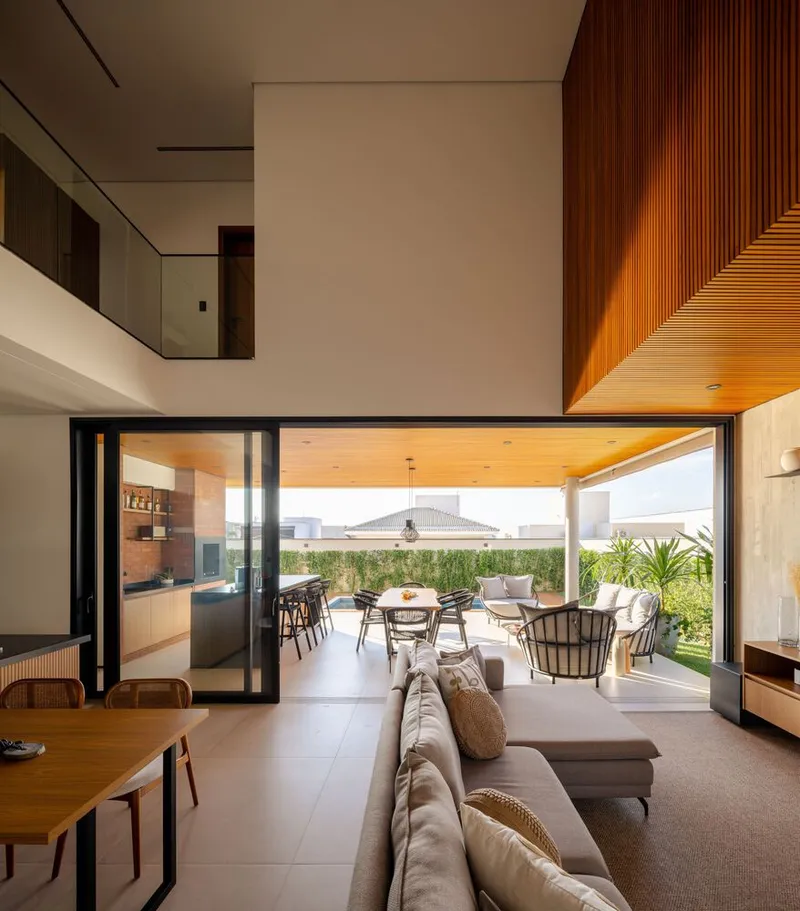
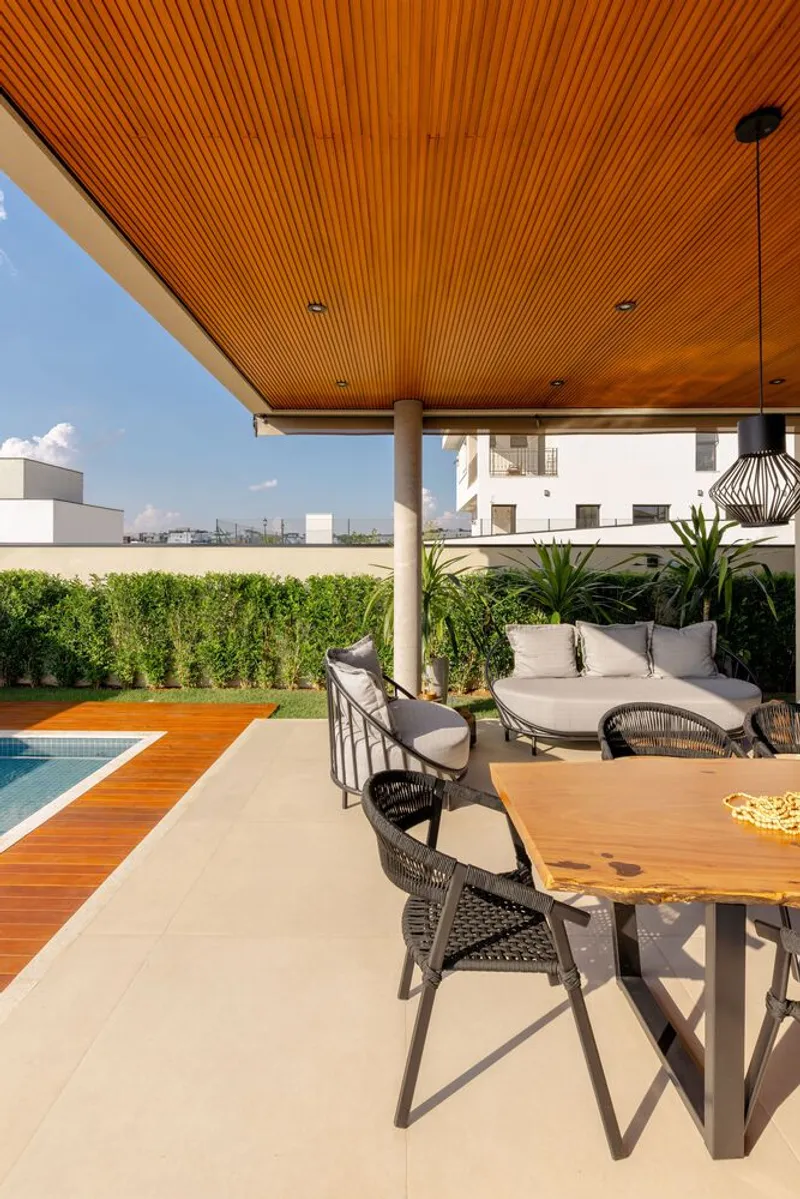
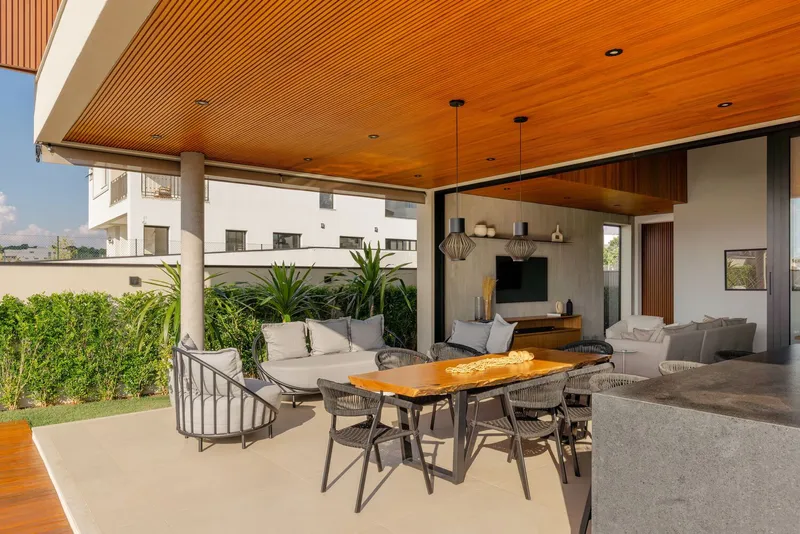
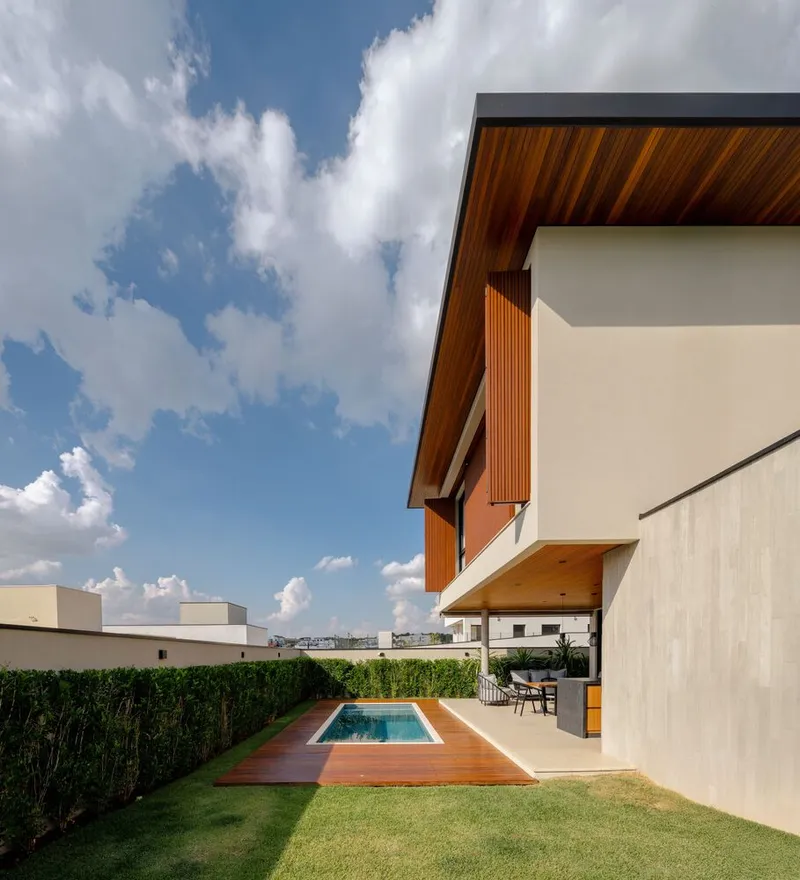
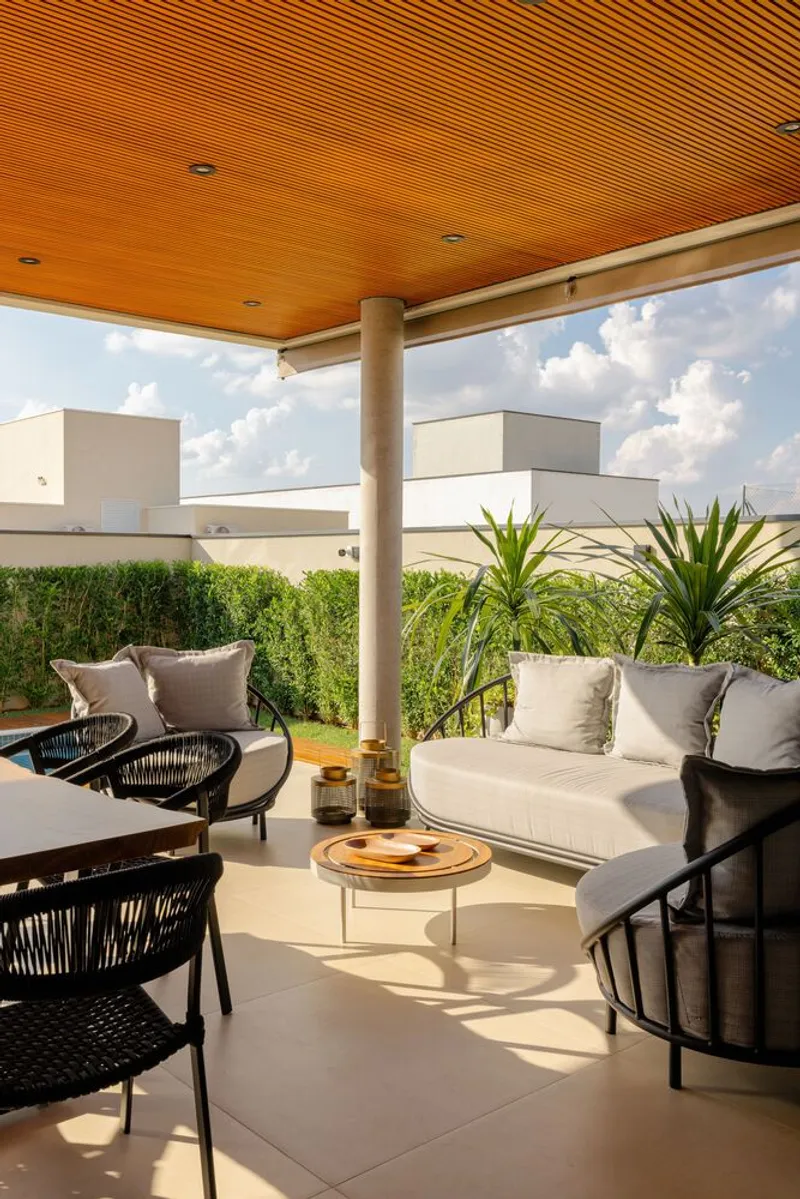
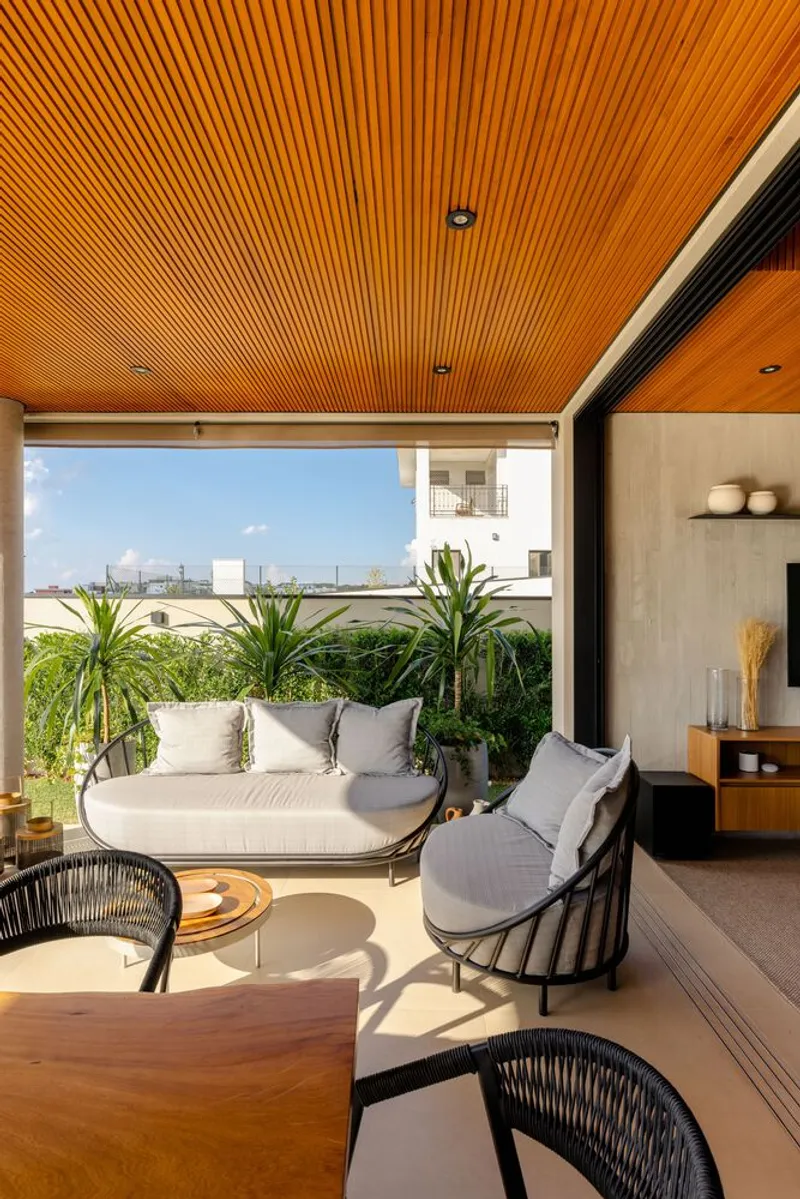
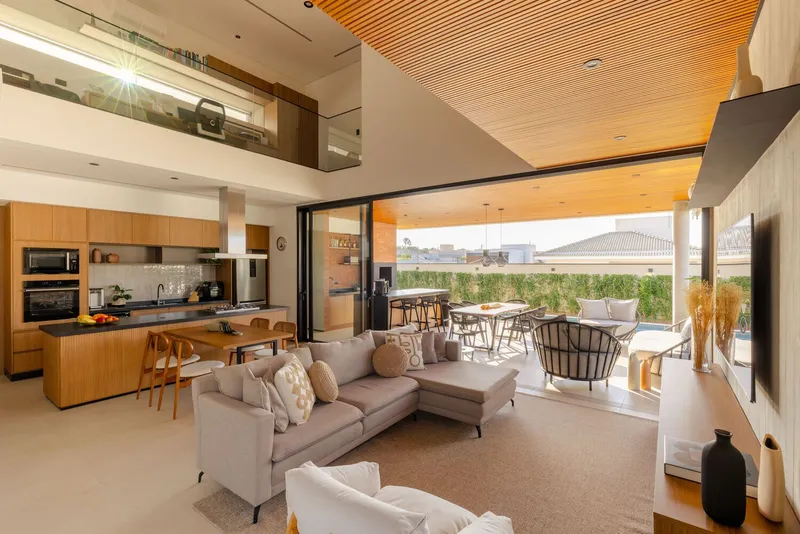
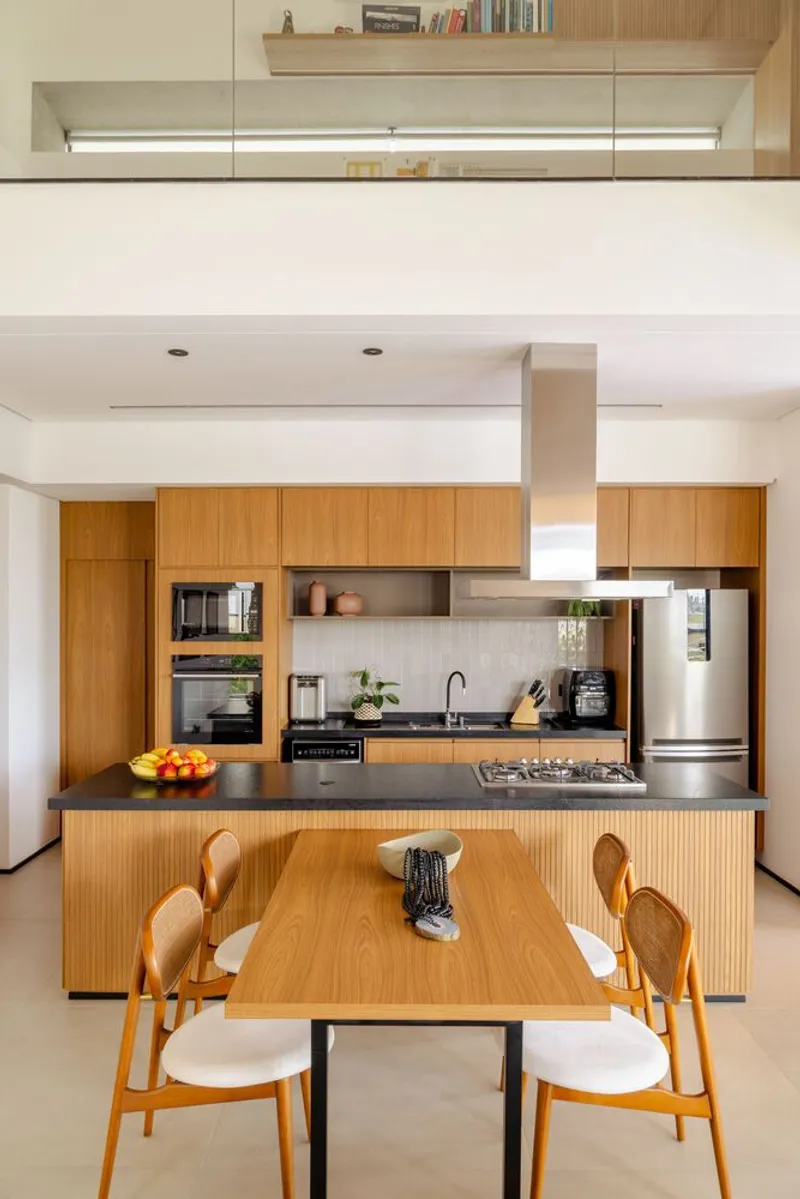
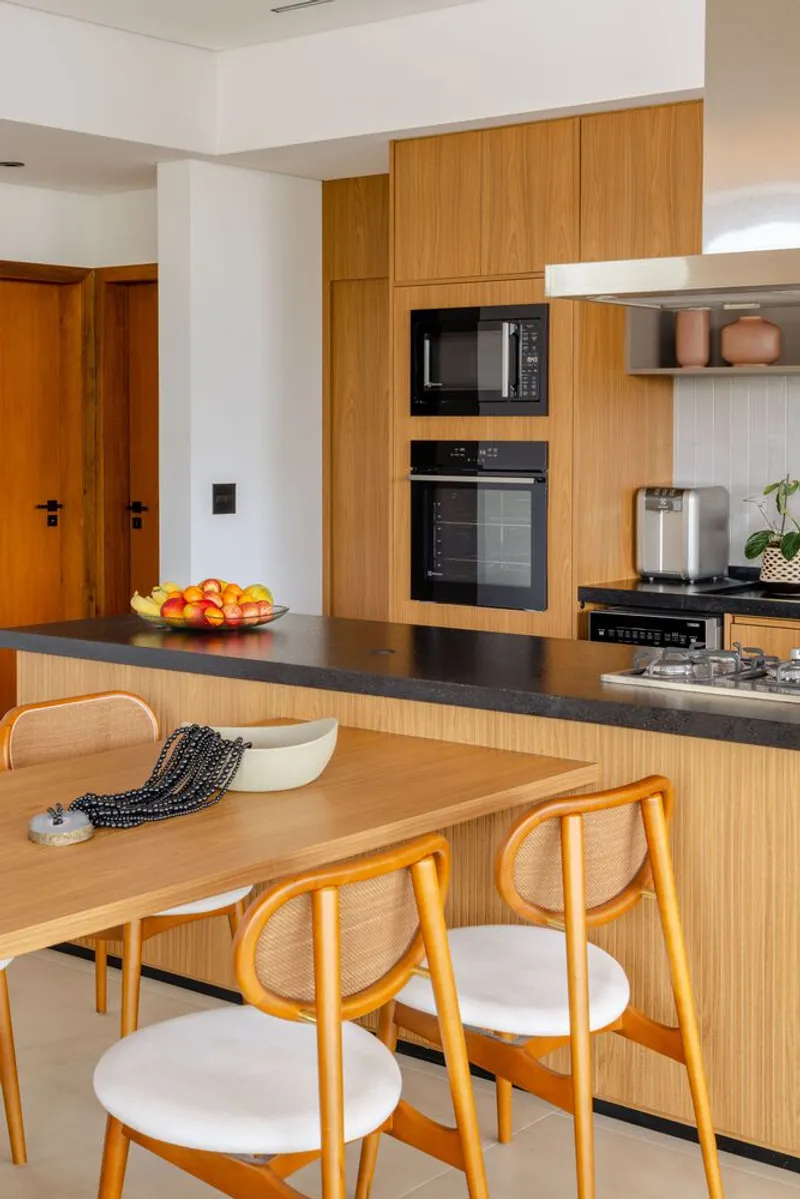
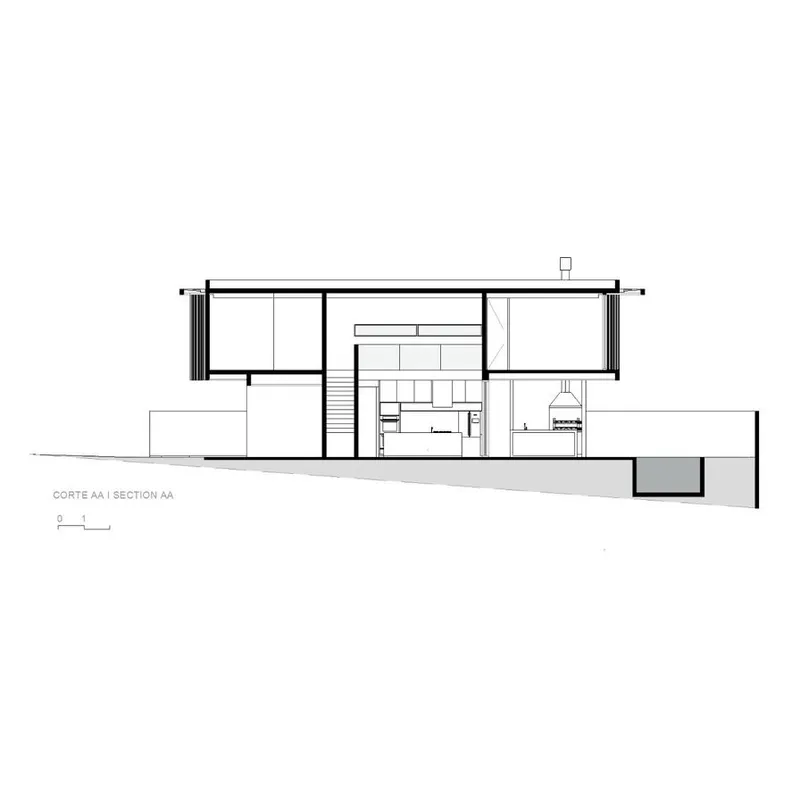
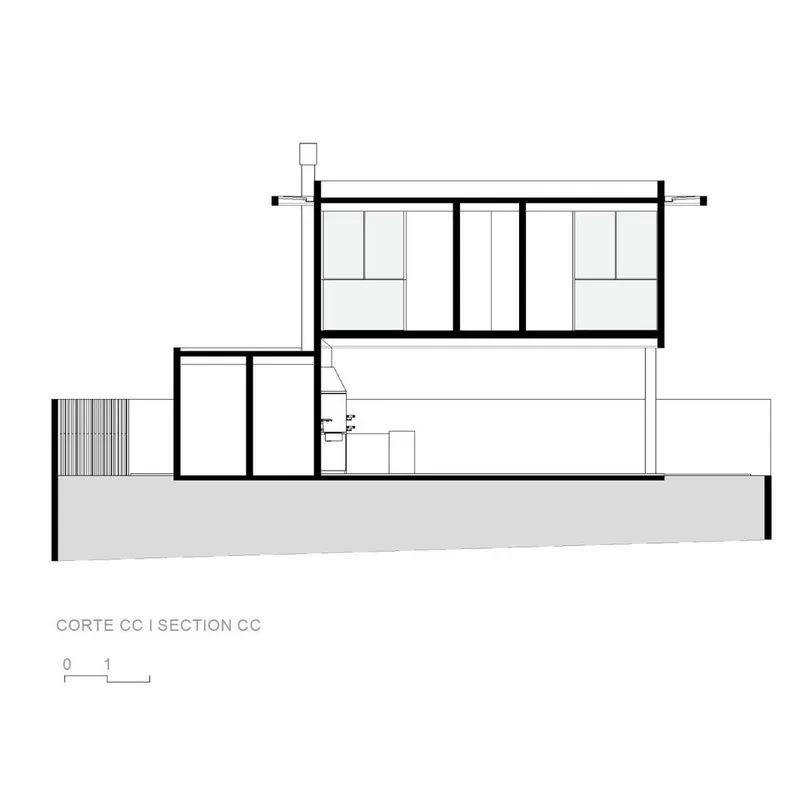
At the core of the design is a layout that centralizes the social spaces, reinforcing the home’s identity as a family-centric environment. The kitchen, dining, and living areas are grouped in the center of the lot and visually connected to an outdoor gourmet area through fully operable glass panels. This transparency allows for physical continuity between interior and exterior zones, fostering everyday rituals of togetherness while remaining adaptable to varying levels of privacy.
Fluid Circulation and Vertical Interaction
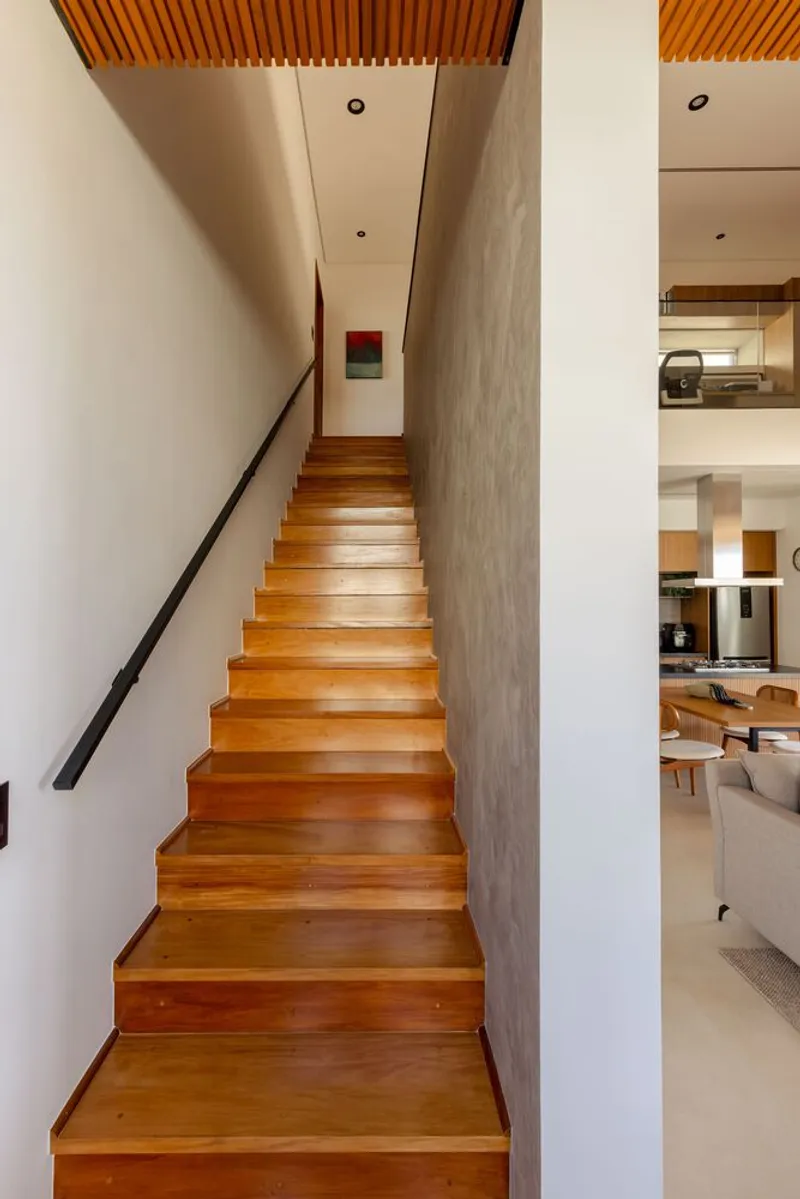
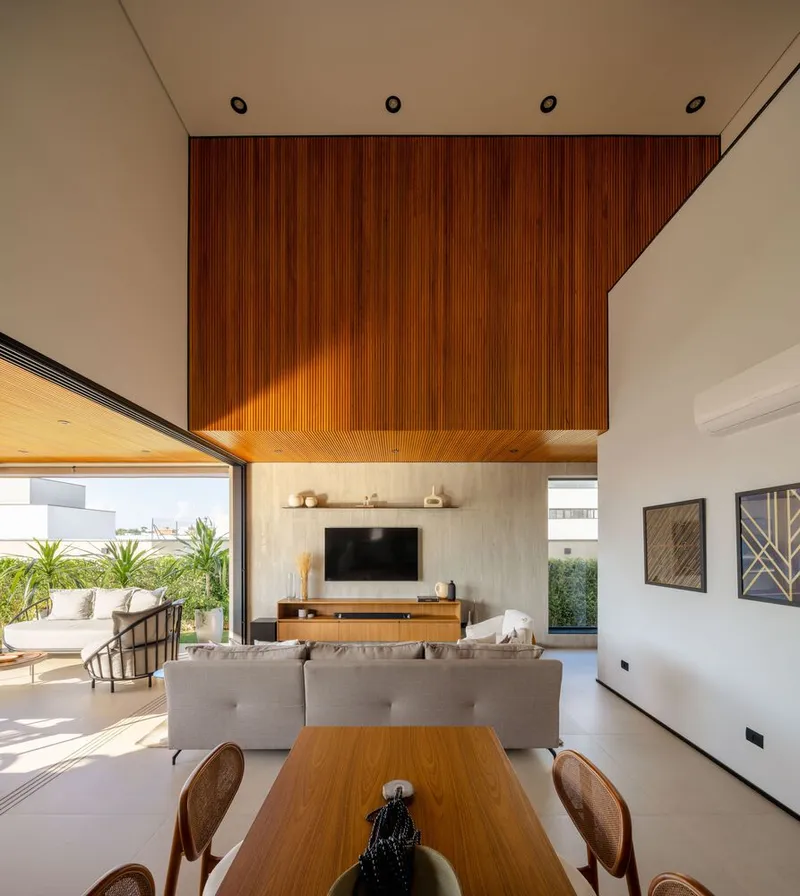
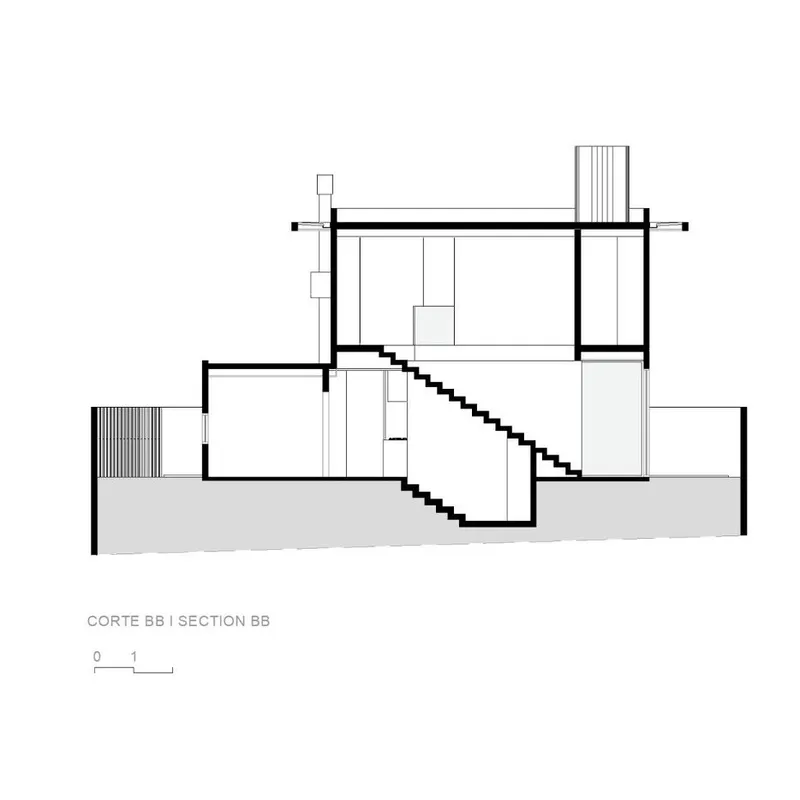
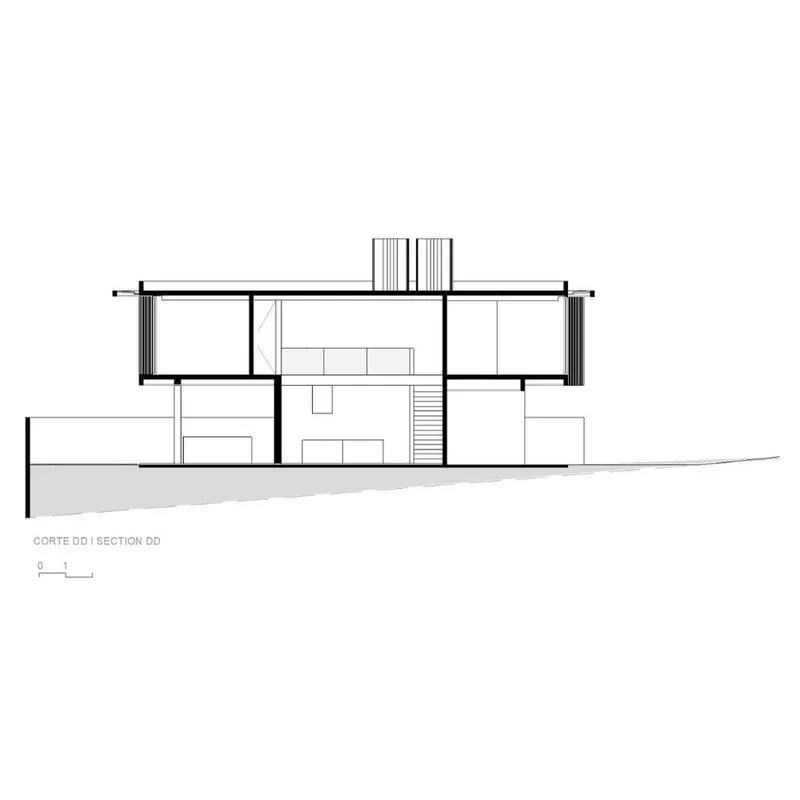
Upon entry, a carefully defined hall organizes the spatial flow. The stairway to the upper level creates a gentle threshold, leading to private spaces such as bedrooms and a home office that overlooks the double-height living area. This visual linkage not only maximizes vertical integration but also facilitates communication and shared experience between the floors. The open-plan concept is guided by clarity and comfort, avoiding visual clutter and encouraging intuitive movement throughout the home.
Passive Design and Privacy in Harmony
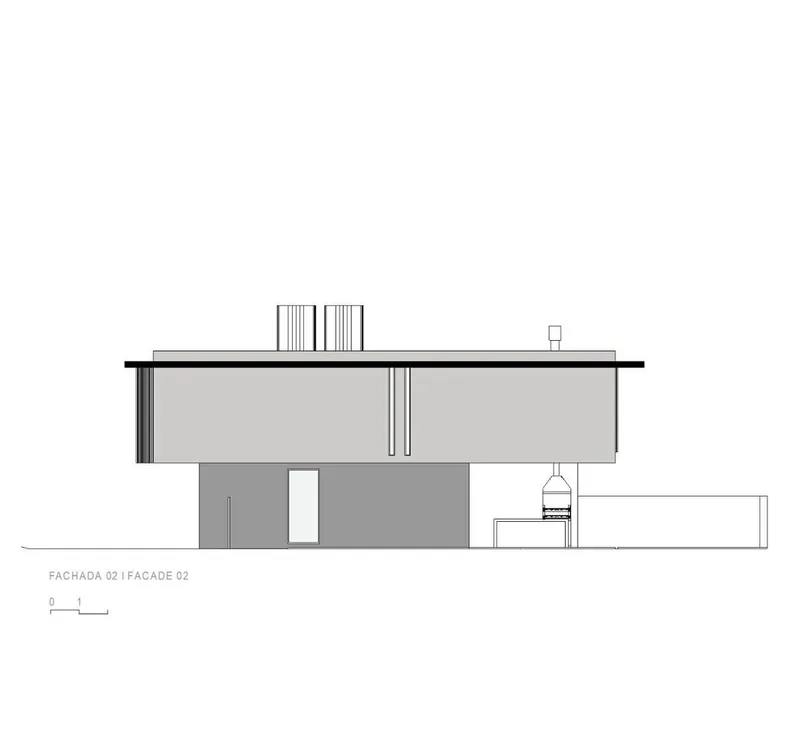
The placement of service zones on the west side of the plot was a strategic move to enhance discretion in the social core. This thoughtful zoning ensures a calm and protected environment, further reinforced by facades with limited openings to the sides. While privacy is maintained, the sense of enclosure never becomes isolating; it instead enhances the serenity of the internal experience.
Material Contrast with a Cohesive Palette
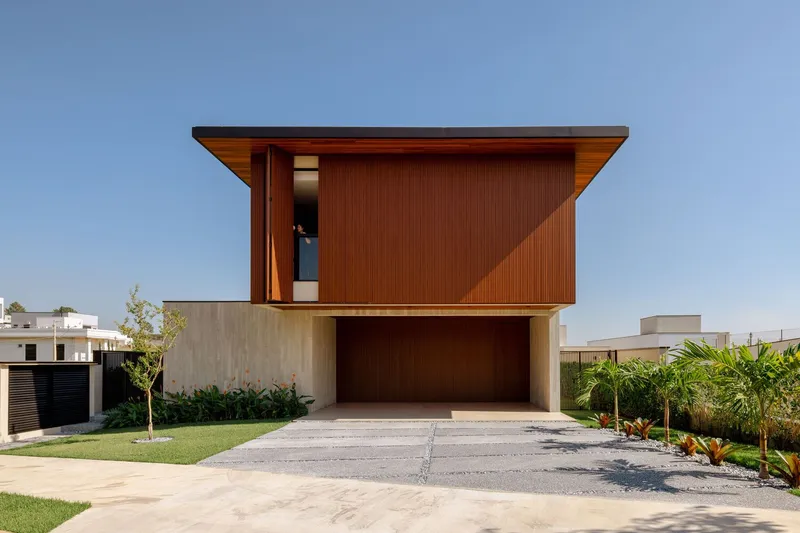
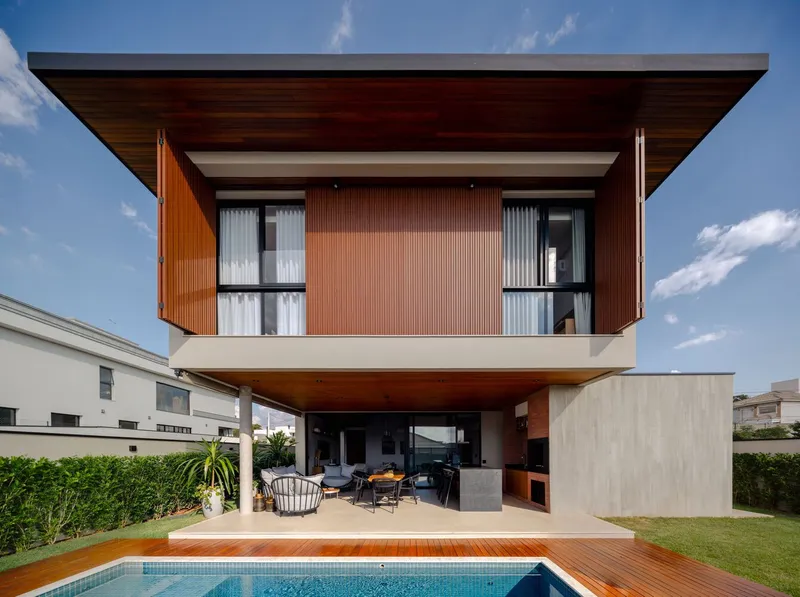
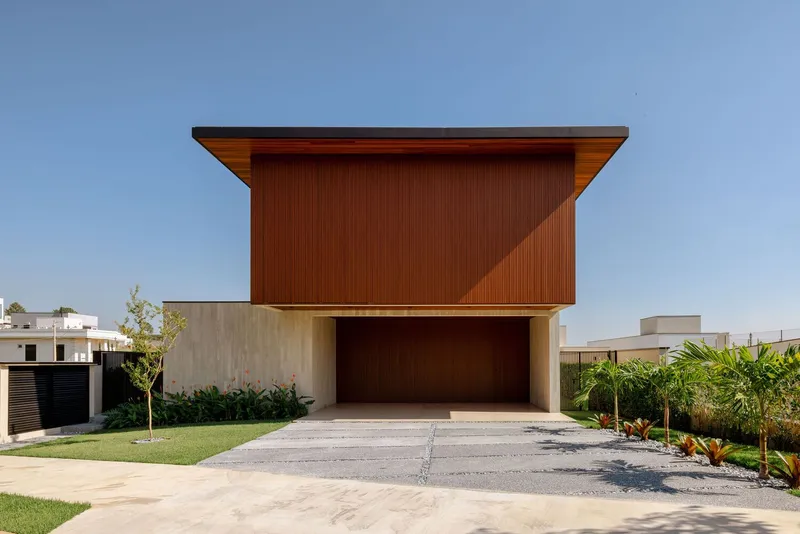
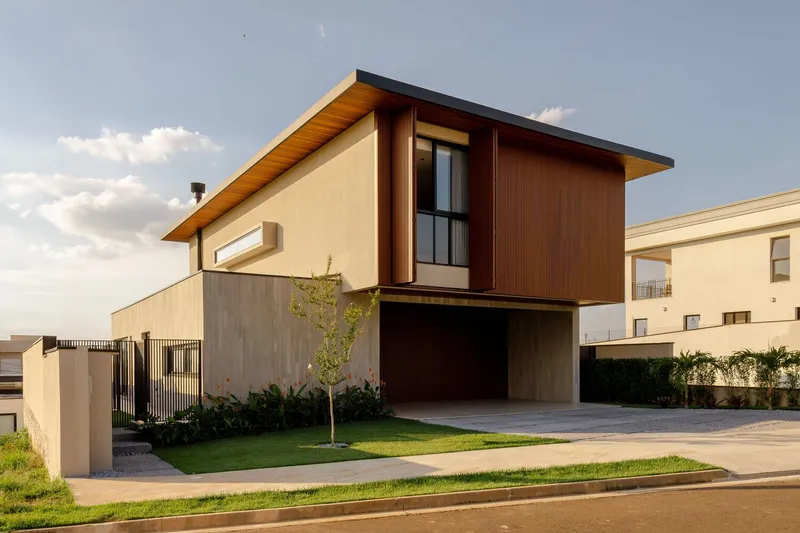
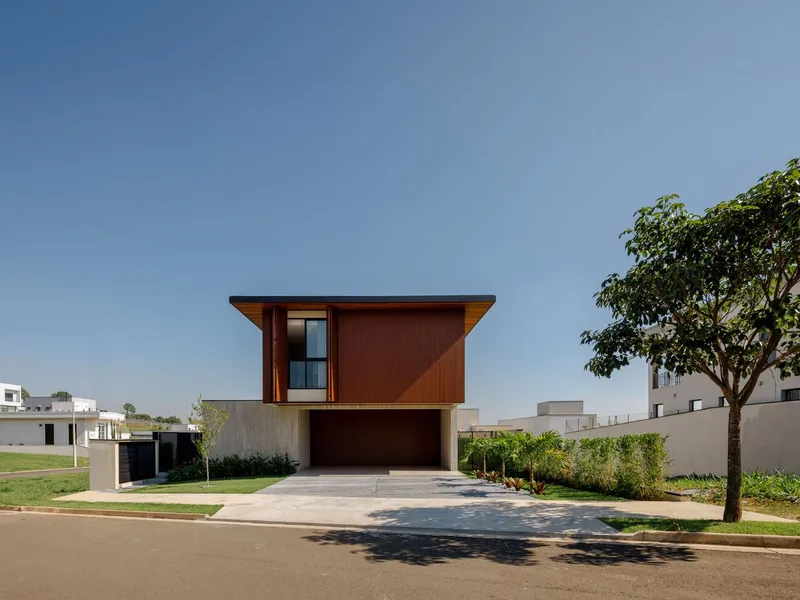
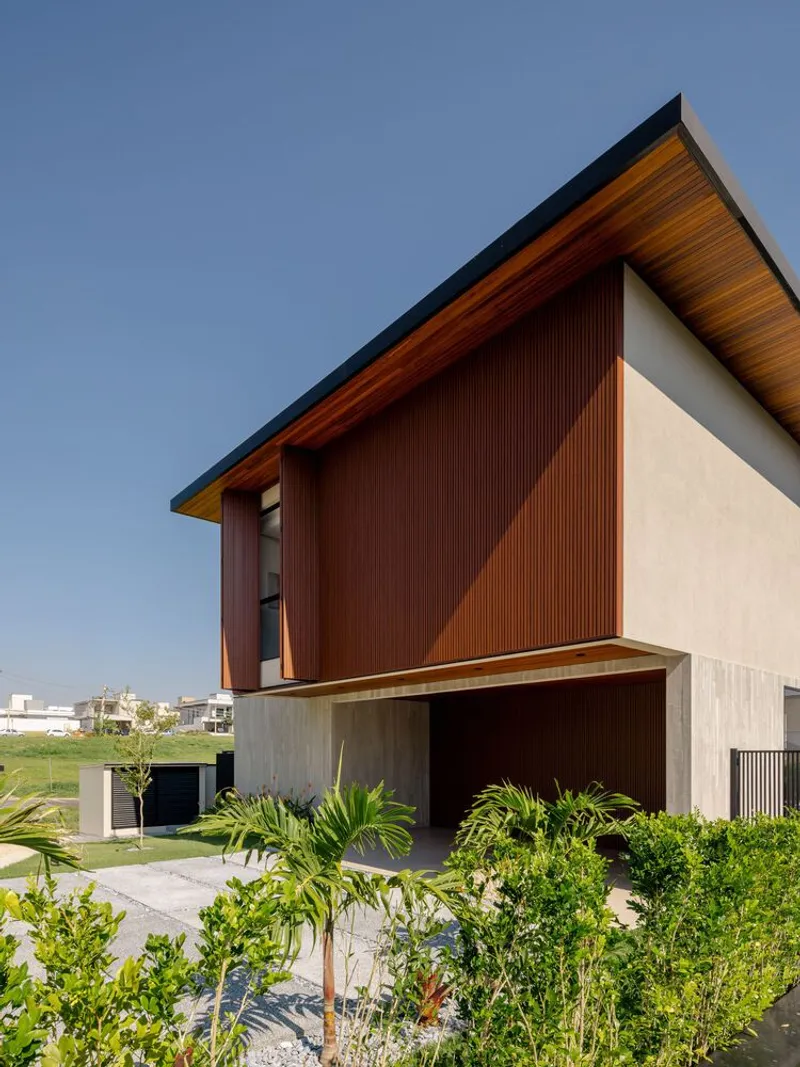
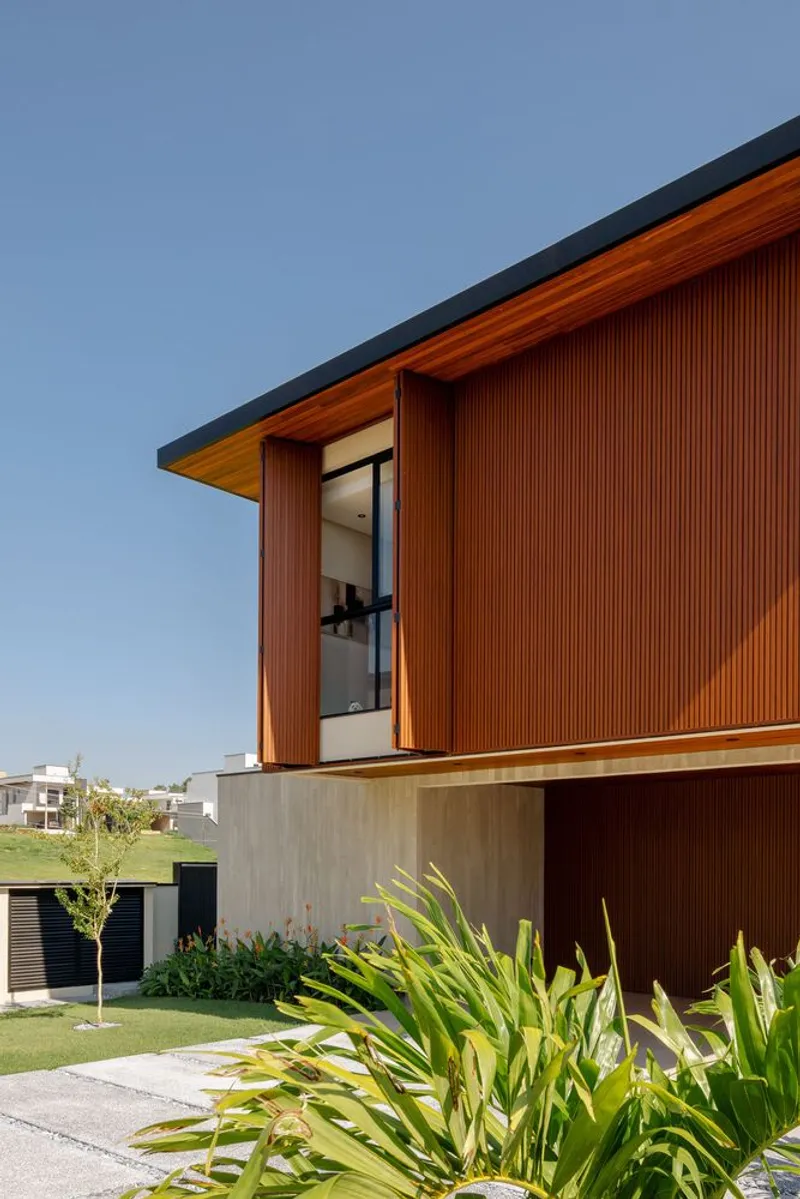
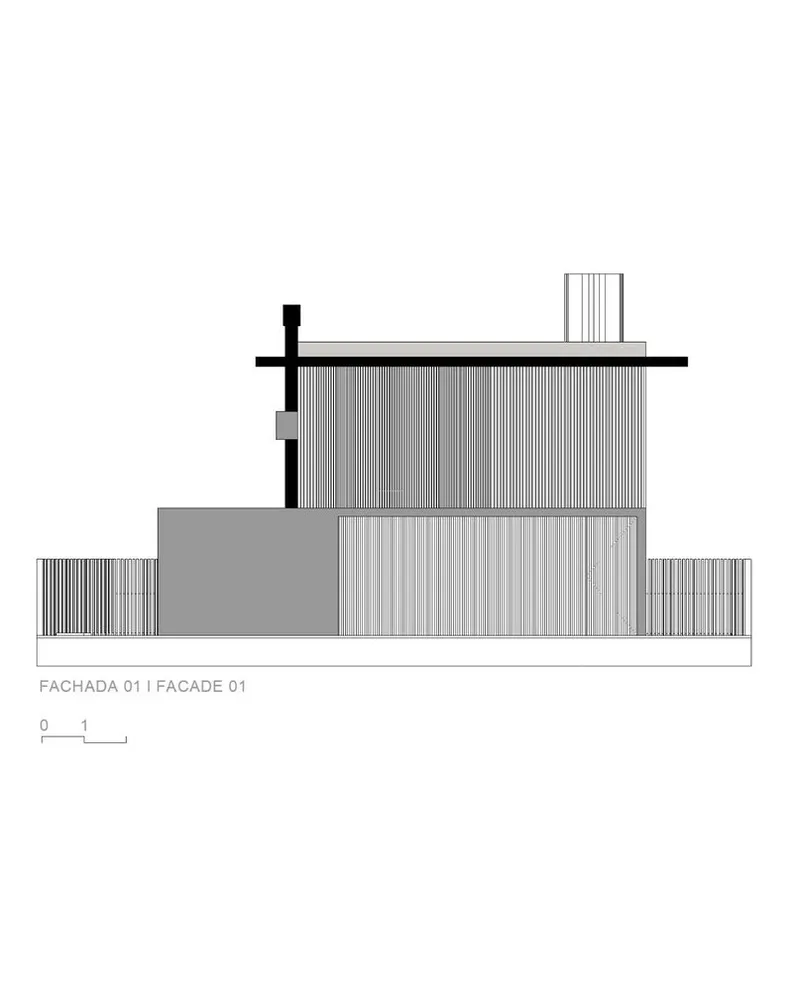
Material selection in AL House plays a significant role in crafting a warm yet modern character. The ground floor employs concrete slats that lend structural solidity, while the use of wood-effect aluminum louvers adds visual softness and texture. These louvers can be folded open or closed, allowing residents to adjust light and airflow based on time of day or need for seclusion. A metal eave adds to the shading strategy, improving thermal comfort and energy efficiency.
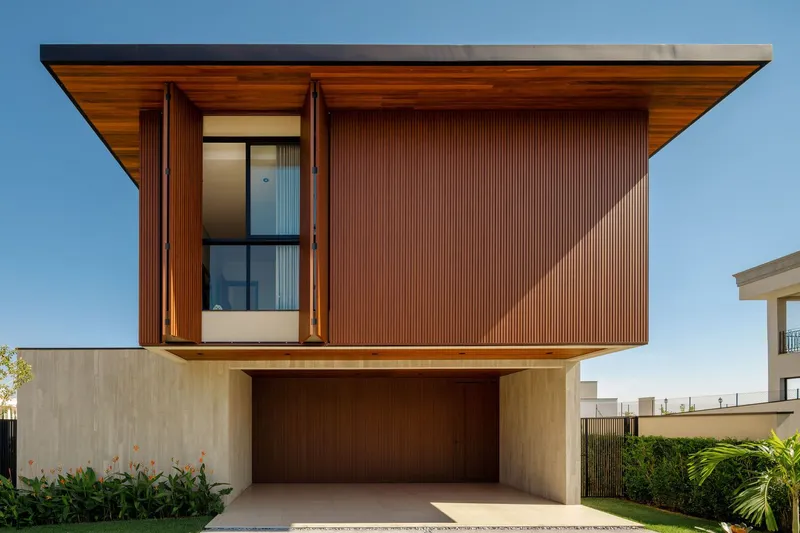
The upper floor, appearing to lightly rest atop the solid base, continues the language of vertical louvers, blurring the line between wall and window. This modular rhythm creates a dynamic façade that shifts with the sun and enhances the overall livability of the home. The interplay between raw structure and refined detailing reinforces the architects’ goal of creating a house with a human-scale identity.
Double-Height Living and Familial Cohesion
One of the spatial highlights is the double-height living room, which serves as the visual and emotional anchor of the residence. This vertical openness allows the house to breathe while establishing a central axis for family interaction. The room becomes a place of convergence, where conversations flow naturally between the upper and lower levels, reinforcing the idea that architectural space can nurture daily connection.
A Contemporary Brazilian Home Rooted in Context
The AL House is a rich expression of how modern Brazilian house design with indoor-outdoor integration can address climatic, cultural, and emotional needs. By harmonizing materials, balancing openness with privacy, and encouraging interaction through design, Taguá Arquitetura delivers a residence that is at once timeless and responsive. It is a space that embraces sunlight, air, and family—a home designed not just to inhabit, but to live fully within.
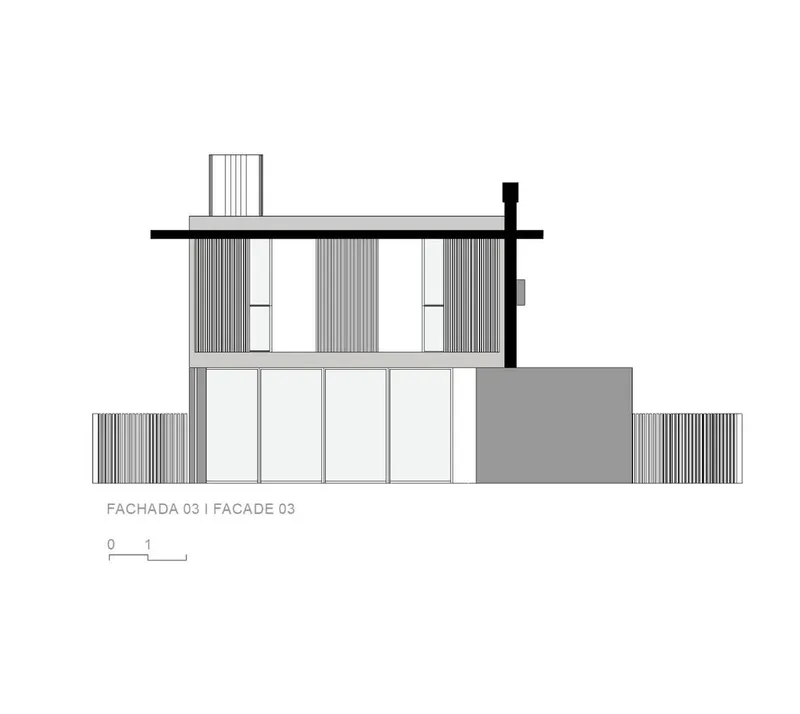
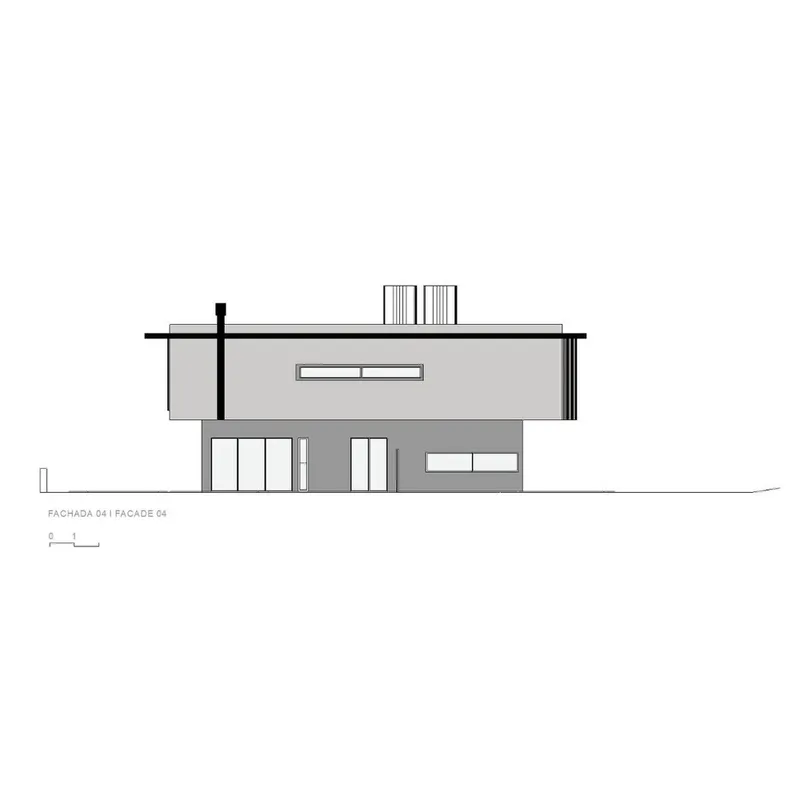
All photographs are works of Manuel Sá




Popular Articles
Popular articles from the community


The Ocean Hive: Sustainable Architecture for a Self-Sufficient Civilization at Sea
The Ocean Hive imagines sustainable architecture at sea, where modular habitats, algae, wave power and ocean waste sustain a growing colony.

Co-life: Sustainable Architecture for Age-Friendly Community Living
Co-life reimagines sustainable architecture for seniors through courtyards, rammed earth, shared gardens, and spaces designed for belonging.

Conexión: Biophilic Design Reimagines High-Rise Living in Hong Kong
Conexión reimagines high-rise living in Hong Kong through biophilic design, green facades, shared spaces, daylight, water and nature within.

Riyadh For All: Intergenerational Urban Design for Active Aging in Rabat
Riyadh For All reimagines urban design in Rabat with intergenerational co-living, adaptive courtyards, and Moroccan cultural exchange today.


Similar Reads
You might also enjoy these articles

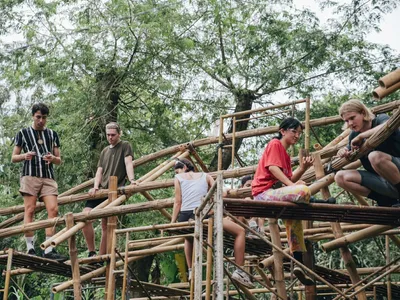
Bamboo Housing Challenge 2026: Design Affordable, Sustainable Homes Using Bamboo
An international design competition by Bamboo U and IBUKU inviting architects and designers to reimagine affordable housing using bamboo — with the winning design built full-scale in Bali.
Computational Design & Education: Beegraphy Design Awards Introduces 7th Category (Featuring Jiyun's Innovative Approach)
Dive into Beegraphy’s 7th Design Awards category, where computational design meets education to create immersive, interactive learning tools, inspired by Jiyun’s work.
From Parametric Lighting to Urban Furniture: Join the 2nd Workshop in Beegraphy’s Computational Design Series
Dive into Cutting-Edge Design Techniques and Practical Applications with Industry Experts

Last Call: Unleash Your Architectural Genius in SHAK's Kindergarten Design Competition
Urgent call for architects to join SHAK's kindergarten design competition before the looming deadline


Explore Latin American Houses Competitions
Discover active competitions in this discipline



Challenge to reimagine the Iron Throne


Photograph architecture without architects


Illustrate the lost glory of Angkor Wat - Render Challenge


Design challenge to reuse E-waste
Comments (0)
Please login or sign up to add comments
No comments yet. Be the first to comment!