

Aljibes Viewpoint in Álora: A Contemporary Architectural Journey Through History
Historic Álora viewpoint reveals archaeological layers through adaptive reuse, guiding visitors across textures, memory, and landscape via immersive contemporary architectural intervention.


The Aljibes Viewpoint, designed by WaterScales arquitectos, is a remarkable example of historic preservation architecture in Spain. Located in Álora, this 297 m² intervention transforms an urban void into a cultural and spatial experience that reconnects visitors with the layered history of the site. Completed in 2022, the project seamlessly integrates adaptive reuse, archaeological discovery, and contemporary design, creating a unique viewpoint rooted in memory and materiality.
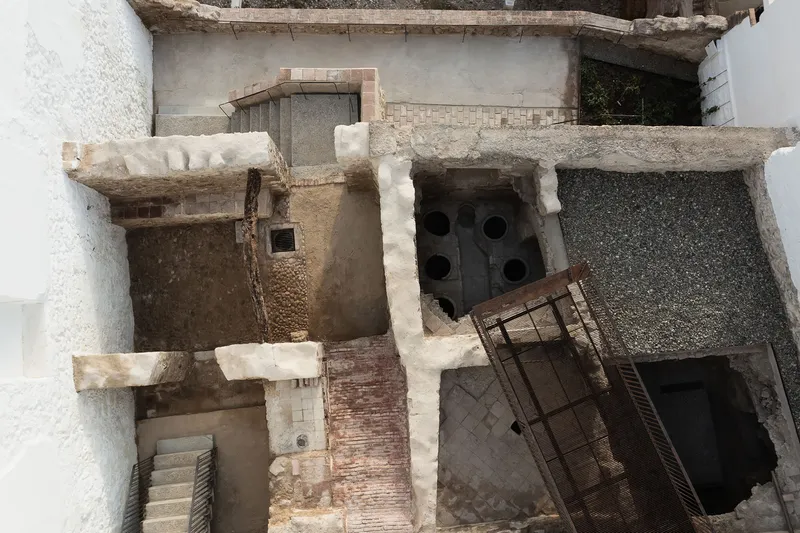
Reclaiming an Urban Void in Historic Álora
The project emerged after the demolition of a house once belonging to Pepe Rosas, a renowned flamenco singer. This removal revealed a significant urban void in the historic center, opening visual and spatial connections to both a 16th-century industrial archaeological site and the nearby Arab castle.
Rather than filling the void, the architects embraced it as an opportunity to design a cultural landscape intervention that preserves and highlights the traces of the past. This strategy aligns with modern heritage conservation architecture, where absence becomes a tool for storytelling.
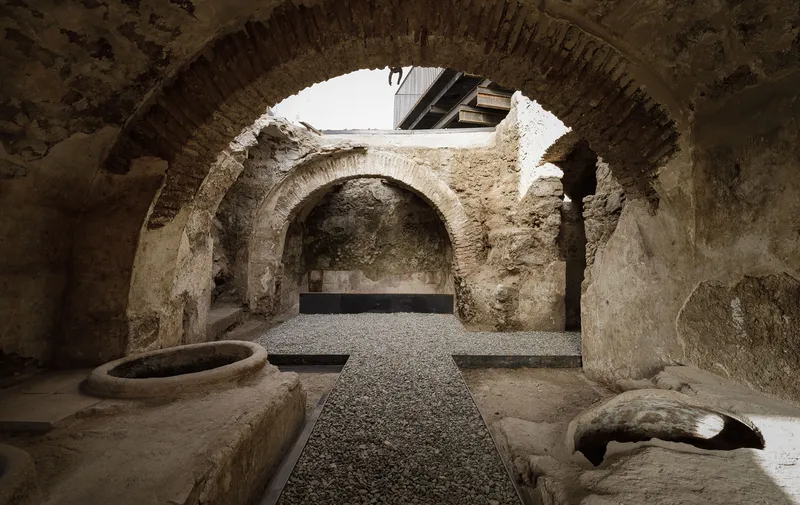
Archaeological Layers and Spatial Discovery
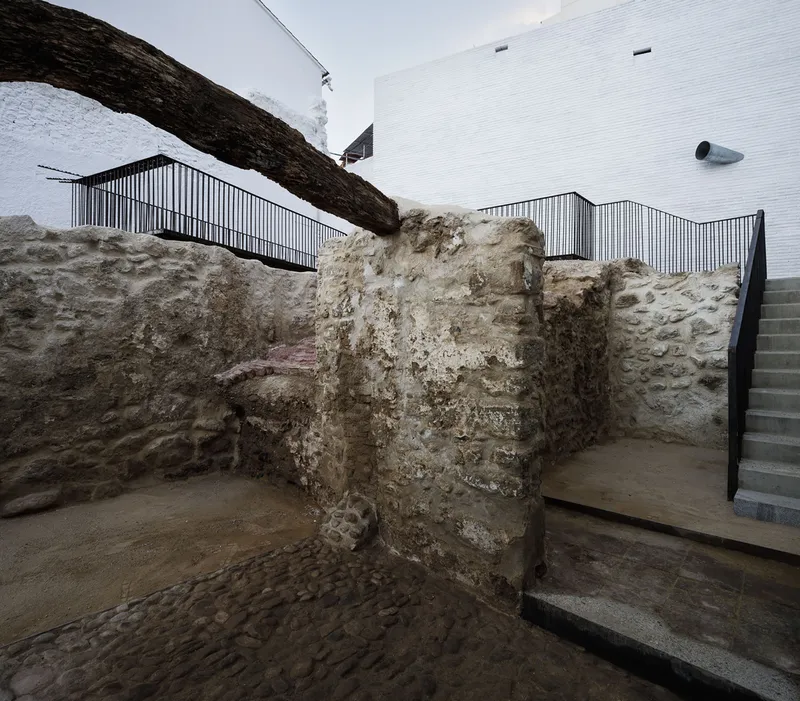
Excavations uncovered hidden historical elements that shaped the project’s narrative. In the southern section, three storerooms house seventeen semi-buried jars dating back to the 16th century, reflecting the site’s industrial past. In the northern area, traditional animal-access stairs lead to a former horse stable, emphasizing the hybrid domestic-industrial typology of the site.
These discoveries informed a design approach centered on experiential architecture, where visitors move through time by physically navigating layered spaces.
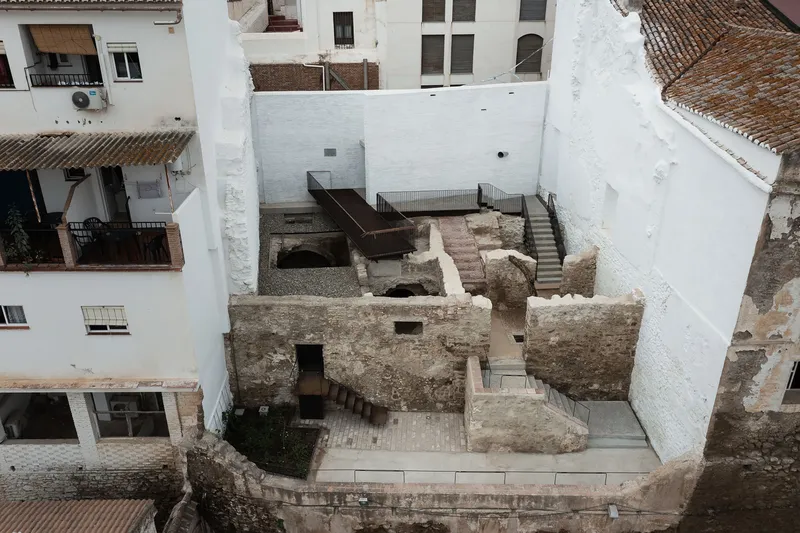
Architectural Concept: Traveling Through Time and Texture
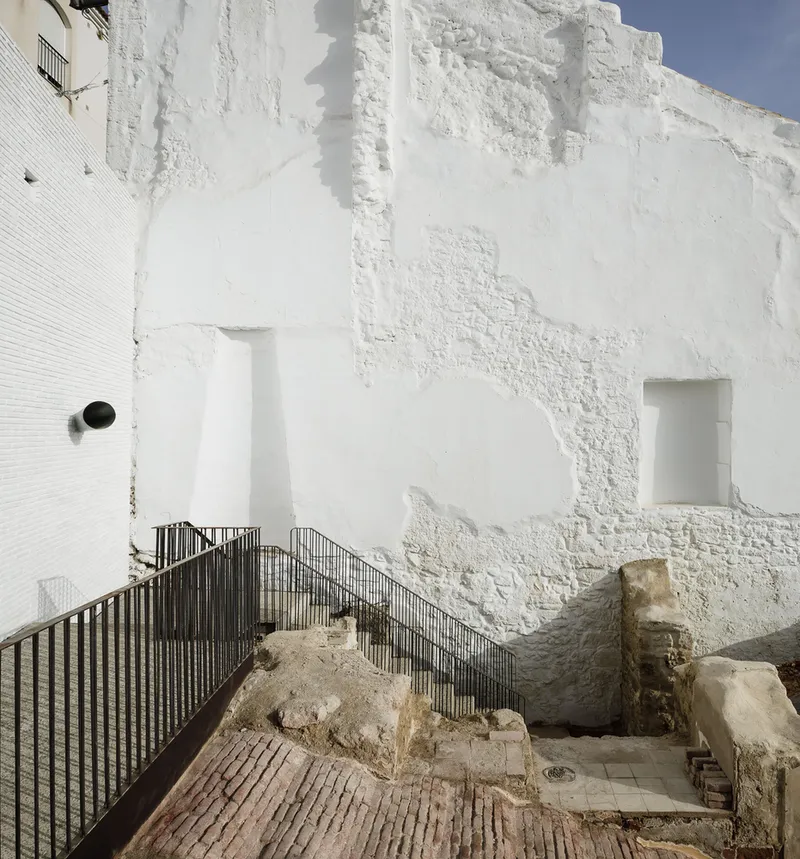
WaterScales arquitectos envisioned the project as a journey across history, using textures, materials, and spatial sequences to narrate the evolution of Álora. A thick white brick wall reconstructs the original façade line, acting as both a boundary and an invitation. Carefully carved openings create moments of curiosity, encouraging exploration of the interior.
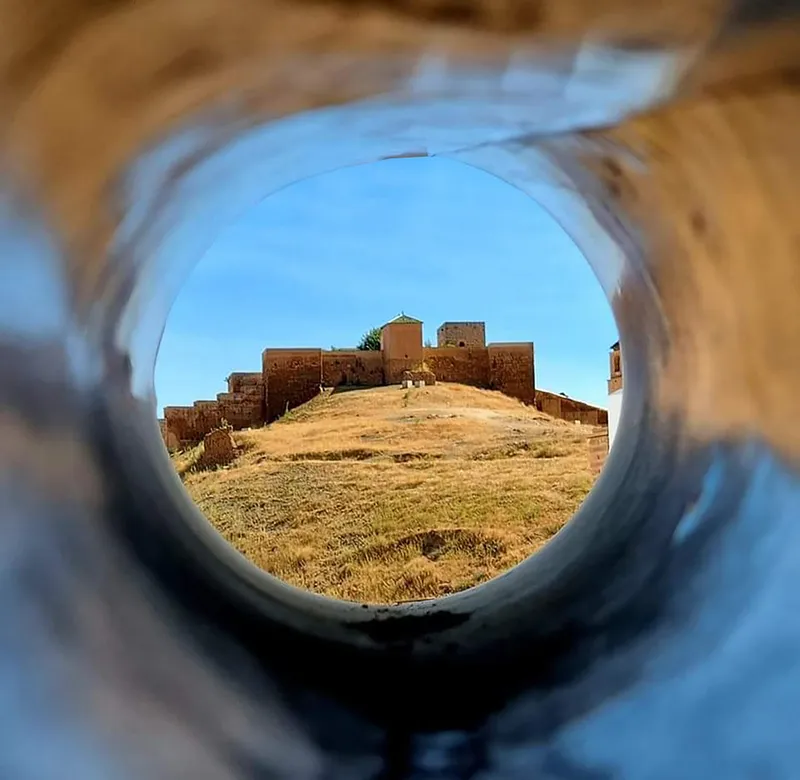
On the street, subtle interventions such as metal spikes mark the footprint of the former entrance, while a small viewing aperture frames unexpected views of the surrounding hills and castle, blending urban memory with contemporary architectural language.
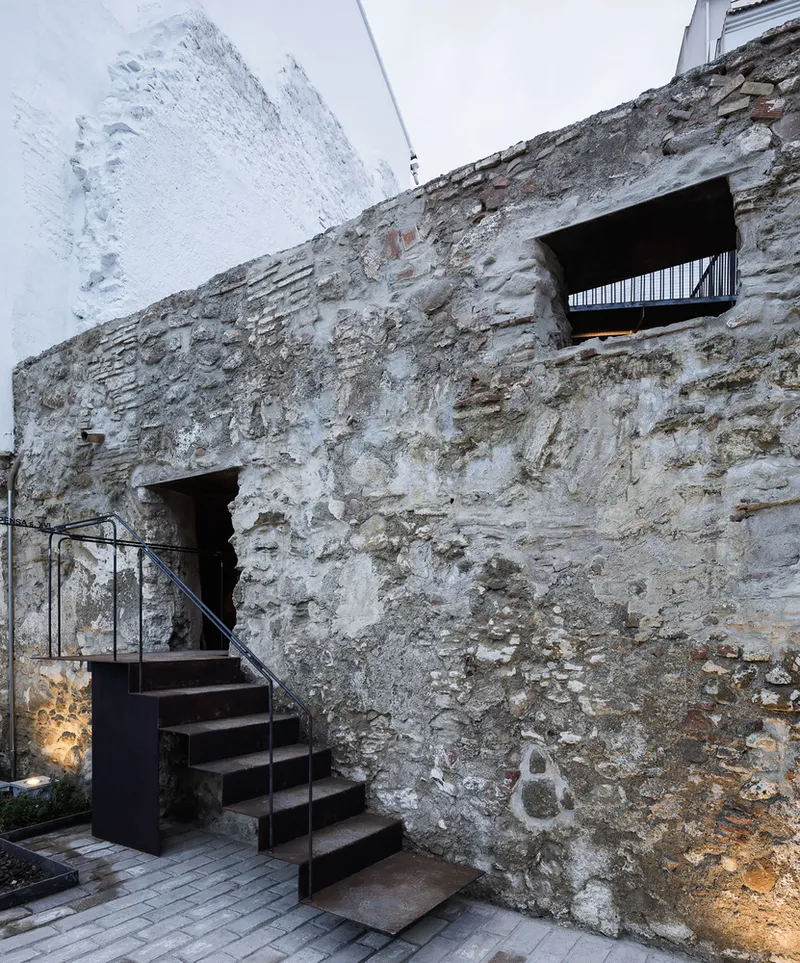
The Metallic Walkway: A Platform for Observation
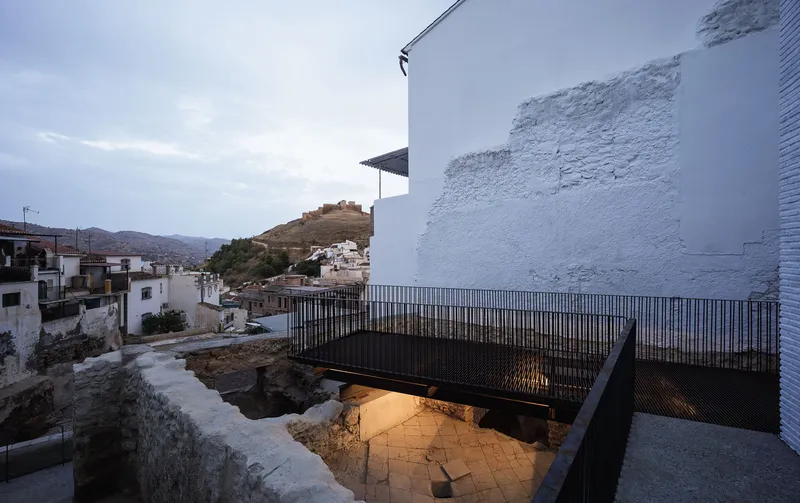
A defining feature of the project is the elevated metallic walkway, designed as a lightweight, transparent structure. This intervention allows visitors to hover above the archaeological remains while maintaining visual continuity with the space below.
The walkway functions both as a viewing platform and interpretive path, guiding visitors through the site while offering perspectives toward the landscape. Perforated panels integrate informational text and visual cues, connecting architecture with storytelling.
Materiality and Sensory Experience
Material selection plays a crucial role in enhancing the tactile and sensory qualities of the space. Concrete stairs lead visitors into the former horse stable, transitioning into a sequence of light verandas and fluid pavements.
On the lower level, a textured wall with carefully positioned openings frames views of the village, while a lightweight metal stair, designed as a “floating carpet”, leads to the storerooms. The geometry of the flooring subtly communicates the historical use of the space, reinforcing the project’s educational and experiential intent.
This approach exemplifies sensory architecture, where touch, light, and movement become tools for understanding history.
A Cultural Landscape of Memory and Light
Ultimately, Aljibes Viewpoint is more than an architectural intervention: it is a resonance space where light, sound, and material evoke the passage of time. The project transforms an empty site into a meaningful public space that celebrates the cultural identity of Álora.
By merging historic preservation, adaptive reuse, and contemporary design, WaterScales arquitectos have created a project that invites reflection, exploration, and connection with the past.
Aljibes Viewpoint stands as a powerful example of how architecture can reinterpret history through minimal intervention. It demonstrates how urban voids can become cultural assets, offering immersive experiences that bridge past and present while enriching the urban fabric.
All photographs are works of
Fernando Alda Calvo, Ayuntamiento de Álora


Popular Articles
Popular articles from the community


Opera by the Sea Estonia: Three Shells Dissolving Architecture into Tallinn's Coastline
A winning opera house proposal replaces monumental form with interconnected shells that blur the boundary between building, park and Baltic Sea.
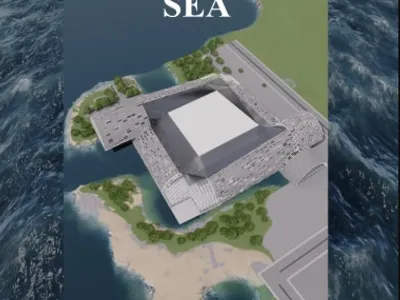
Opera on the Sea: Driftwood Logic Shapes a Timber Opera House on Estonia's Coast
Trevor Orgill's opera house translates the entangled drift of floating timber into a civic building where wood, water, and music converge.
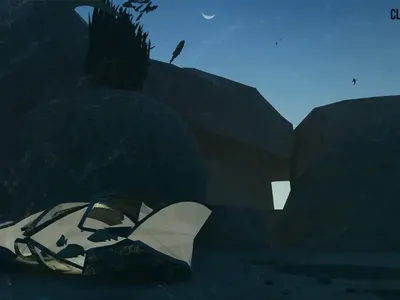
Cloaked Colonization: A Mobile Underwater Habitat That Moves Like a Fish
Micah Abaya's shortlisted EHC Pacific entry reimagines ocean settlement as a dispersed network of self-sustaining architectural organisms.
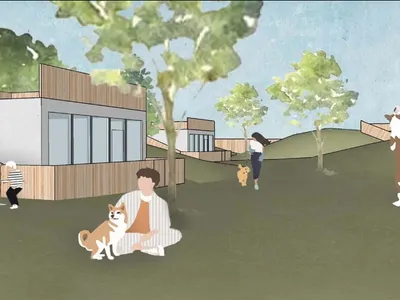
Temporary Home for Dogs: A Reversed Zoo Rethinks Animal Shelter Architecture
In Bucharest, a sinuous corridor and freed landscape flip the logic of containment, designing a shelter that works to make itself unnecessary.

Similar Reads
You might also enjoy these articles


FAMM Arquitectura Organizes Ten Villas Around Courtyards and Jungle in Nosara, Costa Rica
El Molino pairs two elongated volumes with deep overhangs and timber louvers to build a compact coastal community five minutes from the beach.
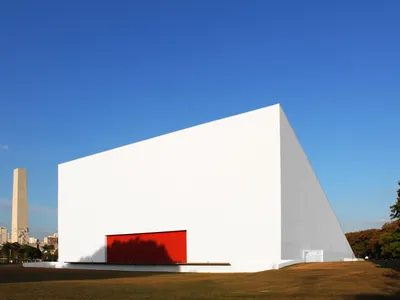
Oscar Niemeyer's Ibirapuera Park Pavilions Define São Paulo's Cultural Identity in Concrete and Curve
A constellation of modernist volumes set within São Paulo's most important urban park, conceived for the city's 400th anniversary in 1954.
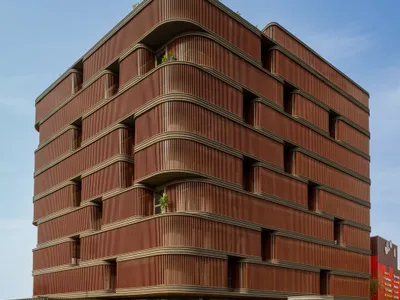
Sanjay Puri Architects Wraps a Jaipur Office Tower in Capsule-Shaped Green Buffers
A nine-level climate-responsive workplace near Jaipur Airport uses stacked planter terraces and aluminium screens to fight 40°C heat.
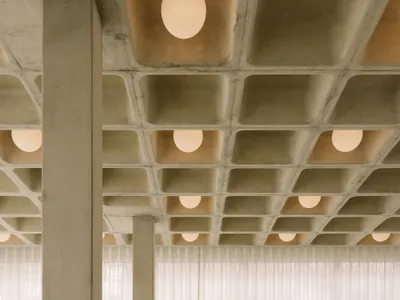
RHO Converts a Berlin Spree-Side Industrial Courtyard into Enkime's 1,000 m² Agency Headquarters
A social media agency's new home in Charlottenburg trades glossy branding for concrete waffle ceilings, glazed tile, and sheer curtains.

Explore Architecture Competitions
Discover active competitions in this discipline

Challenge to reimagine the Iron Throne

Photograph architecture without architects

Illustrate the lost glory of Angkor Wat - Render Challenge

Design challenge to reuse E-waste
Comments (0)
Please login or sign up to add comments
No comments yet. Be the first to comment!