

Alpine Chalet CPL by Ralph Germann architectes: Adaptive Reuse in the Swiss Alps
Historic 1830 Swiss chalet transformed with reclaimed wood, concrete interiors, panoramic window, double-height space, and sustainable wood-fired heating systems.


Located in Montreux, Switzerland, Alpine Chalet CPL by Ralph Germann architectes is a refined example of adaptive reuse and historic preservation within the protected landscape of the Gruyère Pays-d’Enhaut Regional Nature Park. Completed in 2023, this 125 m² rural transformation reinterprets a 19th-century agricultural structure into a contemporary alpine retreat while preserving its architectural heritage.
Originally constructed in 1830, the stone barn once served cattle farming and cheese production, embodying the vernacular typology of Swiss mountain pasture buildings. Today, it stands as a carefully restored alpine chalet that balances traditional craftsmanship with minimalist contemporary architecture.

Preserving Alpine Heritage Through Adaptive Reuse
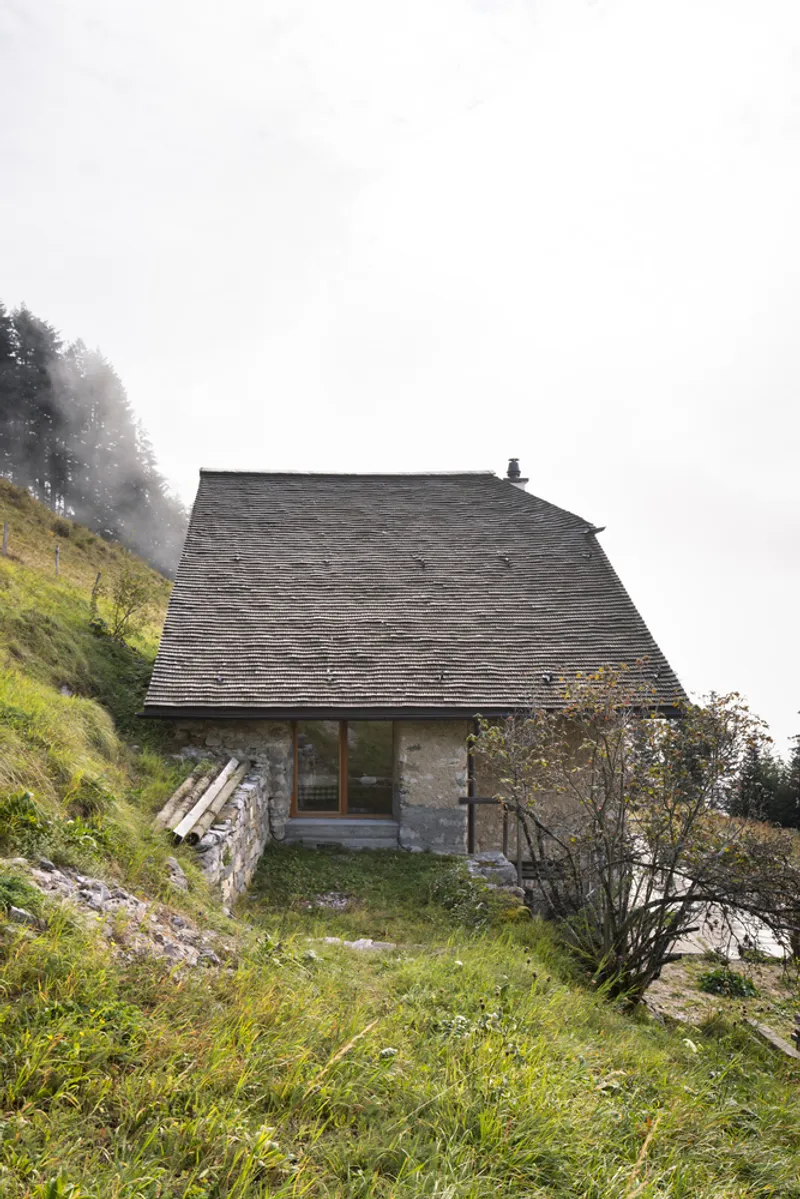
The original rural building featured thick stone masonry walls and a traditional wooden tile roof, characteristic elements of the region’s historic alpine architecture. Rather than erasing its past, the renovation strategy focused on preserving and revealing these historic layers.
The architects retained the original stone façade, structural shell, and spatial proportions while introducing precise contemporary interventions. This approach reinforces the authenticity of the chalet while adapting it to modern residential use. The preserved stone wall above the entrance door becomes a defining architectural feature, anchoring the project in its historical context.
By maintaining the building’s material integrity and rural character, the project contributes to sustainable architectural preservation within Switzerland’s protected mountain landscape.

Contemporary Materials in Dialogue with History
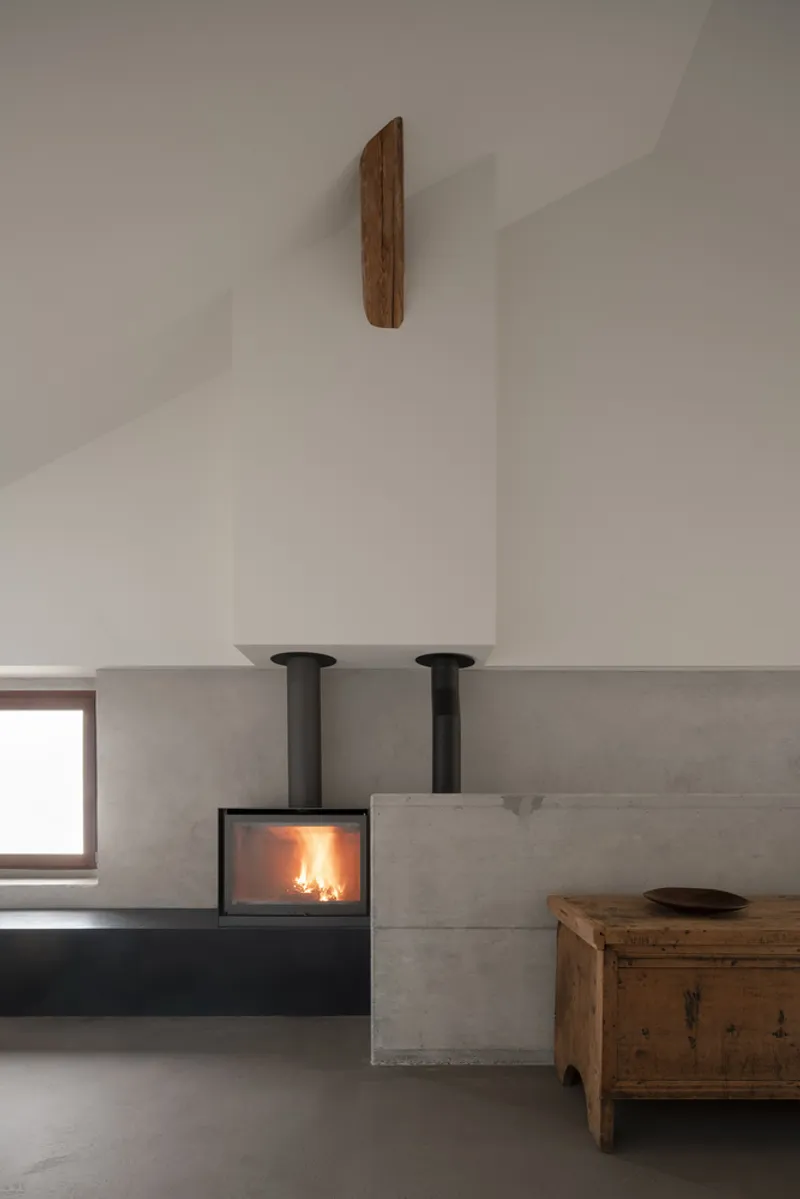
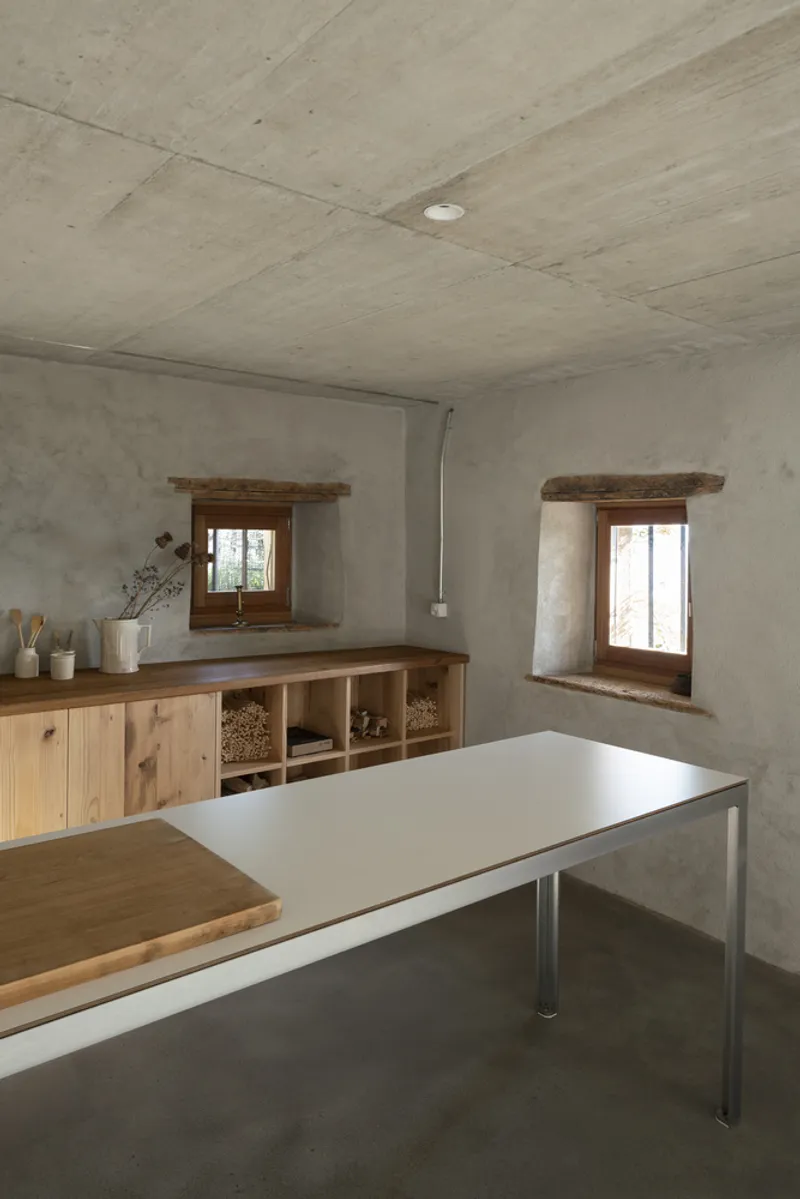
A key client requirement was for a distinctly contemporary architectural intervention using raw and honest materials. Concrete and lime plaster were introduced to contrast with the rugged stone envelope and salvaged timber elements.
During the dismantling of the barn structure, as much original wood as possible was recovered and reused, particularly in the construction of the kitchen. This circular design strategy not only reduced material waste but also preserved the tactile memory of the original structure.
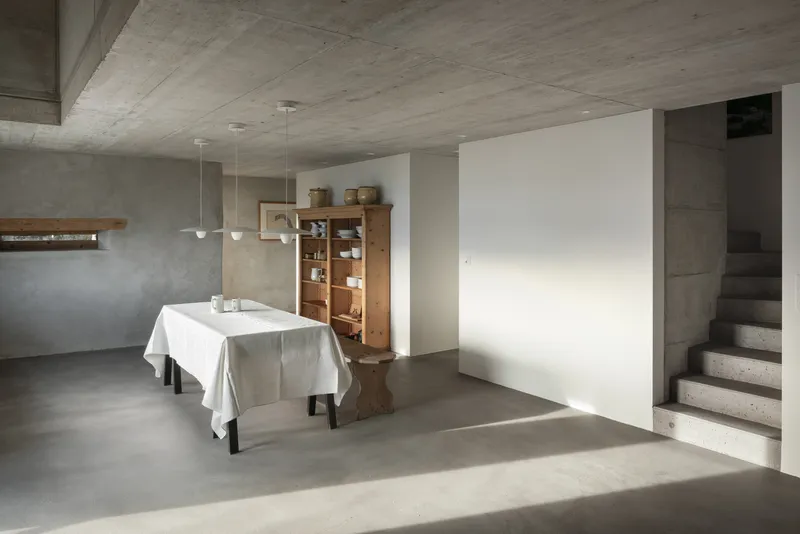
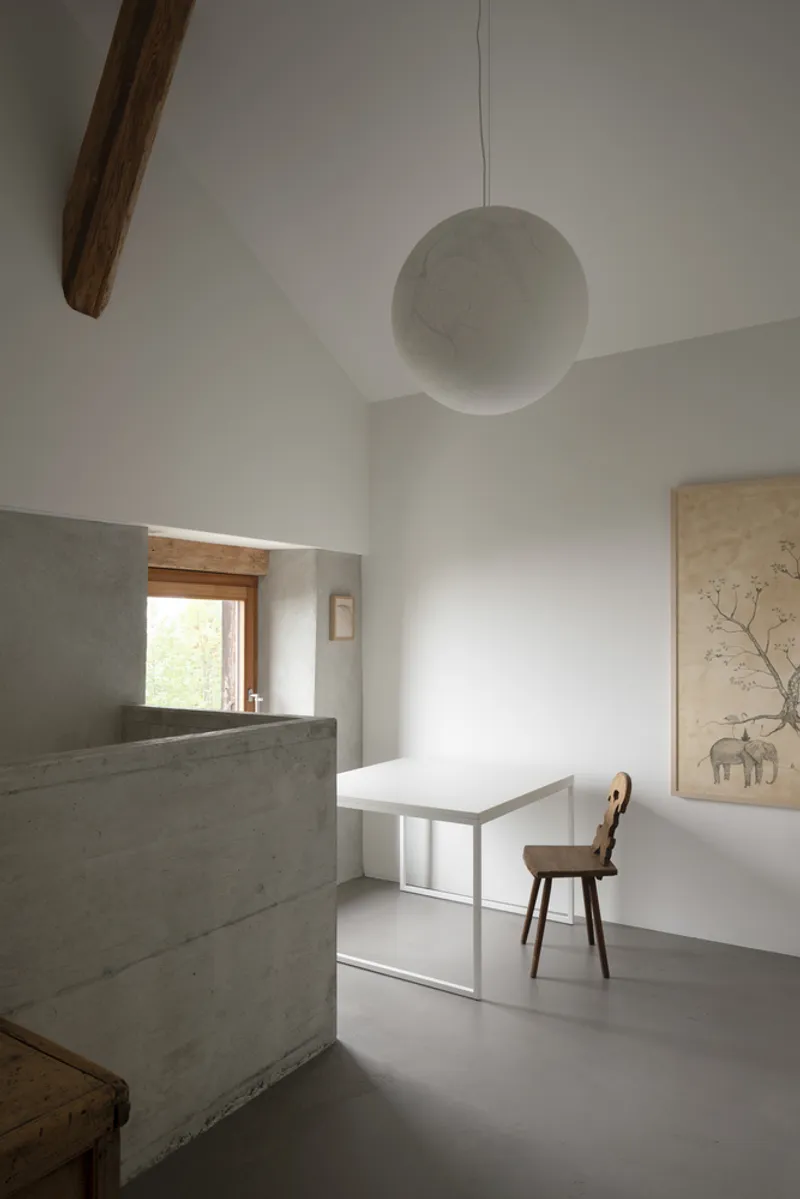
The restrained palette: stone, reclaimed wood, lime plaster, and exposed concrete, creates a neutral architectural canvas. This subtle interior language allows the clients’ collection of artwork and antique furniture to take center stage, reinforcing the house as both a living space and curated gallery.


Spatial Transformation and Vertical Openness
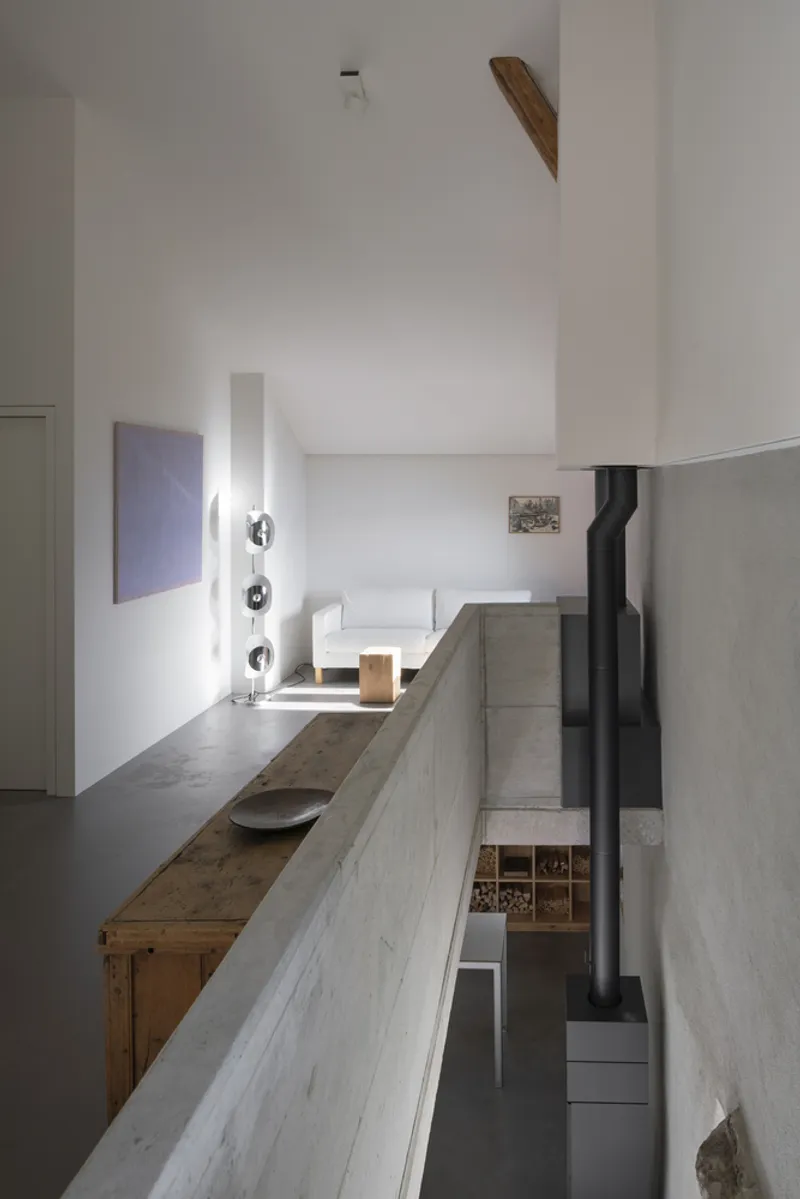
One of the most impactful architectural moves is the opening of the interior space across two floors. This double-height intervention brings generosity and verticality to the lower level while enhancing natural light penetration.
The spatial void emphasizes the original stone façade wall inside the house, transforming it into a monumental interior backdrop. The vertical connection between floors strengthens visual continuity and improves spatial communication, while simultaneously enhancing thermal performance through the chimney effect.
The result is an interior environment that feels both expansive and intimate, rooted in history yet spatially contemporary.

Framing the Landscape: The Horizontal Window
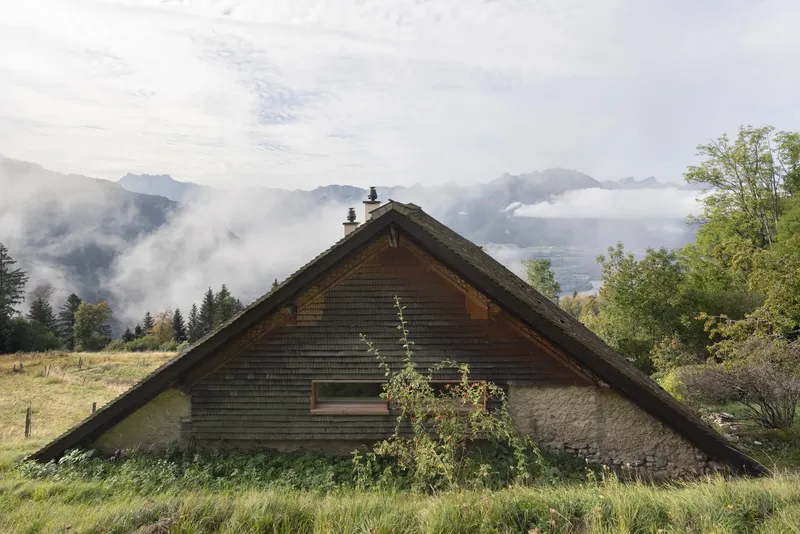
A large horizontal window was introduced to frame panoramic views of the surrounding alpine forest and mountain scenery. This carefully positioned opening establishes a strong visual connection between interior and exterior, reinforcing the relationship between architecture and landscape.
The window also introduces soft, diffused natural light, enhancing the neutral material palette and highlighting textures throughout the space. By blurring the boundary between inside and outside, the project aligns with contemporary alpine architecture strategies that prioritize environmental integration and experiential living.

Sustainable Heating and Energy Strategy
In keeping with its rural identity and environmental context, the chalet is heated exclusively by wood. A fireplace on the upper floor and a wood-burning stove on the lower level provide efficient, localized heating while reinforcing the sensory atmosphere of alpine living.
Hot water is supplied by a heat pump system, integrating renewable energy technology into the historic structure. This combination of traditional wood heating and modern energy systems ensures both comfort and sustainability, aligning the project with contemporary ecological standards.

Architecture as Cultural Continuity
Alpine Chalet CPL demonstrates how historic preservation and modern architecture can coexist without compromise. By preserving original materials, integrating reclaimed wood, and inserting contemporary concrete volumes with precision, Ralph Germann architectes have created a thoughtful alpine renovation rooted in context.
The project reflects broader themes in adaptive reuse architecture: sustainability, material authenticity, spatial reinterpretation, and landscape integration. Within the protected setting of Montreux’s alpine region, this small-scale intervention stands as a powerful example of how rural heritage buildings can be transformed into contemporary residences while retaining their cultural and architectural identity.
All photographs are works of
Nicolas Sedlatchek


Popular Articles
Popular articles from the community


David Ortega Stacks a Two-Story Mexico City Penthouse Around a Steel Stair and a Pergola-Shaded Roof Terrace
In Colonia Roma, a 300 m² penthouse uses oak joinery, a planted steel stair and a slatted roof pergola to make a new-build apartment feel like a house.


Singing Woman: An Opera House That Performs Before the Curtain Rises
Ovidiu Cristian Pavel's conceptual opera house translates Estonia's choral identity into a sculpted waterfront landmark facing the Baltic Sea.

Aquadapt: An Underwater Habitat That Rewrites Its Rooms by the Hour
Curved modules ring the seabed while one shell shifts from breakfast room to cinema, farm and football pitch as residents' needs change.

The Amber Palace Opera: A Geological Fiction Surfaces on Tallinn's Baltic Waterfront
Pierre Brillard reimagines a Baltic legend as a public landscape, opera house, and waterfront promenade rooted in Tallinn's coastal identity.

Similar Reads
You might also enjoy these articles

Cube Design Draws an Ecological Corridor Between Two Shenzhen Hills with the Nankai Building
Beside Shenzhen's container docks, the Nankai Building pairs stacked balconies with a climbing green screen to connect two hillsides across its height.

Praksis A and Studio Sted Bend a Red Timber Cabin Across the Granite of Norway's Southern Coast
On the southern Norwegian coast, a 105 m² cabin follows the rock on slender posts, pairing red cladding outside with pine, brick and plywood within.
David Ortega Stacks a Two-Story Mexico City Penthouse Around a Steel Stair and a Pergola-Shaded Roof Terrace
In Colonia Roma, a 300 m² penthouse uses oak joinery, a planted steel stair and a slatted roof pergola to make a new-build apartment feel like a house.

PARALELA and LB2 Thread a Public Walkway Through the Base of a Las Condes Residential Tower
In Las Condes, Santiago, the Hamlet Building gives its fenceless ground floor to a 70-metre wooded passage linking two streets and the metro.

Explore Historic Preservation Competitions
Discover active competitions in this discipline

Challenge to reimagine the Iron Throne

Photograph architecture without architects

Illustrate the lost glory of Angkor Wat - Render Challenge

Design challenge to reuse E-waste
Comments (0)
Please login or sign up to add comments
No comments yet. Be the first to comment!