
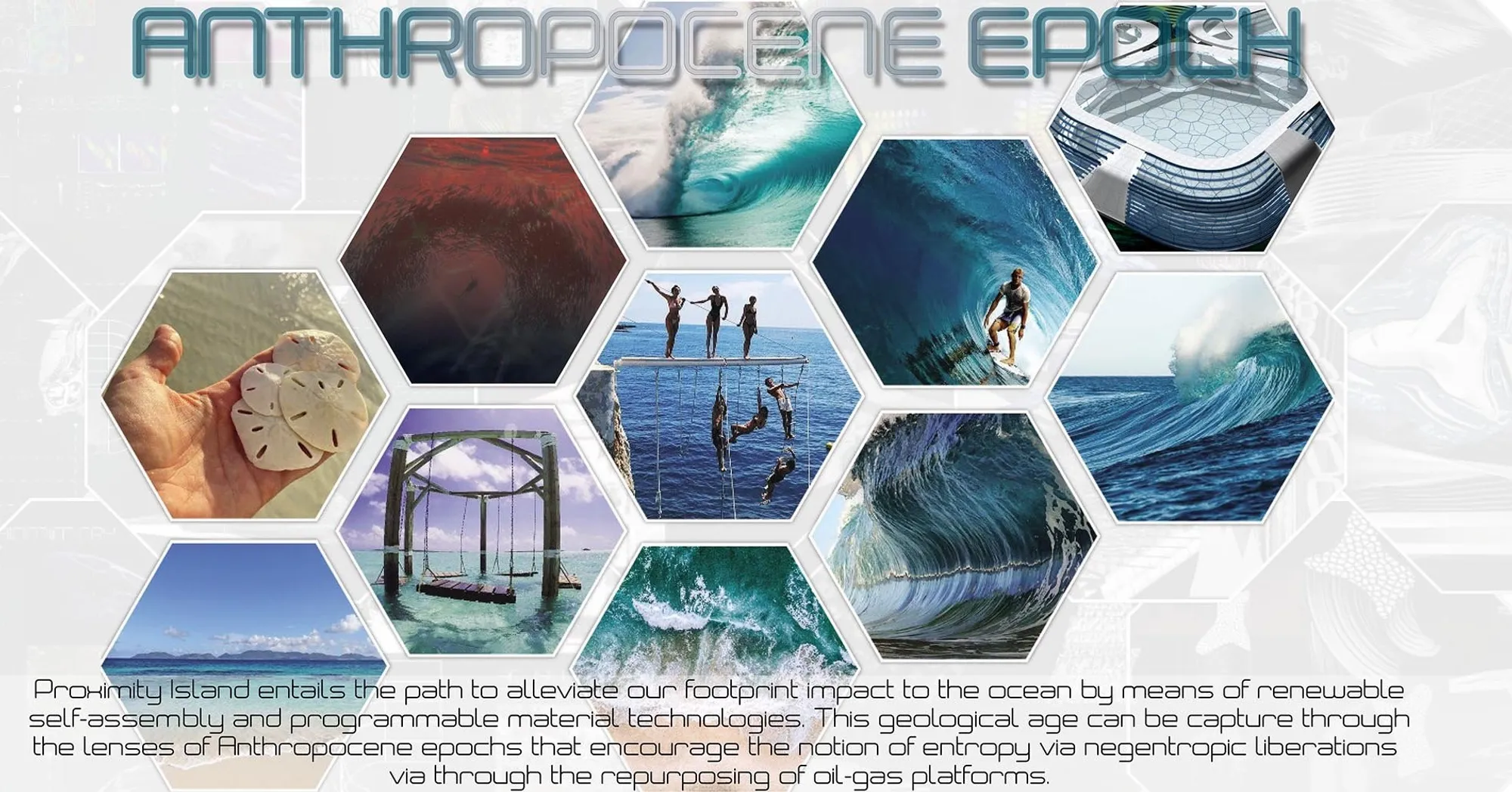
Anthropocene Epoch | A Vision for Sustainable Marine Architecture Through Repurposed Oil Rigs
A futuristic sustainable marine architecture proposal transforming abandoned oil rigs into ecological research and ocean restoration hubs.


As climate instability, marine pollution, and ecological degradation continue to reshape global coastlines, architects are increasingly exploring speculative models capable of restoring damaged environments while redefining human coexistence with nature. Anthropocene Epoch, a shortlisted entry of Proximity Island 2019 by O from the University of Texas at Arlington, presents an ambitious vision for sustainable marine architecture through the adaptive reuse of offshore oil platforms.
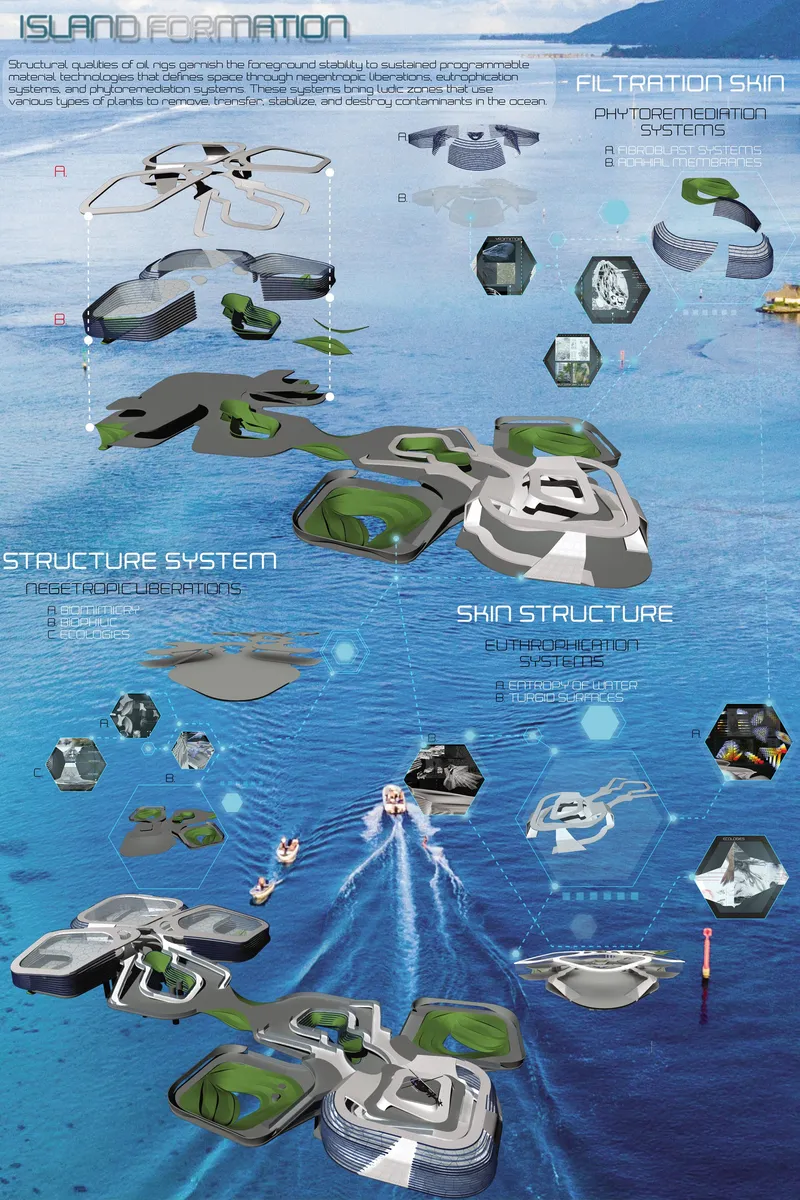
Positioned within the fragile ecosystem of the Adriatic Sea, the proposal transforms obsolete oil and gas infrastructure into a futuristic ecological research hub focused on marine rehabilitation, renewable systems, and programmable material technologies. Rather than treating industrial remnants as abandoned relics, the project reframes them as catalysts for environmental recovery and scientific collaboration.
The proposal investigates how architecture can respond to the realities of the Anthropocene, an era defined by human influence on Earth’s ecosystems. Through biomimetic systems, phytoremediation strategies, and modular habitation units, Anthropocene Epoch attempts to create a new relationship between infrastructure, ecology, and human occupation.

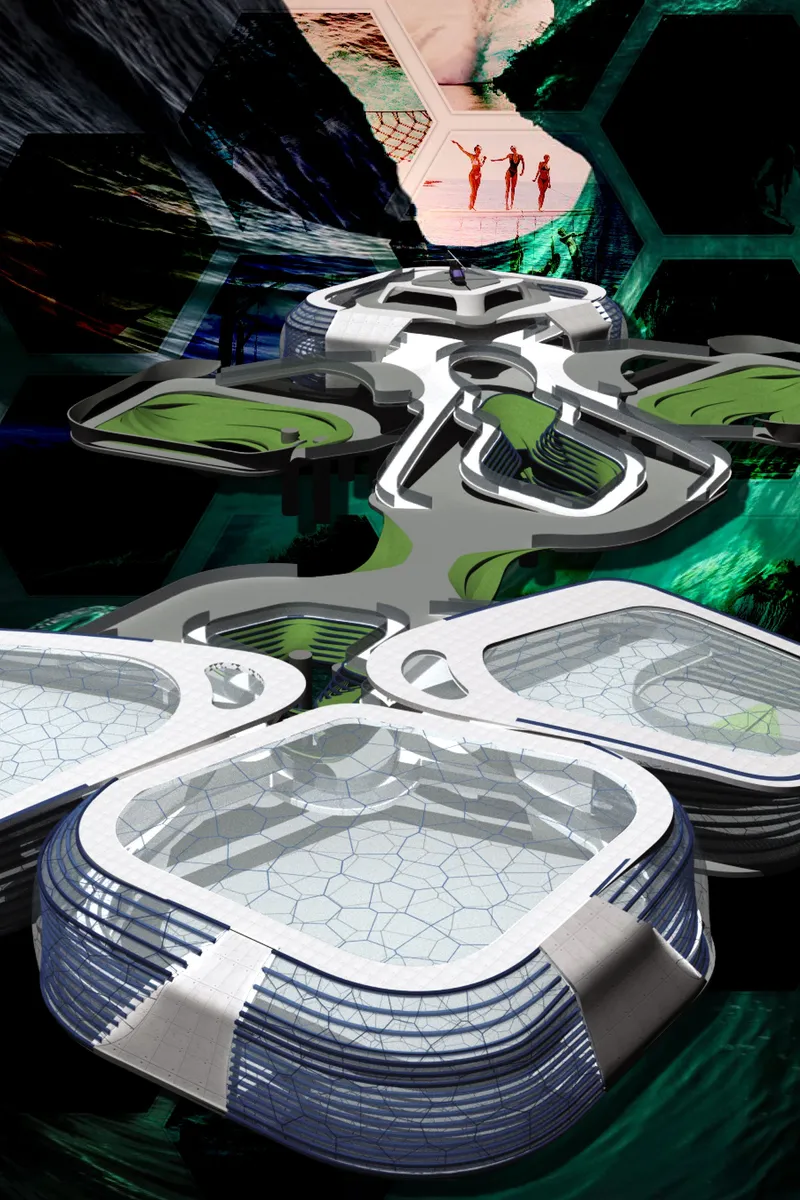
Adaptive Reuse Architecture as Ecological Infrastructure
The central idea behind Anthropocene Epoch lies in transforming decommissioned oil rigs into living environmental systems. This strategy aligns strongly with contemporary adaptive reuse architecture, where obsolete industrial structures are repurposed to support sustainable futures rather than demolished.
The proposal introduces a layered marine ecosystem that filters polluted water, supports biodiversity, and accommodates scientific research facilities. Instead of resisting the ocean, the architecture integrates itself within marine processes through filtration membranes, eutrophication systems, and biologically inspired surface structures.
The project describes this transformation as a movement from “entropy” toward “negentropic liberations,” suggesting that architecture can actively reverse ecological degradation through regenerative design interventions.
Its futuristic forms appear fluid and organic, almost resembling floating coral organisms or marine cells connected across the ocean surface. These interconnected platforms establish a cohabitational environment where scientific research, temporary habitation, ecological restoration, and public awareness coexist simultaneously.
Floating Architecture Inspired by Marine Biology
One of the strongest visual characteristics of Anthropocene Epoch is its biomorphic architectural language. The floating platforms reject rigid industrial geometries in favor of soft, interconnected forms inspired by marine ecologies and cellular growth systems.
The project explores several concepts including:
- Biomimicry
- Biophilic systems
- Fibroblast membrane structures
- Programmable material technologies
- Turgid surface systems
- Phytoremediation filtration layers
These components collectively shape a futuristic floating architecture capable of interacting dynamically with the surrounding marine environment.
The architectural skin itself functions as an environmental device rather than merely an enclosure. Filtration membranes integrated within the structure help address water pollution zones, eutrophic conditions, and biodiversity loss throughout the Adriatic ecosystem.
This creates an architectural proposal that behaves more like living infrastructure than a conventional building.
Sustainable Ocean Architecture and Water Filtration Systems
A major focus of the project is the restoration of marine environments through water treatment and ecological remediation systems. The proposal identifies several environmental concerns affecting the Adriatic Sea:
- Coastal ecosystem degradation
- Water pollution zones
- Biodiversity loss
- Oceanic eutrophication
- Hypoxic marine conditions
- Wastewater contamination
To address these challenges, Anthropocene Epoch introduces a three-step filtration strategy integrated directly into the architecture.
The floating complex operates as a marine filtration organism where various structural layers interact with seawater conditions to improve ecological performance. Green landscape terraces, submerged systems, and membrane technologies contribute to the purification and stabilization of aquatic environments.
This ecological integration positions the project within broader discussions surrounding sustainable ocean architecture, blue infrastructure, and climate-responsive design.
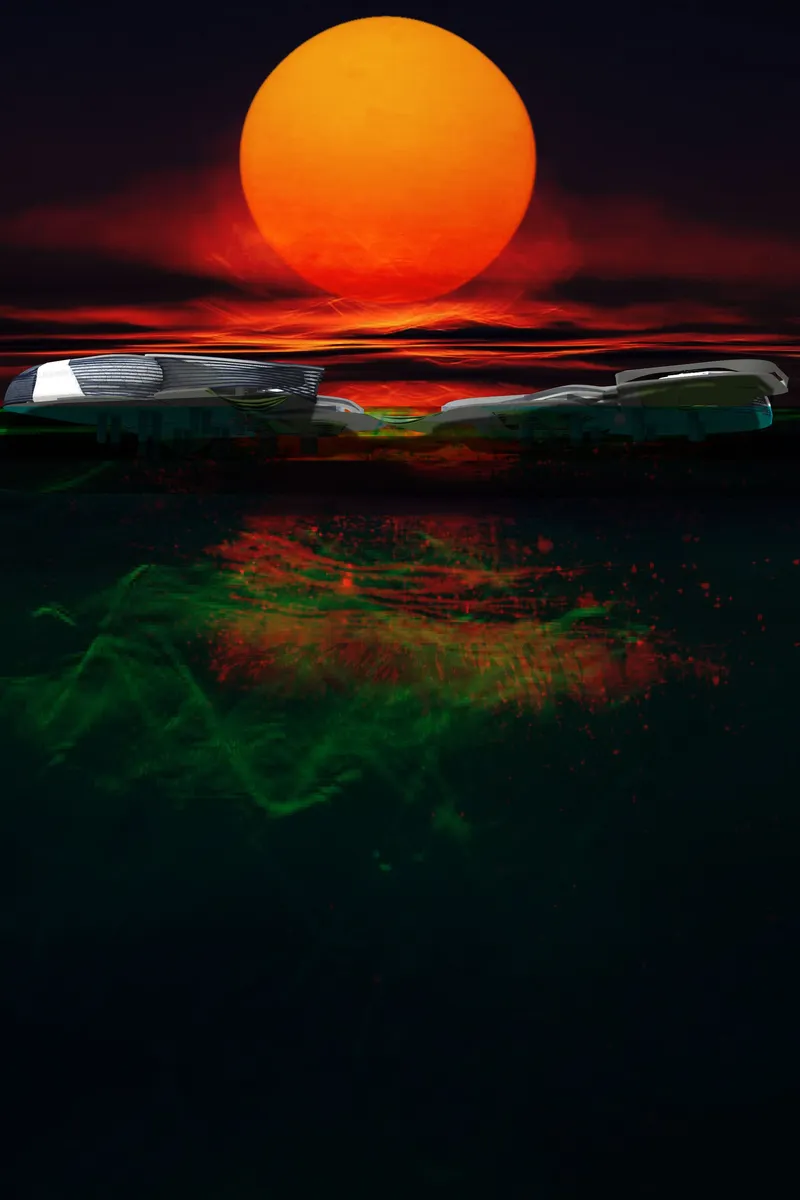
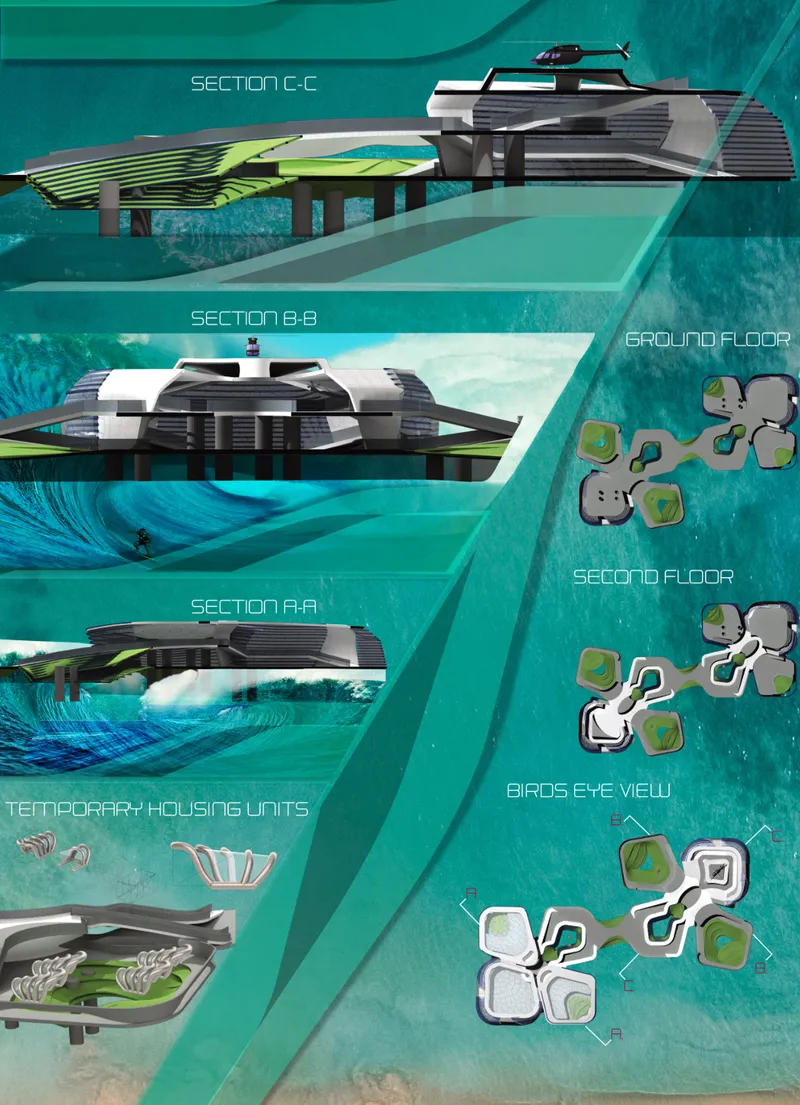
Cohabitational Research Spaces Above the Ocean
Beyond ecological systems, the proposal also explores temporary habitation and collaborative research environments. The project introduces modular living and working spaces intended for scientists, researchers, and visitors engaged in marine studies and environmental observation.
The sectional drawings reveal interconnected circulation paths, elevated research pods, and layered platforms that create a dynamic relationship between architecture and oceanic movement.
Large open terraces, submerged viewing zones, and integrated landscape surfaces attempt to blur the boundaries between built space and marine territory. Helicopter access platforms further reinforce the proposal’s role as an offshore research destination.
The architecture proposes not only environmental recovery but also a new form of ocean-based living centered around coexistence and scientific stewardship.
Futuristic Architecture Rooted in Environmental Speculation
Visually, Anthropocene Epoch embraces a highly speculative futuristic architecture aesthetic. The project combines parametric geometries, layered circulation systems, and fluid structural forms to produce an environment that feels simultaneously infrastructural and biological.
The expansive oceanic setting amplifies the project’s conceptual ambition. Floating islands emerge as hybrid machines capable of supporting life, filtering water, and facilitating environmental education.
Its imagery reflects themes commonly associated with experimental marine urbanism, climate adaptation architecture, and speculative ecological futures. Yet despite its futuristic appearance, the proposal remains grounded in real environmental anxieties surrounding ocean pollution and post-industrial infrastructure.
The project asks a critical architectural question: can humanity transform the very systems that once damaged ecosystems into tools for ecological repair?
Juror Reflection on Anthropocene Epoch
The project’s conceptual depth and extensive research received recognition from juror Donatella Cusma, who highlighted both its ambition and investigative rigor.
According to Cusma:
“The project is very ambitious and an impressive amount of research seems to support the original project statement. This is admirable.”
Her commentary acknowledges the strength of the proposal’s environmental research and speculative framework while also questioning the relationship between architecture and programmatic clarity.
Cusma further noted:
“Perhaps the cohabitational program could have been detailed a bit more to clarify how a building can be designed and used to support scientific research and contribute to limit the impact of human activities in the ocean.”
This observation introduces an important architectural discussion regarding speculative ecological projects: balancing visionary environmental narratives with clearly articulated spatial functionality.
The critique ultimately reinforces the project’s intellectual ambition while encouraging deeper exploration into how architecture operationalizes ecological systems and scientific occupation.
A New Future for Repurposed Offshore Infrastructure
Anthropocene Epoch contributes to a growing global conversation about the future of abandoned industrial infrastructure. As offshore rigs across the world approach obsolescence, architects and environmental researchers are increasingly exploring adaptive reuse models capable of transforming these structures into ecological assets.
Rather than viewing oil platforms solely as symbols of extraction, the project reframes them as frameworks for regeneration, education, and coexistence.
Its proposal merges sustainable marine architecture, floating infrastructure, and ecological restoration into a singular speculative vision. Through programmable systems, biomimetic design, and marine rehabilitation strategies, Anthropocene Epoch imagines a future where architecture actively participates in repairing environmental damage rather than contributing to it.
As oceans become central to climate conversations and resource management, projects like this demonstrate how speculative architecture can provoke new possibilities for environmental futures beyond conventional urban boundaries.




Popular Articles
Popular articles from the community

EW PARK: Sustainable Architecture Reimagines the Future of Urban Parking
EW PARK reimagines city parking as a modular wooden tower combining automation, solar energy, electric mobility, and adaptable urban design.

Hill & Cross Opera: Sculptural Opera House Architecture Shaped by Tallinn’s Landscape and Identity
Hill & Cross Opera reimagines opera house architecture in Tallinn through its sculptural hill, civic plaza, glass wave and a luminous cross.

Riyadh For All: Intergenerational Urban Design for Active Aging in Rabat
Riyadh For All reimagines urban design in Rabat with intergenerational co-living, adaptive courtyards, and Moroccan cultural exchange today.

The Musturak Paradise: Senior Living Architecture for a Connected Future in Temara, Morocco
The Musturak Paradise reimagines senior living architecture in Temara via private homes, social spaces, culture, community, and shared care.


Similar Reads
You might also enjoy these articles

Eco Chapel: A Green Architecture Pavilion Designed in Symbiosis with the Forest
Eco Chapel uses green architecture to weave prayer, learning and reuse into a forest pavilion shaped by modular hexagonal canopies for life.
Kaffeebühnen: Coffee Shop Architecture Designed as a Civic Stage Between Vienna’s City and Park
Kaffeebühnen turns coffee shop architecture into a civic stage, linking Vienna’s park edge, urban life, warm timber yards, and coffee craft.
Healing Façade: Sustainable Architecture for Reforestation, Community, and Sacred Ecology in Ethiopia
Healing Façade reimagines sustainable architecture as a living wall that restores soil, catches water and renews Ethiopia's forest churches.


Urban Forest: A Vertical Ecosystem for 5,000 Workers in Singapore's Changi Business Park
Radially stacked pods and layered green decks turn a 7-acre plot into 47 acres of ecological workspace projected for 2040.

Comments (0)
Please login or sign up to add comments
No comments yet. Be the first to comment!