
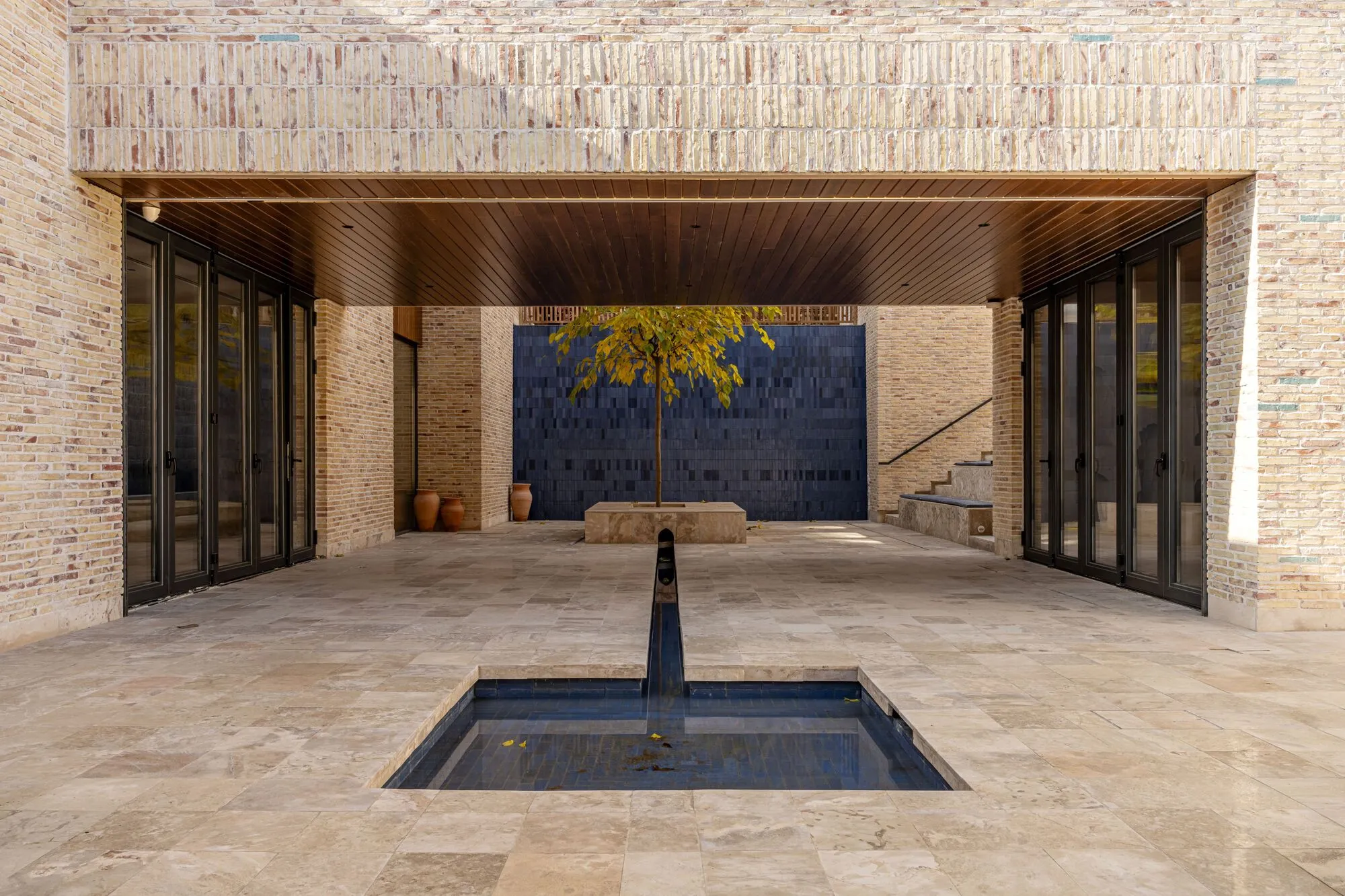
ARC Architects Wraps a Tashkent Textile Museum in Perforated Brick and Carved Timber Screens
The SUZANI by Madina Kasimbaeva Museum joins Tashkent's historic Suzuk Ota ensemble with 1,200 square meters of gallery and workshop space.


Suzani, the embroidered textiles of Central Asia, have survived centuries of trade, conflict, and neglect largely because of the women who kept stitching. A museum dedicated to this craft needs to do more than house artifacts behind glass. It needs to make you understand the labor, the light, and the domestic interiors in which these works were born. ARC Architects, led by Bobir Klichev, have designed exactly that kind of building in the historic core of Tashkent, just steps from a mosque and mausoleum in the Suzuk Ota ensemble.
The SUZANI by Madina Kasimbaeva Museum, completed in 2025, spreads 1,200 square meters across interconnected volumes of pale brick, carved timber, and latticed screens. What makes it genuinely compelling is how it borrows its spatial logic from the traditional Uzbek courtyard house rather than from the white-cube gallery. Rooms are organized around planted courts and reflecting pools; natural light is filtered through mashrabiya-like panels; and the circulation pulls you through compression and release in a way that mimics the experience of moving through a mahalla. The result is a museum that feels indigenous to its place without lapsing into pastiche.
Brick as Textile

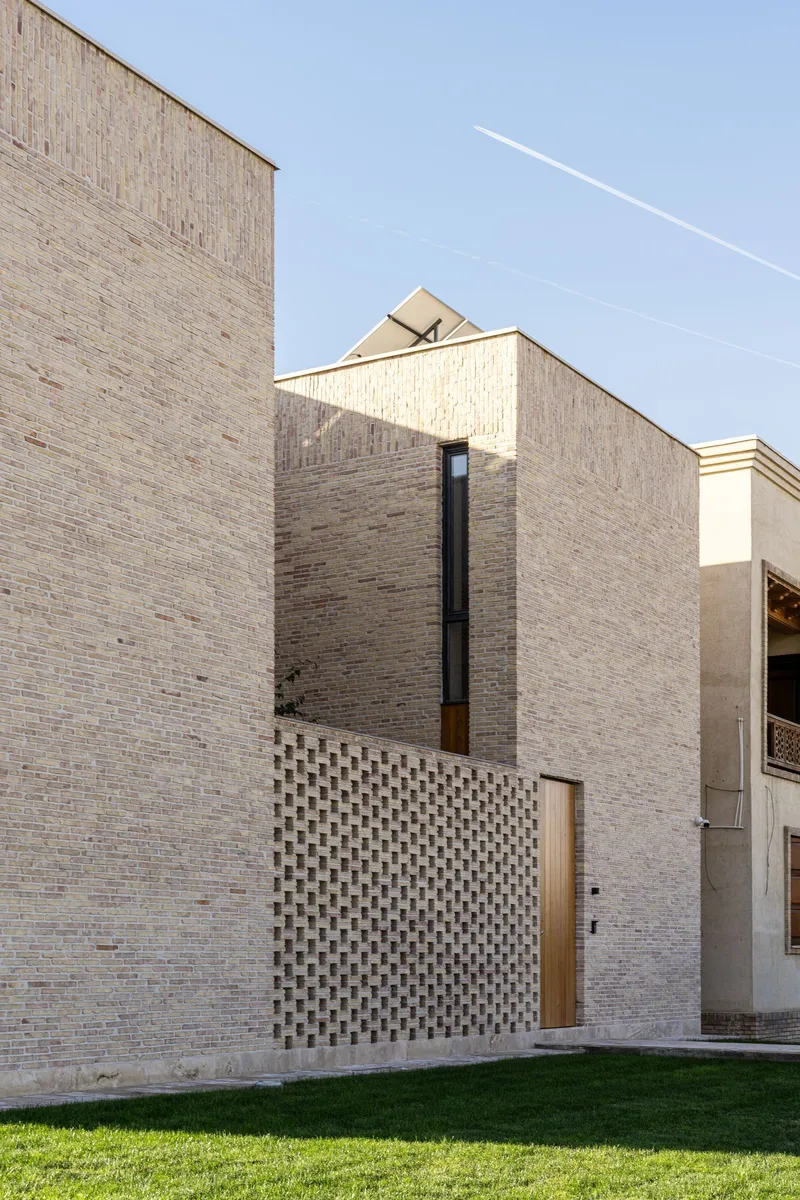

The most immediate decision ARC Architects made was to treat the brick facade as a woven surface. Perforated screens, stacked bond patterns, and subtle variations in coursing give each wall plane a distinct texture, almost like different stitches in the same fabric. It is a direct formal analogy to the suzani themselves: geometric, rhythmic, and built up through repetition of a single modular unit.
From the street, these variegated surfaces read as solid but breathing. Light passes through the perforations in ways that change throughout the day, casting geometric shadows across interior floors and courtyard lawns. The palette stays restrained: buff brick, occasional blue tile accents, and dark metal window frames. The discipline prevents the building from becoming ornamental; it remains structural and tectonic even at its most decorative.
Courtyards as Organizing Principle

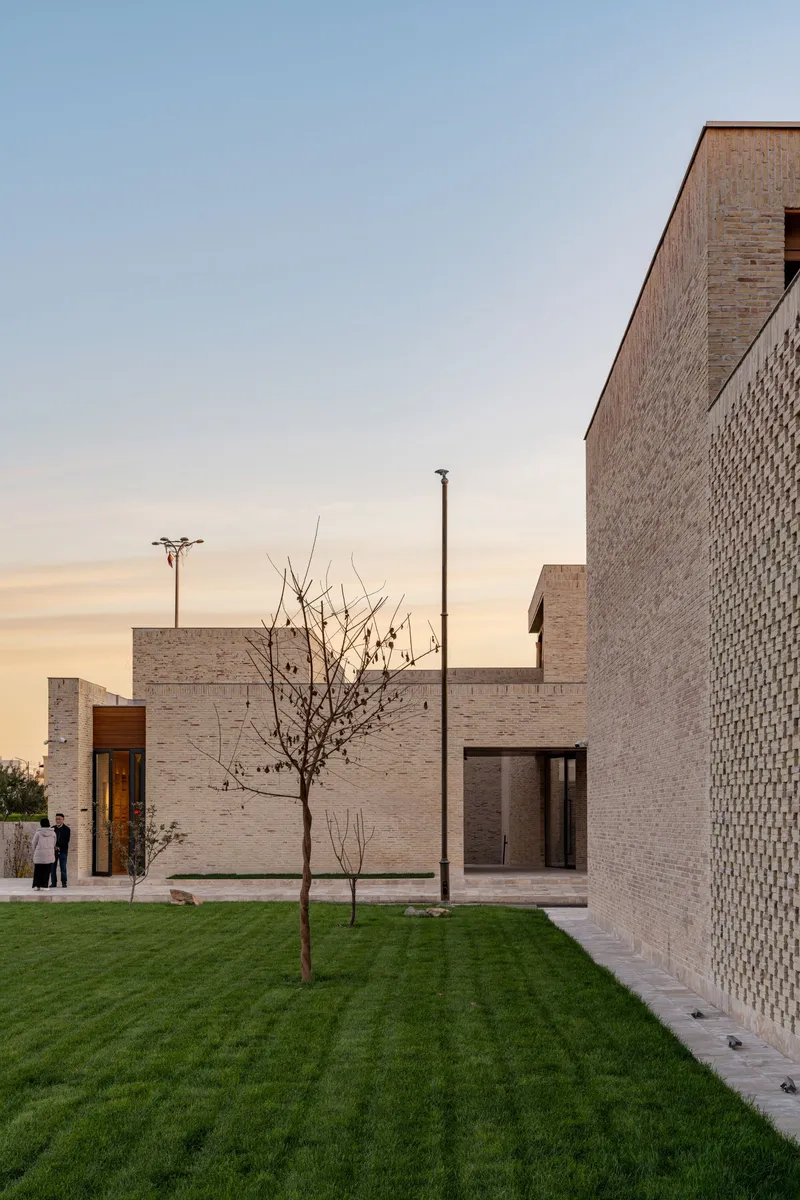
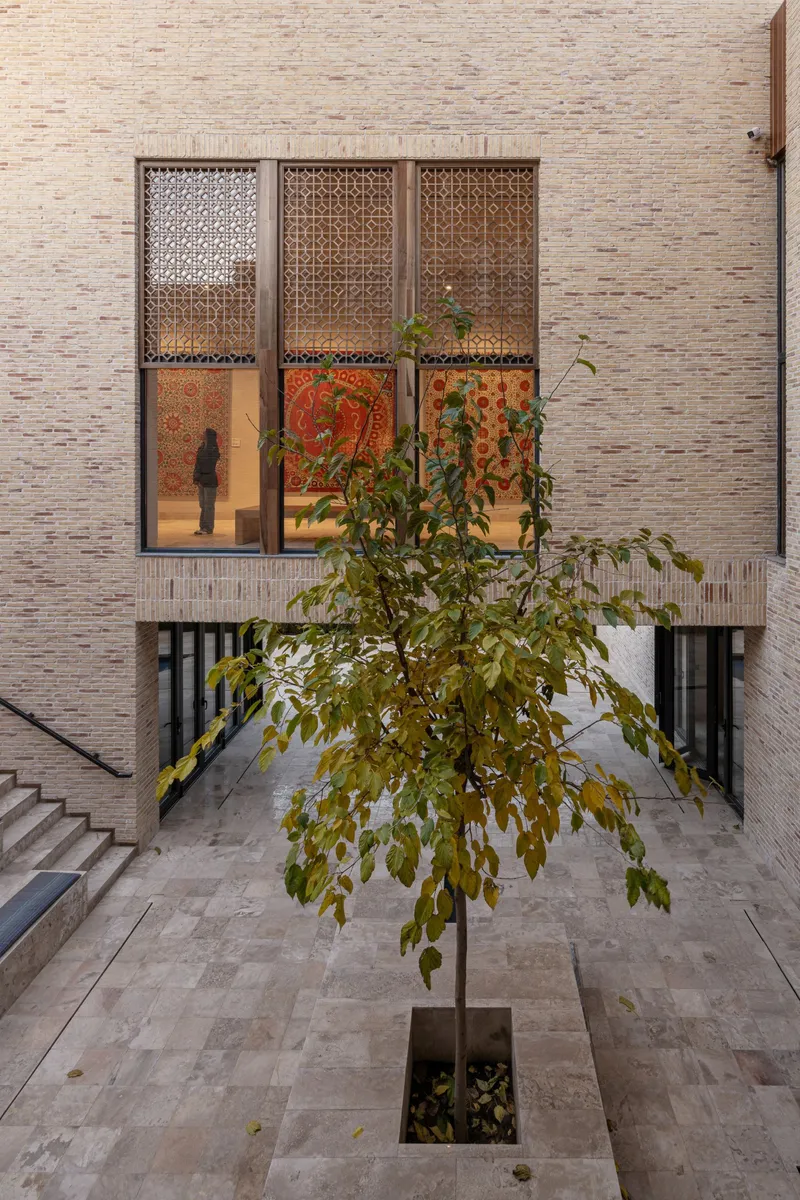
The museum is not one building but a series of volumes organized around open-air courts. Young trees, lawns, and stone paving break up the plan into distinct thresholds. You are never far from the sky. The building insists on outdoor moments between galleries, which slows the visitor down and resets the eye before the next room of intensely detailed textiles.
This is fundamentally a climatic strategy as much as a compositional one. Tashkent's continental extremes, scorching summers and cold winters, have shaped courtyard architecture in the region for millennia. ARC Architects are not reinventing the typology; they are confirming its validity in a contemporary program. The courtyards also allow the building to sit comfortably within the existing Suzuk Ota ensemble, matching its grain and scale rather than announcing itself as an institutional intruder.
Timber Structure and the Covered Court
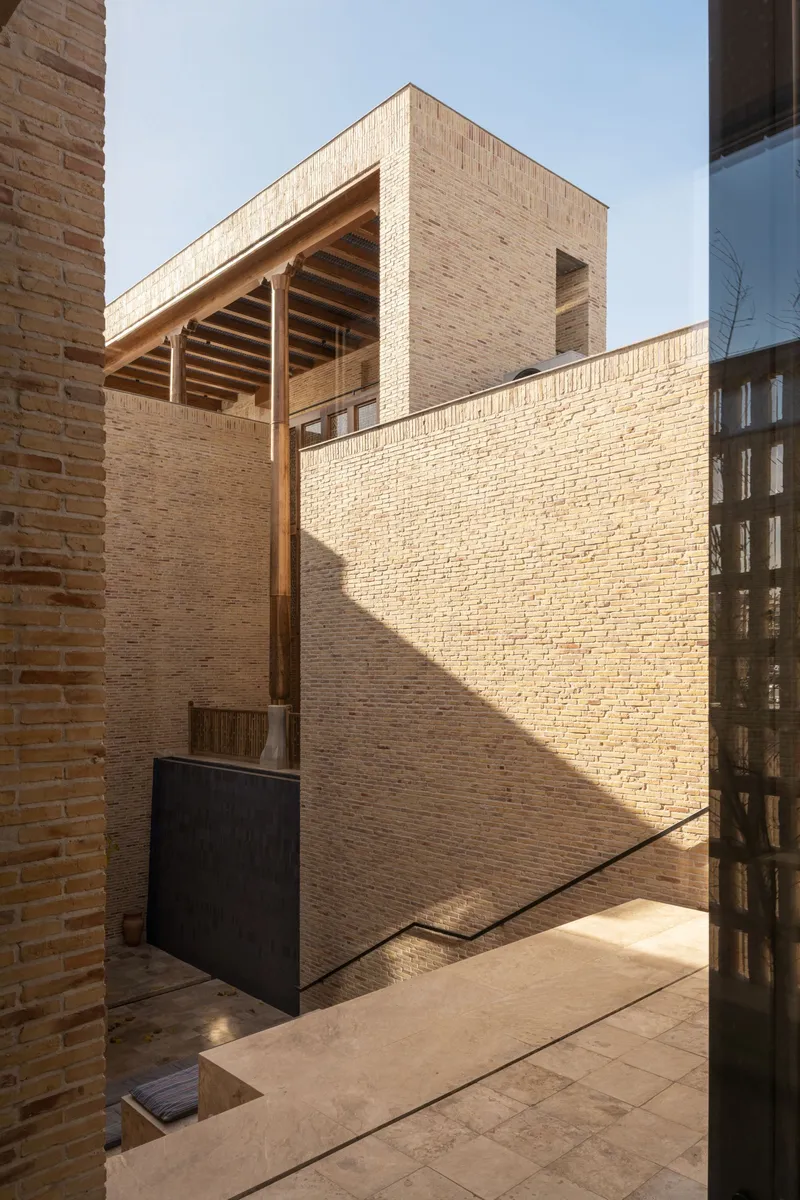

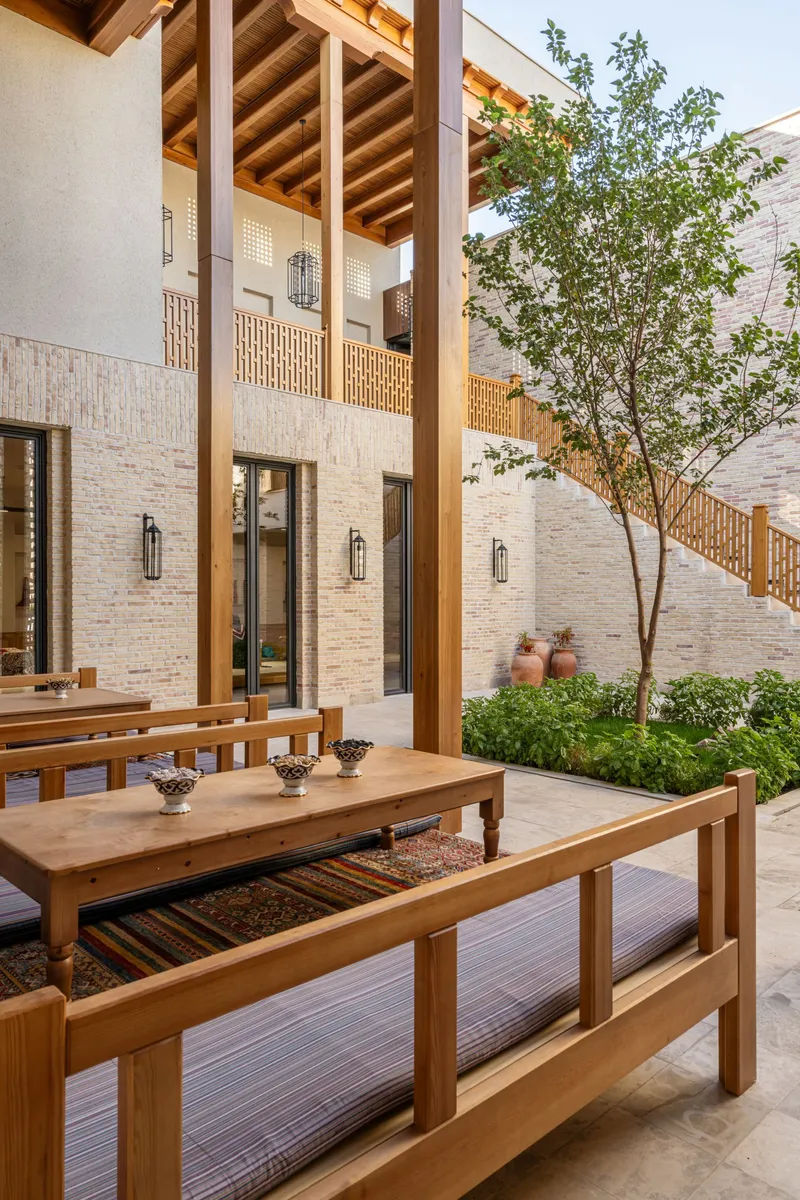
The exposed timber rafter ceilings are perhaps the project's most photogenic element, but they are also its most structurally honest. Thick beams span between brick walls, left unfinished and visible, creating warm overhead planes that contrast with the cooler stone and brick below. In the covered courtyard, these rafters cast sharp diagonal shadows that migrate across the floor as the sun moves, turning the space into a sundial of sorts.
The timber columns in certain courts recall the wooden pillars of Bukhara's mosques, though here they support a contemporary program of benches, planted trees, and circulation. It is a measured reference: recognizable to anyone who has visited the region's historic buildings, but not costumed.
Water, Screens, and Filtered Light
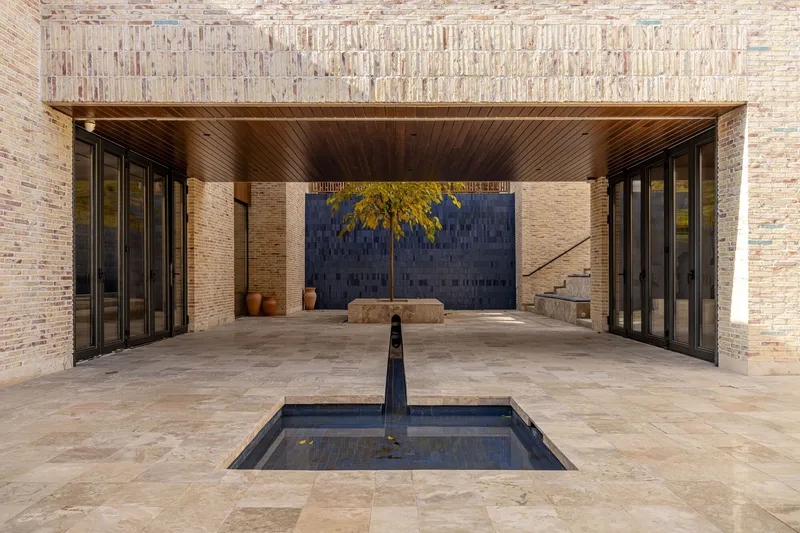

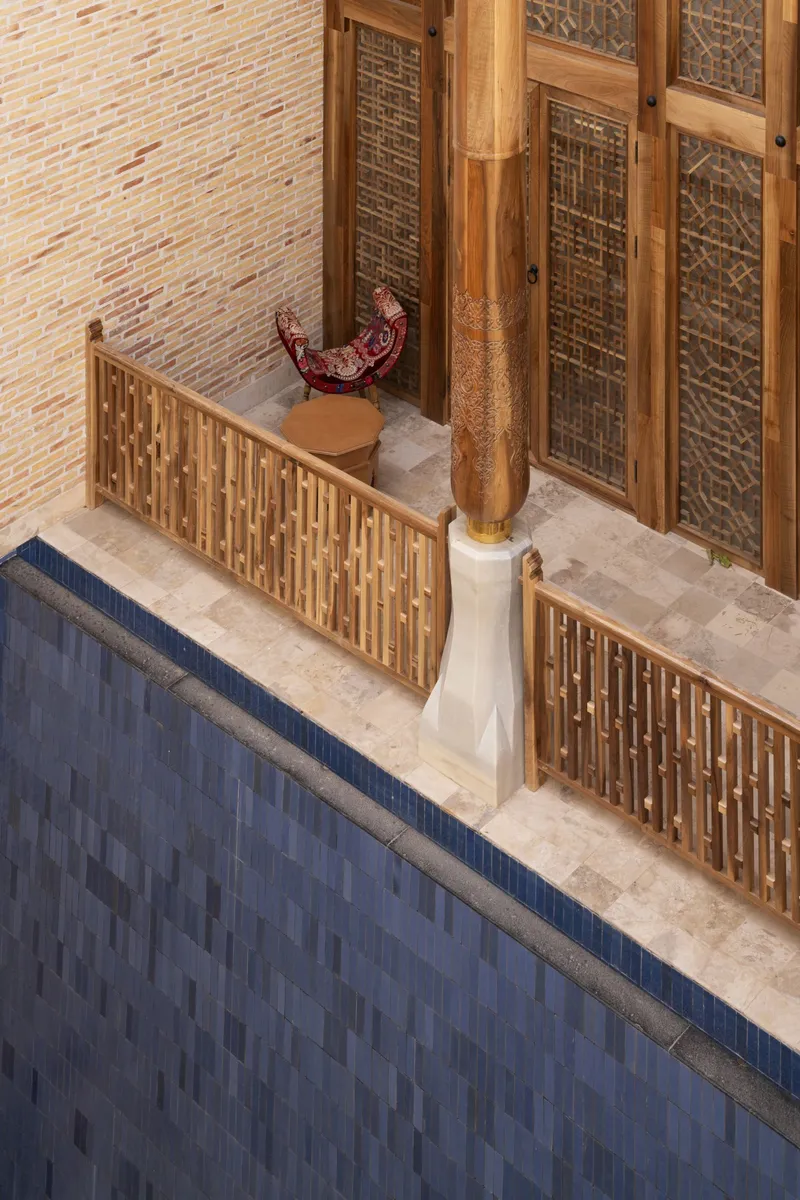
A reflecting pool anchors the main covered courtyard, its still blue surface picking up the timber rafters and latticed screens above. The pool does practical work: it moderates temperature and humidity, which matters when you are preserving fragile textiles in adjacent galleries. But it also establishes a contemplative atmosphere that separates this museum from the noise of the street outside.
The carved timber lattice panels that appear at balconies and window openings serve a similar dual role. They control solar gain and glare while creating intricate shadow patterns on interior walls. Looking out through these screens, the courtyard beyond becomes slightly abstracted, its greenery and blue tile softened into impressionistic planes. The effect is genuinely beautiful in the way that good craft, not decoration, can be.
Gallery Spaces for Living Craft


Inside the galleries, the suzani are given room to command attention. Walls are mostly white or pale stone, letting the saturated reds, blues, and golds of the textiles dominate. Timber benches and stone floors establish a material warmth without competing for the eye. The hanging method varies: some pieces float free, others are framed, and in at least one room, a large backlit photographic wall contextualizes the embroidery tradition with portraiture and landscape.
Crucially, the museum includes workrooms where visitors can watch artisans at their craft. Tall brick-framed windows flood these spaces with the kind of even, raking light that embroiderers actually need. The building does not merely display suzani as historical artifacts; it argues that the tradition is alive and worth supporting.
Thresholds and Transitions

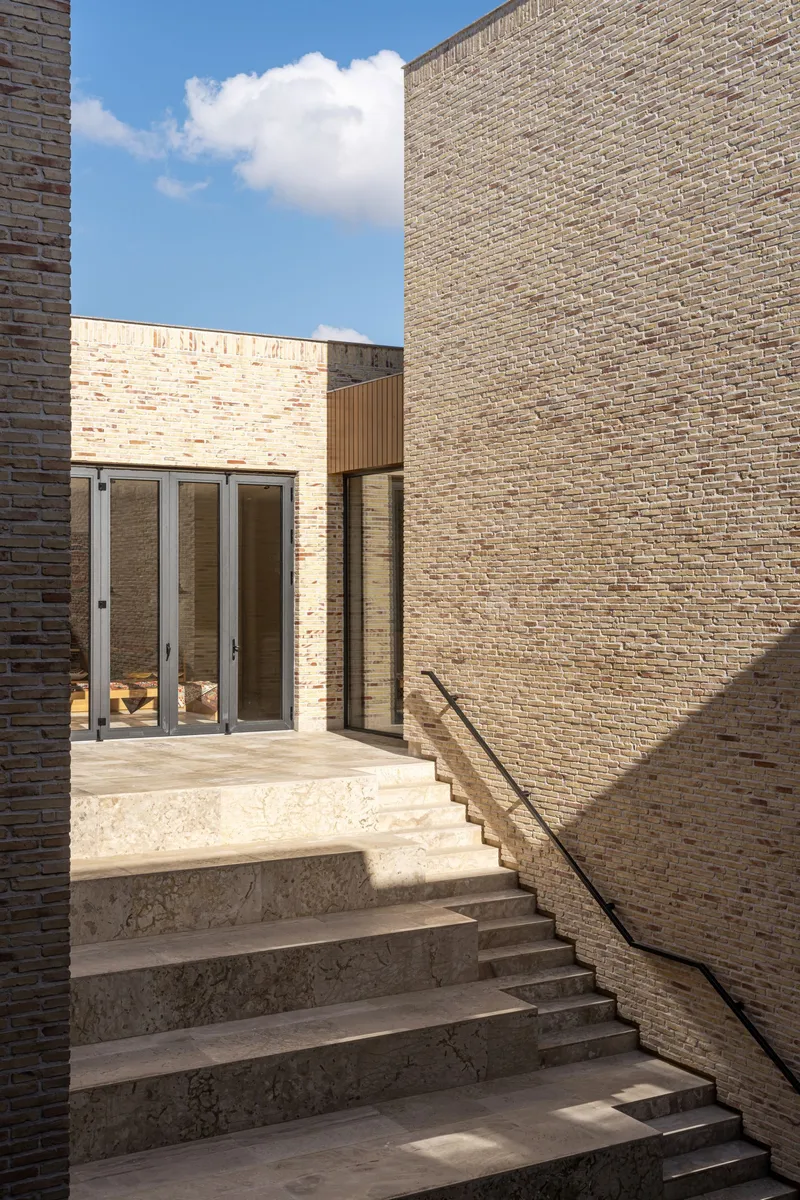
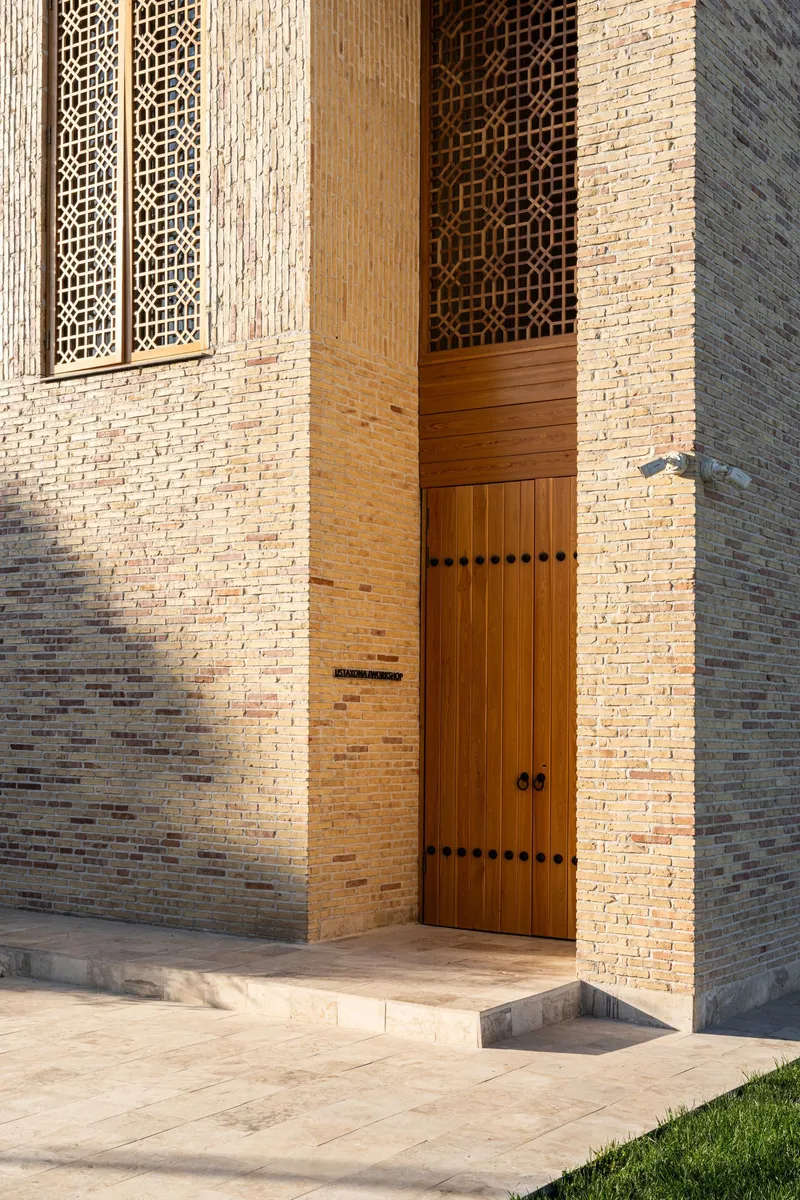
Entrances are treated as events. The main door is a tall timber panel set deep within a brick surround, topped by a lattice screen. You step through rather than walk up to the building. Stone staircases between volumes are narrow and compressed, framed by high brick walls that open to the sky. These transitions enforce a sequence of enclosure and revelation that makes the spatial experience cinematic.
The covered courtyard entrance, with its heavy timber beams and patterned brickwork, functions almost as a narthex: a space for adjusting from the street to the pace of the museum. It is a gesture borrowed from mosque architecture, and it works precisely because the building next door is one.
Street Presence and Urban Context
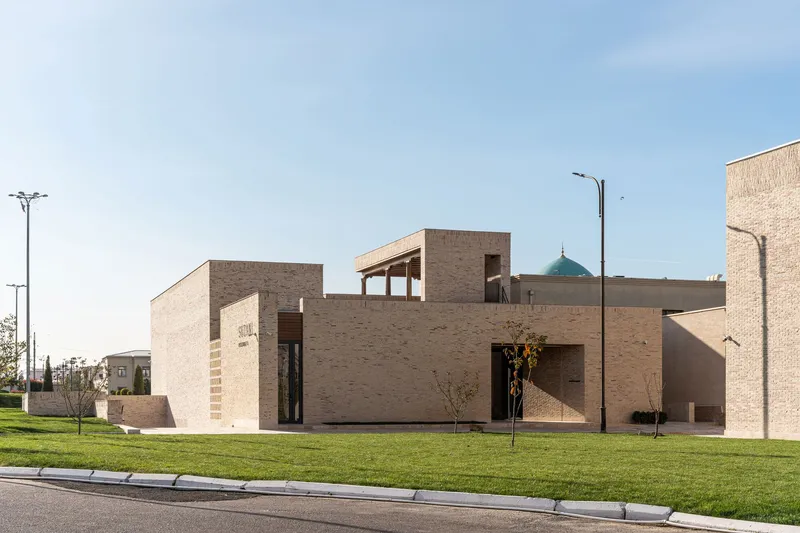
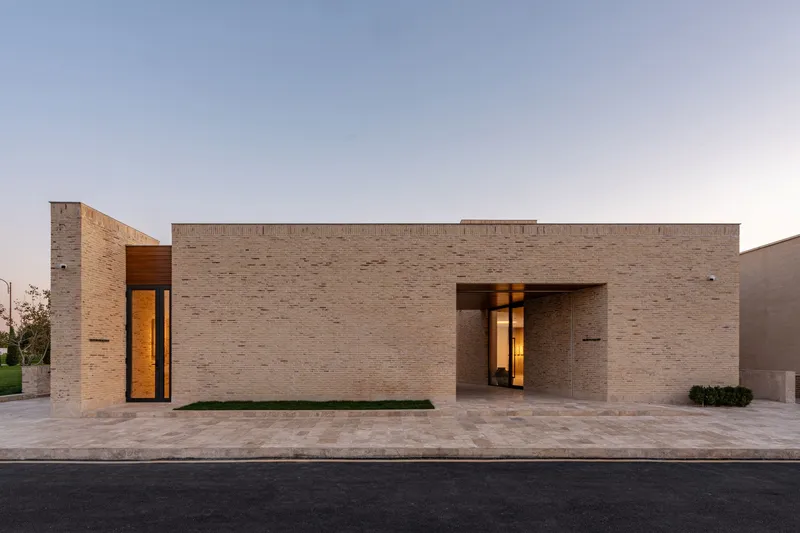

From above, the museum's brick volumes and landscaped courts sit comfortably beside the minarets of the adjacent mosque. The building keeps a low profile, never more than two stories, and its roofline steps down to meet the residential scale of the surrounding mahalla. The street facade uses raised lettering and subtle material shifts to signal its public function, but it does not shout.
Young trees along the perimeter will eventually soften the facade further, but even now the building reads as a mature piece of urban fabric rather than a new insertion. This restraint is the project's quiet strength. In a city undergoing rapid modernization, ARC Architects have demonstrated that a contemporary institution can emerge from local materials and spatial traditions without retreating into nostalgia.
Plans and Drawings
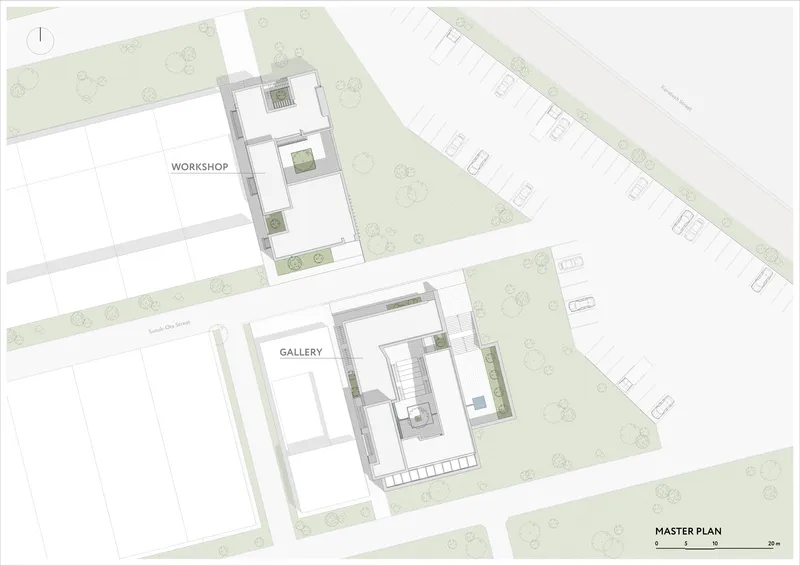
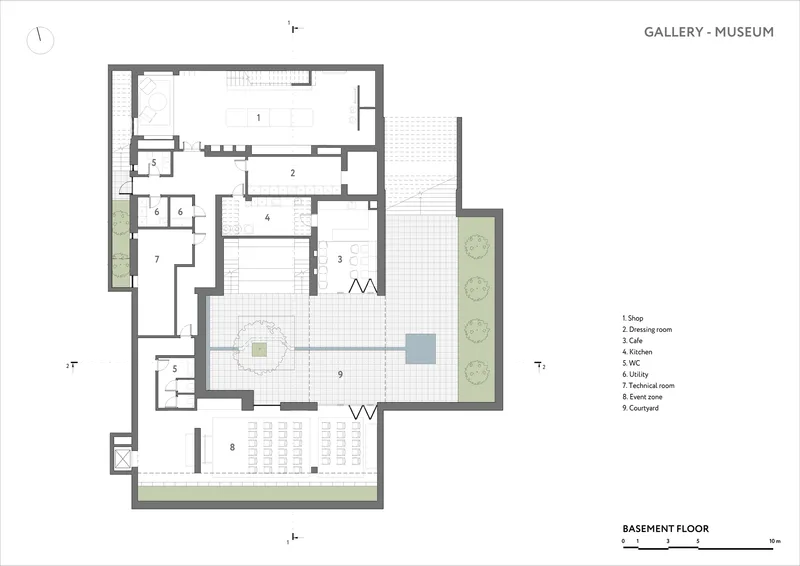
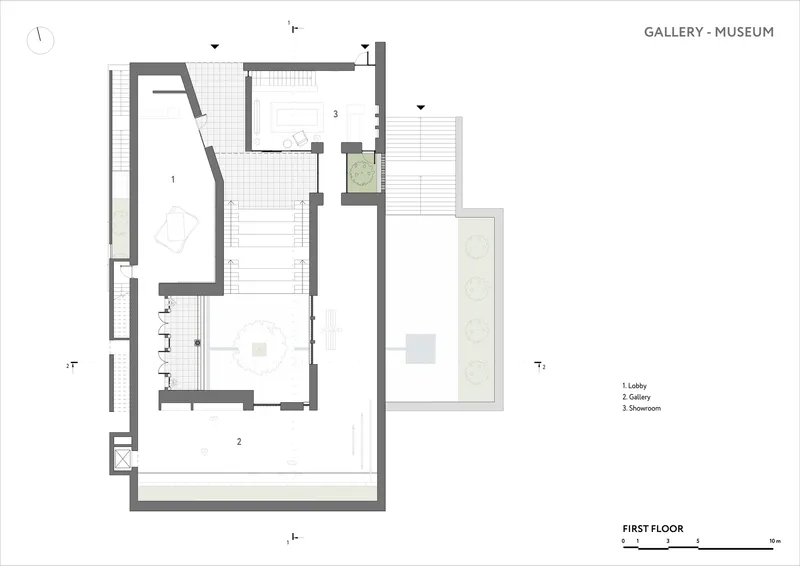
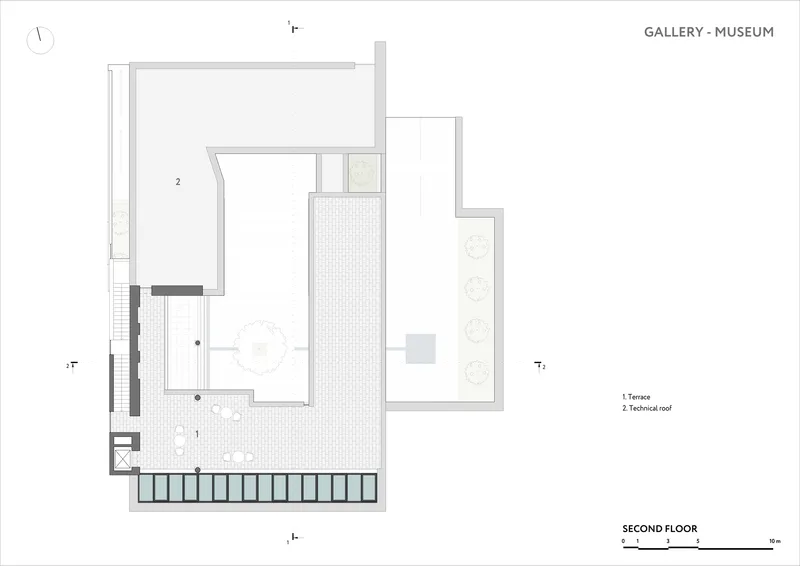


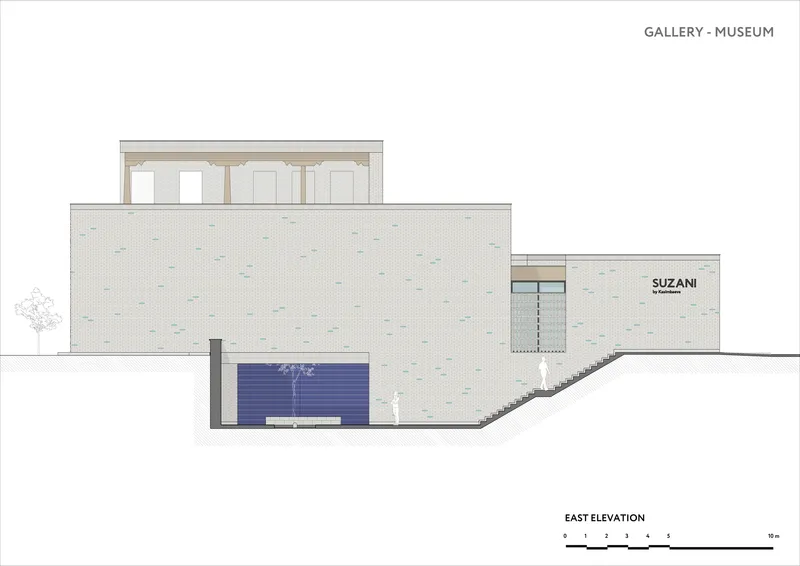


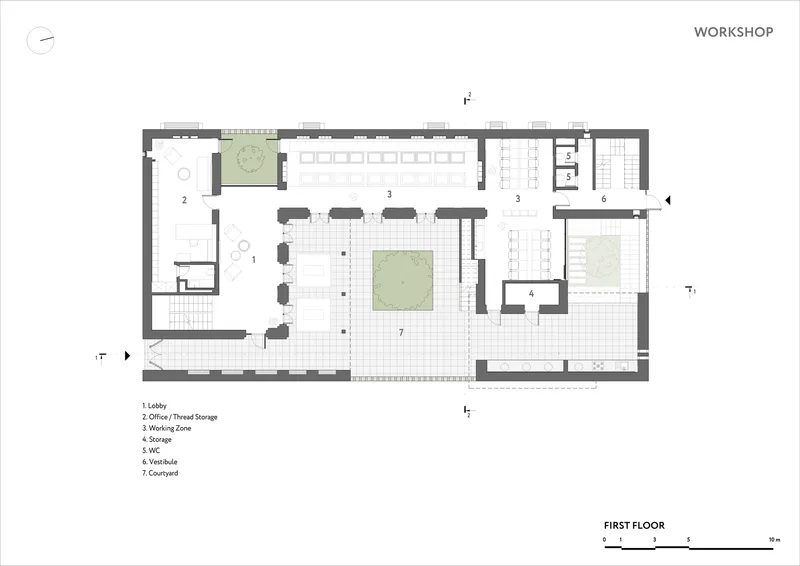

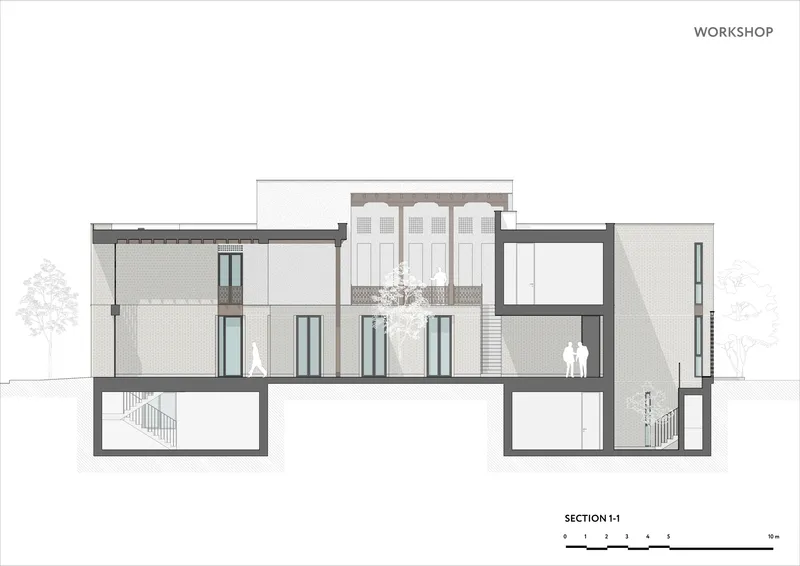

The plans reveal a clear organizational logic: two primary buildings, one for galleries and one for workshops, flank a series of courtyards and circulation spines. Basements house cafés, storage, and technical rooms, while upper levels open onto terraces and technical roofs. The sections are particularly revealing, showing how the double-height gallery volume accommodates the reflecting pool and planted courtyard in a single spatial sweep.
Detail drawings of the perforated brick screen walls and lattice panels show three distinct pattern types, each with its own module and rhythm. These are not applied decoration; they are integral to the wall assembly, with specific dimensions and structural logic. The axonometric breakdowns demonstrate the care ARC Architects invested in developing custom building components from standard materials, an approach that keeps costs manageable while achieving a level of craft that off-the-shelf solutions cannot.
Why This Project Matters
The SUZANI by Madina Kasimbaeva Museum matters because it refuses the false choice between heritage and modernity. Too many cultural projects in rapidly developing cities either ape Western gallery typologies or retreat into themed replicas of historical architecture. ARC Architects have found a third path: a building that is unmistakably contemporary in its program, detailing, and spatial ambition, yet deeply rooted in the courtyard traditions, material culture, and craft practices of Uzbekistan.
It also matters because of what it houses. Suzani embroidery is not a relic; it is a living tradition sustained primarily by women artisans. By integrating working studios alongside exhibition galleries, the museum declares that craft production and cultural presentation are inseparable. The architecture supports this argument at every turn: in the filtered light of its workshops, the tactile warmth of its timber and brick, and the courtyard thresholds that frame making and viewing as part of the same experience. Tashkent now has a cultural institution that honors its subject not just in content but in form.
SUZANI by Madina Kasimbaeva Museum, designed by ARC Architects (lead architect: Bobir Klichev), Tashkent, Uzbekistan. 1,200 m². Completed 2025. Photography by Denis Komarov.
About the Studio
Share Your Own Work on uni.xyz
If projects like this are the kind of work you want to make, uni.xyz is a place to publish your own, find collaborators, and enter design competitions.



Popular Articles
Popular articles from the community


The Musturak Paradise: Senior Living Architecture for a Connected Future in Temara, Morocco
The Musturak Paradise reimagines senior living architecture in Temara via private homes, social spaces, culture, community, and shared care.
EW PARK: Sustainable Architecture Reimagines the Future of Urban Parking
EW PARK reimagines city parking as a modular wooden tower combining automation, solar energy, electric mobility, and adaptable urban design.

Conexión: Biophilic Design Reimagines High-Rise Living in Hong Kong
Conexión reimagines high-rise living in Hong Kong through biophilic design, green facades, shared spaces, daylight, water and nature within.

Co-life: Sustainable Architecture for Age-Friendly Community Living
Co-life reimagines sustainable architecture for seniors through courtyards, rammed earth, shared gardens, and spaces designed for belonging.


Similar Reads
You might also enjoy these articles

Bao Huynh Watercolor Atelier: A Serene Art Retreat in Hội An
Bao Huynh Watercolor Atelier in Hội An blends multifunctional art spaces, sustainable design, local materials, and family-friendly living in a serene environment.

Atelier Macri Concept Store Interior Design by CASE-REAL
Atelier Macri store features a "ko" counter, walnut wood details, cork displays, blending retail, gallery, and seamless customer experiences.

Manuel Vargas Izquierdo Stadium and High-Performance Sports Center: Architectural Excellence in Jalpa de Méndez
The Manuel Vargas Izquierdo Stadium blends sustainable design, inclusive sports facilities, and cultural-inspired architecture, revitalizing Jalpa de Méndez’s public spaces.

KAKR Buluh Awar Hall: Revitalizing Community and Ecology Through Bamboo Architecture
Community built bamboo hall revitalizes Buluh Awar village, empowering youth, restoring ecology, celebrating vernacular craftsmanship through sustainable architecture and culture.


Explore Cultural Architecture Competitions
Discover active competitions in this discipline



Design Challenge - Contemporary interpretation of a religious complex


Bring back Drive In's
Comments (0)
Please login or sign up to add comments
No comments yet. Be the first to comment!