
Atelier l'Abri Builds a Brewery in Montreal from Salvaged Ash Trees and Old Lampposts
Le Relais Boréale turns reclaimed city materials into a circular brewing hall in Montreal's Mile-Ex neighborhood.


There is a particular kind of honesty that comes from building with the city's own castoffs. At Le Relais Boréale, Atelier l'Abri assembled a 750-square-meter brewery and taproom in Montreal's Mile-Ex district using wood from downed ash trees recovered by the Bois Public organization, granite quarried less than three hours away, lamppost domes salvaged from the City of Montreal, and lighting fixtures fashioned from old liquor bottles. The result is a space that feels neither precious nor austere, landing instead on something close to genuine civic warmth.
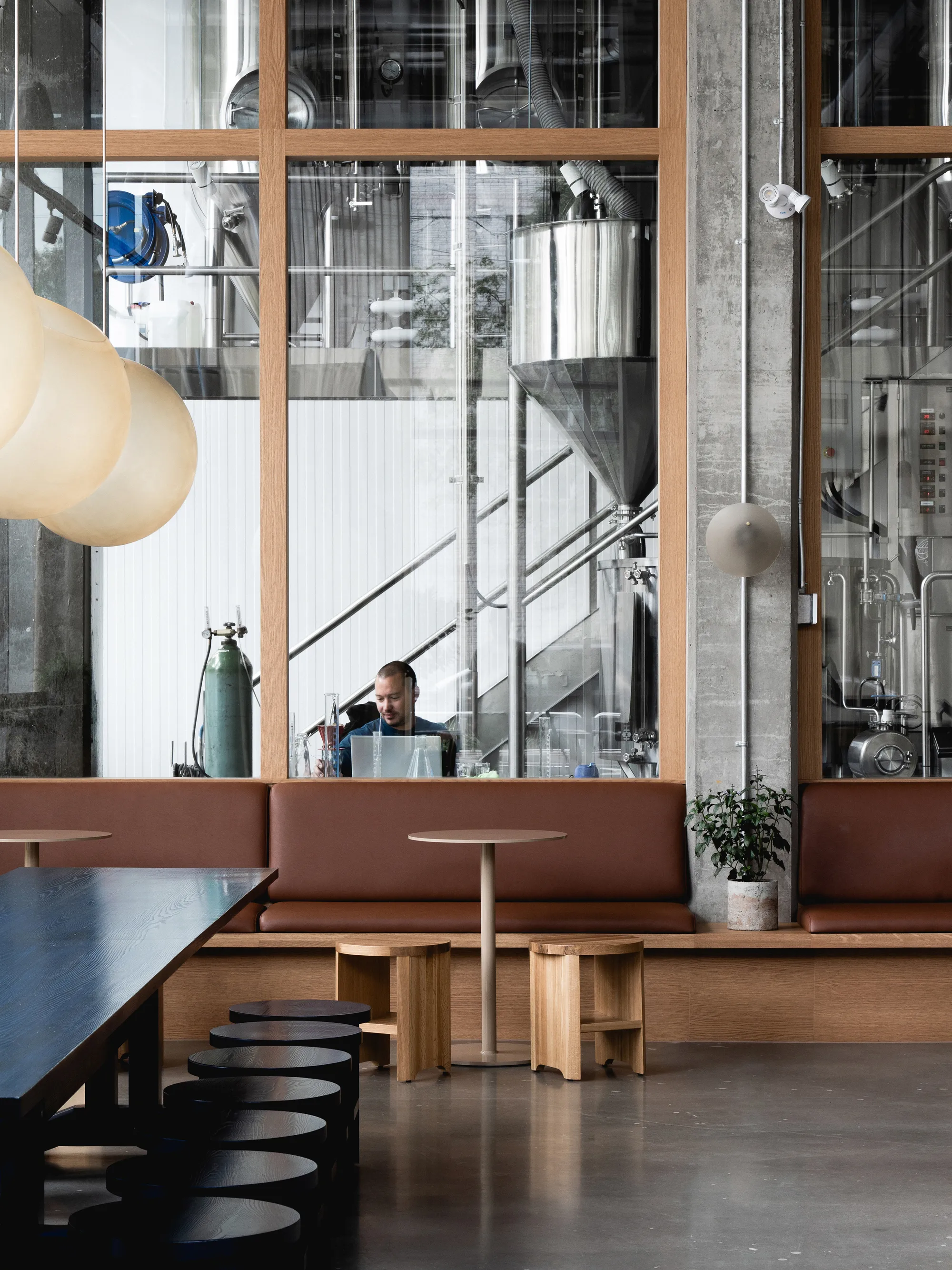
The project marks a homecoming for Les Brasseurs du Nord, who brewed the first Boréale beers in Montreal 35 years ago. Occupying a corner of the WELL-certified Fabrik8 complex, the brewery converts an existing commercial suite of concrete and glass into a layered interior where the production line is not hidden behind drywall but celebrated through a full-height oak-framed glass wall. Fermenters gleam on a mezzanine above cold chambers, diners sit below, and every sightline connects the act of drinking to the act of making.
A Bar That Curves Toward You
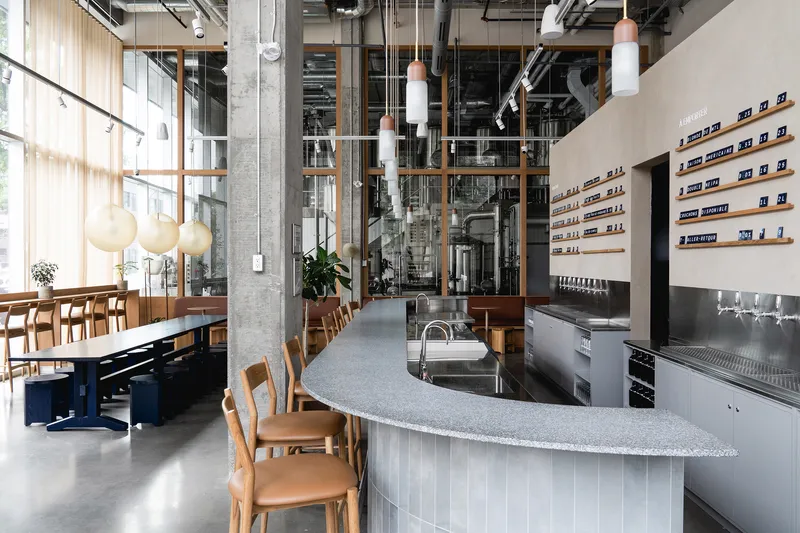
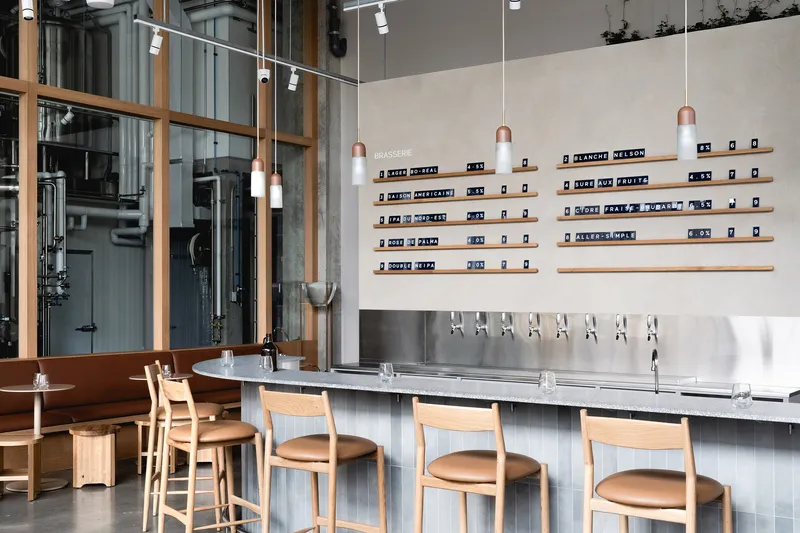
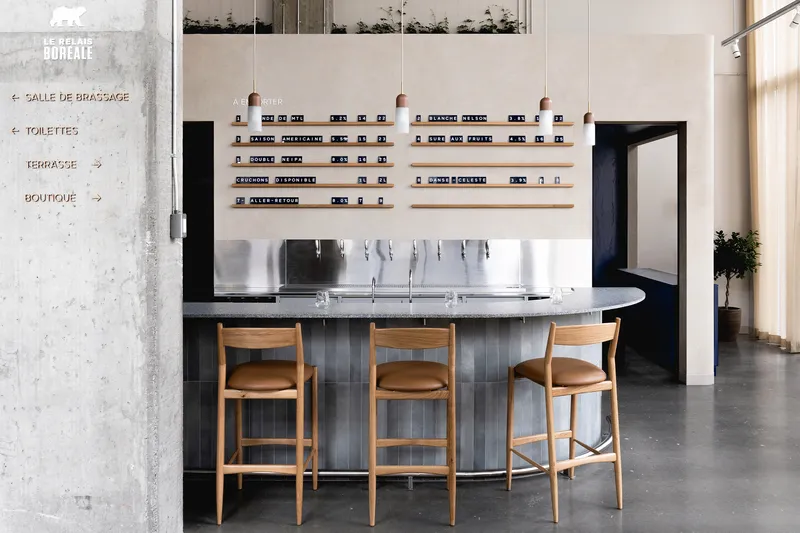
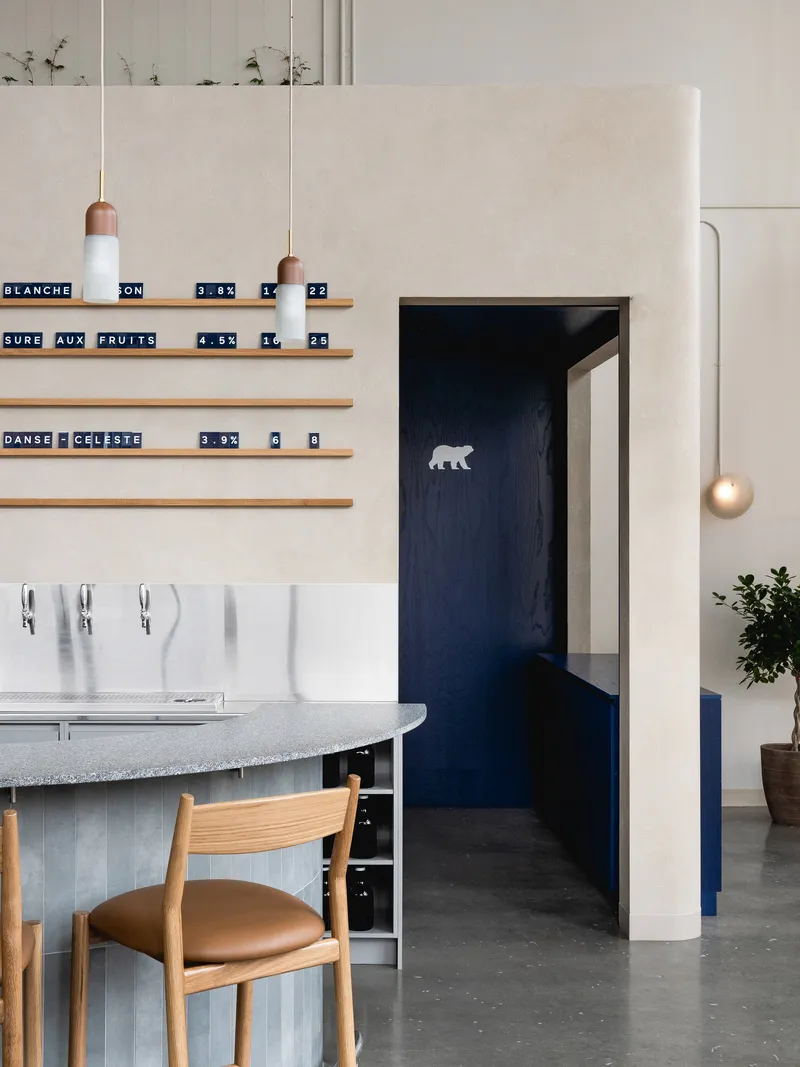
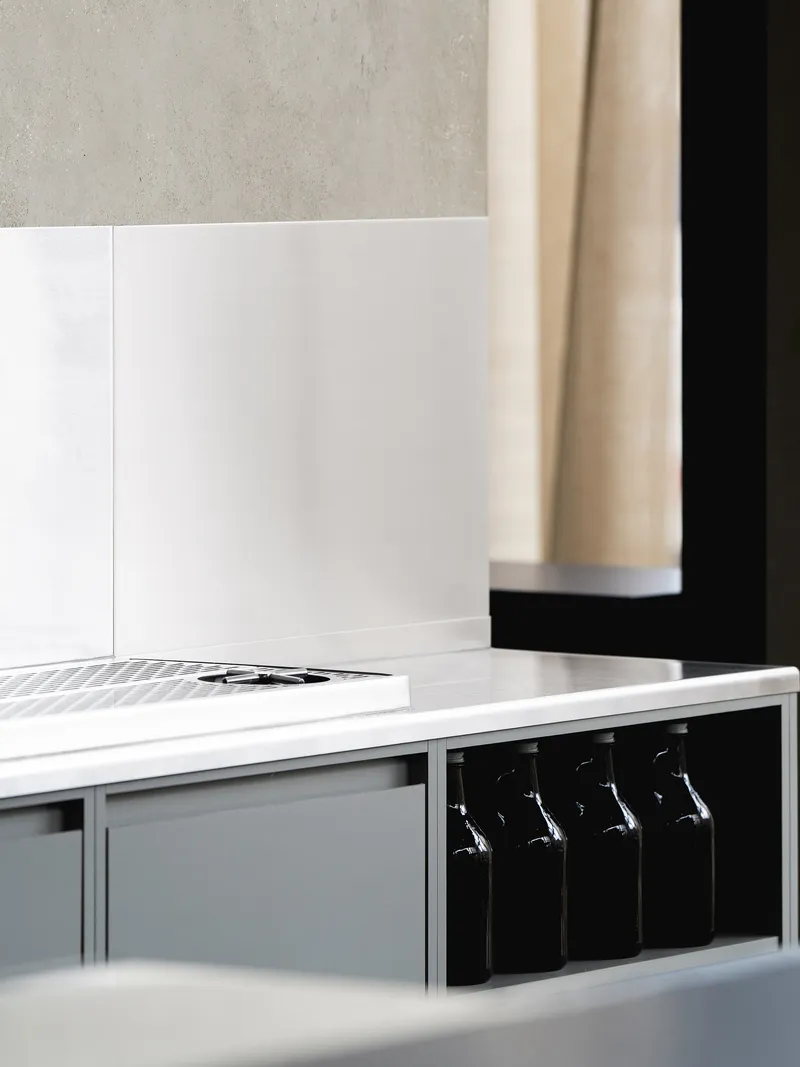
The long bar, anchored by 16 rows of taps, is the first thing visitors encounter, and it does a lot of social work. Its rounded corners are deliberate: they eliminate the dead zones that straight counters create at their ends, inviting people to cluster rather than queue. The fluted tile base gives the counter a visual weight that keeps it from reading as just another hospitality fit-out, while the terrazzo top picks up the tonal warmth of the timber shelving behind.
Oak stools line the curve, and labeled bottles on open shelves double as decoration and menu. The whole arrangement is legible at a glance. You know what this place is the moment you walk in, and the bar makes sure you feel welcome before a single word is spoken.
The Biergarten Table and the Boreal Forest
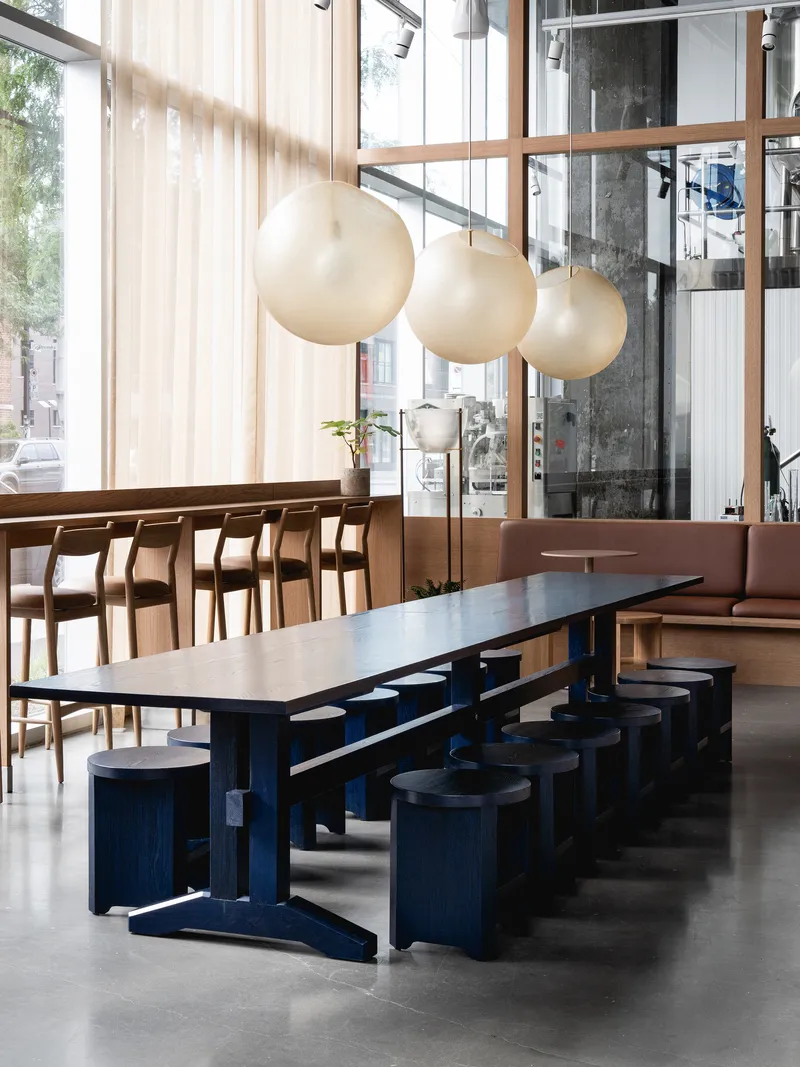
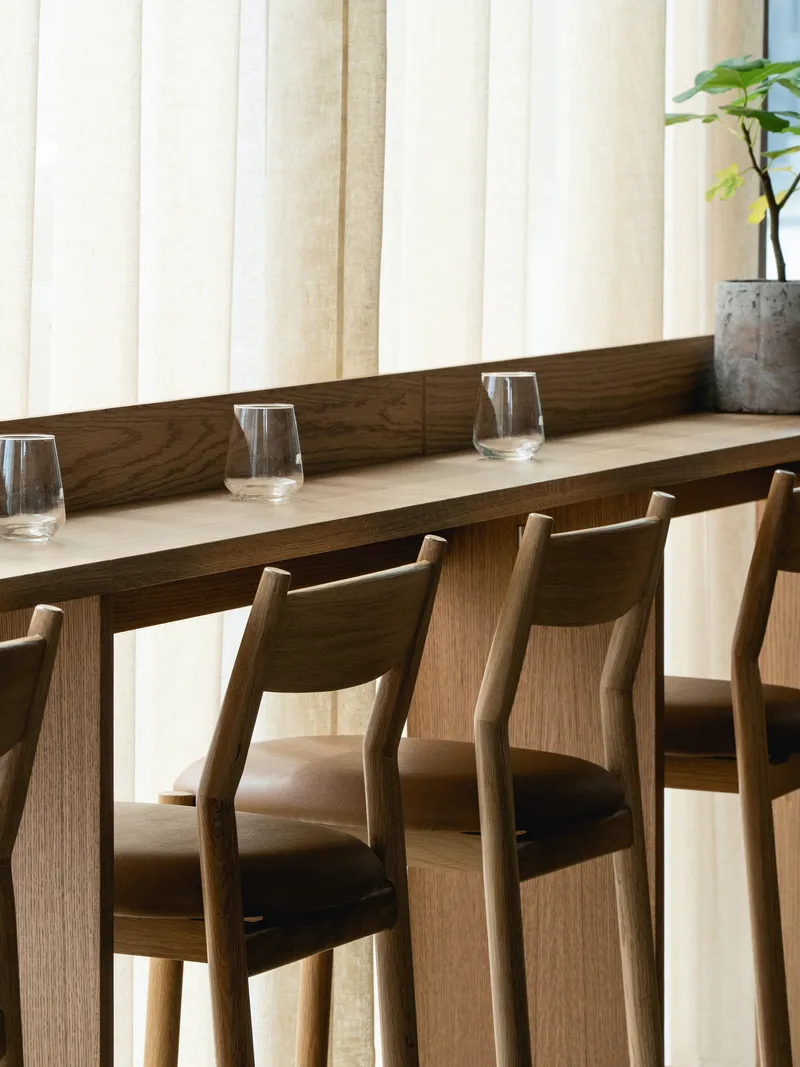
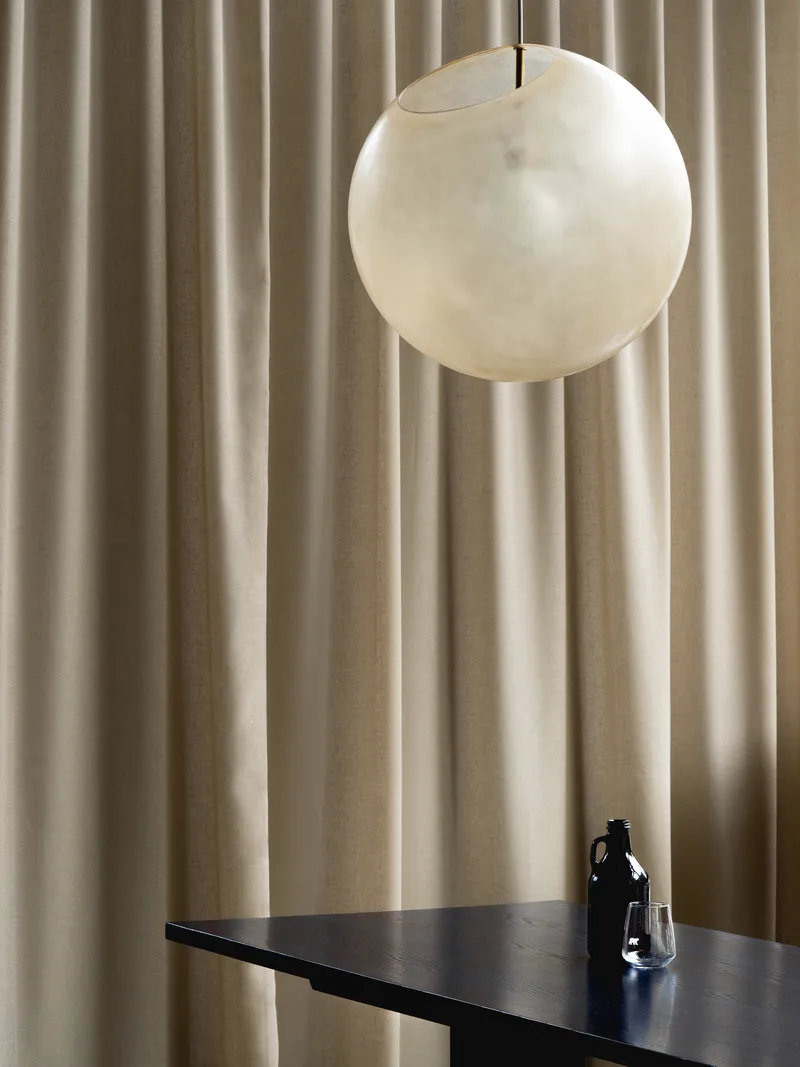
A large navy-painted communal table sits at the heart of the dining room, a nod to the Biergarten tradition where strangers become drinking companions by proximity. Cylindrical stools tuck beneath it, and clustered globe pendants hover overhead, casting a soft, amber pool of light that defines the table's territory without walling it off. Sheer linen curtains filter daylight and create a sense of enclosure that is gentle rather than rigid.
The vegetation woven through the space pays homage to the boreal forest that gives the brand its name. A wall of climbing vines and large potted plants bring organic texture to the concrete-and-glass shell. It is a smart move: the greenery softens acoustics, provides visual privacy between zones, and connects a beer brand rooted in northern wilderness to an actual, living presence in the room.
Production on Display
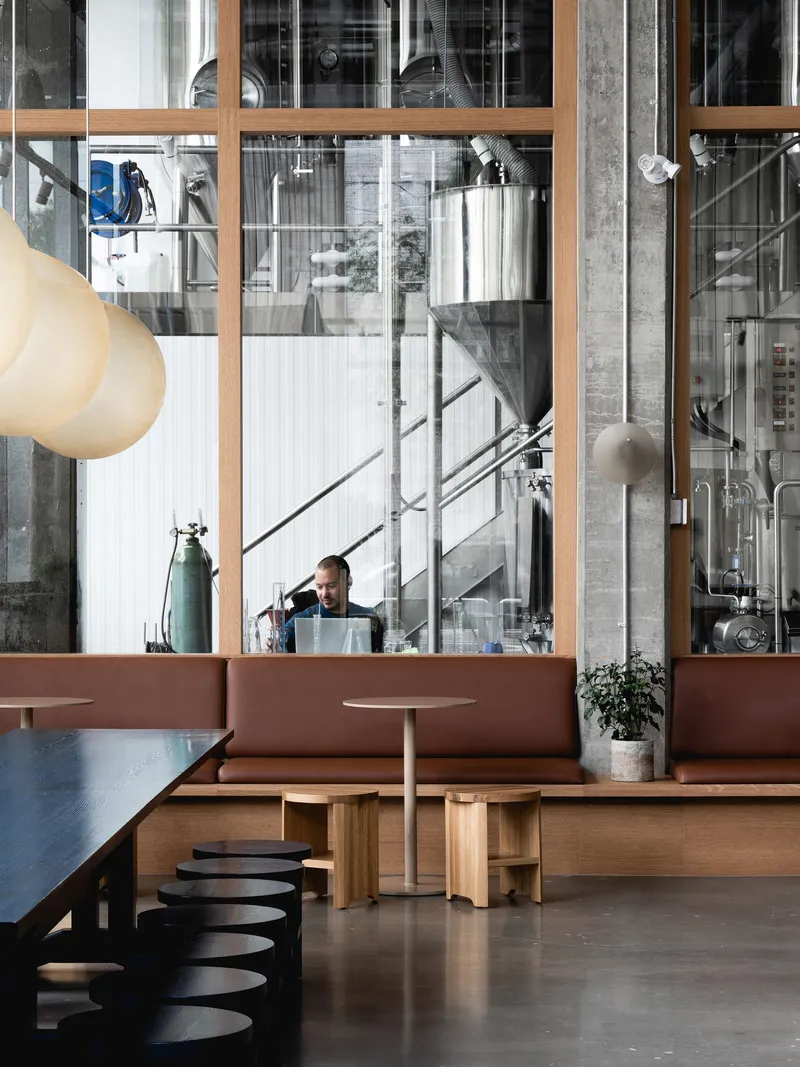
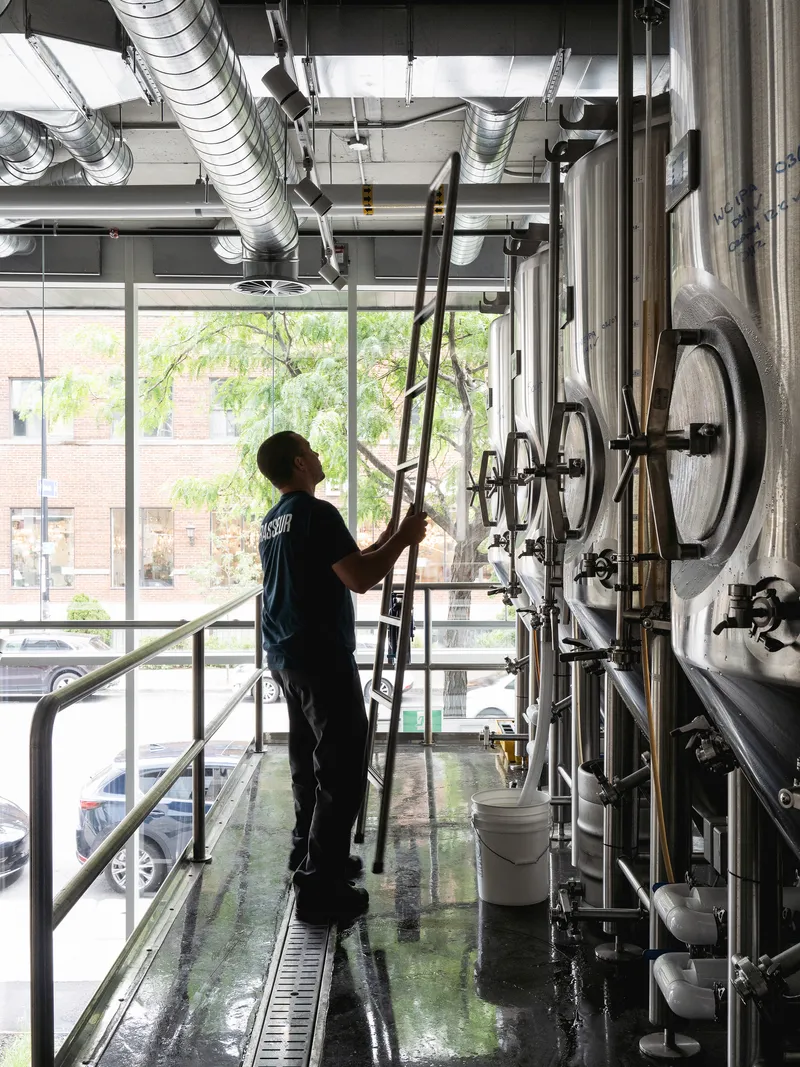
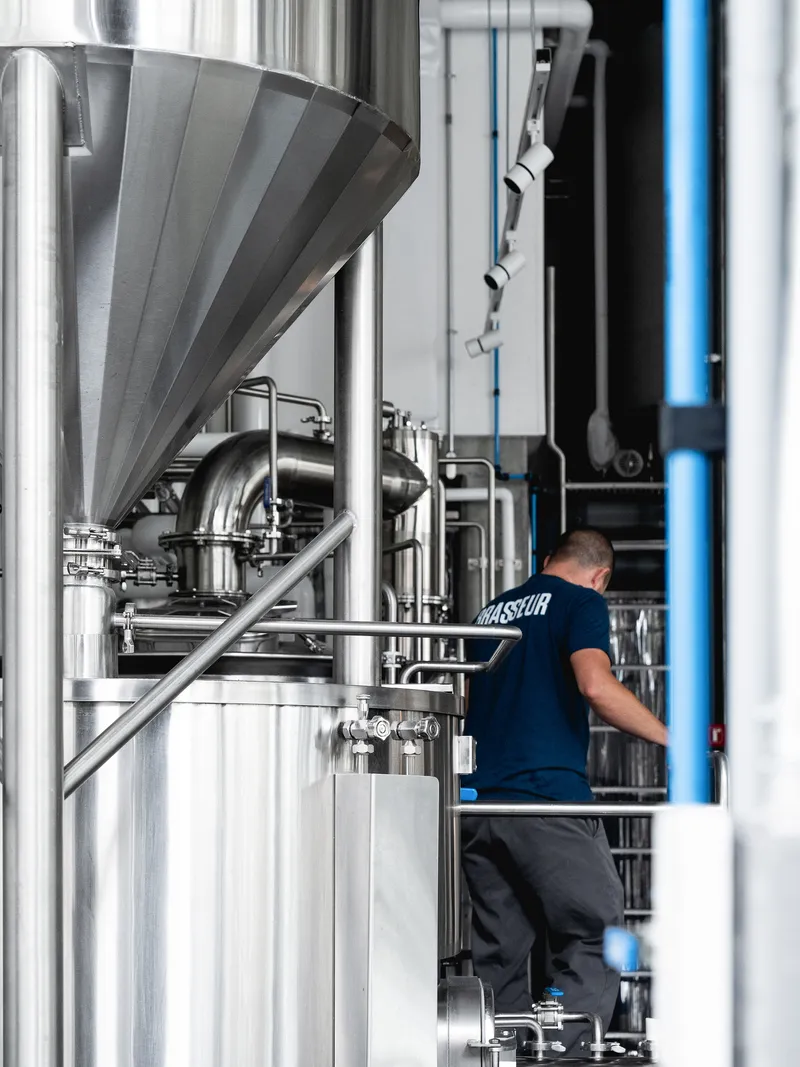
The oak-framed glass wall that separates the dining room from the brewing floor is the project's signature gesture. Stainless-steel fermenters rise behind the glass on the mezzanine level, visible from nearly every seat in the house. Atelier l'Abri positioned the cold chambers containing beer barrels at ground level, then stacked the fermentation equipment above to take advantage of the double-height volume. The stacking is pragmatic: it optimizes a tight footprint. But it is also theatrical, turning the vertical movement of workers on ladders and staircases into a kind of live performance.
Second-hand brewing tanks reinforce the circular ethos that guides the entire project. Nothing here pretends to be new for the sake of newness. The equipment was sourced, cleaned, and redeployed, consistent with a material strategy that treats reuse not as compromise but as design intelligence.
Neighborhood Craft, Not Supply-Chain Aesthetics
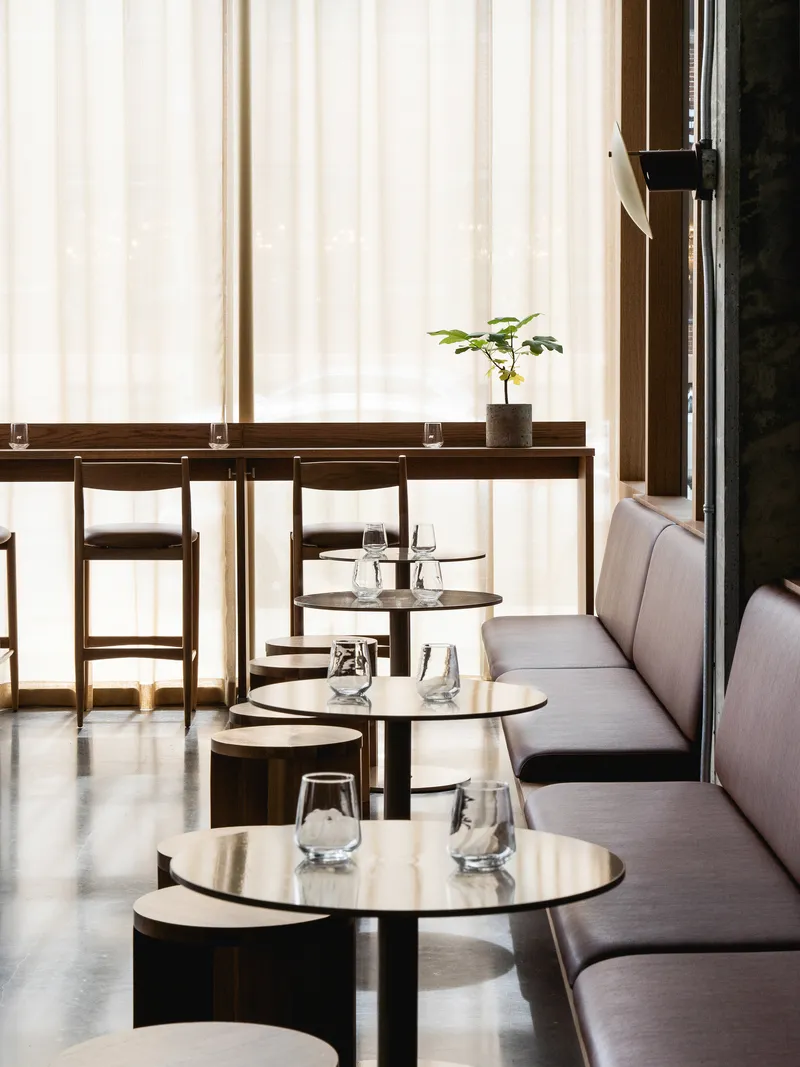
Look past the overall atmosphere and the details start to accumulate. Tables and chairs were handmade by Inat, a local woodworker. Lighting fixtures reuse old lamppost domes from the city and repurposed liquor bottles. Lime plaster walls, local granite surfaces, and native wood all come from within a tight geographic radius. Artisans from the Mile-Ex neighborhood itself collaborated on furniture and lighting, so the supply chain is less a chain than a web of neighbors.
The polar bear motif beside the navy-painted doorway serves as a quiet brand marker, but the real identity of Le Relais Boréale is written in its material sourcing. Every surface tells you where it came from and, by extension, who made it. In an era when hospitality interiors often arrive flat-packed from the same handful of global suppliers, this specificity matters more than it might first appear.
Plans and Drawings
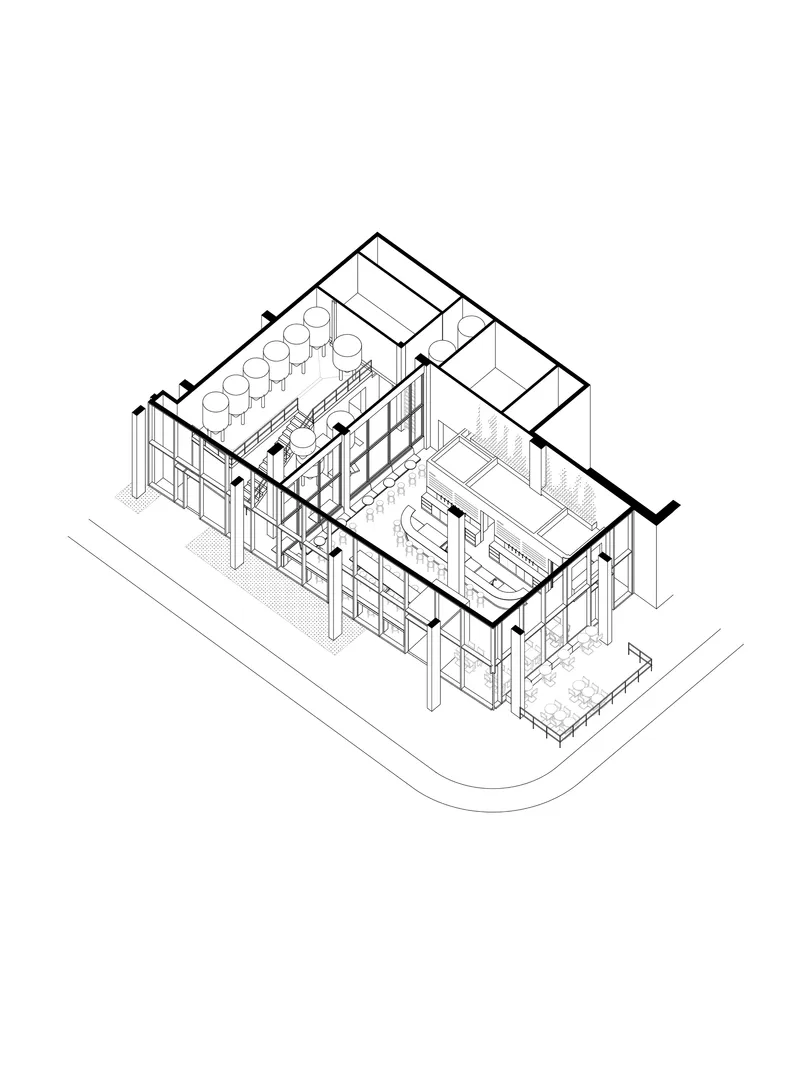
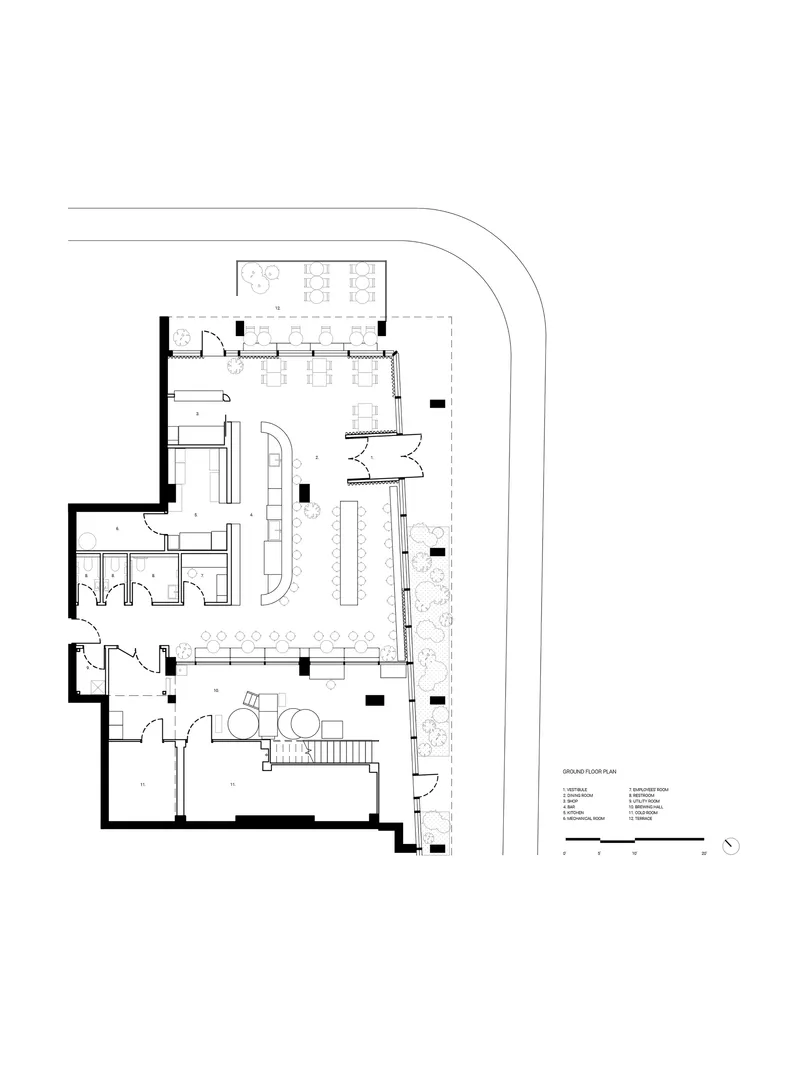
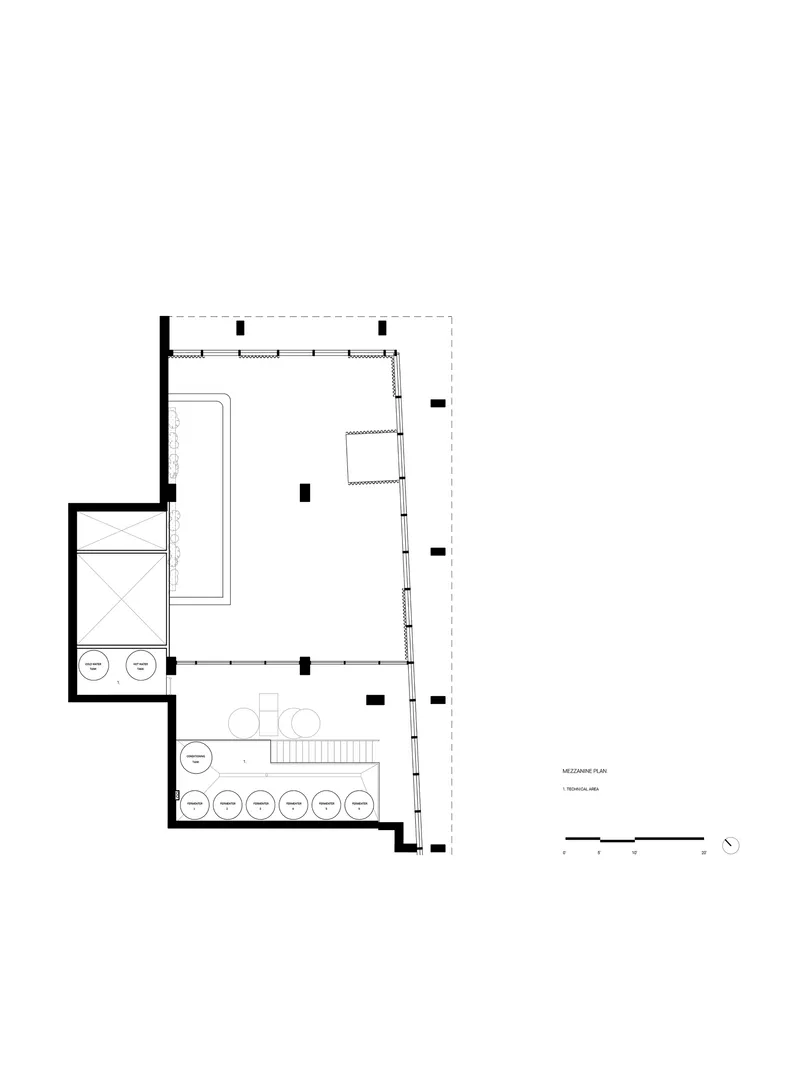
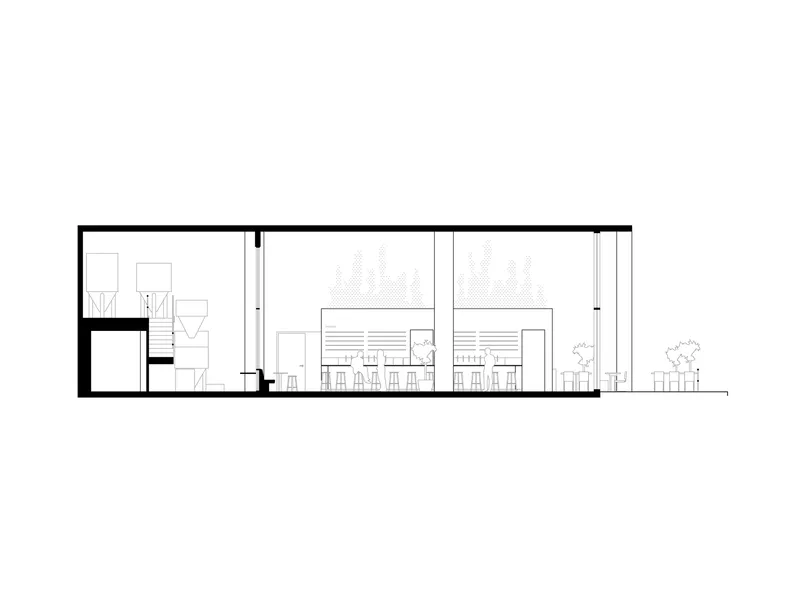
The axonometric drawing reveals the spatial logic most clearly: the glass-walled brewing area occupies the perimeter, the bar commands the entrance, and the dining zones fill the center and edges in layers of increasing intimacy. The ground floor plan shows how the outdoor terrace extends the brewery's social life to the street, while the mezzanine plan illustrates how upper-level seating and service areas wrap around a central staircase that doubles as a visual connection between levels.
The section drawing is perhaps the most telling document. It exposes the double-height volume that makes the fermenter wall legible from the dining floor, and it shows how the rooftop terrace adds yet another layer to the program. For 750 square meters, the project packs in a remarkable density of distinct experiences: bar, communal dining, intimate tables, production floor, mezzanine, and rooftop, all organized with an economy that never feels cramped.
Why This Project Matters
Le Relais Boréale is a case study in how circular design thinking can produce interiors that are more characterful, not less. By sourcing ash from storm-damaged city trees, granite from a nearby quarry, and fixtures from municipal salvage, Atelier l'Abri demonstrates that locality is not a constraint but a creative engine. The project avoids the trap of eco-austerity, where sustainable intentions produce spaces that feel apologetic. Nothing here looks recycled in the pejorative sense. It looks specific, rooted, and alive.
The decision to foreground the brewing process through an oak-framed glass wall offers a broader lesson for hospitality design: transparency builds trust, and trust builds loyalty. When you can see where your beer is made, and where the table you sit at came from, the act of ordering a pint becomes an act of participation in a local economy. That is the real program of this brewery, not just making beer visible, but making an entire network of makers and materials legible to anyone who walks through the door.
Le Relais Boréale Brewery by Atelier l'Abri, Montreal, Canada. 750 m². Completed 2022. Photography by Raphaël Thibodeau.
About the Studio
Share Your Own Work on uni.xyz
If projects like this are the kind of work you want to make, uni.xyz is a place to publish your own, find collaborators, and enter design competitions.



Popular Articles
Popular articles from the community


Conexión: Biophilic Design Reimagines High-Rise Living in Hong Kong
Conexión reimagines high-rise living in Hong Kong through biophilic design, green facades, shared spaces, daylight, water and nature within.

Co-Life: Senior Housing Design That Reconnects Older Adults With the City
Co-Life reimagines senior housing design through healing gardens, shared streets, workshops, and a sustainable community across generations.

The Earth Pod: 3D Printed Homes for Resilient Refugee Communities
The Earth Pod reimagines refugee housing through 3D printed homes made from clay, combining resilience, self-sufficiency, and rapid shelter.

Play: Fragments of Their World
Familiar architecture becomes modular playground design, creating safe spaces where displaced children can learn, connect, imagine and play.


Similar Reads
You might also enjoy these articles

Bao Huynh Watercolor Atelier: A Serene Art Retreat in Hội An
Bao Huynh Watercolor Atelier in Hội An blends multifunctional art spaces, sustainable design, local materials, and family-friendly living in a serene environment.

Atelier Macri Concept Store Interior Design by CASE-REAL
Atelier Macri store features a "ko" counter, walnut wood details, cork displays, blending retail, gallery, and seamless customer experiences.

Manuel Vargas Izquierdo Stadium and High-Performance Sports Center: Architectural Excellence in Jalpa de Méndez
The Manuel Vargas Izquierdo Stadium blends sustainable design, inclusive sports facilities, and cultural-inspired architecture, revitalizing Jalpa de Méndez’s public spaces.

KAKR Buluh Awar Hall: Revitalizing Community and Ecology Through Bamboo Architecture
Community built bamboo hall revitalizes Buluh Awar village, empowering youth, restoring ecology, celebrating vernacular craftsmanship through sustainable architecture and culture.

Comments (0)
Please login or sign up to add comments
No comments yet. Be the first to comment!