
Battery Playscape: A Resilient Urban Playground Rooted in Ecology and Climate Awareness
Battery Playscape blends resilient design, ecological education, and sensory play, fostering climate awareness through immersive, nature-based urban playground experiences.


BKSK Architects+ Starr Whitehouse Landscape Architects and Planners
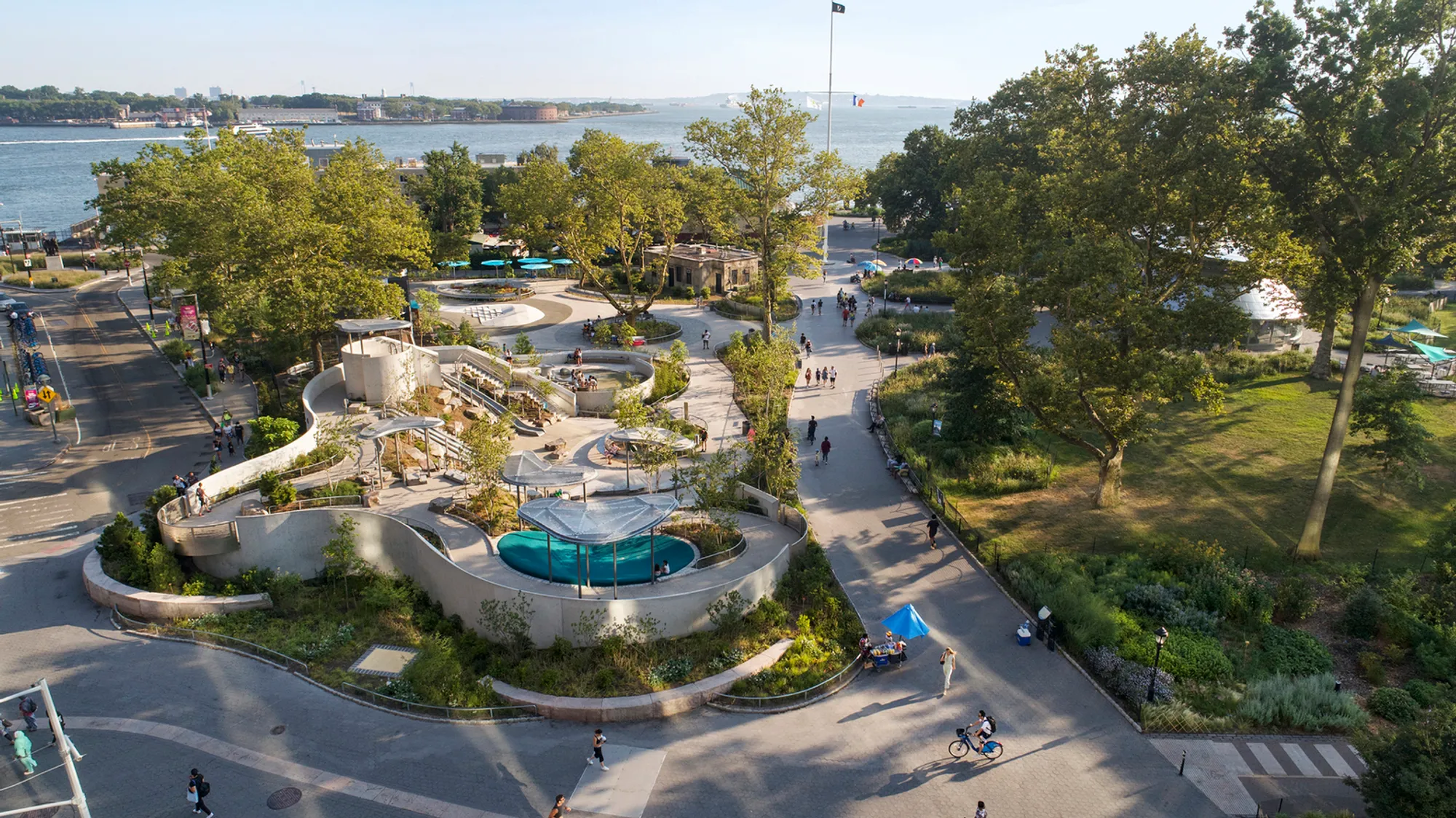
Located at the southernmost tip of Manhattan, where the Hudson River meets New York Harbor, the Battery Playscape is more than just a public playground—it's a forward-thinking model of climate-resilient design that brings ecological education, immersive play, and landscape architecture into one unified vision. Designed collaboratively by BKSK Architects and Starr Whitehouse Landscape Architects and Planners, this 1.5-acre playscape redefines what it means to engage children in urban environments—both physically and environmentally.
Designing for Resilience and Imagination
Set within The Battery—a historically layered park shaped by centuries of landfill expansion—the site sits on low-lying, flood-prone land, making it particularly vulnerable to storm surges, high winds, and rising sea levels. Rather than resisting nature, the Battery Playscape embraces it, using adaptive design to turn environmental challenges into enriching opportunities for creative, open-ended play.
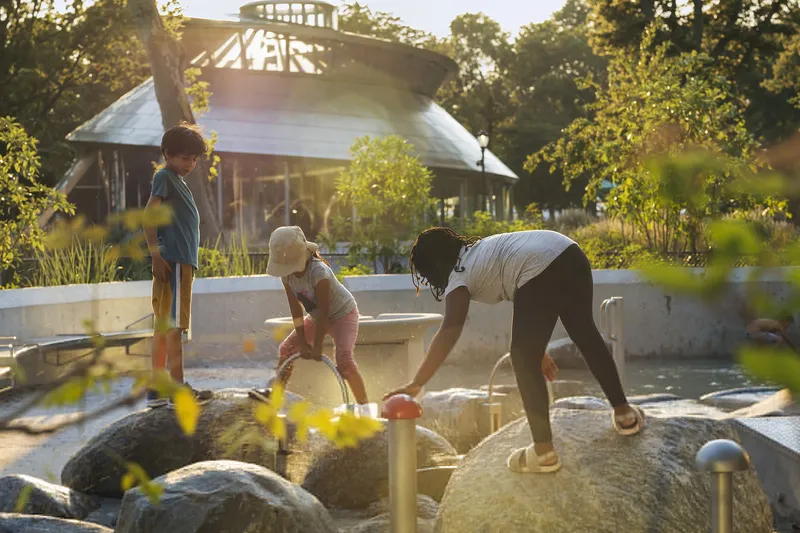
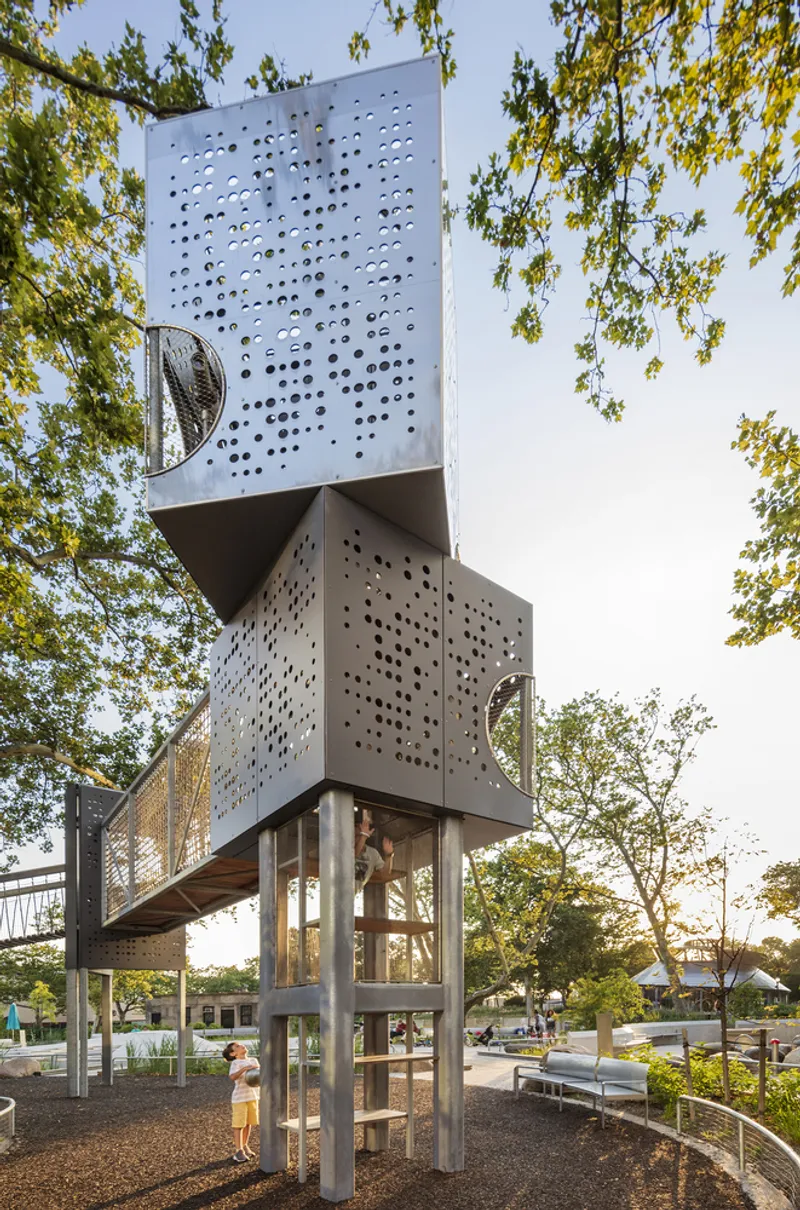
The playscape acts as a flexible, plant-filled framework that invites children to explore, run, climb, and imagine within a setting that mirrors the dynamic rhythms of nature. The architecture and landscape elements are intentionally porous, blending built form with natural processes to support experiential learning and environmental awareness.
Integrating Water Management into Play
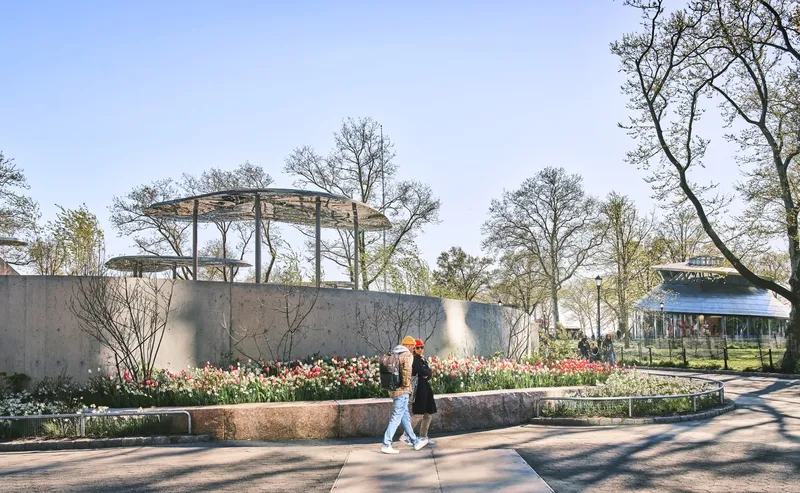
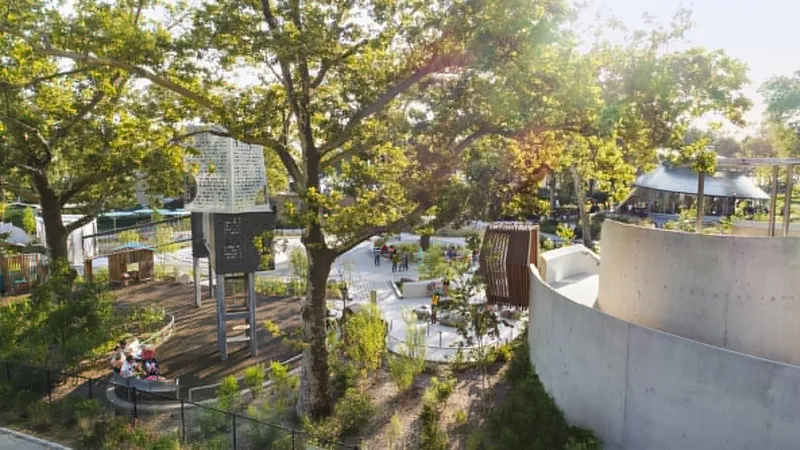
Central to the design is its innovative approach to stormwater management. A network of impermeable paving visibly guides runoff into a series of rain gardens, lushly planted with salt-tolerant, aromatic, and tactile flora. These gardens not only manage flooding and reduce urban heat but also engage children’s senses, sparking curiosity through texture, scent, and seasonal change.
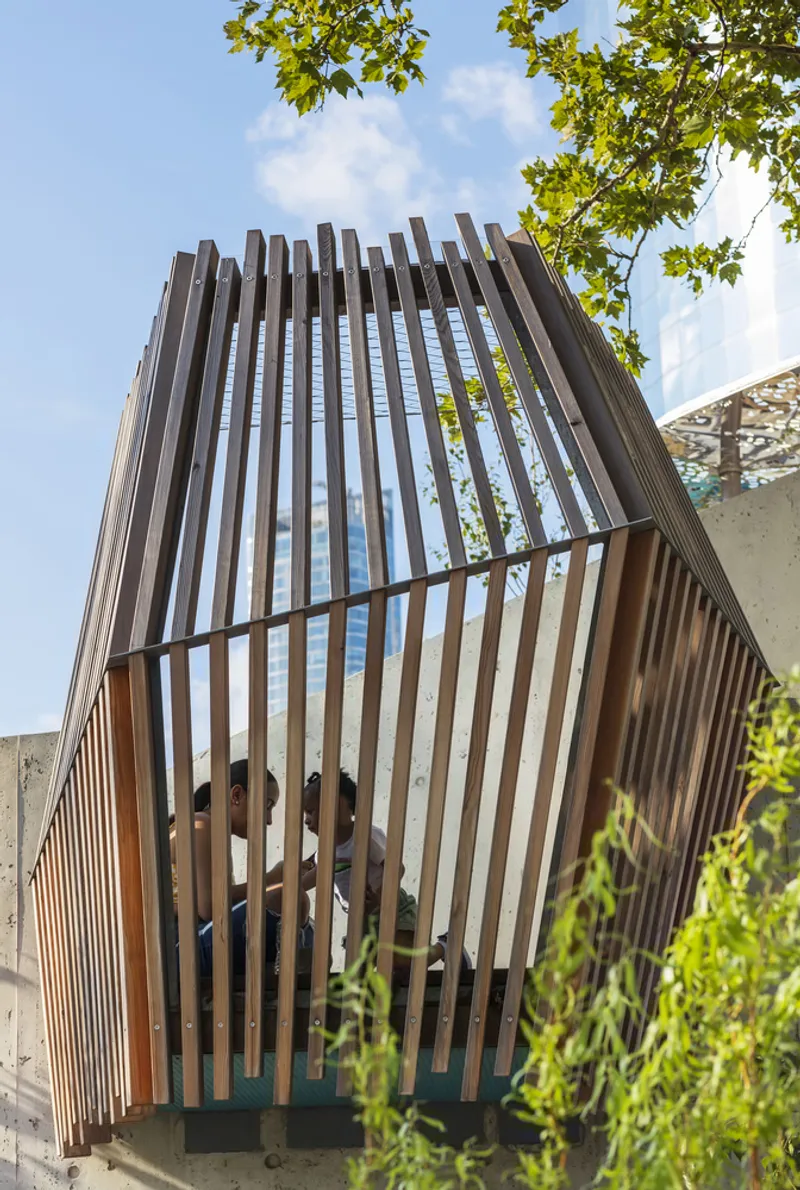
Footbridges crisscross these planted areas, allowing children and adults to observe how the landscape responds to water movement in real-time. It’s a didactic landscape—a place where ecological systems are not hidden but celebrated, helping young users understand how resilient landscapes work while they play.


Play as Ecological Learning
From winding paths and mounds to climbing structures and observation points, every element within the playscape fosters full-body, sensory-rich engagement. Here, play becomes a tool for environmental education, seamlessly connecting children with nature’s rhythms and the pressing realities of climate change. The diverse planting strategy encourages stewardship and biophilic interaction, cultivating emotional connections to the natural world even in a dense urban context.




Popular Articles
Popular articles from the community


The Musturak Paradise: Senior Living Architecture for a Connected Future in Temara, Morocco
The Musturak Paradise reimagines senior living architecture in Temara via private homes, social spaces, culture, community, and shared care.

Hill & Cross Opera: Sculptural Opera House Architecture Shaped by Tallinn’s Landscape and Identity
Hill & Cross Opera reimagines opera house architecture in Tallinn through its sculptural hill, civic plaza, glass wave and a luminous cross.

Co-Life: Senior Housing Design That Reconnects Older Adults With the City
Co-Life reimagines senior housing design through healing gardens, shared streets, workshops, and a sustainable community across generations.

AL-JANNAH: Sustainable Architecture and Permaculture for Afghan Widows
AL-JANNAH uses sustainable architecture and permaculture to create resilient oasis of housing, learning, work and renewal for Afghan widows.


Similar Reads
You might also enjoy these articles


Hodi-Mandai Geram
Project Function: Preservation and revitalization of the Intangible heritage and socio-spatial identity of the Hodi by Housing, Cultural Memory Center, Sacred Grove, landscape, local tourism economy


Olio Towers: A Mid-Rise for Performers That Fuses Housing, Rehearsal, and Stage
Located blocks from Houston's Theater District, this modular tower stacks living units around a central performance atrium.

Oasis: Modular Green Housing Carved into Dhaka's Urban Fabric
A shortlisted Plugin Housing entry reclaims unauthorized settlements in Dhaka with stepped concrete volumes, green roofs, and ventilation-driven design.

Black Hole: A Floating Megastructure for the Post-Physical Era
Emiliano Mazzarotto envisions a spherical, self-scaling arena where e-sports, digital hotels, and holographic stadiums replace traditional public space.


Explore Playground Competitions
Discover active competitions in this discipline



Challenge to reimagine the Iron Throne


Photograph architecture without architects


Illustrate the lost glory of Angkor Wat - Render Challenge


Design challenge to reuse E-waste
Comments (0)
Please login or sign up to add comments
No comments yet. Be the first to comment!