
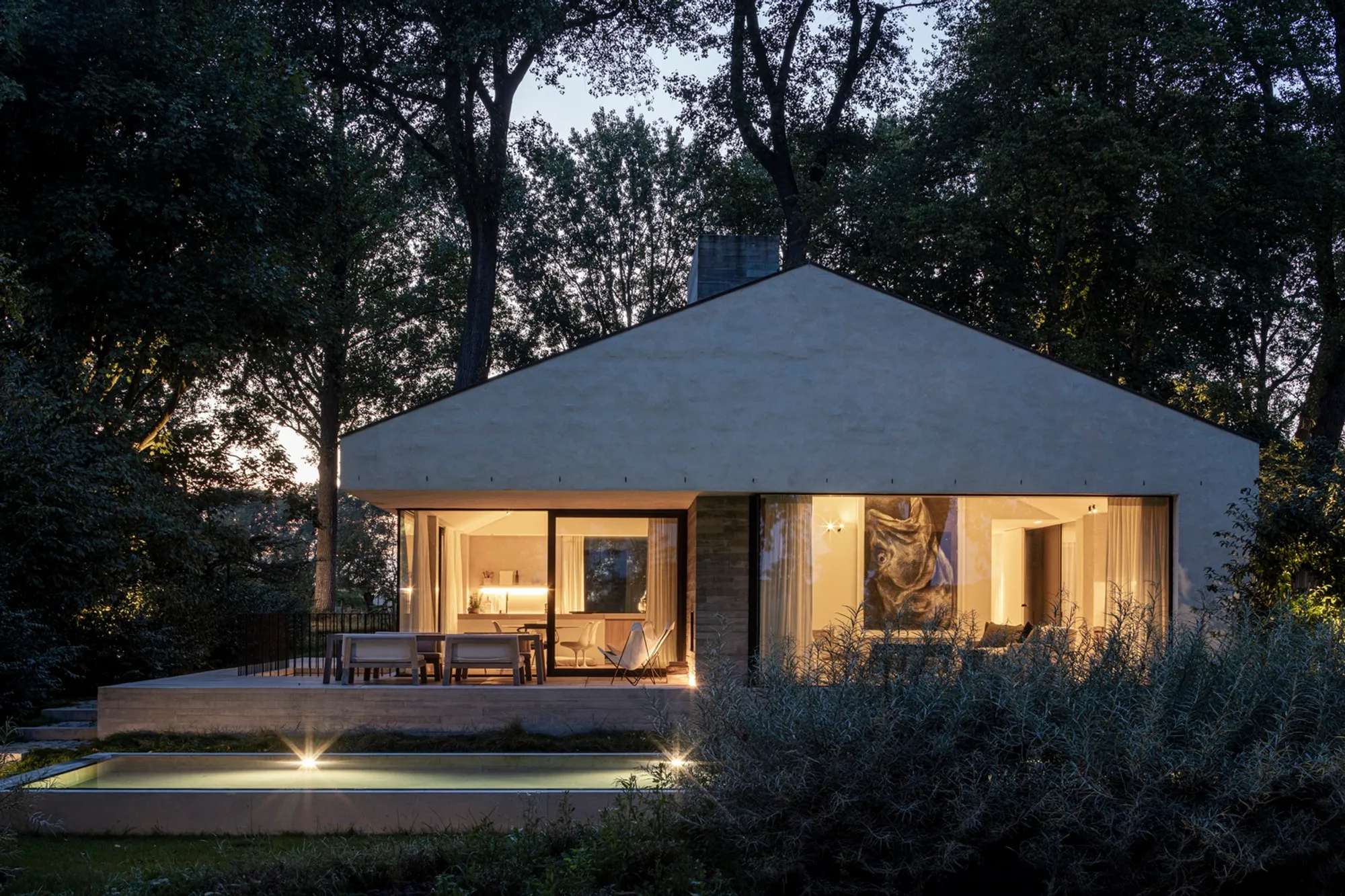
Bawada Residence by TOOP architectuur: A Modern Rural House with Underground Level in Damme, Belgium
A modern rural house in Damme that subtly blends with the landscape through an underground level and contextual materiality.


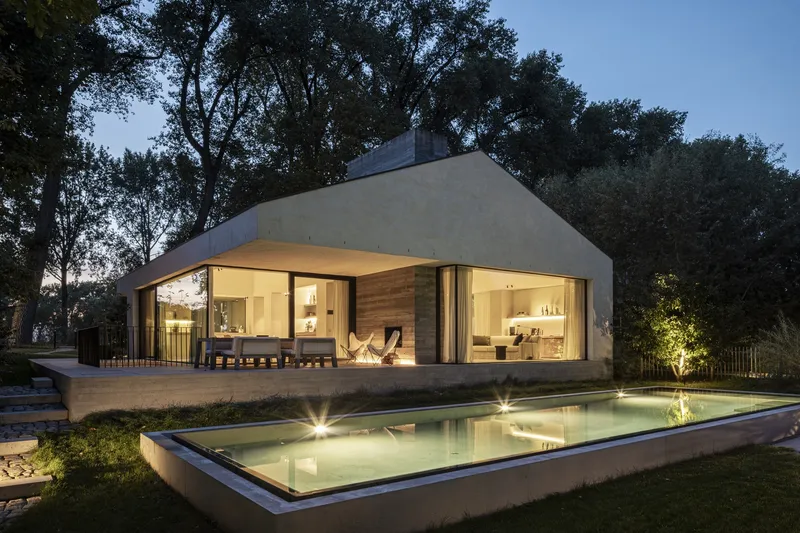
Set in the rural outskirts of Damme, just ten minutes from Bruges, the Bawada Residence by TOOP architectuur redefines what it means to design a modern rural house with underground level. Located on the historical site of the former Fort Damme, the project tactfully bridges the past with a sensitive contemporary design that responds to context, terrain, and privacy.
Repositioning Architecture for Landscape Integration
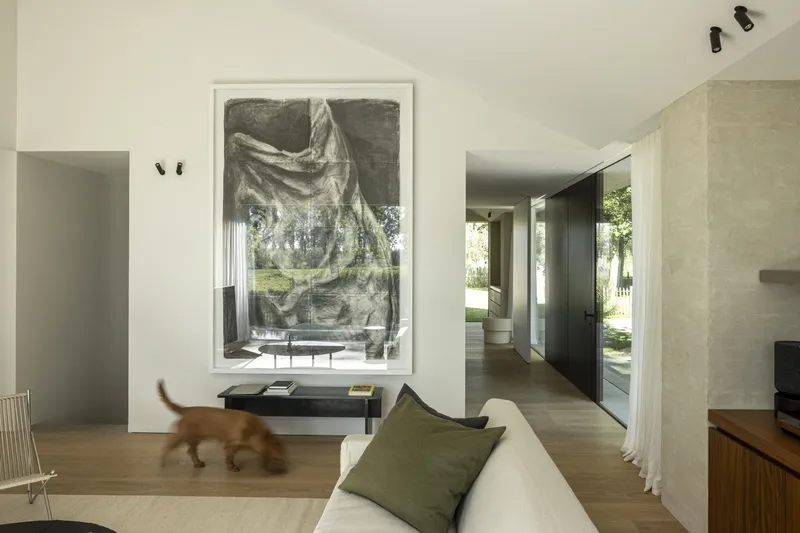
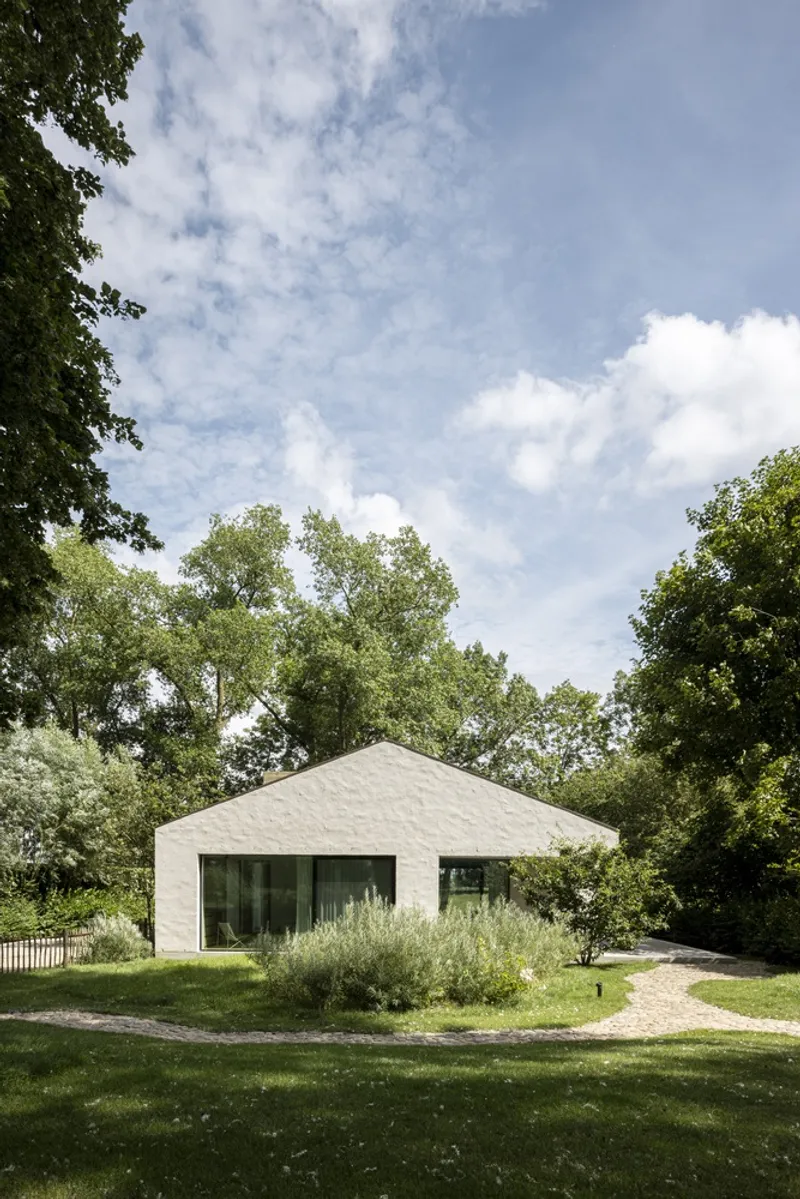
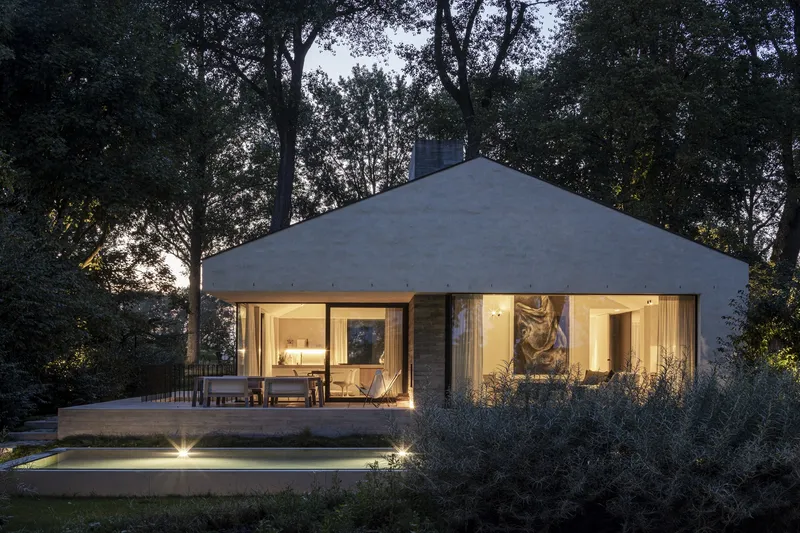
The existing building on the plot failed to engage with its environment. TOOP architectuur responded by repositioning the new residence to enhance the experience of the surrounding gardens and to preserve the mature trees on site. The new placement reactivates the relationship between the building and the ‘polder’ landscape while creating clear spatial boundaries that maintain privacy from the nearby street and village center.
Blending Tradition and Innovation
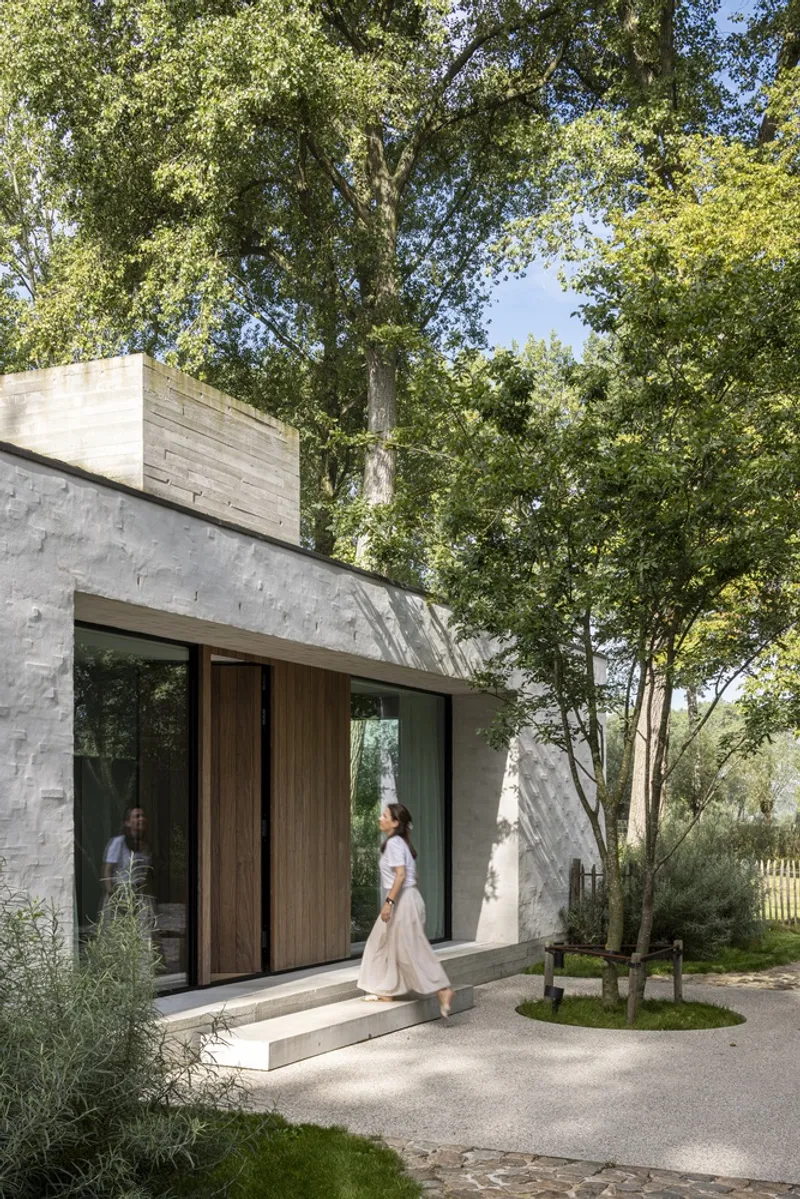
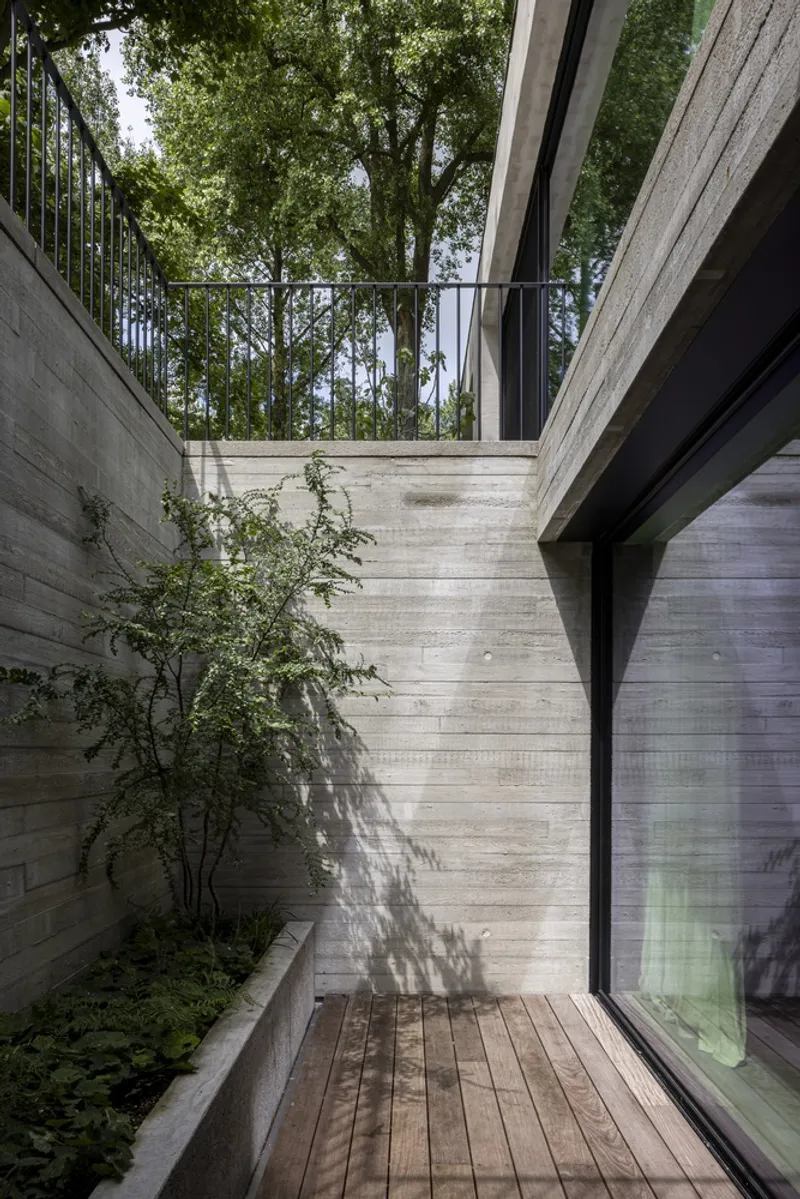
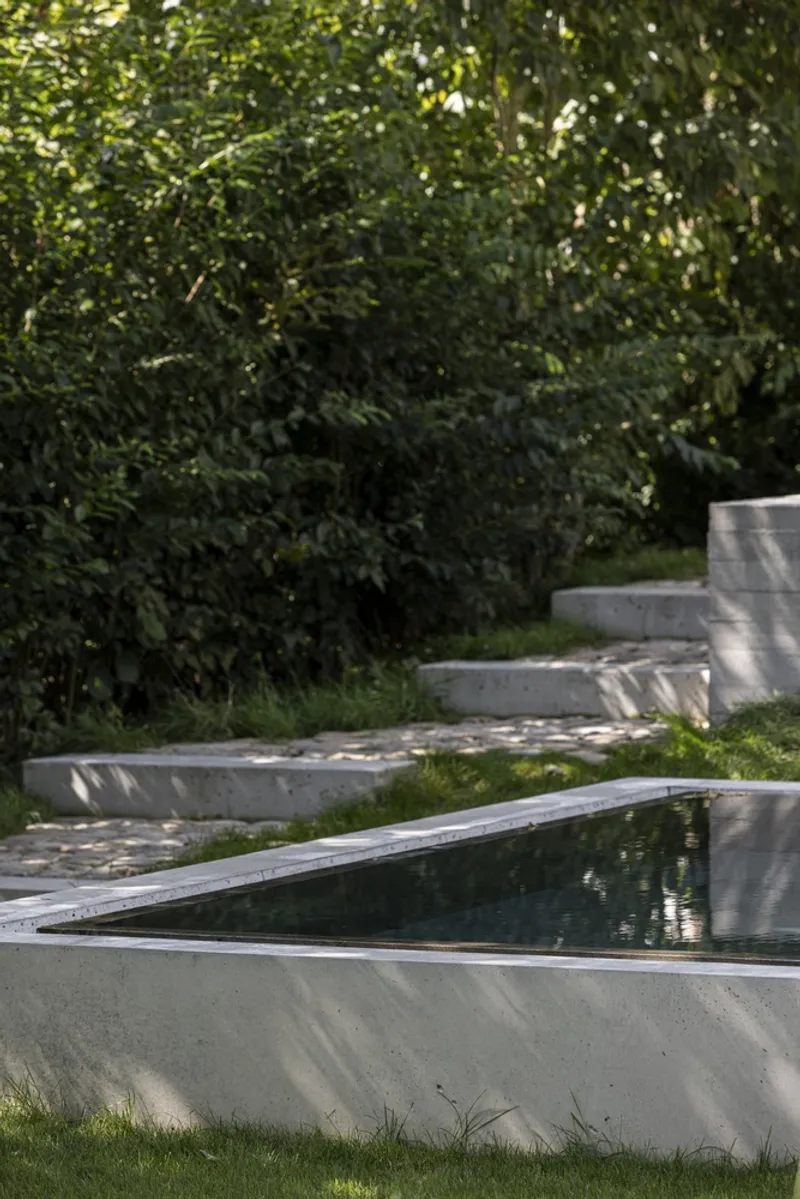
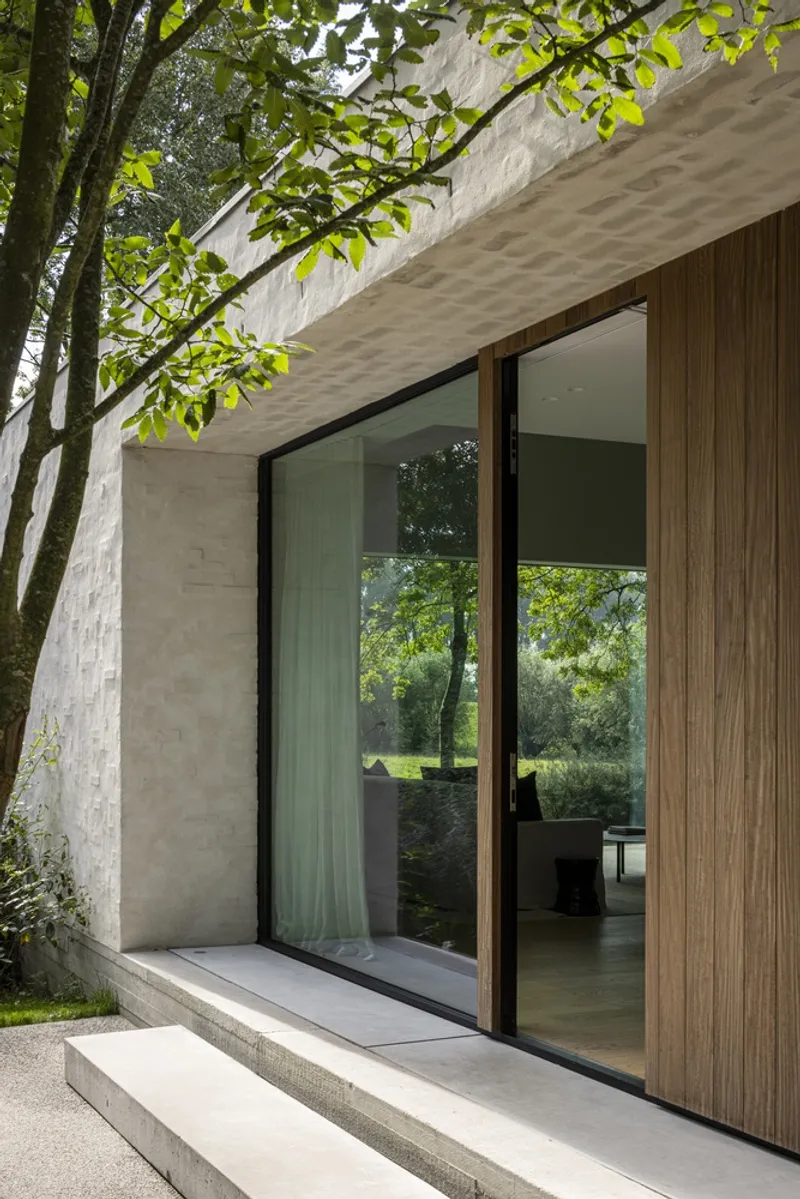
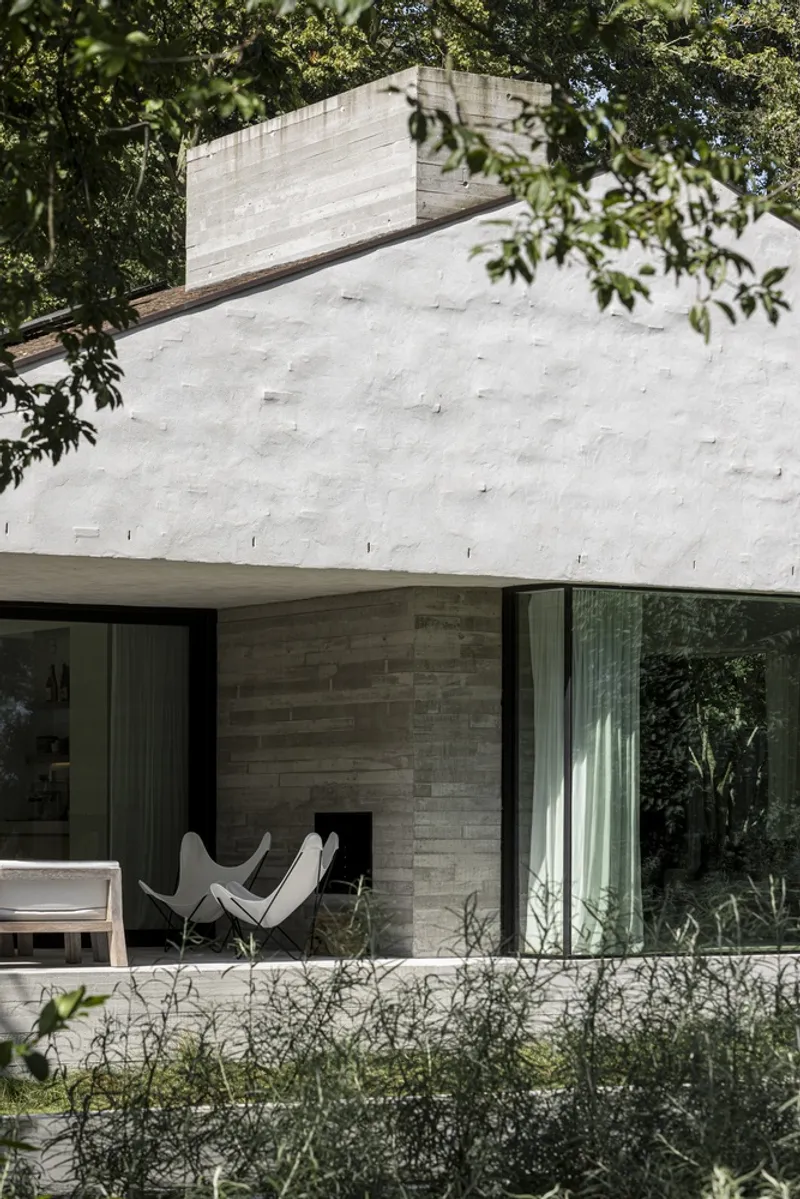
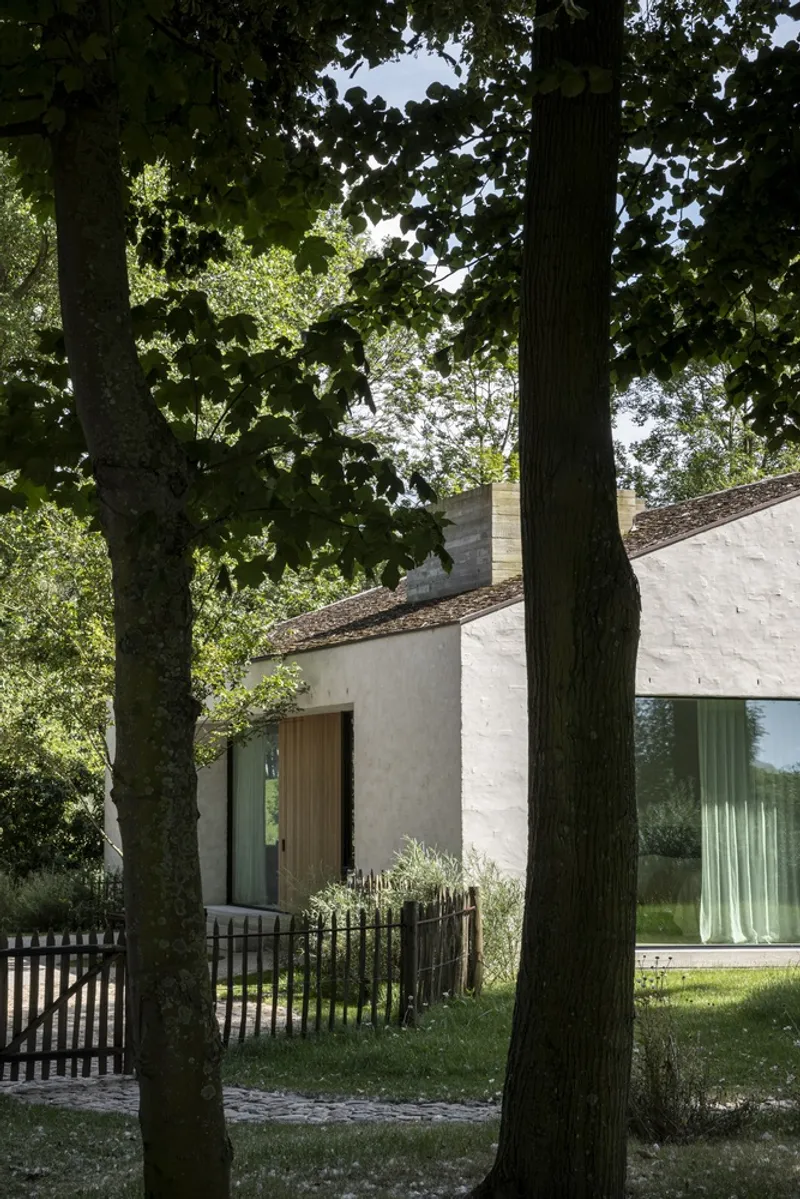
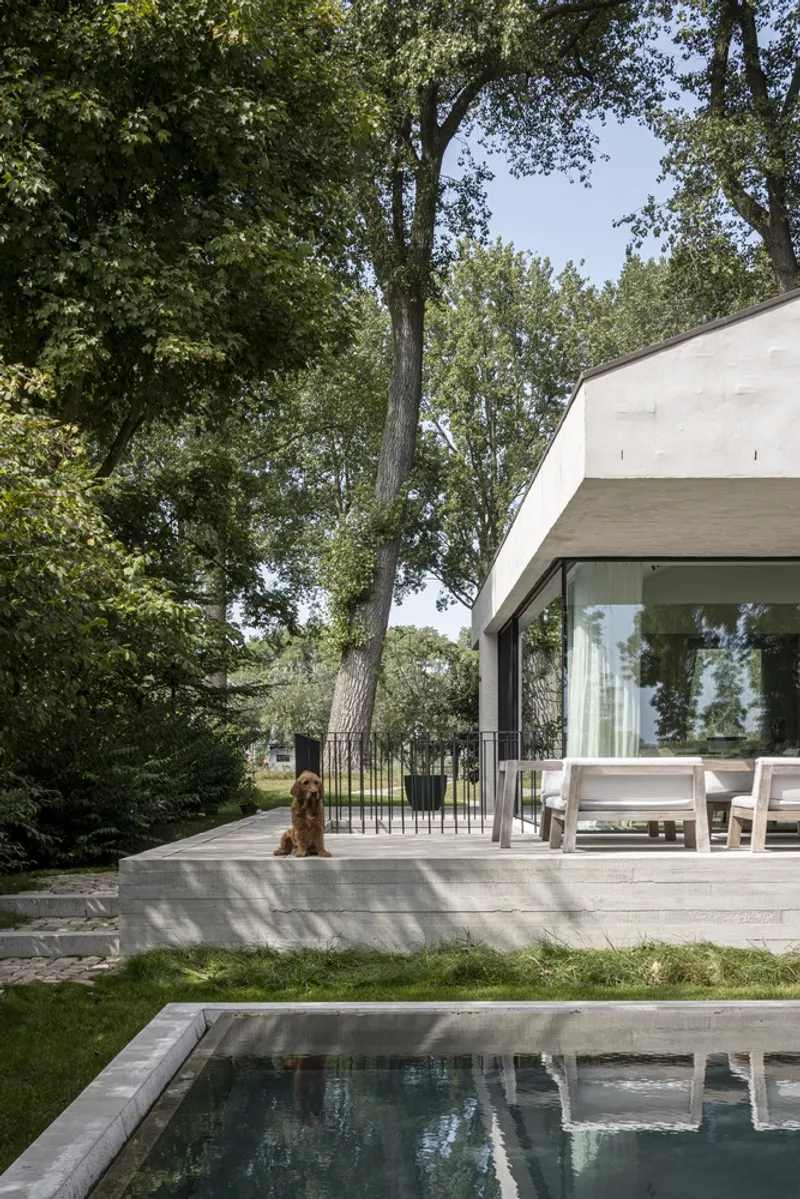
Local building regulations required a pitched roof and materials that harmonize with the village's architectural language—limed bricks and reddish-brown roof tiles. Rather than replicate historical forms, TOOP architectuur embraced a contemporary reinterpretation. A defining move in the design is the integration of an active sous-terrain level, rendered almost invisible from the exterior. It gently emerges as a concrete “pedestal” due to the sloping terrain, becoming a subtle yet powerful foundation for the house above.
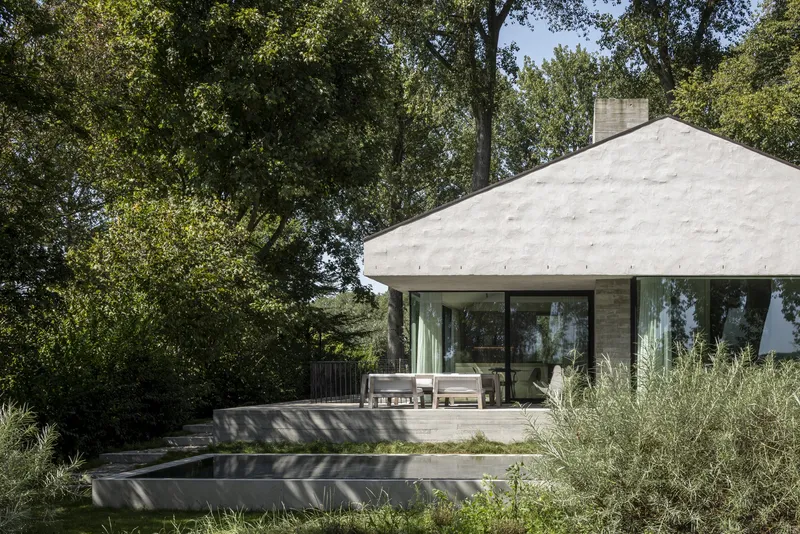
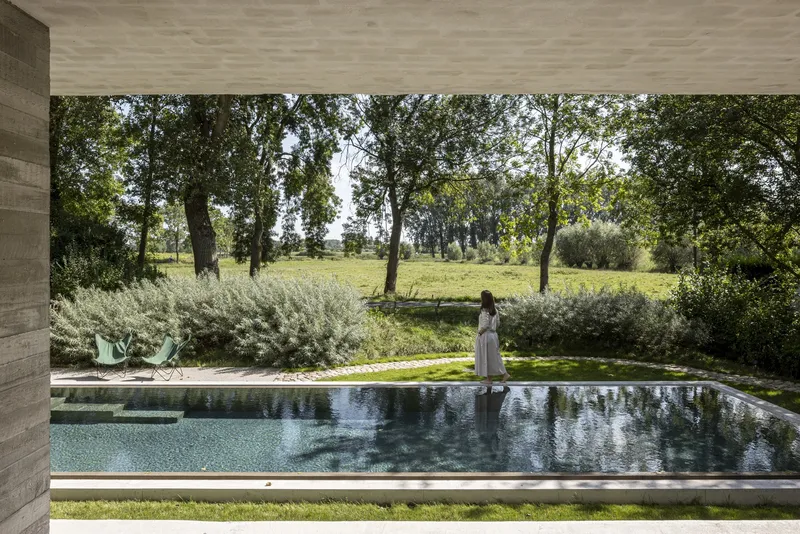
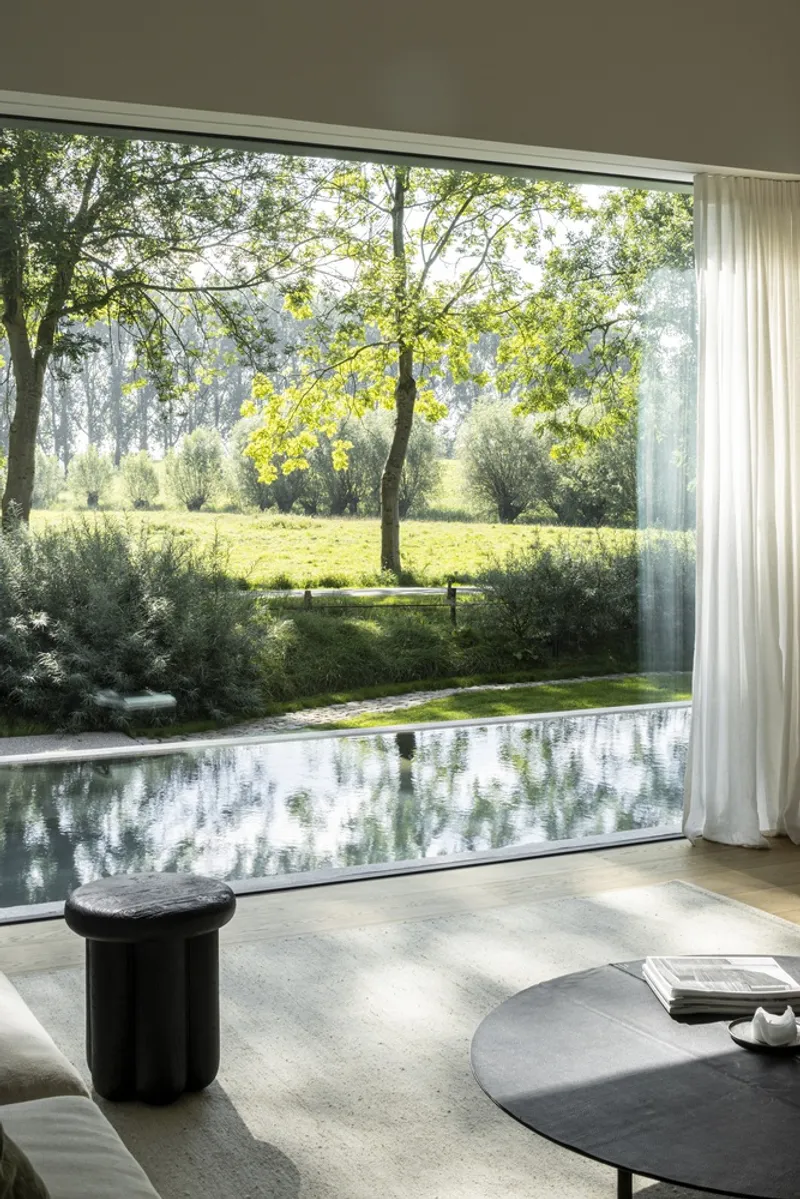
From the street, passersby catch only filtered glimpses of life inside, while the interiors enjoy open views over the rural pastures. This careful play of orientation and massing achieves both openness and seclusion.
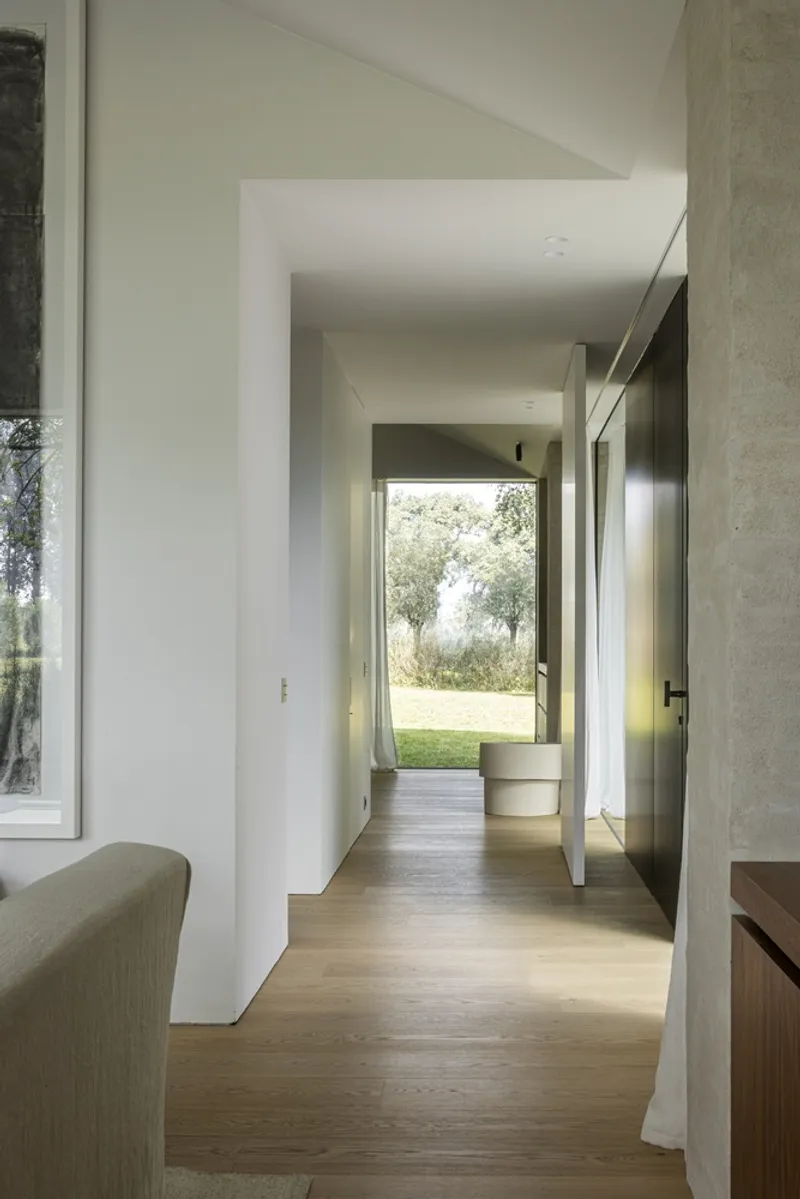
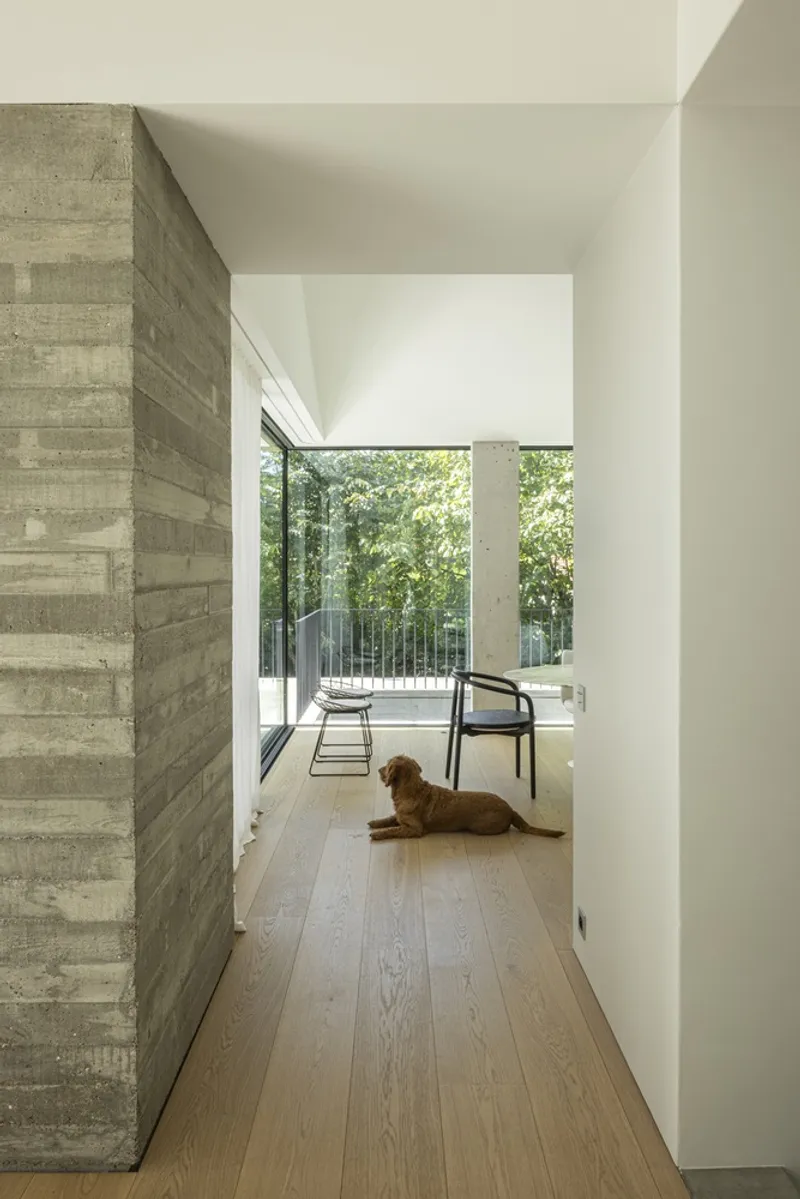
Concrete, Light, and Atmosphere
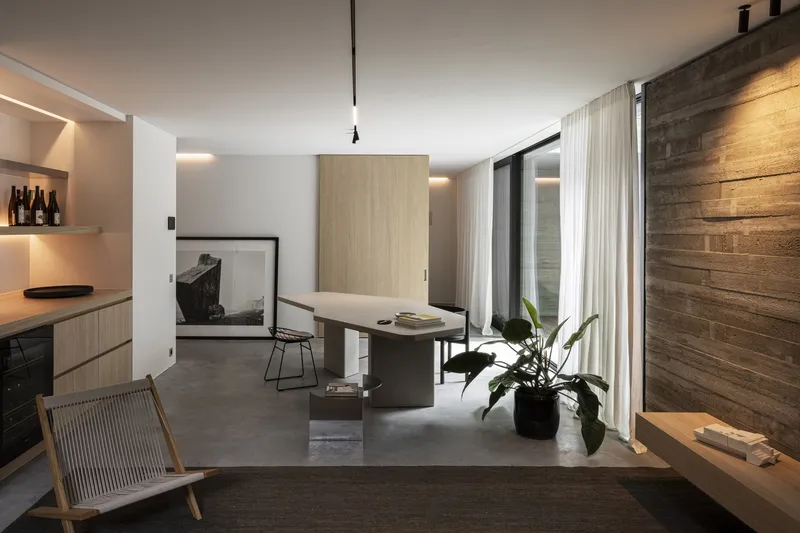
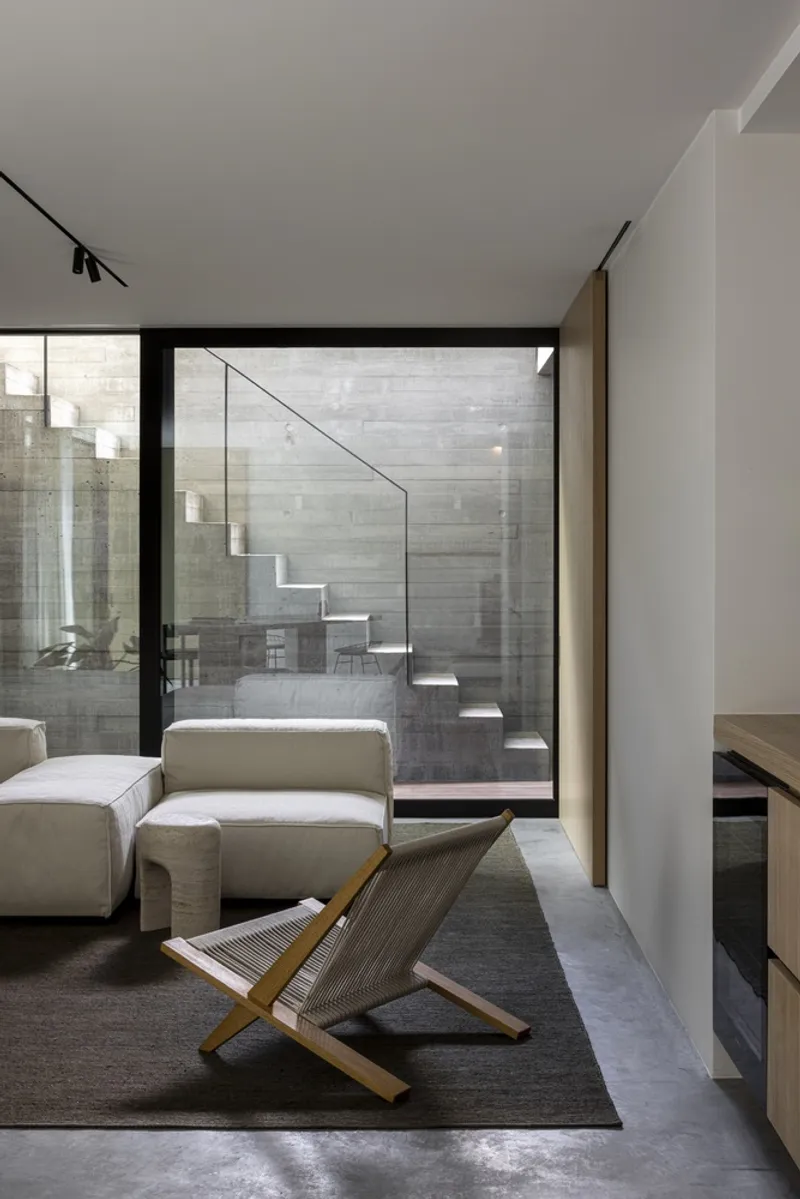
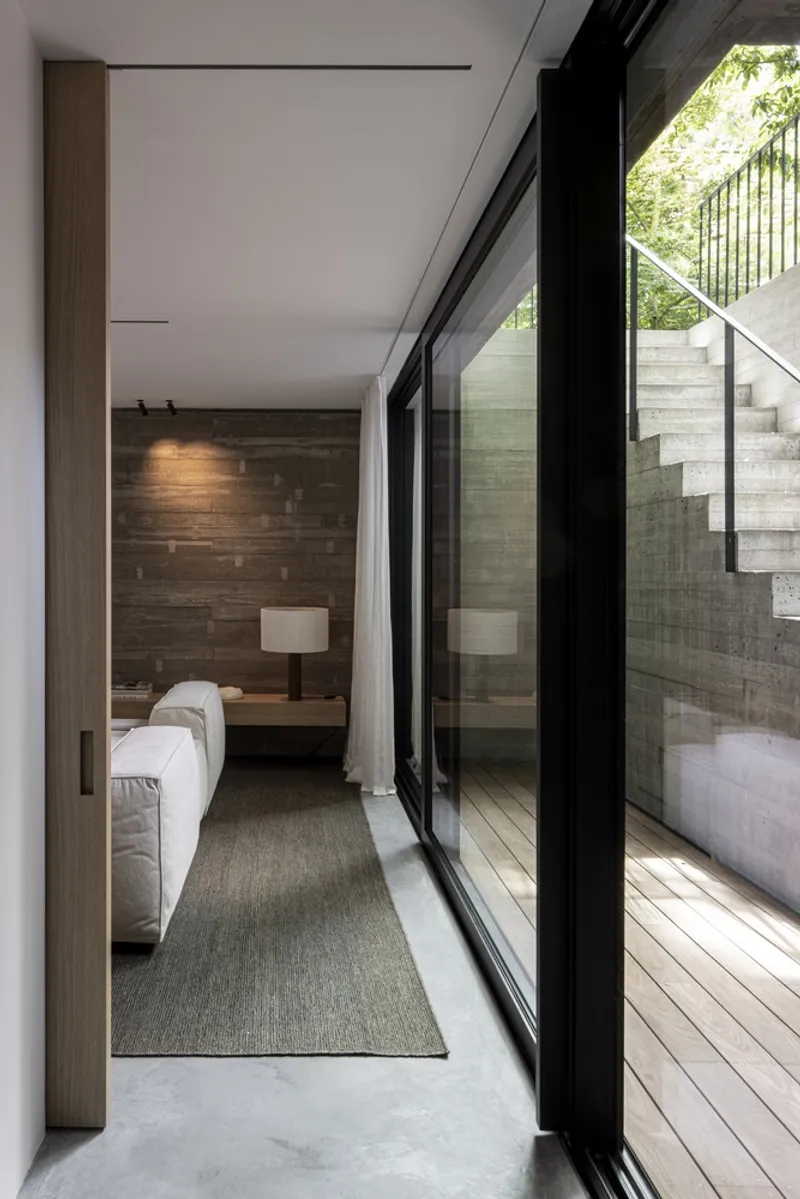
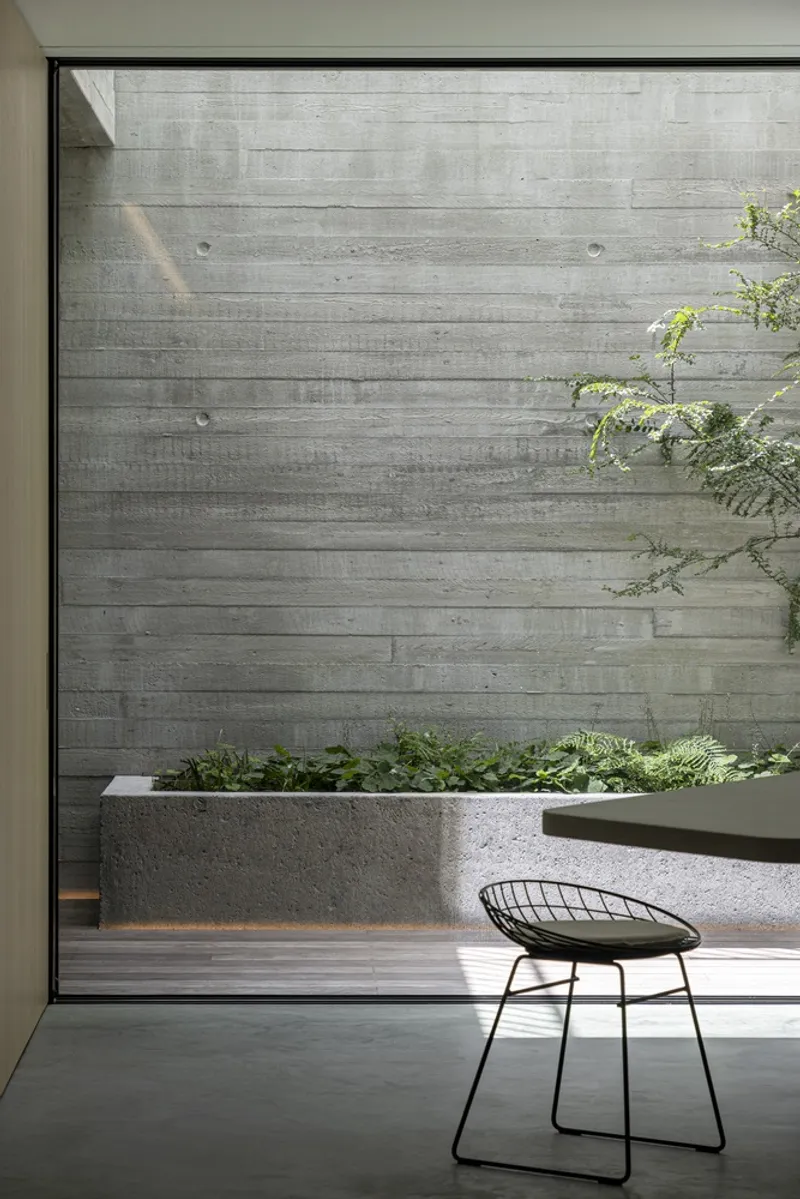
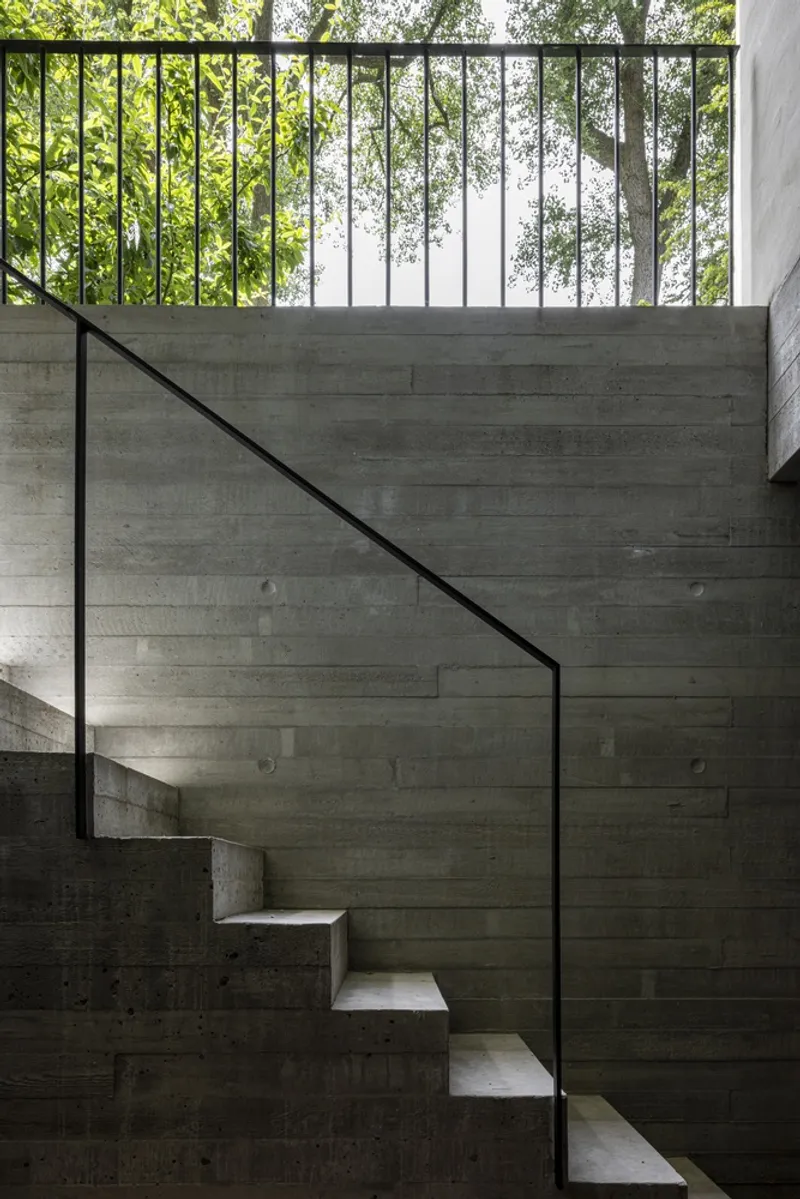
The underground level is constructed using in-situ poured concrete with a wooden plank texture, giving the base a tactile material character that echoes the agricultural and fortification history of the area. Despite being underground, the space feels anything but closed. Generous light wells allow daylight to penetrate deeply, ensuring that the lower rooms feel bright and connected to the exterior.
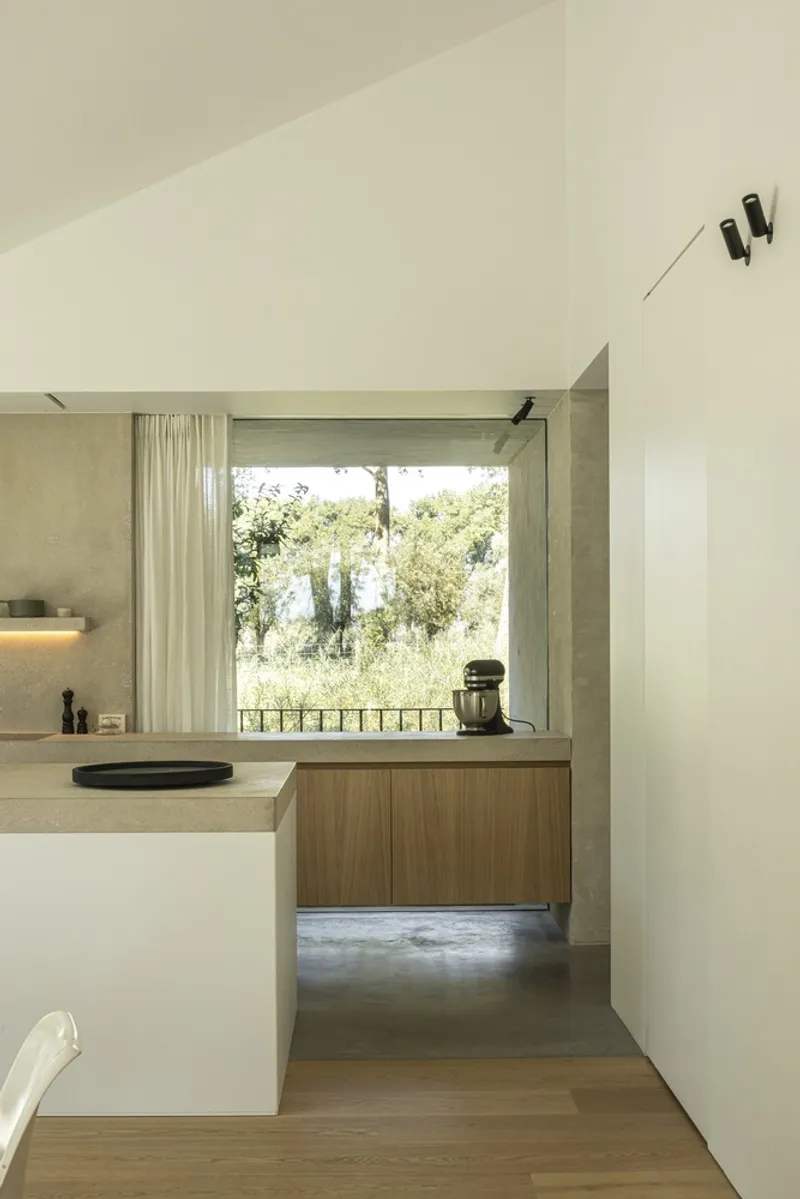
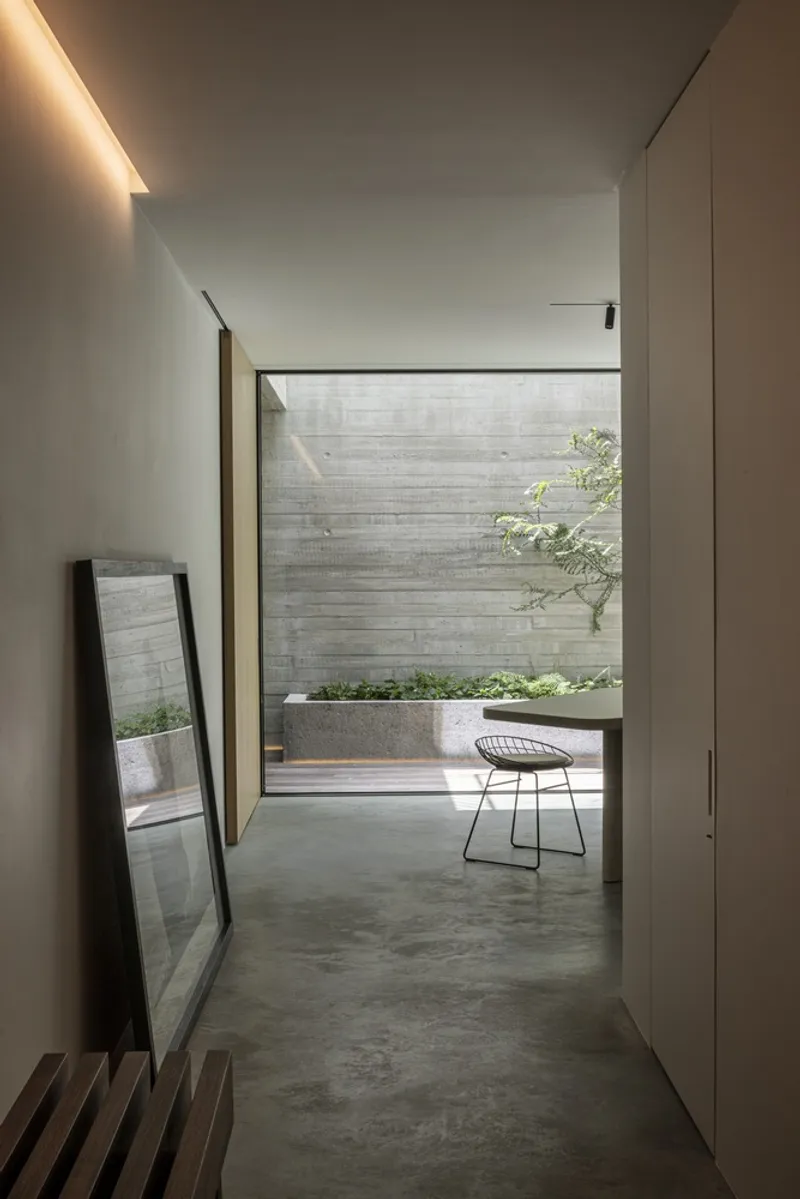
Concrete walls continue into the interiors, visually and materially linking the landscape with the living spaces. The result is a calm, introspective zone below, ideal for rest and retreat.
From Introversion to Openness
A striking circular staircase links the lower and upper levels. It acts as both a sculptural and functional element, guiding residents to a more extroverted ground floor. This level houses the main living areas and is characterized by an open plan and large windows that frame the surrounding fields and sky.
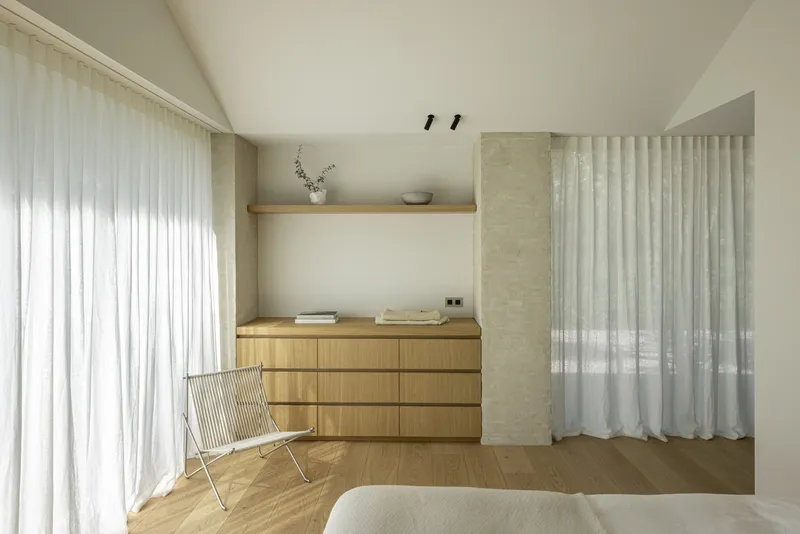
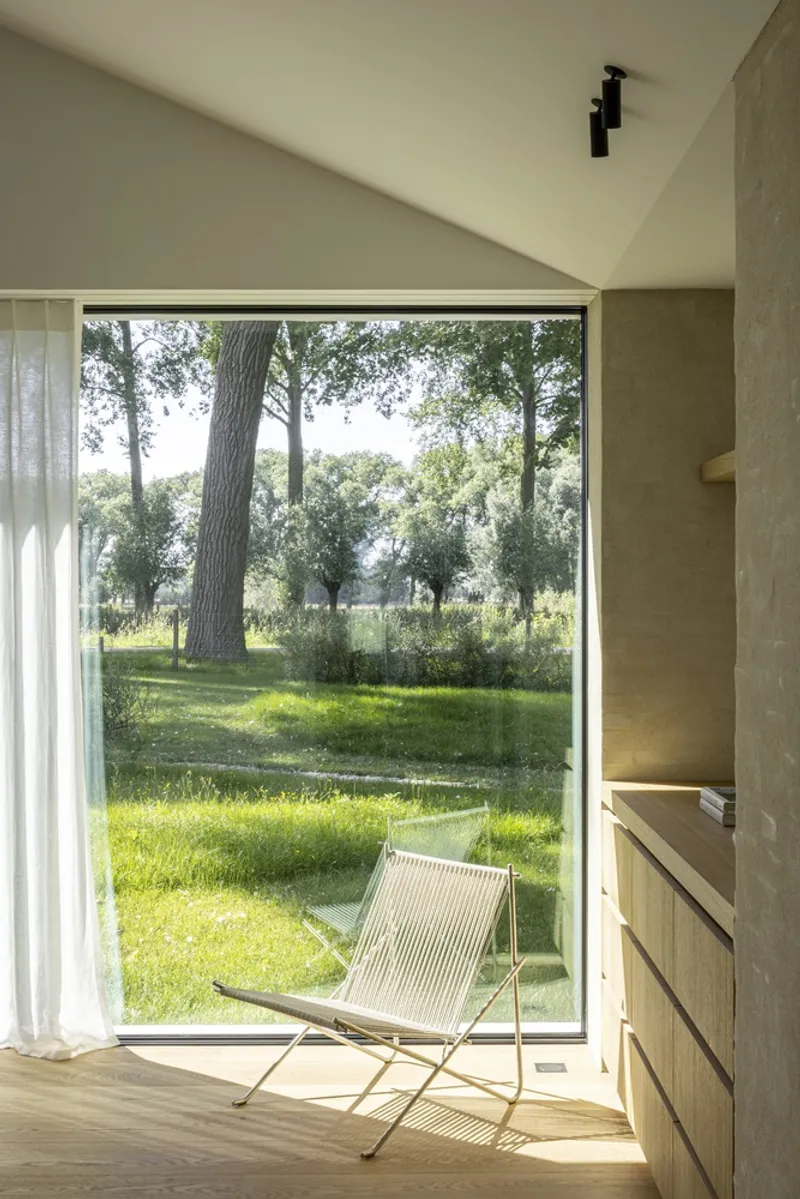
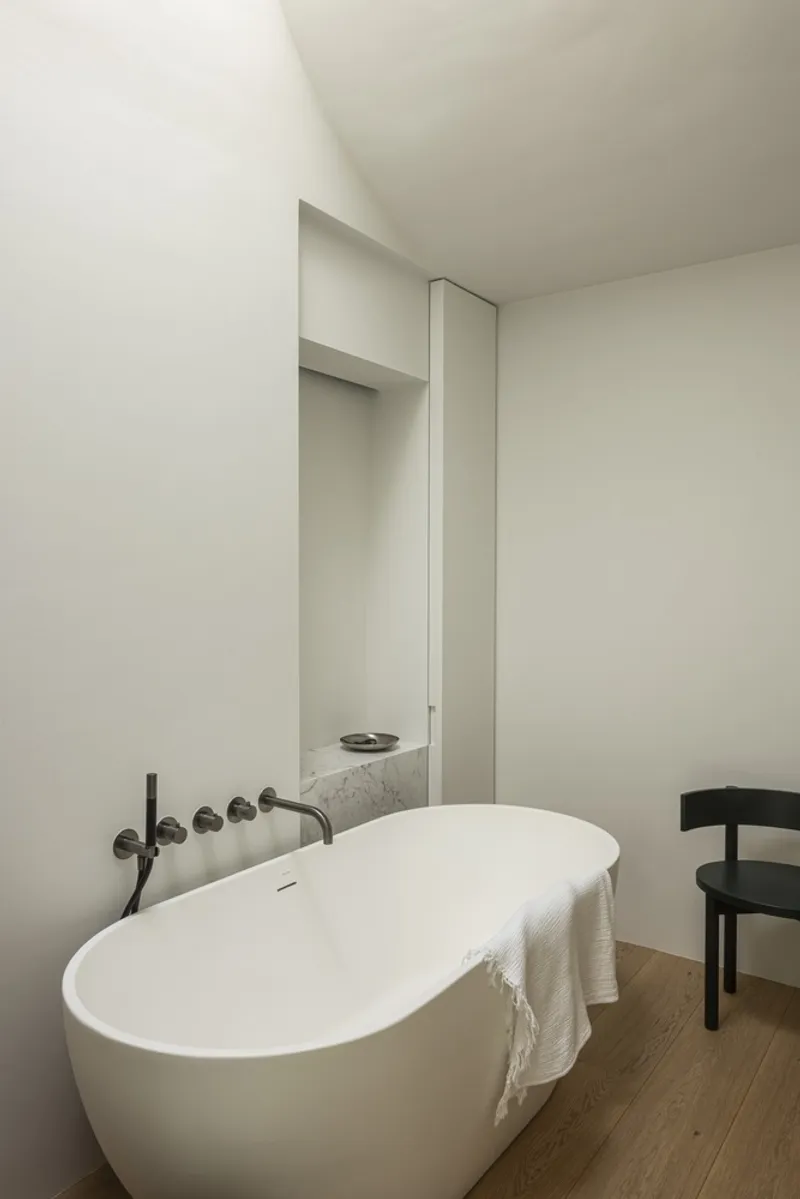
The architecture maintains a humble posture through its material palette—warm woods, soft lighting, and unadorned finishes. These choices shift attention away from the building and towards the experience of being in the landscape. The design doesn't overpower its setting; it becomes part of it.
A Contemporary Take on the Rural Belgian Home
The Bawada Residence stands as a thoughtful example of how modern design can coexist with vernacular traditions. Rather than impose itself on the land, the house is embedded into it, using level changes and muted materials to minimize its impact and maximize its spatial potential.
This modern rural house with underground level is not only a home—it is an architectural statement that prioritizes context, landscape, and a deeply rooted sense of place. TOOP architectuur has created a project that merges quiet sophistication with rural sensitivity, establishing a timeless dialogue between architecture and environment.
All Photographs are works of Tim Van de Velde



Popular Articles
Popular articles from the community


The Earth Pod: 3D Printed Homes for Resilient Refugee Communities
The Earth Pod reimagines refugee housing through 3D printed homes made from clay, combining resilience, self-sufficiency, and rapid shelter.

Co-Life: Senior Housing Design That Reconnects Older Adults With the City
Co-Life reimagines senior housing design through healing gardens, shared streets, workshops, and a sustainable community across generations.

Conexión: Biophilic Design Reimagines High-Rise Living in Hong Kong
Conexión reimagines high-rise living in Hong Kong through biophilic design, green facades, shared spaces, daylight, water and nature within.

Riyadh For All: Intergenerational Urban Design for Active Aging in Rabat
Riyadh For All reimagines urban design in Rabat with intergenerational co-living, adaptive courtyards, and Moroccan cultural exchange today.
Similar Reads
You might also enjoy these articles

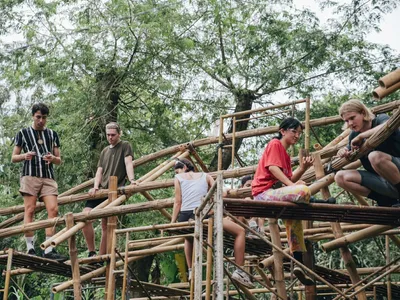
Bamboo Housing Challenge 2026: Design Affordable, Sustainable Homes Using Bamboo
An international design competition by Bamboo U and IBUKU inviting architects and designers to reimagine affordable housing using bamboo — with the winning design built full-scale in Bali.

Computational Design & Education: Beegraphy Design Awards Introduces 7th Category (Featuring Jiyun's Innovative Approach)
Dive into Beegraphy’s 7th Design Awards category, where computational design meets education to create immersive, interactive learning tools, inspired by Jiyun’s work.
From Parametric Lighting to Urban Furniture: Join the 2nd Workshop in Beegraphy’s Computational Design Series
Dive into Cutting-Edge Design Techniques and Practical Applications with Industry Experts

Last Call: Unleash Your Architectural Genius in SHAK's Kindergarten Design Competition
Urgent call for architects to join SHAK's kindergarten design competition before the looming deadline


Explore Architecture Competitions
Discover active competitions in this discipline



Challenge to reimagine the Iron Throne


Photograph architecture without architects


Illustrate the lost glory of Angkor Wat - Render Challenge


Design challenge to reuse E-waste
Comments (0)
Please login or sign up to add comments
No comments yet. Be the first to comment!