

Between the Mango Trees Residence by Enviarch Studio: A Harmonious Blend of Nature and Architecture
Between the Mango Trees Residence by Enviarch Studio blends minimalistic design, natural materials, and lush mango farms for serene, nature-integrated living.


Nestled in the serene town of Shoolagiri, India, Between the Mango Trees Residence by Enviarch Studio
is a stunning example of residential architecture that celebrates harmony with nature. Spread across 4,000 sq. ft., this 2024 project seamlessly integrates sustainable design, landscape integration, and minimalistic aesthetics, offering a tranquil retreat amid sprawling mango and mint farms. Photography by Yash R Jain beautifully captures the home’s thoughtful composition, while material choices from Bath Sense, Prism Lights, and Wooden Street highlight artisanal craftsmanship and refined detailing.
Nature as a Guiding Element
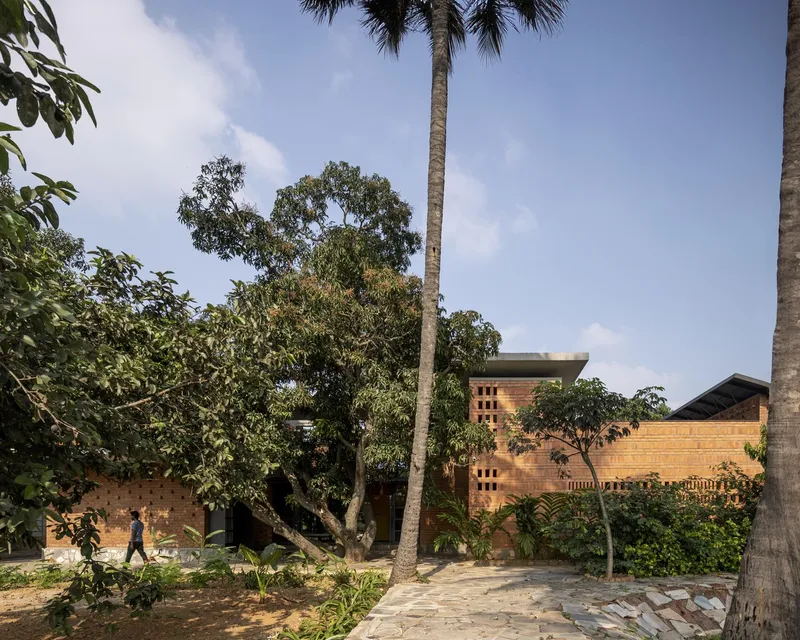
The residence is intentionally sited among existing mango trees and aromatic mint fields, allowing nature to shape the visitor’s journey. A carefully placed blank wall and strategically preserved trees guide the entrance, located at the northeastern corner, creating a sensory path that gradually reveals the home. This approach encourages visitors to engage with the landscape, enjoying subtle glimpses of the architecture while experiencing the refreshing scents of the surrounding mango grove.

Thoughtful Spatial Organization
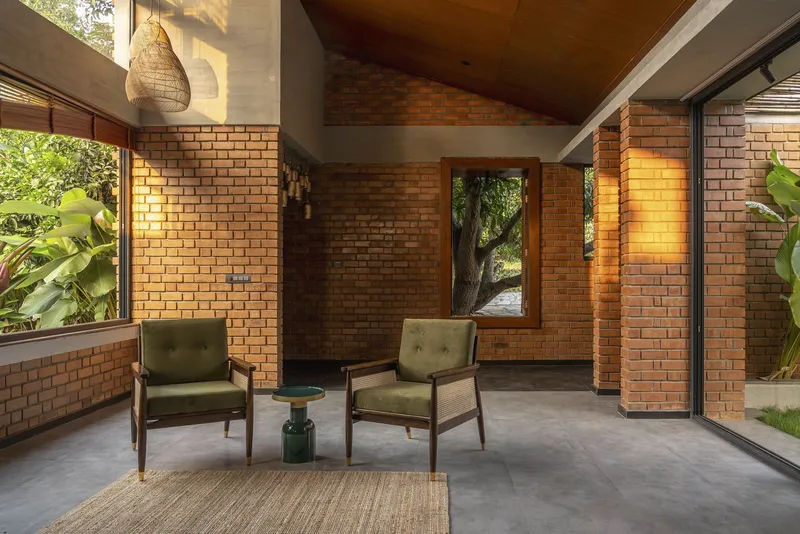
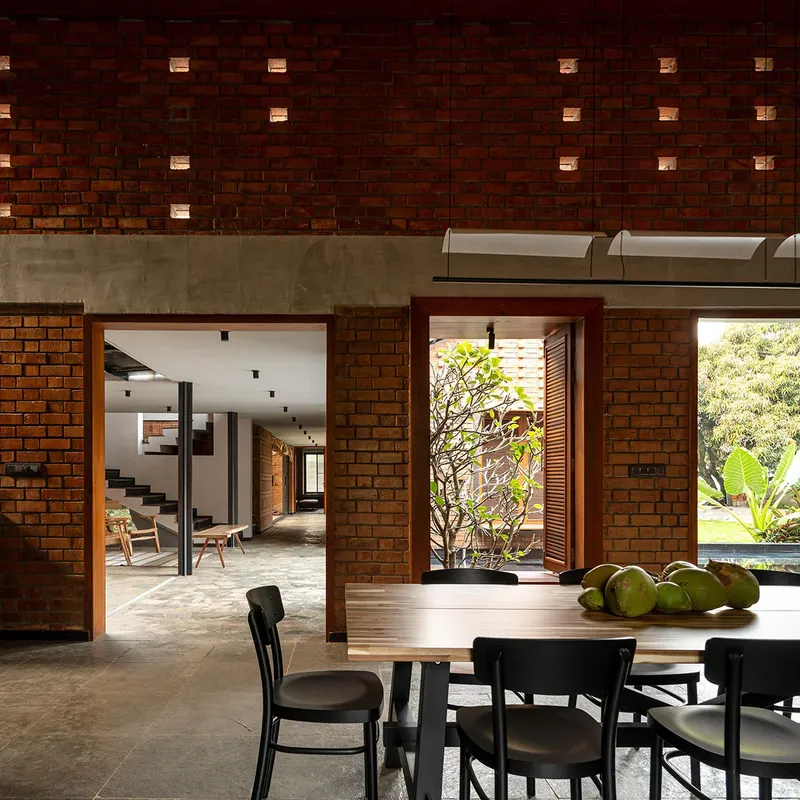
Upon entering, residents and visitors are greeted by a linear arrangement of communal spaces: living, dining, and kitchen areas, distinctly separated from the private bedrooms. Generous openings, pause points, and expansive views frame the lush farms, creating a seamless connection between indoor and outdoor environments. The dining area serves as a hub of social interaction, complemented by a private spillover zone for additional gatherings and moments of leisure.
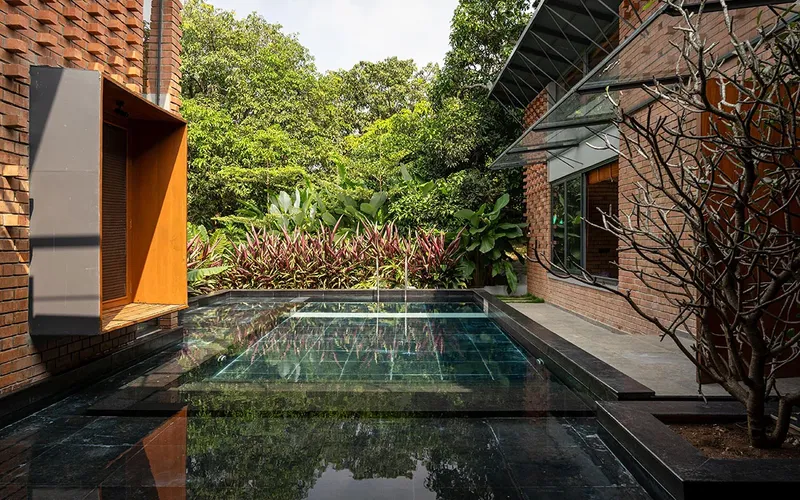
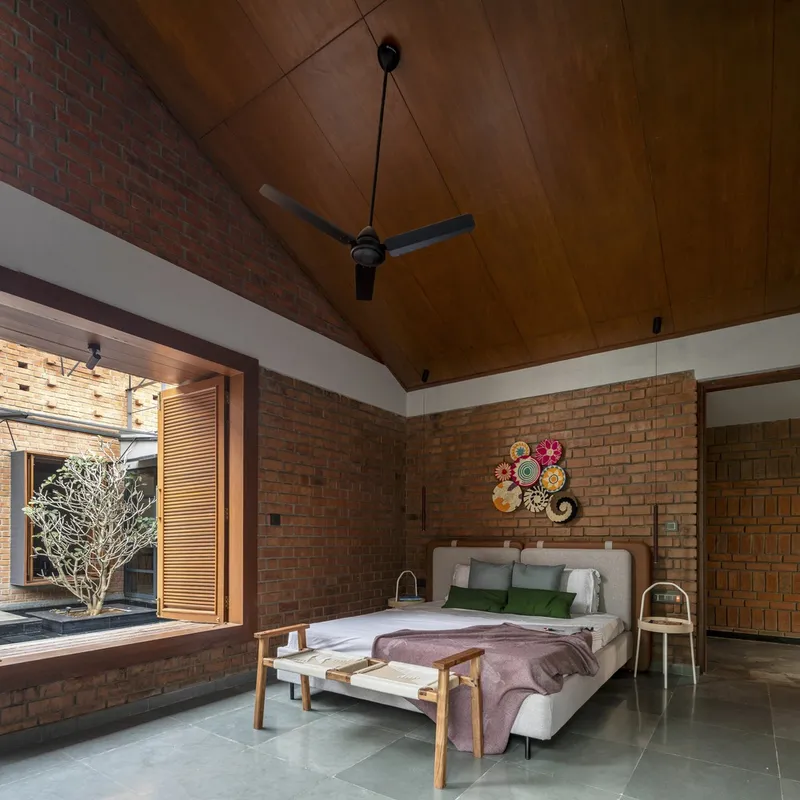
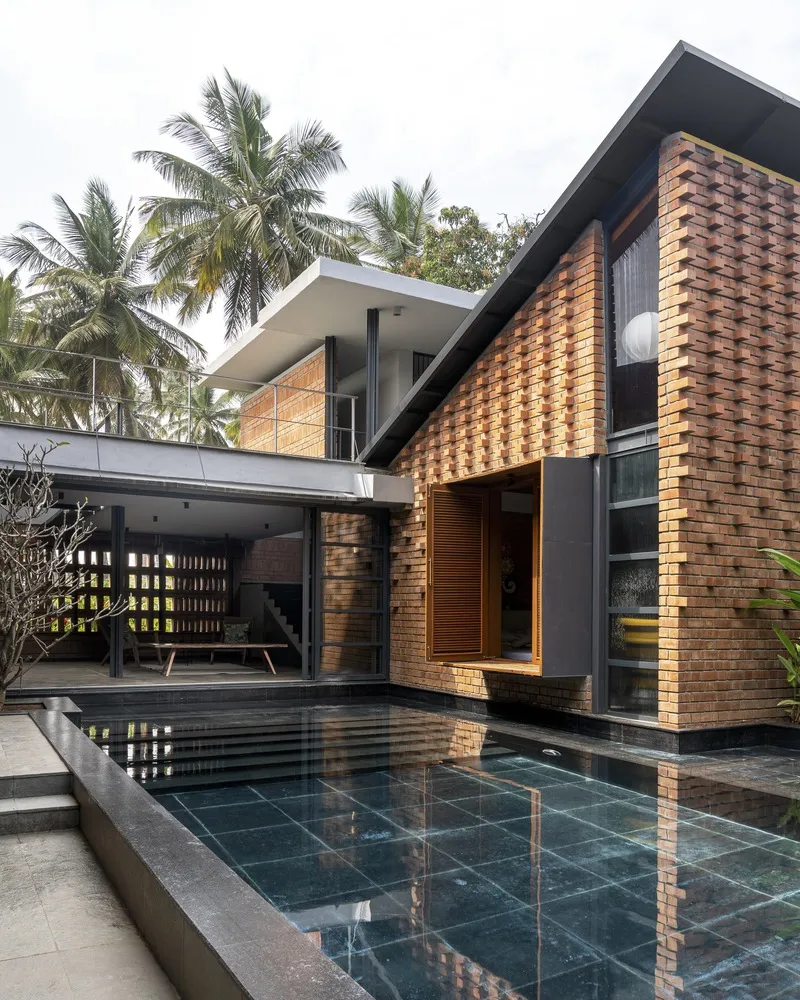
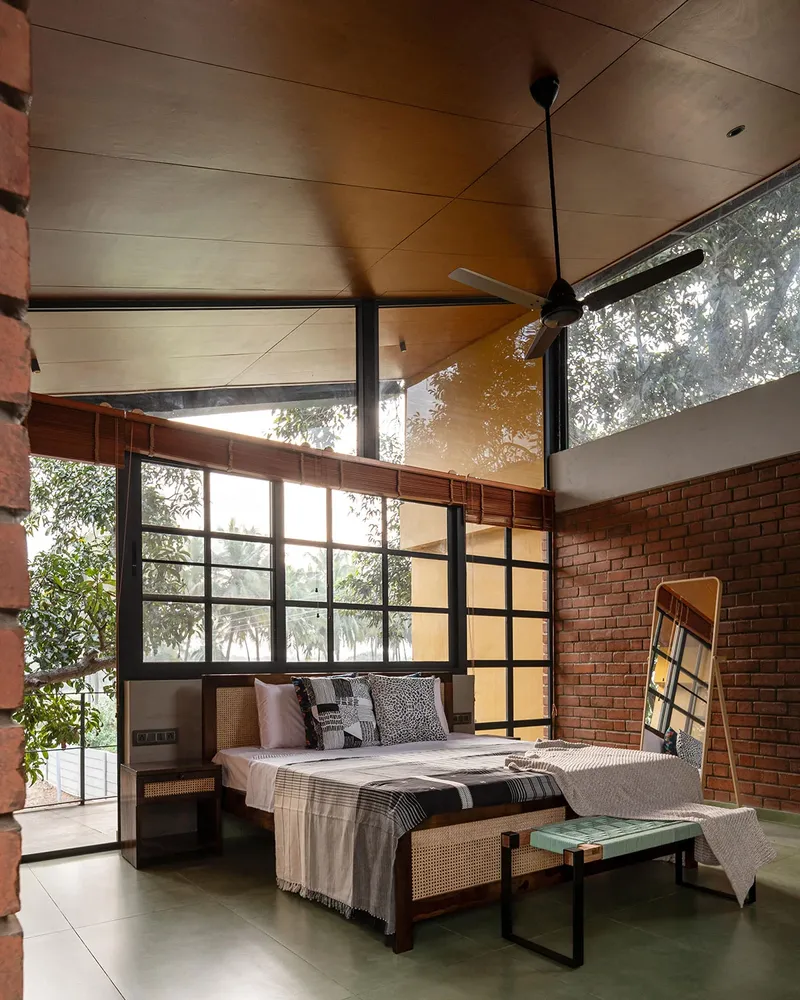
A tranquil water body serves as the central organizing element, linking the public zones with the three bedrooms. Each bedroom is self-contained, prioritizing privacy while maintaining strong visual connections to the landscape. The design’s high ceilings, achieved through sloped roof profiles, amplify the sense of spaciousness, and while each roof is uniquely angled, the corridors maintain a unifying flat roof to preserve cohesion.
Materiality and Sustainable Craft
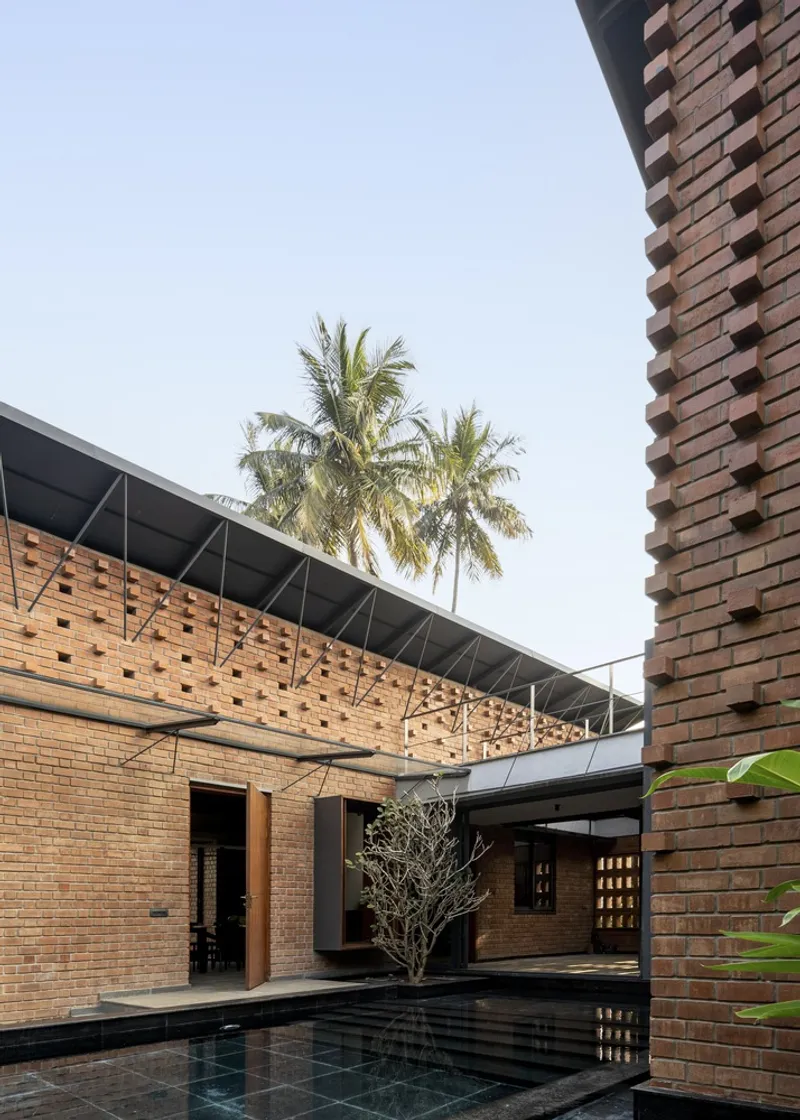
Departing from conventional concrete walls, the architects employ brick as the primary envelope, designed with a patterned jaali effect that creates dynamic light and shadow play. This patterning is accentuated at the top, while the landscape visually enriches the lower sections. Locally sourced Kota and Kadapa stones, combined with meticulously refined discarded quarry stones, reinforce the home’s sustainable ethos. The subtle use of color and natural textures reflects a minimalist approach, ensuring the house blends effortlessly with its surroundings.
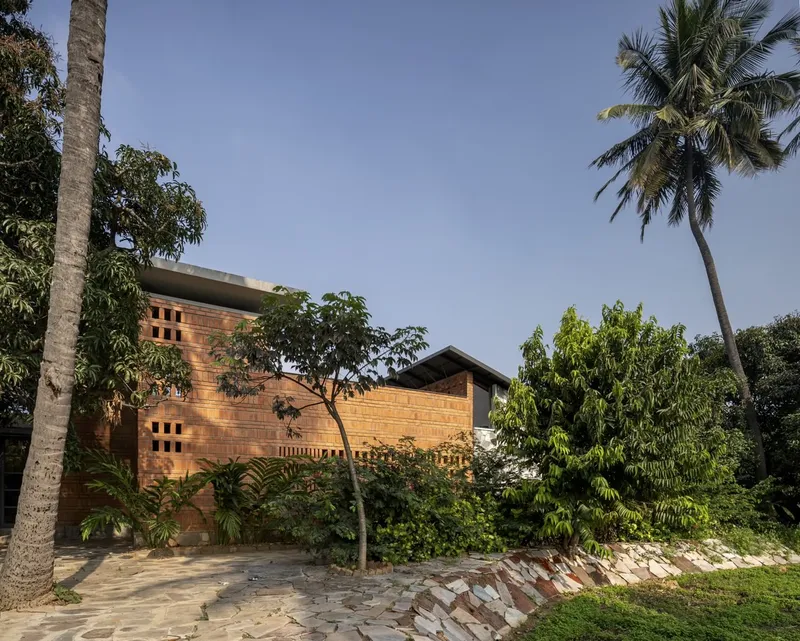

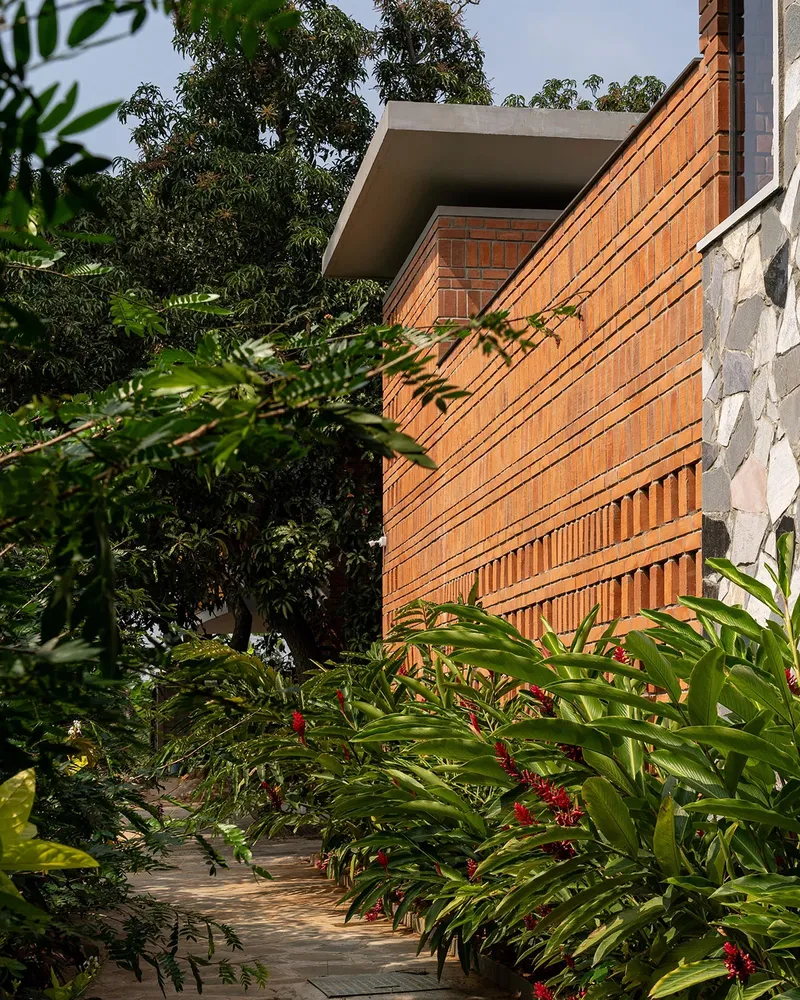
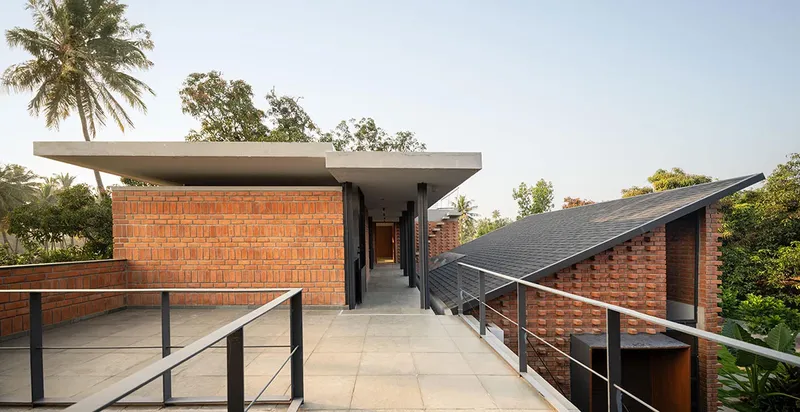
All photographs are works of Yash R Jain


Popular Articles
Popular articles from the community

Extended Shell: Retrofitting Kolkata's Balconies as Living Urban Thresholds
A modular retrofit system recovers the social and environmental intelligence of Kolkata's historic verandas for contemporary Park Street residents.

Opera on the Sea: Driftwood Logic Shapes a Timber Opera House on Estonia's Coast
Trevor Orgill's opera house translates the entangled drift of floating timber into a civic building where wood, water, and music converge.

Opera by the Sea Estonia: Three Shells Dissolving Architecture into Tallinn's Coastline
A winning opera house proposal replaces monumental form with interconnected shells that blur the boundary between building, park and Baltic Sea.
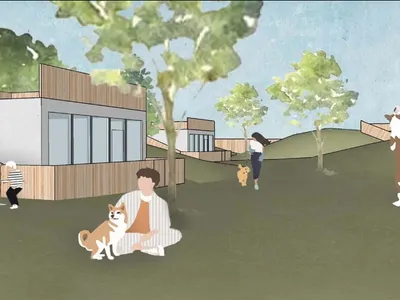
Temporary Home for Dogs: A Reversed Zoo Rethinks Animal Shelter Architecture
In Bucharest, a sinuous corridor and freed landscape flip the logic of containment, designing a shelter that works to make itself unnecessary.

Similar Reads
You might also enjoy these articles


Hodi-Mandai Geram
Project Function: Preservation and revitalization of the Intangible heritage and socio-spatial identity of the Hodi by Housing, Cultural Memory Center, Sacred Grove, landscape, local tourism economy


Olio Towers: A Mid-Rise for Performers That Fuses Housing, Rehearsal, and Stage
Located blocks from Houston's Theater District, this modular tower stacks living units around a central performance atrium.

Oasis: Modular Green Housing Carved into Dhaka's Urban Fabric
A shortlisted Plugin Housing entry reclaims unauthorized settlements in Dhaka with stepped concrete volumes, green roofs, and ventilation-driven design.

Black Hole: A Floating Megastructure for the Post-Physical Era
Emiliano Mazzarotto envisions a spherical, self-scaling arena where e-sports, digital hotels, and holographic stadiums replace traditional public space.

Explore Residential Design Competitions
Discover active competitions in this discipline

Challenge to reimagine the Iron Throne

Photograph architecture without architects

Illustrate the lost glory of Angkor Wat - Render Challenge

Design challenge to reuse E-waste
Comments (0)
Please login or sign up to add comments
No comments yet. Be the first to comment!