

BizyBoy by Studio Profile: Contemporary Restaurant Interior Design in Shanghai
BizyBoy in Shanghai by Studio Profile transforms restaurant interior design with flexible layouts, theatrical gestures, and immersive dining experiences.


Located on Yuyuan Road in Shanghai, BizyBoy is a bold and experimental dining space designed by Studio Profile in 2024. With a compact 250 m² footprint, the project showcases how restaurant interior design can blend theatricality, flexibility, and function. By merging flamboyant gestures with practical layouts, the space redefines the dining experience as a performance of both food and architecture.
A Street Presence with Character
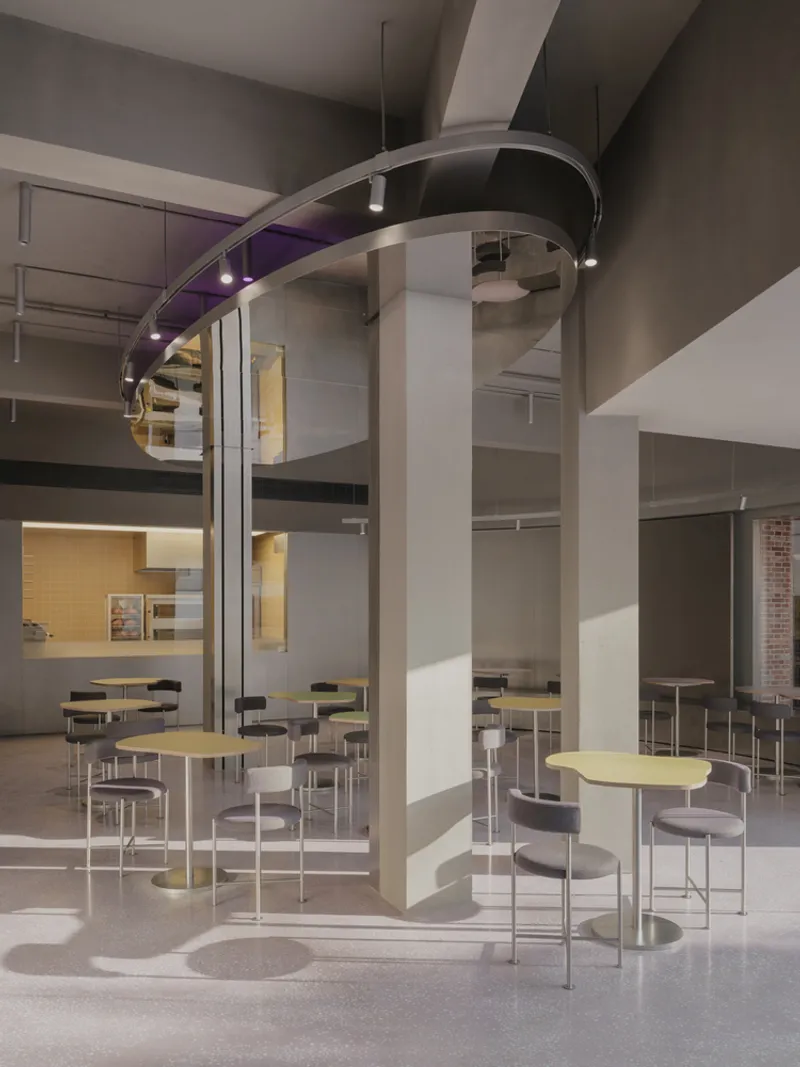
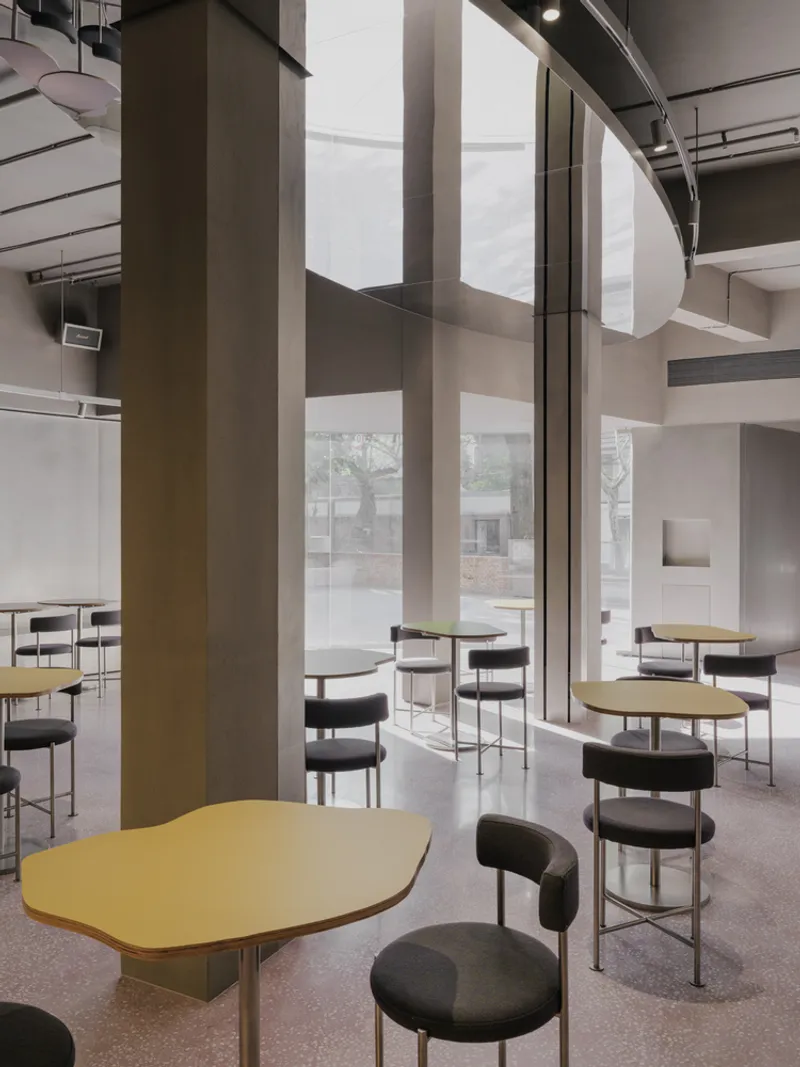
The restaurant immediately stands out within the quiet residential fabric of Yuyuan Road. Oversized signage and a vivid palette signal its lively personality, projecting an identity that is both extroverted and intimate. At its entrance, Studio Profile reconfigured a challenging corner façade by dismantling non-structural walls between columns, creating openness while preserving the building’s integrity. A transparent circular volume now punctuates the façade, transforming concave space into a convex form that draws light and connects with the adjacent courtyard. A secondary doorway introduces a new rhythm to the frontage, marking the café entrance.
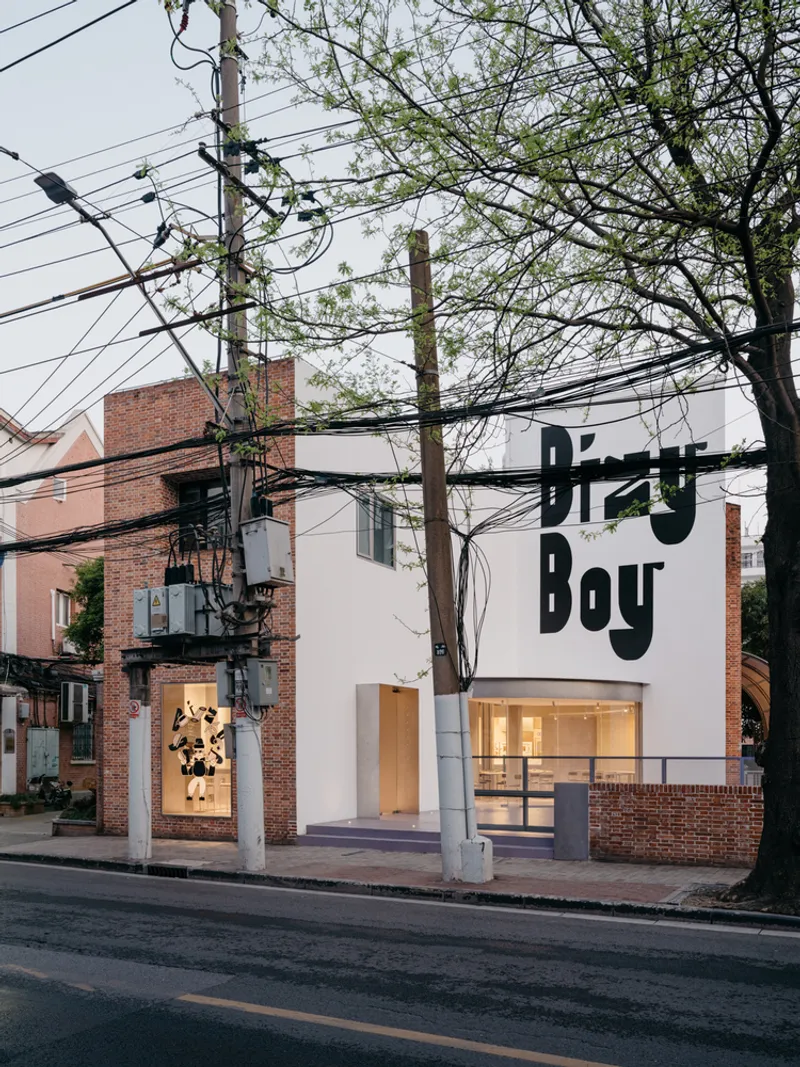
Functional Layout and Open Kitchen
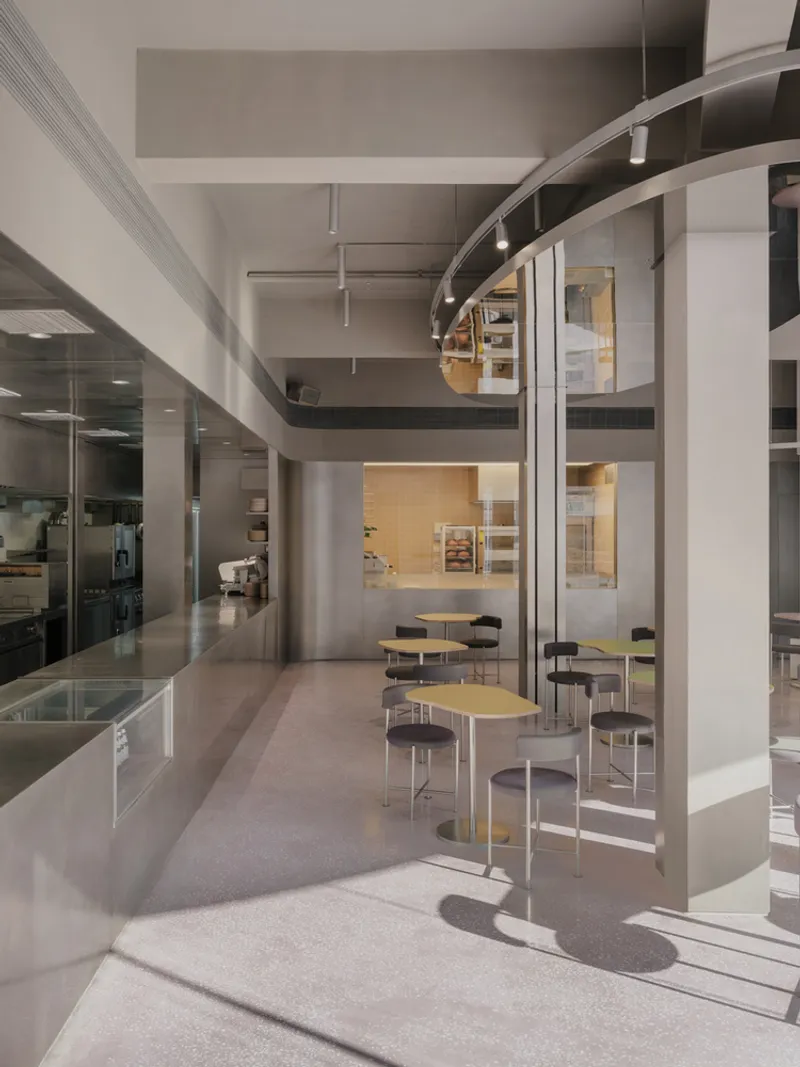
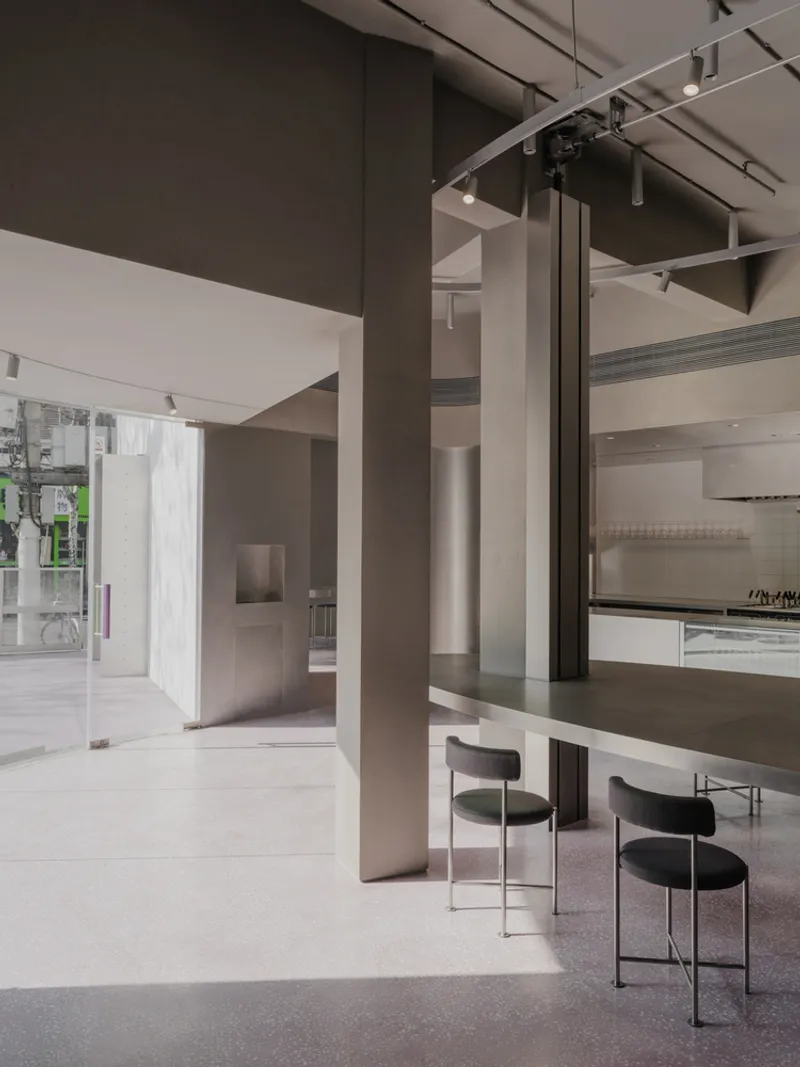
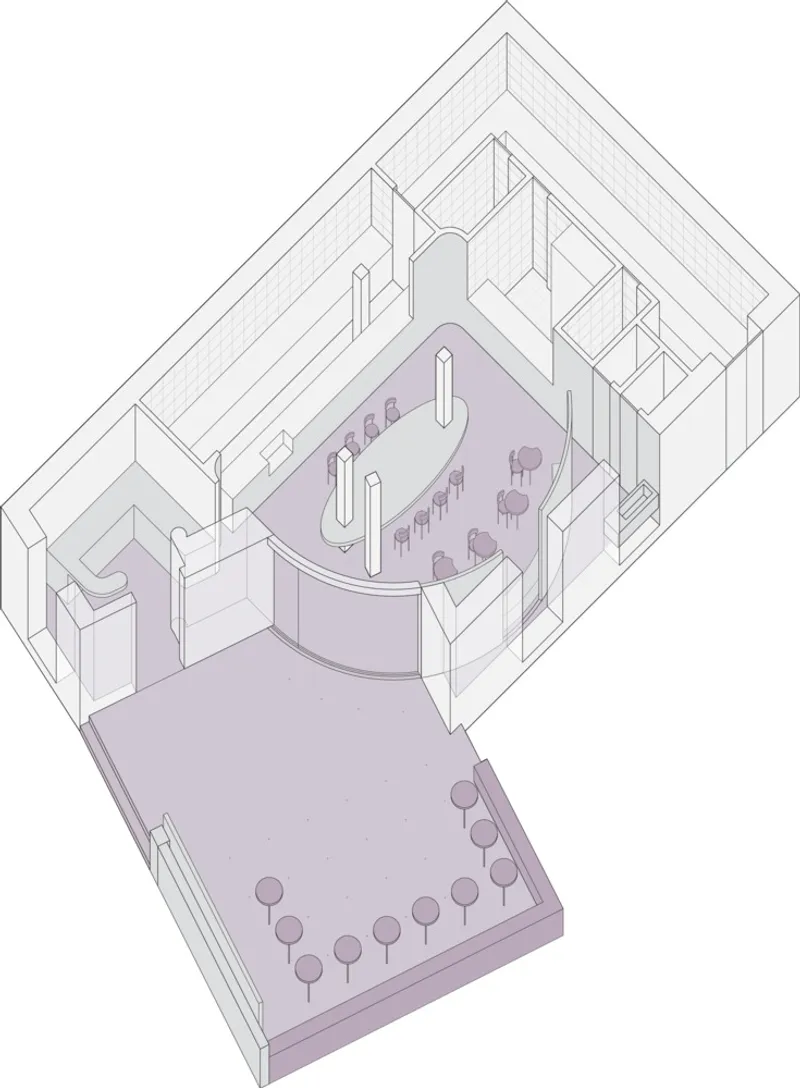
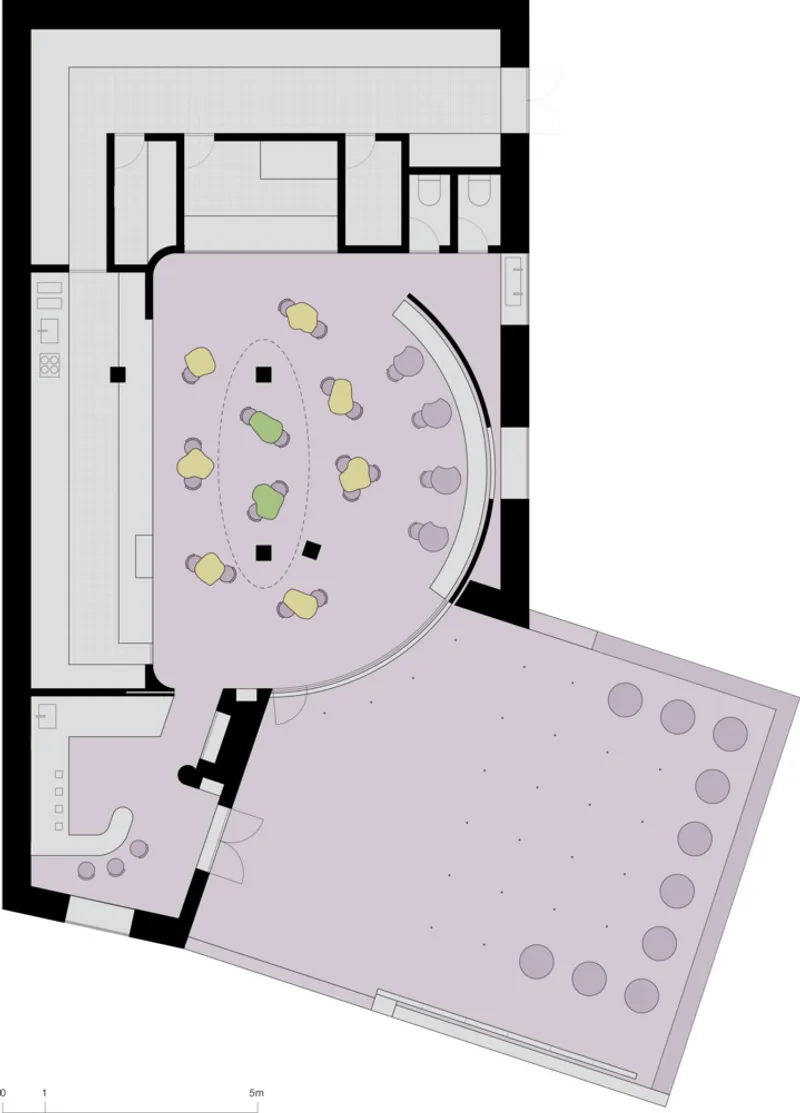
Inside, the interior plan was shaped by the flow of work within the kitchen. Collaborating closely with head chef Jeremy, the design mapped circulation patterns to create an efficient layout. A large L-shaped kitchen anchors the back wall, serving both functional and performative purposes. Transparent boundaries invite guests to observe the choreography of culinary preparation, while a glowing box embedded in the wall highlights pasta and pastry-making as part of the dining spectacle. Adjacent to the kitchen, a café bar unfolds as an irregular L-shaped extension, seamlessly linking hospitality and preparation zones.
Shifting Between Day and Night
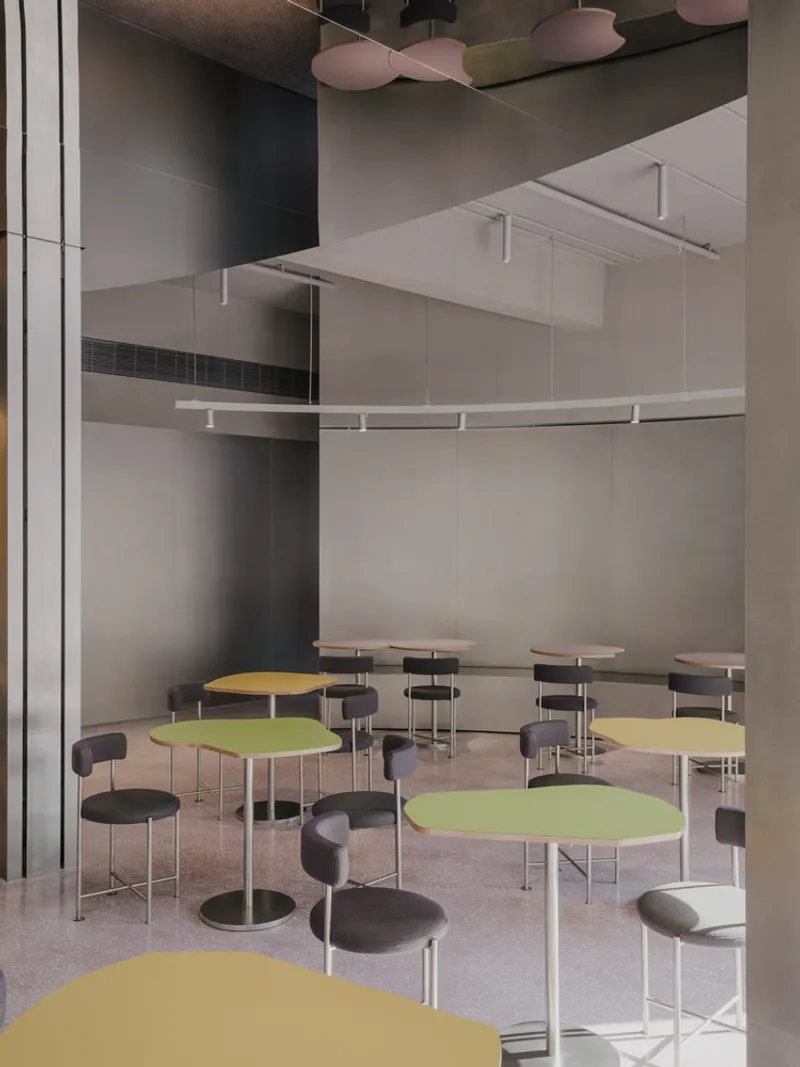
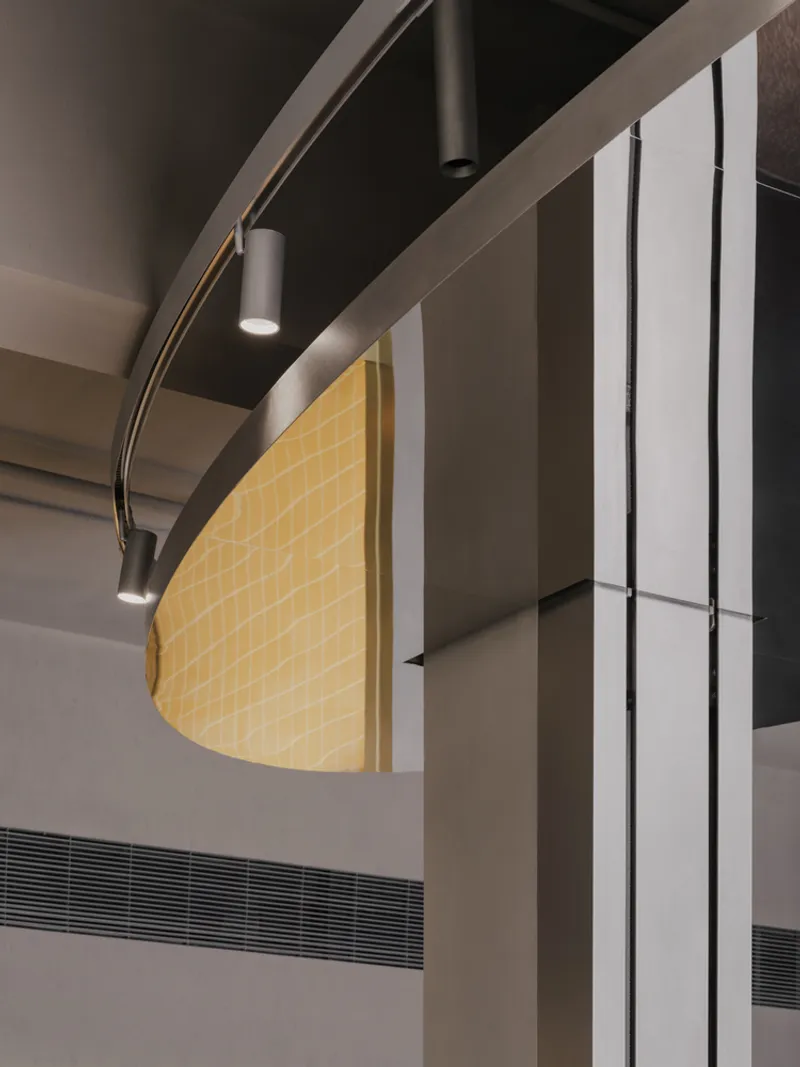
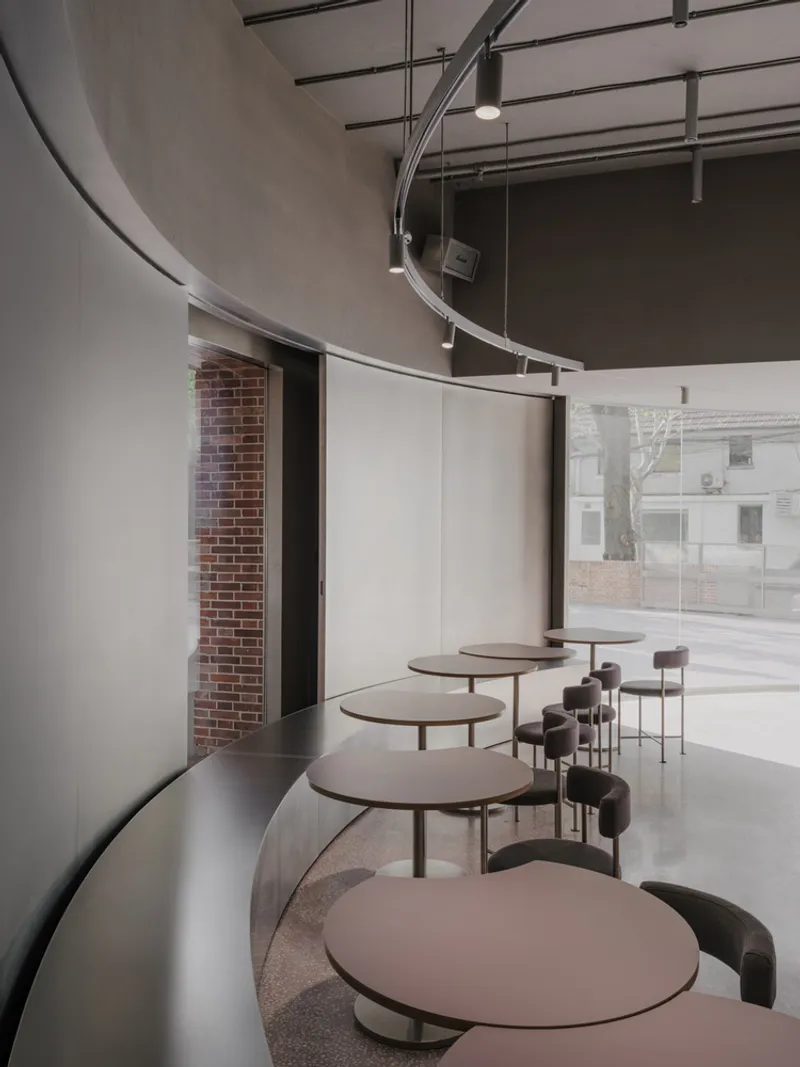
BizyBoy was designed with a dual operating mode: sandwiches by day, pastas by night. This temporal shift inspired a system of flexible restaurant interiors that transform with time. The centerpiece is a massive oval lift table spanning the main dining space. When lowered, it becomes a communal dining surface encouraging conversation and shared meals. When raised, it transforms into a mirrored canopy, expanding vertical space and resetting the evening mood. Complementing this, a movable curved wall swings open in the morning to signal service and slides inward at night to function as a subtle divider.
Materiality and Atmosphere
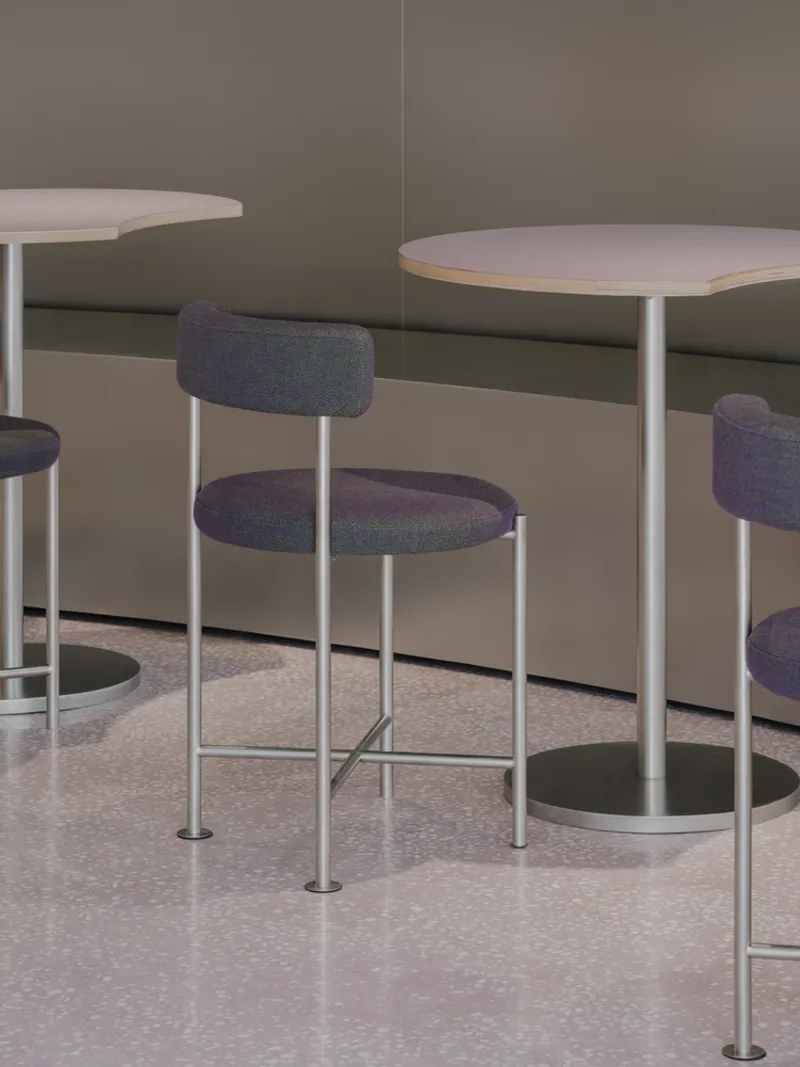
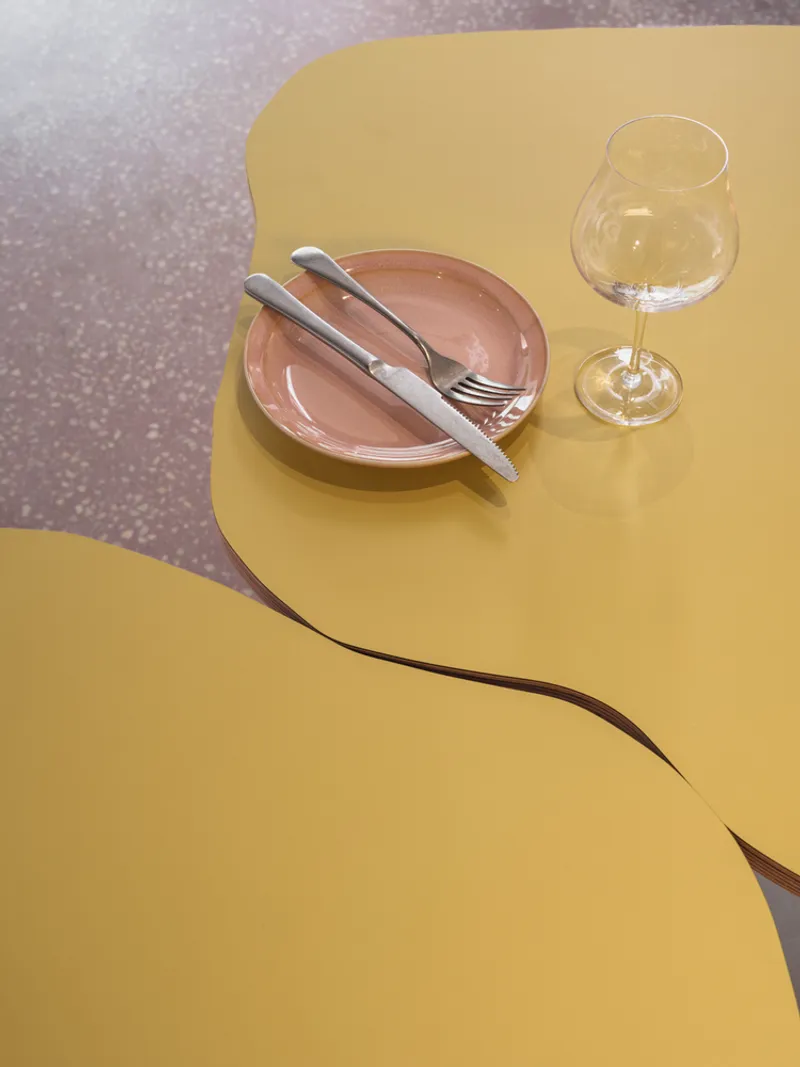
The design balances stainless steel surfaces, reflective elements, and soft lighting to create a dynamic atmosphere. Transparency is a recurring theme: glass panels, curved glazing, and open kitchens erase boundaries between chef and guest, while movable architectural elements keep the dining experience playful and surprising. The result is an environment that adapts to both the rhythms of hospitality and the expectations of contemporary urban dining.
Redefining Restaurant Interior Design in Shanghai
BizyBoy exemplifies how restaurant interior design can become an architectural performance. Through adaptive layouts, theatrical gestures, and a deep understanding of culinary workflow, Studio Profile created a dining venue that reflects the evolving culture of Shanghai. By merging design flexibility with bold visual statements, the project offers a model for how compact spaces can host dynamic and multi-layered experiences.

With BizyBoy, Studio Profile transforms 250 m² into a restaurant that is part kitchen stage, part social theatre, and part adaptive interior. This project stands as a prime example of how restaurant interior design in Shanghai can reimagine everyday dining into an extraordinary architectural encounter.

All Photographs are works of Wen Studio




Popular Articles
Popular articles from the community


The Ocean Hive: Sustainable Architecture for a Self-Sufficient Civilization at Sea
The Ocean Hive imagines sustainable architecture at sea, where modular habitats, algae, wave power and ocean waste sustain a growing colony.

AL-JANNAH: Sustainable Architecture and Permaculture for Afghan Widows
AL-JANNAH uses sustainable architecture and permaculture to create resilient oasis of housing, learning, work and renewal for Afghan widows.

Hill & Cross Opera: Sculptural Opera House Architecture Shaped by Tallinn’s Landscape and Identity
Hill & Cross Opera reimagines opera house architecture in Tallinn through its sculptural hill, civic plaza, glass wave and a luminous cross.

Co-Life: Senior Housing Design That Reconnects Older Adults With the City
Co-Life reimagines senior housing design through healing gardens, shared streets, workshops, and a sustainable community across generations.


Similar Reads
You might also enjoy these articles


Bamboo Housing Challenge 2026: Design Affordable, Sustainable Homes Using Bamboo
An international design competition by Bamboo U and IBUKU inviting architects and designers to reimagine affordable housing using bamboo — with the winning design built full-scale in Bali.

Computational Design & Education: Beegraphy Design Awards Introduces 7th Category (Featuring Jiyun's Innovative Approach)
Dive into Beegraphy’s 7th Design Awards category, where computational design meets education to create immersive, interactive learning tools, inspired by Jiyun’s work.

From Parametric Lighting to Urban Furniture: Join the 2nd Workshop in Beegraphy’s Computational Design Series
Dive into Cutting-Edge Design Techniques and Practical Applications with Industry Experts

Last Call: Unleash Your Architectural Genius in SHAK's Kindergarten Design Competition
Urgent call for architects to join SHAK's kindergarten design competition before the looming deadline

Explore Architecture Competitions
Discover active competitions in this discipline



Challenge to reimagine the Iron Throne


Photograph architecture without architects


Illustrate the lost glory of Angkor Wat - Render Challenge


Design challenge to reuse E-waste
Comments (0)
Please login or sign up to add comments
No comments yet. Be the first to comment!