

BLOCO Arquitetos Designs a Brasilia Home Around Five Inverted Beams and a Private Art Gallery
In Lago Sul, a 600-square-meter house treats its living spaces as exhibition rooms for the family's painting collection.


Brasilia's modernist DNA runs deep, and any new house in the capital risks looking like a footnote to Niemeyer. BLOCO Arquitetos, led by Daniel Mangabeira, Henrique Coutinho, and Matheus Seco, sidesteps that trap with Galeria House by taking a single proposition seriously: if a family collects paintings, the entire house should function as a gallery. That idea dictates everything here, from the 12-meter clear span of the roof to the neutral palette of the walls, to the way light enters every room indirectly, filtered through gardens and setbacks so it never scorches a canvas.
The result is a 600-square-meter residence in Lago Sul organized into two rectangular blocks separated by uncovered linear gardens. One block contains the social core: living, dining, kitchen, balcony, and garage all unified under a dramatic folded ceiling. The other holds bedrooms and private quarters. Between them, planted strips act as light wells, climate buffers, and compositional pauses. An original Athos Bulcão tile panel, once designed for an Oscar Niemeyer house, sits beside the entrance garden, quietly anchoring the project in a lineage it earns rather than borrows.
A Facade That Deflects the Sun and the Gaze
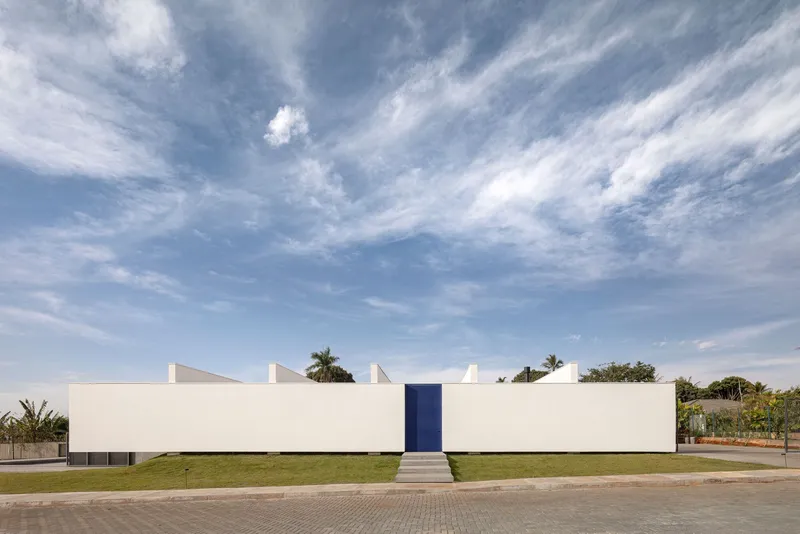
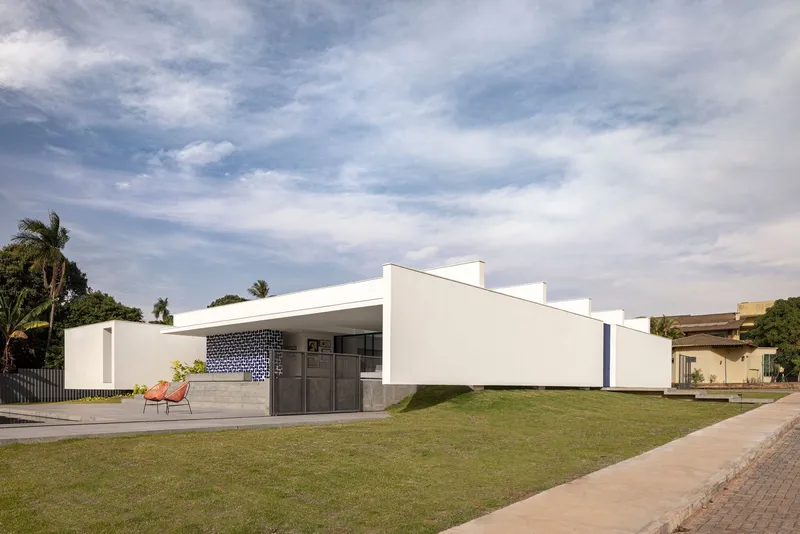
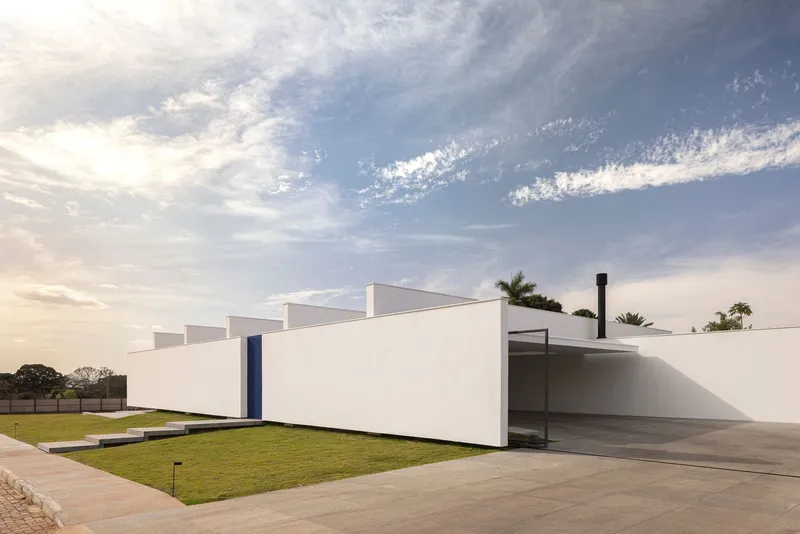
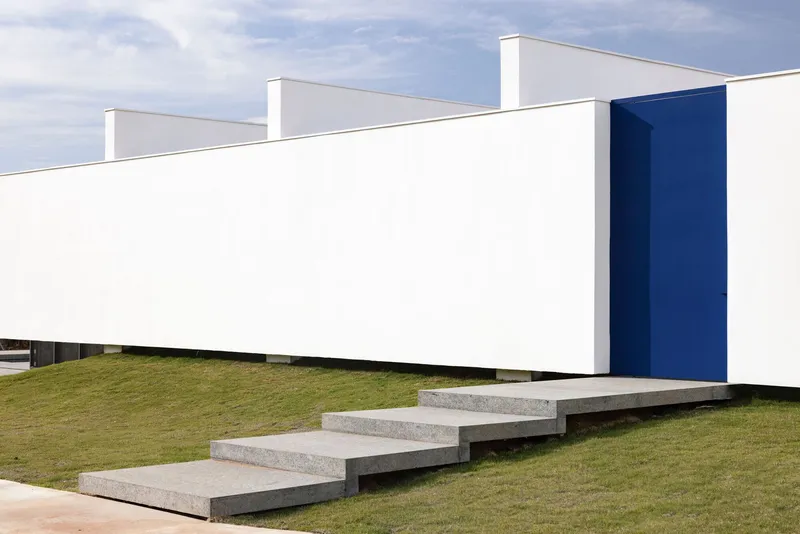
From the street, the house reads as a long, low white wall with a stepped roofline and almost no visible openings. A dark tiled portal marks the entrance, and a central blue door provides a single chromatic punctuation. The facade is not decorative restraint for its own sake; that large wall is slightly suspended from the floor to block the fierce afternoon sun that would otherwise blast through the glazed sides of the gallery. The gap between wall and glass creates a breathing zone where an open garden channels indirect daylight into the interior.
At dusk, the recessed entry canopy and black chimney stack give the composition a more graphic quality, almost like an ink drawing against the sky. The strategy is clear: protect the art, control the light, and let the architecture do its work without shouting.
The Gallery Spine
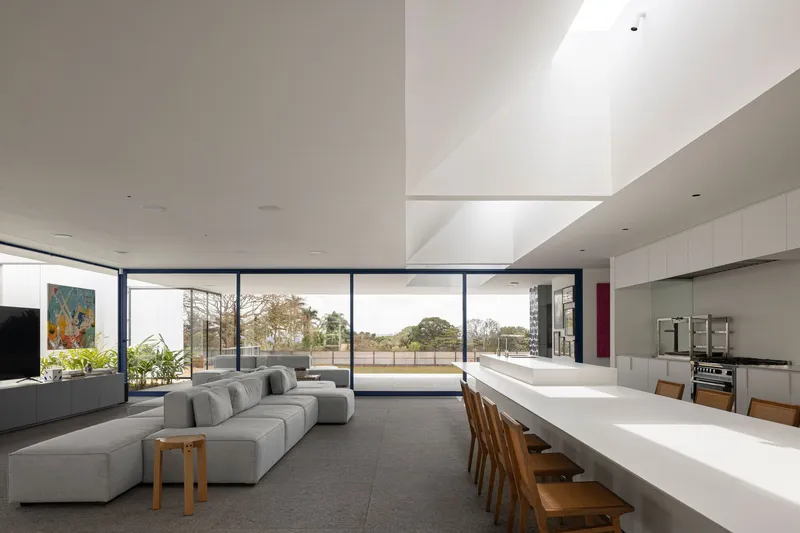
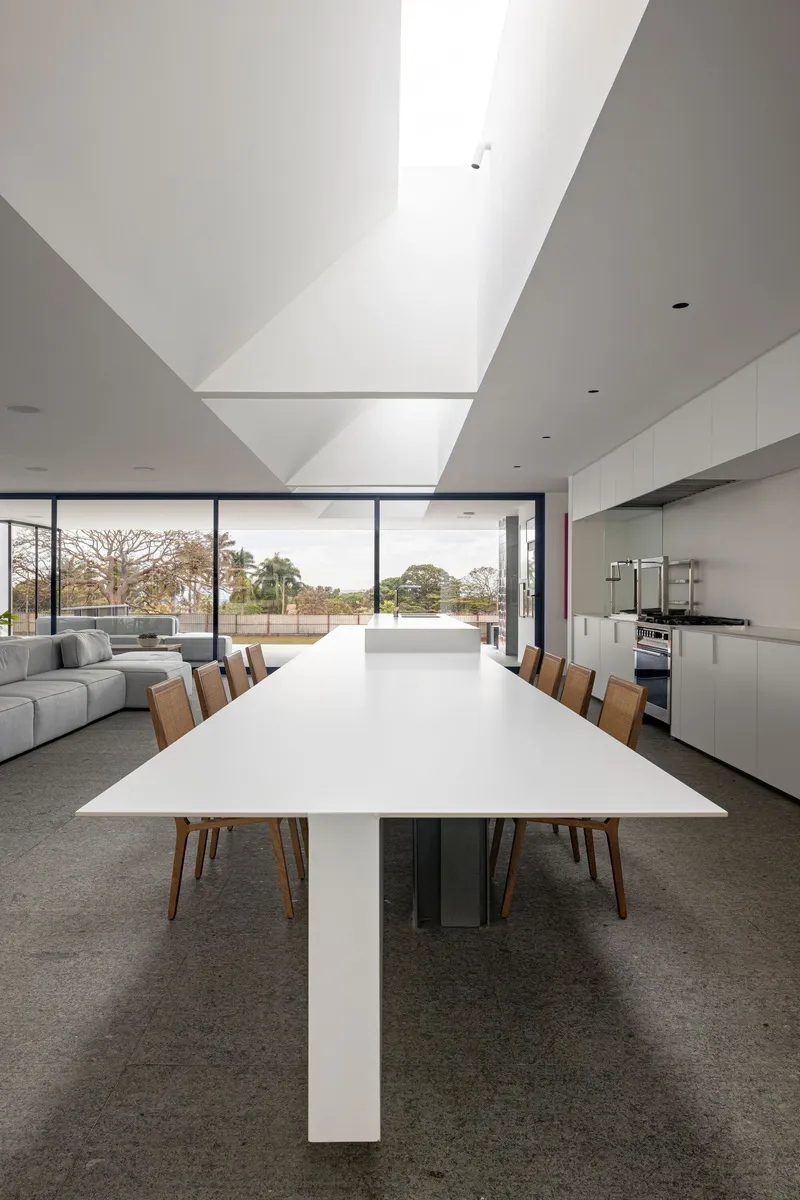
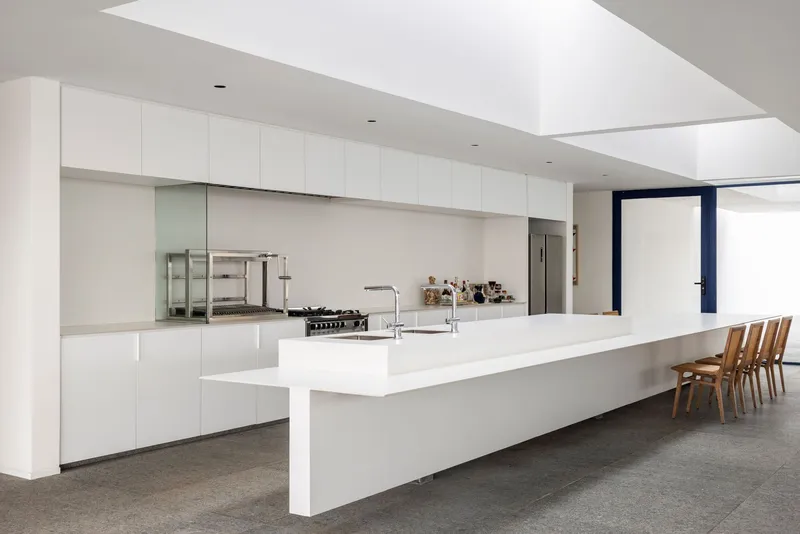
The central living space is the project's structural and conceptual engine. Five large inverted beams span the full 12-meter width of the roof, creating a folded ceiling plane that rises and dips like origami. The geometry is not arbitrary: by inverting the beams, the architects turn structure into a ceiling feature, eliminating the need for a flat slab below and freeing the space to feel taller than its single story would suggest. Clerestory windows sit in the valleys between beams, pulling light down the angular surfaces and washing the walls where paintings hang.
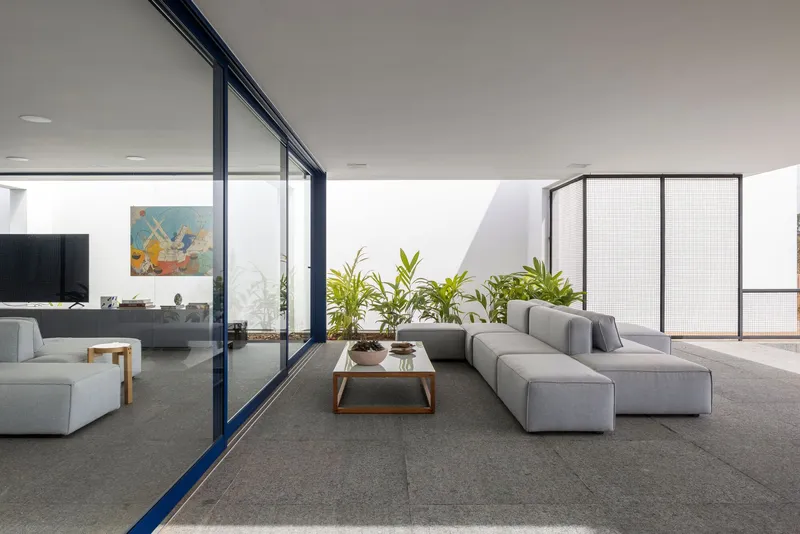
Living, dining, and kitchen flow into one another beneath this continuous roof. A long white table and a kitchen island with cantilevered timber dining extension occupy the space without subdividing it. The floor remains open, the walls remain white, and the architecture steps back to let the collection speak. It is a house that knows when to be quiet.
Linear Gardens as Climate and Light Instruments
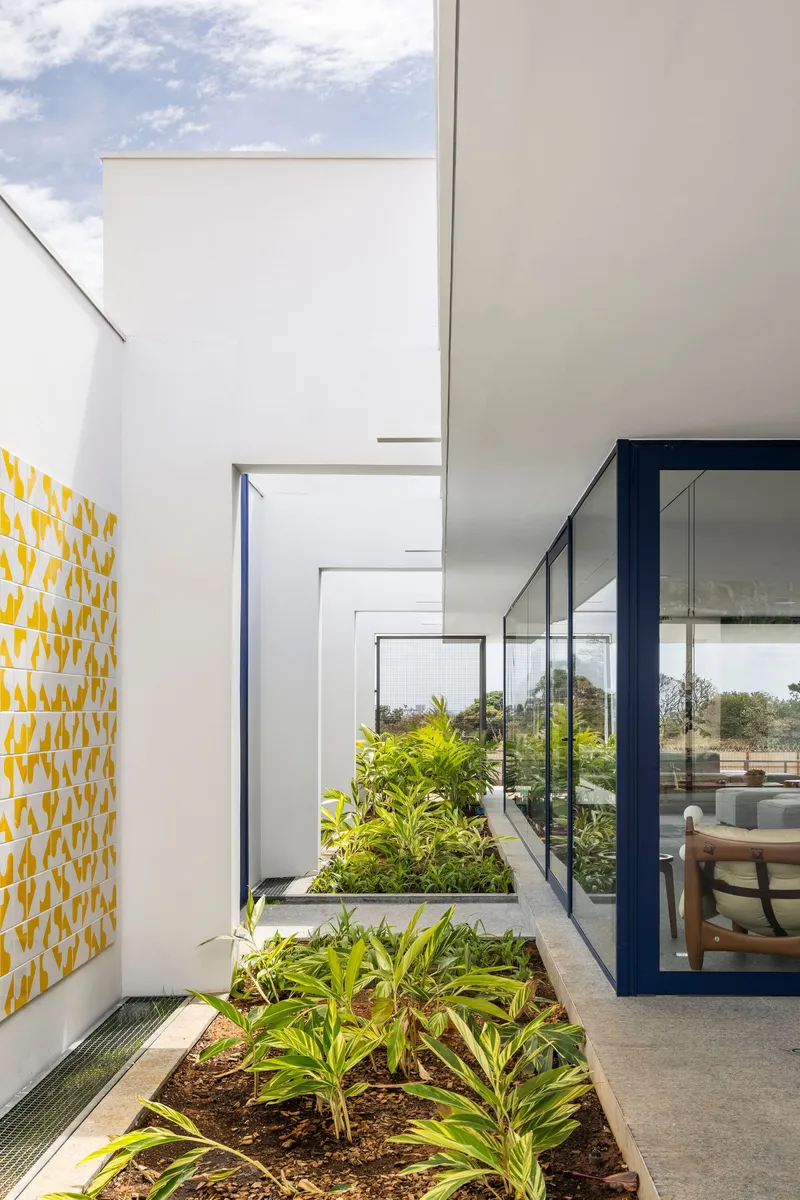
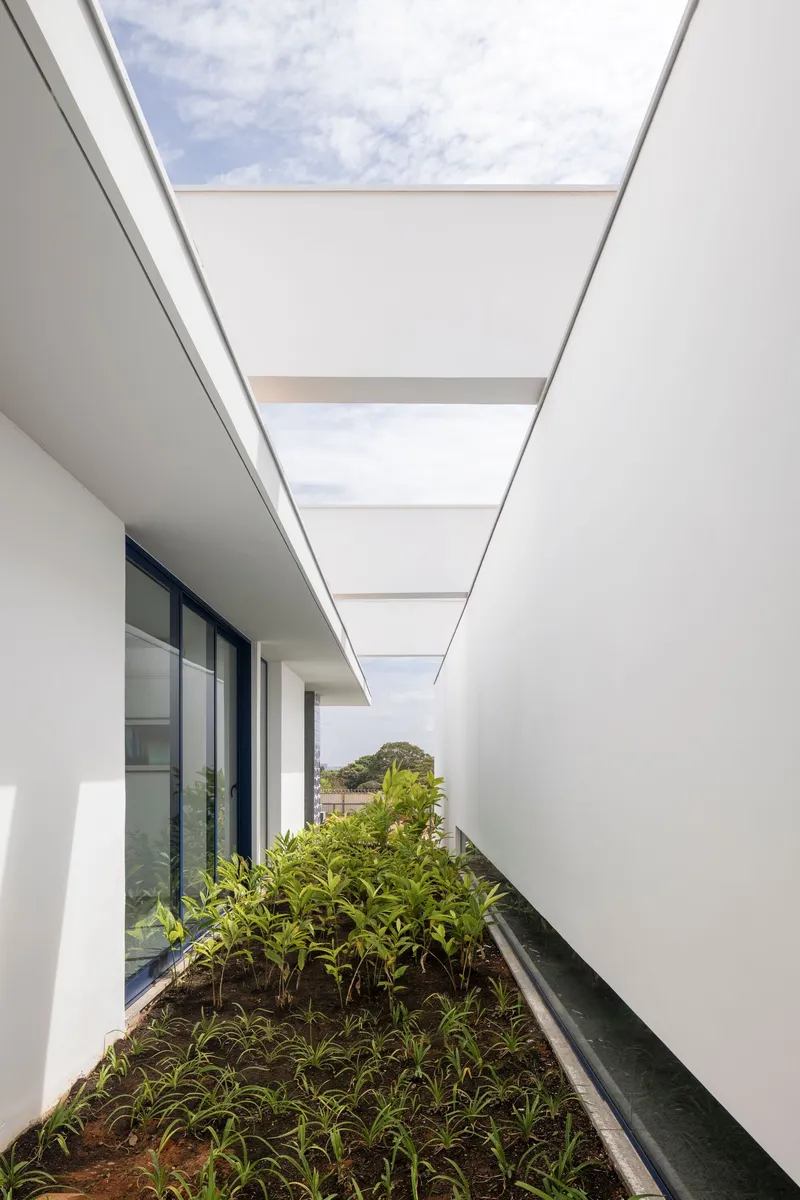
The two uncovered linear gardens are the plan's secret weapons. The first, closer to the street, sits between the sun-protection wall and the glazed frames of the central living area. It converts what could be a dark corridor into a luminous green buffer, admitting soft light while the wall overhead blocks direct rays. The second garden divides the social pavilion from the bedroom wing, creating acoustic and visual separation without a solid partition.
In the courtyard visible from the dining area, a yellow geometric tile accent wall by artist João Henrique injects color into an otherwise restrained palette. Floating granite stair treads ascend a grass lawn toward a blue accent wall, reinforcing the idea that every transition in this house is choreographed. These gardens are not leftover voids; they are programmed landscapes doing the work of mechanical systems.
Interior Rooms and the Art of Restraint
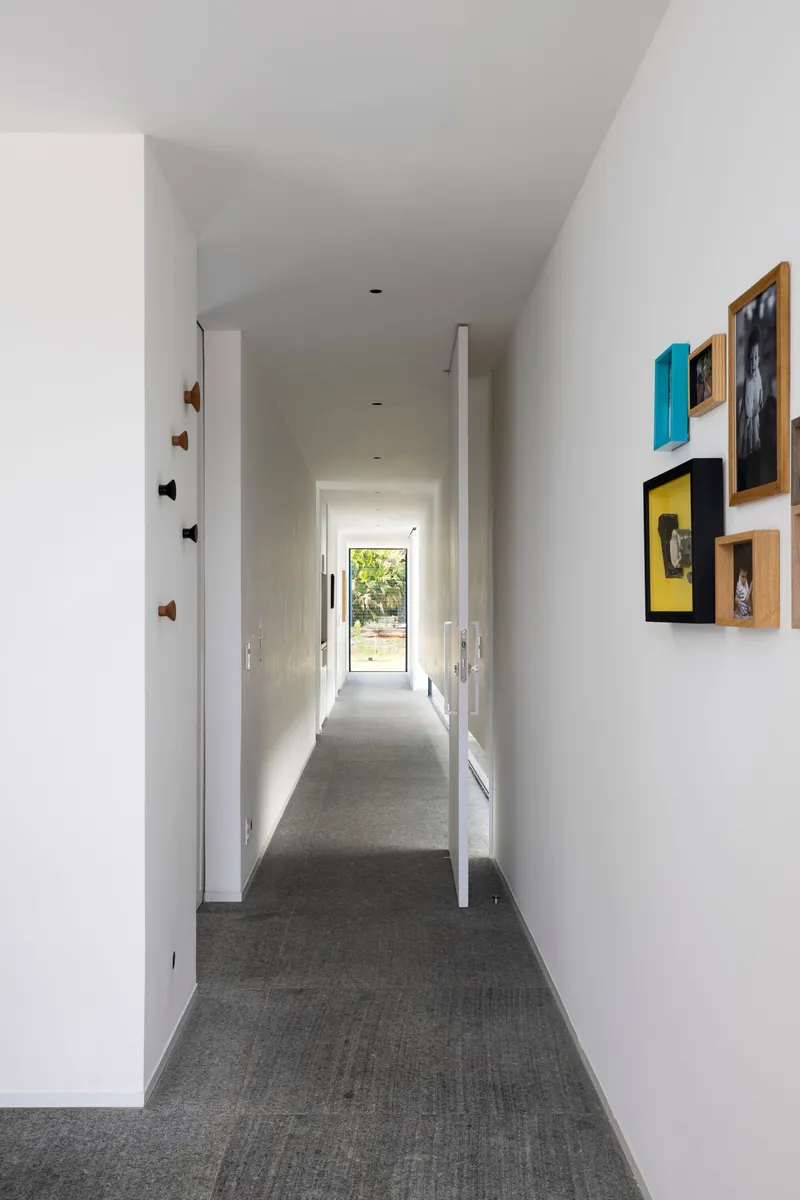
Step past the gallery spine into the private wing and the tone shifts to something quieter but no less considered. A white corridor lined with framed photographs acts as a secondary exhibition space, drawing the eye toward a distant glazed door and garden view. The corridor's proportions are generous enough to stop, look, and linger, which is exactly the point.
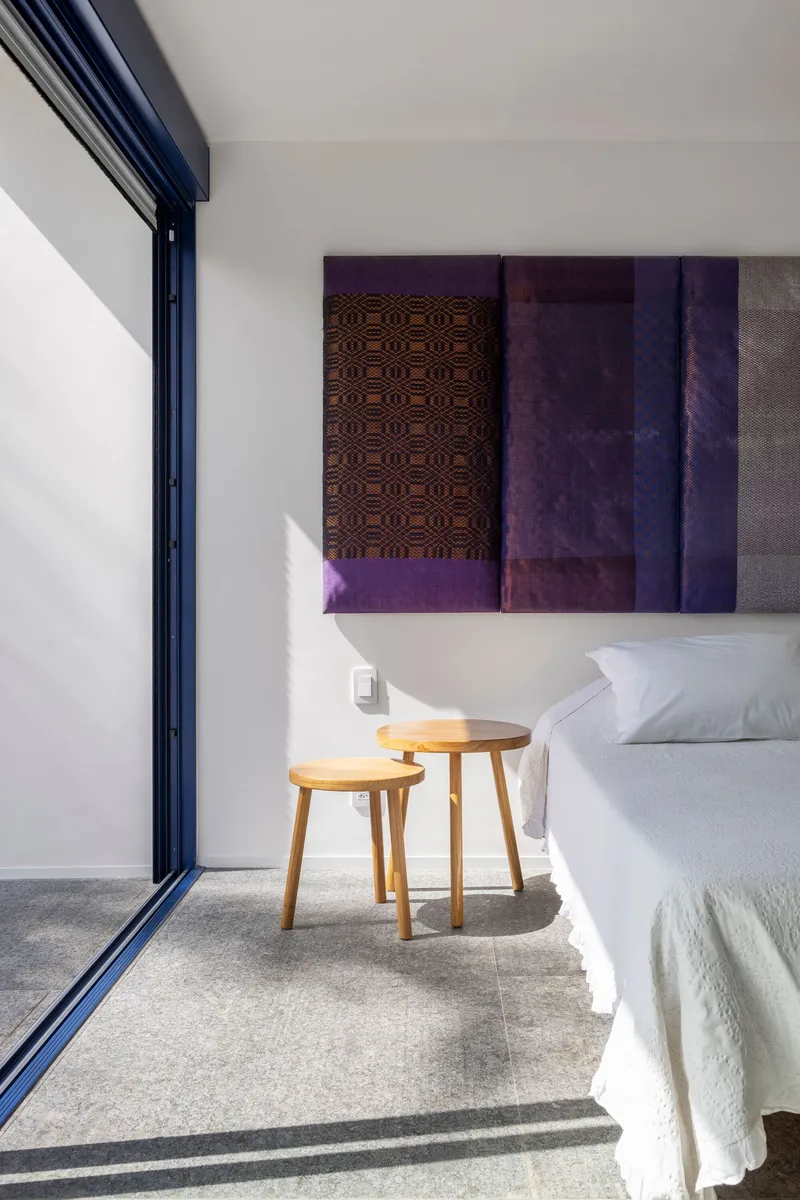
Bedrooms catch afternoon sunlight through dark-framed glazing, with patterned textile artworks on the walls warming the otherwise neutral interiors. A minimalist dressing room with fitted wardrobes, terrazzo floor, and a ceiling skylight demonstrates that even utilitarian spaces receive the same caliber of natural light. Neutral materials and colors persist throughout, establishing a backdrop that foregrounds whatever the family chooses to hang or place.
Tile Panels and Color Provocations
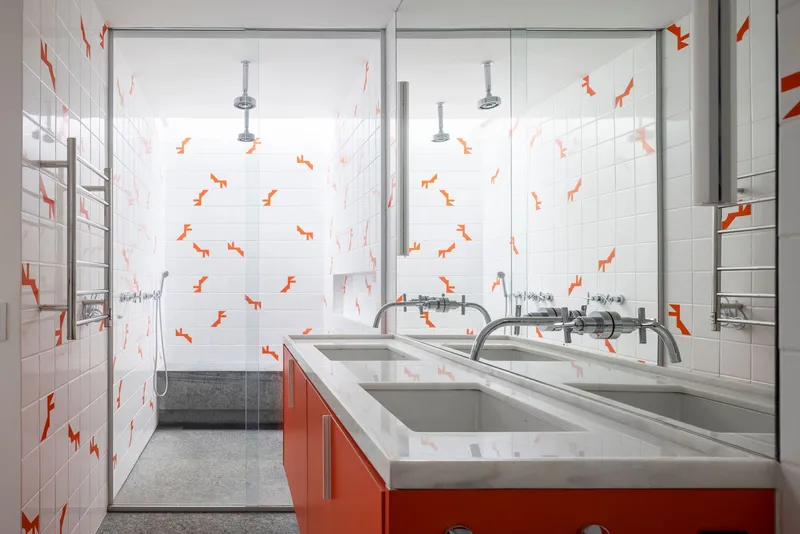
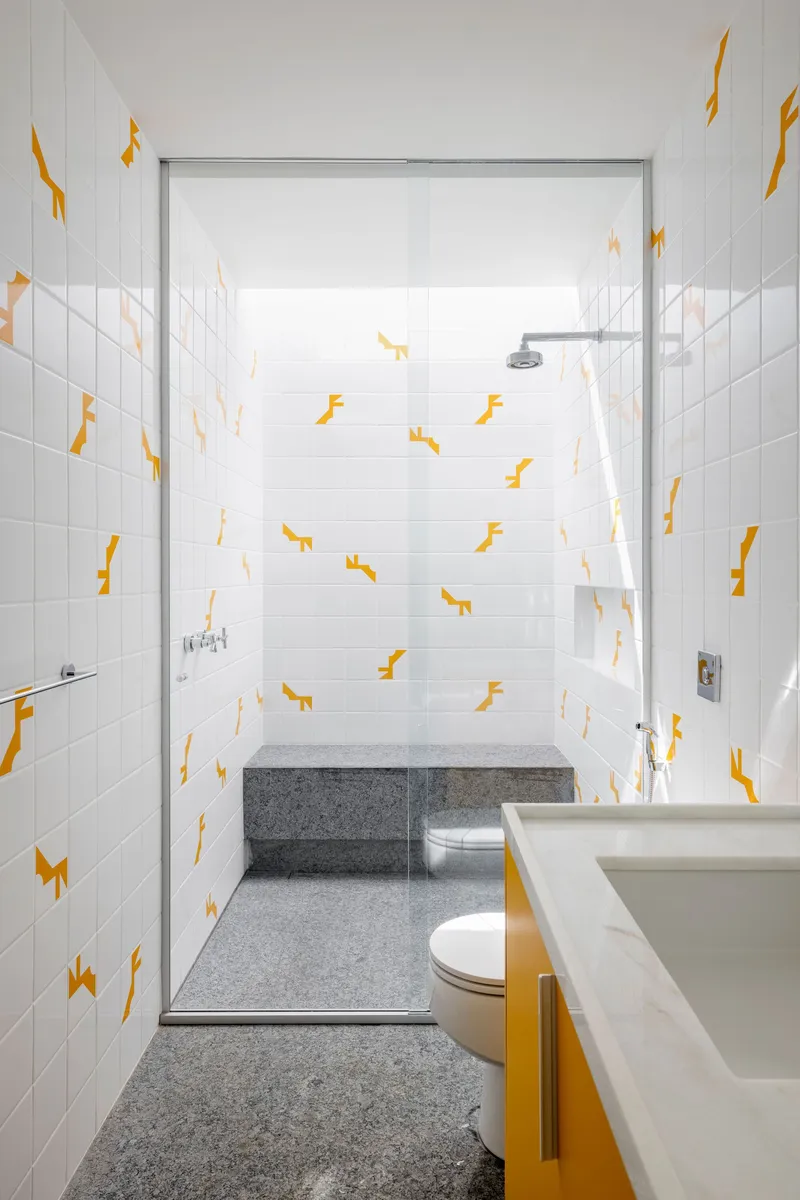
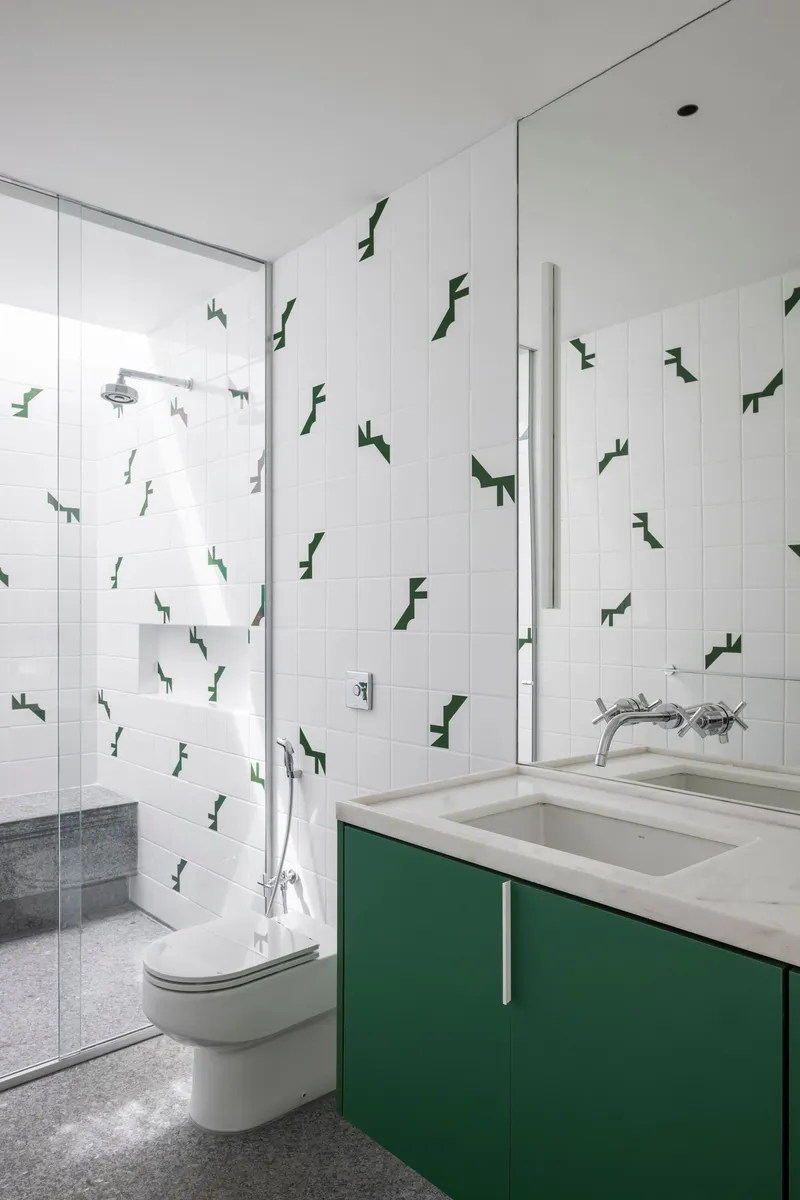
The bathrooms are where BLOCO Arquitetos allows the house to raise its voice. Custom tile panels by João Henrique appear in three distinct color schemes: orange vanity cabinetry paired with white tiles sporting scattered geometric decals; a yellow vanity base with animal-shaped yellow decals; and green cabinetry with dark green geometric accents on white tile. Each bathroom becomes a small room of its own identity, a deliberate counterpoint to the gallery's discipline.
The named Bárbara panel, executed in blue and white, and the relocated Athos Bulcão panel near the entrance garden together form a secondary narrative of Brazilian decorative art running through the house. They signal that the residents' collection extends beyond framed paintings into the very surfaces of their home.
Pool Terrace and Exterior Volumes
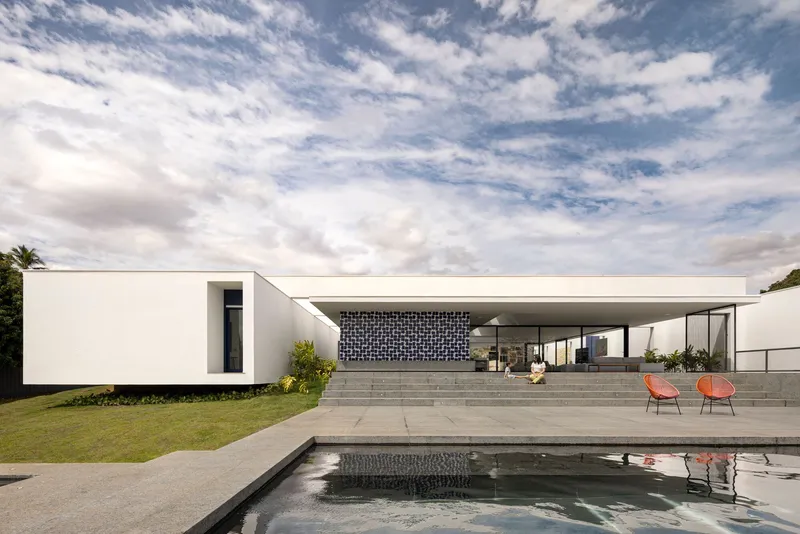
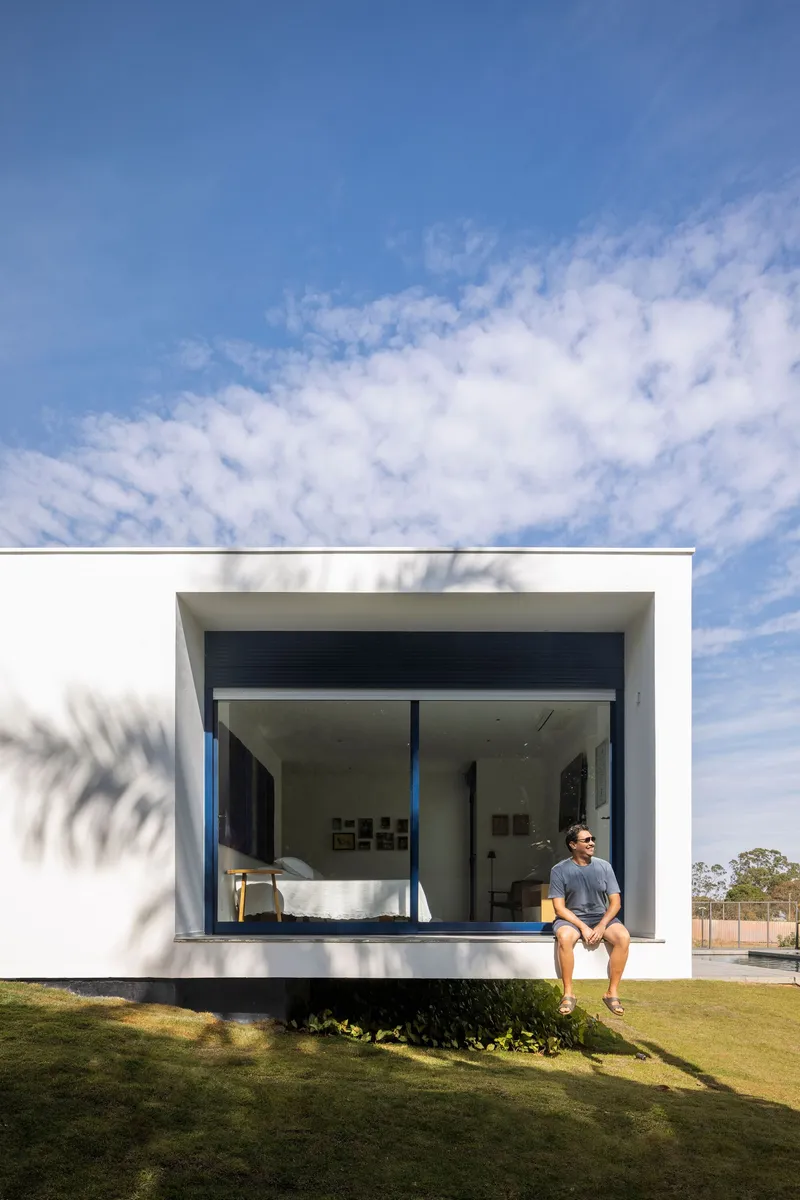
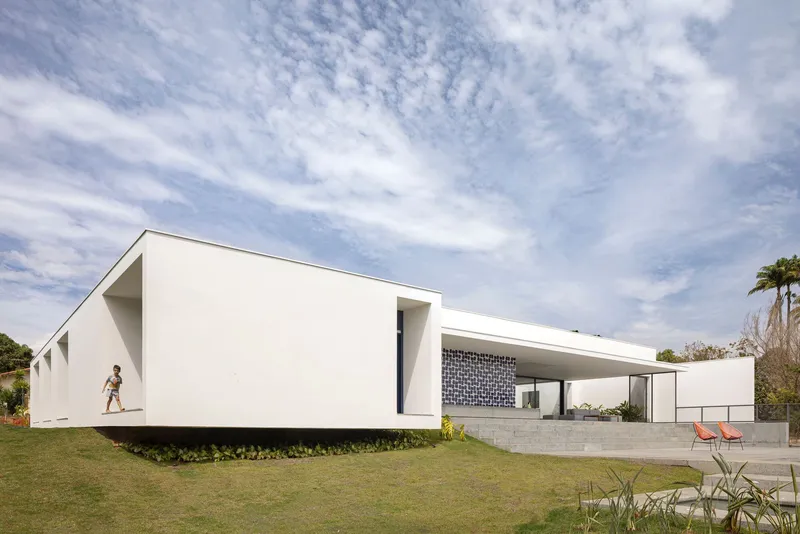
The rear of the house opens to a pool terrace where still water reflects the white volumes and a patterned screen wall. A cantilevered white volume projects outward over the sloping site, its glazed underside revealing interior life to anyone on the lawn below. The gesture is structurally bold but visually calm, a hovering box that reads as weightless against the grassy slope.
Seen from a distance, the house resolves into a series of low cantilevered wings stepping across terrain under cirrus clouds. The composition is horizontal, grounded, and quietly monumental, qualities that align it with Brasilia's urbanistic ethos without mimicking any particular precedent.
Plans and Drawings
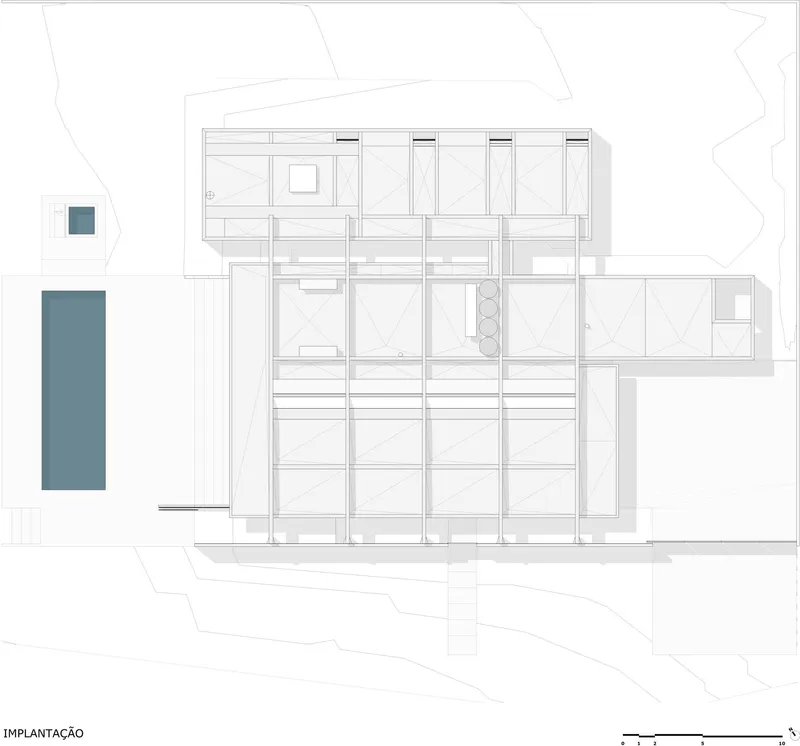
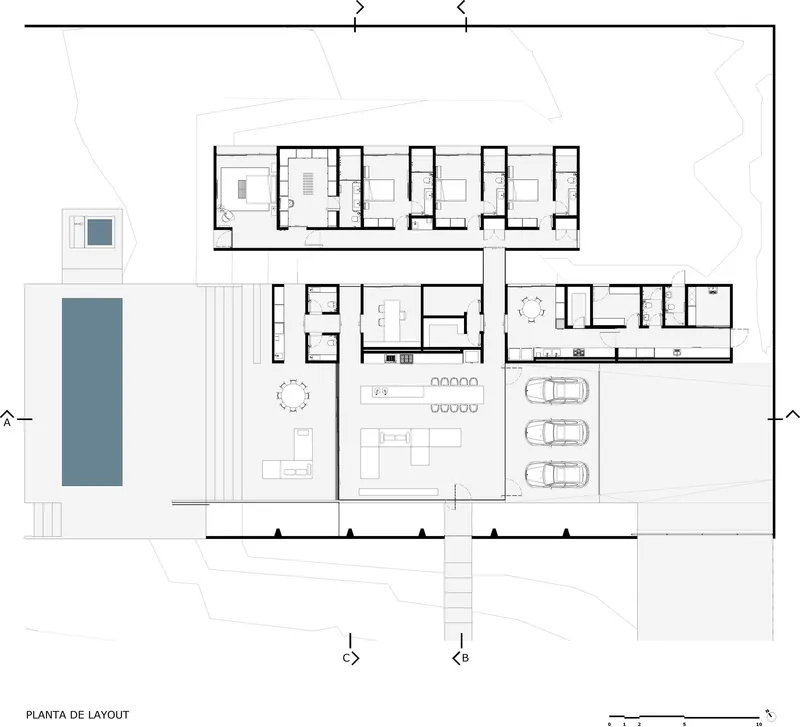
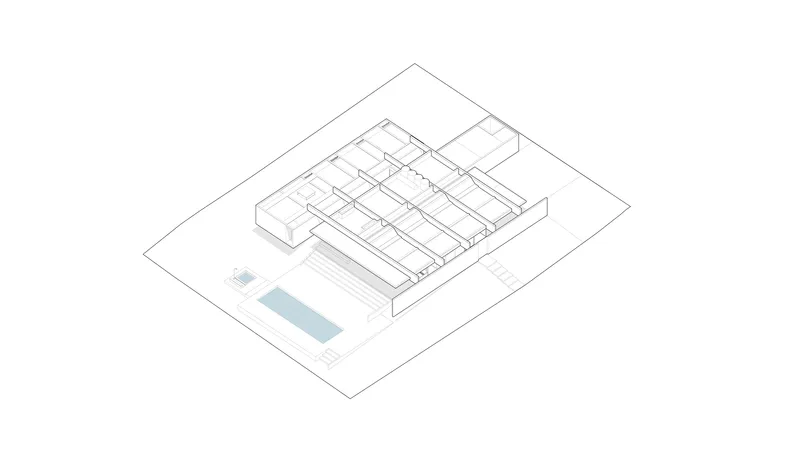
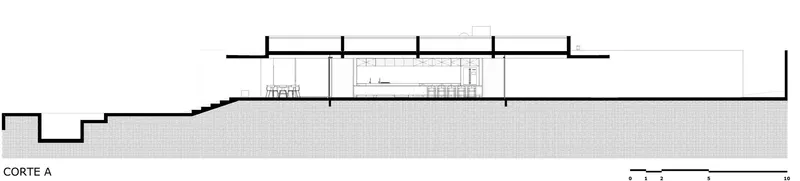
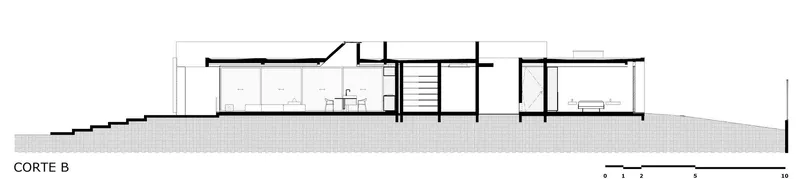
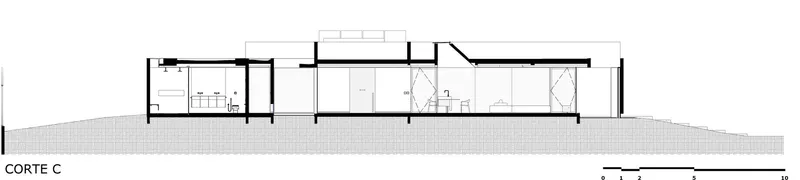
The site plan reveals two rectangular volumes offset from one another and connected by the linear gardens, confirming that the plan's bipartite logic is legible from above. The floor plan shows the garage for three cars integrated seamlessly into the gallery block, a pragmatic move that avoids the usual garage-as-afterthought problem. The axonometric drawing is the most telling: it exposes the inverted beam structure and demonstrates how the roof, the gardens, and the pool all belong to a single topographic strategy descending the slope.
Section drawings cut through the sloping site and illustrate how the house steps down the terrain while maintaining a single-story reading. Interior rooms stack against the hillside, using the grade change to create sheltered conditions on the north-facing side while opening fully to the garden and pool on the south.
Why This Project Matters
Galeria House matters because it takes a residential brief that could easily dissolve into generic luxury and turns it into a proposition about how architecture serves culture. The inverted beams are not just structural gymnastics; they shape the light that falls on paintings. The linear gardens are not decorative courtyards; they are calibrated thermal and luminous devices. The neutral interiors are not minimalism as fashion; they are curatorial discipline applied to domestic space.
BLOCO Arquitetos proves that a house can be a gallery without becoming a museum. The family lives inside the collection, not beside it. In a city already saturated with modernist legacy, this project adds a credible new chapter by focusing not on formal novelty but on the relationship between structure, light, and the objects that make a home worth inhabiting.
Galeria House by BLOCO Arquitetos (Daniel Mangabeira, Henrique Coutinho, Matheus Seco). Lago Sul, Brasilia, Brazil. 600 m². Completed 2022. Photography by Joana França.
About the Studio
Share Your Own Work on uni.xyz
If projects like this are the kind of work you want to make, uni.xyz is a place to publish your own, find collaborators, and enter design competitions.


Popular Articles
Popular articles from the community


Opera on the Sea: Driftwood Logic Shapes a Timber Opera House on Estonia's Coast
Trevor Orgill's opera house translates the entangled drift of floating timber into a civic building where wood, water, and music converge.

The Amber Palace Opera: A Geological Fiction Surfaces on Tallinn's Baltic Waterfront
Pierre Brillard reimagines a Baltic legend as a public landscape, opera house, and waterfront promenade rooted in Tallinn's coastal identity.

Cloaked Colonization: A Mobile Underwater Habitat That Moves Like a Fish
Micah Abaya's shortlisted EHC Pacific entry reimagines ocean settlement as a dispersed network of self-sustaining architectural organisms.

Singing Woman: Contemporary Architecture Inspired by Estonia’s Voice and the Sea
Singing Woman turns Estonia’s song culture into flowing opera house architecture, blending public life, landscape, sea, and national memory.

Similar Reads
You might also enjoy these articles

Bao Huynh Watercolor Atelier: A Serene Art Retreat in Hội An
Bao Huynh Watercolor Atelier in Hội An blends multifunctional art spaces, sustainable design, local materials, and family-friendly living in a serene environment.

Atelier Macri Concept Store Interior Design by CASE-REAL
Atelier Macri store features a "ko" counter, walnut wood details, cork displays, blending retail, gallery, and seamless customer experiences.

Manuel Vargas Izquierdo Stadium and High-Performance Sports Center: Architectural Excellence in Jalpa de Méndez
The Manuel Vargas Izquierdo Stadium blends sustainable design, inclusive sports facilities, and cultural-inspired architecture, revitalizing Jalpa de Méndez’s public spaces.

KAKR Buluh Awar Hall: Revitalizing Community and Ecology Through Bamboo Architecture
Community built bamboo hall revitalizes Buluh Awar village, empowering youth, restoring ecology, celebrating vernacular craftsmanship through sustainable architecture and culture.


Comments (0)
Please login or sign up to add comments
No comments yet. Be the first to comment!