
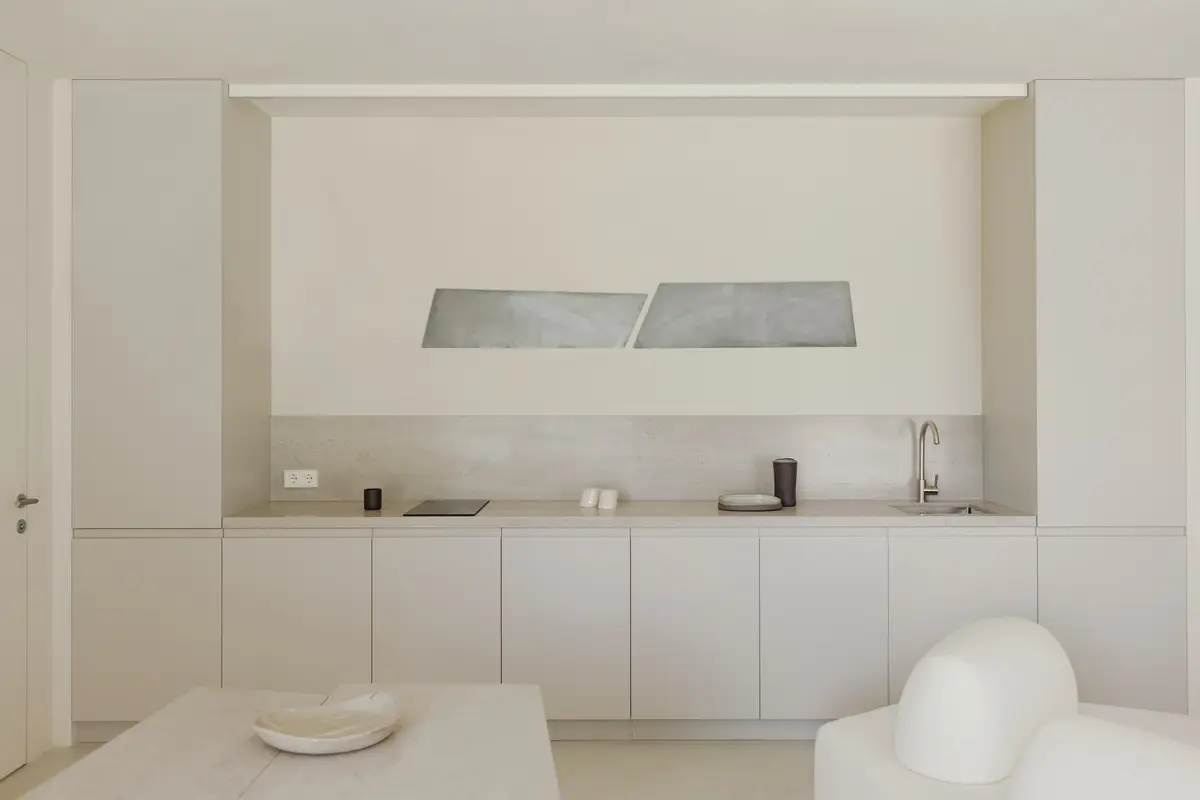
Blondie Space Apartment: Minimalist Serenity in 70 Square Meters
Seventy-square-meter Minsk apartment transformed through minimalist restraint, custom furniture, micro-cement surfaces, strategic travertine accents, and integrated storage creating spacious serenity.


Introduction: Radical Minimalism in a Compact Urban Dwelling
In the heart of Minsk, Belarus, where standard new-build apartments typically feature low ceilings and modest dimensions, the Blondie Space Apartment emerges as a masterclass in spatial perception and minimalist restraint. Designed by Vlad Kudin and completed in 2025, this 70-square-meter residence transforms the constraints of contemporary Eastern European apartment construction into opportunities for creating profound spaciousness, luminosity, and tranquility.
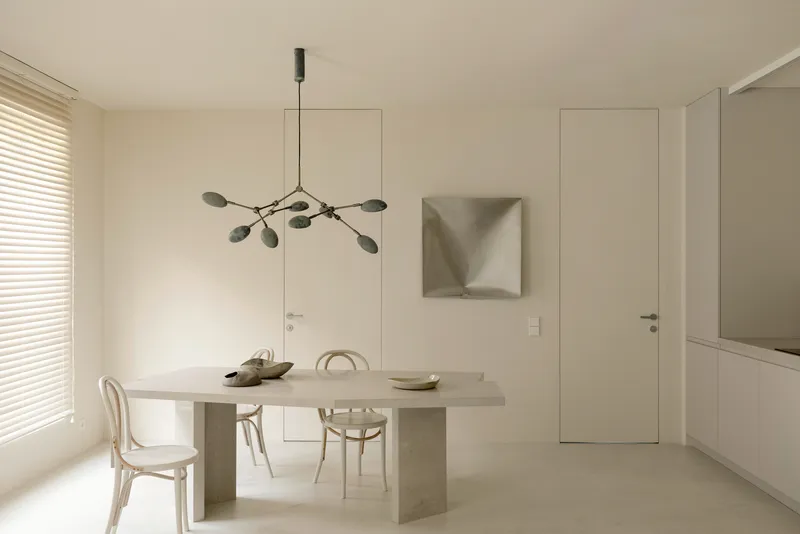
The project serves as a pied-à-terre for busy clients dividing their time between Minsk and Moscow—a secondary residence requiring the efficiency of a small apartment while offering the serenity of a spacious retreat. This programmatic duality shaped every design decision: how to accommodate essential functions within limited area while creating an atmosphere of expansiveness that allows residents to decompress from demanding professional lives. The result demonstrates that spatial generosity depends more on design intelligence than physical dimensions.
Client Context: Moscow-Based Entrepreneurs in Natural Stone
Understanding the clients' background proves essential to comprehending the project's particular challenges and solutions. Based primarily in Moscow and working in the natural stone business, these entrepreneurs possess sophisticated material knowledge and strong aesthetic preferences shaped by daily exposure to luxurious finishes. Their professional immersion in travertine, marble, granite, and other premium stones created both opportunity and challenge for the designer.
The opportunity lay in clients who genuinely appreciate material quality and craftsmanship, understanding the value of well-executed details and willing to invest in custom solutions. Their business provides access to exceptional stone materials at favorable terms, making strategic use of natural stone economically viable within the project budget.
The challenge, paradoxically, stemmed from the same source. Professionals in the stone industry naturally gravitate toward showcasing their materials extensively—covering walls, floors, and surfaces in the luxurious finishes that define their business identity. For the Blondie Space project, however, such abundance would contradict the fundamental design concept. The designer faced the delicate task of persuading clients to use their beautiful materials sparingly, allowing restraint rather than abundance to define the space.
Design Philosophy: Minimalism as Spatial Amplification
The Blondie Space project embraces a "strict minimalist ethos" not as aesthetic preference alone but as strategic response to spatial constraints. This distinction matters: minimalism sometimes appears as stylistic choice disconnected from functional imperatives, but here it emerges necessarily from the apartment's physical limitations.
Low ceilings in standard Minsk new-build construction create oppressive conditions when combined with visual clutter, multiple materials, or complex geometries. The designer recognized that overcoming this inherent constraint required radical simplification—eliminating every non-essential element, unifying surfaces through continuous materials, and allowing light and space themselves to become the primary experiential qualities.

The inspiration for this approach draws from minimalist traditions emphasizing material restraint, spatial purity, and refined detail. Yet the project avoids the coldness sometimes associated with extreme minimalism through careful introduction of texture, warmth, and character. The muted material palette provides neutral background against which custom-designed asymmetric furniture and bold art objects create focal points and visual interest without fragmenting the space or creating clutter.
Budget and Timeline: Constraints as Creative Drivers
The project faced significant practical constraints that shaped design methodology fundamentally. A stringent budget combined with an accelerated timeline created pressure that might have compromised quality in less capable hands. The clients' Moscow base necessitated swift decisions without opportunities for extended deliberation or multiple revision cycles. Meetings required efficiency; selections demanded confidence; implementation needed precision.

Rather than viewing these constraints as limitations to be overcome or regretted, Vlad Kudin reframed them as the project's "driving force"—catalysts for innovation rather than obstacles to ambition. This philosophical reorientation transforms the design process from problem-solving (how to achieve predetermined goals despite constraints) to opportunity-seeking (what new possibilities emerge from constraint conditions).
The budget limitation led directly to the decision to custom-design almost all furniture and art rather than purchasing ready-made pieces. This choice might seem counterintuitive—custom work typically costs more than mass-produced alternatives. However, within the specific context of this project, bespoke design offered crucial advantages.

Custom furniture allows perfect dimensional coordination with the apartment's specific proportions, maximizing functionality within tight spaces. It ensures aesthetic cohesion impossible to achieve with disparate purchased pieces from multiple manufacturers. It provides control over materials and finishes, maintaining the rigorous palette essential to the minimalist concept. And, importantly in Eastern European construction contexts, skilled local craftspeople can often produce custom pieces at costs competitive with imported designer furniture while offering superior fit to local conditions.
Material Strategy: Restraint and Strategic Accent
The material palette demonstrates exceptional discipline, limited to a carefully curated selection that creates coherence without monotony. Warm white and light-gray matte micro-cement plaster serves as the project's foundational material, unifying walls, floors, and built-in storage. This continuous application eliminates visual breaks that would fragment the space and reduce perceived dimensions.
Micro-cement plaster offers specific properties that suit the project's requirements perfectly. Its matte finish absorbs rather than reflects light harshly, creating soft, diffused luminosity that enhances the sense of calm. The material's slight texture provides tactile interest and visual depth without busy patterning. Its durability suits high-traffic residential use while its maintenance requirements remain reasonable. Perhaps most significantly, micro-cement can be applied continuously across different surfaces—flowing from walls to floors to cabinet fronts—creating seamless transitions that make spaces feel larger and more unified.

The warm white and light-gray tones specifically chosen for the plaster create an envelope that feels neither stark nor clinical. Pure white can feel cold and institutional, especially in spaces with limited natural light; these warmed neutrals maintain minimalist simplicity while introducing subtle warmth that makes the apartment feel welcoming rather than austere.
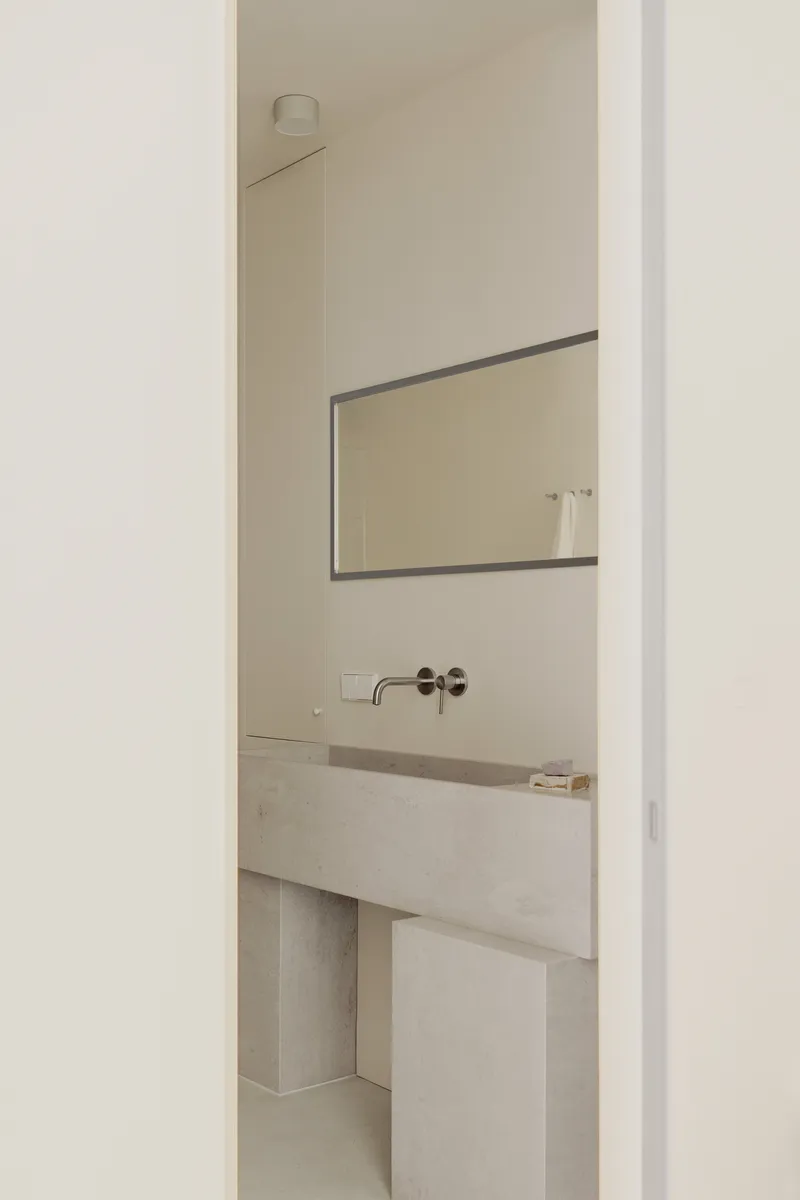
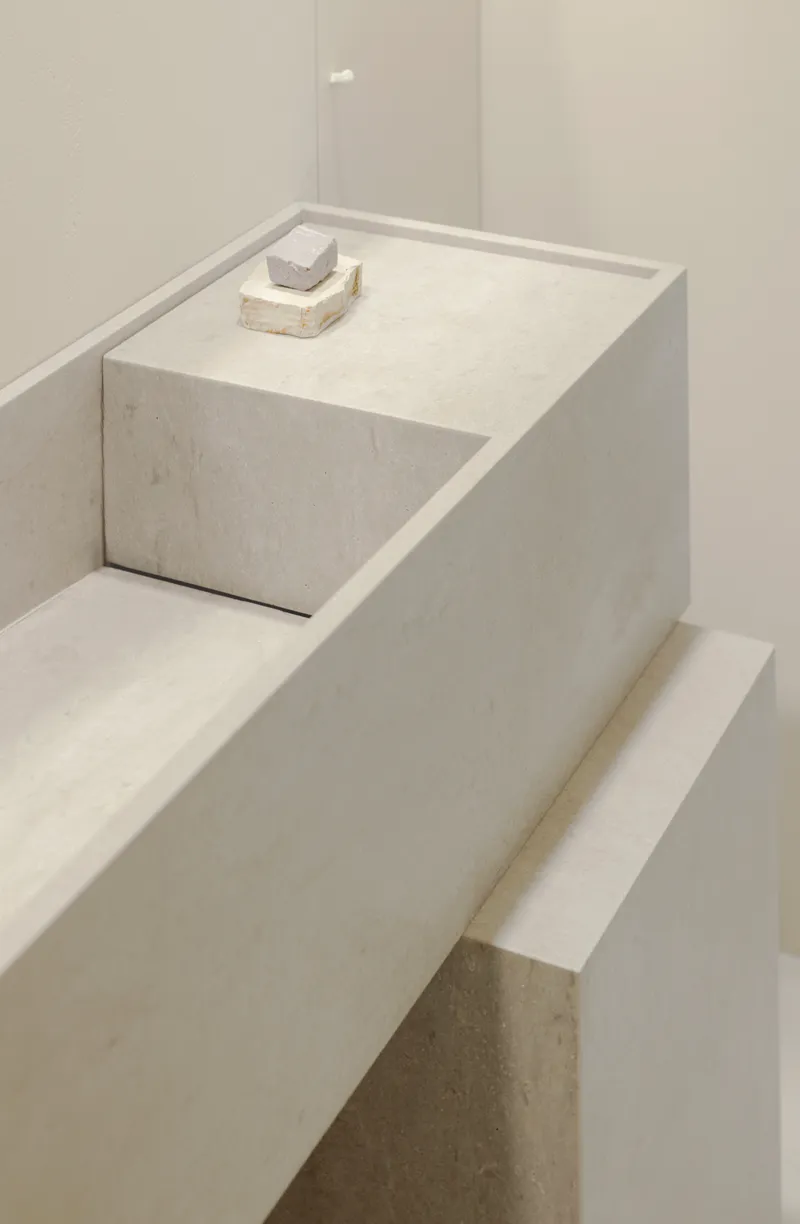
Natural travertine provides the material palette's key accent, used strategically rather than extensively. The kitchen countertop features this distinctive stone, creating a focal point in the open living area while providing practical work surface with the durability and heat resistance essential for food preparation. The signature washbasin, custom-designed and fabricated in travertine, becomes a sculptural object—functional art that celebrates material beauty while serving daily rituals.
Custom Furniture: Asymmetry and Material Contrast
The custom-designed furniture pieces represent crucial elements in achieving the project's aesthetic and functional goals. Unlike standard furniture that arrives with predetermined dimensions and proportions, these bespoke pieces respond precisely to the apartment's specific spatial conditions and the clients' particular needs.
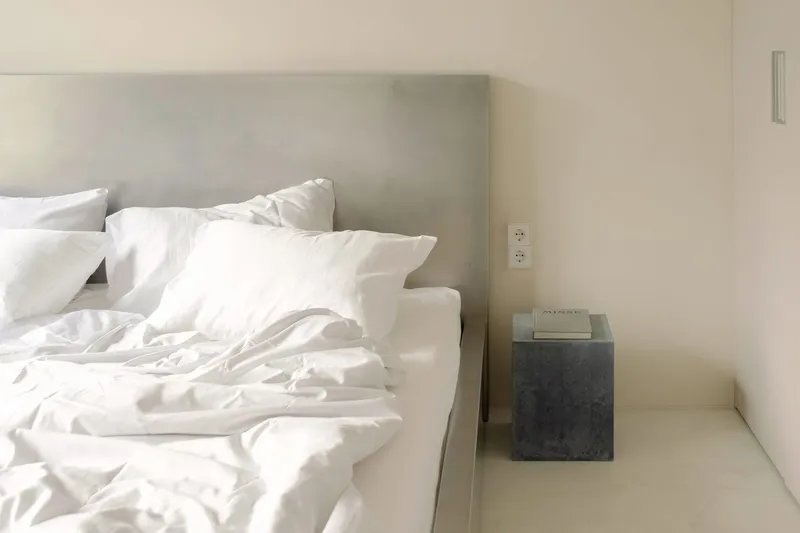
The custom sofa, bed, and tables incorporate "raw textures of black metal and stainless steel"—materials that provide deliberate contrast to the soft, matte background of micro-cement surfaces. This contrast serves multiple purposes. Visually, the darker metal elements create definition and prevent the light palette from appearing washed out or indistinct. Texturally, the hard, cool metal contrasts with the warmer, softer plaster, creating sensory variety. Formally, the geometric precision of metal fabrication introduces linear clarity that complements the more organic quality of handworked plaster.
The asymmetric design of furniture pieces prevents the static quality that can characterize overly balanced minimalist interiors. Asymmetry introduces dynamism and visual interest while avoiding the decorative complexity that would contradict minimalist principles. An asymmetric sofa might feature one arm lower than the other, or seat depth varying along its length. Asymmetric tables could have legs positioned off-center or surfaces that cantilever differently on each side. These subtle variations create character and prevent monotony without resorting to pattern, color, or ornament.
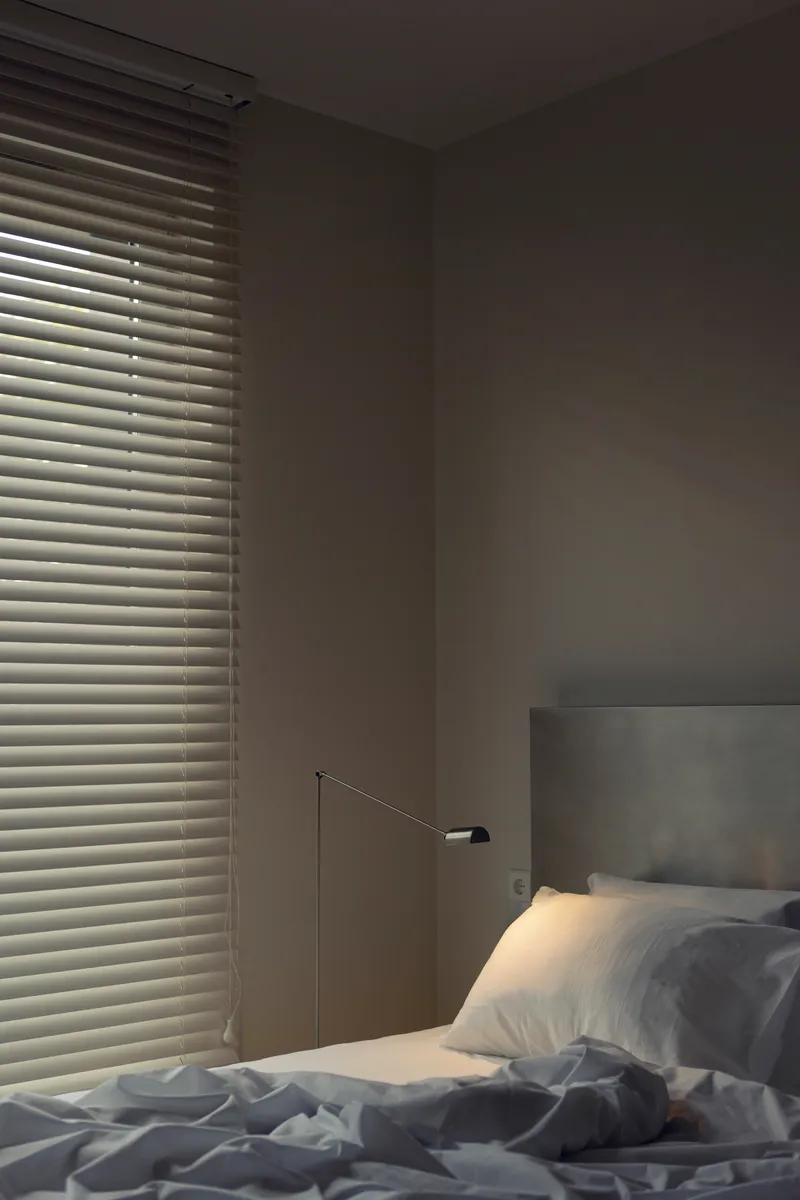
The metal materiality chosen for custom furniture also offers practical advantages. Black metal and stainless steel require minimal maintenance, don't show wear as readily as some materials, and age gracefully—developing patina rather than looking damaged. In a minimalist interior where every surface remains visible and uncluttered, materials must maintain visual quality over time without constant attention.
Spatial Configuration: Merging Loggia and Strategic Zoning
The spatial organization required careful planning to accommodate all necessary functions—living, cooking, dining, sleeping, guest accommodation, and storage—within 70 square meters while maintaining the sense of openness essential to the design concept. The floor plan reveals a sophisticated approach to zoning that creates both flow and definition.
The primary spatial intervention involved merging the loggia (a common feature in Eastern European apartment buildings—a recessed balcony or terrace) with the living area. This move significantly expanded the common zone, providing crucial additional square meters while increasing natural light penetration and improving visual connection to the exterior. The merged space allowed for generous proportions in the most socially important area of the apartment—the zone where residents and guests gather, where daily life unfolds most visibly.
This expanded common area accommodates the living room, kitchen, and dining functions in an open-plan configuration. The spatial flow feels logical and unforced—each function occupies its appropriate territory while maintaining visual and physical connection to adjacent zones. The kitchen doesn't feel isolated from social activity; the dining area doesn't consume precious living space; the living room doesn't become residual leftover territory. This balanced distribution of functions within open space requires precise dimensional coordination and careful furniture positioning.

Beyond the common area, the plan provides a separate bedroom and compact guest room—important for the pied-à-terre program where visiting friends or family might require accommodation. The bedroom enjoys separation from living activities, ensuring acoustic privacy and the psychological decompression necessary for restful sleep. The guest room, though compact, provides genuine hospitality rather than makeshift arrangements, reflecting the clients' desire to welcome visitors properly despite the apartment's modest size.

Storage Integration: Invisible Infrastructure
Perhaps the most sophisticated aspect of the spatial strategy involves storage—that perennial challenge in compact urban apartments where insufficient closet space leads to clutter that undermines design quality and spatial clarity. The Blondie Space apartment addresses this challenge through comprehensive integration of storage into the architectural fabric rather than treating it as furniture to be added afterward.
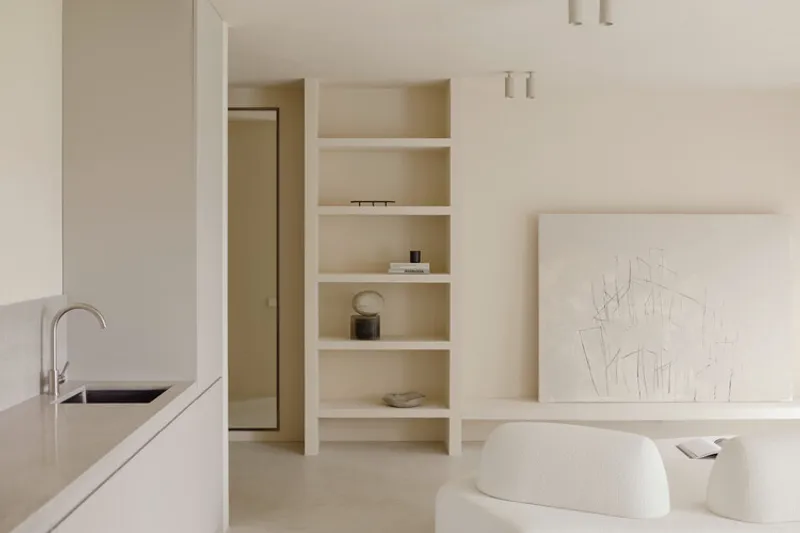
All storage is "fully integrated into niches with flush fronts finished in the same wall plaster"—a deceptively simple description that represents substantial design and construction complexity. This approach requires precise coordination between architectural planning (creating niches at appropriate locations with correct dimensions) and custom joinery (fabricating doors and drawer fronts that align perfectly with surrounding wall surfaces).

The flush fronts finished in matching plaster create visual continuity where conventional cabinets would introduce breaks and boundaries. When closed, storage becomes essentially invisible—the wall appears as continuous surface with only subtle reveals indicating door locations. This disappearance of storage infrastructure dramatically simplifies visual perception of the space, eliminating the visual noise that would result from visible cabinets, varied materials, or protruding hardware.
The approach also maximizes usable floor area. Recessed storage doesn't project into rooms, consuming precious space and creating obstacles to circulation. Every centimeter of floor area remains available for living rather than being claimed by cabinetry.

Lighting Strategy: Enhancing Spaciousness and Mood
Though not extensively detailed in the project description, the photographs reveal sophisticated lighting design that contributes significantly to the spatial quality and atmospheric character. The lighting strategy appears to layer multiple sources—ambient illumination, task lighting, and accent lighting—creating flexibility for different times of day and activities while enhancing the sense of spaciousness.

Manufacturers mentioned include Flos and Lumina México—both known for refined contemporary lighting design. The selection of specific fixtures from these manufacturers suggests attention to lighting as sculptural element and quality of light as experiential priority. In minimalist interiors where decorative objects remain sparse, lighting fixtures often serve dual roles as both functional equipment and aesthetic objects.
The matte surfaces of micro-cement walls and floors interact favorably with lighting, diffusing rather than harshly reflecting it. This creates even, gentle illumination that makes spaces feel larger and more serene than direct or specular lighting would achieve. The ability to control lighting intensity and character allows the apartment to transform from bright, energizing morning environment to soft, calming evening retreat—supporting the varied moods and activities that occur throughout daily cycles.
Art as Characterization: Bold Objects in Minimal Context
The design strategy employs "bold art objects to add character without visual clutter"—an approach that recognizes the importance of personality and visual interest while maintaining minimalist discipline. In spaces stripped of conventional decoration, art assumes heightened significance, becoming primary means of expressing individuality and creating focal points.
The art selection process required care to ensure pieces would enhance rather than compete with the architectural character. Scale, color, form, and content all needed evaluation against the minimalist context. Art that works beautifully in busier environments might overwhelm a minimal interior; conversely, timid pieces would disappear against the strong architectural presence.

Bold art succeeds in minimal contexts by providing confident punctuation—clear statements that attract attention, reward contemplation, and create visual anchors without requiring supporting cast of decorative objects. A single powerful sculpture, painting, or installation can characterize an entire room, making additional decoration unnecessary.

Eastern European Context: Regional Building Practices and Aesthetics
The Blondie Space apartment emerges from specific Eastern European architectural and construction contexts that shape both challenges and opportunities. New-build apartments in cities like Minsk typically follow standardized plans and specifications developed for efficient construction and marketability. These standards prioritize pragmatic concerns—structural economy, construction speed, cost control—over spatial quality or design innovation.
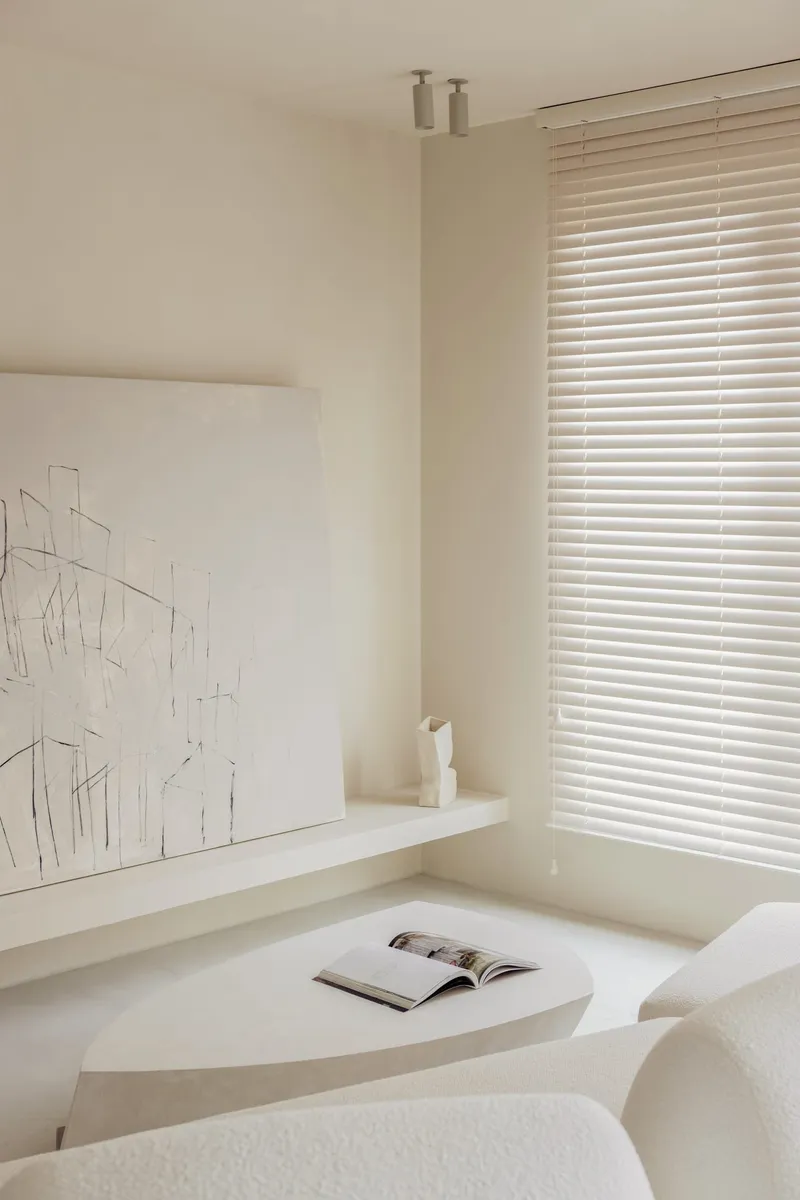
The result: apartments with low ceilings (often 2.6-2.7 meters), compact footprints, standardized room proportions, and generic finishes. These spaces serve basic housing needs but rarely inspire or delight. The challenge for interior designers becomes how to overcome these inherent limitations and create distinctive, high-quality environments within mundane shells.
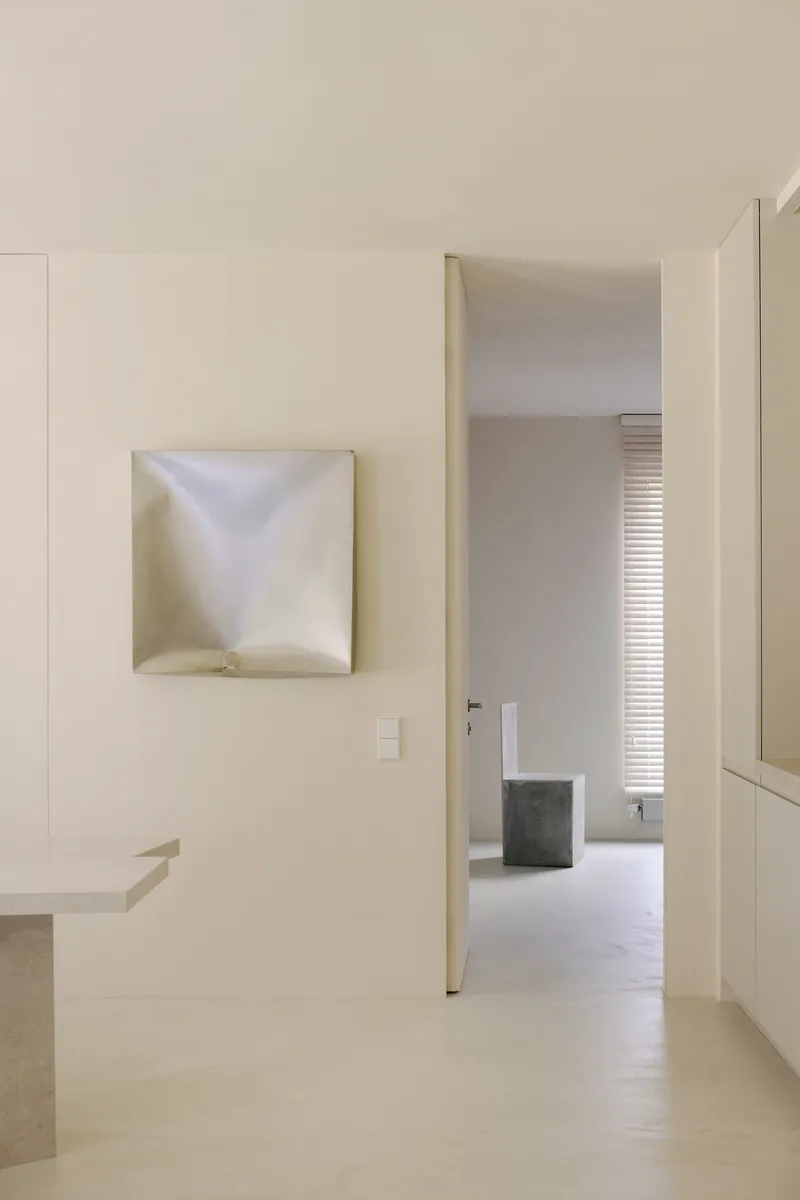
Vlad Kudin's approach—radical simplification, custom fabrication, material restraint, and spatial manipulation through merging zones—responds directly to these regional building characteristics. The design doesn't fight the apartment's fundamental nature but rather works with it, using minimalism to overcome proportion limitations and custom elements to introduce quality within budget constraints.
The project also reflects growing sophistication in Eastern European design culture. While the region historically looked to Western Europe for design leadership, increasingly confident local practices now develop distinctive approaches rooted in regional conditions, craft traditions, and aesthetic sensibilities. The Blondie Space apartment represents this maturing design culture—internationally aware but locally grounded, ambitious in vision but pragmatic in execution.
Photography and Representation: Capturing Spatial Atmosphere
Lizaveta Kulenenok's photography plays crucial role in communicating the project's spatial and atmospheric qualities. Photographing minimalist interiors presents specific challenges: the apparent simplicity can appear empty or boring in images; the subtle qualities that make spaces compelling in person—light quality, material texture, spatial proportion—can disappear in photographs; the lack of decorative complexity provides fewer obvious focal points for composition.
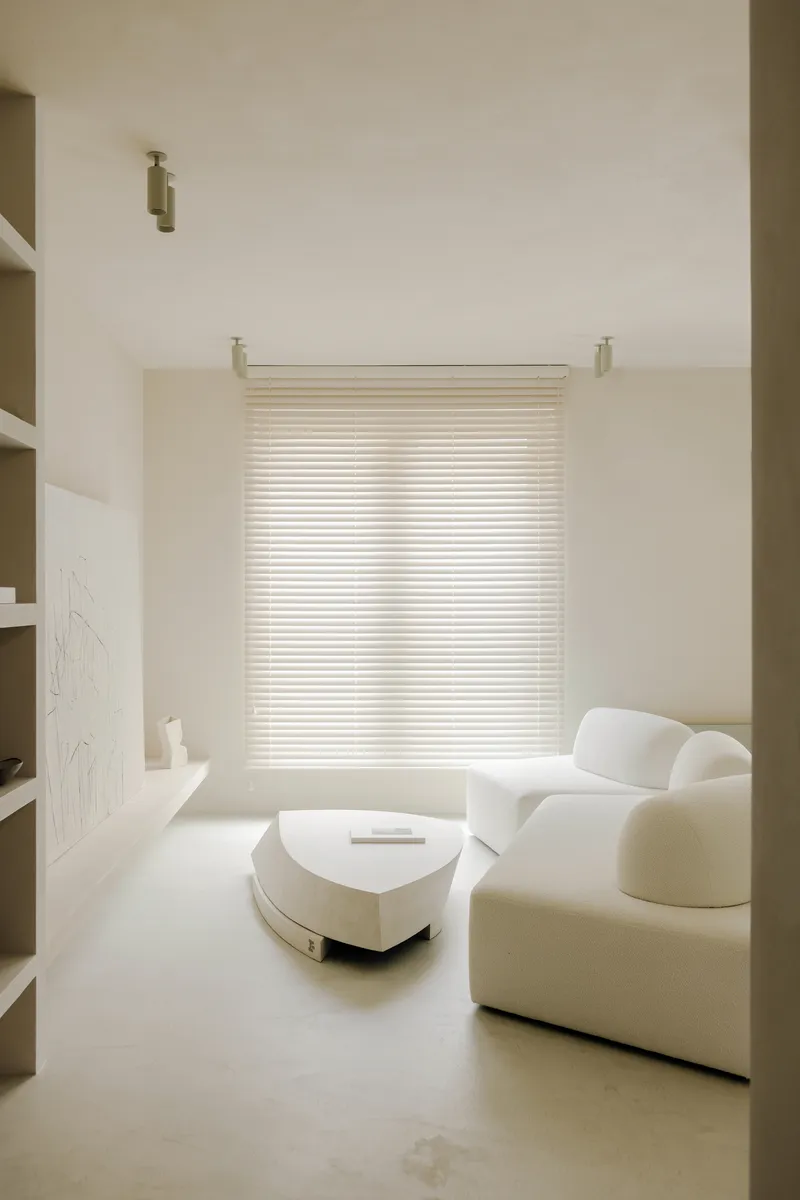

Kulenenok's images successfully capture the apartment's character through careful attention to light, composition, and detail. The photographs show how natural light moves through spaces, how materials reveal texture at close range, how proportions create unexpected spaciousness, and how carefully positioned objects create visual interest without clutter. These images do justice to the design's sophistication, revealing qualities that casual snapshots would miss.
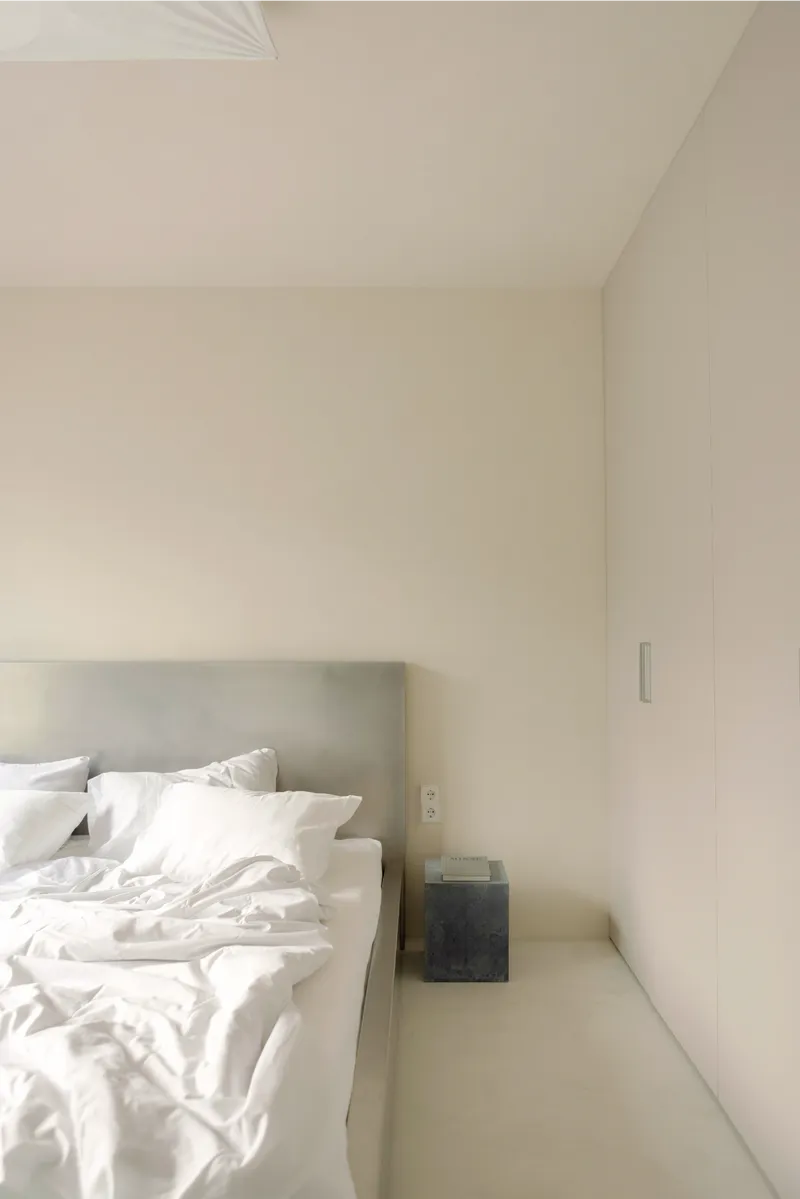
All the Photographs are works of Lizaveta Kulenenok


Popular Articles
Popular articles from the community


Juan García Correa, John González and Claudia Rueda Sink a Circular Amphitheater into a Manizales Engineering Building
On the La Nubia campus in Manizales, Colombia, the S1 Building folds labs and offices into a hillside of ramped lawns that double as a campus route.

LT2A and OPEN Architectes Thread a Brick and Glass High School Through a Wooded Belgian Campus
In Braine-l'Alleud, a 3,000 m² wing for Collège Cardinal Mercier pairs pale brick with a glazed colonnade, deferring to a small chapel and a dense wood.

David Macias Steps a Doorless Stone and Plaster House Down a Tropical Colombian Hillside
In the humid hills of Colombia, Threshold House replaces the front door with an open void and terraces its 850 m² down the slope instead of fighting it.

David Ortega Stacks a Two-Story Mexico City Penthouse Around a Steel Stair and a Pergola-Shaded Roof Terrace
In Colonia Roma, a 300 m² penthouse uses oak joinery, a planted steel stair and a slatted roof pergola to make a new-build apartment feel like a house.

Similar Reads
You might also enjoy these articles


Hodi-Mandai Geram
Project Function: Preservation and revitalization of the Intangible heritage and socio-spatial identity of the Hodi by Housing, Cultural Memory Center, Sacred Grove, landscape, local tourism economy


Olio Towers: A Mid-Rise for Performers That Fuses Housing, Rehearsal, and Stage
Located blocks from Houston's Theater District, this modular tower stacks living units around a central performance atrium.

Oasis: Modular Green Housing Carved into Dhaka's Urban Fabric
A shortlisted Plugin Housing entry reclaims unauthorized settlements in Dhaka with stepped concrete volumes, green roofs, and ventilation-driven design.

Black Hole: A Floating Megastructure for the Post-Physical Era
Emiliano Mazzarotto envisions a spherical, self-scaling arena where e-sports, digital hotels, and holographic stadiums replace traditional public space.

Explore Small Space Competitions
Discover active competitions in this discipline

Photograph living through a minimalistic lens

Challenge to reimagine the Iron Throne

Photograph architecture without architects

Illustrate the lost glory of Angkor Wat - Render Challenge
Comments (0)
Please login or sign up to add comments
No comments yet. Be the first to comment!