
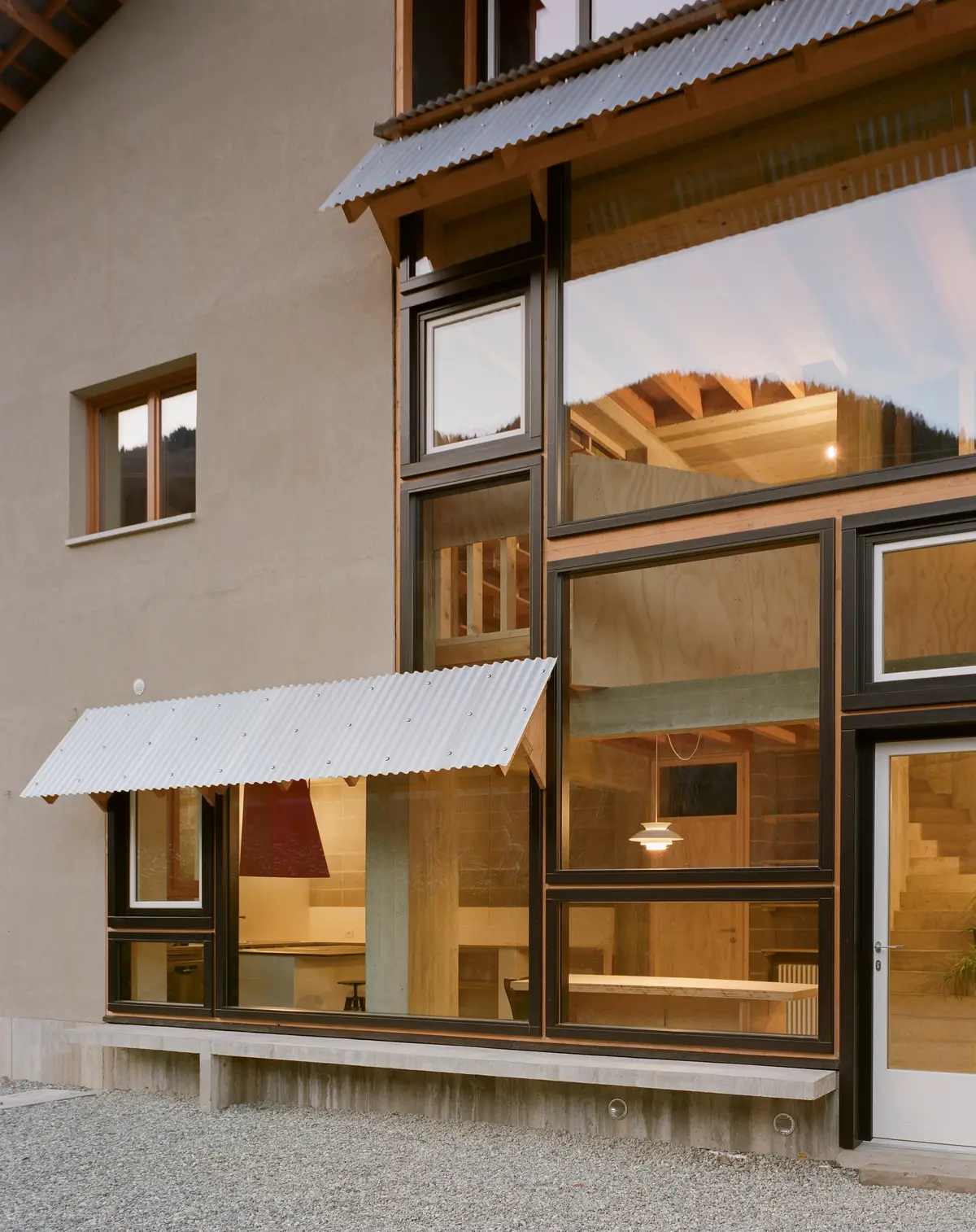
BM House Finds Clarity in Raw Materials and Color
ErranteArchitetture renovates a compact home at the mouth of Italy's Po Valley using concrete, plywood, and a signature red accent.


At the entrance to the Po Valley, where the flat agricultural plain meets the foothills of the Cottian Alps, BM House sits in the small commune of Paesana with an almost stubborn quietness. ErranteArchitetture has renovated a 320 square meter dwelling into something that reads less like a typical Piedmontese renovation and more like a carefully constructed argument about how few materials you actually need to make architecture feel deliberate.
What makes the project worth studying is its discipline. The palette is strict: board-formed concrete, plywood, exposed timber structure, corrugated metal, and a single jolt of red that runs through railings, stairs, and select details like a circulatory system. The house is composed of two interlocking volumes at different heights, producing a split-level section that generates spatial variety without formal excess. Nothing here is decorative in the conventional sense, yet nothing feels austere. That is a harder trick to pull off than it sounds.
Two Volumes, One Conversation

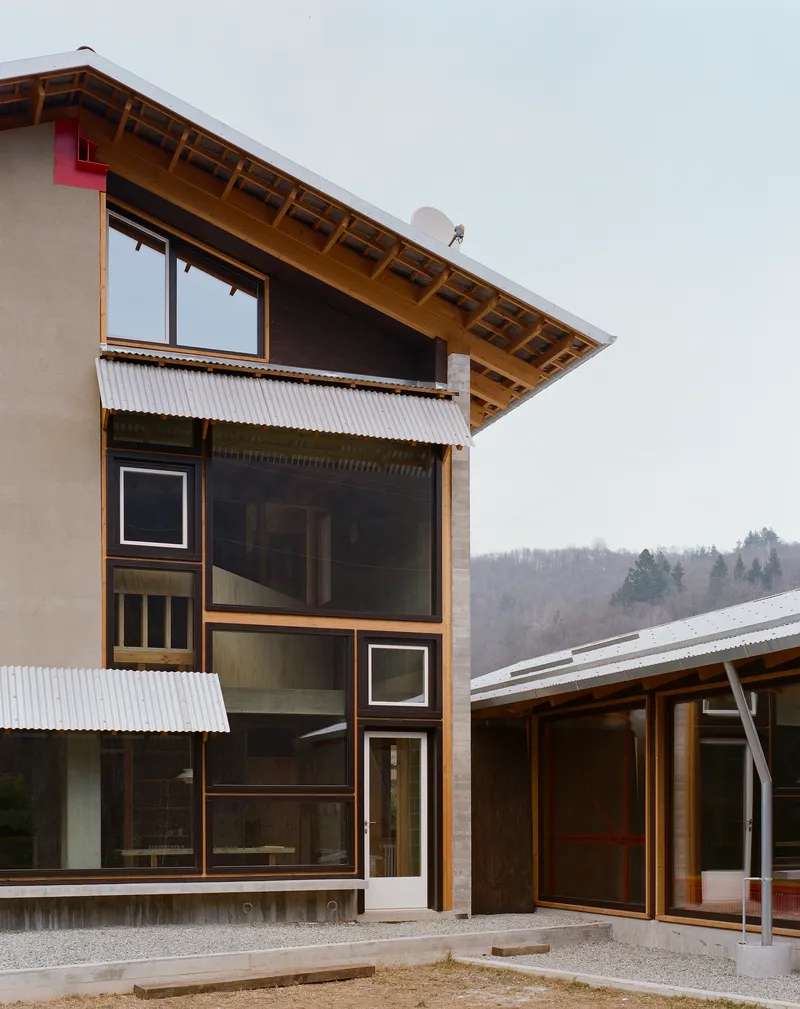

The exterior composition is immediately legible: two rectangular volumes, one taller and gabled, the other lower, connected under a shared logic of timber eaves and corrugated metal awnings. Against the overcast Piedmontese sky, the massing reads as compact and grounded. The stacked windows are punched into rendered walls with a deliberate irregularity, avoiding any whiff of domestic banality. At dusk, warm light pours through the timber-framed openings, and the house transforms from a mute object into something hospitable.
The corrugated metal, used for awnings and lower skirting, deserves a note. It is an agricultural material in this region, common on barns and outbuildings. ErranteArchitetture deploys it with enough restraint that it reads as contextual rather than ironic, a nod to the valley's working landscape without descending into rusticity.
The Red Thread
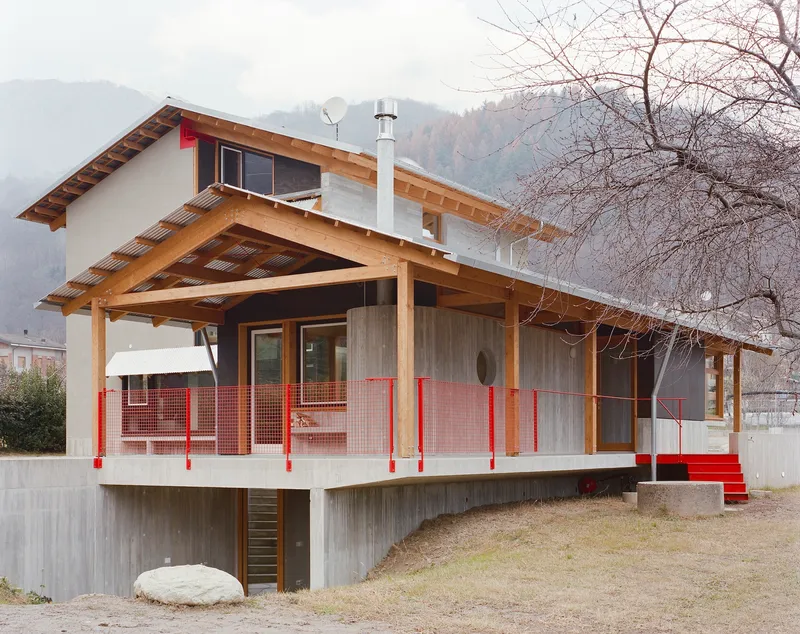


Red mesh appears on balustrades, stair railings, and safety screens throughout BM House. It is the project's single deliberate provocation. Against the gray of concrete and the warm blonde of plywood, the red functions almost diagrammatically: it marks circulation, edges, thresholds. You always know where the stairs are, where the boundary between inside and outside falls, because the red tells you.
The mesh material is industrial and transparent. It filters light and views rather than blocking them. Looking down a stairwell through layers of red mesh, the effect is layered and graphic, not unlike looking at the house's own section drawings. It is a clever move that gives the project a visual identity without resorting to color-blocking entire walls.
Concrete and Plywood as Partners

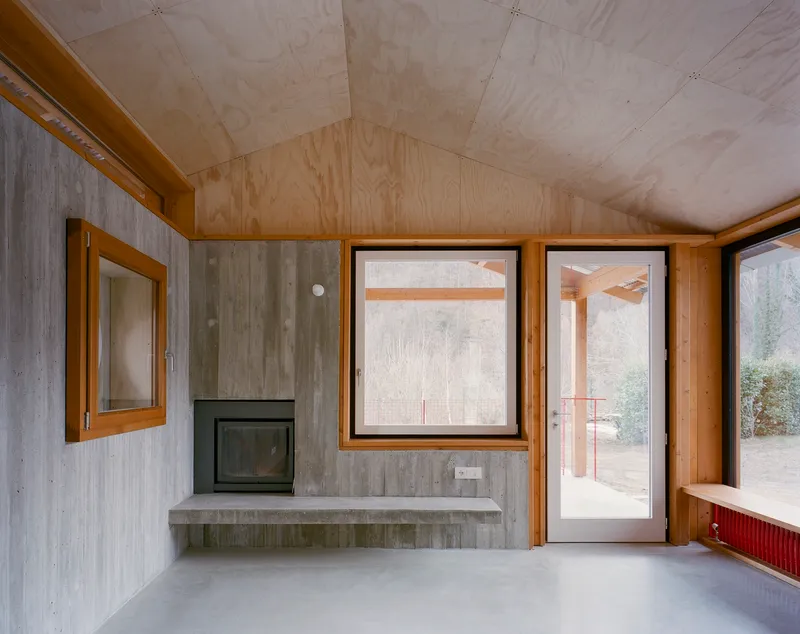

Inside, the material conversation is primarily between two surfaces: board-formed concrete and light plywood. The concrete carries the structural story, appearing on walls, beams, and the lower portions of the house. The plywood lines ceilings, built-in furniture, and door panels. Together, they create rooms that feel both substantial and lightweight, depending on where your eye lands.
The open-plan kitchen and dining area is the clearest expression of this pairing. Exposed timber joists span between concrete beams overhead, while daylight enters generously through the facade. A corner fireplace in one of the adjacent rooms grounds the living spaces with a quiet domestic anchor. The material honesty extends to the concrete block walls in secondary spaces, left unplastered, their coursing visible as a secondary texture.
Built-In Logic

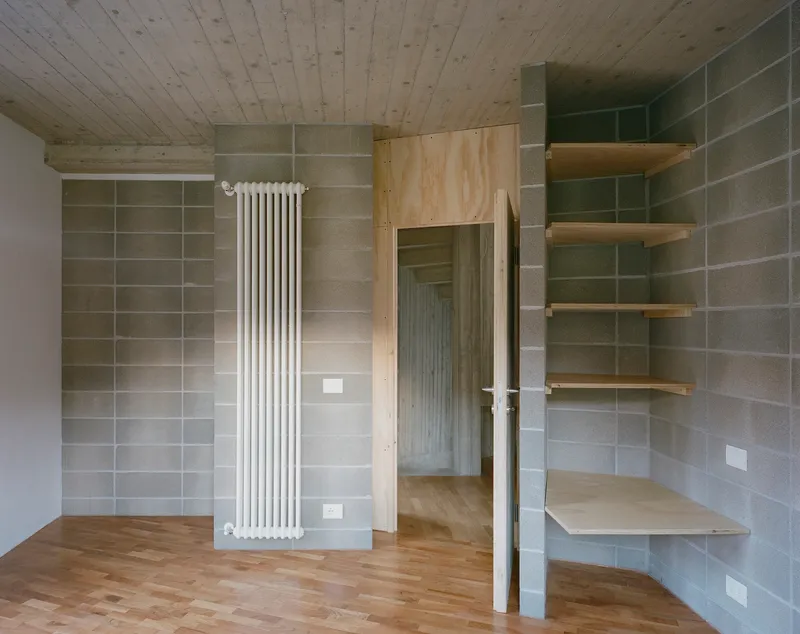

ErranteArchitetture treats joinery as architecture, not afterthought. Workspaces, shelving, and storage are built into the concrete block walls using the same plywood that lines the ceilings. The result is a continuity of material that makes even the smallest rooms feel resolved. A corner desk wraps seamlessly into shelving. Floating shelves sit against exposed block as if they were always part of the construction sequence.
This approach eliminates the common renovation problem of freestanding furniture fighting against rough structural surfaces. By embedding the millwork into the walls, the architects allow the raw concrete and block to remain visible without the spaces feeling unfinished. It is renovation thinking at its best: working with what the structure gives you, not covering it up.
Thresholds and Covered Ground
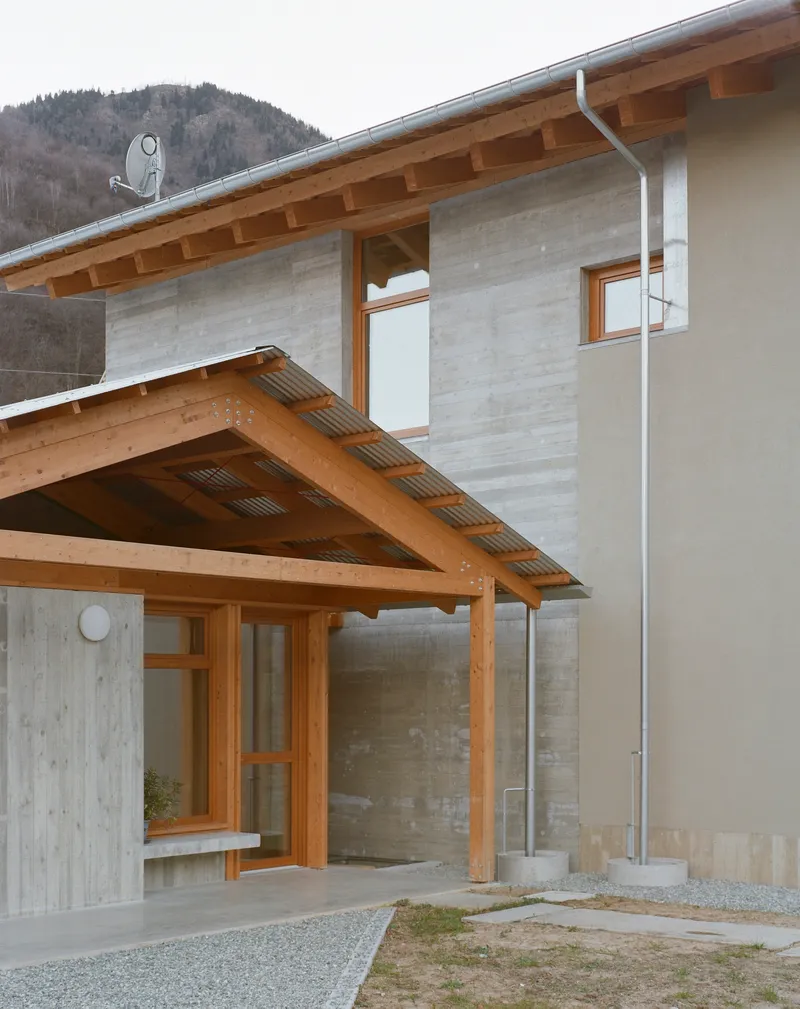
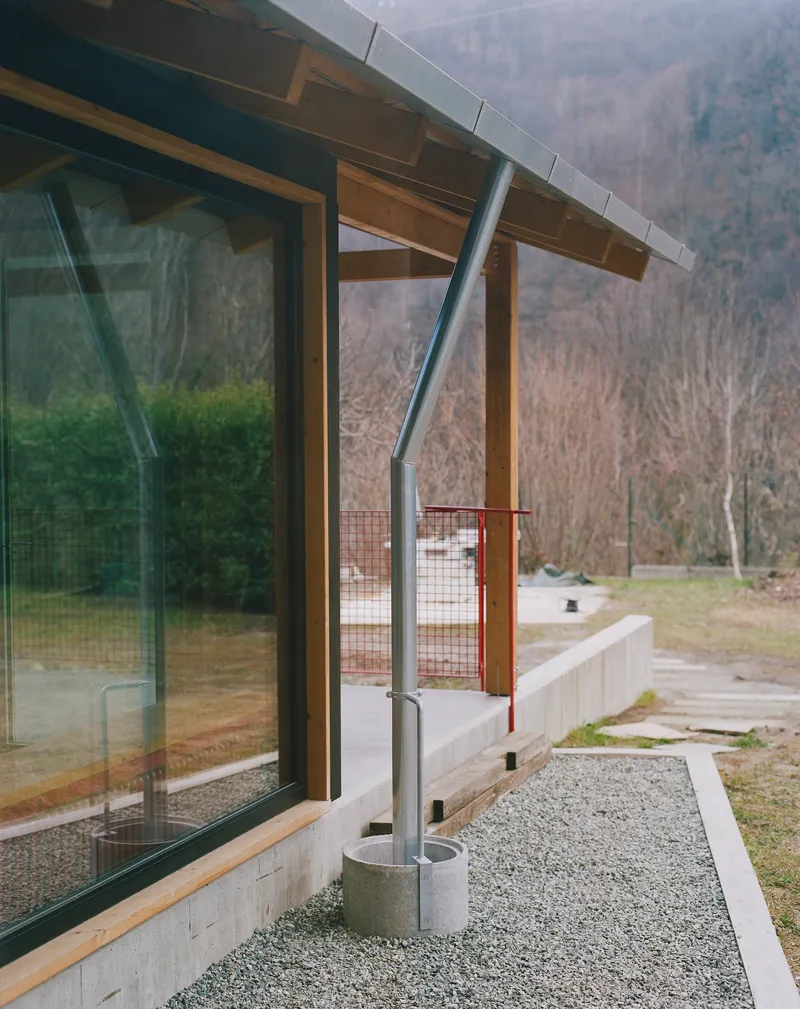

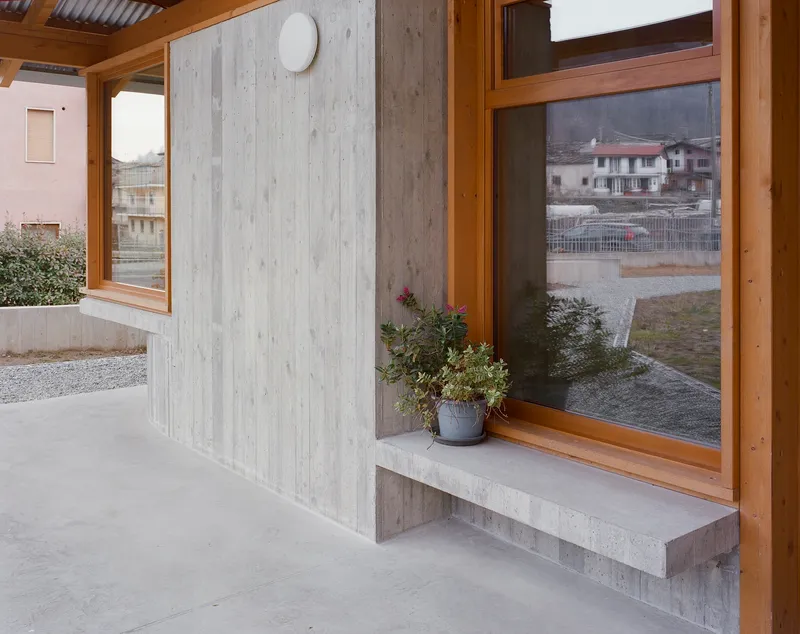
The transitional spaces of BM House are among its strongest moves. An entry porch with exposed timber beams sits against a concrete wall beside a wooded slope, framing arrival as a deliberate experience rather than a simple door opening. The timber roof overhang, supported by angled steel columns, creates covered outdoor territory on the gravel terrace. At dusk, an illuminated entry pergola with exposed joists connects the two volumes, its warm glow acting as a lantern between the concrete and plaster masses.
These in-between zones are where the house engages most directly with its hillside setting. Rather than a single dramatic gesture toward the landscape, ErranteArchitetture stages a series of framed encounters: a gravel courtyard seen through a concrete window seat, a wooded slope filtered through timber structure, the village rooftops visible from the upper terrace. The landscape arrives in fragments, and the house is better for it.
Stairs as Spatial Engine
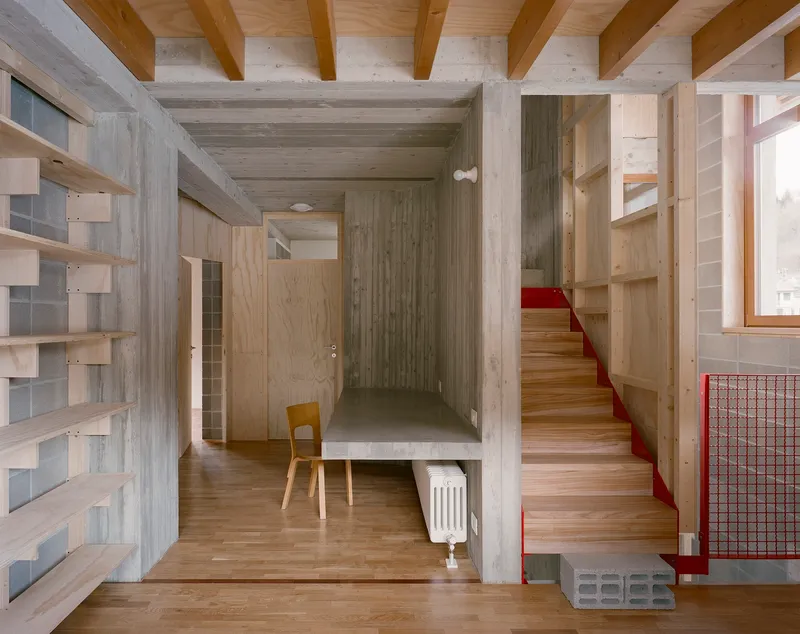
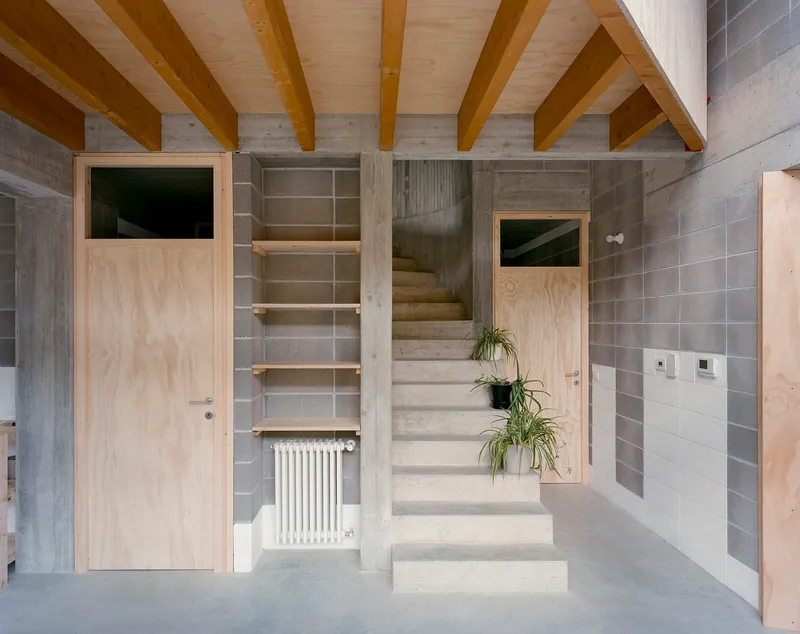
In a split-level house, the staircase is not mere circulation; it is the primary spatial device. BM House has at least two distinct stair conditions. The timber stair with its red metal handrail near the entry connects the main living levels, its open risers allowing light and views to pass through. A concrete staircase elsewhere in the house sits beside built-in shelving and potted plants, more grounded and monolithic in character.
The section drawings confirm that the architects thought of circulation as the engine driving the spatial experience. The zigzag of stairs through the two volumes creates half-level relationships that multiply the number of distinct spaces well beyond what 320 square meters would typically yield. You move through this house diagonally, never just horizontally, and the shifting floor levels keep even familiar domestic rooms slightly unfamiliar.
Plans and Drawings


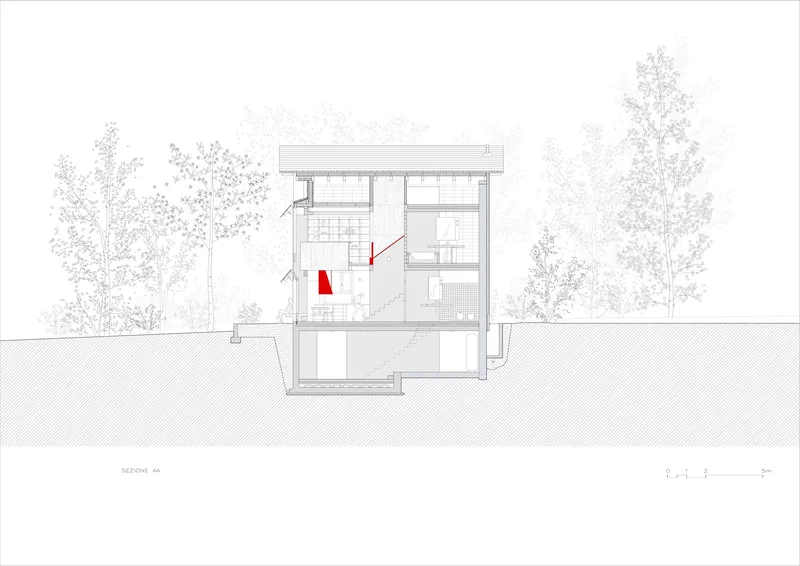


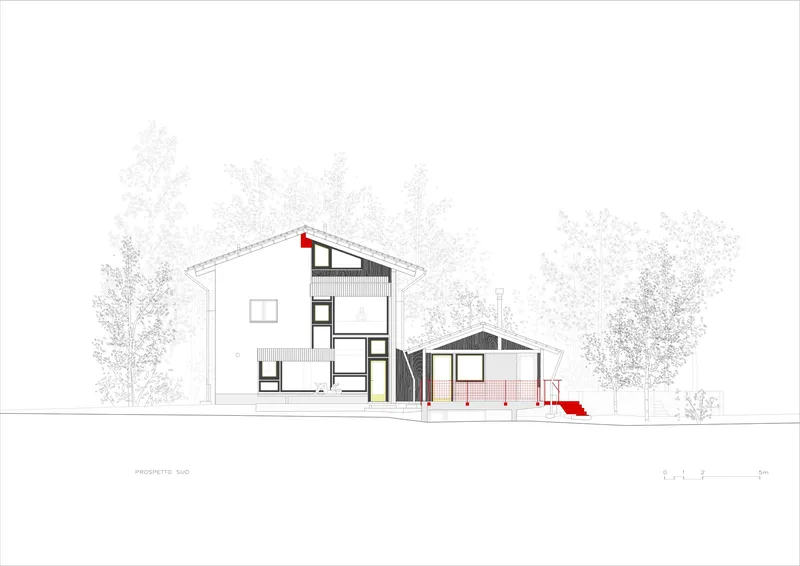


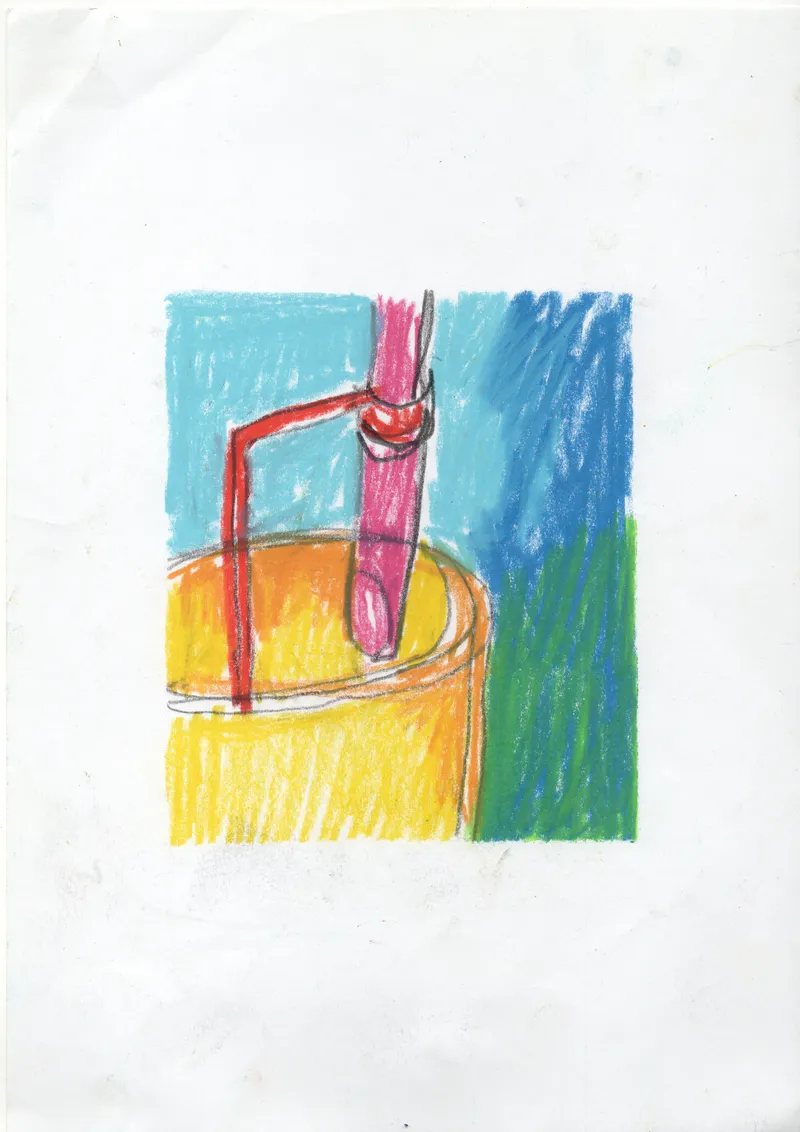


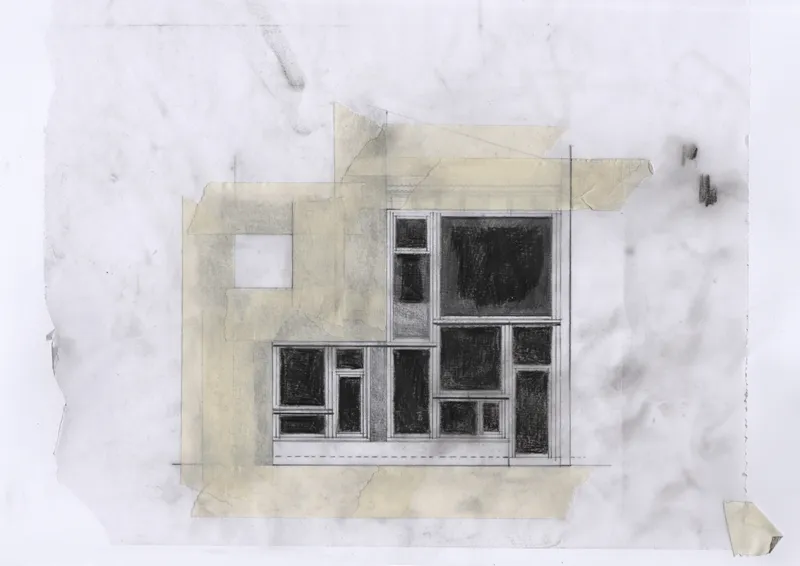


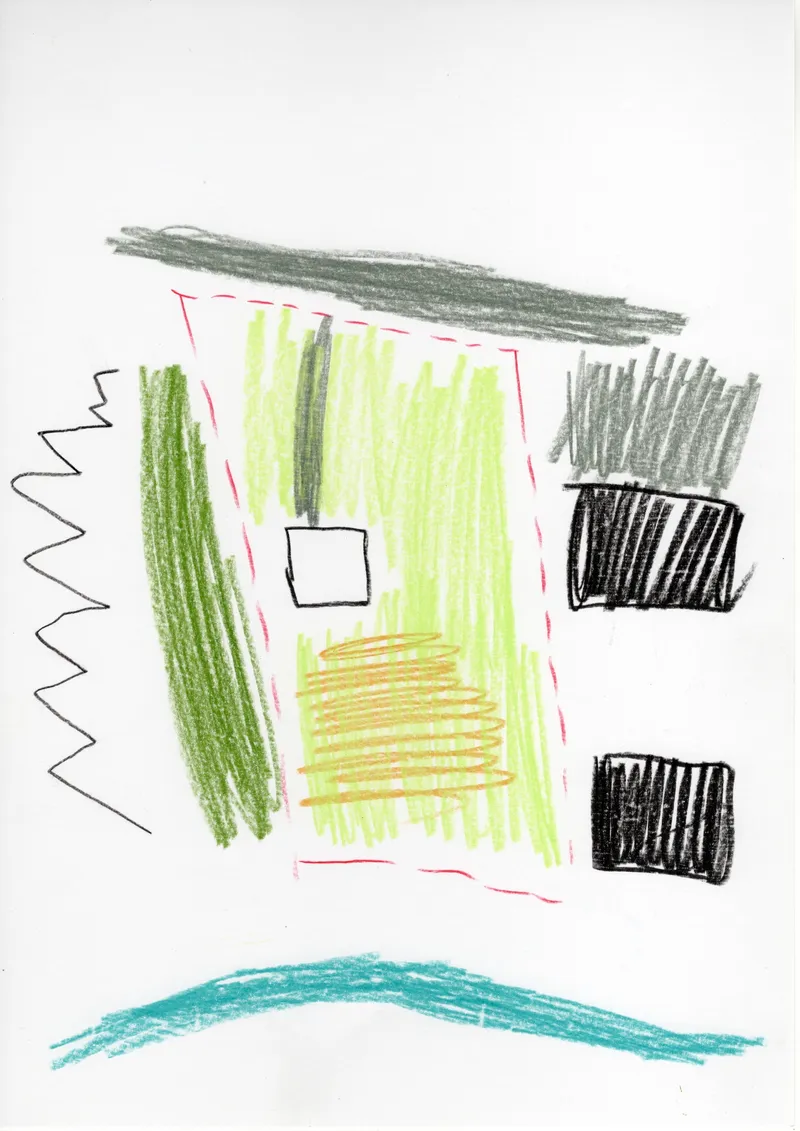

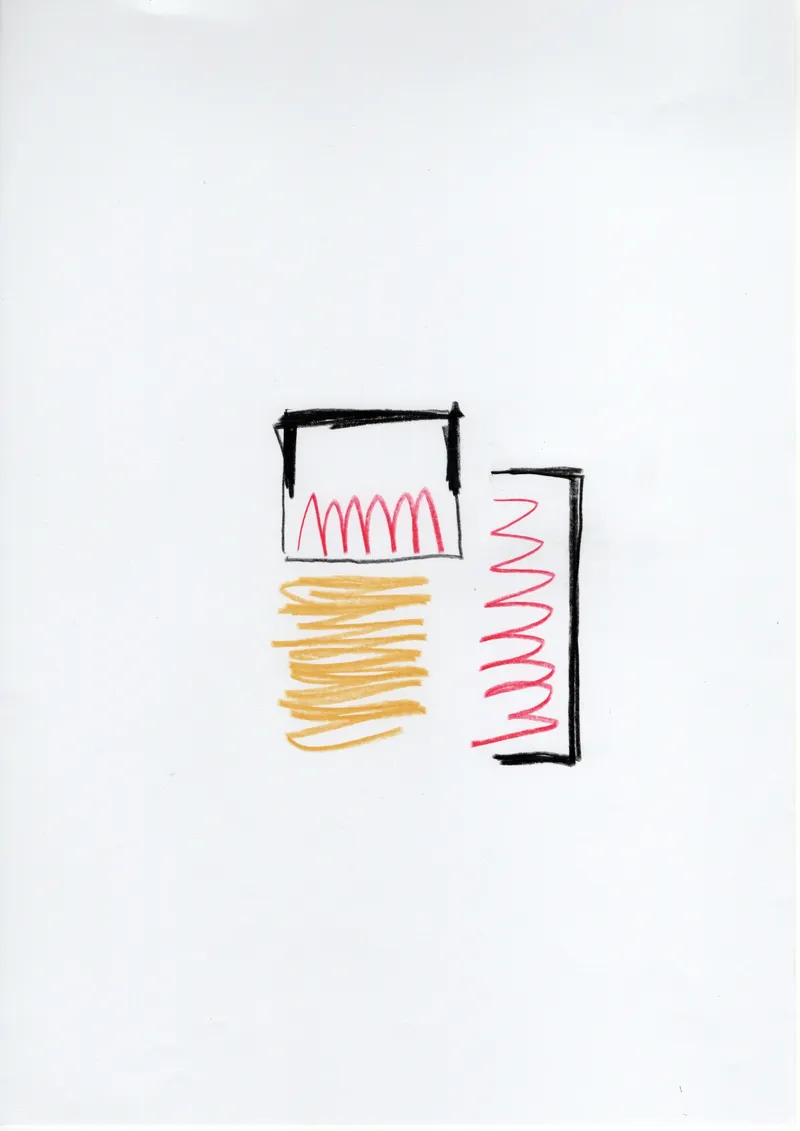
The drawing set is unusually generous and revealing. The site plans show BM House embedded in a dense tree canopy with careful pathways connecting it to the village context. The sections are the real storytellers, exposing the split-level logic and the way the two volumes meet at different heights to create covered terraces and double-height conditions. Red elements appear consistently in the drawings, confirming that the accent color was a design decision from the earliest stages, not an afterthought.
The hand-drawn sketches and colored pencil studies are a welcome surprise. They reveal a design process rooted in physical drawing, with pastel studies of roof planes, marker explorations of intersecting forms, and detailed sketches of structural connections. The axonometric drawing, with its sectioned volumes and zigzag staircases rendered in red, is perhaps the single image that best explains the project's organizational logic. These are not presentation drawings polished for publication; they are working documents, and they are better for it.
Why This Project Matters
BM House is a reminder that renovation does not require either erasure or nostalgia. ErranteArchitetture has produced a house that acknowledges its Piedmontese context through material choices and massing while refusing to mimic traditional forms. The concrete, plywood, corrugated metal, and red mesh belong to a contemporary construction vocabulary, yet they sit comfortably against the hillside village. The house earns its place not through camouflage but through conviction.
More broadly, the project demonstrates what becomes possible when architects commit to a restricted palette and then work it hard. Every material in BM House does multiple jobs: structural, spatial, atmospheric, graphic. The red mesh marks circulation and provides safety, but it also gives the house its visual signature. The plywood lines ceilings and becomes furniture. The concrete is both frame and finish. In an era of material excess and specification bloat, this kind of economy is not just admirable. It is instructive.
BM House by ErranteArchitetture, Paesana, Italy. 320 m², completed 2025. Photography by Luca Bosco.
About the Studio
Share Your Own Work on uni.xyz
If projects like this are the kind of work you want to make, uni.xyz is a place to publish your own, find collaborators, and enter design competitions.


Popular Articles
Popular articles from the community


Temporary Home for Dogs: A Reversed Zoo Rethinks Animal Shelter Architecture
In Bucharest, a sinuous corridor and freed landscape flip the logic of containment, designing a shelter that works to make itself unnecessary.
Tsunami Convergenics: Turning Catastrophic Ocean Forces into Underwater Housing Infrastructure
A speculative underwater settlement off the coast of Onagawa, Japan, treats tsunamis and typhoons as energy sources rather than threats.

Singing Woman: An Opera House That Performs Before the Curtain Rises
Ovidiu Cristian Pavel's conceptual opera house translates Estonia's choral identity into a sculpted waterfront landmark facing the Baltic Sea.
Extended Shell: Retrofitting Kolkata's Balconies as Living Urban Thresholds
A modular retrofit system recovers the social and environmental intelligence of Kolkata's historic verandas for contemporary Park Street residents.

Similar Reads
You might also enjoy these articles

Pixel Gardens: One Repeated Module Stacked Into a Terraced Social Housing Tower for Famagusta
Salem Bader's shortlisted housing tower builds a vertical neighbourhood from one repeated module, offsetting units to carve terraces, light and air.

Bao Huynh Watercolor Atelier: A Serene Art Retreat in Hội An
Bao Huynh Watercolor Atelier in Hội An blends multifunctional art spaces, sustainable design, local materials, and family-friendly living in a serene environment.

Atelier Macri Concept Store Interior Design by CASE-REAL
Atelier Macri store features a "ko" counter, walnut wood details, cork displays, blending retail, gallery, and seamless customer experiences.

Manuel Vargas Izquierdo Stadium and High-Performance Sports Center: Architectural Excellence in Jalpa de Méndez
The Manuel Vargas Izquierdo Stadium blends sustainable design, inclusive sports facilities, and cultural-inspired architecture, revitalizing Jalpa de Méndez’s public spaces.

Explore Ai Generated Competitions
Discover active competitions in this discipline

Challenge to design luxury tourism on rails

VR headsets Storefront design competition

Designing a staircase for a client
Comments (0)
Please login or sign up to add comments
No comments yet. Be the first to comment!