
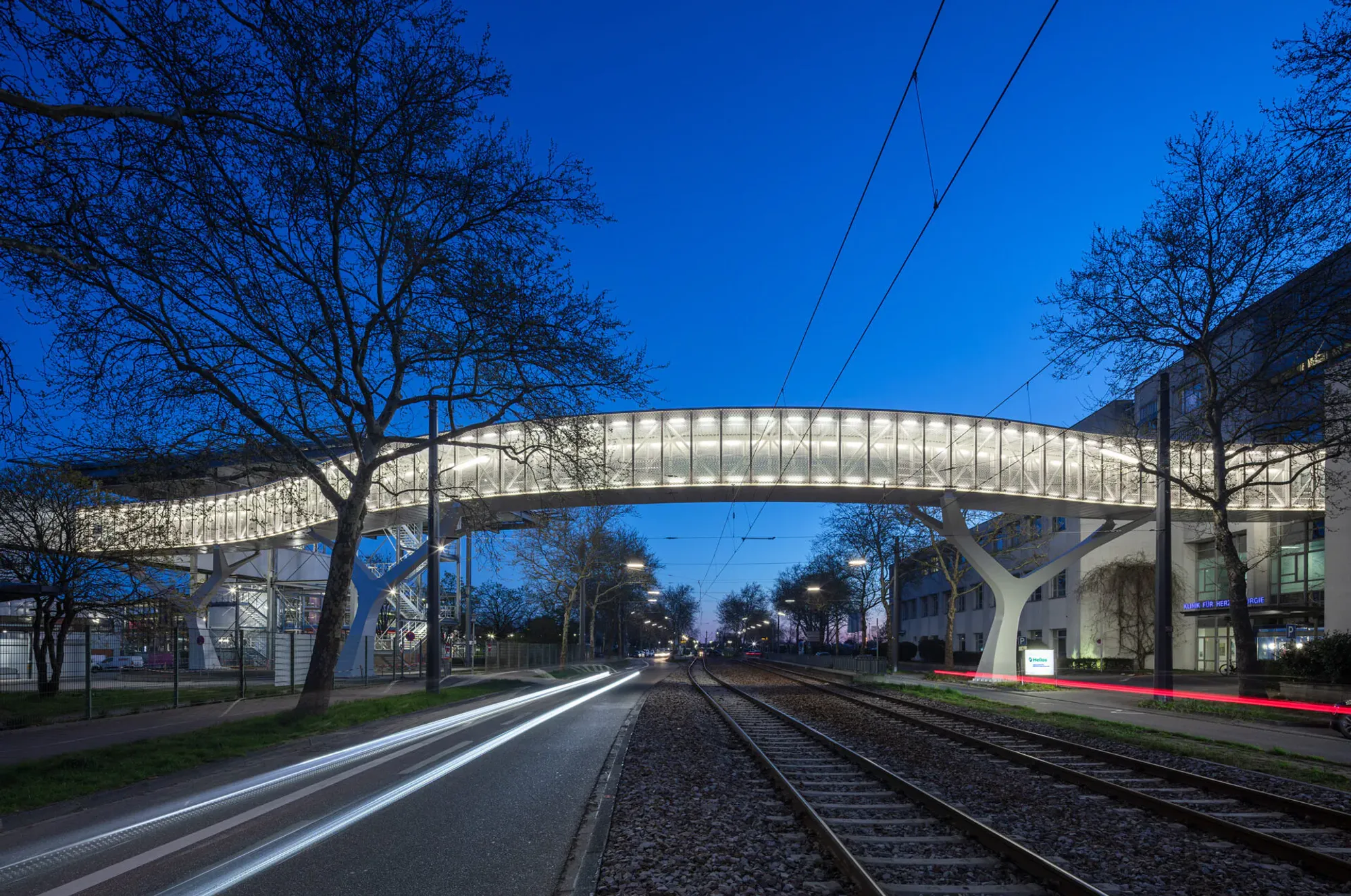
Bridge Municipal Hospital Karlsruhe: Connecting Architecture, Infrastructure, and Healing
Elegant 80-meter bridge in Karlsruhe linking hospital and helipad, combining structural precision, sustainable design, and seamless healthcare connectivity.


In Karlsruhe, Germany, a striking new bridge now links the Municipal Hospital with the neighboring Helios Clinic, symbolizing connection not only between two major healthcare institutions but also between architecture, engineering, and human-centered design. Completed in 2024 by the Stuttgart-based firm caspar., the Bridge Municipal Hospital Karlsruhe emerges as a seamless fusion of functionality, elegance, and technological precision.
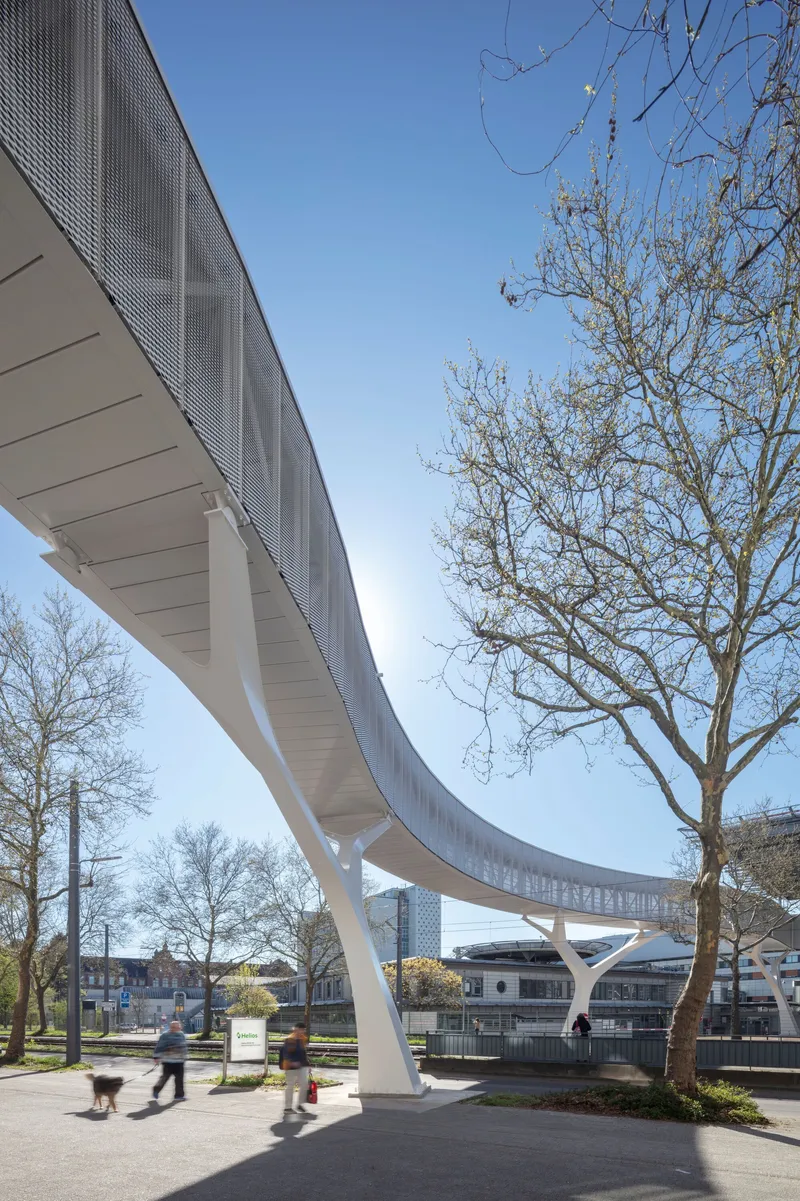
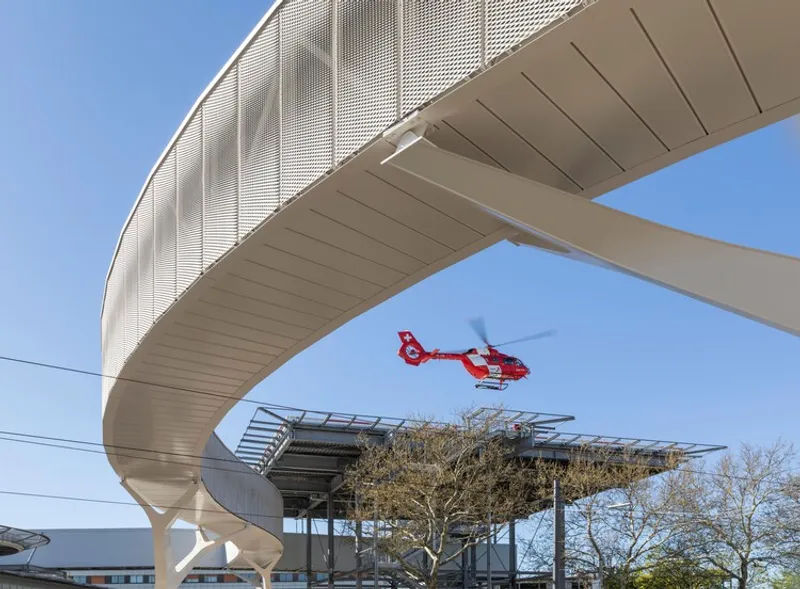
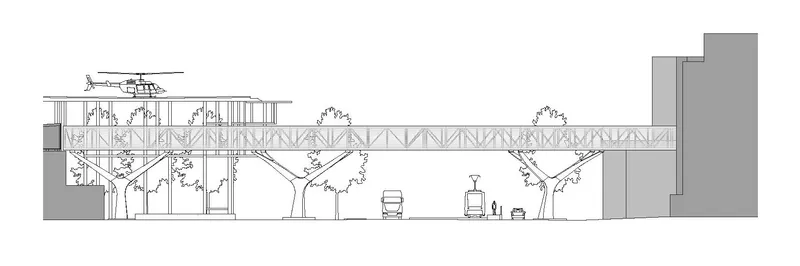
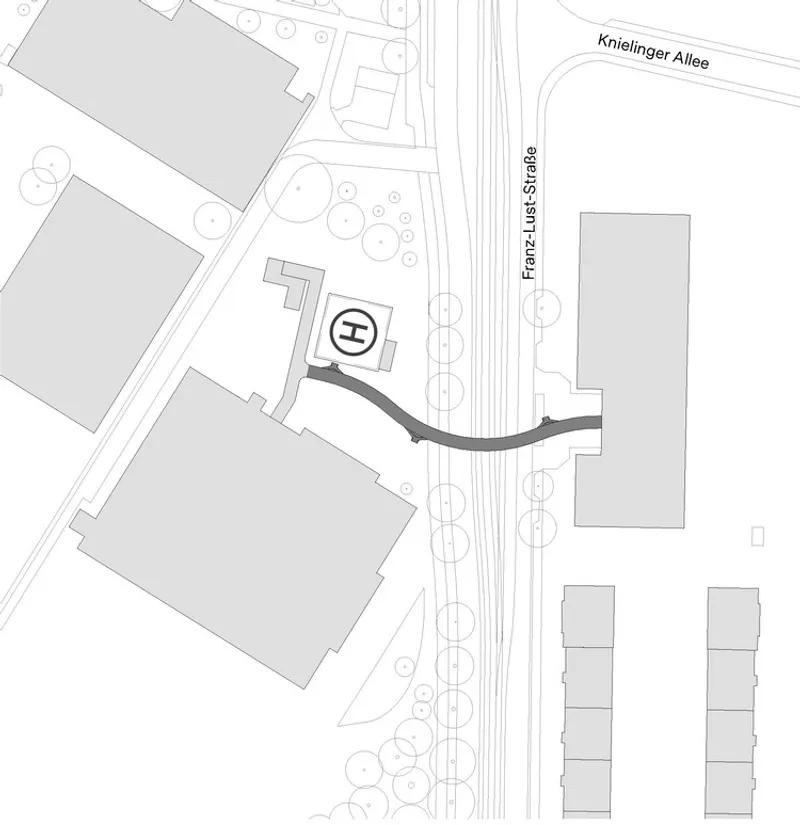
Spanning approximately 80 meters, the bridge serves as a vital infrastructural artery between the hospitals and the newly developed helipad, ensuring rapid and efficient patient transfer across the busy Franz-Lust-Strasse and its central streetcar tracks. Conceived through a design collaboration with Werner Sobek, the project redefines what medical infrastructure can achieve when engineering meets architectural clarity.
Designing Flow and Functionality
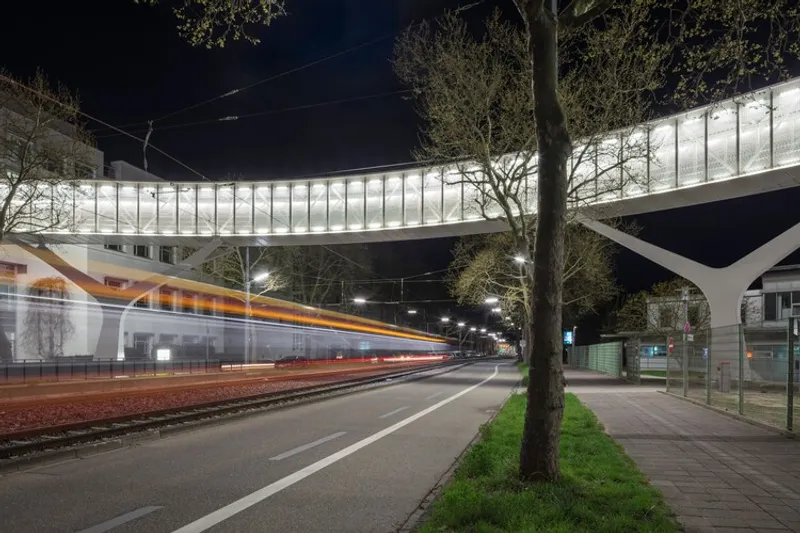
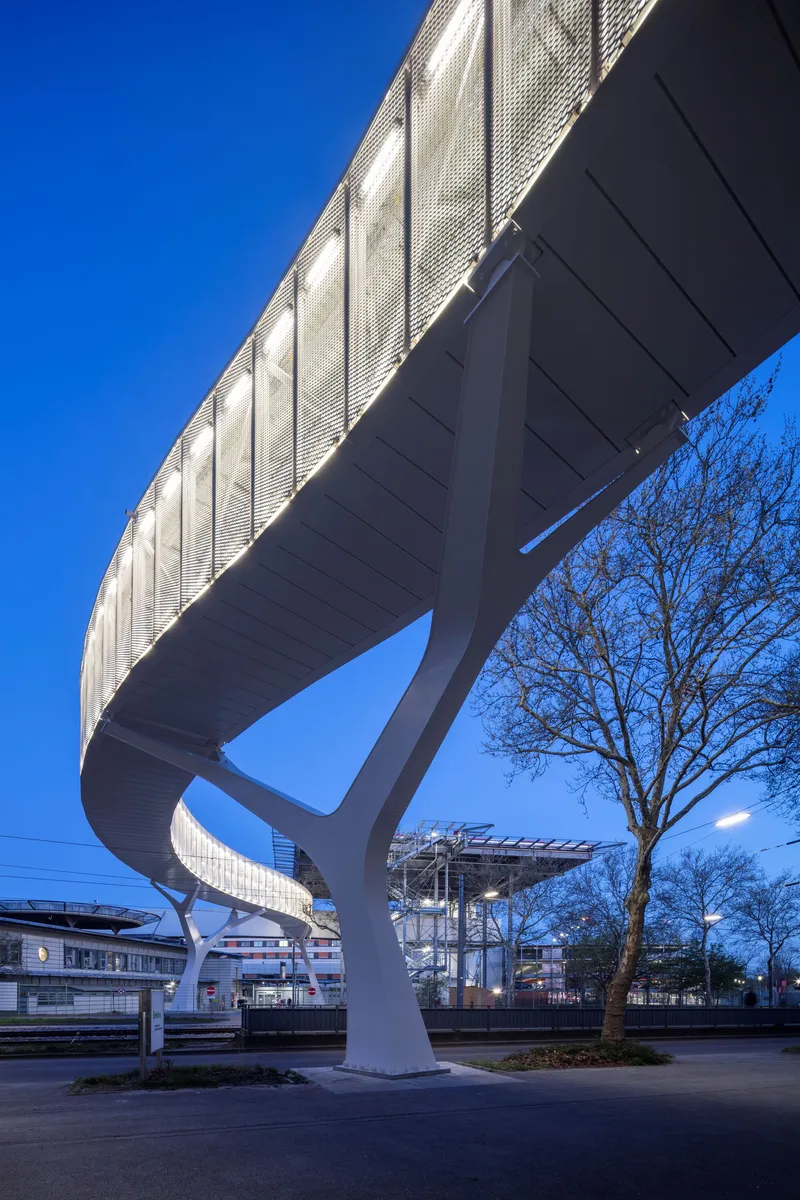
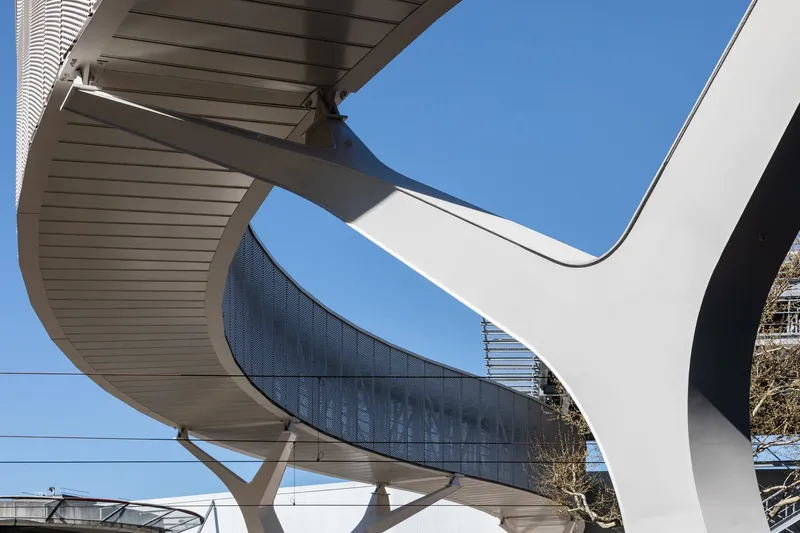
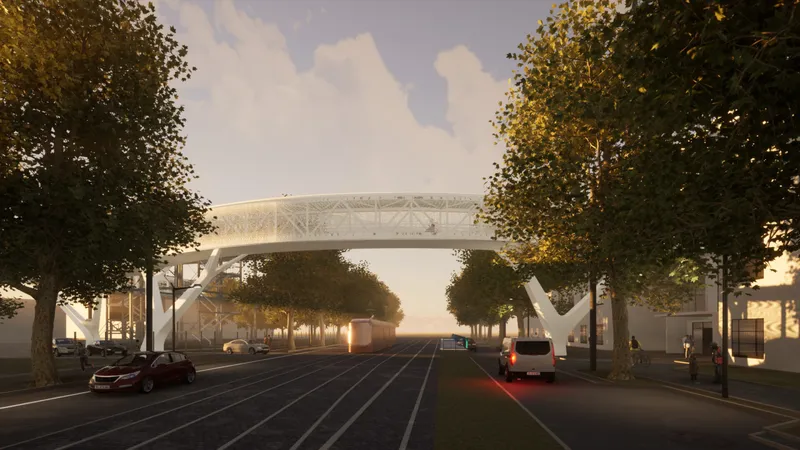
The bridge’s form evolved from both technical and visual considerations. With a soft, S-shaped curvature, the structure fluidly crosses traffic below while visually resonating with the rhythm of the existing urban grid and surrounding landscape. Each structural component contributes to the design’s purpose: forked steel columns with extended cantilevers support the bridge on both sides of the road, integrating naturally with the avenue of plane trees that define the hospital campus.
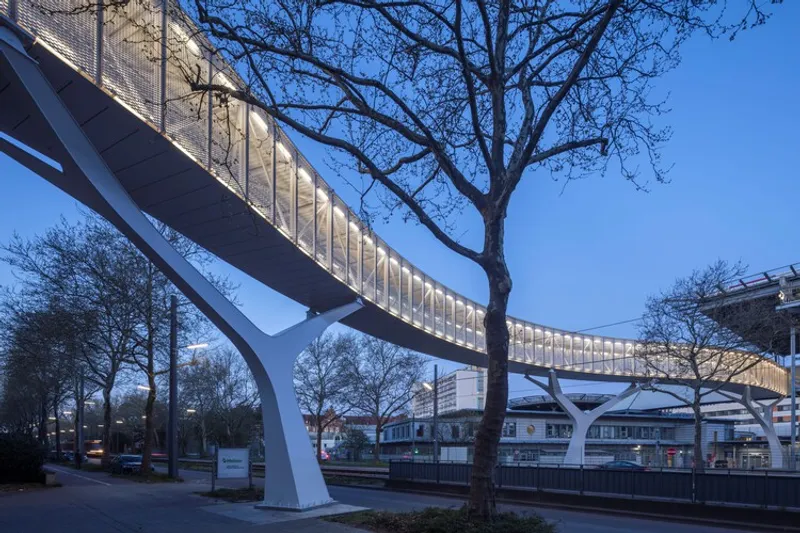
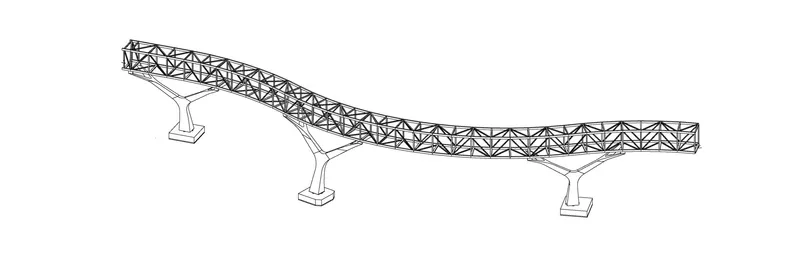
These columns, along with one additional support before the helipad, uphold a white truss box girder, providing rigidity and visual lightness. The design ensures that despite its size, the bridge feels less like an imposed element and more like a continuation of the hospital’s architectural language and urban texture.
A Nighttime Landmark
At night, the bridge transforms into a beacon of direction and calm. Integrated lighting systems provided by Norka lighting and glass components by Glassline highlight the truss framework, gently illuminating the walkway. The subtle glow gives the structure an almost weightless quality, floating above traffic as a quiet yet powerful civic landmark.
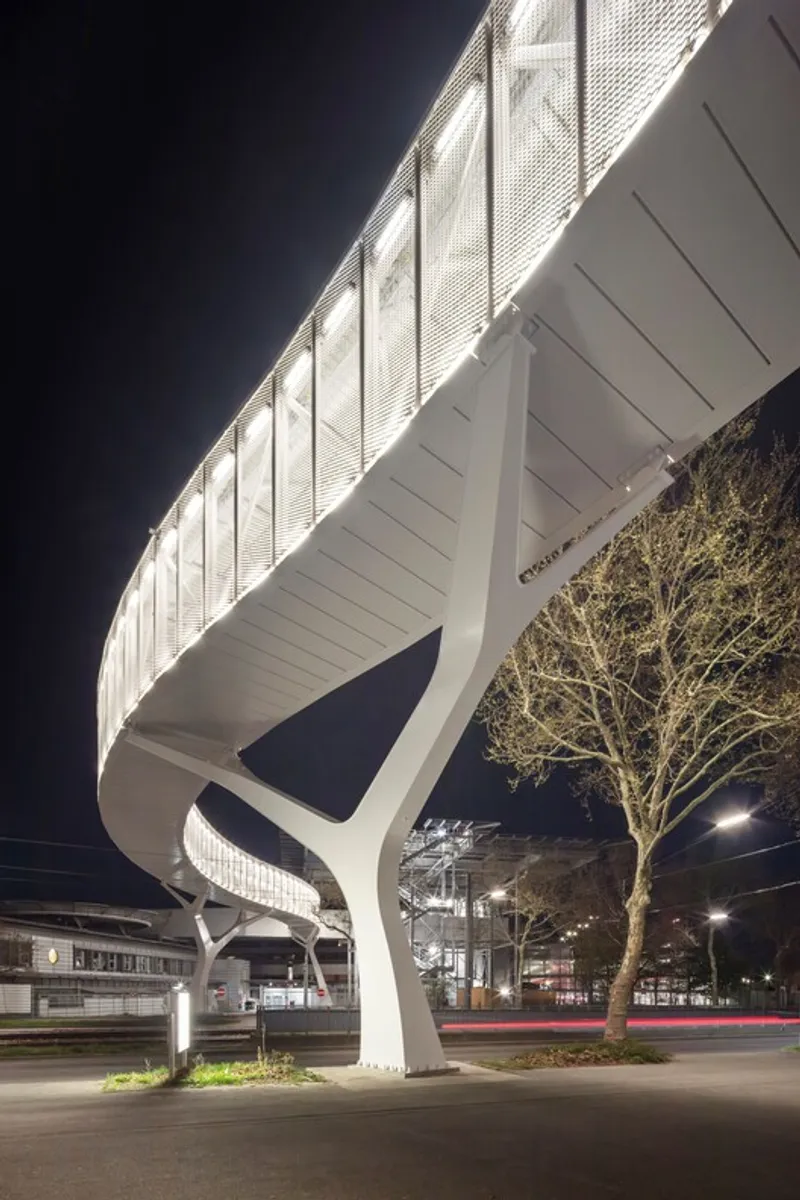
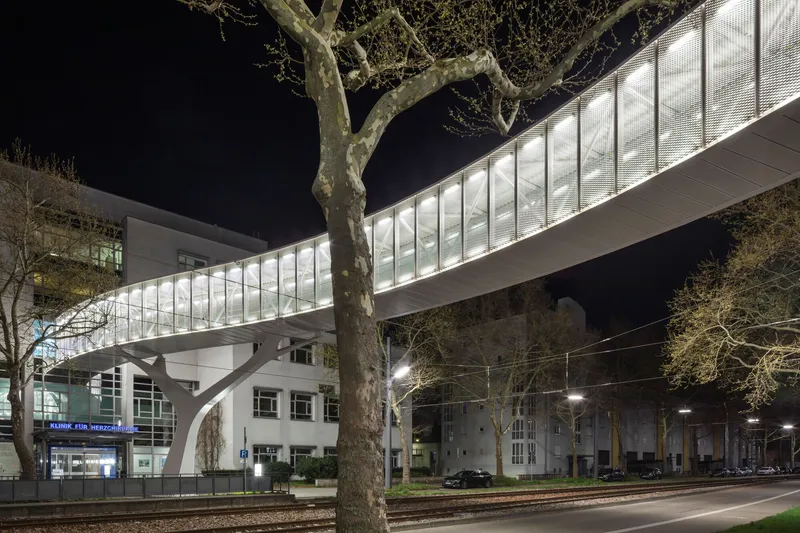
The result is not an isolated piece of infrastructure but an inviting, human-scaled passageway—an architectural gesture of openness that reinforces the hospital’s identity as a place of care, innovation, and accessibility at any hour.
Structural Intelligence and Material Craft
The bridge’s engineering complexity lies in its balance of flexibility and stiffness. The truss girder’s composition allows for long spans with minimal material use, while maintaining structural integrity under varying loads. The materials—primarily steel, aluminum, and glass—were chosen for longevity, low maintenance, and visual harmony with both hospital complexes.
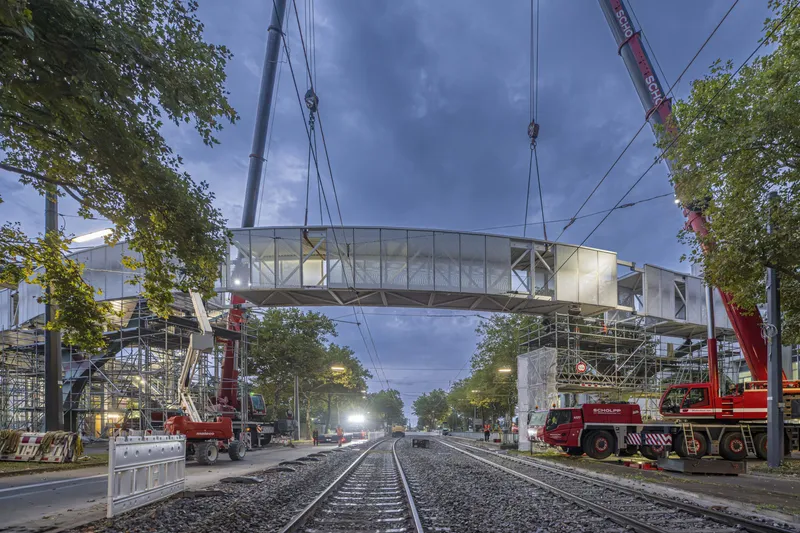
Fabrication was executed with millimeter precision. Prefabricated components were assembled on site under tight conditions, requiring efficient coordination between architecture, structural engineering, and municipal planning authorities.
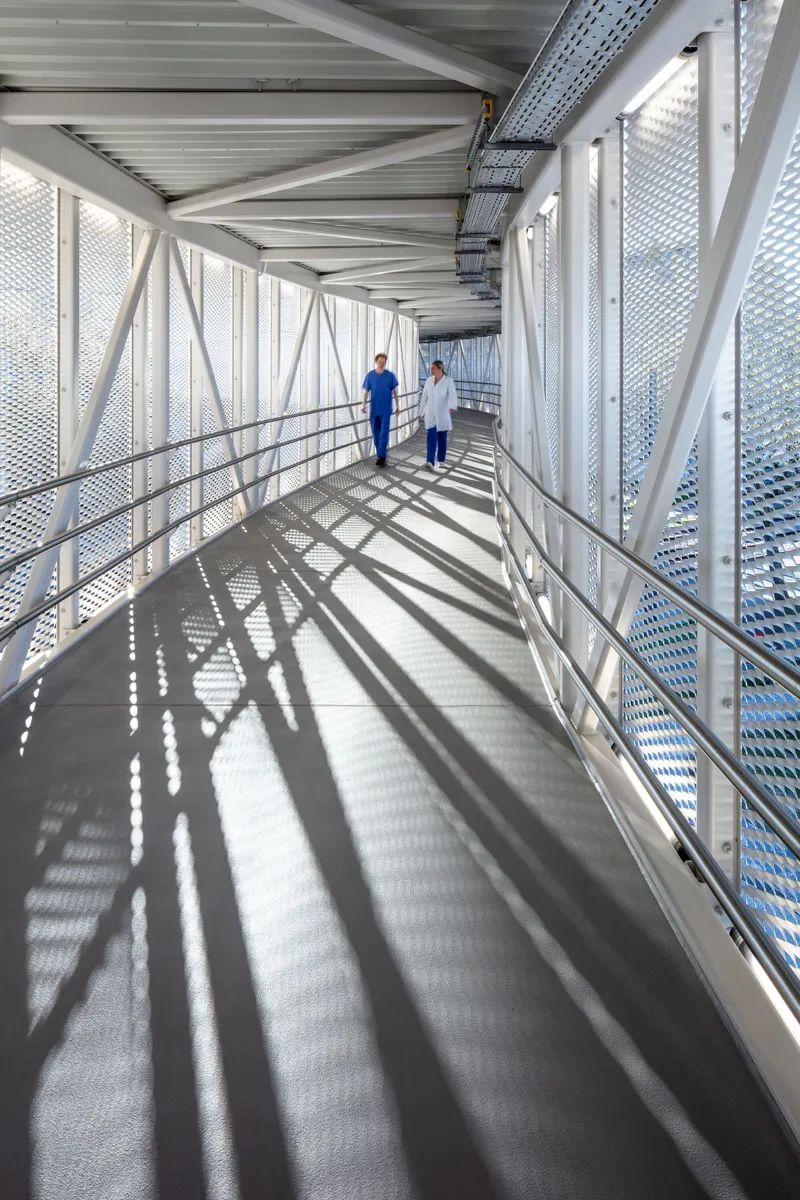
Manufacturers such as Laukien, Lamparter, and BGM contributed specialized components to ensure the bridge met safety, durability, and aesthetic standards.
Integration into Urban Context
Rather than appearing as a foreign object, the bridge establishes equilibrium with its environment. Its curvature follows the natural lines of the avenue and surrounding architecture, ensuring that it respects rather than dominates the cityscape. The structure’s graceful arc—not merely functional—creates a symbolic bridge between two medical institutions that together serve as a lifeline for the region.
By responding sensitively to its surroundings, the design transforms utilitarian infrastructure into civic art. It becomes a connector—of people, of spaces, and of design disciplines—embodying the spirit of collaboration in contemporary urban architecture.
Architecture as Connection
The Bridge Municipal Hospital Karlsruhe exemplifies how precise engineering and architectural vision can create more than a passage between buildings. It creates a moment of transition—a threshold between urgency and care, between the mechanical and the humane.
caspar. has delivered more than an infrastructural solution. The bridge communicates lightness, purpose, and modernity within the city’s built landscape, embodying the principles of clarity, function, and respect for context. In doing so, it transforms the practical necessity of hospital logistics into a landmark of thoughtful contemporary design.
All the photographs are works of HG Esch



Popular Articles
Popular articles from the community


The Earth Pod: 3D Printed Homes for Resilient Refugee Communities
The Earth Pod reimagines refugee housing through 3D printed homes made from clay, combining resilience, self-sufficiency, and rapid shelter.

Conexión: Biophilic Design Reimagines High-Rise Living in Hong Kong
Conexión reimagines high-rise living in Hong Kong through biophilic design, green facades, shared spaces, daylight, water and nature within.

The Musturak Paradise: Senior Living Architecture for a Connected Future in Temara, Morocco
The Musturak Paradise reimagines senior living architecture in Temara via private homes, social spaces, culture, community, and shared care.

Riyadh For All: Intergenerational Urban Design for Active Aging in Rabat
Riyadh For All reimagines urban design in Rabat with intergenerational co-living, adaptive courtyards, and Moroccan cultural exchange today.


Similar Reads
You might also enjoy these articles


Hodi-Mandai Geram
Project Function: Preservation and revitalization of the Intangible heritage and socio-spatial identity of the Hodi by Housing, Cultural Memory Center, Sacred Grove, landscape, local tourism economy


Olio Towers: A Mid-Rise for Performers That Fuses Housing, Rehearsal, and Stage
Located blocks from Houston's Theater District, this modular tower stacks living units around a central performance atrium.

Oasis: Modular Green Housing Carved into Dhaka's Urban Fabric
A shortlisted Plugin Housing entry reclaims unauthorized settlements in Dhaka with stepped concrete volumes, green roofs, and ventilation-driven design.

Black Hole: A Floating Megastructure for the Post-Physical Era
Emiliano Mazzarotto envisions a spherical, self-scaling arena where e-sports, digital hotels, and holographic stadiums replace traditional public space.


Explore Foot Bridge Competitions
Discover active competitions in this discipline



Challenge to reimagine the Iron Throne


Photograph architecture without architects


Illustrate the lost glory of Angkor Wat - Render Challenge


Design challenge to reuse E-waste
Comments (0)
Please login or sign up to add comments
No comments yet. Be the first to comment!