

BTR House by DeDal architectes – Contemporary Townhouse in Brussels
BTR House by DeDal architectes blends contemporary design with timber facades, quarter-level interiors, and contextual integration in Brussels’ townhouse street.


Located in the heart of Brussels, Belgium, the BTR House by DeDal architectes redefines contemporary townhouse living while remaining deeply respectful of its urban context. Completed in 2021, this 210 m² residence stands out as a refined architectural intervention that integrates modern design, structural clarity, and a thoughtful dialogue with its surroundings.
Context and Urban Integration
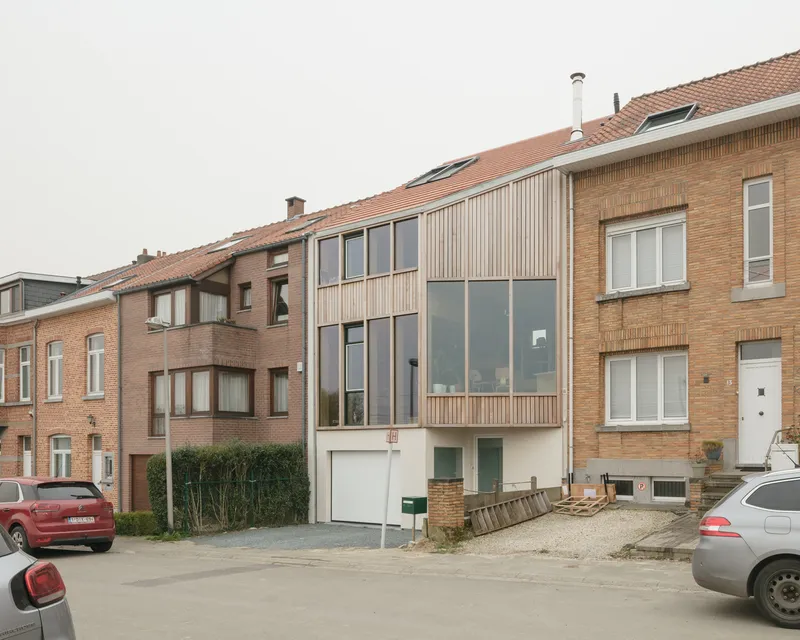
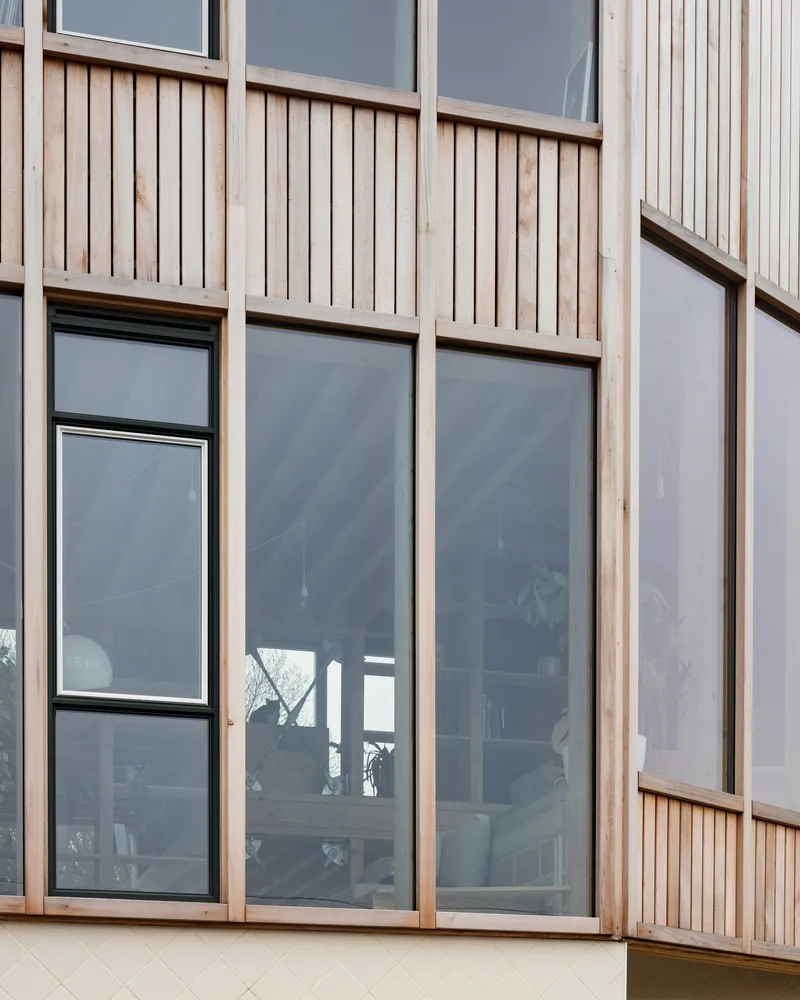
The house is situated on a street lined with traditional townhouses, where a significant misalignment exists between the upper and lower sections of the street. Instead of erasing this irregularity, the architects used it as a design opportunity. The facade design features a strategic fold that negotiates depth differences and cornice levels, ensuring seamless integration with neighboring buildings while also asserting a distinct architectural identity.
Spatial Design and Interior Layout
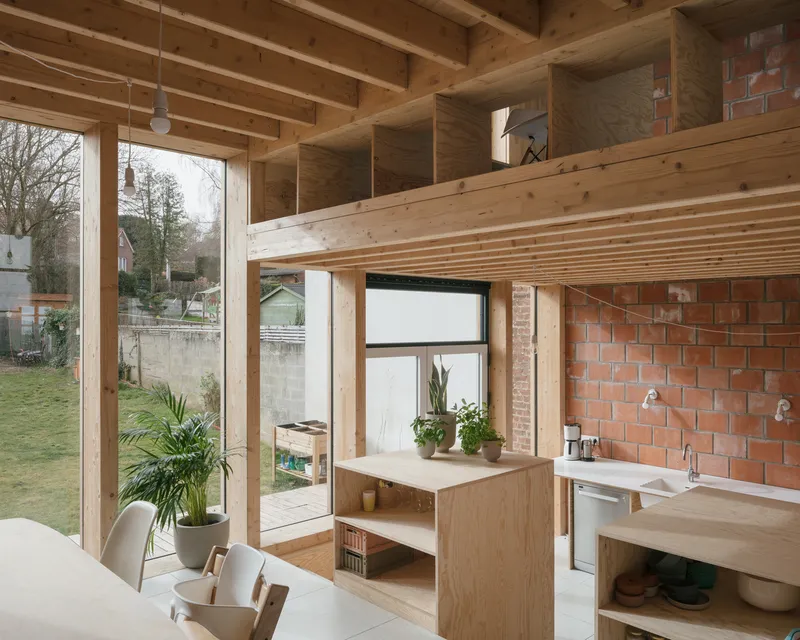
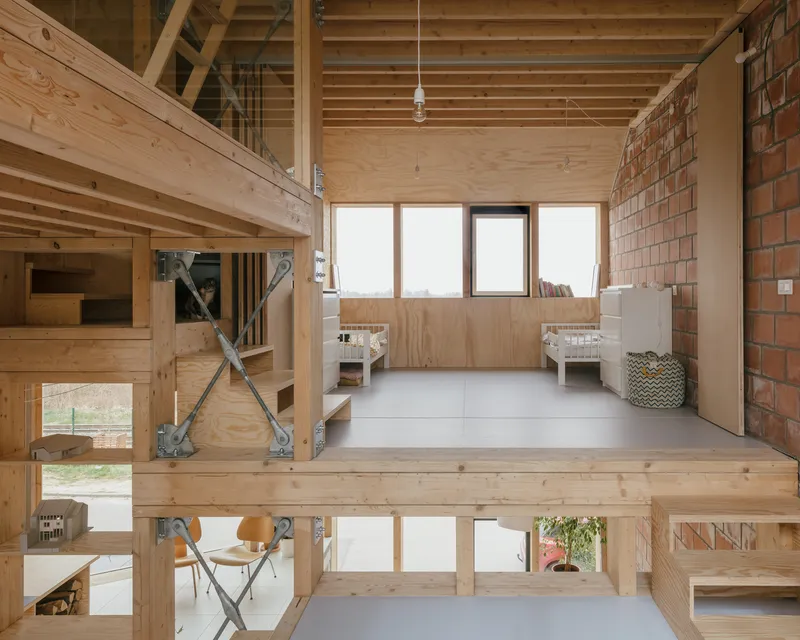
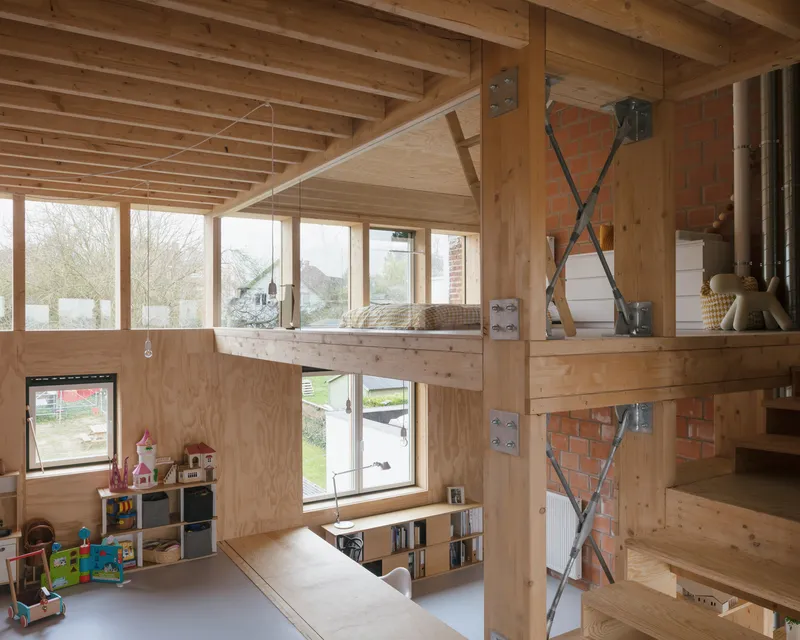
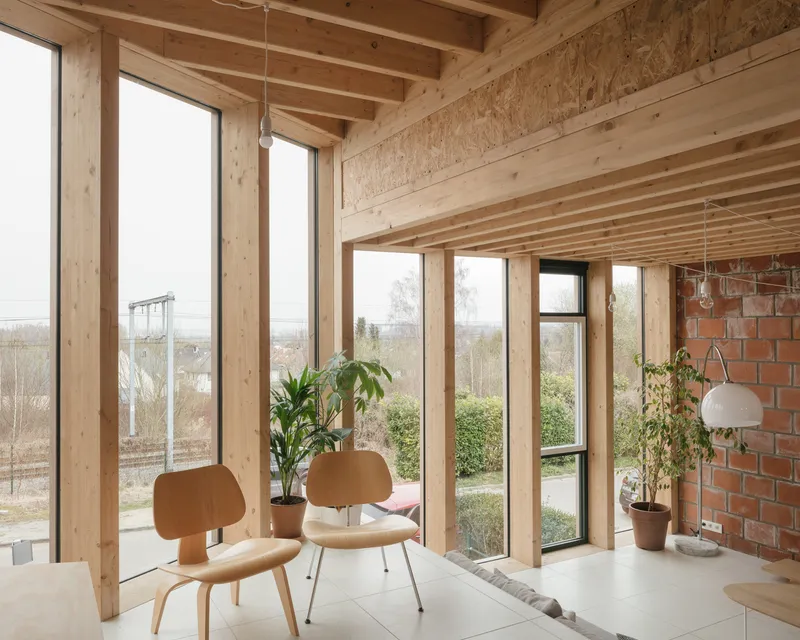
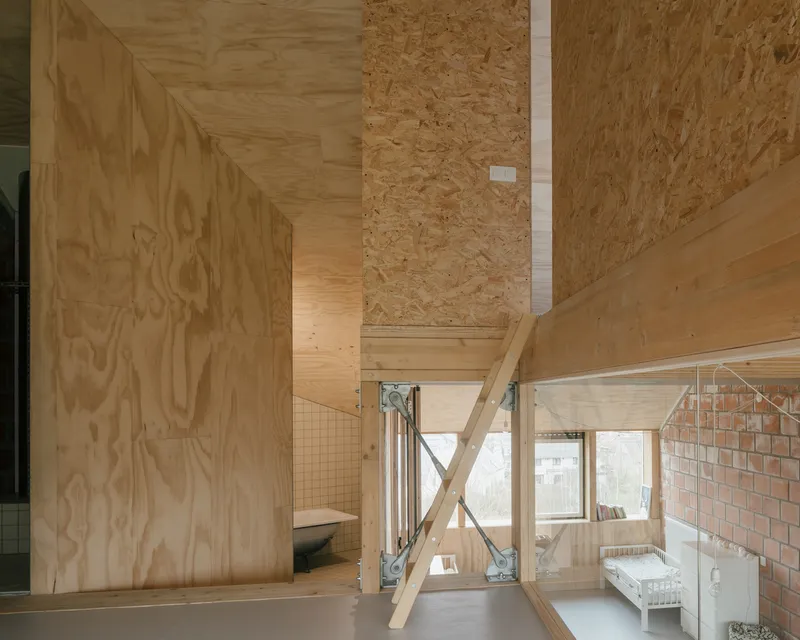
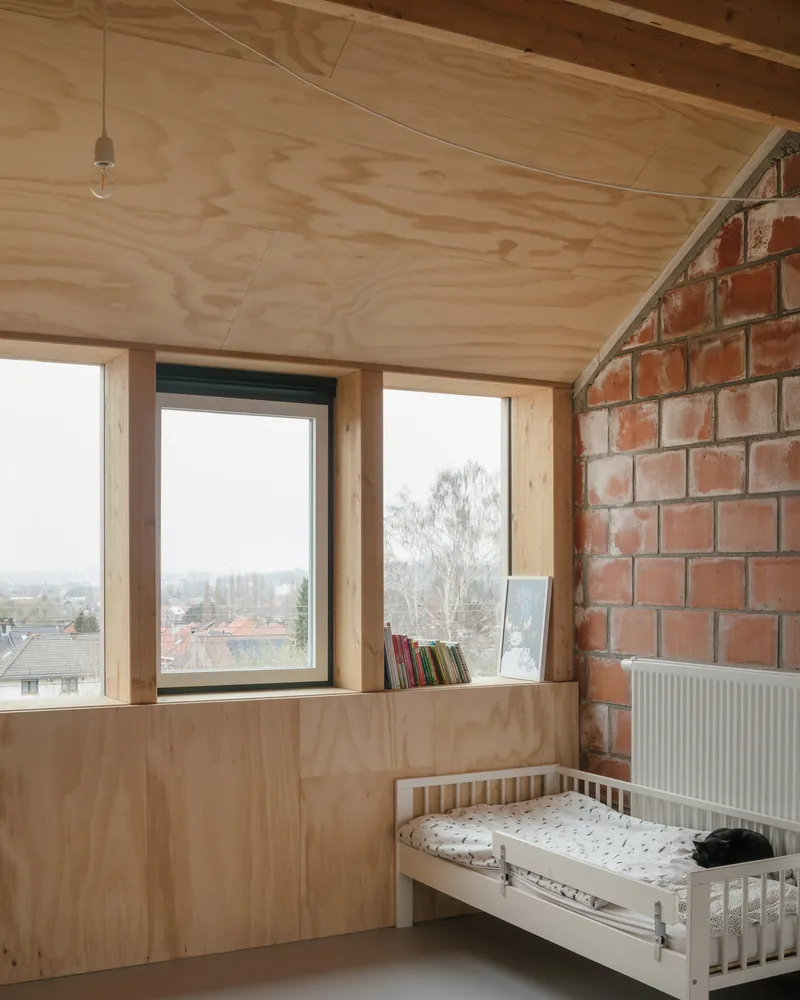
The interior is organized through a unique system of quarter-levels and half-levels, creating a dynamic spatial sequence rather than rigidly partitioned rooms. Each transition is articulated by integrated furniture and subtle changes in floor height, resulting in open and interconnected living spaces.
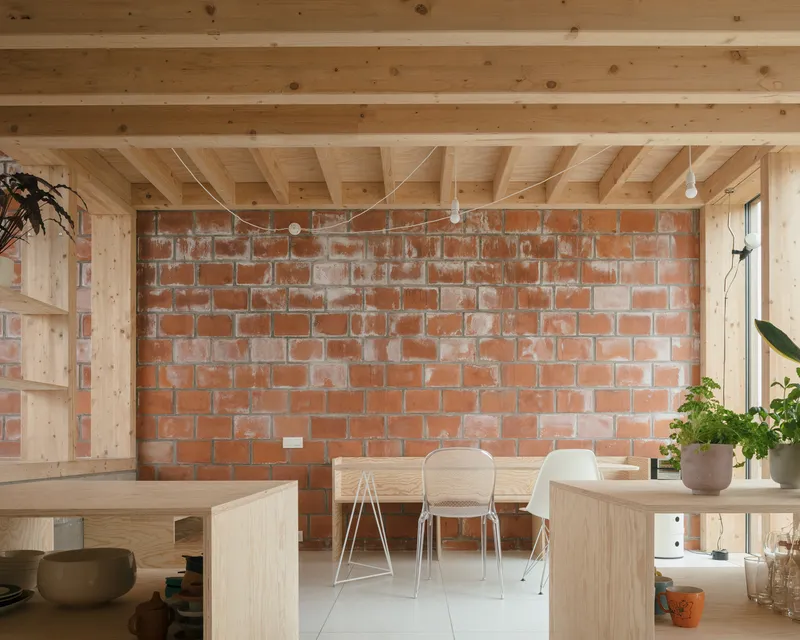
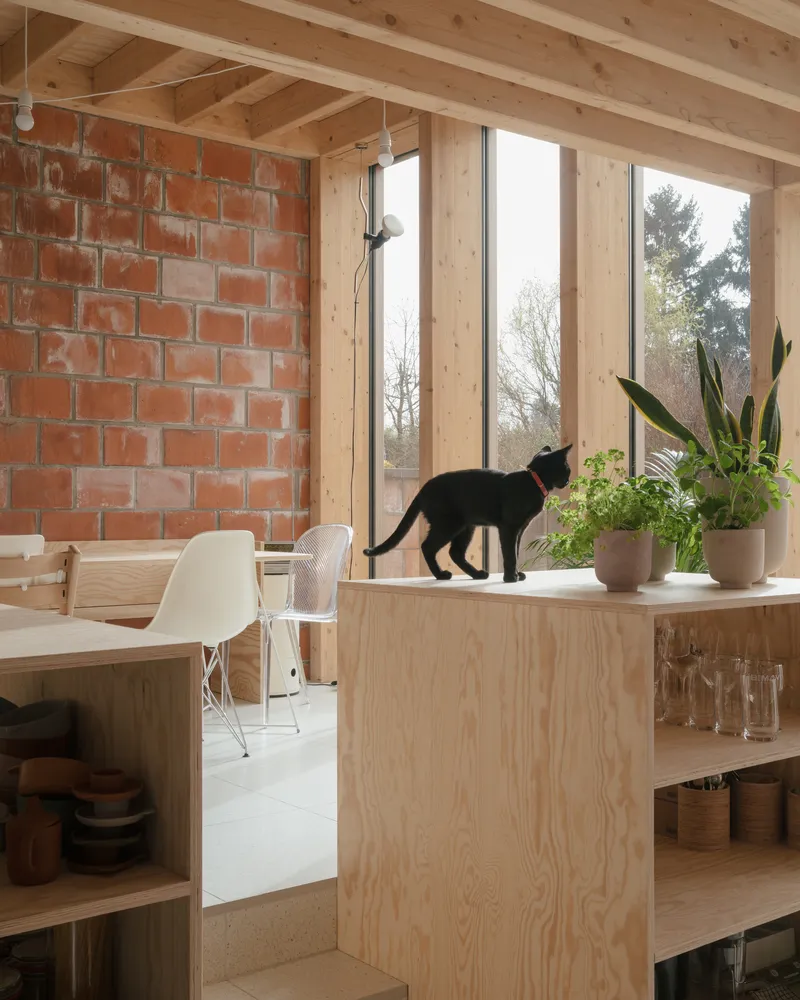
Instead of relying on partitions, spatial intimacy emerges gradually as residents move through elevated platforms, blurring boundaries between private and social zones. The living room, kitchen, and dining spaces flow into one another, enhanced by natural light filtering through generous windows.
Materiality and Architectural Expression
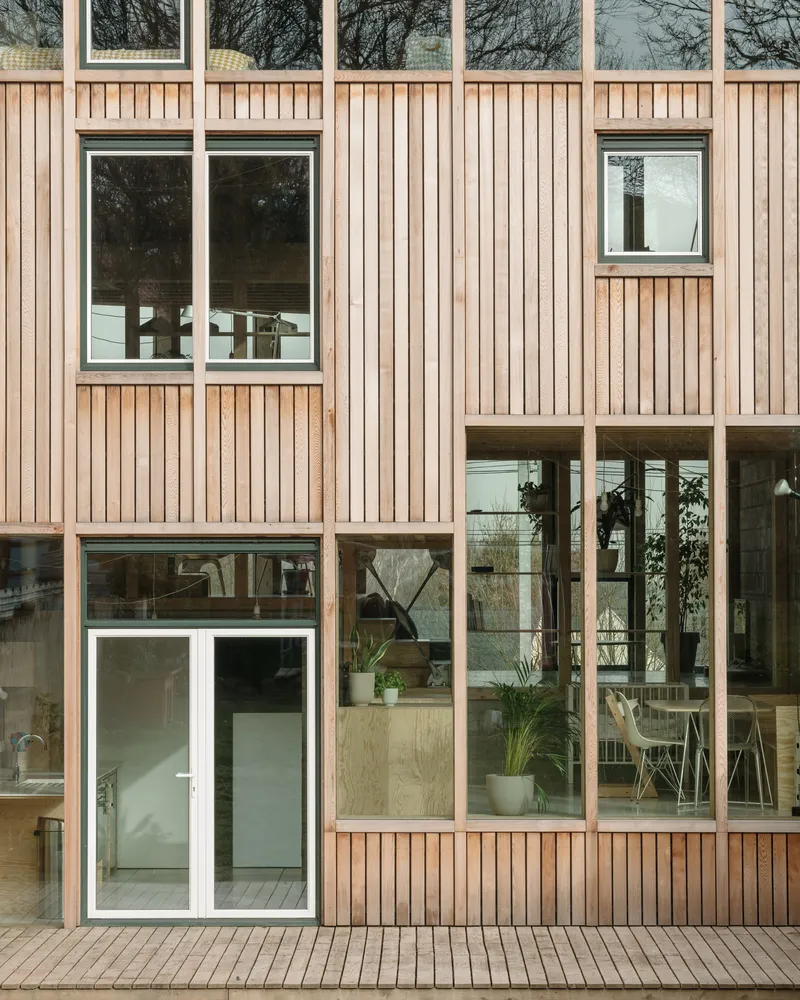
The wood-frame construction is expressed both structurally and aesthetically. The rear facade and much of the front facade are clad in Red Cedar wood, designed to weather naturally over time and harmonize with the tones of adjacent houses. This approach emphasizes durability, sustainability, and contextual dialogue.
At street level, the structural base of masonry and concrete is distinguished by light tiling, providing a mineral quality that grounds the house and contrasts with the warmth of the timber cladding above.
Sustainable and Functional Detailing
Natural ventilation, optimized daylight penetration, and high-quality materials from manufacturers such as Reynaers Aluminium, Forbo, Velux, and Viessmann enhance both comfort and performance. The design not only respects the surrounding fabric but also elevates it through careful craftsmanship and material honesty.
All Photographs are works of Stijn Bollaert




Popular Articles
Popular articles from the community


Hill & Cross Opera: Sculptural Opera House Architecture Shaped by Tallinn’s Landscape and Identity
Hill & Cross Opera reimagines opera house architecture in Tallinn through its sculptural hill, civic plaza, glass wave and a luminous cross.
AL-JANNAH: Sustainable Architecture and Permaculture for Afghan Widows
AL-JANNAH uses sustainable architecture and permaculture to create resilient oasis of housing, learning, work and renewal for Afghan widows.

Co-life: Sustainable Architecture for Age-Friendly Community Living
Co-life reimagines sustainable architecture for seniors through courtyards, rammed earth, shared gardens, and spaces designed for belonging.

EW PARK: Sustainable Architecture Reimagines the Future of Urban Parking
EW PARK reimagines city parking as a modular wooden tower combining automation, solar energy, electric mobility, and adaptable urban design.

Similar Reads
You might also enjoy these articles


Hodi-Mandai Geram
Project Function: Preservation and revitalization of the Intangible heritage and socio-spatial identity of the Hodi by Housing, Cultural Memory Center, Sacred Grove, landscape, local tourism economy


Olio Towers: A Mid-Rise for Performers That Fuses Housing, Rehearsal, and Stage
Located blocks from Houston's Theater District, this modular tower stacks living units around a central performance atrium.

Oasis: Modular Green Housing Carved into Dhaka's Urban Fabric
A shortlisted Plugin Housing entry reclaims unauthorized settlements in Dhaka with stepped concrete volumes, green roofs, and ventilation-driven design.

Black Hole: A Floating Megastructure for the Post-Physical Era
Emiliano Mazzarotto envisions a spherical, self-scaling arena where e-sports, digital hotels, and holographic stadiums replace traditional public space.


Explore Architecture Competitions
Discover active competitions in this discipline



Challenge to reimagine the Iron Throne


Photograph architecture without architects


Illustrate the lost glory of Angkor Wat - Render Challenge


Design challenge to reuse E-waste
Comments (0)
Please login or sign up to add comments
No comments yet. Be the first to comment!