
Bunker Architecture in Brandenburg: A Modern Approach to Explosive Storage and Safety
The article explores the innovative design and functionality of the Bunker Complex in Brandenburg, focusing on explosive storage and safety.


The Bunker Complex in Brandenburg, designed by Maedebach & Redeleit Architekten, represents a modern solution to the storage and safe disposal of explosives in a region steeped in military history. This cutting-edge facility stands as a testament to the integration of advanced engineering and architectural design in the field of explosive materials management. Located in the dense forests of Brandenburg, Germany, the project combines functional necessity with aesthetic innovation.

The Role of Bunker Architecture in Explosive Storage
Bunker architecture plays a crucial role in the safe handling and storage of explosives. The Brandenburg bunker complex is designed to store ammunition and defuse improvised explosive devices (IEDs) in a controlled, safe environment. The site, which was historically used for military purposes, provides a secure location for the storage of hazardous materials. Today, its redesign reflects the latest in architectural innovation while maintaining a focus on security and functionality.
In the context of the Bunker Complex in Brandenburg, several new bunkers were built as storage facilities for explosives. Additionally, the decommissioning facility was specifically designed to handle explosives safely, thanks to a complex machine developed in collaboration with component manufacturers. This machine plays a key role in the dismantling of explosives, ensuring that they are dealt with in the safest possible manner.
Innovative Design by Maedebach & Redeleit Architekten
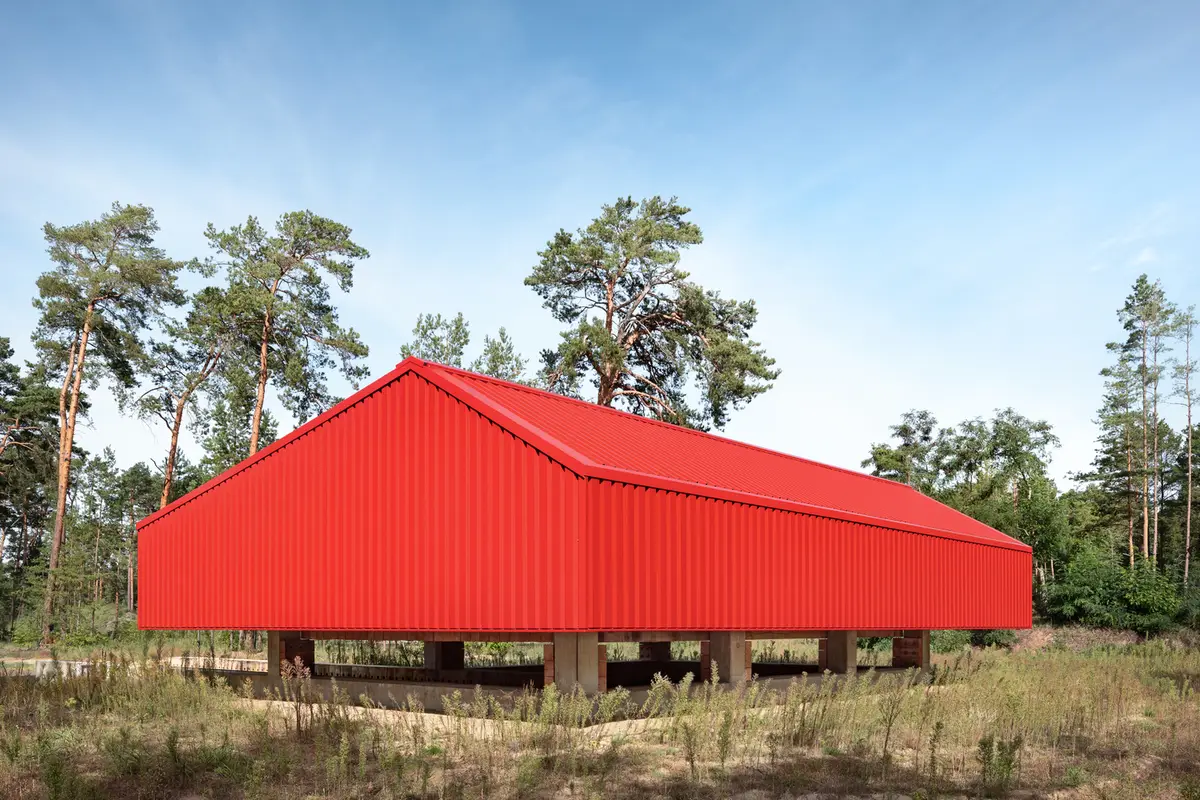
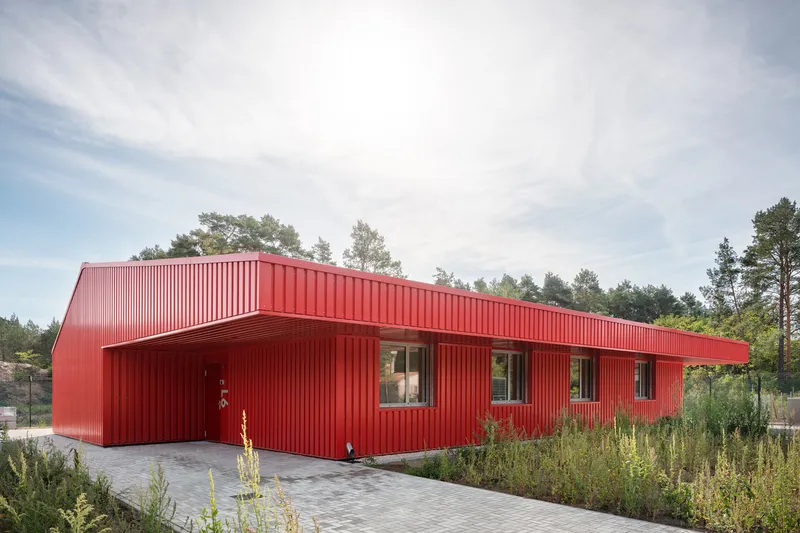
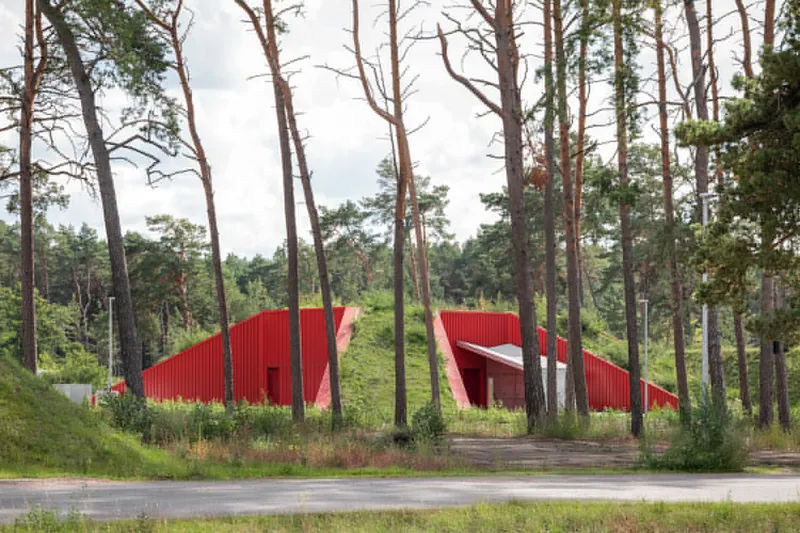
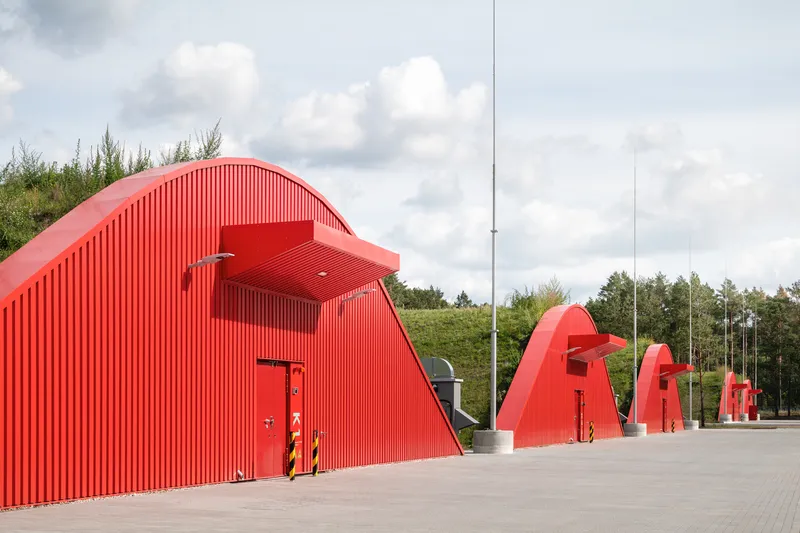
Maedebach & Redeleit Architekten, the team behind the Bunker Complex, utilized innovative design strategies to create a structure that is both secure and aesthetically pleasing. Each building on the site has its unique geometry, carefully crafted to serve its specific technical function. Despite their differing forms, the buildings share a common design language that ties the project together. This cohesion is achieved through the use of red, sharp-edged, profiled metal sheeting for the facades, a material that is both functional and visually striking.
The choice of a strong red color for the buildings’ exterior surfaces was not just for aesthetic reasons; it also serves a practical purpose. The bold hue makes the buildings easily identifiable from a distance, helping users navigate the expansive site with ease. The design team was intentional about ensuring that the bunkers' forms, materials, and colors respect the natural surroundings while maintaining their distinction from the forested landscape.

A Sustainable Approach to Bunker Architecture
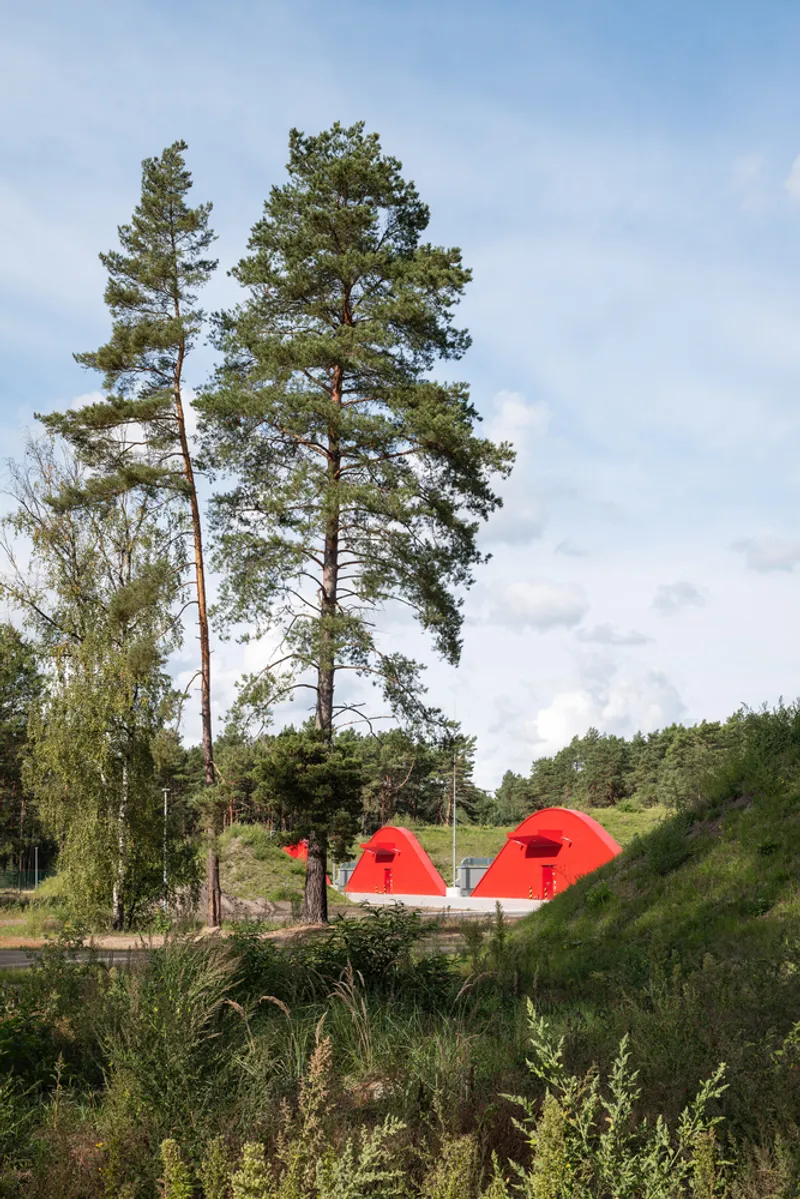
The Bunker Complex is not just about safety and functionality; it also embraces sustainable architectural practices. The buildings are earth-covered, blending into the natural environment and reducing their visual impact. This approach aligns with modern architectural trends that focus on sustainability and environmental responsibility, ensuring that the new structures integrate seamlessly with their surroundings.
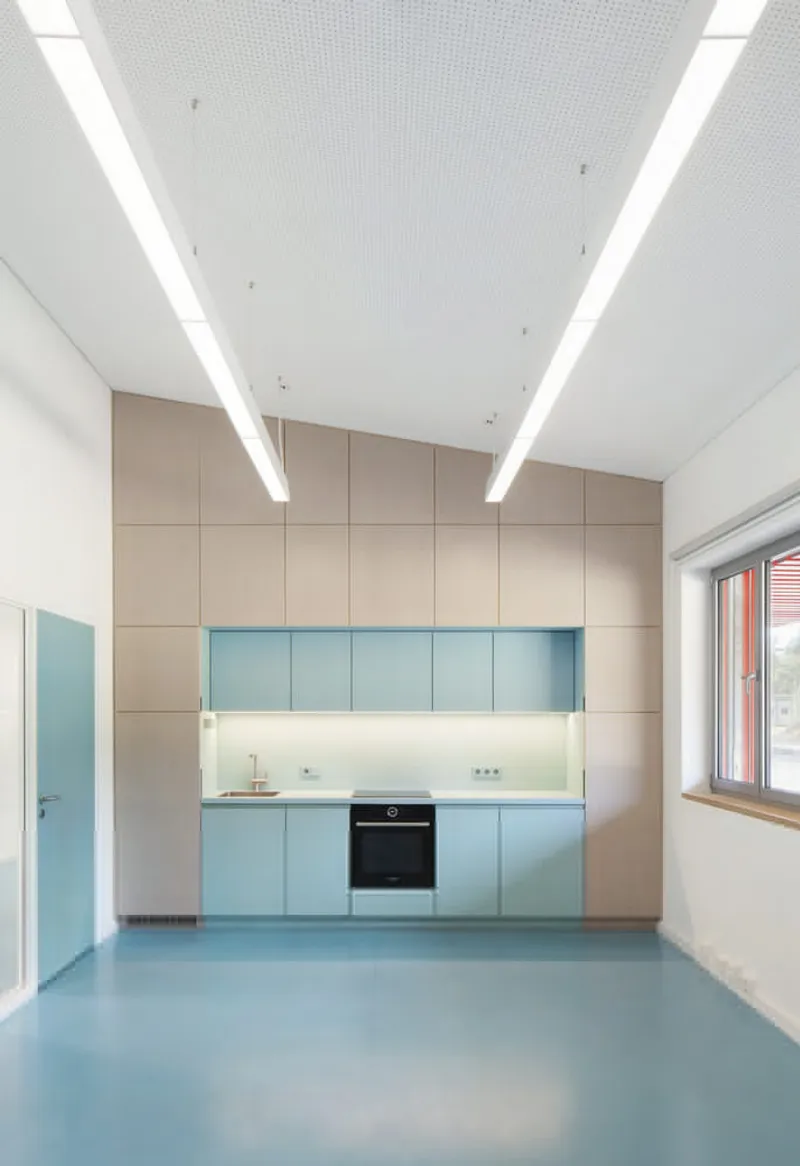
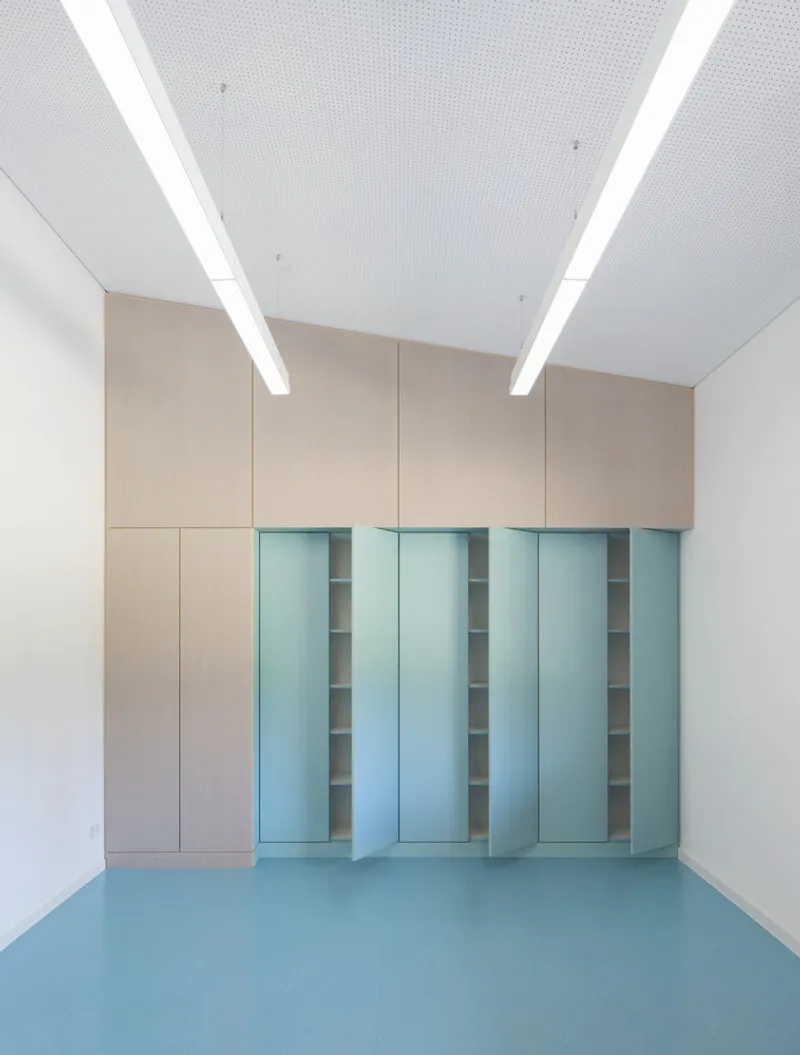
The use of high-quality materials in the construction, such as those provided by manufacturers like AGROB BUCHTAL, DELABIE, and Forbo Flooring Systems, ensures that the complex is not only durable but also environmentally conscious. These materials help the buildings withstand the challenges of housing hazardous materials while minimizing their environmental footprint.


The Technical Functionality of the Bunker Complex
Each of the new buildings within the Bunker Complex is designed to serve a specific function, ranging from ammunition storage to explosive device disposal. The bunkers are equipped with specialized systems to ensure the safe handling of explosives. The decommissioning facility, for example, incorporates a machine designed to handle the dismantling of explosives safely and efficiently. This machine underwent a rigorous safety assessment and was ultimately approved for the European CE safety marking, underscoring the facility's commitment to safety and regulatory compliance.
The design and construction of these bunkers were carried out with a keen eye for technical precision. The structural engineers at CRP Bauingenieure, in collaboration with the architects, ensured that the buildings are not only functional but also structurally sound, capable of withstanding the potential hazards associated with explosives.
Landscape Integration and Environmental Design
One of the key aspects of the Bunker Complex is its seamless integration into the surrounding landscape. Despite the heavy-duty functions of the site, the design minimizes its impact on the environment. The site is situated in dense woodland, and the natural topography was taken into account to ensure the buildings blend into their surroundings. The landscape planning by Hübner Ingenieure helped to preserve the integrity of the forest, ensuring that the new structures did not disrupt the local ecosystem.
The strong contrast between the bold, red buildings and the lush, green forest creates a striking visual effect that signals the technical nature of the site while also respecting the beauty of the natural environment.
The Future of Bunker Architecture
The Bunker Complex in Brandenburg stands as a prime example of how modern architecture can address the complex needs of explosive storage while remaining mindful of environmental and aesthetic considerations. Through thoughtful design and innovative engineering, Maedebach & Redeleit Architekten have created a facility that not only meets the functional requirements of the site but also contributes to the architectural landscape of Brandenburg.
Bunker architecture, as demonstrated by this project, is a critical component of modern infrastructure. It combines cutting-edge technology with timeless design principles to create structures that are both safe and sustainable. As the world continues to grapple with the challenges of handling hazardous materials, the Bunker Complex in Brandenburg provides a model for future developments in the field of bunker architecture.
All photographs are work of Adrian Schulz, Anastasia Hermann


Popular Articles
Popular articles from the community


The Amber Palace Opera: A Geological Fiction Surfaces on Tallinn's Baltic Waterfront
Pierre Brillard reimagines a Baltic legend as a public landscape, opera house, and waterfront promenade rooted in Tallinn's coastal identity.

Aquadapt: An Underwater Habitat That Rewrites Its Rooms by the Hour
Curved modules ring the seabed while one shell shifts from breakfast room to cinema, farm and football pitch as residents' needs change.


Cube Design Draws an Ecological Corridor Between Two Shenzhen Hills with the Nankai Building
Beside Shenzhen's container docks, the Nankai Building pairs stacked balconies with a climbing green screen to connect two hillsides across its height.

graciastudio Turns a Viewless Tijuana Lot Inward Around a Courtyard of Concrete, Timber and Trees
In Tijuana, Jorge Gracia's GA2 House stacks a timber-clad private floor over exposed concrete and replaces a missing view with a planted interior patio.

Similar Reads
You might also enjoy these articles


Hodi-Mandai Geram
Project Function: Preservation and revitalization of the Intangible heritage and socio-spatial identity of the Hodi by Housing, Cultural Memory Center, Sacred Grove, landscape, local tourism economy


Olio Towers: A Mid-Rise for Performers That Fuses Housing, Rehearsal, and Stage
Located blocks from Houston's Theater District, this modular tower stacks living units around a central performance atrium.

Oasis: Modular Green Housing Carved into Dhaka's Urban Fabric
A shortlisted Plugin Housing entry reclaims unauthorized settlements in Dhaka with stepped concrete volumes, green roofs, and ventilation-driven design.

Black Hole: A Floating Megastructure for the Post-Physical Era
Emiliano Mazzarotto envisions a spherical, self-scaling arena where e-sports, digital hotels, and holographic stadiums replace traditional public space.

Explore Architecture Competitions
Discover active competitions in this discipline

Challenge to reimagine the Iron Throne

Photograph architecture without architects

Illustrate the lost glory of Angkor Wat - Render Challenge

Design challenge to reuse E-waste
Comments (0)
Please login or sign up to add comments
No comments yet. Be the first to comment!