

Burrell Collection reopens after refurbishment
Newly Renovated Burrell Collection Showcases Dazzling Art and Artifacts for Visitors to Enjoy
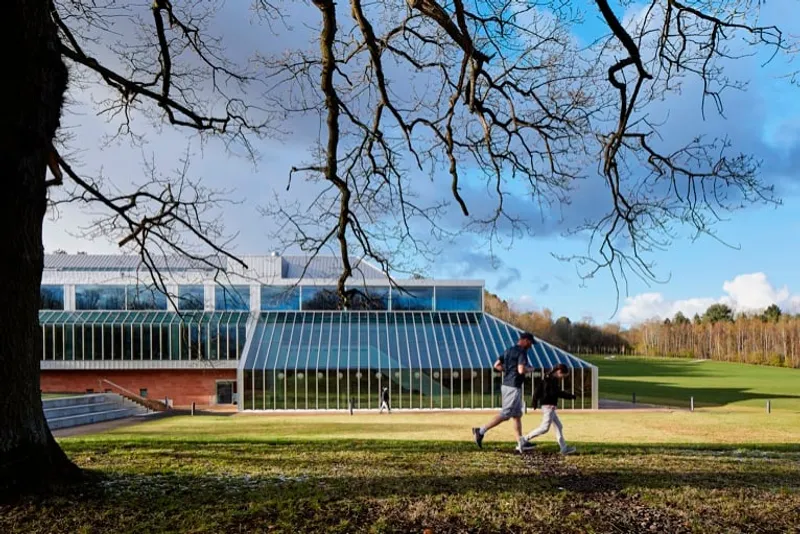
John McAslan + Partners have successfully refurbished the Burrell Collection museum in Scotland, which has now reopened to the public. Housed in a Category-A listed post-war Scottish building, the museum boasts an extensive collection of 9,000 works of fine and decorative art spanning 6,000 years. The collection was donated to the City of Glasgow in 1944 by Sir William Burrell, a philanthropist and collector.
The museum building, designed by three Cambridge architect-academics, was constructed in 1983 using red Dumfriesshire sandstone, polished concrete, stainless steel, and timber and glass. The renovation and enhancement of the museum were led by John McAslan + Partners over a five-year period, appointed by Glasgow Life, the charity that delivers cultural, sporting, and learning activities on behalf of Glasgow City Council.

John McAslan + Partners collaborated with a group of experts to achieve three primary objectives for the project. Firstly, they aimed to repair the building effortlessly while also enhancing its environmental efficiency by adopting a "fabric first" strategy for its refurbishment. Secondly, they sought to reinforce the building's surroundings in the parkland. Lastly, after a thorough analysis, they decided to unveil certain sections of the interior to express the horizontal and vertical movement through the galleries, allowing a larger portion of the collection to be viewed simultaneously.

A discrete entrance has been constructed to the east of the existing entrance that is still intact. The new entrance is accessible from a paved piazza and provides visitors with an improved natural environment, where they can relax, have a picnic, or enjoy the southeast corner café.
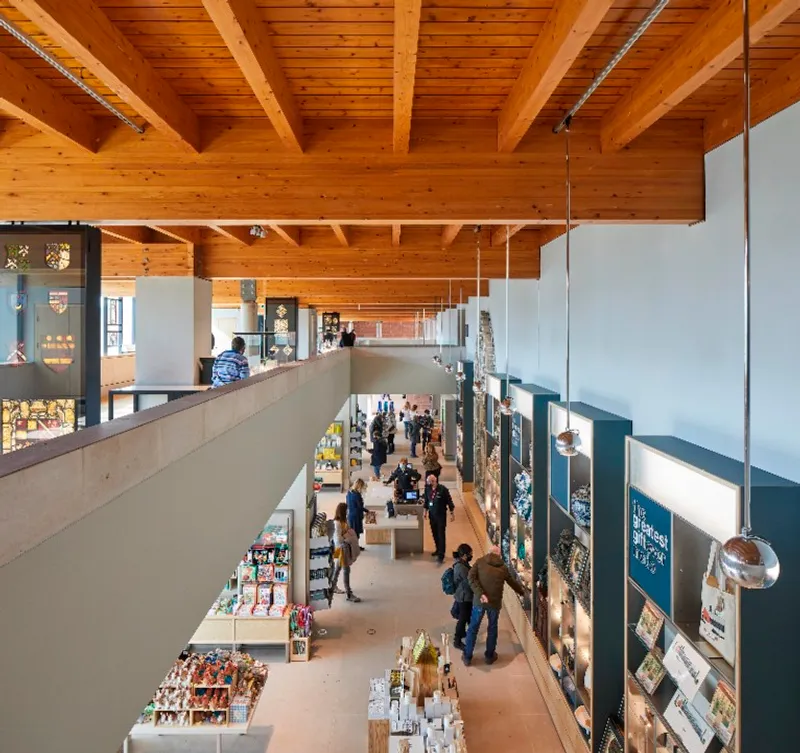
Adjacent to the new entrance, a fresh orientation volume has been added, which connects the museum levels to the mezzanine galleries. Visitors can also use a stepped seating arrangement to access the newly opened garden-level floor below. The garden-level floor now boasts an exhibition and events gallery, which is connected to an art storage space that is open for public viewing, workshops, and a rejuvenated café. Visitors can also access the parkland that is beyond the café.
The landscape design for The Burrell was crafted by John McAslan + Partners, with leadership from Andy Harris, who heads the firm's Landscape and Urban Design Studio. Harris outlines the methodology employed by the practice.
“The relationship between building, parkland and woodland was an iconic narrative in the original 1980s design proposal. Our ‘updating’ of the landscape respects the original design vision whilst carefully integrating new elements to engage with a new generation of visitors. Accessible routes to the museum, a flexible entrance plaza, café terrace and amphitheatre will provide a more legible, engaging and diverse user experience.”
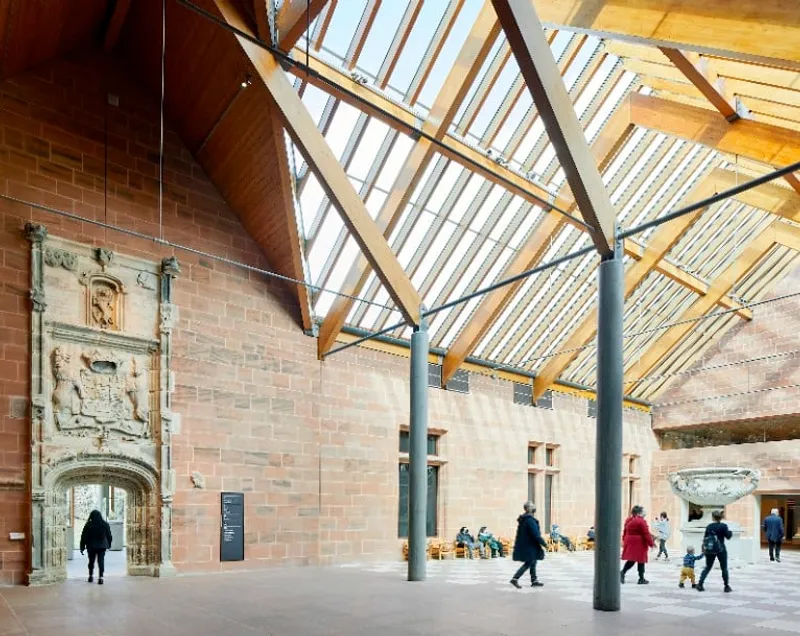
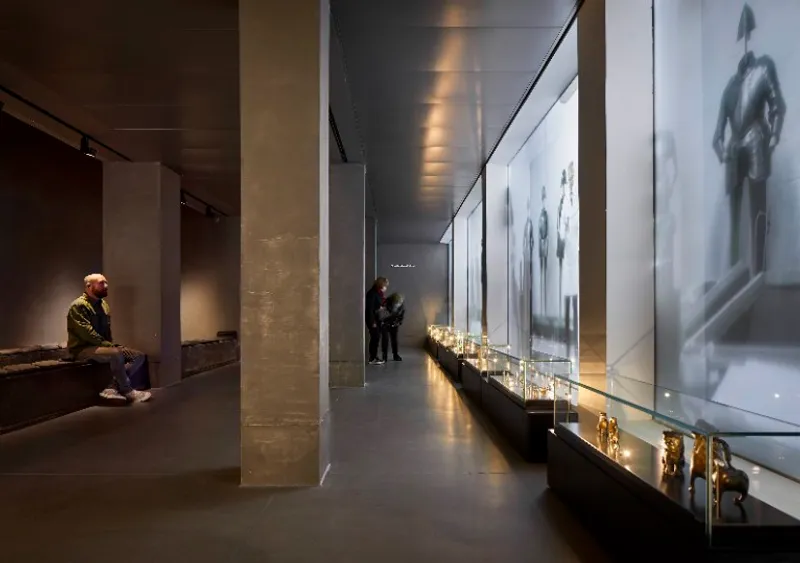
Upon returning to the galleries, visitors will come across the newly curated collection, organized thematically with an immersive narrative guiding its museography. The gallery space has expanded by 35% from its previous arrangement, with the vast majority of the collection now stored on-site for easy access and rotation.
“In all cases”, says John McAslan, Founder of John McAslan + Partners, “we have respected the original architecture and adjusted it appropriately. Additionally, we have introduced energy conservation techniques throughout, whilst reconsidering the needs of the Collection to support the improved conservation, interpretation, and rotation of the Collection. This includes the Collection’s particular requirements within the enfilade of north-lit galleries, affectionately known as ‘the walk in the woods’, a tour-de-force within Gasson’s design”.
Reuse
John McAslan + Partners’ commitment to reusing and revitalizing important 20th-century structures is exemplified in their work on The Burrell project. By prioritizing a ‘Fabric First’ approach, the building's existing architecture was maximized to its full potential through careful adaptation and refurbishment. Notably, the team was able to reuse the aluminium glazing frames, avoiding the need for over 8.5 tonnes of new aluminium, which in turn saved 100 tonnes of carbon emissions associated with new aluminium production.
This achievement was the result of collaboration between John McAslan + Partners, environmental designers Atelier Ten, and façade consultant Arup. The renewed Burrell Collection has also achieved a BREEAM rating of Excellent, placing it within the top 10% of energy-efficient buildings in the UK. This achievement is a significant milestone for the refurbishment and conservation of a Category-A listed building.
Paul East, John McAslan + Partners’ Project Lead for The Burrell summarises,
“When Gasson, Andresen and Meunier’s design for the Burrell Collection were commissioned in 1972, it was the start of Glasgow’s first modern cultural grand project, setting the boldest of precedents for the city’s £1.4bn spend on cultural and sporting projects since 1980. Through The Burrell Project, we have delivered a building whose original design – nearly half a century old – remains largely unchanged and in keeping with its original design intent yet is now completely revitalised, significantly more accessible, and is once again a museum fit for its exemplary collection.”
David Cameron, director at the Burrell’s environmental designers, Atelier Ten, says,
“The Burrell Collection is leading the way in sustainable museum design, being the first refurbished museum in the UK to achieve a BREEAM Excellent rating.
Crucially, these sustainability goals were met while also increasing the atmospheric stability required for artefacts and enhancing the architecture. We’re very proud to have helped safeguard both the heritage and future, of the institution at once.”
Graeme DeBrincat, Senior Façade Engineer at Arup, adds,
“The ‘fabric first’ approach the team adopted emphasised finding design solutions that significantly improved the building performance yet respected and revitalised the original architecture.
We designed and detailed subtle interventions, implementing new performance elements such as a bespoke gasket system and thermal breaks to the existing glazing frame, replacing non-visible roof systems with modern alternatives and installing high-performance glazing into the existing system. These interventions contributed more than 50% of the overall building energy use improvements.
And the Burrell was a catalyst for our research into architectural glass recovery. No glass material went to landfill, 16 tonnes of glass was recycled back to flat glass manufacture and the rest went into other building products. It has been rewarding to see what we could achieve through a circular design approach.”
The Glasgow City Council pledged almost 50% of the funding for the £68.25 million project, while the National Lottery Heritage Fund, The Scottish Government, the UK Government, and various generous trusts and private donors made notable contributions.
References (1)

Popular Articles
Popular articles from the community


Cloaked Colonization: A Mobile Underwater Habitat That Moves Like a Fish
Micah Abaya's shortlisted EHC Pacific entry reimagines ocean settlement as a dispersed network of self-sustaining architectural organisms.

Faces of the Soviet Avant-Garde: Turning Moscow's Street Names into an Open-Air Museum
A network of sculptural installations across a Moscow residential district transforms forgotten architect names into spatial encounters with cultural memor

Opera on the Sea: Driftwood Logic Shapes a Timber Opera House on Estonia's Coast
Trevor Orgill's opera house translates the entangled drift of floating timber into a civic building where wood, water, and music converge.

Opera by the Sea Estonia: Three Shells Dissolving Architecture into Tallinn's Coastline
A winning opera house proposal replaces monumental form with interconnected shells that blur the boundary between building, park and Baltic Sea.

Similar Reads
You might also enjoy these articles
116 Rokeby Building, Collingwood
Sustainable Collingwood office building featuring double-skin façade, natural ventilation, rooftop amenities, and carbon-neutral design focused on wellbeing and longevity.
Contemporary Apartment Renovation in Spain: RV House by BIAN Opens Up to the Sea
A minimalist 1930s apartment in Santander is transformed into a flexible, sea-facing home through contemporary Spanish renovation.
3 Marías House: A Contemporary Mediterranean Courtyard Retreat by Bajet Giramé + Burckhardt
Mediterranean courtyard home blending traditional architecture with modern design, terracotta flooring, flexible interiors, sustainable climate strategies, and garden integration.
NZ10 Apartment by auba studio: Adaptive Reuse in Palma de Mallorca
Adaptive reuse apartment transforms bakery into light-filled home with patios, privacy layers, and wood interiors enhancing urban living experience.

Explore Cultural Architecture Competitions
Discover active competitions in this discipline


Challenge to reimagine the Iron Throne

Photograph architecture without architects

Illustrate the lost glory of Angkor Wat - Render Challenge

Bring back Drive In's
Comments (0)
Please login or sign up to add comments
No comments yet. Be the first to comment!