

Cabin in La Cantera: A Harmonious Blend of Nature, Memory, and Sustainable Architecture
A sustainable eco-lodge in Baños de Agua Santa, blending recycled materials with volcanic landscape, promoting eco-tourism and conservation.


Sustainable Architecture in the Shadow of Tungurahua Volcano
The Cabin in La Cantera, also known as La Cabina de la Curiosidad, stands as a testament to the integration of sustainable design and the rich cultural context of its location. Nestled in the Baños de Agua Santa region, Ecuador, this architectural project reimagines a stone quarry landscape into an immersive eco-lodge experience. Surrounded by the majestic Tungurahua Volcano and the flowing Pastaza River, this project aims to strike a balance between conservation and tourism, offering visitors an exceptional experience in the heart of Ecuador's volcanic landscape.
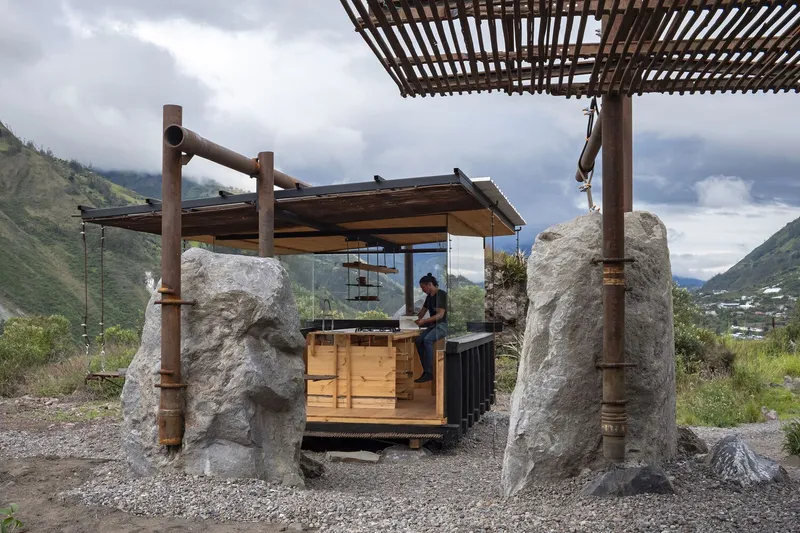

Contextual Landscape: From Quarry to Conservation
The project site is divided into two distinct sections that guide the design logic. The first 40% of the land is the active quarry, once a site of intense extraction, where large machinery like dump trucks and excavators reshaped the landscape. The remaining portion of the land remains undeveloped or is undergoing ecological remediation, home to varied native ecosystems with shifting vegetation zones, from dry Andean plants in the higher altitudes to lush, humid foliage near water springs.
The project reflects a transition from an extractive industrial model to a conservation and eco-tourism approach, marking a significant shift in the land's use. The family owning the site is focusing on sustainable practices, including adventure tourism and climbing activities. The region's massive volcanic rock walls offer unparalleled opportunities for climbers, while the lush surrounding forest provides a rich natural backdrop.
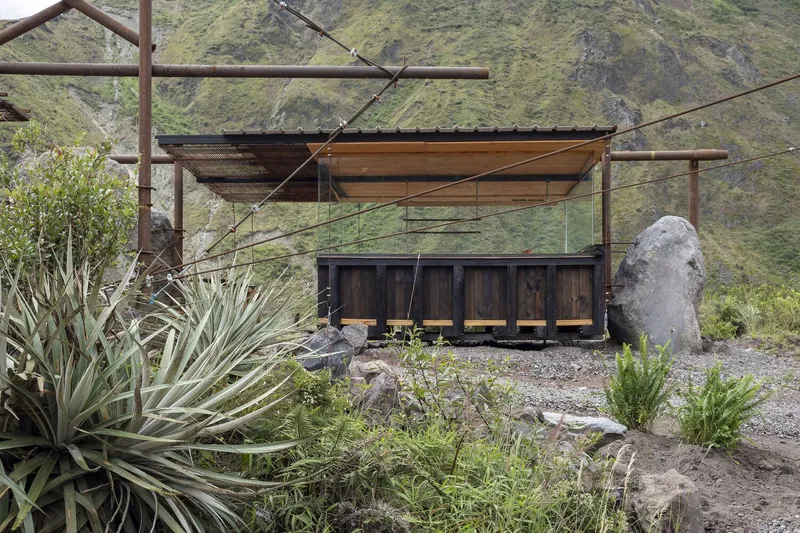
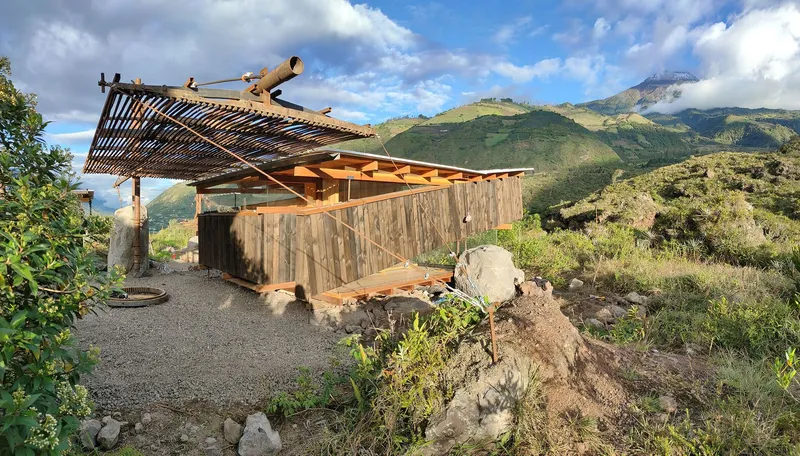
Design Concept: Dialogue Between Time, Memory, and Materiality
The Cabin in La Cantera masterfully incorporates the materials and remnants of the stone quarry, breathing new life into objects left behind by the site's industrial past. The architecture forms a dialogue of time and memory, where each element tells a story of the land's transformation. The design honors the quarry’s history while embracing a vision of ecological and cultural sustainability.
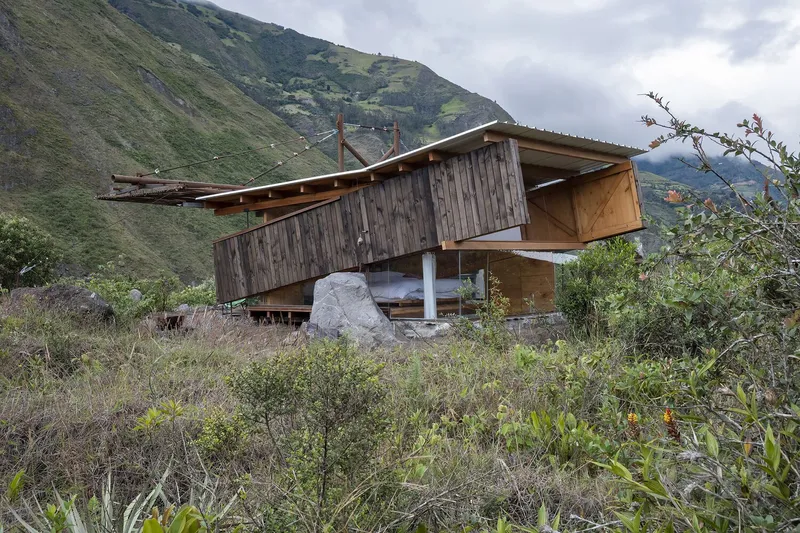
Material Selection: A Blend of Natural and Recycled Elements
The materials used in the construction of the lodge come from three key sources:
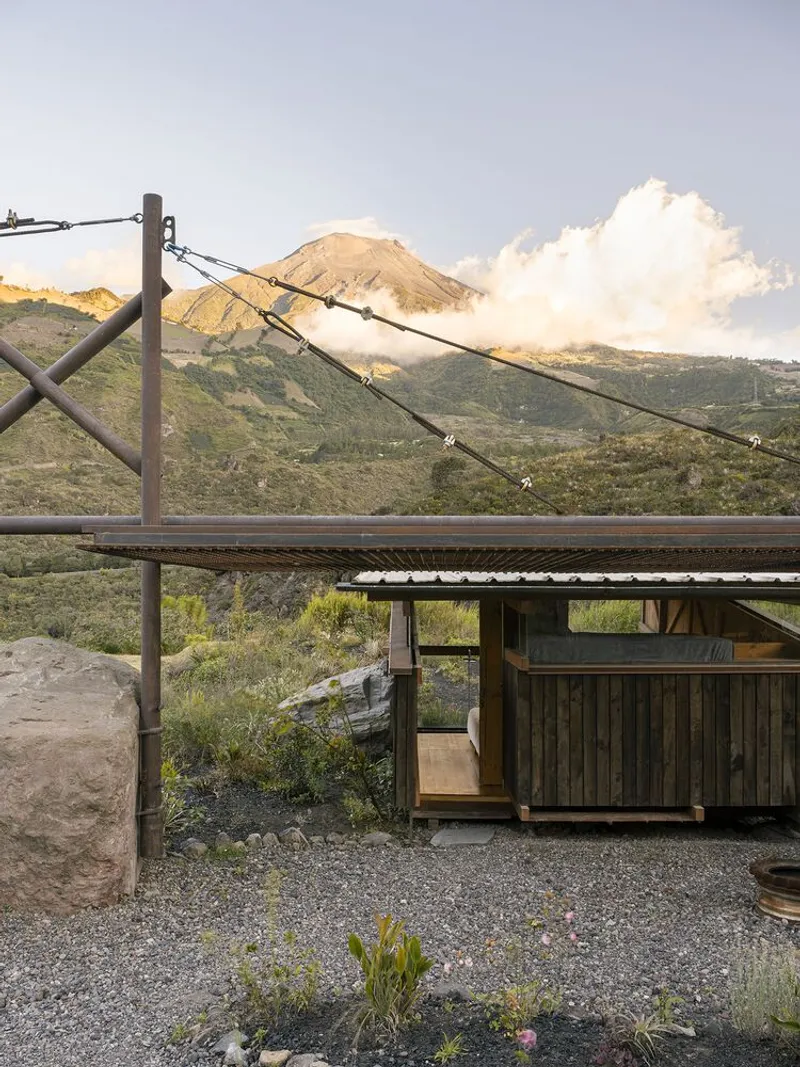
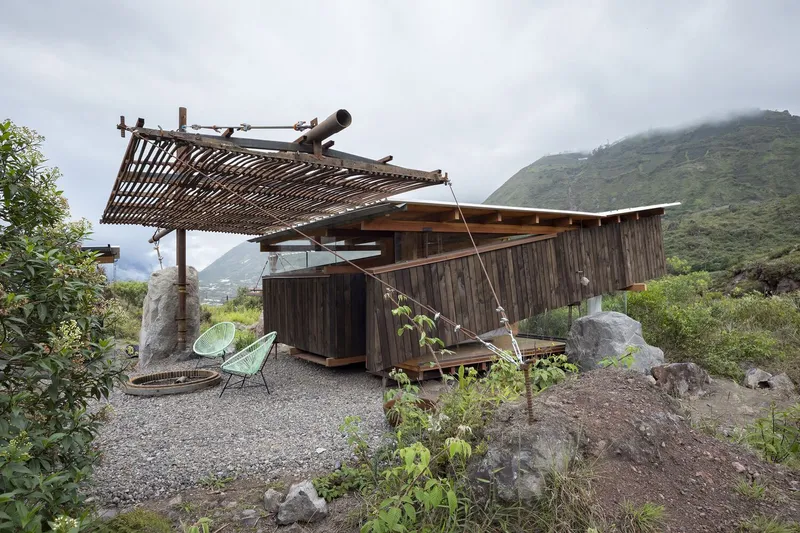
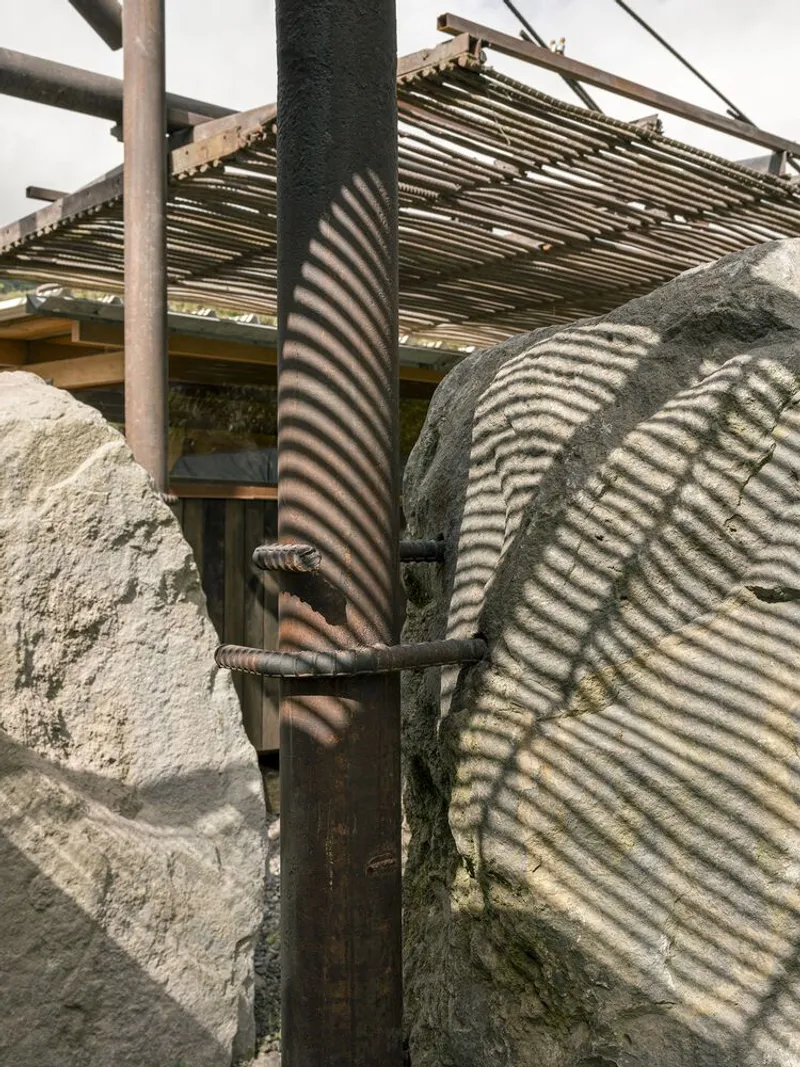
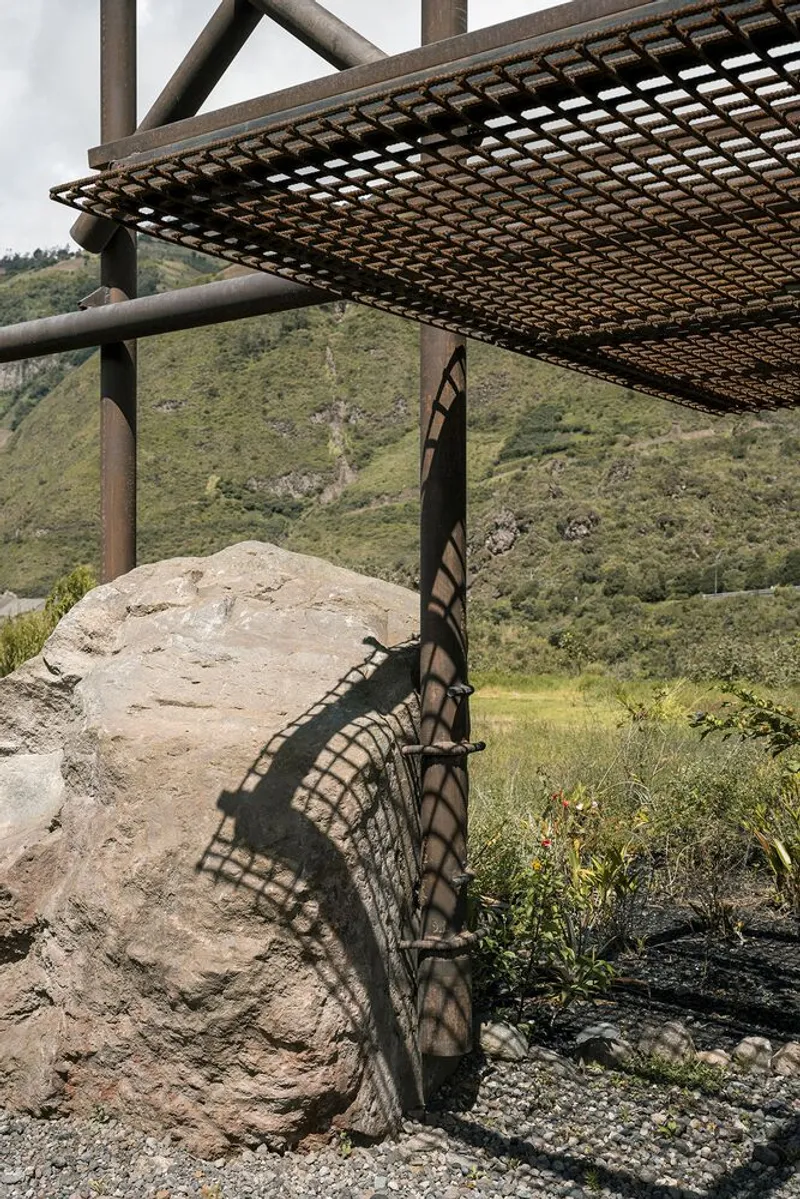
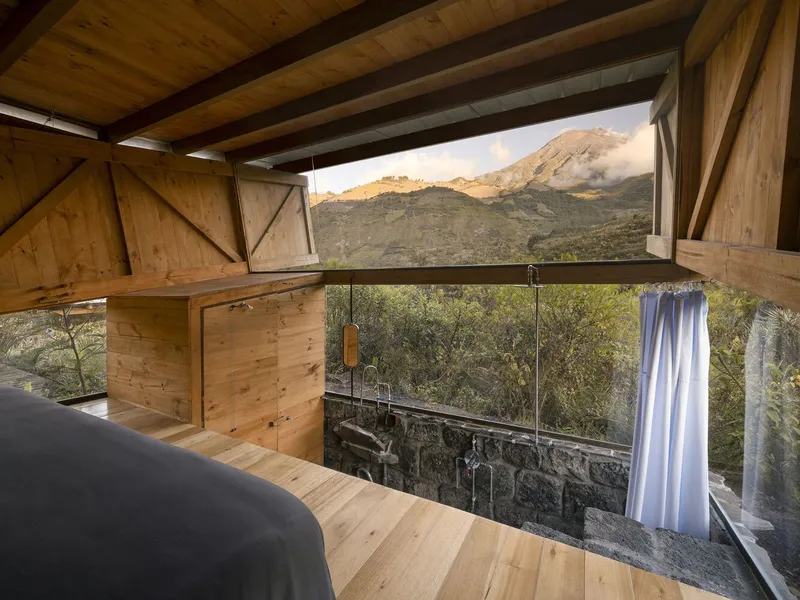
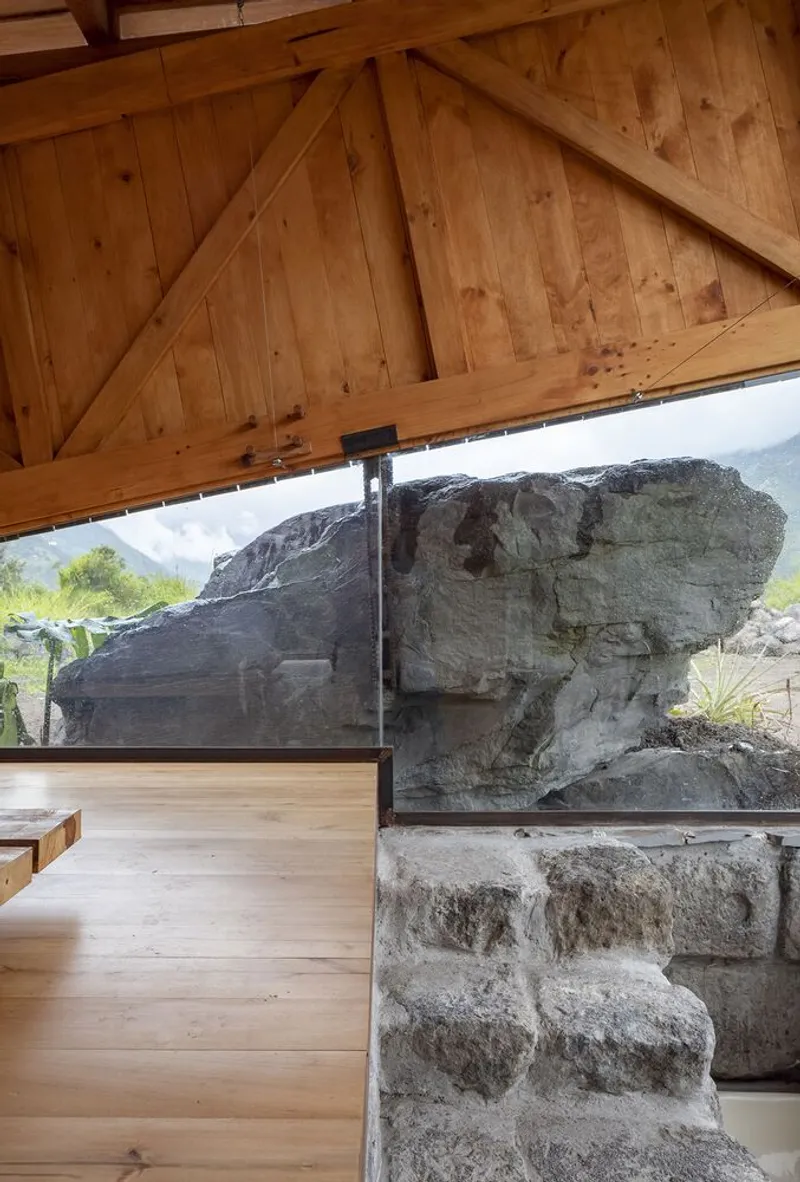
- Natural Context – The remnants of the quarry itself, including large stones and flagstones, have been repurposed into structural supports and functional elements like sinks. Gravel and sand have been utilized in outdoor spaces, blending seamlessly with the natural surroundings.
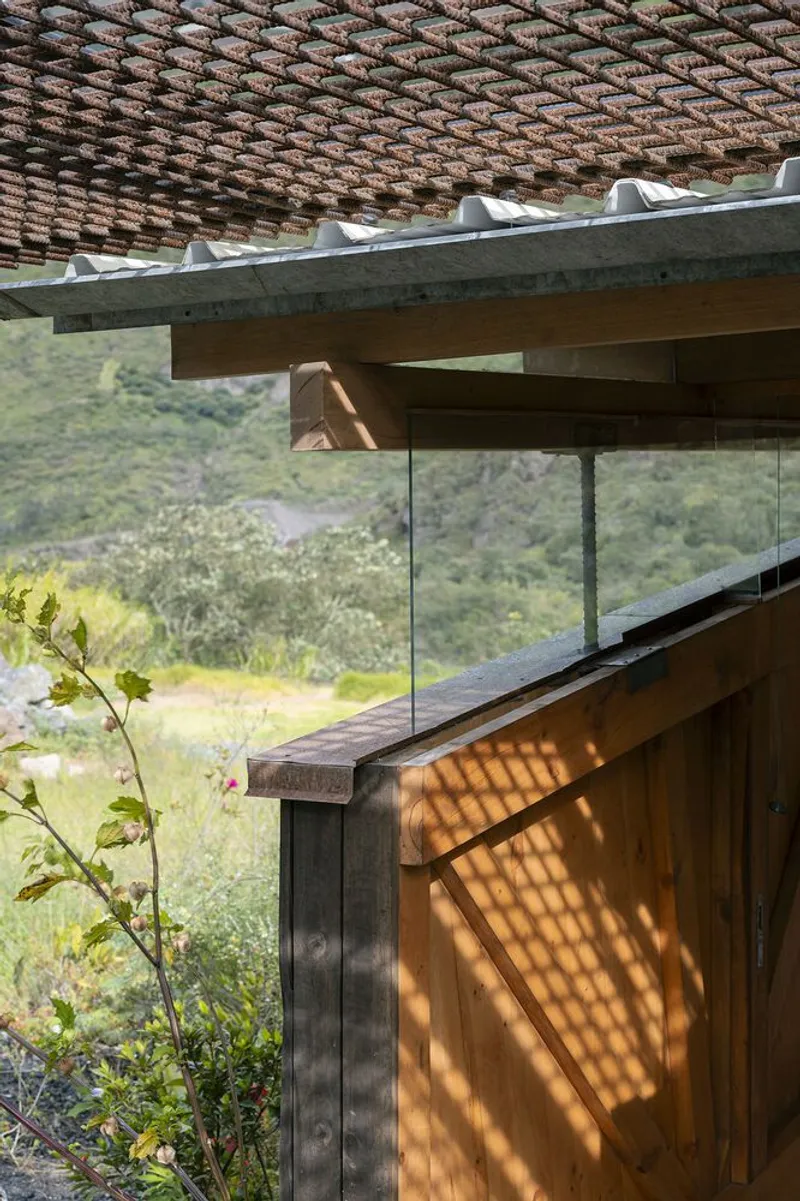
- Recycling – Materials like sieves, oil pipeline tubes, metal parts, and wood from old structures in Baños are integrated into the design. These recycled materials infuse the cabins with the history and essence of the quarry while providing an eco-conscious solution to material reuse.
- New Materials – To ensure visitor comfort, new materials such as pine wood and colored wood have been used for interior finishes, enhancing the aesthetic appeal and providing warmth and comfort in the living spaces.
Spatial Experience: A Majestic View of Tungurahua Volcano
The cabins are designed with simple, prefabricated trusses that create an unobstructed view of the Tungurahua Volcano, offering an experience akin to being in an observatory. The materials and layout ensure that guests are not just visitors—they are immersed in the landscape, with the volcano serving as a focal point that enhances the emotional connection between the structure and its surroundings.
Sustainable Design and Eco-Tourism Integration
This project redefines the relationship between architecture and its environment. By using locally sourced and recycled materials, the cabin is not only a sustainable retreat but also a reflection of the local landscape’s history and natural beauty. It is a perfect example of eco-tourism architecture, where the focus on environmental integration, sustainable practices, and recycling creates a harmonious living space for those looking to reconnect with nature.
A Tribute to Nature, History, and Sustainability
The Cabin in La Cantera is an inspiring example of how architecture can embrace the past while forging a path toward a sustainable future. With its unique design, rooted in both the land's history and its ecological potential, this project sets the stage for a new type of sustainable tourism. Through recycled materials, natural design, and an immersive volcanic experience, the cabin offers visitors a chance to connect with both the history of the land and the dynamic natural forces shaping it.


Popular Articles
Popular articles from the community


GROUP A Strips a 1969 Rotterdam Harbor Headquarters to Its Frame and Wraps It in Timber Louvers
In Rotterdam's M4H harbor district, Ferro Offices reuses a 1969 frame, adds one timber storey and reaches BREEAM-NL Outstanding.

Jaramillo Van Sluys Arquitectura and Urbanismo Turn a Demolished Registry Lot in Quito into an Orchard Plaza
In Quito's Centro Histórico, a 2,800 m² plaza exposes the San Agustín convent wall and redraws its lost Augustinian orchard in volcanic stone.

Cube Design Draws an Ecological Corridor Between Two Shenzhen Hills with the Nankai Building
Beside Shenzhen's container docks, the Nankai Building pairs stacked balconies with a climbing green screen to connect two hillsides across its height.

David Ortega Stacks a Two-Story Mexico City Penthouse Around a Steel Stair and a Pergola-Shaded Roof Terrace
In Colonia Roma, a 300 m² penthouse uses oak joinery, a planted steel stair and a slatted roof pergola to make a new-build apartment feel like a house.

Similar Reads
You might also enjoy these articles


Hodi-Mandai Geram
Project Function: Preservation and revitalization of the Intangible heritage and socio-spatial identity of the Hodi by Housing, Cultural Memory Center, Sacred Grove, landscape, local tourism economy


Olio Towers: A Mid-Rise for Performers That Fuses Housing, Rehearsal, and Stage
Located blocks from Houston's Theater District, this modular tower stacks living units around a central performance atrium.

Oasis: Modular Green Housing Carved into Dhaka's Urban Fabric
A shortlisted Plugin Housing entry reclaims unauthorized settlements in Dhaka with stepped concrete volumes, green roofs, and ventilation-driven design.

Black Hole: A Floating Megastructure for the Post-Physical Era
Emiliano Mazzarotto envisions a spherical, self-scaling arena where e-sports, digital hotels, and holographic stadiums replace traditional public space.

Explore Eco-Tourism Competitions
Discover active competitions in this discipline

Challenge to design a portable theatre

Challenge to design a portable music platform

Challenge to design an open learning module for the elderly

Challenge to reimagine the Iron Throne
Comments (0)
Please login or sign up to add comments
No comments yet. Be the first to comment!