

Cacho House by Estudio Grizzo Arquitectos: A Sculptural Harmony of Space, Light, and Landscape
Cacho House blends travertine minimalism, floating volumes, and lush landscaping to create a serene, light-filled home rooted in nature.


Location: Guillermo Enrique Hudson, Argentina Area: 420 m² Year: 2022 Architects: Estudio Grizzo Arquitectos, in collaboration with Santiago Fernández Bender Photography: © Alejandro Peral Manufacturers: Carlú, Deca, EB Mobile Design, Herrería Vicente, Marmolería Bustamante, Perricone, Thol
Contextual Design on a Challenging Plot
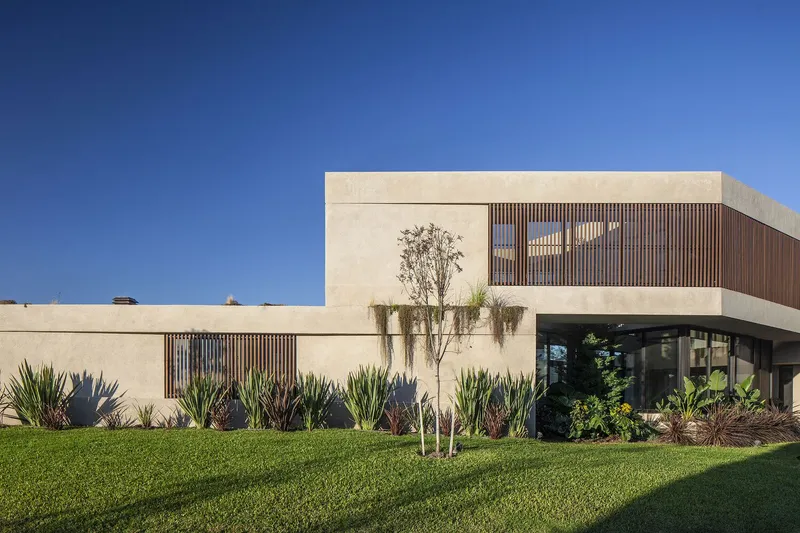
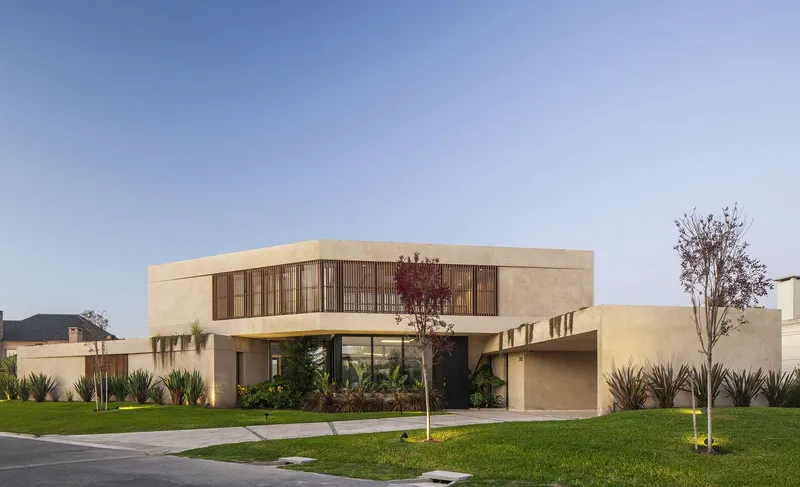
Situated in the serene town of Guillermo Enrique Hudson, Cacho House presents a bold architectural response to the constraints of a triangular site. With a generous frontage but limited rear depth, Estudio Grizzo Arquitectos was tasked with organizing a complex residential program predominantly on the ground floor while preserving outdoor space and ensuring privacy.
The solution was an elegant spatial strategy that divides the plan into two parallel linear volumes, each serving distinct functions. One volume houses the communal areas — kitchen, dining room, gallery, grill, laundry, and mechanical rooms — positioned toward the front of the lot. The second bar, aligned with the side setback, contains the master bedroom suite, creating a private retreat buffered by nature.
A Floating Volume Anchoring the Design
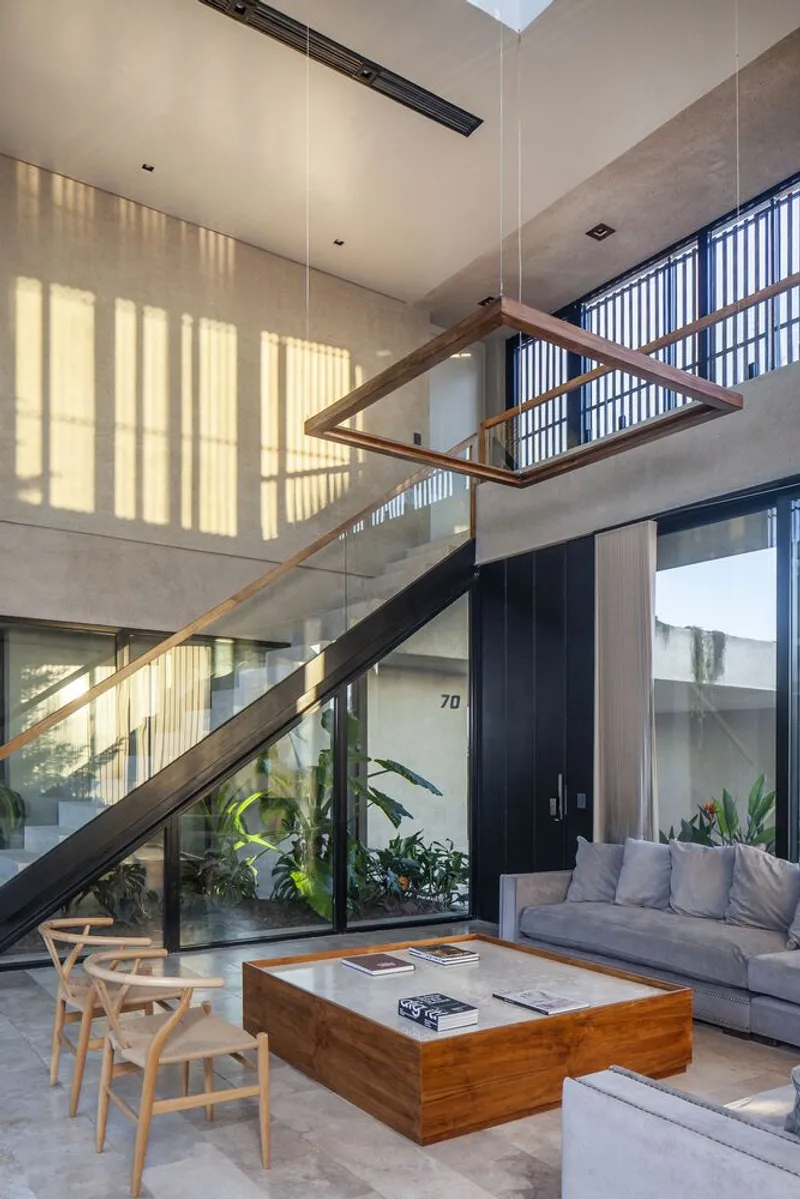
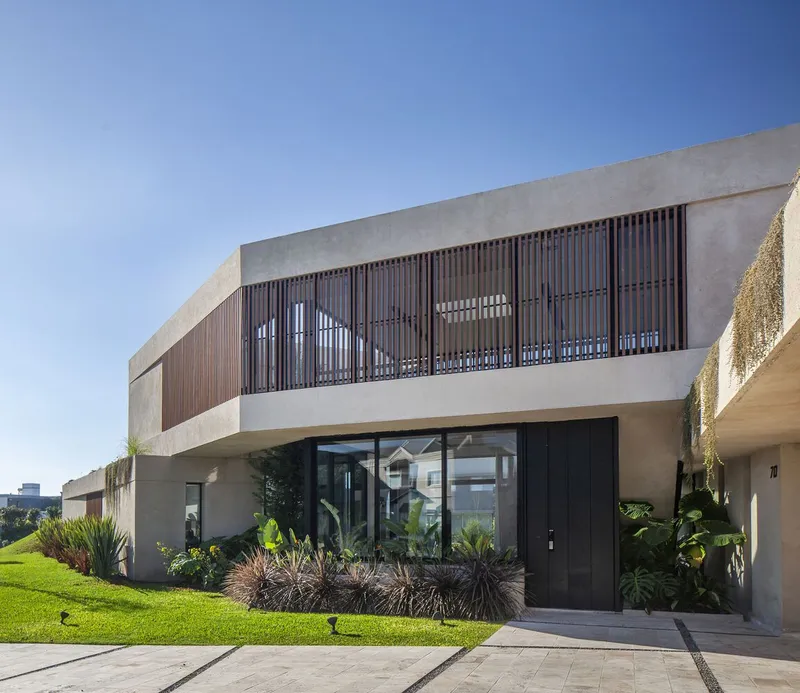
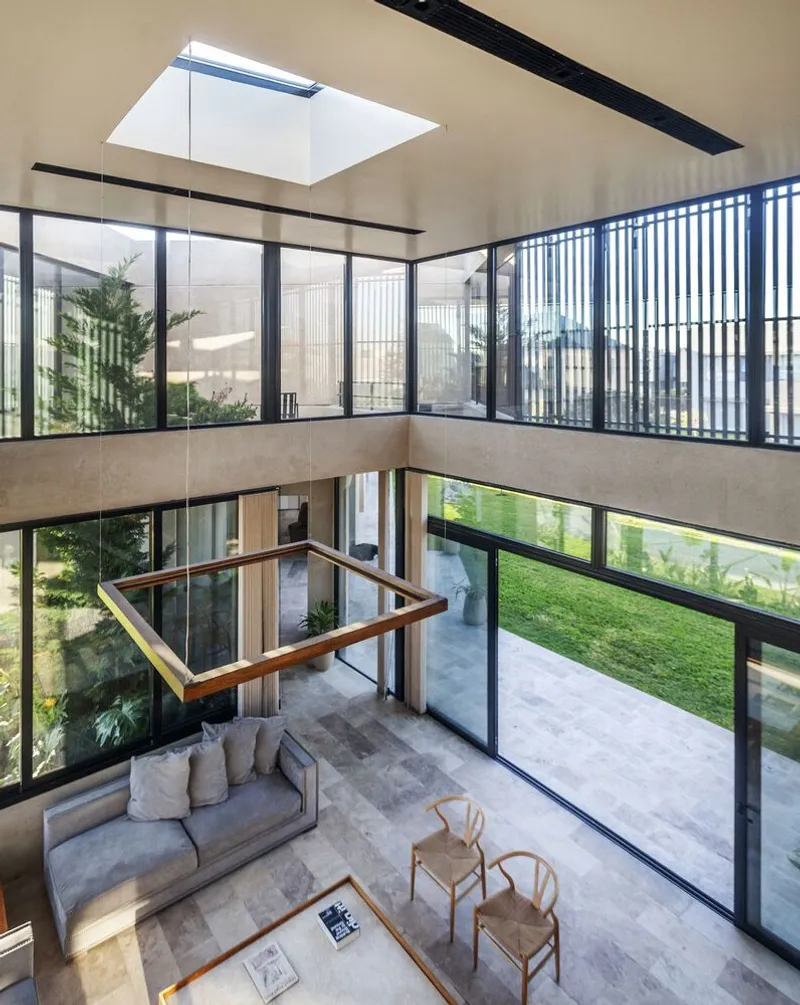
Resting atop these two bars is a third elevated volume, forming a compact, unified silhouette. This upper structure houses two guest bedrooms placed at opposite ends. Between these three linear forms emerges the architectural centerpiece: a double-height living room, flooded with light and offering dynamic views in all directions.
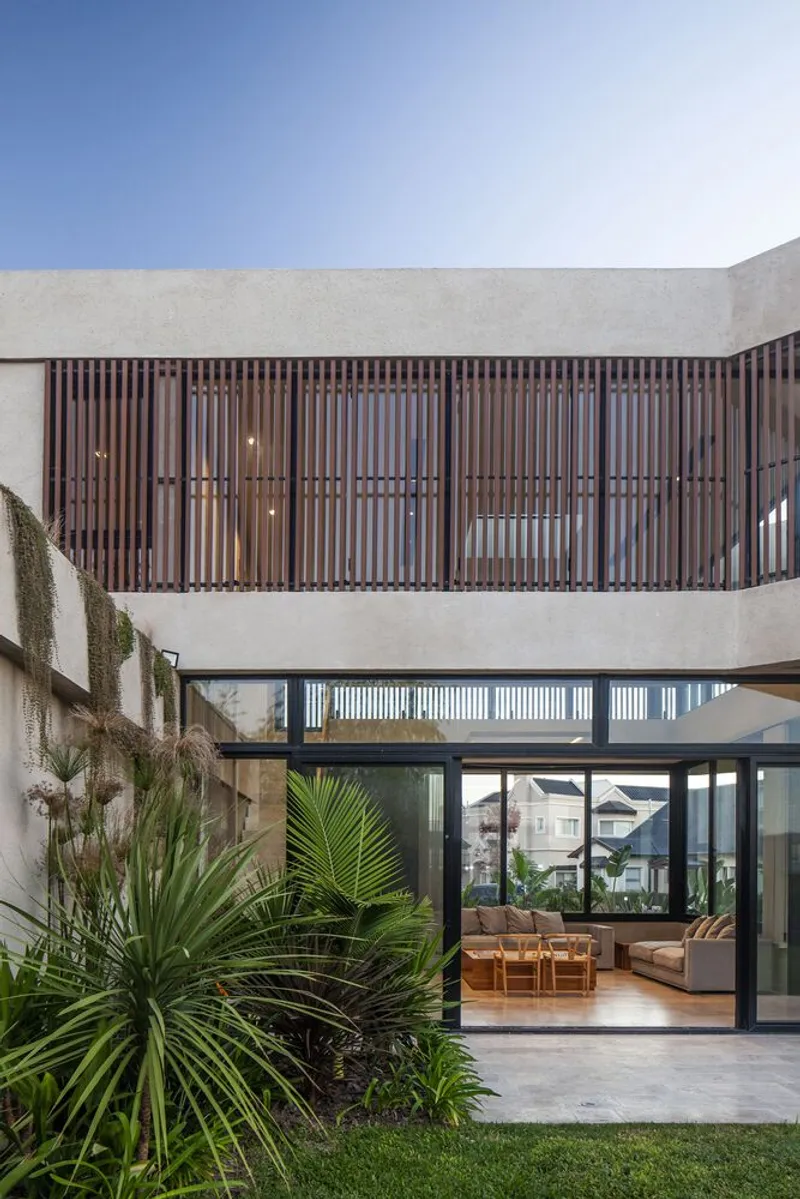
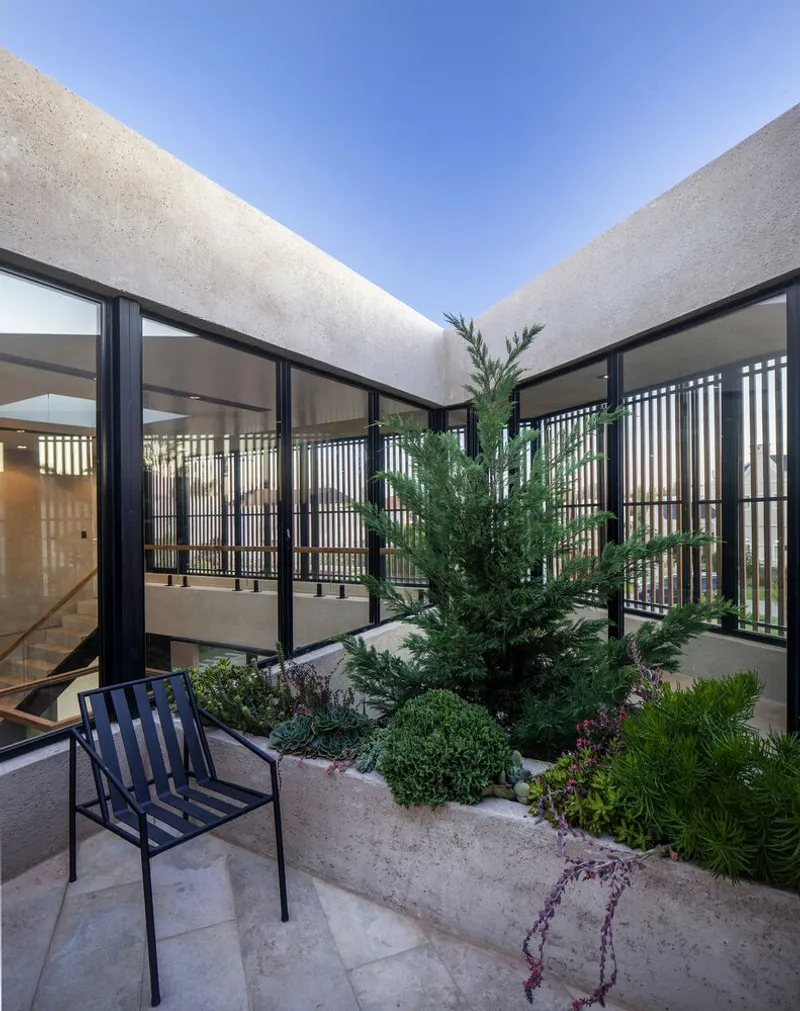
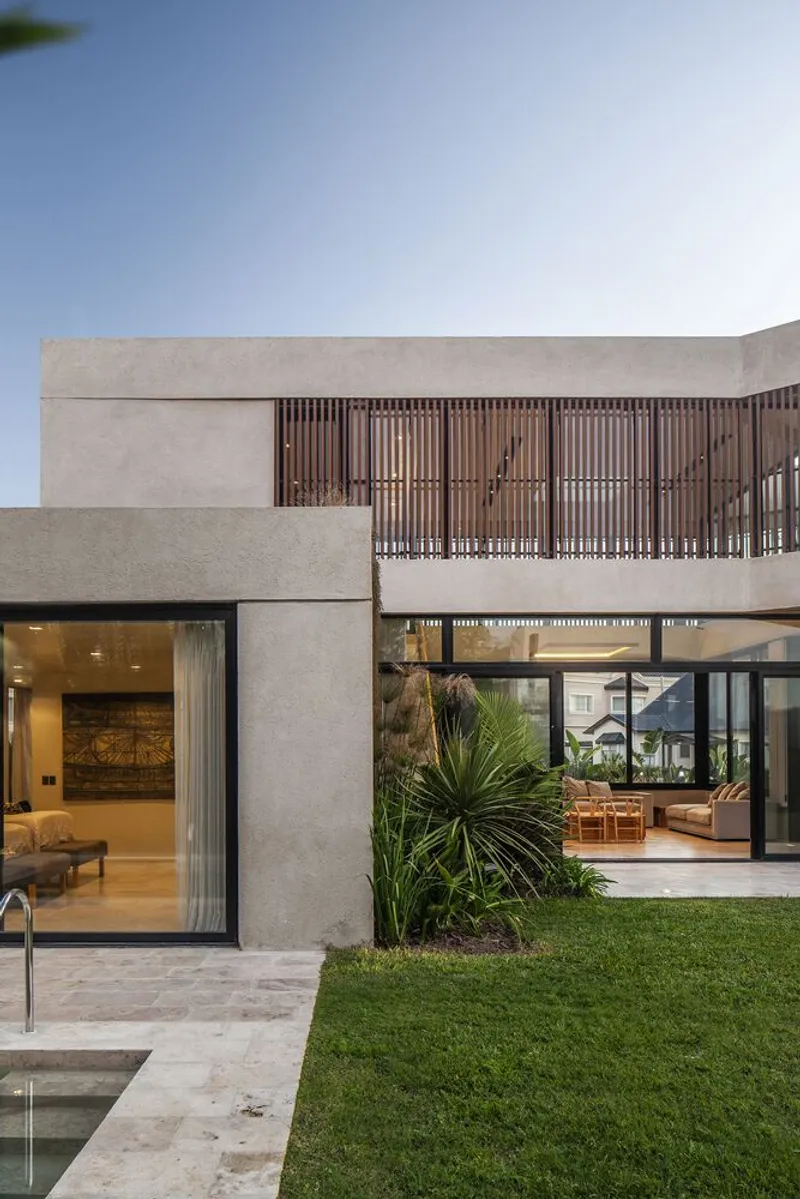
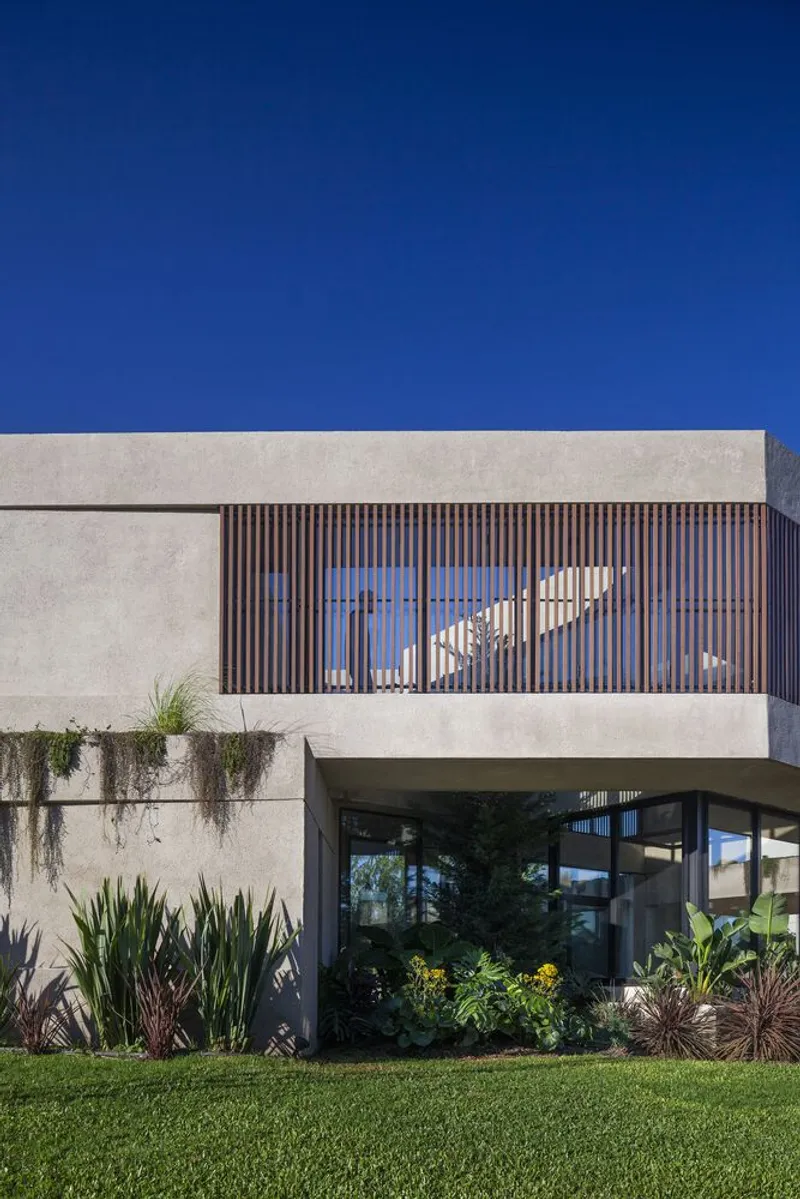
The interplay of these three volumes carves out intimate courtyards and green pockets that connect seamlessly with the interior. Large windows with sunshades punctuate the upper volume, providing both thermal comfort and controlled daylighting, while framing lush garden views.
Seamless Indoor-Outdoor Integration
Cacho House demonstrates a meticulous balance between built form and natural landscape. The architecture actively engages with the exterior through a series of front and rear gardens, internal patios, and strategic vegetation pockets. An internal planter beneath the staircase, together with green roofs and balconies, ensures that nature weaves through every level of the home.
A standout gesture is the cantilevered upper volume at the rear, projecting four meters beyond the ground floor footprint. This floating gallery not only provides shade but creates a covered outdoor living space without compromising the garden area.
Material Palette and Monochromatic Warmth
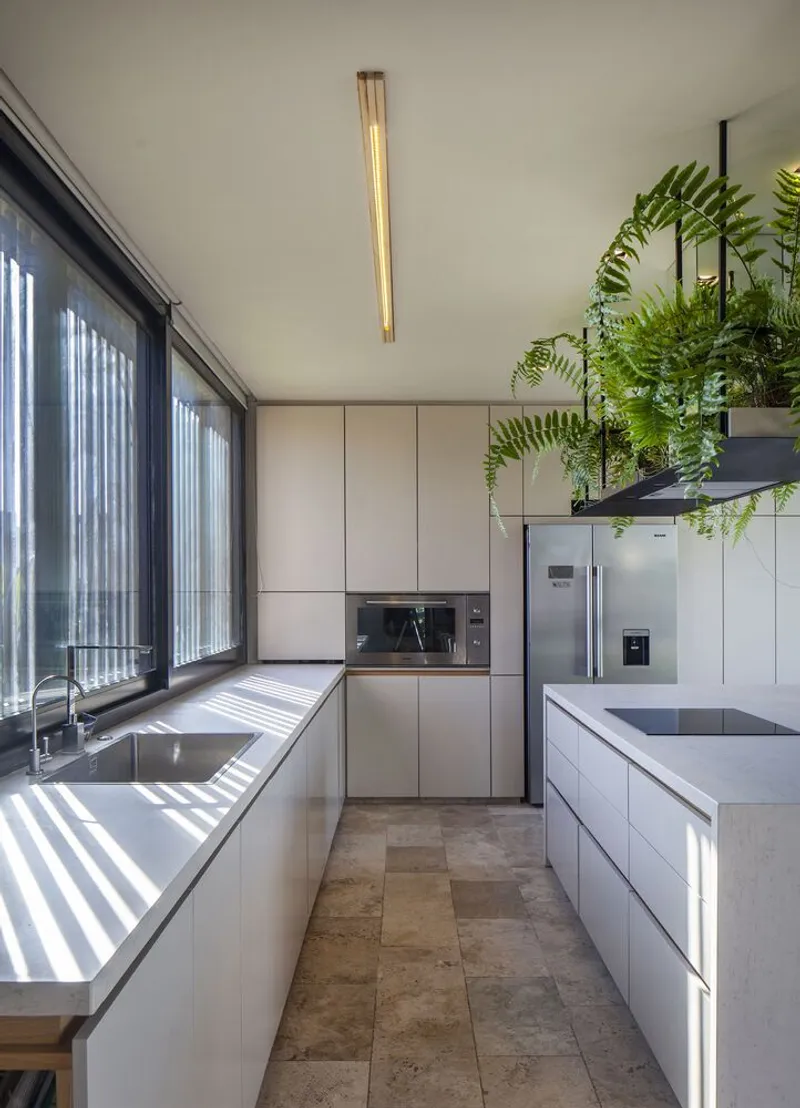
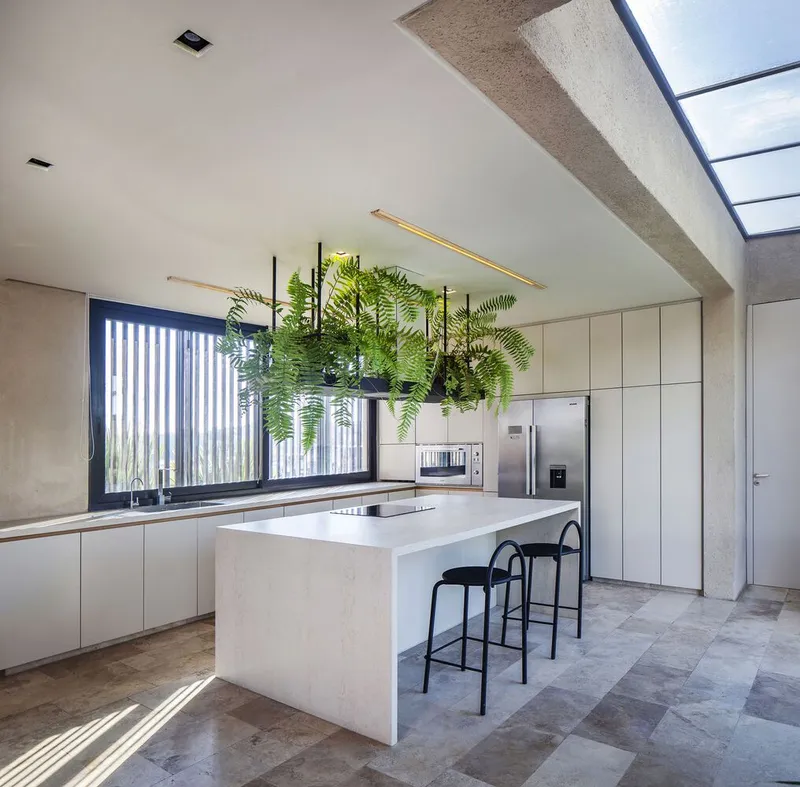
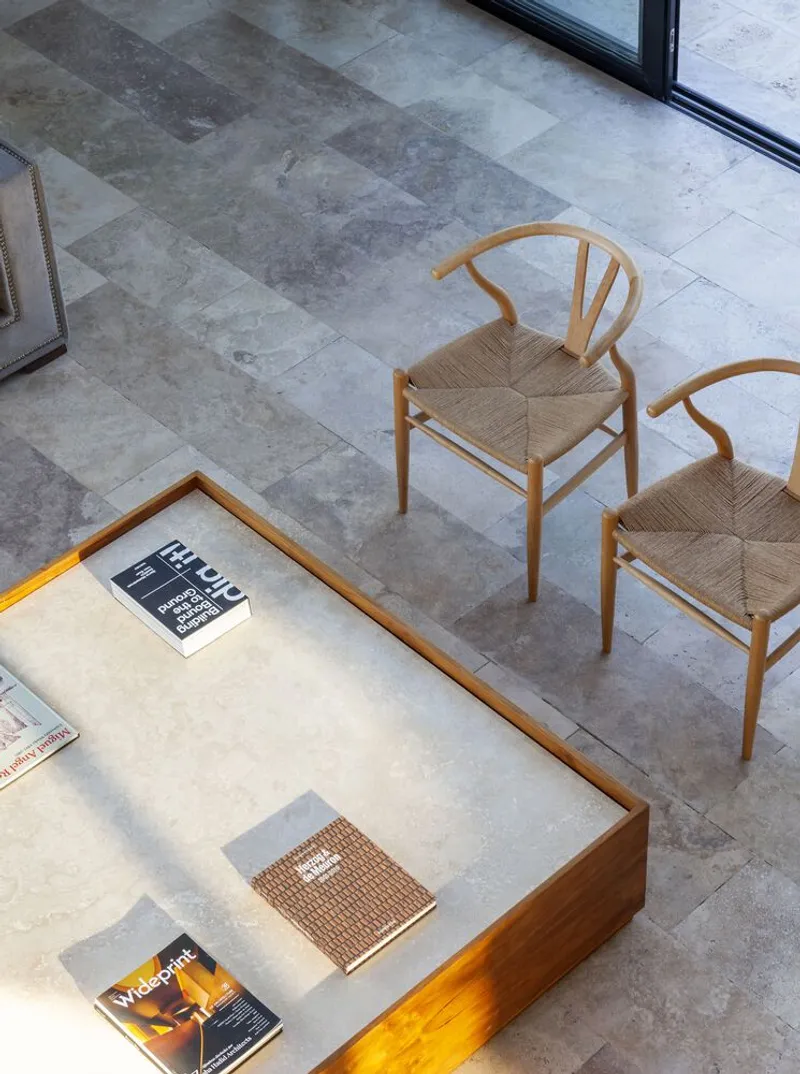
The house employs a restrained, earthy palette grounded in travertine marble, chosen for both its durability and timeless elegance. This natural stone appears throughout the house — in floors, walls, and bathroom finishes — ensuring visual continuity. On the façade, a combed marble-stone mix enriches the texture and lends a sculptural quality to the elevation.
To contrast and complement the stone, a raw, monochromatic tone is used across walls, ceilings, and even kitchen cabinetry. This neutrality allows natural wood accents, such as custom oak handles, to subtly stand out, enhancing the overall warmth and tactile richness of the spaces.
Landscape as a Living Architecture
Landscape architecture is an intrinsic element of the project’s spatial identity. Green “islands” emerge where the architecture shifts or intersects, softening transitions and anchoring the home within its natural context. Roof gardens, integrated into each bar, bring greenery to elevated planes and play with light and shadow, contributing to both environmental sustainability and aesthetic refinement.
The result is a house that is not only a private residence but a living system of architecture, vegetation, and light — evolving gracefully over time with minimal maintenance.
Cacho House by Estudio Grizzo Arquitectos stands as a testament to thoughtful spatial composition, material honesty, and environmental integration. Through layered volumes, controlled openings, and landscape-conscious design, the project transcends typical residential architecture, offering a refined lifestyle deeply rooted in place and nature.




Popular Articles
Popular articles from the community


Conexión: Biophilic Design Reimagines High-Rise Living in Hong Kong
Conexión reimagines high-rise living in Hong Kong through biophilic design, green facades, shared spaces, daylight, water and nature within.

Co-Life: Senior Housing Design That Reconnects Older Adults With the City
Co-Life reimagines senior housing design through healing gardens, shared streets, workshops, and a sustainable community across generations.

AL-JANNAH: Sustainable Architecture and Permaculture for Afghan Widows
AL-JANNAH uses sustainable architecture and permaculture to create resilient oasis of housing, learning, work and renewal for Afghan widows.

Co-life: Sustainable Architecture for Age-Friendly Community Living
Co-life reimagines sustainable architecture for seniors through courtyards, rammed earth, shared gardens, and spaces designed for belonging.

Similar Reads
You might also enjoy these articles


Hodi-Mandai Geram
Project Function: Preservation and revitalization of the Intangible heritage and socio-spatial identity of the Hodi by Housing, Cultural Memory Center, Sacred Grove, landscape, local tourism economy


Olio Towers: A Mid-Rise for Performers That Fuses Housing, Rehearsal, and Stage
Located blocks from Houston's Theater District, this modular tower stacks living units around a central performance atrium.

Oasis: Modular Green Housing Carved into Dhaka's Urban Fabric
A shortlisted Plugin Housing entry reclaims unauthorized settlements in Dhaka with stepped concrete volumes, green roofs, and ventilation-driven design.

Black Hole: A Floating Megastructure for the Post-Physical Era
Emiliano Mazzarotto envisions a spherical, self-scaling arena where e-sports, digital hotels, and holographic stadiums replace traditional public space.


Explore Latin American Houses Competitions
Discover active competitions in this discipline



Challenge to reimagine the Iron Throne


Photograph architecture without architects


Illustrate the lost glory of Angkor Wat - Render Challenge


Design challenge to reuse E-waste
Comments (0)
Please login or sign up to add comments
No comments yet. Be the first to comment!