

Campus ACV-CSC-Metea: Sustainable Renovation and Contemporary Educational Architecture in Ghent
A sustainable, wood-structured Ghent campus integrating renovated volumes, green courtyards, glass transparency, flexible offices, and energy-efficient design.


Located in Ghent, Belgium, the Campus ACV-CSC-Metea by evr-Architecten is a striking example of sustainable, adaptive reuse in modern educational architecture. Covering an area of 3,161 m², the project revitalizes an aging campus at Sint Pietersstation, blending historic structures with innovative wood construction to create a coherent, functional, and environmentally conscious educational environment.
Transforming an Unorganized Campus into a Cohesive Whole
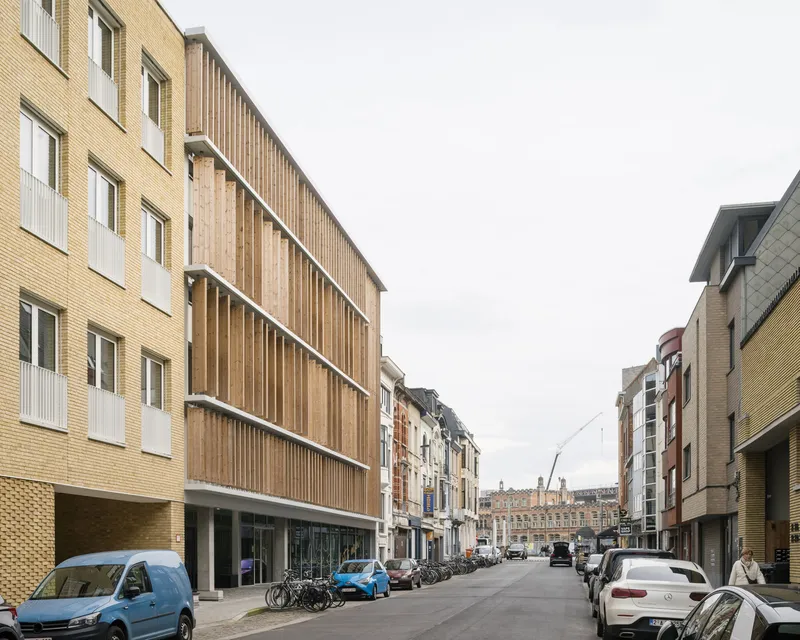
Previously, the campus extended between Koning Boudewijnstraat and Koning Albertlaan, consisting of multiple disconnected buildings with little public presence. Over time, numerous renovations and interventions had created a fragmented cluster, lacking functional clarity and architectural cohesion.
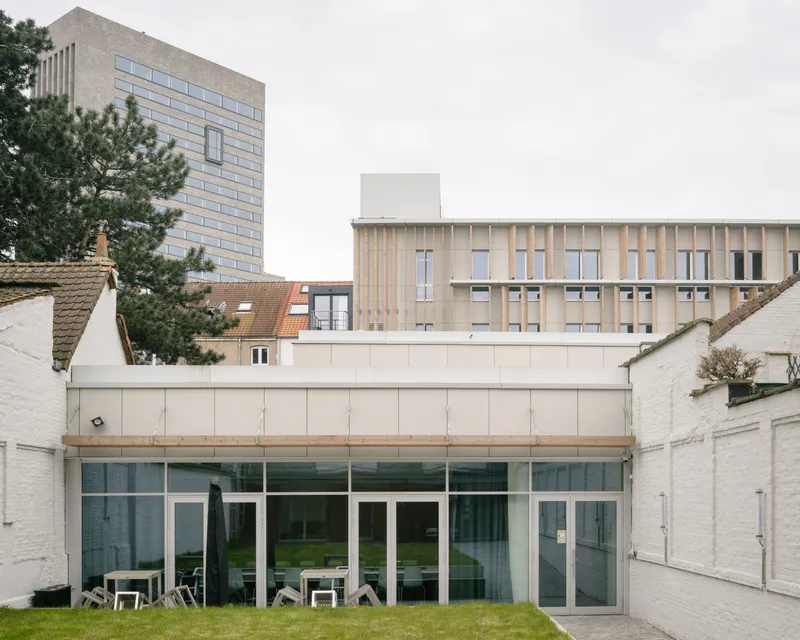
The design team prioritized the preservation of existing structures where feasible. The old archives cellar was converted into an accessible bicycle shed, while three rear volumes underwent a complete renovation following BEN (Nearly Zero Energy Building) principles. However, the main historic volumes, though structurally robust, could not meet contemporary comfort standards, leading to the construction of a new timber-based building, significantly reducing the carbon footprint.
Sustainable Design and Material Reuse
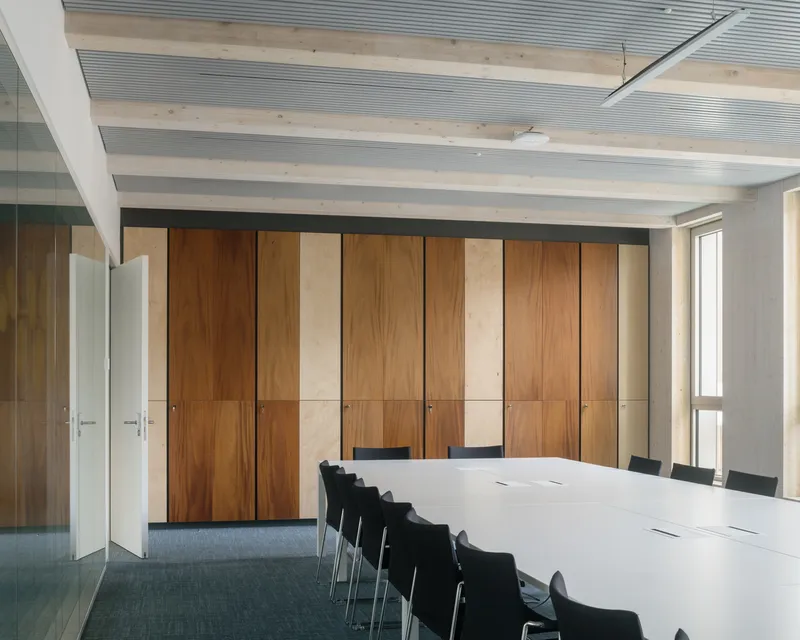
Sustainability was central to the project. During demolition, a thorough inventory of existing movable and fixed elements was conducted, enabling the reuse of insulation, joinery, and interior finishes. This circular approach extended the life cycle of materials and integrated them into the new structures.
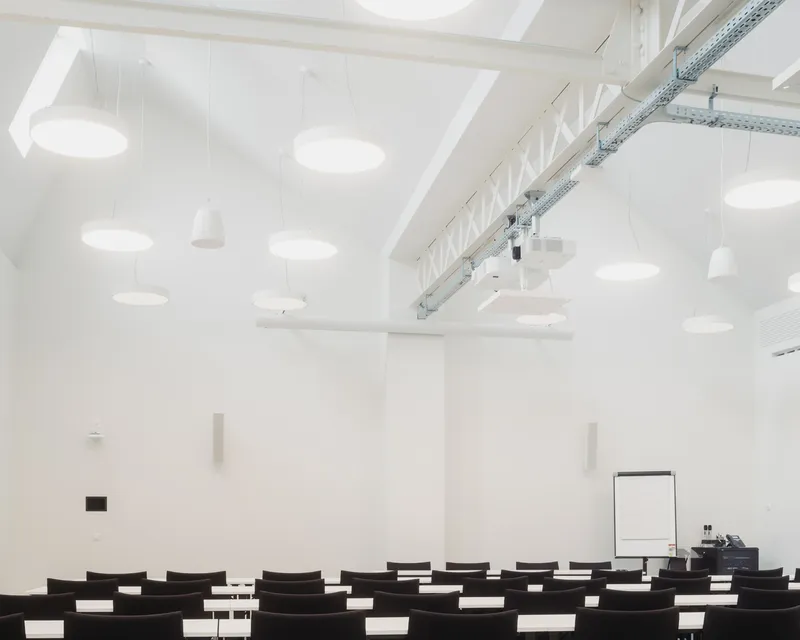
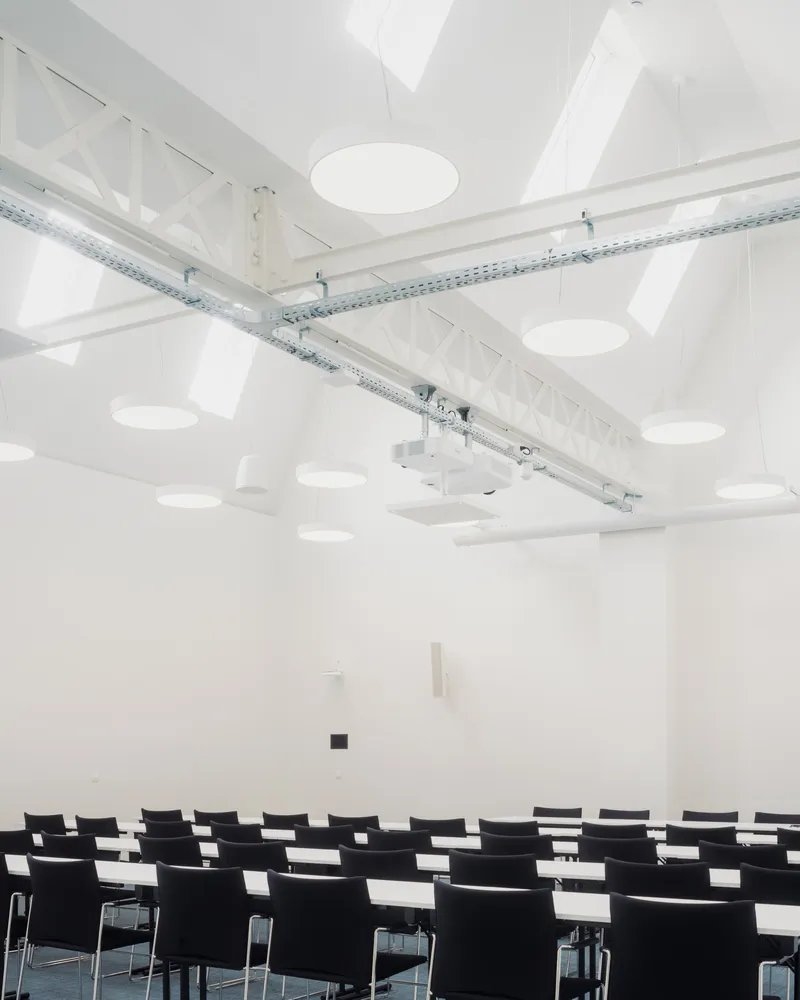
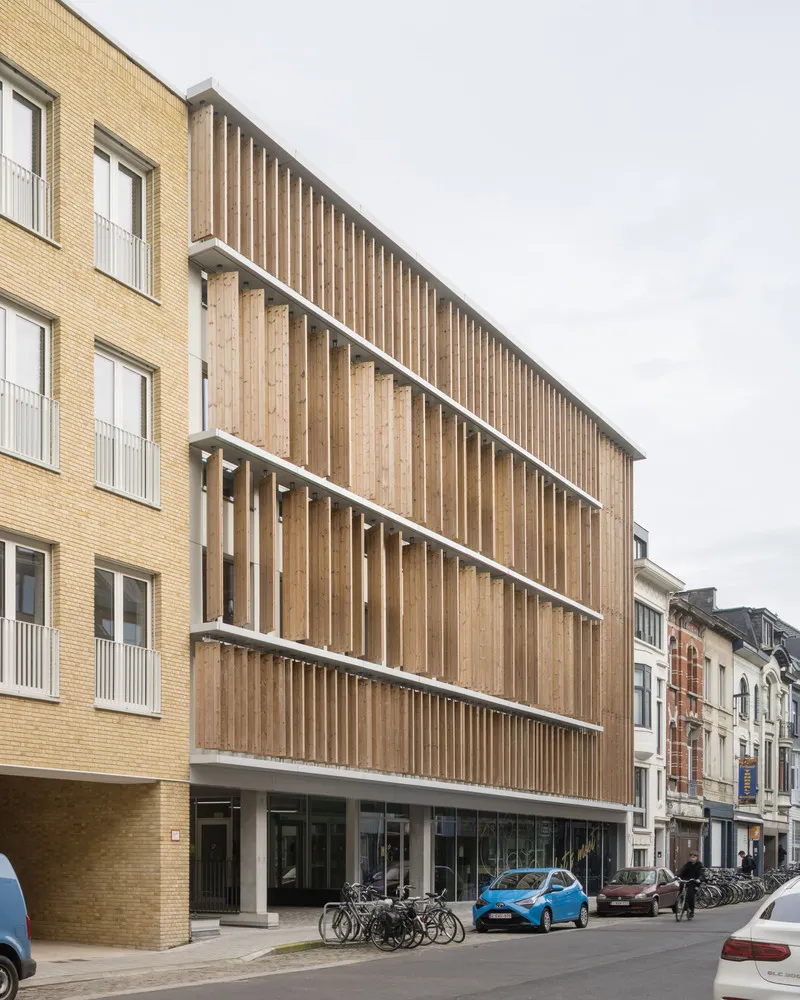
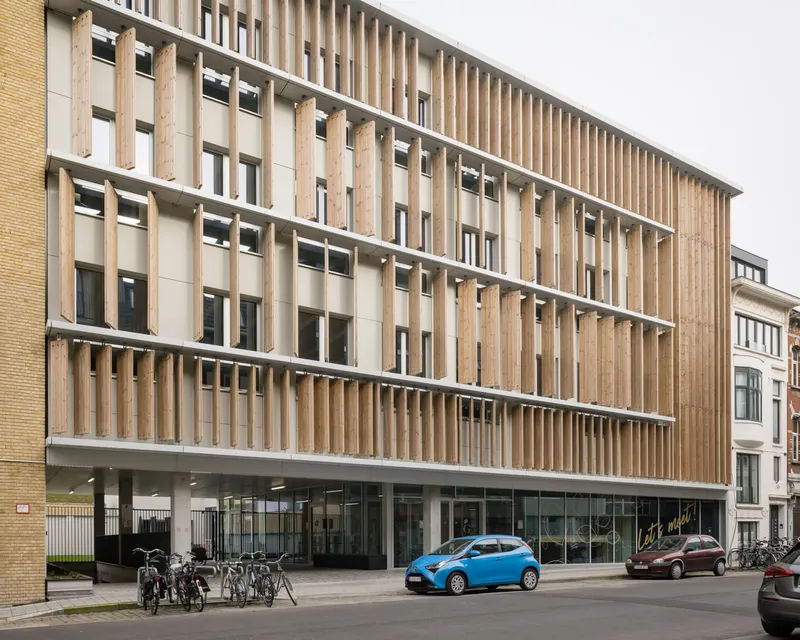
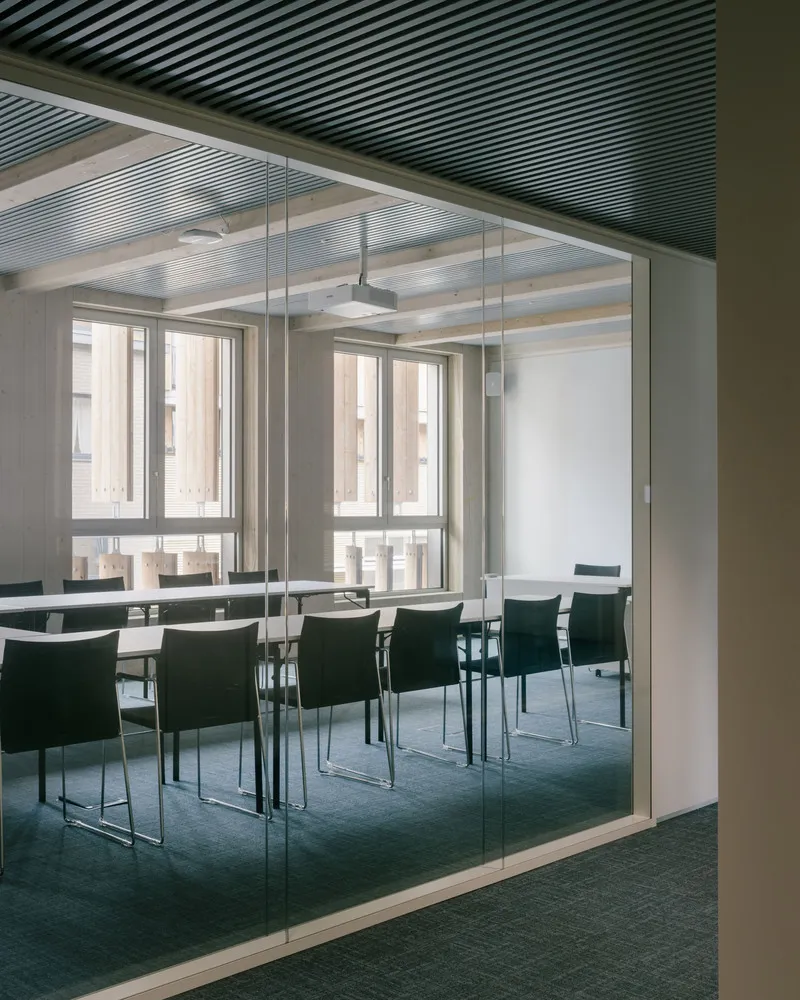
The new main volume features a glass, inward-sloping façade that connects seamlessly with the street and inner courtyard, creating transparency and openness. The ground floor houses a cafeteria, informal workspaces, and meeting rooms, while upper floors include lecture rooms, offices, and additional meeting spaces.
Flexible, Future-Proof Office Spaces
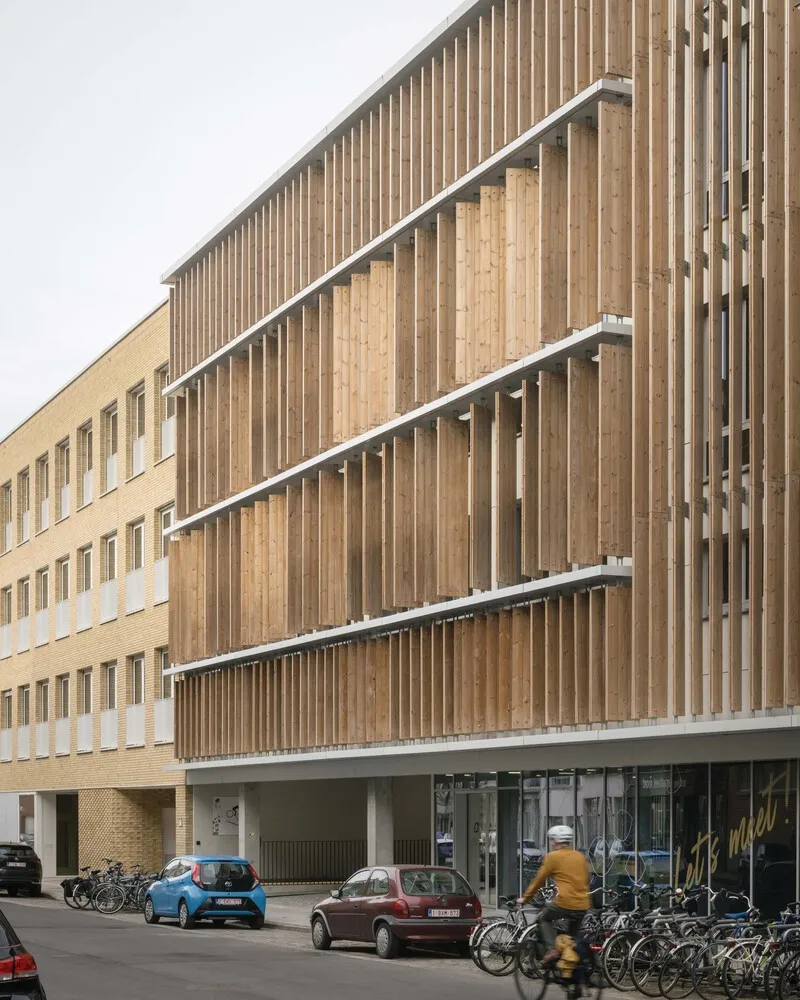
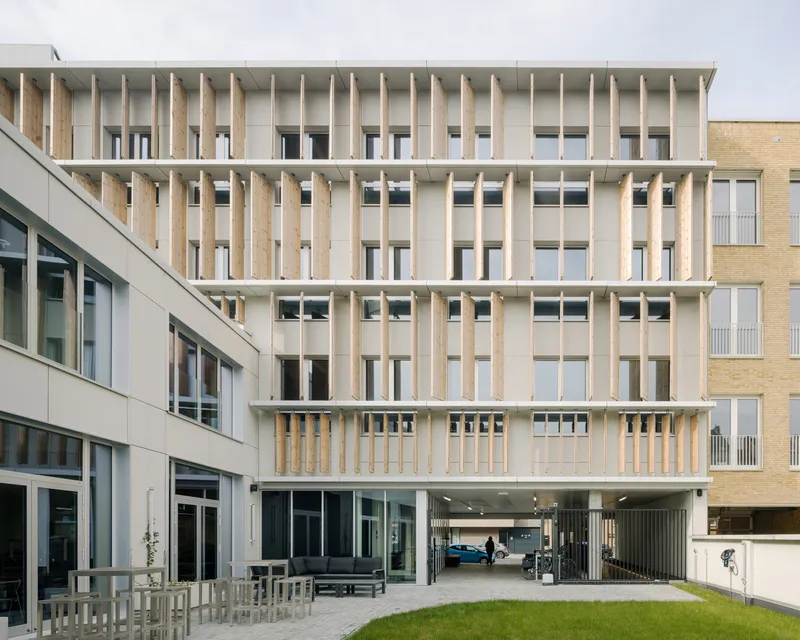
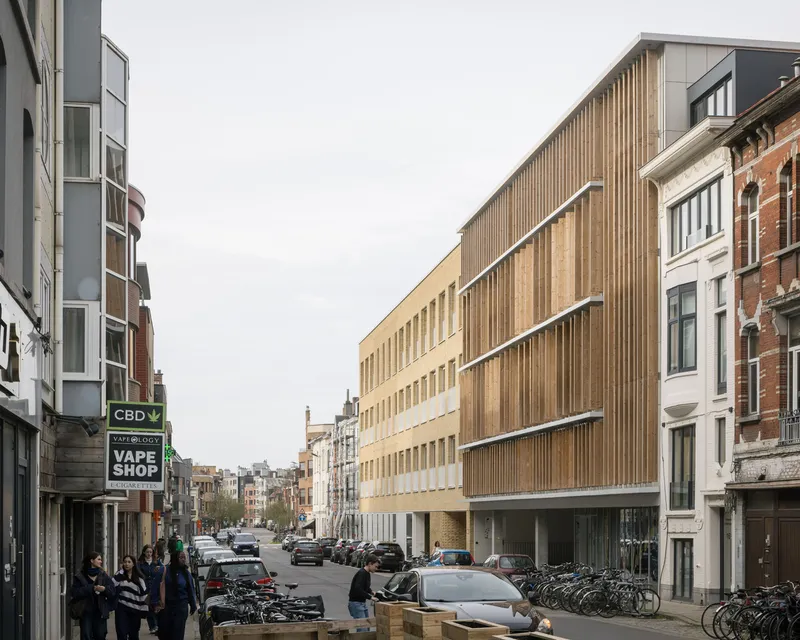
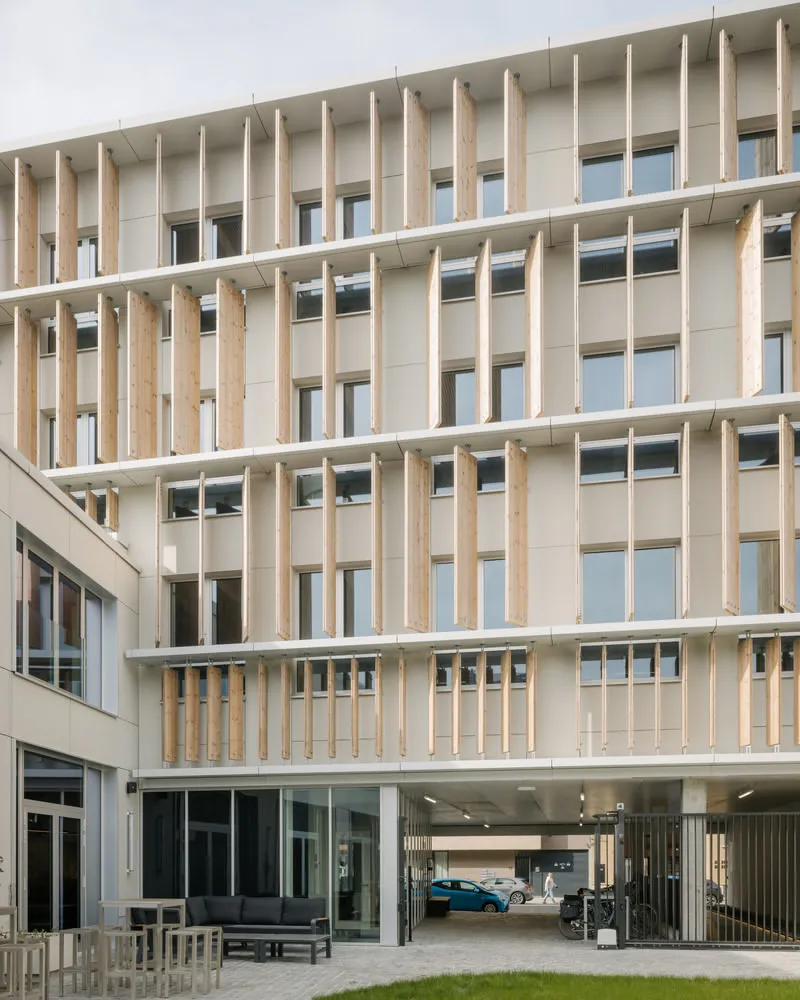
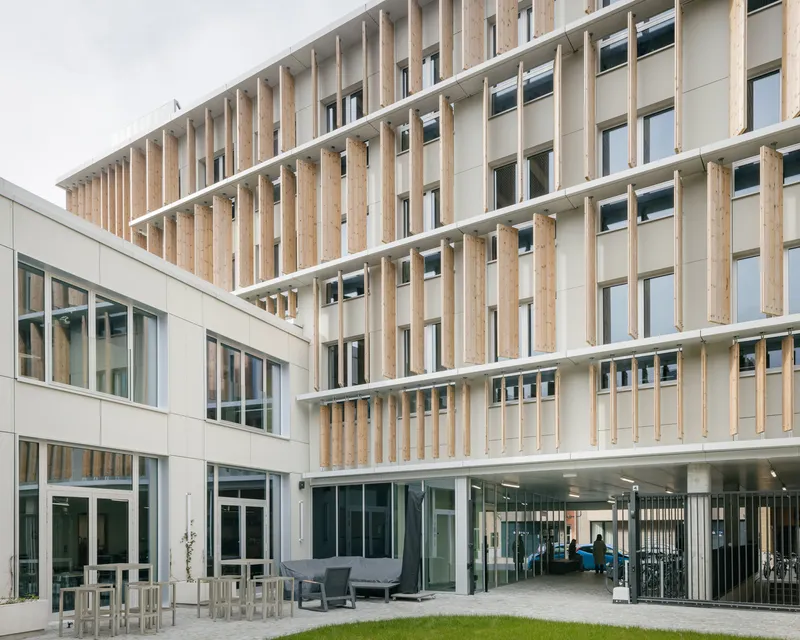
The upper three floors are constructed entirely from solid wood, offering a dismantlable, open structure that allows flexible office configurations. Vertical wooden slats, made from thermally treated FSC pine, provide passive solar shading, while horizontal lacquered fins diffuse daylight, balancing comfort and energy efficiency. Dynamic orientation of the slats ensures optimal daylight management throughout the day.
Collaboration with Bureau Bouwtechniek allowed for an advanced daylight and shading study, optimizing natural light access, glare reduction, and façade performance. The building’s design promotes interaction, accessibility, and sustainable operation while respecting the site’s historical context.
Green Courtyards and Community Integration
The renovation also redefined the campus landscape. By opening and connecting rear volumes to the new structure, two green courtyard gardens were created, enhancing accessibility and connecting to the cafeteria and meeting areas. The building now actively engages with the neighborhood, transforming the campus from a closed, fragmented environment into a vibrant, semi-public hub.
Campus ACV-CSC-Metea exemplifies how adaptive reuse, sustainable wood construction, and daylight-responsive design can transform aging educational facilities into functional, environmentally conscious, and aesthetically engaging spaces. The project sets a precedent for eco-friendly educational architecture, demonstrating a seamless balance between historic preservation, innovative design, and circular construction principles.
All photographs are works of
Stijn Bollaert


Popular Articles
Popular articles from the community


LT2A and OPEN Architectes Thread a Brick and Glass High School Through a Wooded Belgian Campus
In Braine-l'Alleud, a 3,000 m² wing for Collège Cardinal Mercier pairs pale brick with a glazed colonnade, deferring to a small chapel and a dense wood.

David Ortega Stacks a Two-Story Mexico City Penthouse Around a Steel Stair and a Pergola-Shaded Roof Terrace
In Colonia Roma, a 300 m² penthouse uses oak joinery, a planted steel stair and a slatted roof pergola to make a new-build apartment feel like a house.

Juan García Correa, John González and Claudia Rueda Sink a Circular Amphitheater into a Manizales Engineering Building
On the La Nubia campus in Manizales, Colombia, the S1 Building folds labs and offices into a hillside of ramped lawns that double as a campus route.

GROUP A Strips a 1969 Rotterdam Harbor Headquarters to Its Frame and Wraps It in Timber Louvers
In Rotterdam's M4H harbor district, Ferro Offices reuses a 1969 frame, adds one timber storey and reaches BREEAM-NL Outstanding.

Similar Reads
You might also enjoy these articles

Gil Mello Arquitetura Tilts a Single Roof Toward the Waterfalls on a Plateau Above Aiuruoca, Brazil
In Aiuruoca, Minas Gerais, a 200 m² house of local labor and reclaimed poles pairs a low valley veranda with a tall mountain one.

U.GA Architects Wraps an Oval Rooftop Pool in Curved Board-Formed Concrete on Busan's Jeollidan-gil
In Busan's Jeonpo-dong, a 454 m² mixed-use block stacks a neighborhood facility, guest rooms and an oval rooftop pool inside spiraling concrete walls.

Felipe Hess Arquitetos Turns a Blind Stone Wall to the Street and Opens a Brazilian House onto a Courtyard and Canal
A canal-front house in Brazil hides behind painted stone and planting, then opens to an olive-tree courtyard, a reed-ceilinged porch and a curving pool.

David Macias Steps a Doorless Stone and Plaster House Down a Tropical Colombian Hillside
In the humid hills of Colombia, Threshold House replaces the front door with an open void and terraces its 850 m² down the slope instead of fighting it.

Explore Architecture Competitions
Discover active competitions in this discipline

Challenge to reimagine the Iron Throne

Photograph architecture without architects

Illustrate the lost glory of Angkor Wat - Render Challenge

Bring back Drive In's
Comments (0)
Please login or sign up to add comments
No comments yet. Be the first to comment!