
Carlos Castanheira Builds a Gravity-Fed Winery from Granite and Timber in Northern Portugal
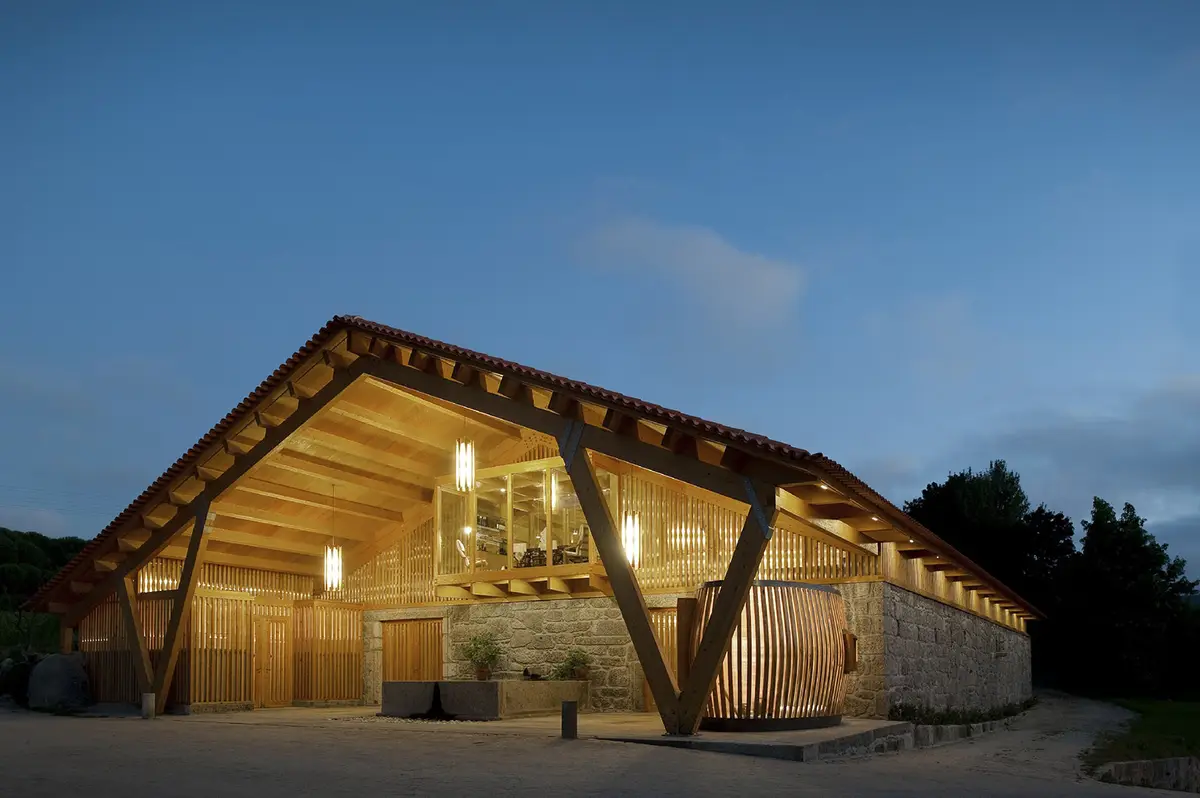
Adega Casa da Torre in Louro channels wine downhill without pumps, sheltered by laminated timber trusses and thick stone walls.


A winery ought to feel like it has always been there. The best ones sit in the landscape the way old trees do: rooted, unhurried, shaped by the same forces that ripen the grapes. At Adega Casa da Torre in Louro, Carlos Castanheira took an existing estate winery and expanded it with that instinct, adding only what the production demanded and nothing the site could not absorb. The result is a long, low building half-buried in the hillside, processing 180,000 kilograms of white grapes across 120,000 liters of fermentation and storage capacity, all fed by gravity alone.
The design decision that gives this project its backbone is structural honesty. Laminated timber trusses span 18 meters, supported by central pillars that branch into four stanchions each. Steel cables absorb the horizontal thrust. Granite walls, thick enough to stabilize interior temperatures without mechanical assistance, anchor the north side. The south and west faces tuck into the terrain, shielded from sun and heat. Everything serves the wine first, the architecture second, and yet the architecture is quietly excellent.
Settling into the Hillside
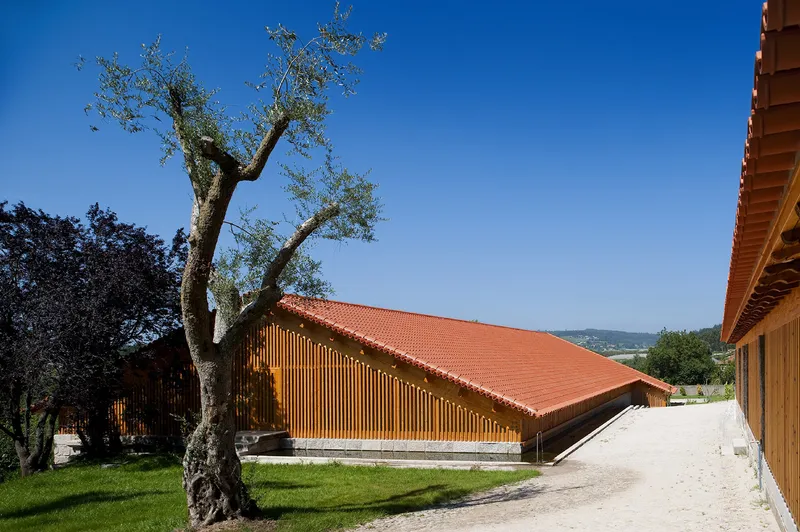
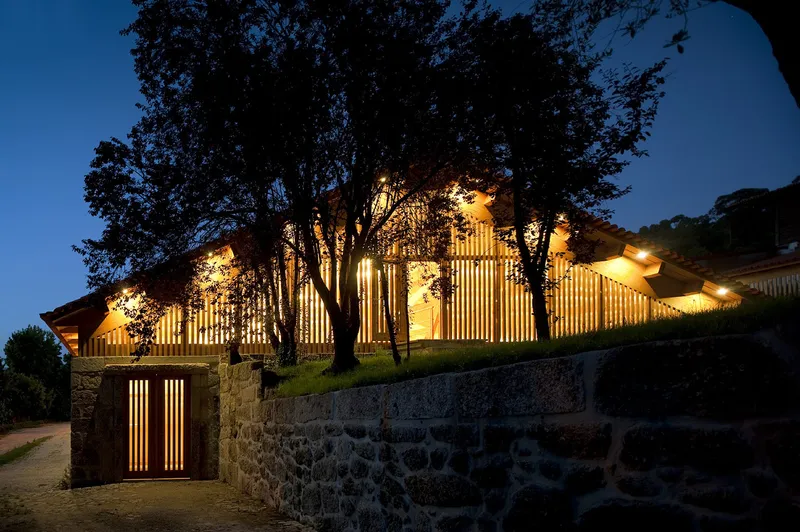
From a distance, the building reads as a single horizontal gesture: a terracotta tile roof over a timber-slatted volume resting on a granite base. The proportions are deliberately modest. Castanheira kept the ridge low and extended the eaves deep, so the structure appears to crouch against the slope rather than sit on top of it. The gnarled olive trees and mature plantings around the perimeter were not cleared but worked around, and forgotten water sources on the property were tapped and put back into use.
Embedding the south and west sides into the earth is not just a formal move. It creates a thermal envelope that keeps fermentation temperatures stable without relying on heavy mechanical cooling. The thick granite wall on the north elevation does the same work from the opposite direction, acting as a heat sink that moderates temperature swings across seasons. The building breathes through its east-facing entrance, where the terrain opens and light arrives.
Timber Screen and Filtered Light
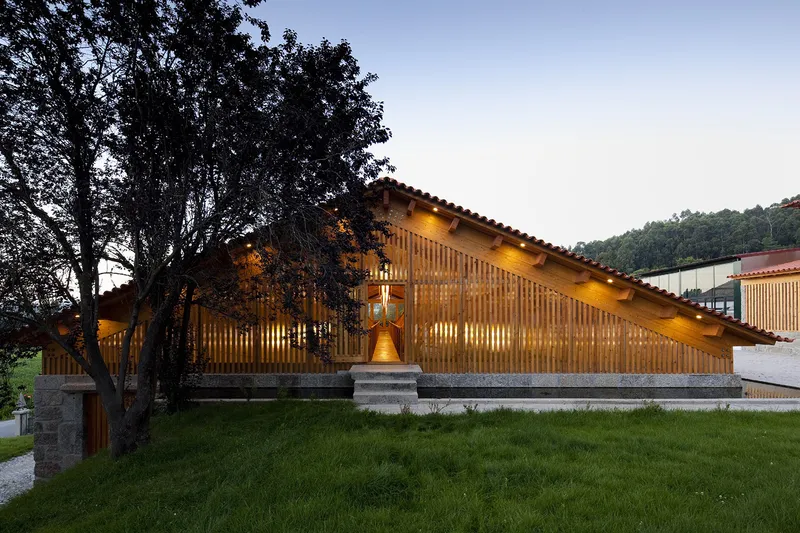
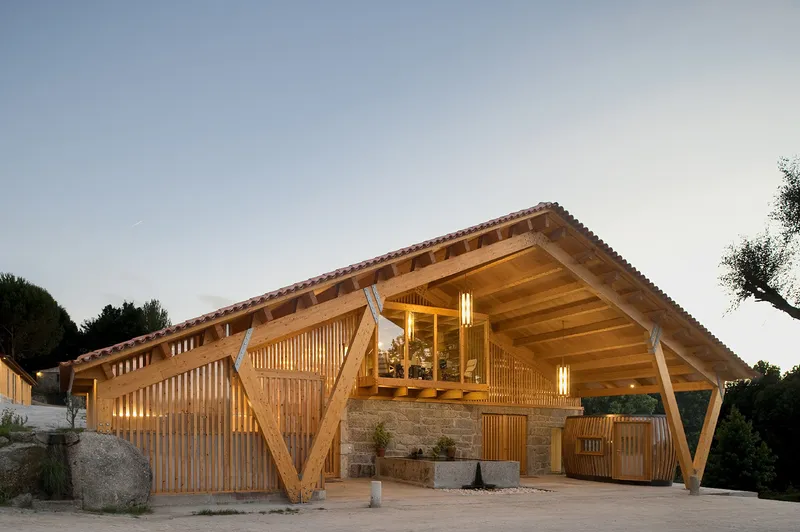
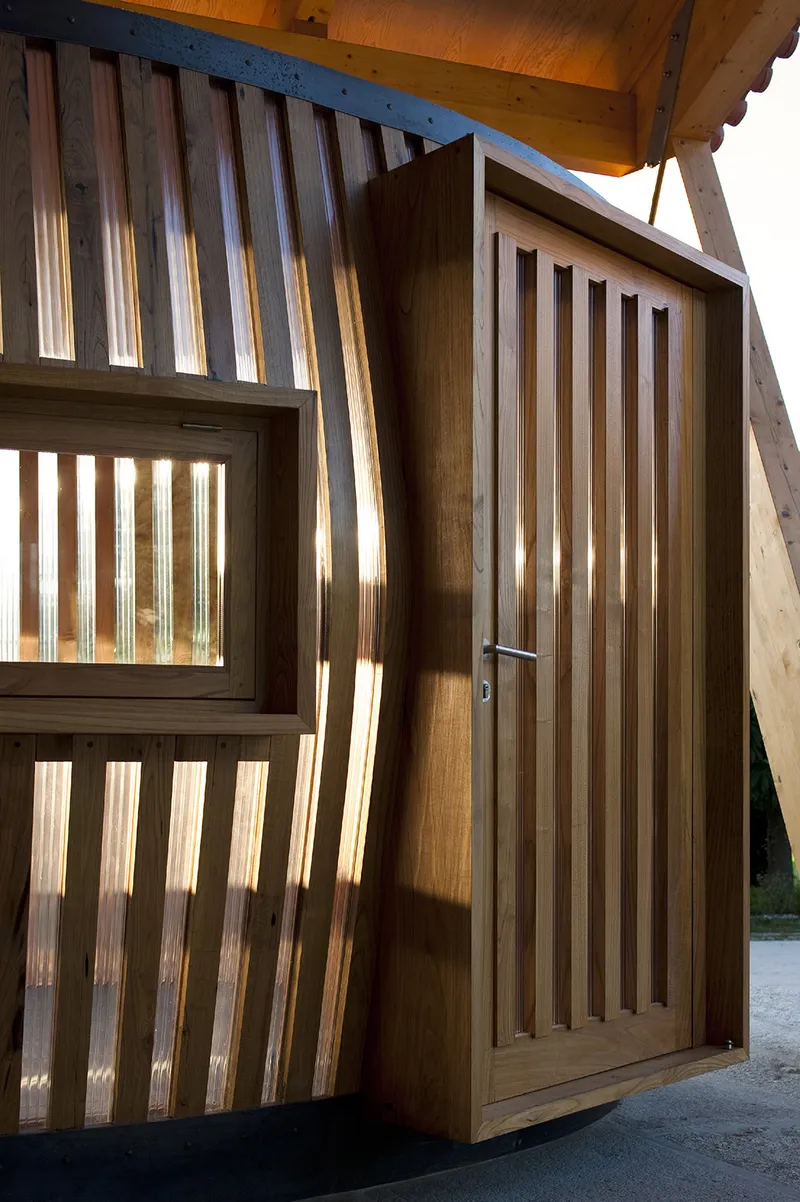
The vertical timber slat screen that wraps the upper volume is the building's most recognizable element, and its most functional. It filters direct sun into soft, raking lines that shift across the interior throughout the day. At night, the effect reverses: warm light leaks through the gaps and turns the facade into a glowing lantern set among dark trees. The slats are spaced to balance ventilation with solar control, and their rhythm gives the long elevation a grain that keeps it from feeling monolithic.
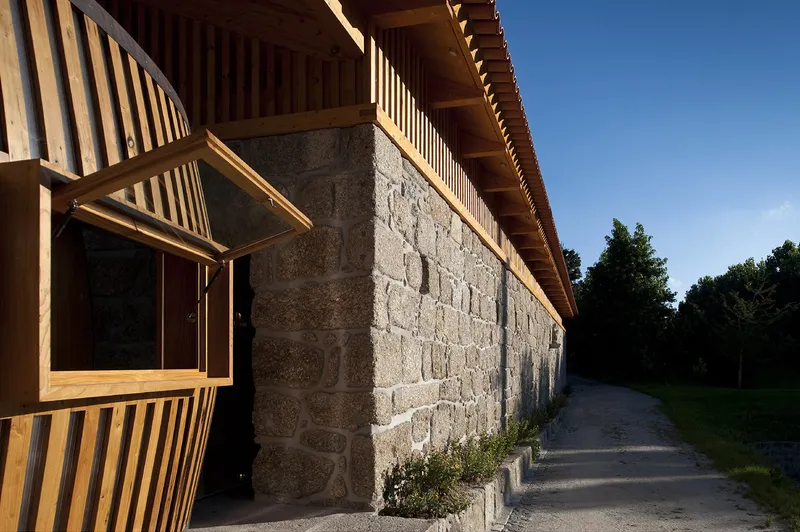
Small operable windows are embedded within the screen, framing precise views of the surrounding tree canopy. These openings are modest in size but deliberate in placement, offering moments of visual connection to the vineyard landscape without compromising the thermal or structural integrity of the wall assembly.
The Structural Spine
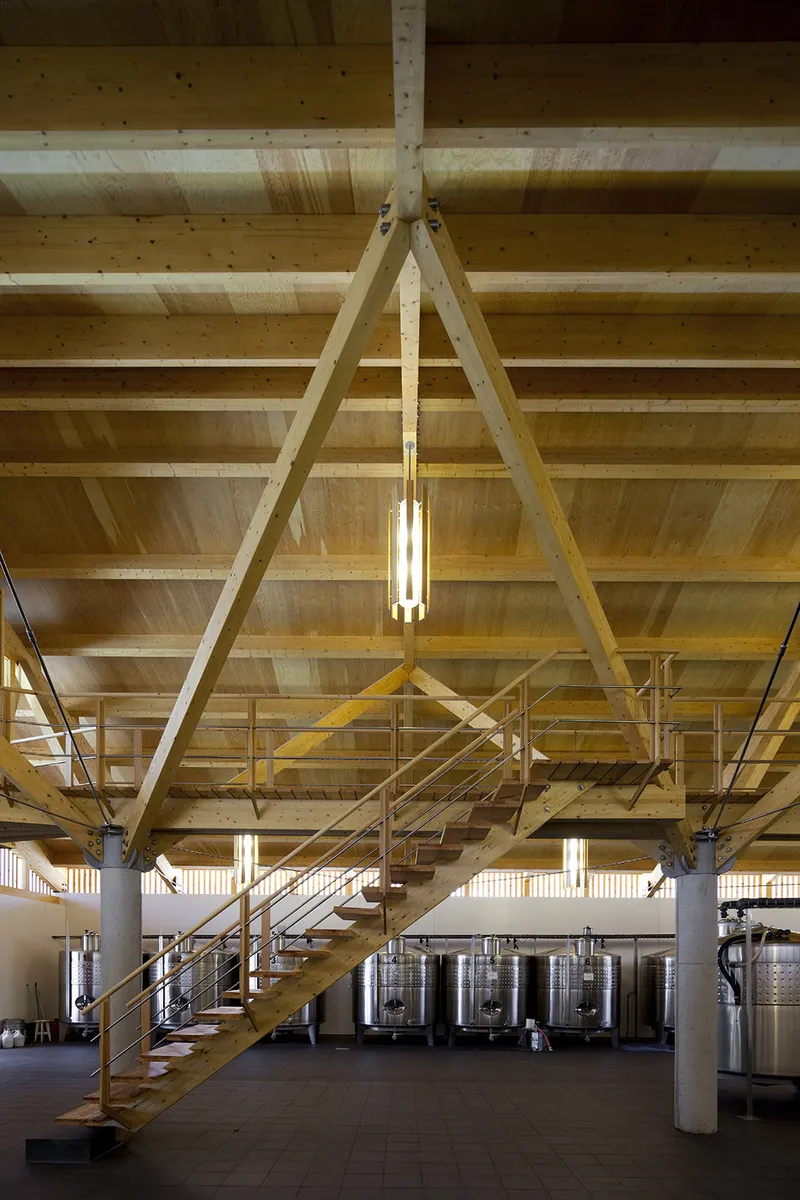
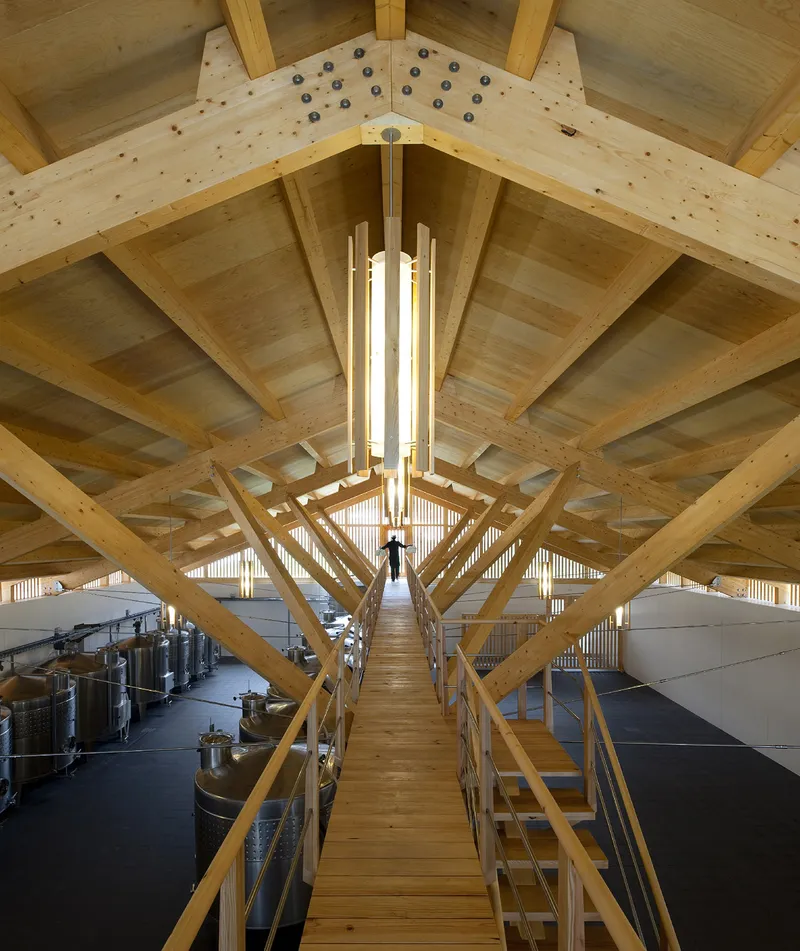
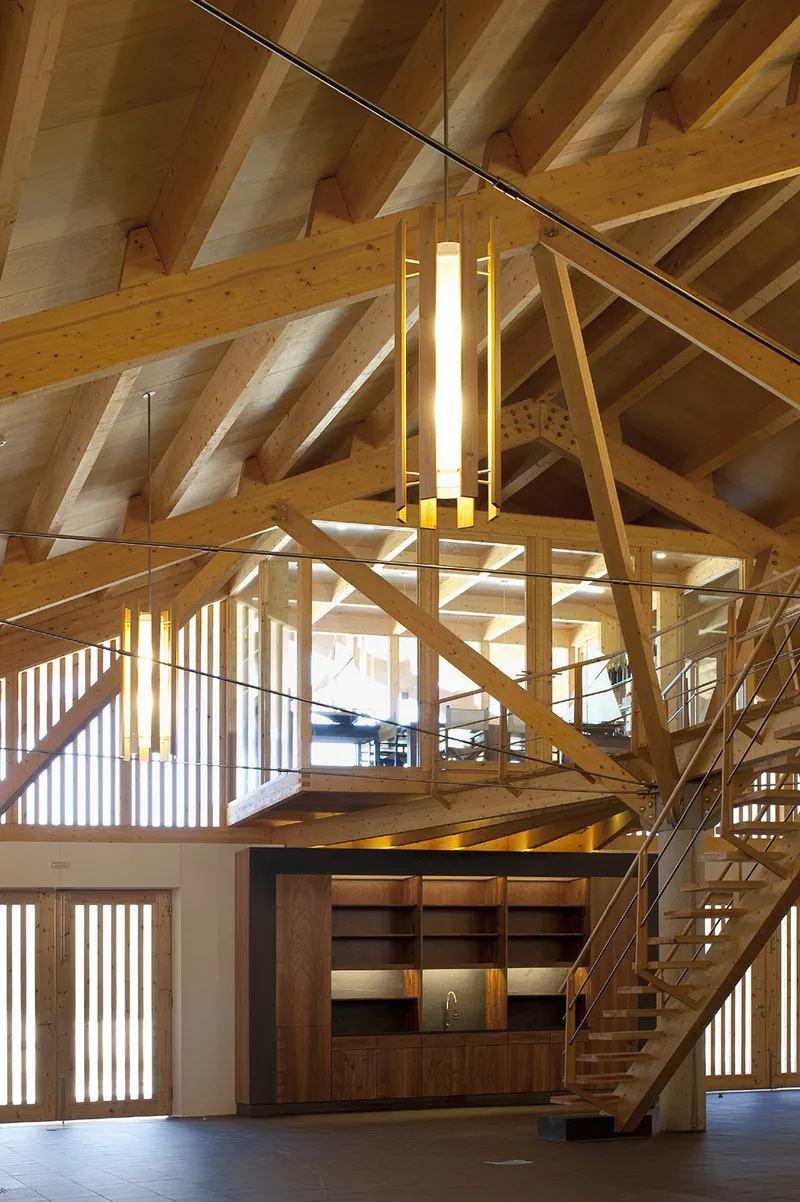
Inside, the laminated timber trusses dominate. Their geometry is direct: A-frame profiles that rise from the branching stanchion columns, with diagonal braces running to the ridge. Castanheira treated the central pillars as a concession to the 18-meter span, not a celebration of it. They are slender, practical, and almost reluctant. The real drama comes from the way the truss system creates a continuous roof canopy that shelters everything beneath it, from stainless steel fermentation tanks to the elevated walkway that connects the exterior terrain to the office mezzanine.
That walkway is a key piece of the gravity-fed logic. Grapes arrive at the upper level and move downward through the production sequence without ever needing a pump. The architecture literalizes the winemaking process: the section of the building is the flowchart of the wine. It is a smart integration of topography and program that avoids the mechanical complexity and energy consumption of pumped systems while preserving grape quality.
The Covered Threshold
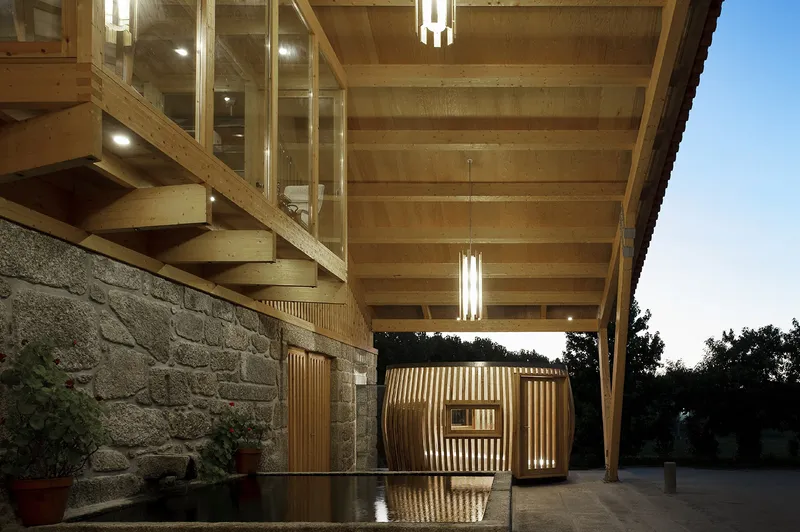
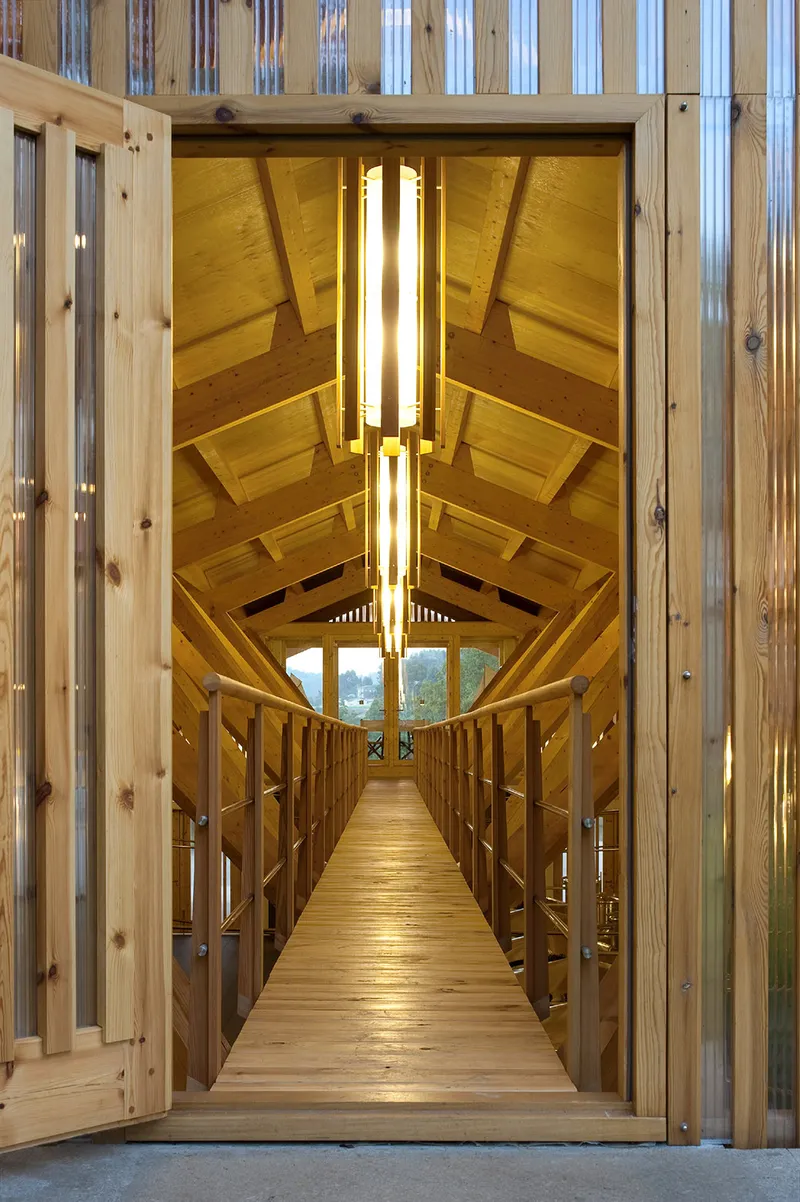
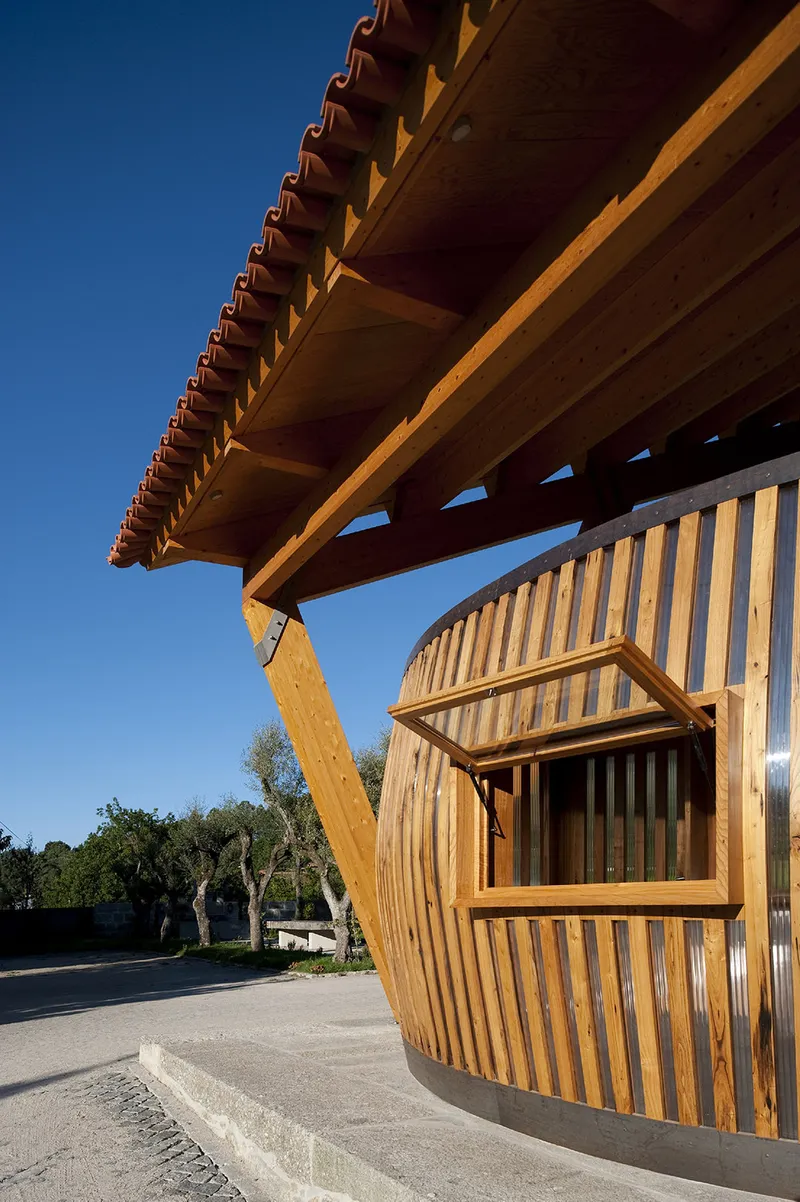
The entrance sequence is handled with care. A deep roof overhang covers the arrival space, creating a sheltered porch where exposed timber beams meet the granite wall and wet stone paving reflects the sky. This covered zone also houses the toilets and a small laboratory space referred to as the "pipo." It is a transitional zone, neither fully inside nor out, that prepares you for the scale shift from landscape to production hall.
A timber footbridge extends from this threshold into the landscape, its exposed truss ceiling framing a vertical light slot that pulls the eye toward the terrain beyond. The bridge doubles as a functional connection between the exterior grade and the office floor above, reinforcing the gravity-fed logic that organizes the entire building section.
Stone, Screen, and the Oval Laboratory
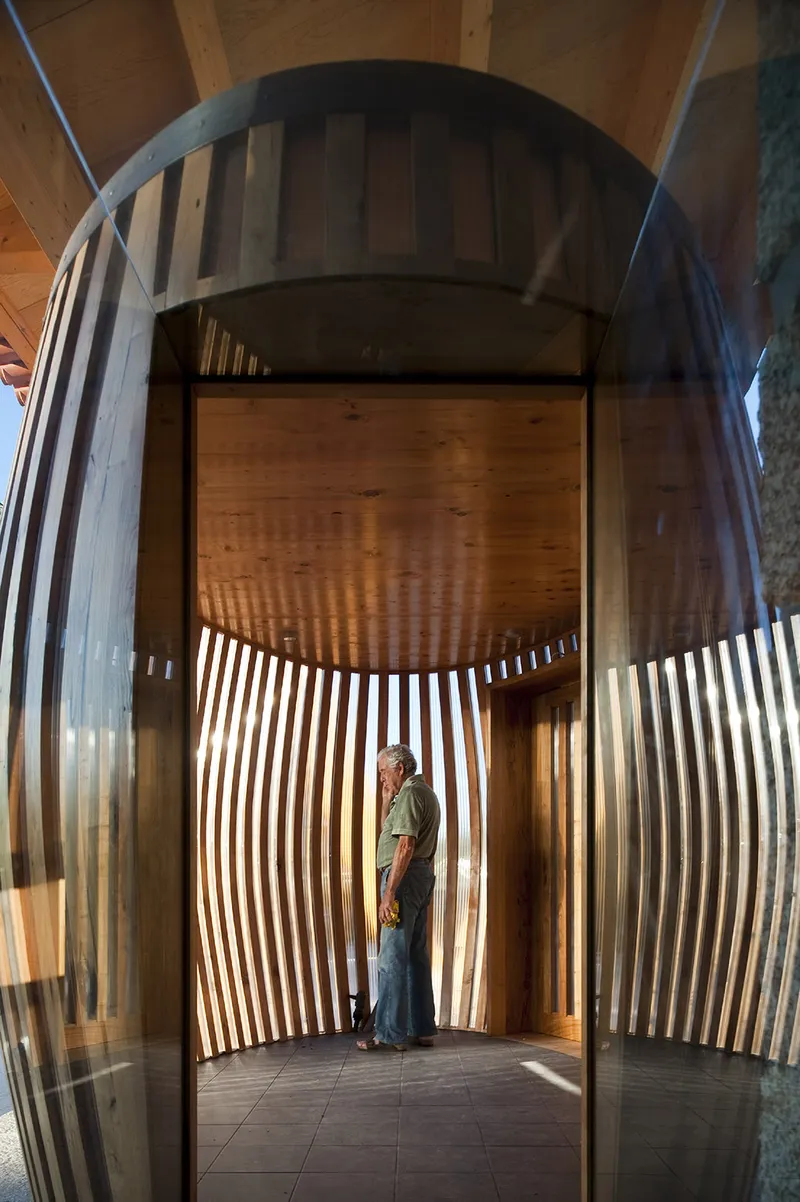
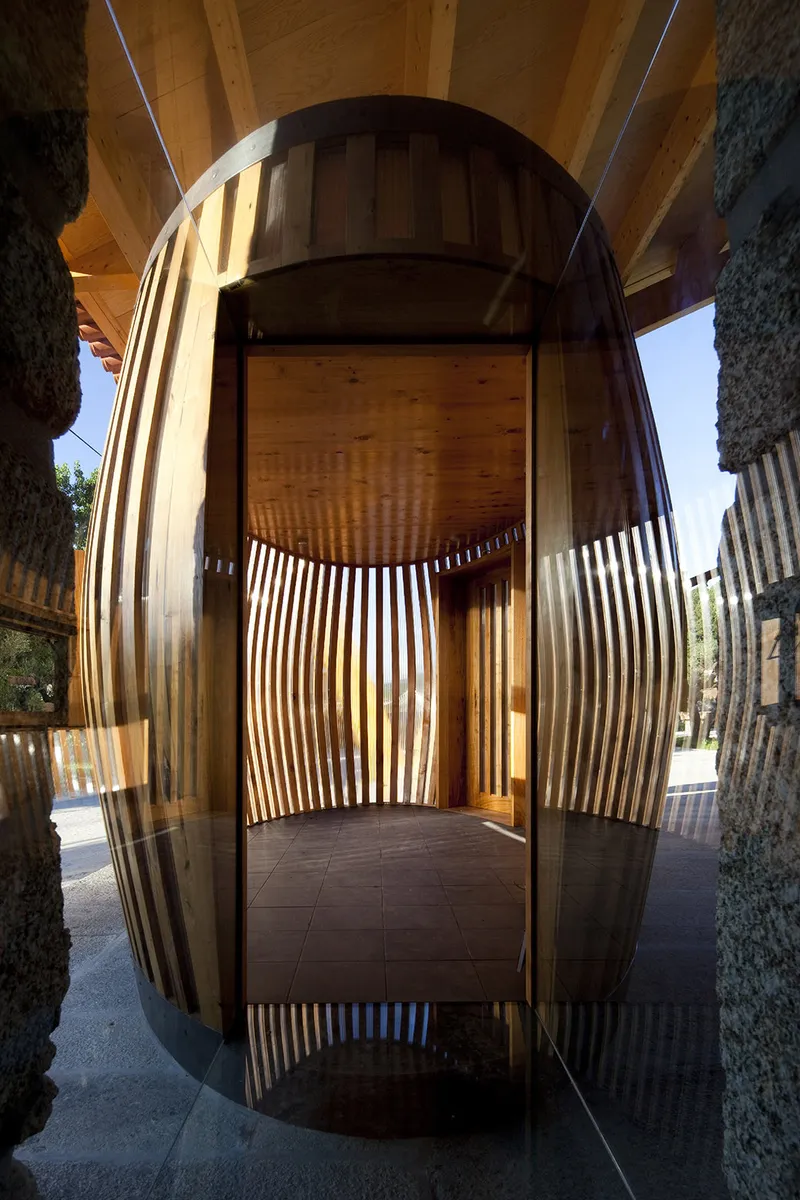
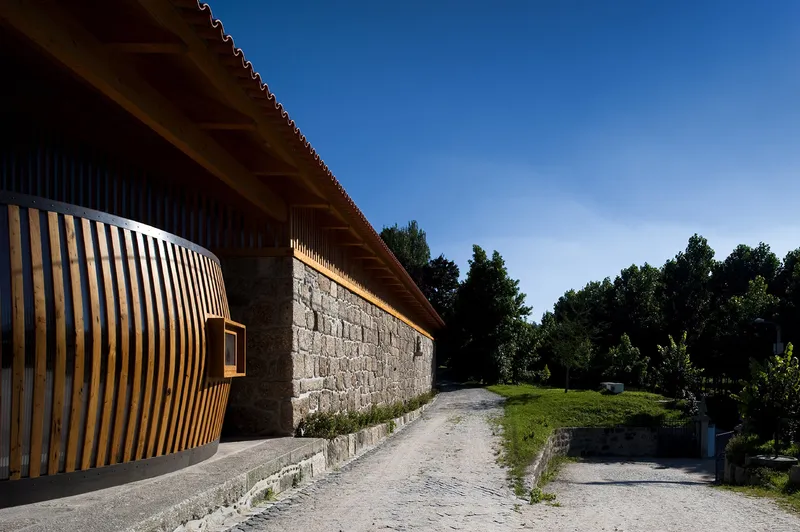
One of the more unexpected elements is the curved timber-slatted enclosure that wraps a stone masonry wall near the entrance. Its oval plan houses the laboratory, a continuous perimeter workspace that looks inward toward a central opening. The form is unusual for a winery but functionally precise: the curved screen diffuses light evenly around the workstation while maintaining visual privacy. Stone columns flank the entrance to this volume, grounding it in the same material language as the main building.
The small office volume is positioned directly over an exterior granite stone tank, one of several new tanks built with floors of great stone slabs in the manner of the old construction traditions. Castanheira made a point of referencing these regional methods not as nostalgia but as proven technique. The tanks work. They have always worked.
Courtyard and Landscape
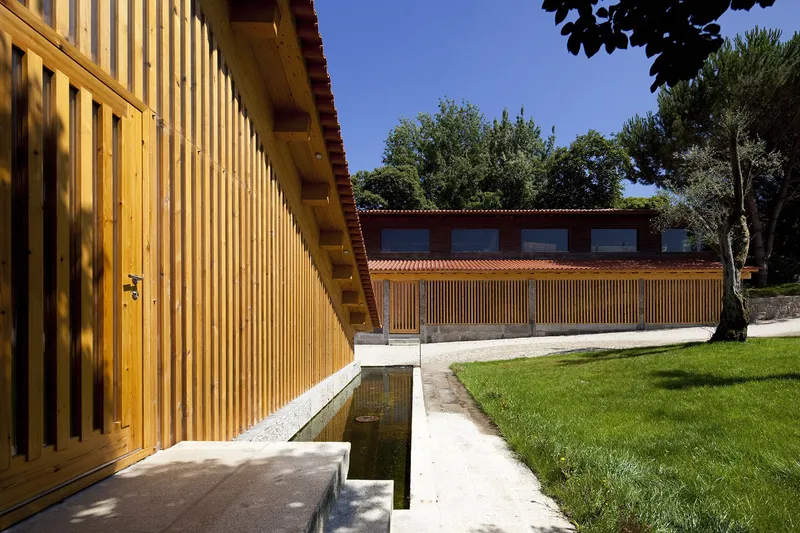
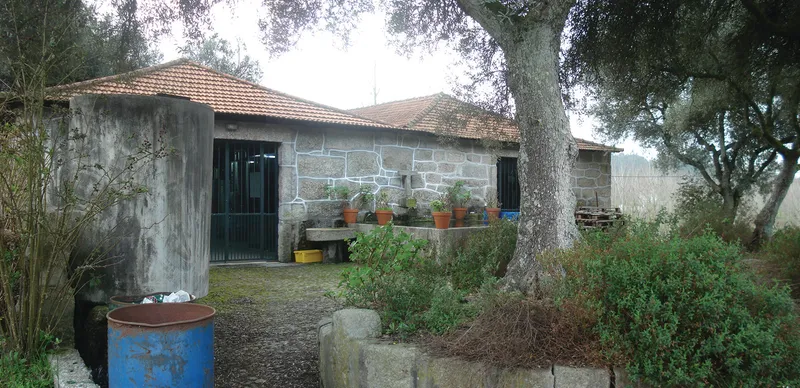
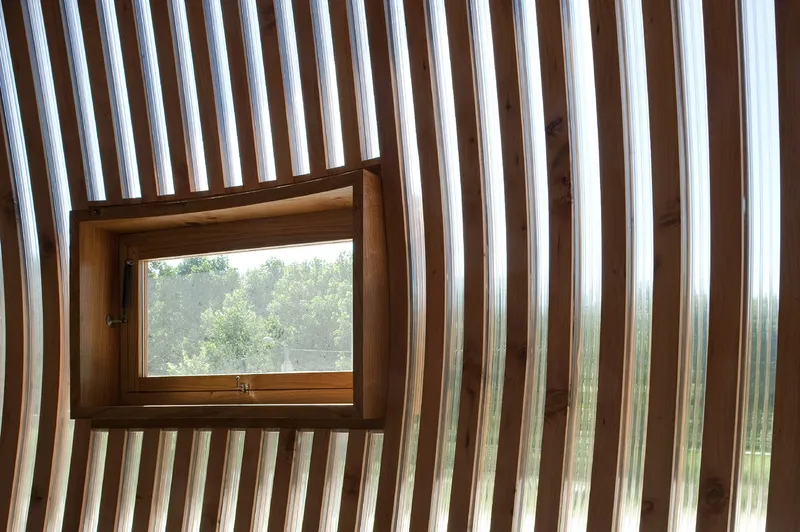
A narrow water channel runs along the timber-clad walls of the courtyard, a detail that is both ornamental and practical. The courtyard lawn sits beneath dappled tree shadows, and the surrounding buildings, including a stone block outbuilding with a terracotta tile roof, complete an ensemble that feels like a small agricultural compound rather than a single architectural object. Trees were transplanted and stones relocated during construction, a level of site sensitivity that speaks to Castanheira's respect for the existing estate character.
Plans and Drawings
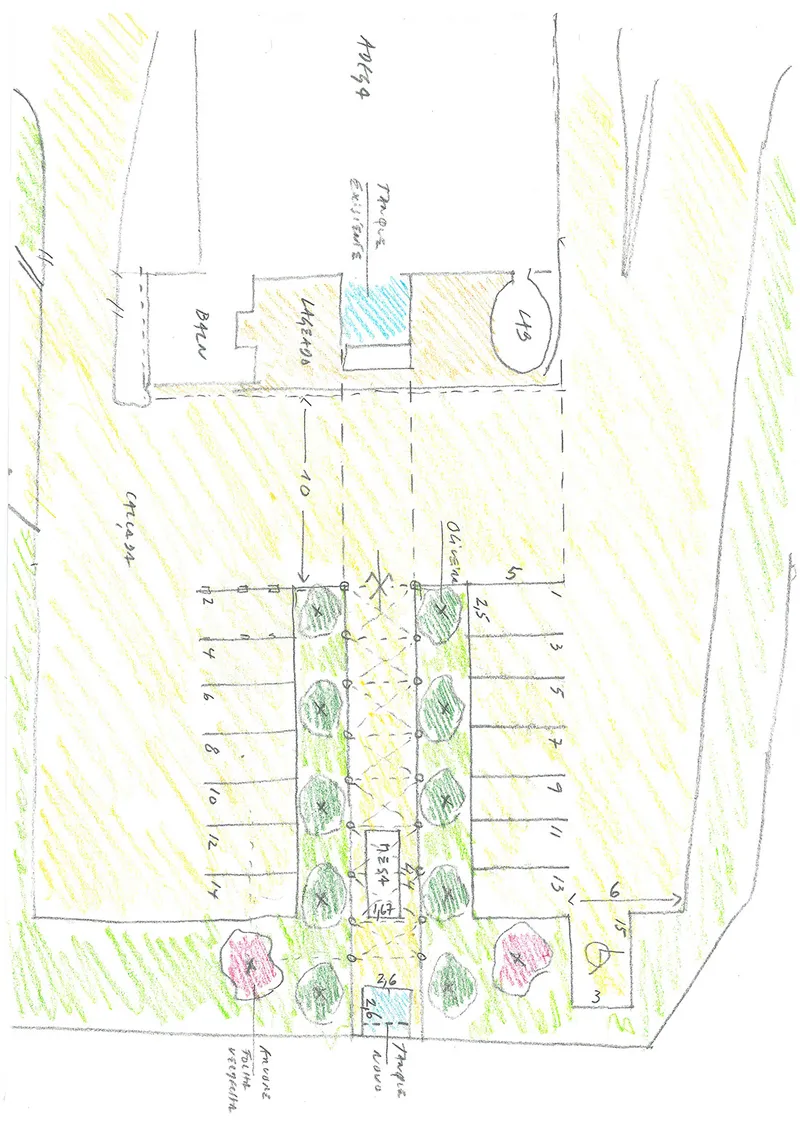
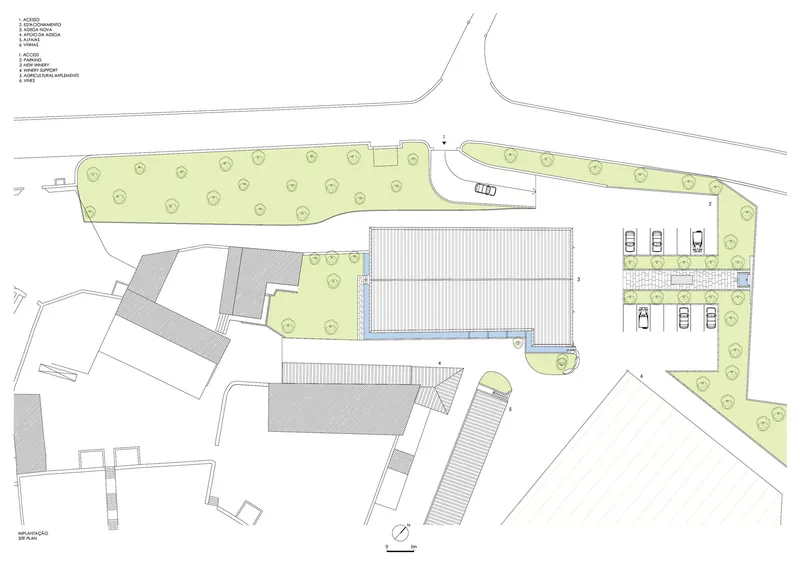
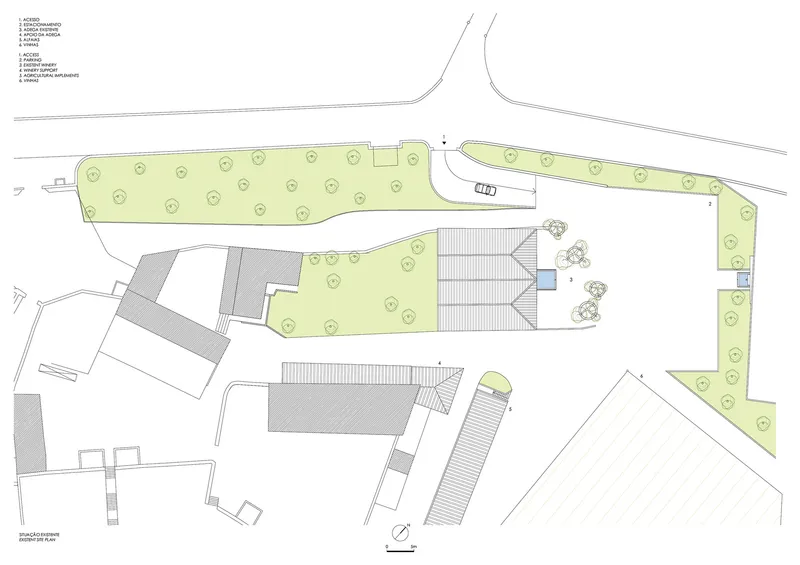
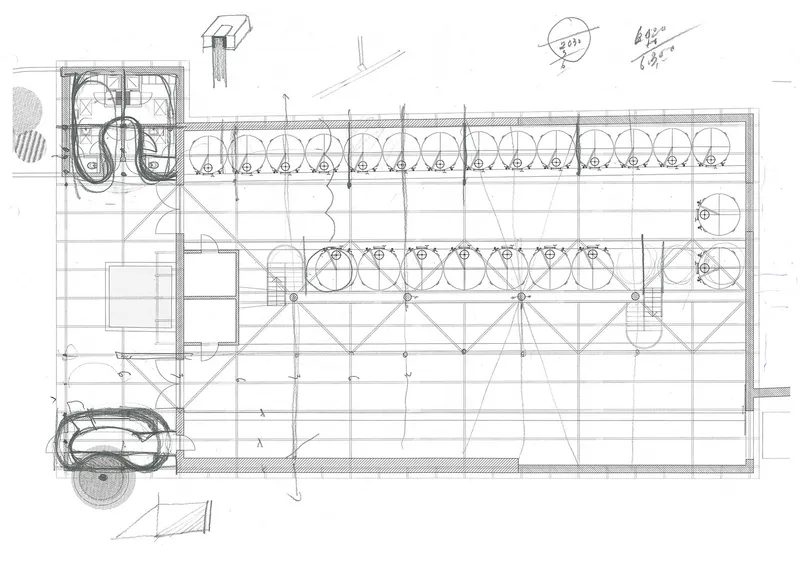
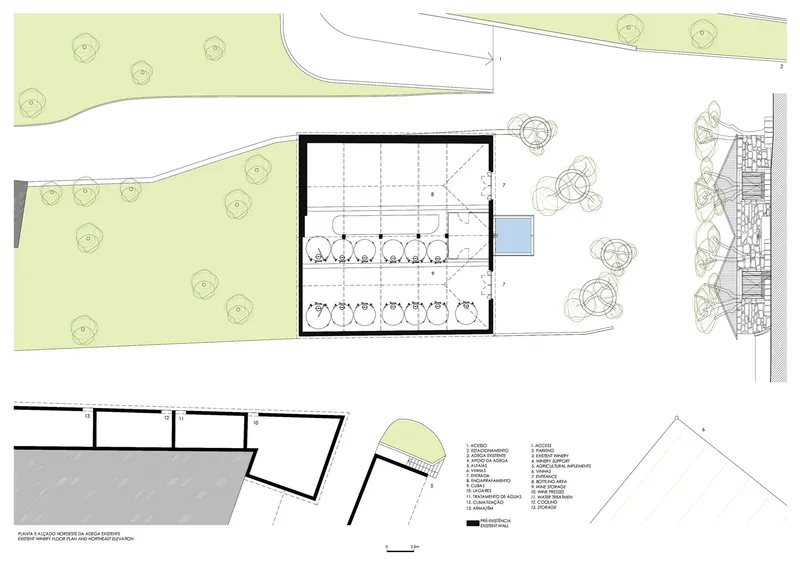
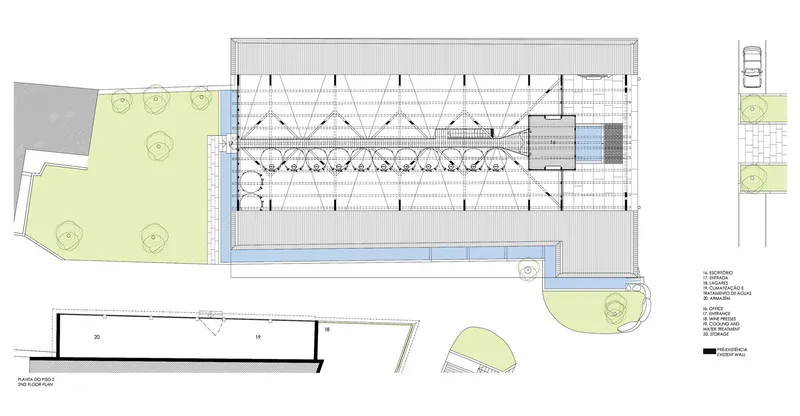
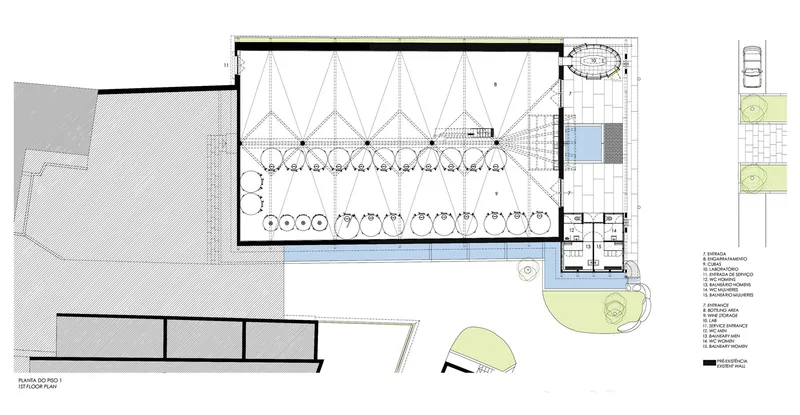
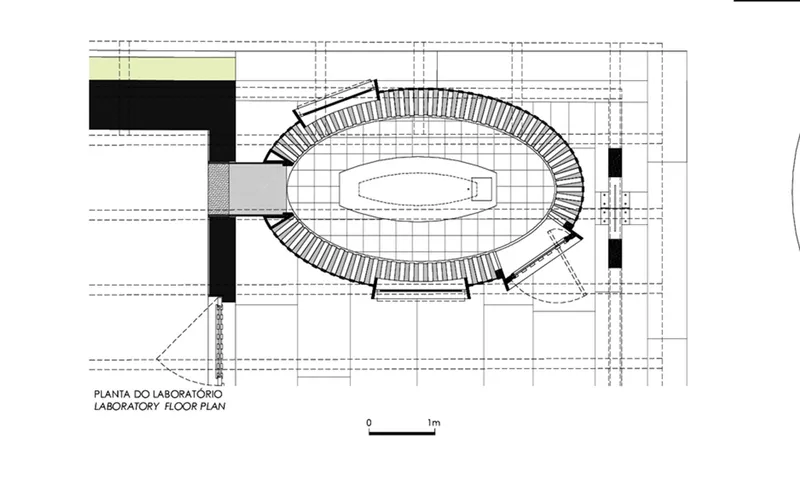
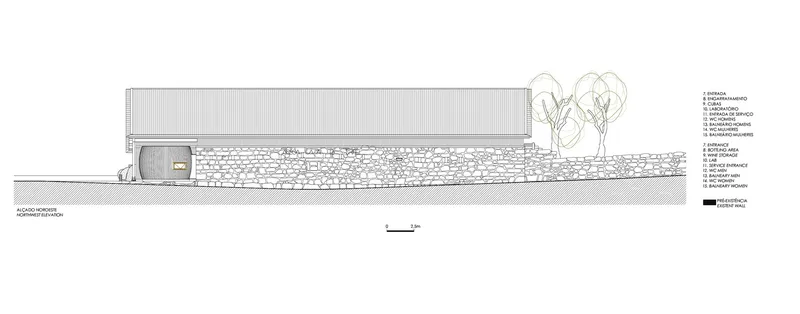
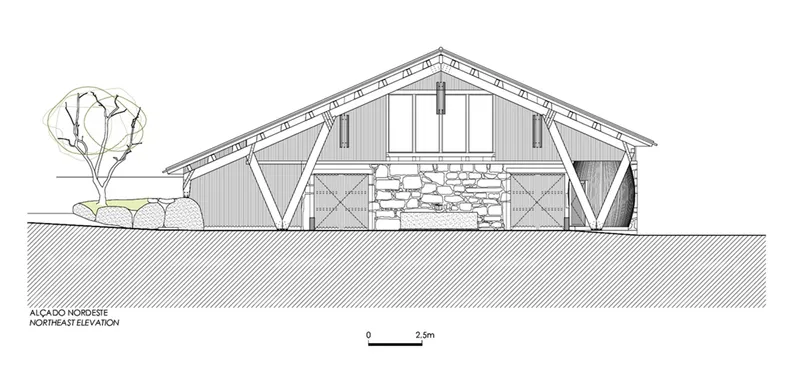
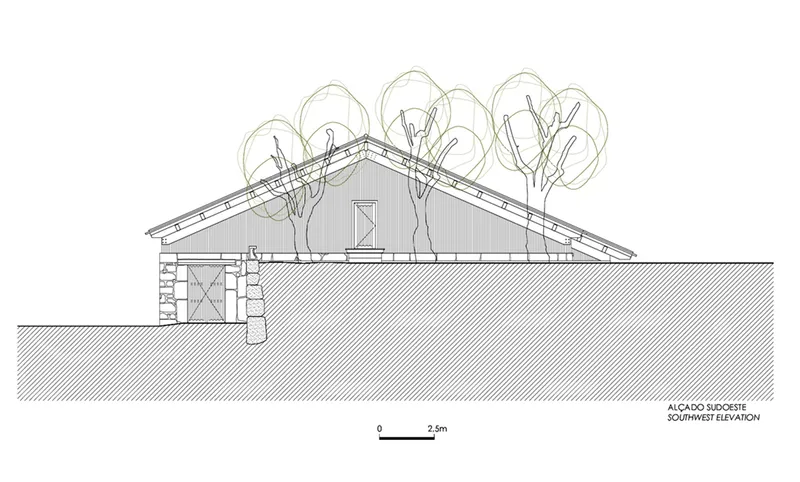
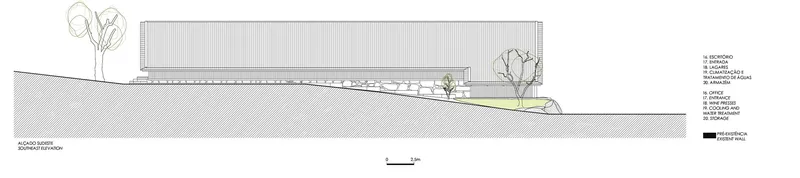
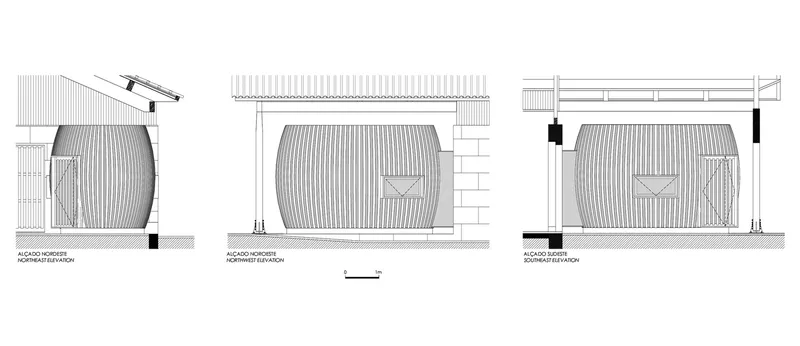
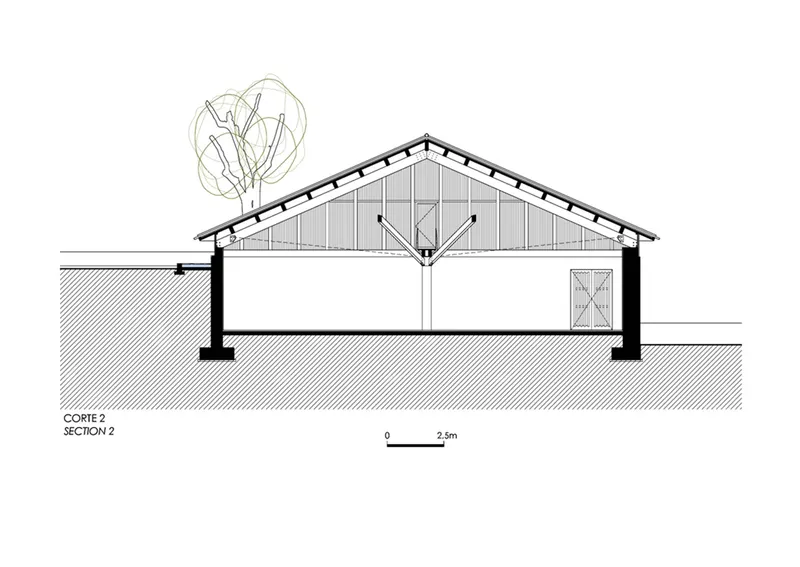
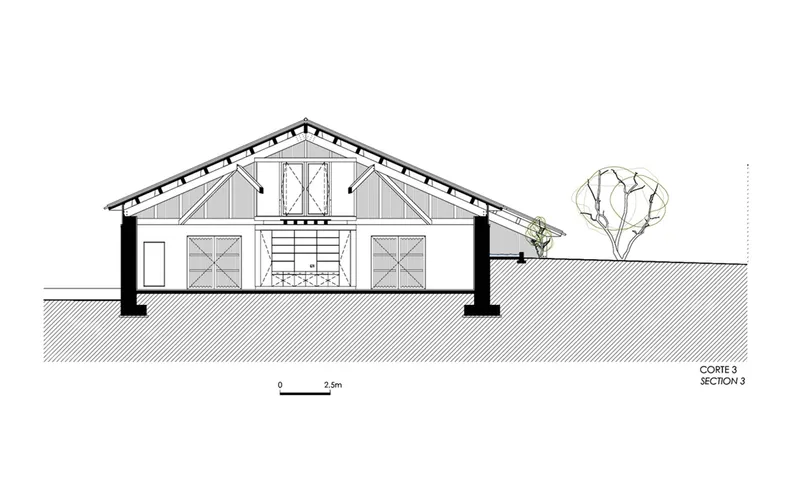
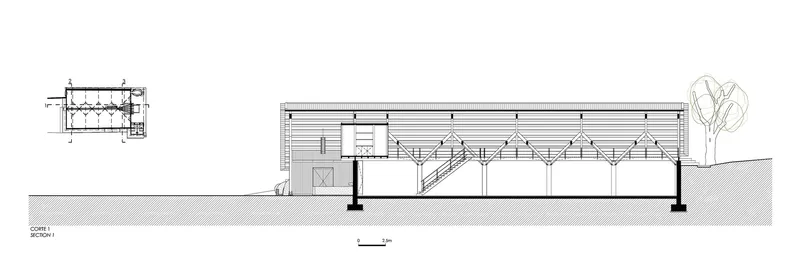
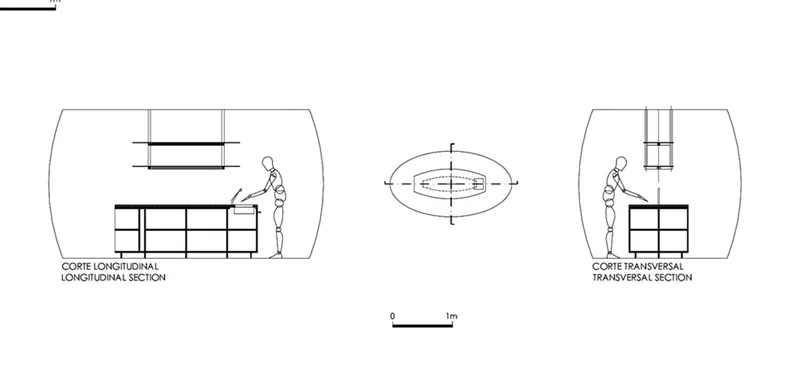
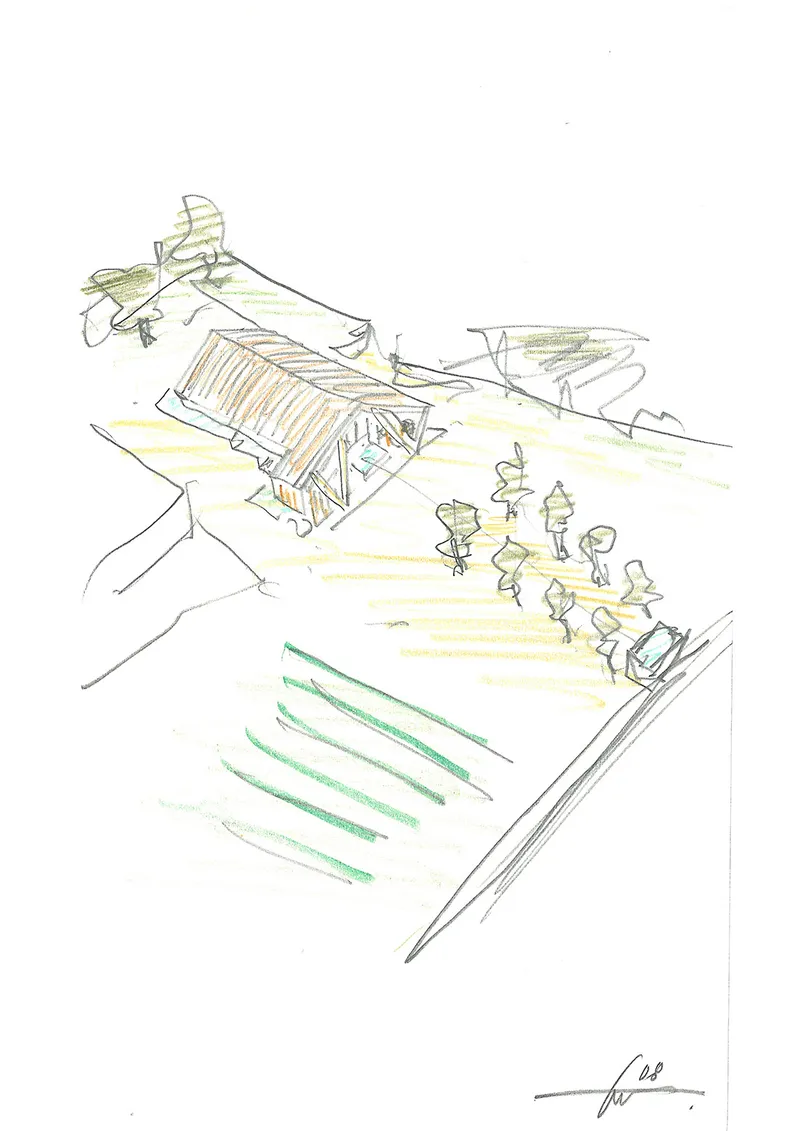
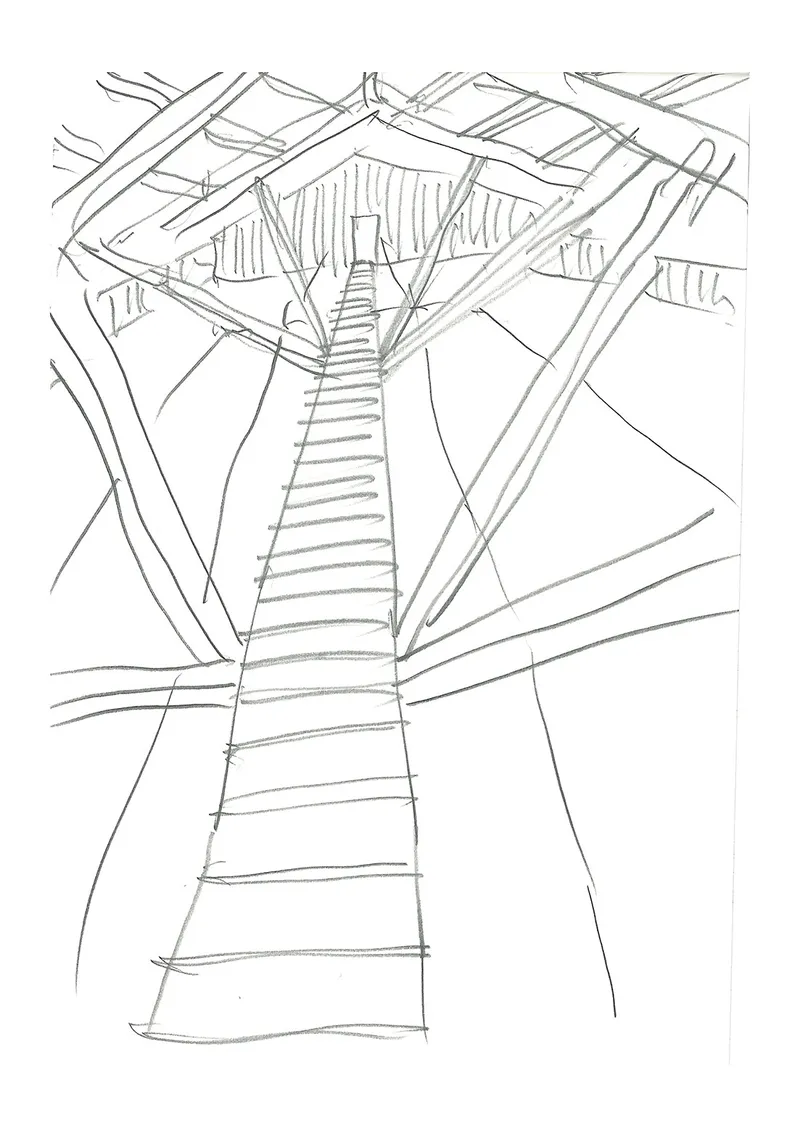
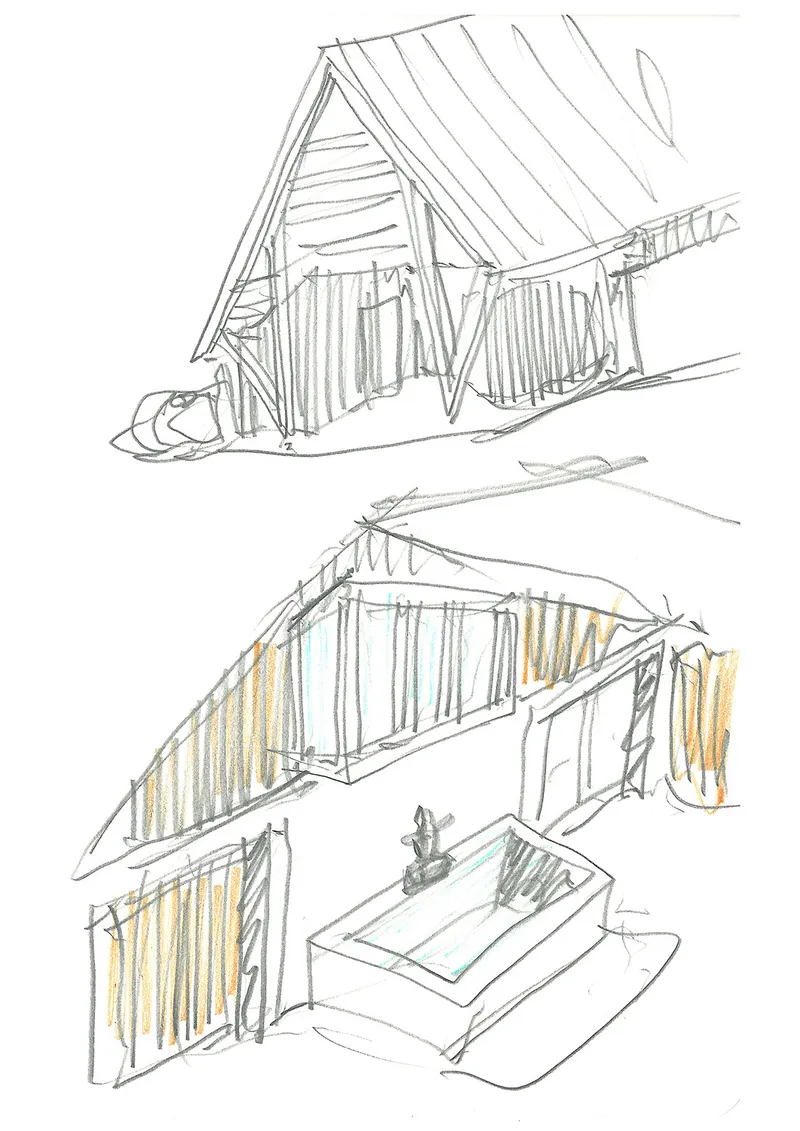
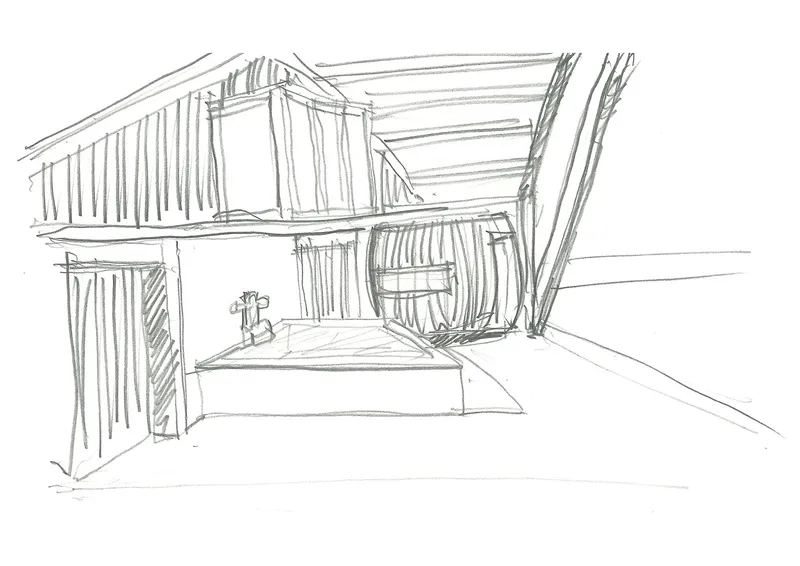
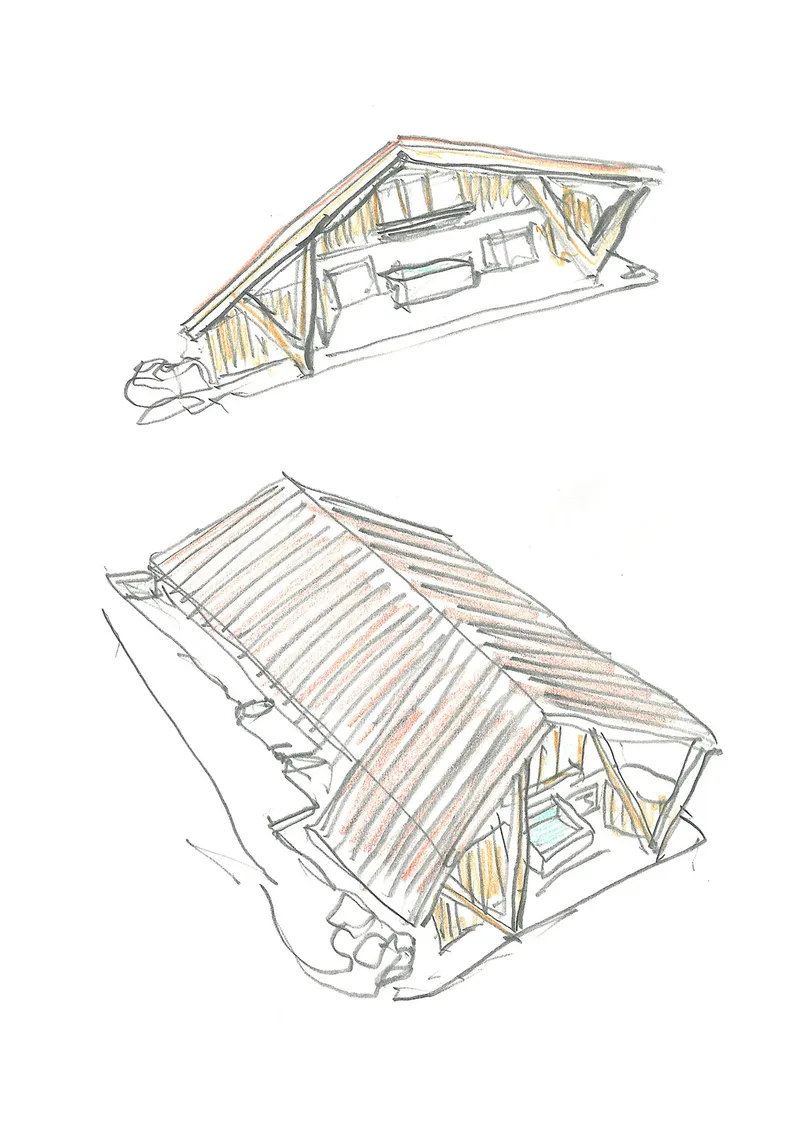
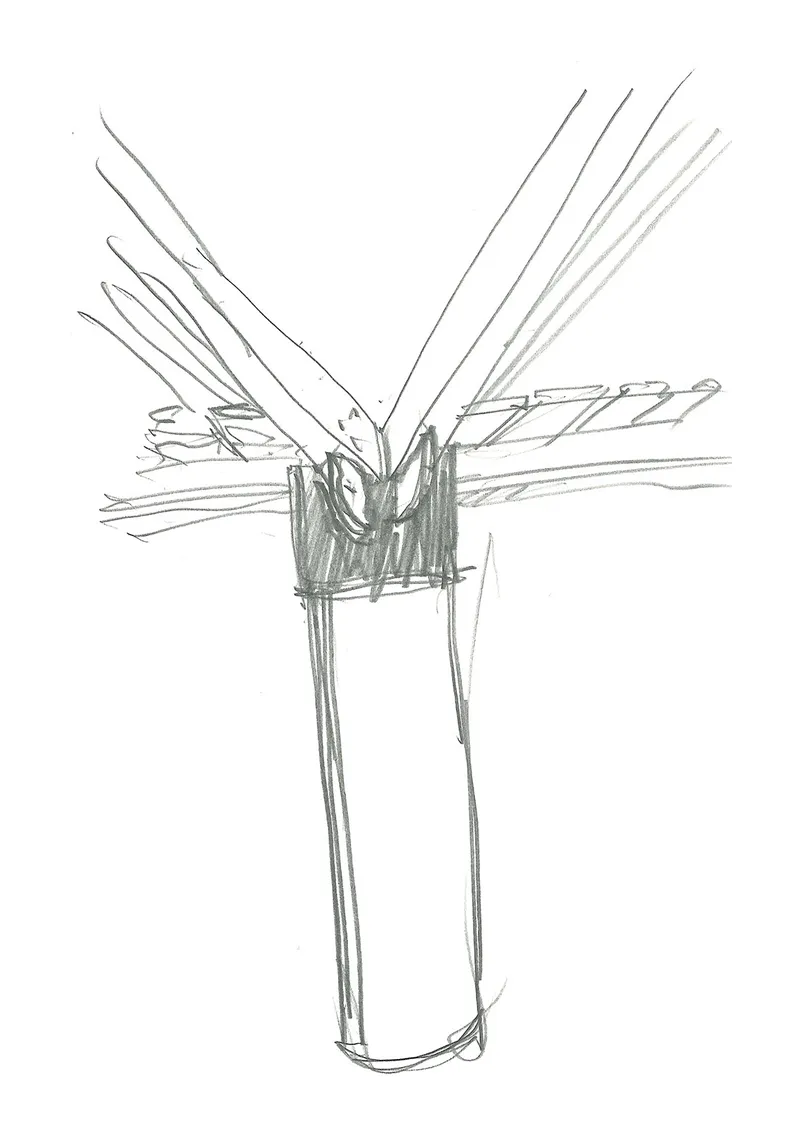
The drawings reveal how tightly the structural logic and the winemaking process are interlocked. The floor plan shows parallel rows of circular fermentation tanks organized within the rectangular hall, with diagonal bracing corresponding to the truss geometry above. Sections cut through the gabled volume expose the double-height interior, the mezzanine stair, and the way the building tucks into the slope. The oval laboratory plan appears as a distinct satellite element. The site plans illustrate the careful distribution of parking, planted areas, and the relationship between the new winery and the existing estate buildings. Castanheira's sketches, with their loose pen lines and warm color washes, show that the branching column detail and the pitched roof profile were resolved early and carried through with consistency.
Why This Project Matters
Adega Casa da Torre is a reminder that the most interesting wine architecture does not compete with the product. Castanheira resisted the temptation to design a destination building, a sculptural object meant to attract visitors before it makes wine. Instead, he built a machine for winemaking that happens to be beautiful. The gravity-fed process, the passive climate strategy, the granite and timber material palette: every choice serves the grapes and the site first. The architecture earns its presence by working.
In a moment when winery commissions routinely become vehicles for formal spectacle, this project argues for restraint rooted in knowledge. Castanheira understood the regional traditions, the stone tank construction, the forgotten water sources, the thermal behavior of buried walls, and used that understanding to make decisions that no amount of parametric modeling could replicate. The building is contemporary, but it carries the accumulated intelligence of the place. That is harder to achieve than novelty, and it lasts longer.
Adega Casa da Torre by Carlos Castanheira. Louro, Vila Nova de Famalicão, Portugal. Completed 2010. Photography by Fernando Guerra | FG+SG.
About the Studio
Share Your Own Work on uni.xyz
If projects like this are the kind of work you want to make, uni.xyz is a place to publish your own, find collaborators, and enter design competitions.


Popular Articles
Popular articles from the community


U.GA Architects Wraps an Oval Rooftop Pool in Curved Board-Formed Concrete on Busan's Jeollidan-gil
In Busan's Jeonpo-dong, a 454 m² mixed-use block stacks a neighborhood facility, guest rooms and an oval rooftop pool inside spiraling concrete walls.

Cube Design Draws an Ecological Corridor Between Two Shenzhen Hills with the Nankai Building
Beside Shenzhen's container docks, the Nankai Building pairs stacked balconies with a climbing green screen to connect two hillsides across its height.

Architekt Andreas Gruber Scatters 23 Dark Timber Chalets Across a South Tyrolean Forest Edge
In Molini di Tures, Amonti Chalets breaks a resort into a hamlet of gabled timber houses, with parking, storage and services pushed into the slope.

Juan García Correa, John González and Claudia Rueda Sink a Circular Amphitheater into a Manizales Engineering Building
On the La Nubia campus in Manizales, Colombia, the S1 Building folds labs and offices into a hillside of ramped lawns that double as a campus route.

Similar Reads
You might also enjoy these articles


LAVA Architecten Gives Vocational Education a Sawtooth-Roofed Face on a Mechelen School Campus
In Mechelen, Belgium, a 2,053 m² STEM school on a 6×6 m grid turns workshops and classrooms into rooms that can be rearranged as teaching changes.

KEMA Studio Turns a Derelict Marvila Attic into a 60 m² Lighthouse Apartment Above Lisbon
In Lisbon's Marvila district, a rebuilt roof, four skylights and two plywood volumes turn an unlivable attic into a bright home facing the Tagus.

Pixel Gardens: One Repeated Module Stacked Into a Terraced Social Housing Tower for Famagusta
Salem Bader's shortlisted housing tower builds a vertical neighbourhood from one repeated module, offsetting units to carve terraces, light and air.

Bao Huynh Watercolor Atelier: A Serene Art Retreat in Hội An
Bao Huynh Watercolor Atelier in Hội An blends multifunctional art spaces, sustainable design, local materials, and family-friendly living in a serene environment.

Explore Porto Local Tiles Competitions
Discover active competitions in this discipline

Challenge to reimagine the Iron Throne

Photograph architecture without architects

Illustrate the lost glory of Angkor Wat - Render Challenge

Design challenge to reuse E-waste
Comments (0)
Please login or sign up to add comments
No comments yet. Be the first to comment!