
Cat Alley: Rethinking Urban Design Through Street-Level Public Space Revitalization
A playful urban design intervention transforming forgotten alleys into vibrant public spaces through human-cat coexistence.


In contemporary cities, urban design has increasingly prioritized mobility infrastructure over meaningful street life. Roads are engineered for efficiency, sidewalks narrowed for speed, and back alleys reduced to purely service-oriented zones. As a result, dense urban environments, particularly in cities like Hong Kong, have become static at street level, offering limited opportunities for spontaneous social interaction or community formation.
The project Cat Alley challenges this paradigm. Designed by Hon Man Au, Tsz Nam Hui, and Lok Yan Leung, the proposal reimagines neglected back alleys as vibrant micro public spaces. Instead of viewing alleys as residual infrastructure, the project positions them as opportunities for urban revitalization through playful, low-cost architectural intervention.
Observing the City: Cats as Urban Actors
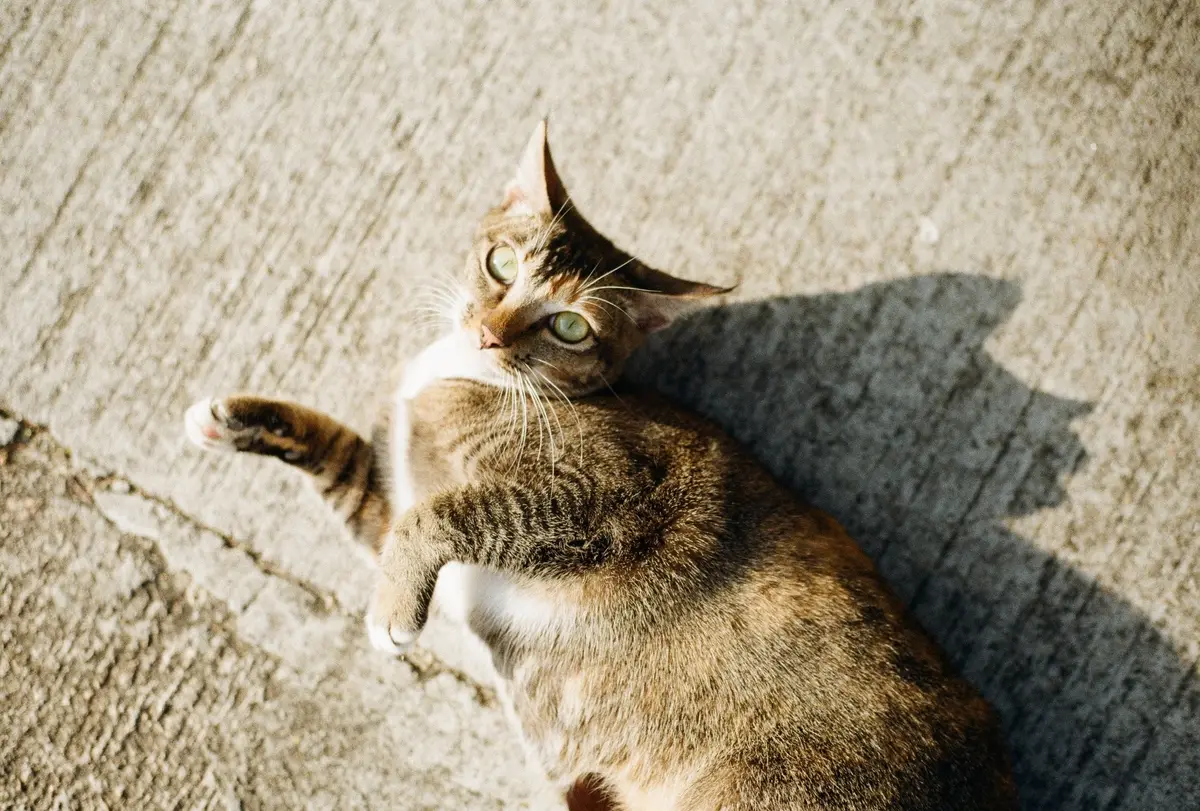
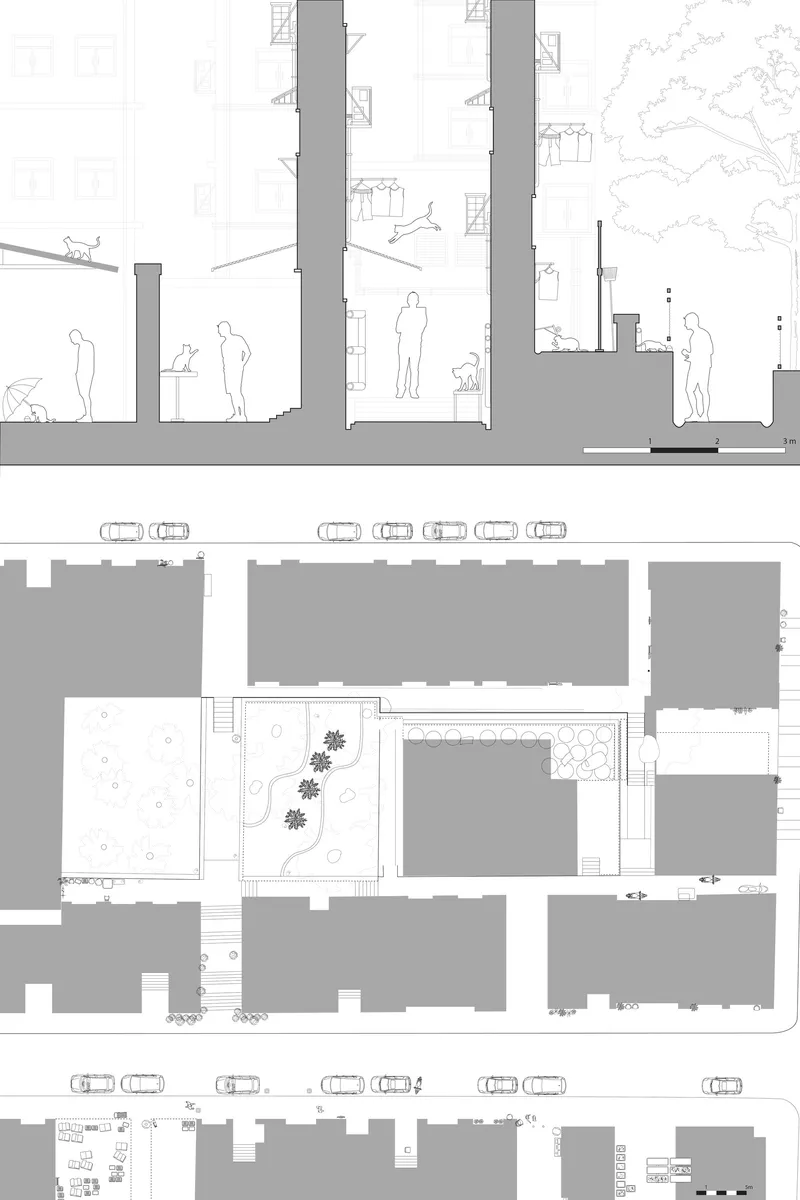
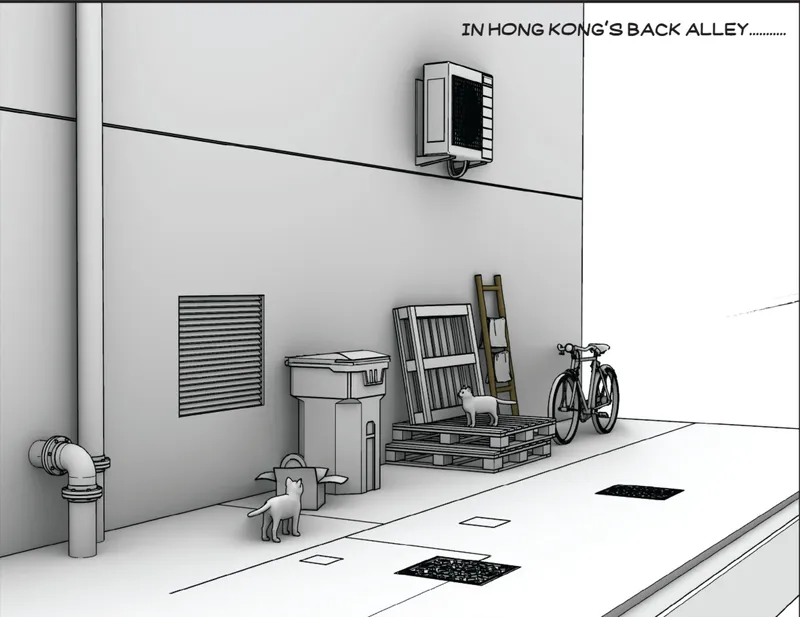
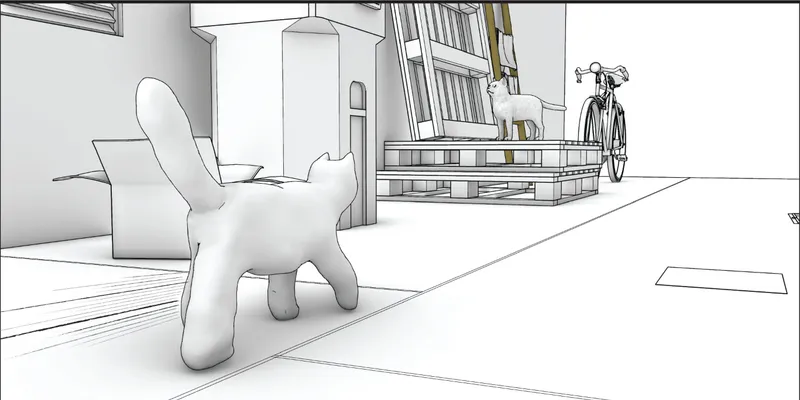
Hong Kong’s back alleys are already inhabited, by stray cats. These animals navigate pipes, pallets, drainage systems, and mechanical installations with agility and confidence. Their movement patterns reveal an overlooked vertical dimension within alley environments.
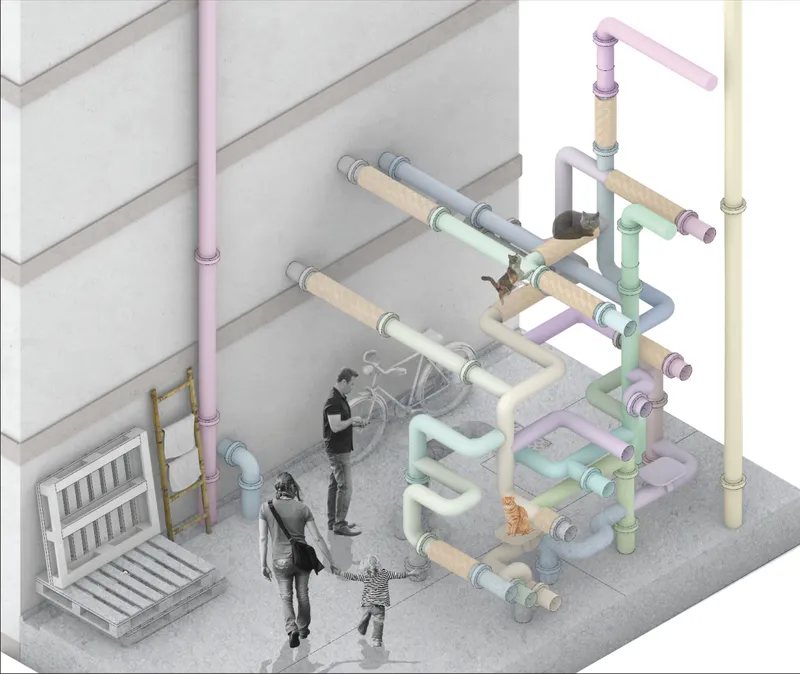
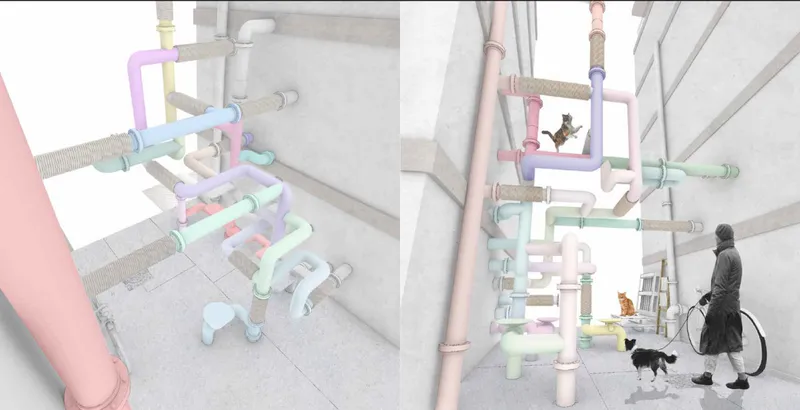
Rather than removing or ignoring this presence, Cat Alley embraces it. The designers propose a tube-based installation system that transforms existing utility pipes into a three-dimensional circulation network for cats. Rope-wrapped tubes encourage climbing and resting, while elevated pathways allow cats to move independently from pedestrians.
This simple yet powerful move introduces layered spatial use, humans at ground level, cats above, without conflict.
Tactical Urban Design Strategy
At its core, Cat Alley operates as a tactical urban design intervention. The proposal does not rely on large-scale demolition or expensive reconstruction. Instead, it works with what already exists:
- Existing utility pipe networks
- Service walls and blank façades
- Abandoned pallets and alley infrastructure
- Minimal added structural components
By attaching modular tube installations to current systems, the project creates a lightweight architectural framework. Ground-level seating is integrated to allow feeding and interaction, subtly encouraging residents to pause rather than pass through.
This approach demonstrates how urban design can activate forgotten spaces without heavy capital investment.
Public Space Revitalization Through Coexistence
Street vibrancy does not always require programmed events or commercial intervention. Sometimes, it begins with presence. Cats become catalysts for engagement: drawing attention, sparking conversation, and encouraging children and adults alike to linger.
The intervention reframes the alley from a service corridor into a shared habitat. It becomes:
- A vertical playground for cats
- A micro social node for residents
- A safe feeding and resting zone
- A visually engaging architectural installation
By layering ecological consideration with spatial strategy, the project aligns with contemporary urban design principles that emphasize coexistence, biodiversity, and community building.
Rethinking Alley Architecture in Dense Cities
In hyper-dense urban contexts, every square meter matters. Back alleys, often dismissed as leftover spaces, collectively represent a significant urban resource. When approached through the lens of urban design innovation, they can become:
- Micro public spaces
- Green infrastructure corridors
- Social interaction pockets
- Community-supported animal habitats
Cat Alley suggests that small-scale architectural gestures can shift perception at a city-wide scale. It advocates for reclaiming overlooked ground planes and transforming service spaces into active urban layers.
Human + Cat + Design
The visual language of the proposal reinforces its conceptual clarity. Soft pastel tubes contrast with industrial concrete walls, signaling transformation without erasing the existing urban fabric. The installation feels playful yet deliberate, an architectural system embedded within infrastructure.
Importantly, the intervention does not displace human circulation. Instead, it enriches it. Pedestrians move freely at ground level while cats navigate elevated paths. The result is a harmonious dual-layer urban experience.
Toward a More Responsive Urban Design Future
Cat Alley exemplifies how urban design can move beyond transportation efficiency toward social and ecological responsiveness. By acknowledging non-human urban dwellers and activating neglected spaces, the project redefines what public space can be in dense metropolitan environments.
Through a modest yet imaginative intervention, Hon Man Au, Tsz Nam Hui, and Lok Yan Leung demonstrate that vibrant cities are not built solely through megaprojects, but through attentive design at the smallest scales.
In rethinking the back alley, Cat Alley reminds us that urban design begins where we least expect it.


Popular Articles
Popular articles from the community


The Ocean Hive: Sustainable Architecture for a Self-Sufficient Civilization at Sea
The Ocean Hive imagines sustainable architecture at sea, where modular habitats, algae, wave power and ocean waste sustain a growing colony.

Hill & Cross Opera: Sculptural Opera House Architecture Shaped by Tallinn’s Landscape and Identity
Hill & Cross Opera reimagines opera house architecture in Tallinn through its sculptural hill, civic plaza, glass wave and a luminous cross.

Co-Life: Senior Housing Design That Reconnects Older Adults With the City
Co-Life reimagines senior housing design through healing gardens, shared streets, workshops, and a sustainable community across generations.

Little Red Riding Hood: Architectural Design as a Journey Through Fear, Light, and Storytelling
Little Red Riding Hood reimagines the fairy tale through architectural design shaped by fear, light, scale, memory, uncertainty, and choice.

Similar Reads
You might also enjoy these articles

Eco Chapel: A Green Architecture Pavilion Designed in Symbiosis with the Forest
Eco Chapel uses green architecture to weave prayer, learning and reuse into a forest pavilion shaped by modular hexagonal canopies for life.
Kaffeebühnen: Coffee Shop Architecture Designed as a Civic Stage Between Vienna’s City and Park
Kaffeebühnen turns coffee shop architecture into a civic stage, linking Vienna’s park edge, urban life, warm timber yards, and coffee craft.
Healing Façade: Sustainable Architecture for Reforestation, Community, and Sacred Ecology in Ethiopia
Healing Façade reimagines sustainable architecture as a living wall that restores soil, catches water and renews Ethiopia's forest churches.


Urban Forest: A Vertical Ecosystem for 5,000 Workers in Singapore's Changi Business Park
Radially stacked pods and layered green decks turn a 7-acre plot into 47 acres of ecological workspace projected for 2040.

Comments (0)
Please login or sign up to add comments
No comments yet. Be the first to comment!