
CEASURA
A pause in the middle of the street.

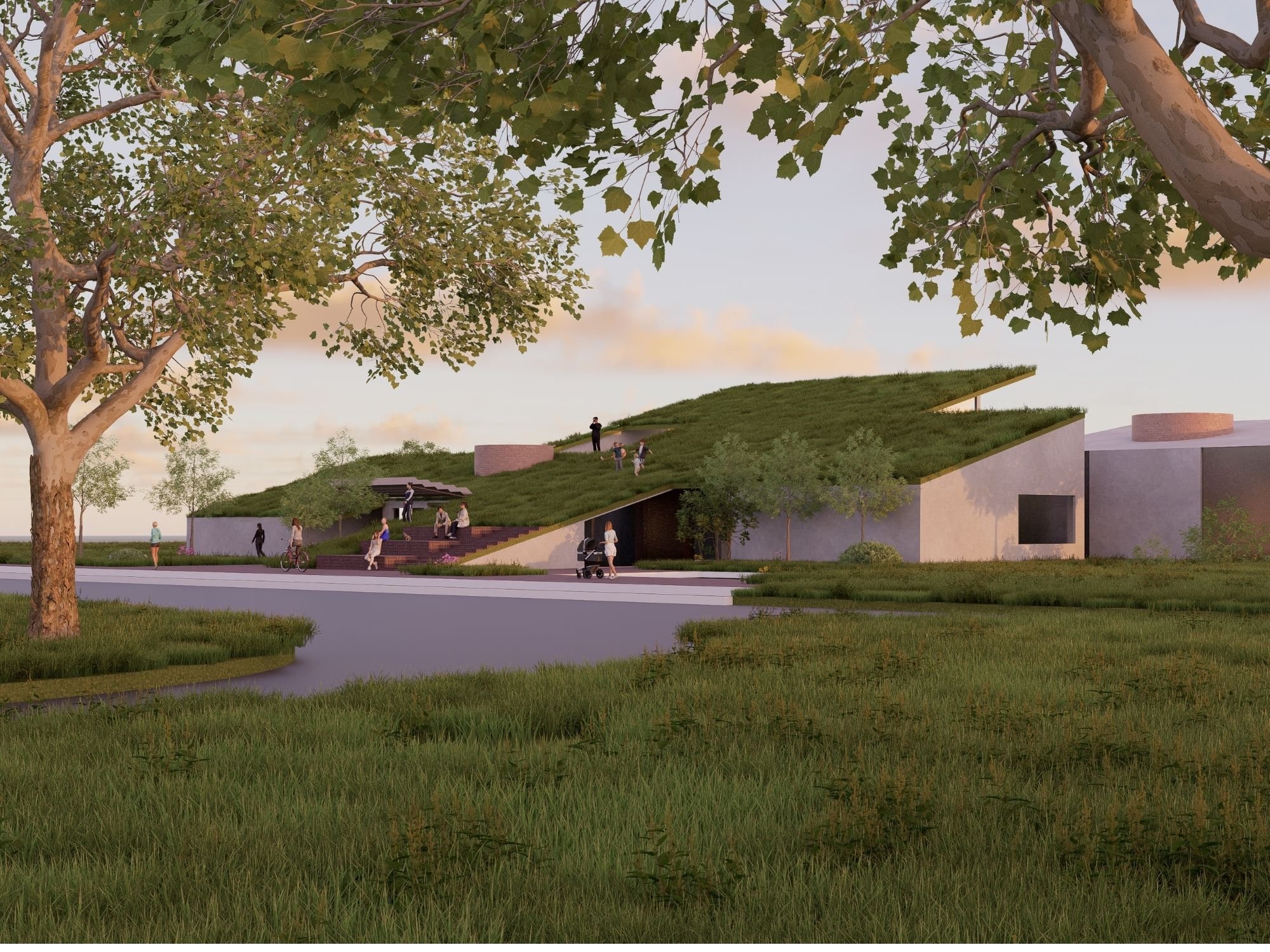
This project is based on the acceptance that mental well-being is not only an individual and internal condition, but a holistic process shaped by the continuous interaction between the body, the environment, and spatial experience. In this context, we believe that mental health is the entirety of an experience produced through physical movement, sensory awareness, and a continuous relationship with nature. Accordingly, our design proposes a permeable landscape that allows all these interactions, inviting users from the street and enabling them to experience the space naturally within everyday life; this landscape is organized into three layers: public, semi-public, and private.
The conceptual departure point of the project is the idea of “caesura,” that is, a “pause” that emerges within continuity. This concept is interpreted as a conscious interruption within a linear flow and translated into space. The street is considered not only as a circulation route but as a surface where movement flows continuously, and we aimed to create a “pause point” within this flow. The concept of “pause” created within this flow is supported by the analyses conducted. It has been observed that approximately 47% of the users of the center are individuals under the age of 26. This data directed the design towards a more active, experience-oriented, and socially engaging spatial configuration. As younger users are more inclined towards spaces experienced through movement, exploration, and interaction with nature, the project is constructed as a system that supports the active participation of the body rather than a passive therapeutic environment. At the same time, street analyses have shown that brick façades are predominantly used in the urban fabric. Additionally, the semi-permeable brick walls that we created throughout the building, which occasionally divide or define spaces, function as thresholds that invite the user into the space; meanwhile, gallery voids and the fragmented massing—an aspect we strongly emphasize—enhance the user’s sense of curiosity, allowing the building to be experienced through exploration rather than being a place that is simply passed by. Thus, the idea of “pause” transforms into an experience that slows the user down, increases awareness, and enables interaction with the space.
In line with this approach, the most fundamental decision of the design is placing the program largely below ground level. In this way, the structure preserves ground continuity and maintains the continuity of the landscape. The ground level functions entirely as a public park, and thus, instead of directing the user through a defined path, it draws the user into the space through the aforementioned experiential qualities. The ground is not merely a surface of passage, but an active area that accommodates actions such as walking, stopping, observing, and playing.
The design can be read through three main layers: the publicly accessible ground plane, semi-public program areas, and more controlled private areas. While the ground level is integrated with public life, the programs are mainly organized at lower levels. However, this lower level is not designed as a completely closed system. On the contrary, through gallery voids and courtyards opened at certain points on the ground level, we aimed to establish a spatial continuity that allows users at different levels to see and interact with each other. These voids present fragments of the interior programs to the user, triggering curiosity and sustaining exploration.
The below-ground organization is designed as a connected yet fragmented system. Different functions such as a multipurpose hall, workshop areas, café, yoga, and sports spaces are divided within a single large volume by semi-permeable brick walls. We did not only use this brick texture on walls, but also in certain furnishings; for example, in small planters, large seating planters, and a small three-step amphitheater. As users move through the space, they remain continuously active through open and enclosed areas, light and shadow, walkable roofs, and amphitheaters. These transitions enable users to experience the space not only visually but also physically and sensorially.
Nature is considered as a strong tool for mental awareness. Landscape is integrated into the building not only at the ground level but also through courtyards, terraces, and roof surfaces. The green roof is one of the strongest expressions of this approach. The roof surface functions as a public space where users can walk, spend time, and observe their surroundings. Thus, the boundary between the building and the landscape almost completely disappears.
The relationship between the body and space is one of the main focuses of the project. Programs requiring physical activity, such as yoga and sports areas, are located in well-lit spaces with visual connections to greenery. These spaces provide suitable atmospheres for both physical and mental relaxation. This diversity allows users to choose spaces according to their needs.
As a result, we designed a wellness center where people can become members of yoga or fitness facilities, or not be members and still enjoy the roof landscape or participate in workshops. This approach defines well-being not through isolation, but through nature, movement, and social interaction. Through the program located below ground and the continuity of the landscape, the user establishes a gradual relationship with the space. The idea of “pause” inserted into the flow of the street offers users both a physical and mental breathing space. The project establishes a bridge between individual experience and urban life, producing a multi-layered spatial system that supports well-being.



Popular Articles
Popular articles from the community

Alton Cliff House: A Harmonious Retreat by f2a Architecture in Lake Country, Canada
Alton Cliff House blends corten steel, prefabrication, and sustainable design, creating a luxurious, energy-efficient retreat perched on Canadian cliffs.
Magic Box Office Barcelona Innovative Sustainable Workplace Design
Innovative sustainable office design featuring triangular form, ceramic façade, flexible interiors, natural light optimization, and creative workspace for modern work culture.

20 Most Popular Commercial Architecture Projects of 2025
From sustainable market concepts to heritage factories, the commercial buildings and proposals that drew the most attention on uni.xyz this year.
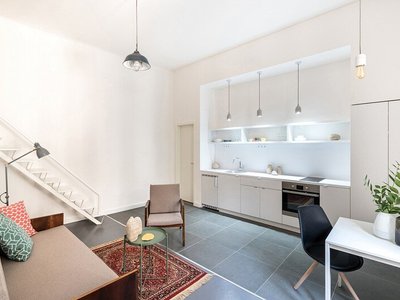
Marvila Apartment Renovation in Lisbon: A Bright Minimalist Attic Transformation by KEMA Studio
Bright attic transformed into minimalist Lisbon apartment with skylights, sustainable materials, open plan layout, and industrial-inspired interior design elements.
Similar Reads
You might also enjoy these articles
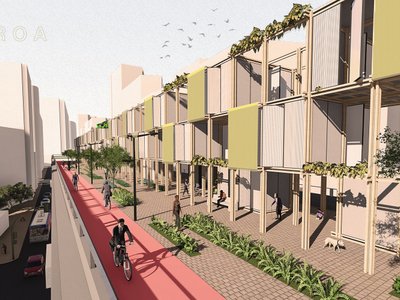
Garoa: A Parasitic Architecture Model for Urban Housing Transformation
A modular parasitic architecture system transforms São Paulo’s Minhocão into adaptive social housing, blending infrastructure, community, and urban renewal.
Sustainable Pedestrian Bridge Design: The Experiential Bridge by Khor Wanxuan
A sustainable pedestrian bridge blending cycling culture, social spaces, and a revolving café inspired by Viking ship forms.
Re-Imagining the Urban Crematorium: A New Paradigm in Funerary Architecture
Redefining funerary architecture through public parks, contemplative landscapes, and secular design in the heart of Mumbai.
Mixed-Use Commercial Architecture Reimagined: COME THRU: Dixie Drive Thru Mall
A future-ready mixed-use commercial architecture merging drive-through retail, pop-up culture, and flexible urban infrastructure.

Explore Architecture Competitions
Discover active competitions in this discipline




The International Standard for Design Portfolios


The Global Benchmark for Architecture Dissertation Awards


The Global Benchmark for Graduation Excellence


Challenge to reimagine the Iron Throne
Comments (0)
Please login or sign up to add comments
No comments yet. Be the first to comment!