
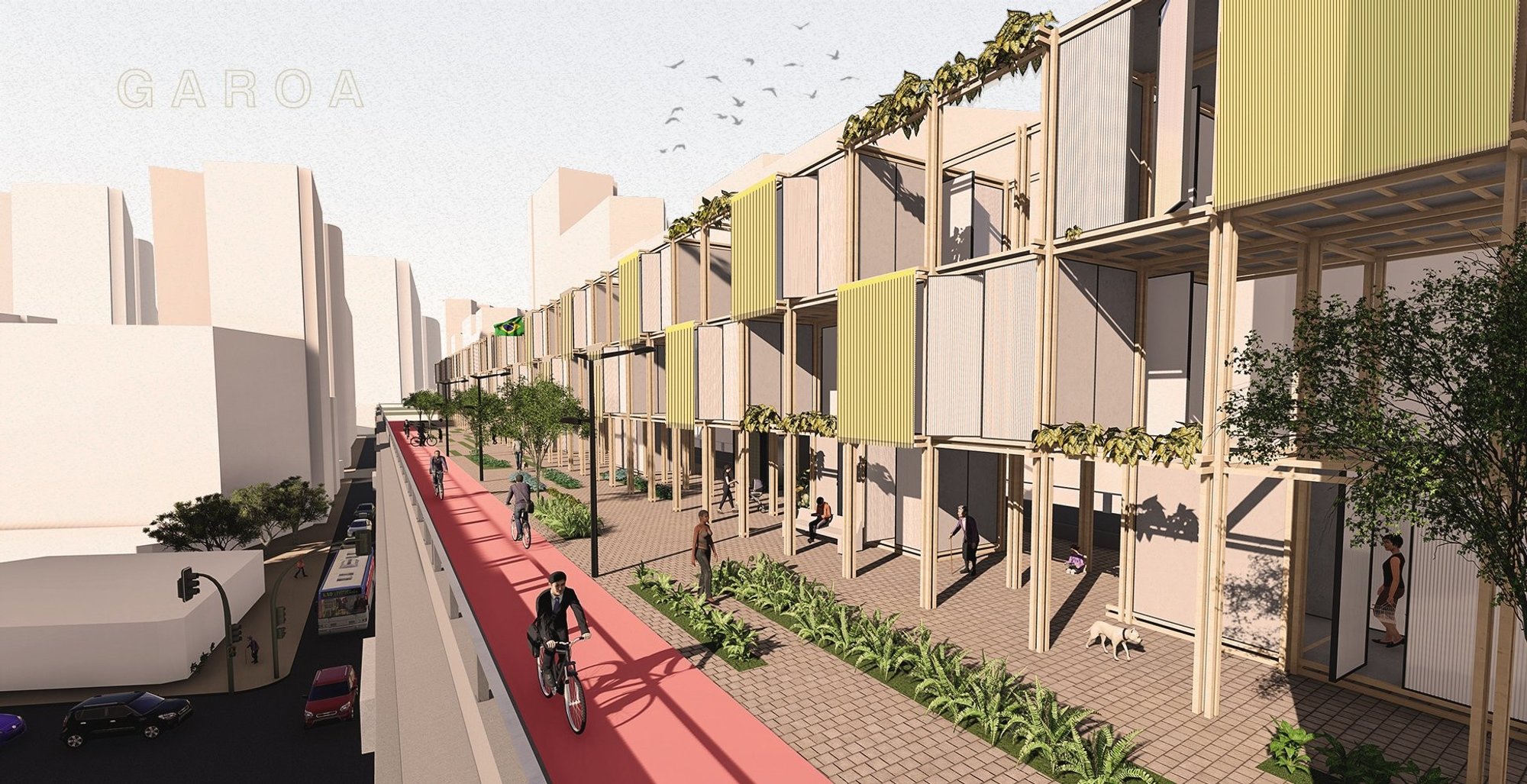
Garoa: A Parasitic Architecture Model for Urban Housing Transformation
A modular parasitic architecture system transforms São Paulo’s Minhocão into adaptive social housing, blending infrastructure, community, and urban renewal.

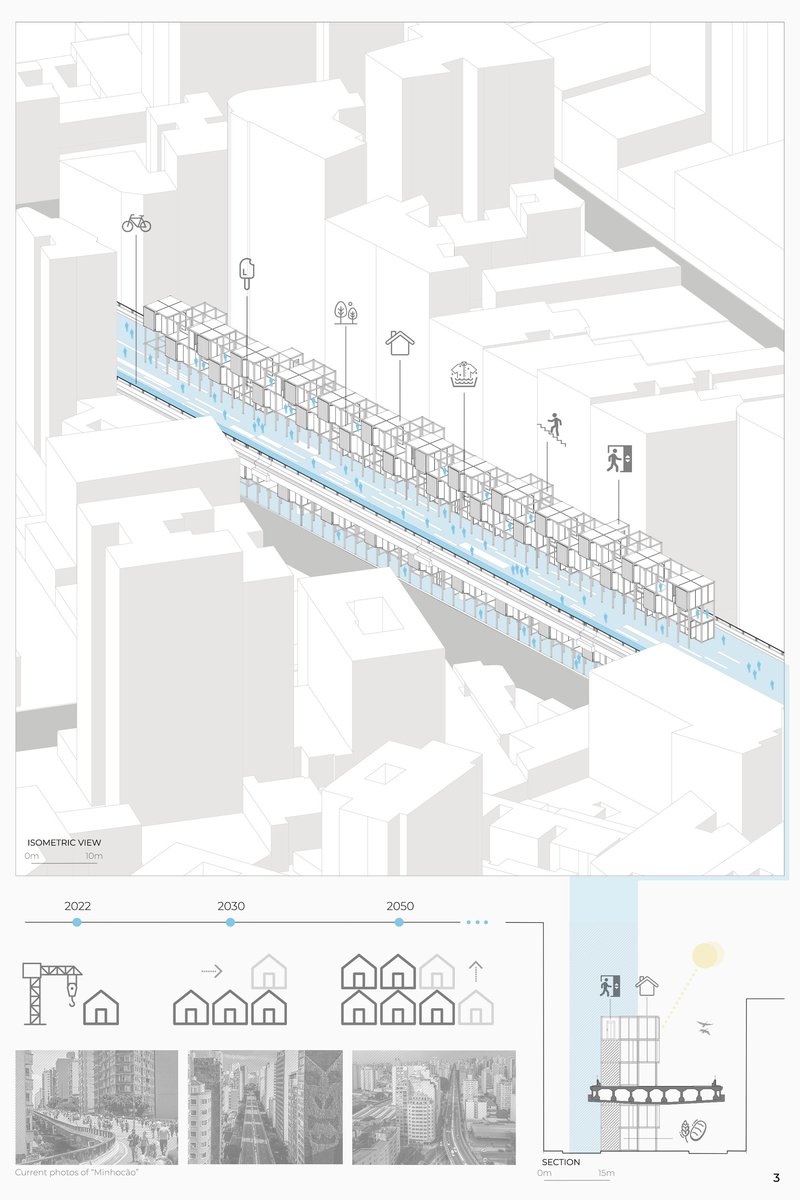
In rapidly urbanizing cities, the intersection of infrastructure and social inequality creates complex spatial challenges. Garoa, an experimental project by Studio Projetos BR and Larissa Rutte, redefines this intersection through a powerful architectural strategy rooted in parasitic architecture. Positioned along São Paulo’s iconic Minhocão viaduct, the project reimagines underutilized infrastructure as a catalyst for inclusive urban living.
Recognized as an Editor's Choice entry in Parasitic Architecture 2020, Garoa proposes a scalable, modular housing system designed to address homelessness, activate public space, and integrate economic opportunities within a dense urban fabric.
Context: São Paulo and the Minhocão
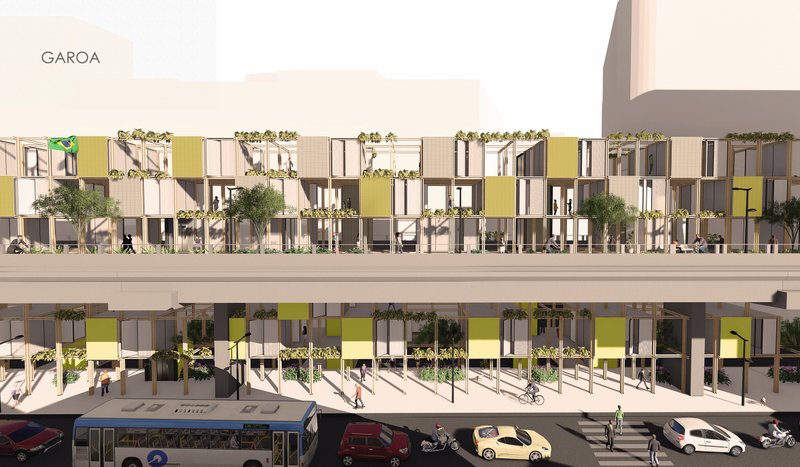
São Paulo, one of the largest cities in the world, is characterized by its density, infrastructural complexity, and socio-economic disparity. The Minhocão (Elevado Presidente João Goulart) is a 3.4 km elevated highway cutting through the city’s core. While it functions as a critical transportation route, it also creates fragmented urban conditions and discomfort for nearby residents.
Simultaneously, the viaduct has evolved into an informal public space. When closed to vehicles on weekends, it becomes a pedestrian corridor for recreation and social interaction. Yet beneath and around it, vulnerable populations, particularly the homeless, occupy marginal spaces with little access to safe housing.
Garoa leverages this contradiction. Instead of treating the viaduct as a problem, the project positions it as an opportunity for transformation through adaptive architectural intervention.
Concept: Parasitic Architecture as Urban Strategy
At its core, Garoa adopts the principles of parasitic architecture, a design approach where new structures attach to existing ones, drawing support while introducing new functions. Here, the viaduct becomes a host structure, enabling a lightweight, modular housing system to grow along its length.
The project functions as a living system rather than a static building. It adapts, expands, and evolves based on user needs, urban conditions, and social demands. This approach shifts architecture from a fixed solution to a responsive framework.
Modular Housing System
The architectural system is based on a 2.5m x 2.5m structural grid, constructed using wooden pillars and beams. This grid allows units to expand both vertically and horizontally, creating a flexible housing typology.
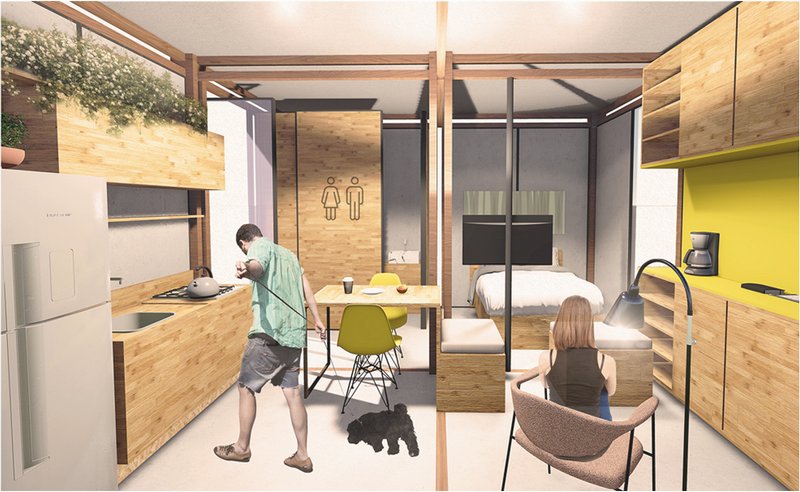
Each base module measures approximately 25 square meters and is subdivided into essential living functions:
- Kitchen
- Bathroom
- Bedroom
- Living space
These modules can be combined and expanded depending on household requirements. A single occupant, a student, or a large family can all inhabit variations of the same system, ensuring adaptability across socio-economic contexts.
Construction Logic and Material Strategy
The construction process is designed for efficiency, affordability, and replicability. The system is assembled in stages:
- Installation of wooden pillars within the structural grid
- Addition of beams and locking framework
- Integration of concrete panels and polycarbonate openings
- Assembly of interior partitions and shading systems
Material selection prioritizes availability and speed of construction. Key materials include:
- Wooden structural elements for flexibility and ease of assembly
- OSB panels for internal divisions
- Concrete panels for durability and external sealing
- Polycarbonate panels for light transmission and ventilation
This strategy ensures that the architecture remains lightweight yet robust, enabling rapid deployment across different urban contexts.
Programmatic Integration: Living, Working, Recreation
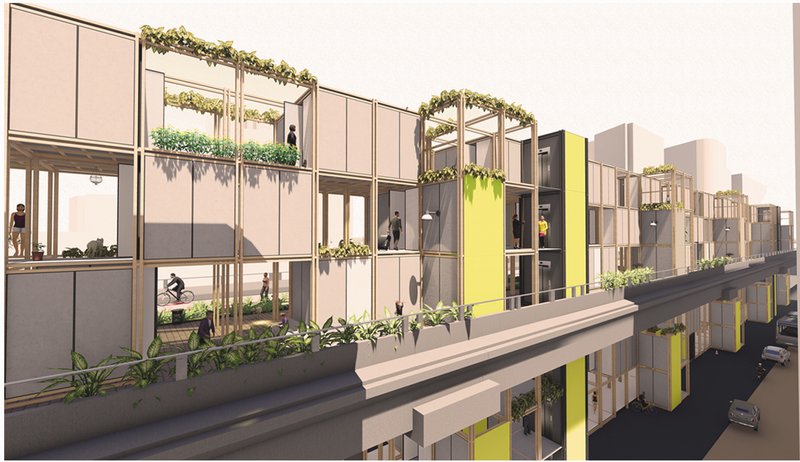
Garoa extends beyond housing. It integrates living, working, and recreational functions into a cohesive urban system. The modules accommodate:
- Residential units
- Informal commercial spaces
- Circulation and vertical access
Elevators and staircases connect street level to the elevated platform, ensuring accessibility. Informal businesses can occupy modular spaces along the façade, activating the structure and generating economic opportunities for residents.
This mixed-use approach transforms the viaduct into a vibrant socio-economic corridor rather than a mono-functional infrastructure.
Social Impact and Urban Regeneration
The project directly addresses homelessness by providing safe, adaptable housing integrated into the city fabric. Rather than isolating vulnerable populations, Garoa embeds them within active urban systems, fostering inclusion and visibility.
Key social outcomes include:
- Provision of dignified housing
- Creation of employment opportunities through construction and commerce
- Activation of underutilized infrastructure
- Enhancement of public safety through increased activity
By redefining the viaduct as a productive urban layer, the project contributes to long-term urban regeneration.
Scalability and Replication
One of Garoa’s most significant strengths lies in its scalability. The modular system can be reproduced and adapted across different parts of São Paulo and other cities facing similar challenges.
Because the system relies on standardized components and simple construction logic, it enables rapid deployment with minimal resource dependency. This positions Garoa as a prototype for future urban housing strategies worldwide.
Architectural Significance
Garoa exemplifies how parasitic architecture can move beyond theoretical discourse into actionable urban solutions. It challenges conventional notions of housing, infrastructure, and urban growth by introducing a hybrid system that is:
- Adaptive
- Incremental
- Socially driven
The project reframes architecture as an evolving process rather than a finished object, aligning with contemporary demands for resilience and flexibility in urban design.
Garoa is not merely a housing proposal; it is a redefinition of how cities can utilize existing infrastructure to address urgent social issues. By merging parasitic architecture with modular design, the project offers a pragmatic yet visionary model for urban transformation.
In a future where cities must accommodate growing populations under increasing constraints, Garoa presents a compelling blueprint, one where architecture becomes a dynamic agent of social change.




Popular Articles
Popular articles from the community

IDIN Architects Wraps a Hua Hin Hotel Around a Private Courtyard to Escape the City
Dusit D2 Hua Hin turns an urban infill site in Thailand's family vacation heartland into a self-contained resort through courtyard planning.
Foster + Partners Wraps a 200-Meter Shanghai Tower in Stainless Steel and Industrial Memory
The Suhe Centre Office Tower anchors a regenerated waterfront district in Shanghai with an all-steel structure that nods to local warehouse heritage.
Constanti Architects Builds a Fortress of Privacy in Nicosia with House 345
A concrete and timber residence in Cyprus reinterprets the traditional introverted courtyard house for a new urban landscape.
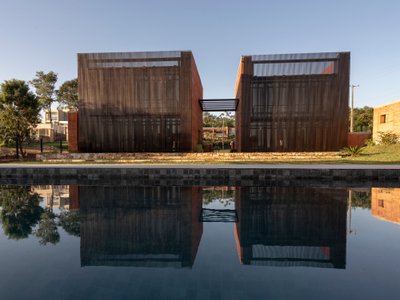
BAUEN Builds Two Rammed Earth Volumes in Paraguay Inspired by the Ovenbird's Nest
In San Bernardino, a house of compacted earth channels the instinct of a constructive bird to shelter life from the Paraguayan summer.

Similar Reads
You might also enjoy these articles


Urban Forest: A Vertical Ecosystem for 5,000 Workers in Singapore's Changi Business Park
Radially stacked pods and layered green decks turn a 7-acre plot into 47 acres of ecological workspace projected for 2040.
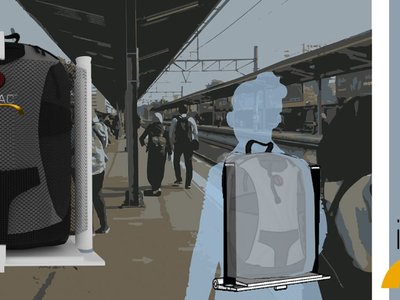
interACT: A Wearable Transit Object That Turns Commuting Into Social Infrastructure
A backpack-mounted foldable device transforms walking, waiting, and riding into moments of shared comfort across Jakarta's transit network.
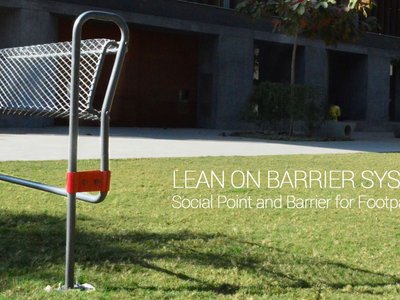
Lean On Barrier System: Where Traffic Safety Meets Chai Culture in Ahmedabad
A modular steel barrier doubles as informal seating and lean-on furniture at one of Ahmedabad's busiest intersections, keeping vendors in place.

The Black Bagh: A Living Monument Built from Water, Light, and Memory
On the banks of the Yamuna, two designers replace the myth of a marble mausoleum with a regenerative landscape of reflection and ritual.





Comments (0)
Please login or sign up to add comments
No comments yet. Be the first to comment!