
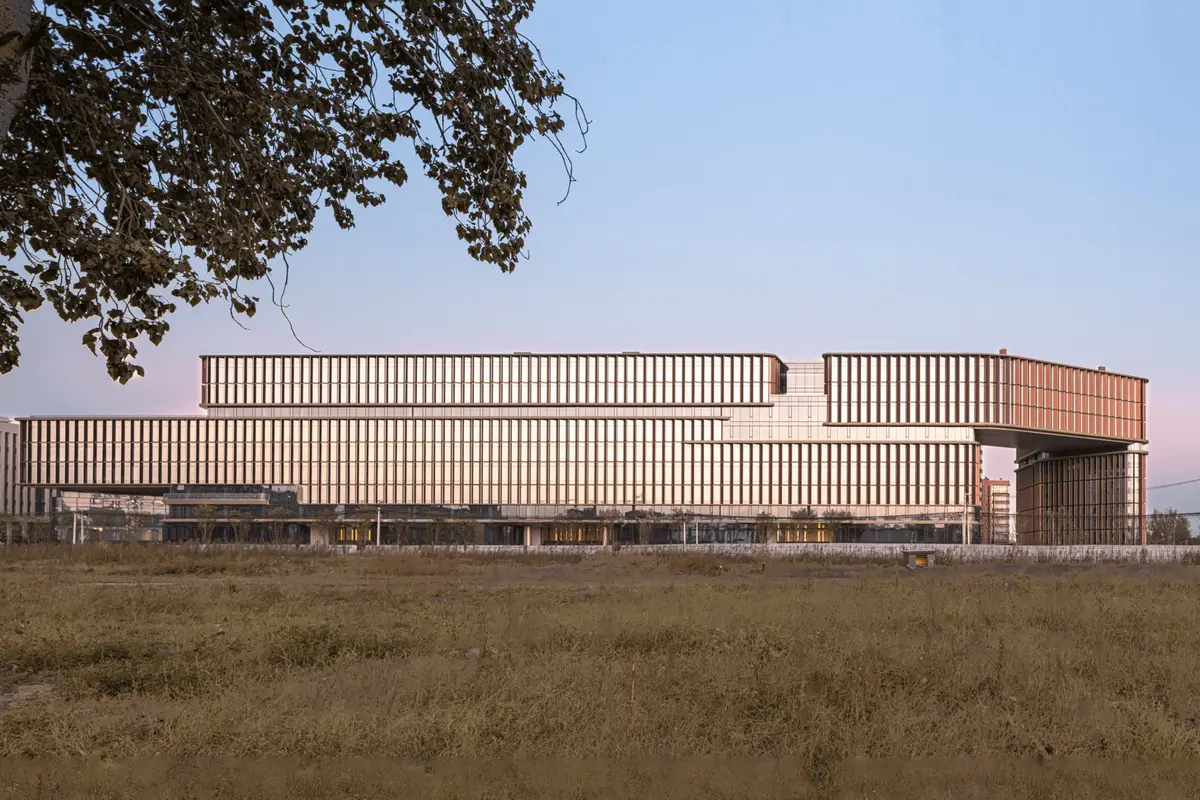
CECEP·Shouzuo Beijing By gad
A large-scale mixed-use campus in Beijing integrating offices, talent housing, shared green spaces, and sustainable design for work-life urban balance.


CECEP·Shouzuo Beijing, designed by gad, is a large-scale mixed-use development located along Beijing’s South Fifth Ring Road, conceived as a new benchmark for integrated urban real estate. With a total construction area of 263,955 m², the project combines office buildings, talent apartments, and shared public spaces into a cohesive environment that supports contemporary patterns of work, living, and leisure.
Driven by a forward-looking vision, the project integrates advanced technologies, sustainable strategies, and innovative spatial organization to deliver both practical utility and long-term urban value.
An Integrated Work, Life Community
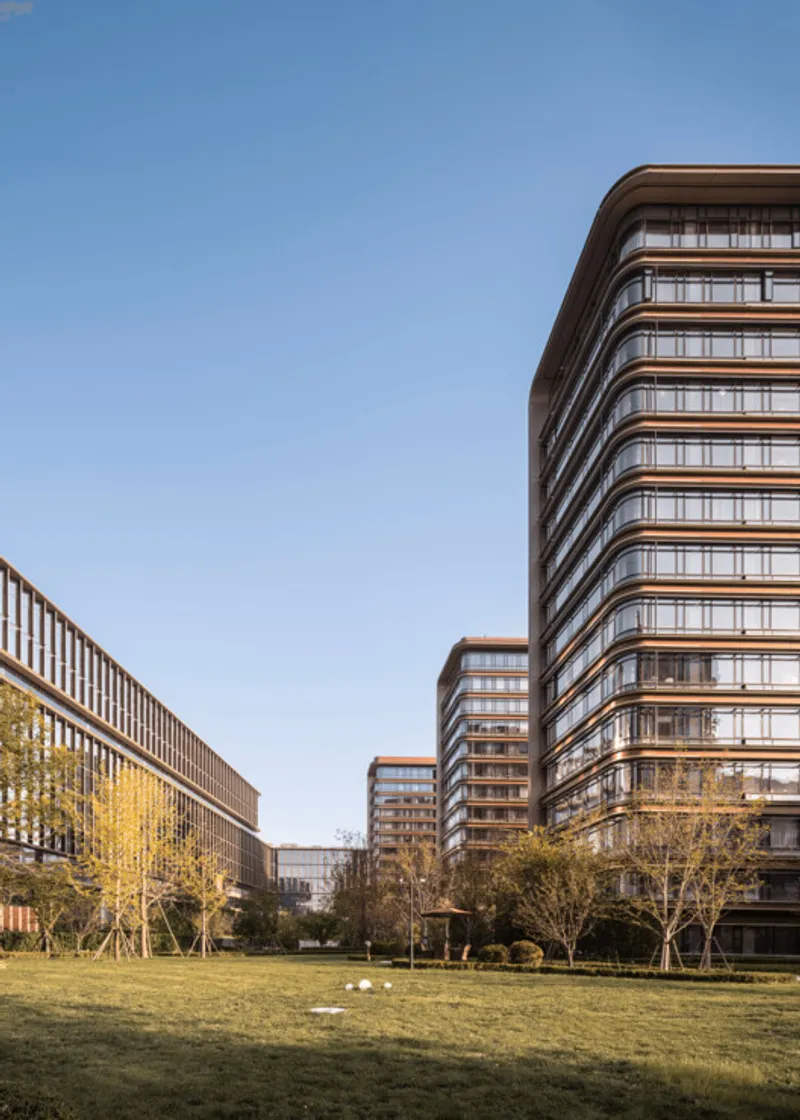
At the core of the design is the ambition to dissolve rigid boundaries between professional and residential life. By juxtaposing urban office spaces with talent apartments, the project explores functional linkage and resource sharing between public work environments and community living.
This integrated planning approach fosters a high-quality mixed-use community where daily routines: working, resting, socializing, and recreation, are seamlessly interconnected, reflecting evolving lifestyles in China’s major metropolitan areas.
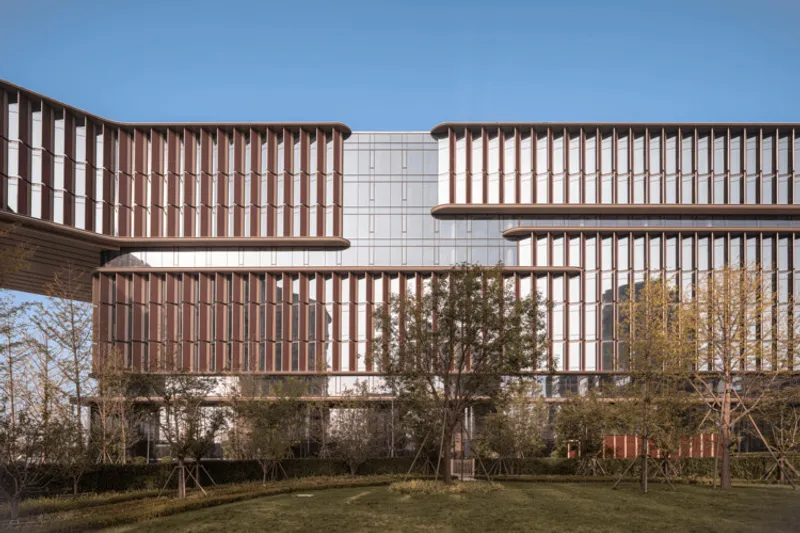
Spatial Strategy: Buffer, Transition, and Connection
The project’s masterplan strategically uses continuous horizontal office buildings to enclose the residential zones. This configuration strengthens the project’s relationship with the surrounding city while simultaneously creating a buffer zone that protects the talent apartments from urban noise and traffic.
Between the office areas and residential buildings, large-scale shared green spaces function as spatial and programmatic transitions. These landscaped zones ensure efficient connectivity while preserving the relative independence and privacy of each function, creating a calm living environment within a dense urban context.
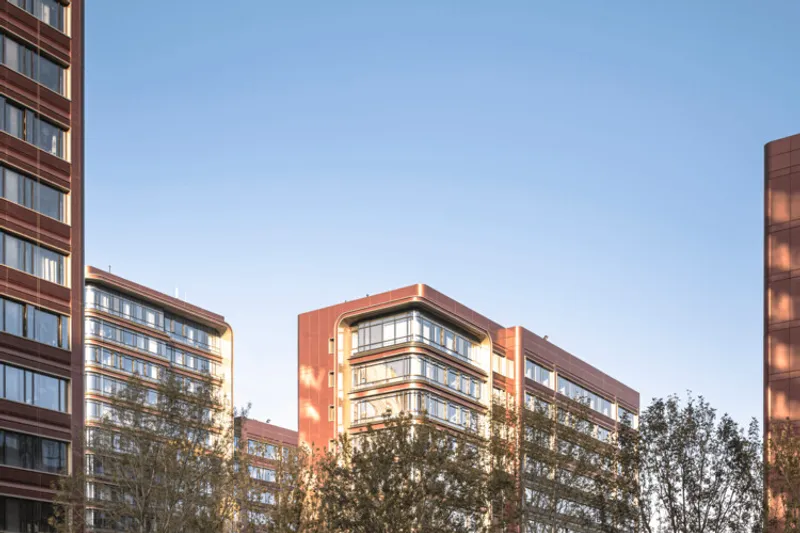
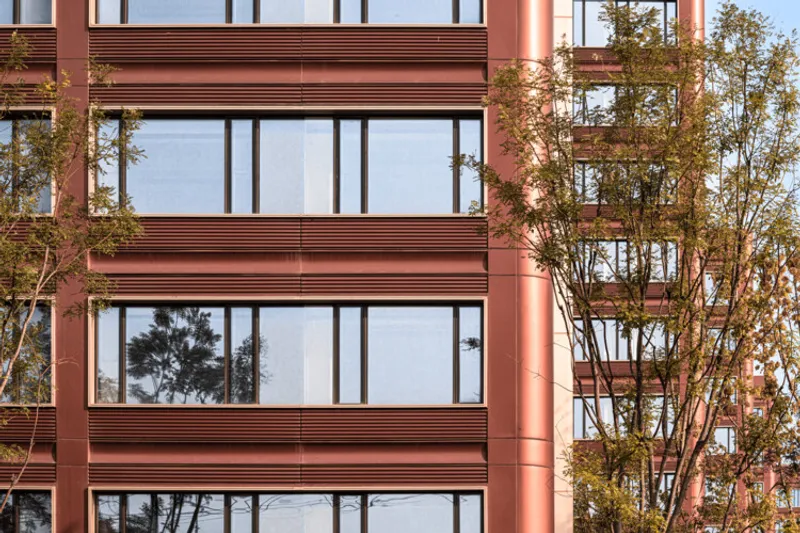
Architectural Expression and Façade Design
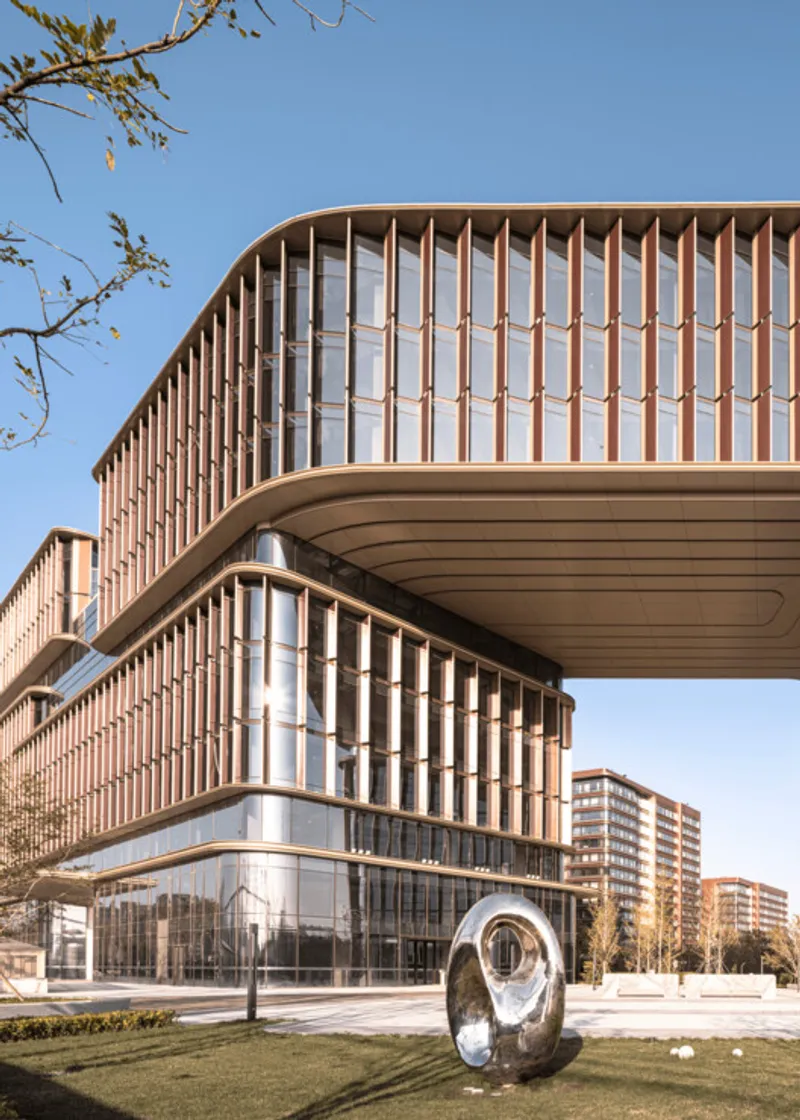
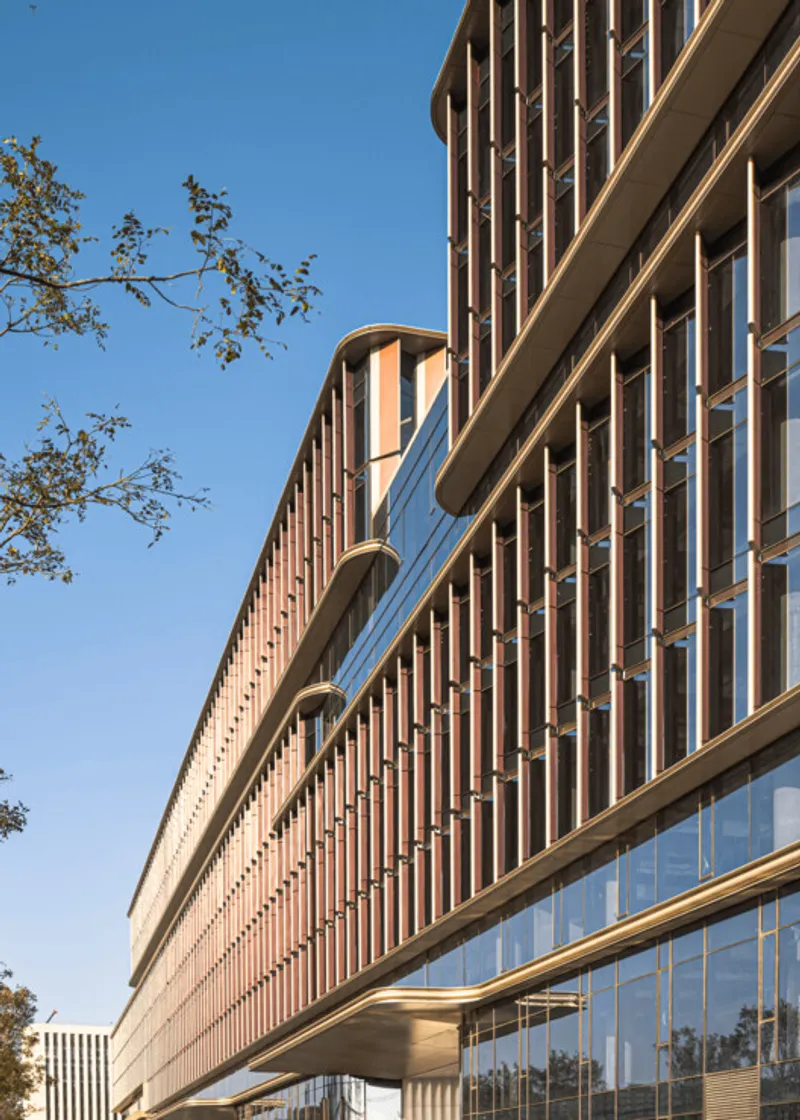
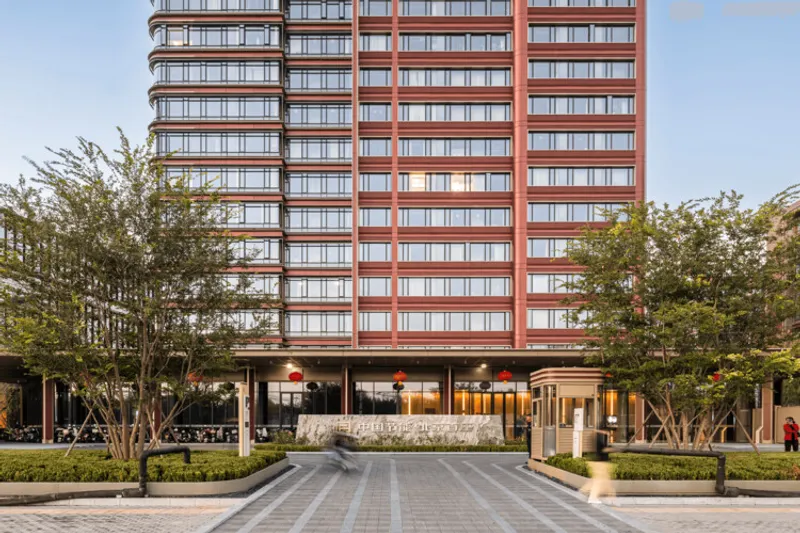
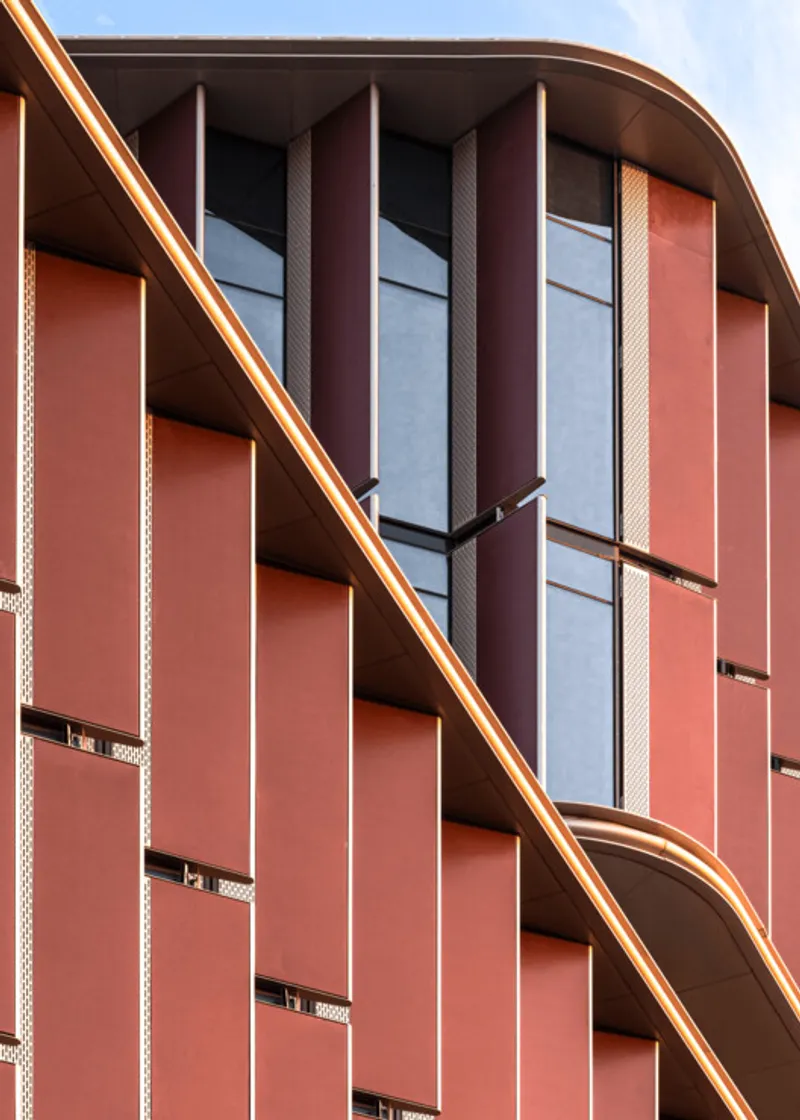
The architectural language of CECEP·Shouzuo Beijing follows a modern, minimalist design philosophy. Building façades are composed of restrained materials, glass curtain walls combined with russet aluminum panels, to form a clean and contemporary visual identity.
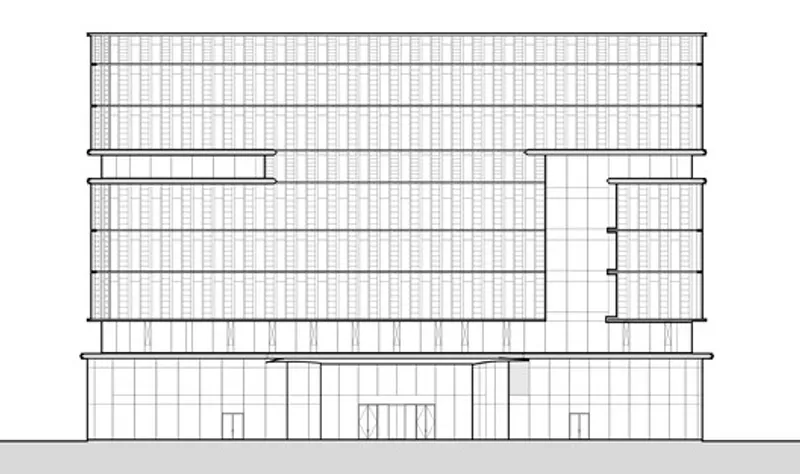
For the office buildings, horizontal volumes are articulated through angular folds, vertical rhythms, and contrasts between solid and transparent surfaces, breaking down the scale of the long façades and enhancing visual proportion. This rhythmic façade treatment lends the development a distinctive and recognizable skyline presence.
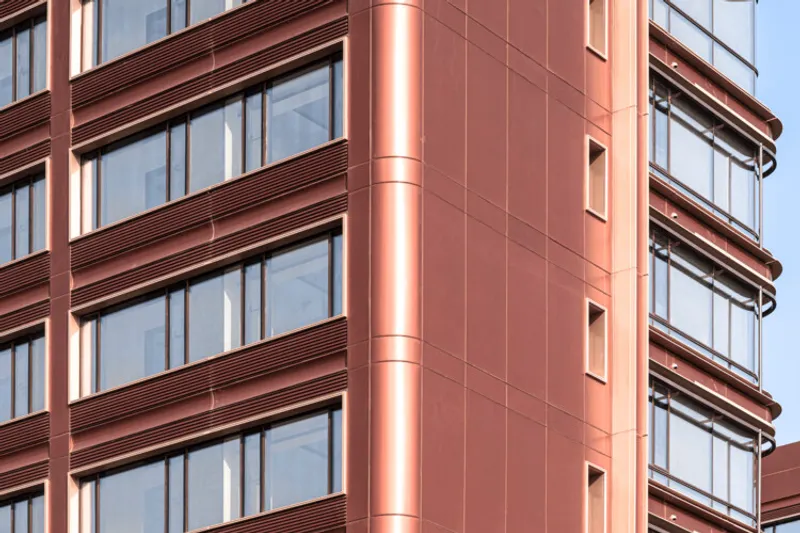
The talent apartments are defined by tan aluminum panels that emphasize horizontal lines, reinforcing a sense of openness and residential calm. The consistent material palette across the park creates formal unity while maintaining architectural clarity and modern elegance.
Climate-Responsive and Sustainable Design
Sustainability is embedded throughout the project, with design strategies tailored to Beijing’s climate, characterized by hot, humid summers and cold, dry winters. Office buildings incorporate multiple vented atriums to improve natural ventilation, while the enclosed park layout forms a sheltered microclimate that acts as a winter wind buffer.
Landscape design prioritizes local, climate-resilient plant species, enhancing biodiversity and improving the site’s micro-ecological conditions.
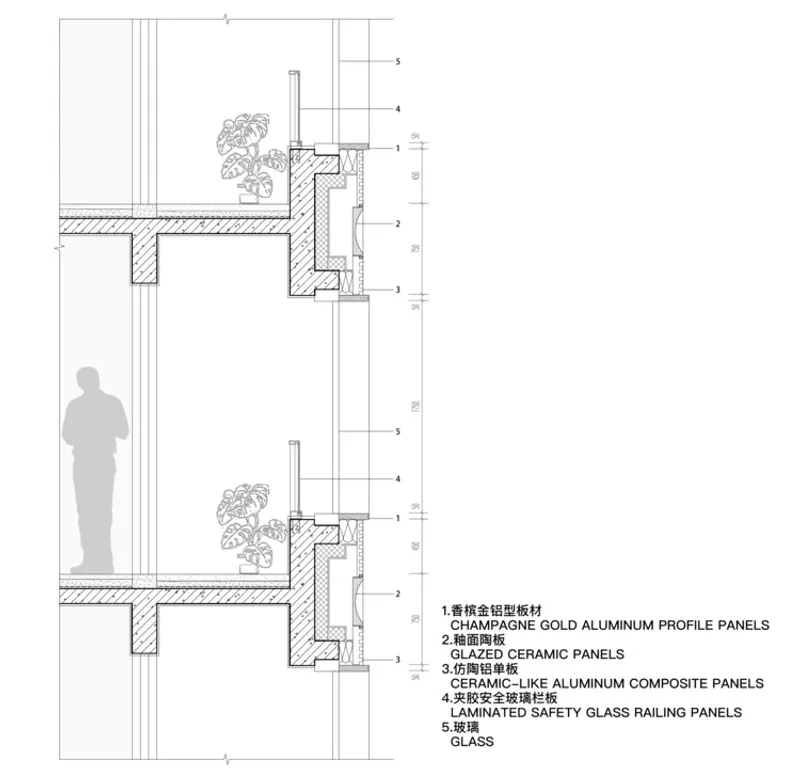
From a technical perspective, the project employs high-airtightness, low-energy enclosure systems, permeable paving, and water-saving fixtures to optimize resource use. These measures are supported by high-efficiency HVAC systems, real-time energy monitoring, and solar water heating, achieving comprehensive energy-saving performance.
A Model for Large-Scale Urban Parks
CECEP·Shouzuo Beijing serves as a referential design paradigm for the planning, construction, and long-term operation of large-scale integrated park developments. Its careful balance of density, openness, sustainability, and functionality contributes to the enhancement of Beijing’s urban image and elevates the business and service capacity of the Daxing Xihongmen area.
By attracting high-end industries and talent while offering a livable and environmentally responsive setting, the project strengthens regional competitiveness and demonstrates how mixed-use architecture can shape future urban growth.
All the photographs are works of Architectural Translator


Popular Articles
Popular articles from the community


Singing Woman: An Opera House That Performs Before the Curtain Rises
Ovidiu Cristian Pavel's conceptual opera house translates Estonia's choral identity into a sculpted waterfront landmark facing the Baltic Sea.

Temporary Home for Dogs: A Reversed Zoo Rethinks Animal Shelter Architecture
In Bucharest, a sinuous corridor and freed landscape flip the logic of containment, designing a shelter that works to make itself unnecessary.
Faces of the Soviet Avant-Garde: Turning Moscow's Street Names into an Open-Air Museum
A network of sculptural installations across a Moscow residential district transforms forgotten architect names into spatial encounters with cultural memor

The Amber Palace Opera: A Geological Fiction Surfaces on Tallinn's Baltic Waterfront
Pierre Brillard reimagines a Baltic legend as a public landscape, opera house, and waterfront promenade rooted in Tallinn's coastal identity.

Similar Reads
You might also enjoy these articles


Hodi-Mandai Geram
Project Function: Preservation and revitalization of the Intangible heritage and socio-spatial identity of the Hodi by Housing, Cultural Memory Center, Sacred Grove, landscape, local tourism economy


Olio Towers: A Mid-Rise for Performers That Fuses Housing, Rehearsal, and Stage
Located blocks from Houston's Theater District, this modular tower stacks living units around a central performance atrium.

Oasis: Modular Green Housing Carved into Dhaka's Urban Fabric
A shortlisted Plugin Housing entry reclaims unauthorized settlements in Dhaka with stepped concrete volumes, green roofs, and ventilation-driven design.

Black Hole: A Floating Megastructure for the Post-Physical Era
Emiliano Mazzarotto envisions a spherical, self-scaling arena where e-sports, digital hotels, and holographic stadiums replace traditional public space.

Explore Beijing Competitions
Discover active competitions in this discipline

Challenge to reimagine the Iron Throne

Photograph architecture without architects

Illustrate the lost glory of Angkor Wat - Render Challenge

Design challenge to reuse E-waste
Comments (0)
Please login or sign up to add comments
No comments yet. Be the first to comment!