

Cercle Calongí Cultural Center: Adaptive Reuse and Contemporary Identity in Calonge
A historic Calonge building transformed into a contemporary cultural center through adaptive reuse, redefining access, façade, and community engagement.


In the historic heart of Calonge, a small town in northeastern Spain, the Cercle Calongí Cultural Center stands as a thoughtful example of adaptive reuse, where heritage architecture is reinterpreted to serve contemporary public life. Designed by Anna Prats Joan Valls, and Roger Panadès, and completed in 2023, the 172-square-meter intervention transforms part of a century-old social building into a civic cultural facility while respecting its historical significance and urban context.
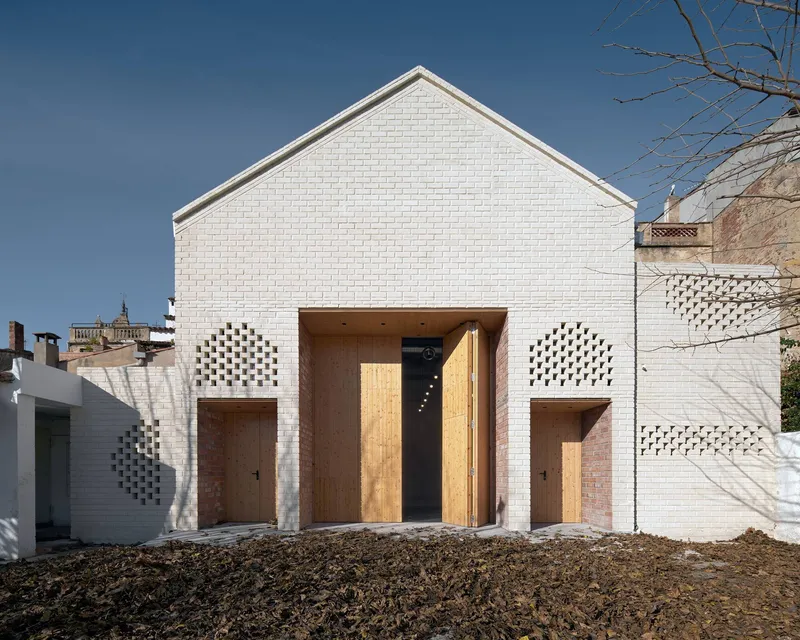
Rather than relying on overt gestures or dramatic contrasts, the project introduces subtle yet powerful architectural strategies that redefine access, public presence, and spatial versatility. Through a new façade, a reimagined courtyard, and a carefully adapted interior, the Cercle Calongí Cultural Center reasserts its role as a gathering place at the center of community life.
A Building Rooted in Local History
The Cercle Calongí society building was inaugurated in 1924 and has long been a social and cultural reference point within Calonge’s old town. Located on the town’s main square, the building reflects the architectural language of early twentieth-century civic architecture, characterized by masonry walls, rhythmic arcades, and a strong sense of permanence.
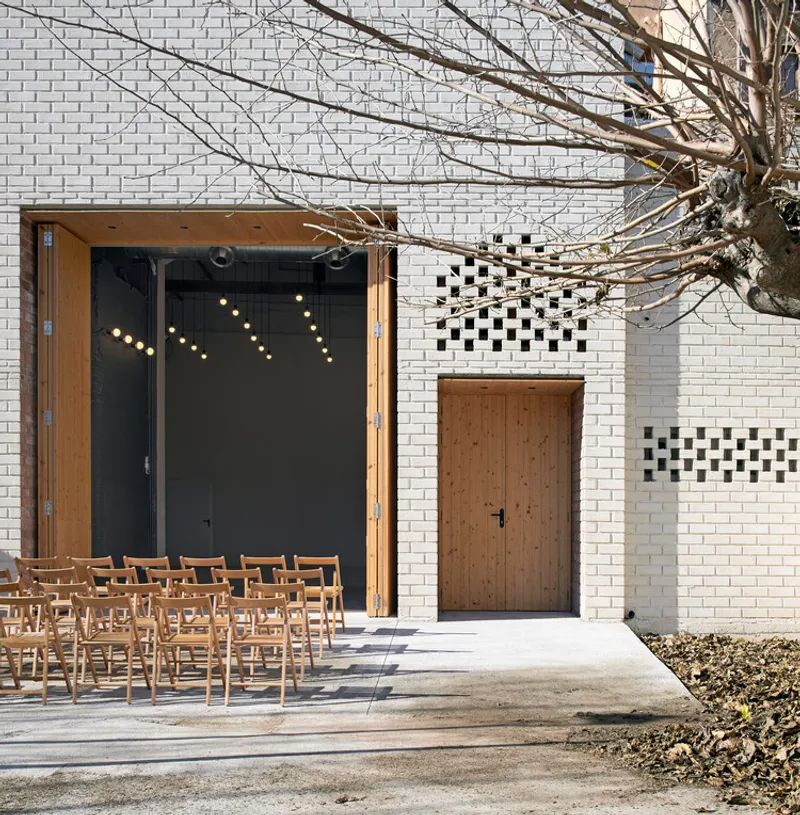
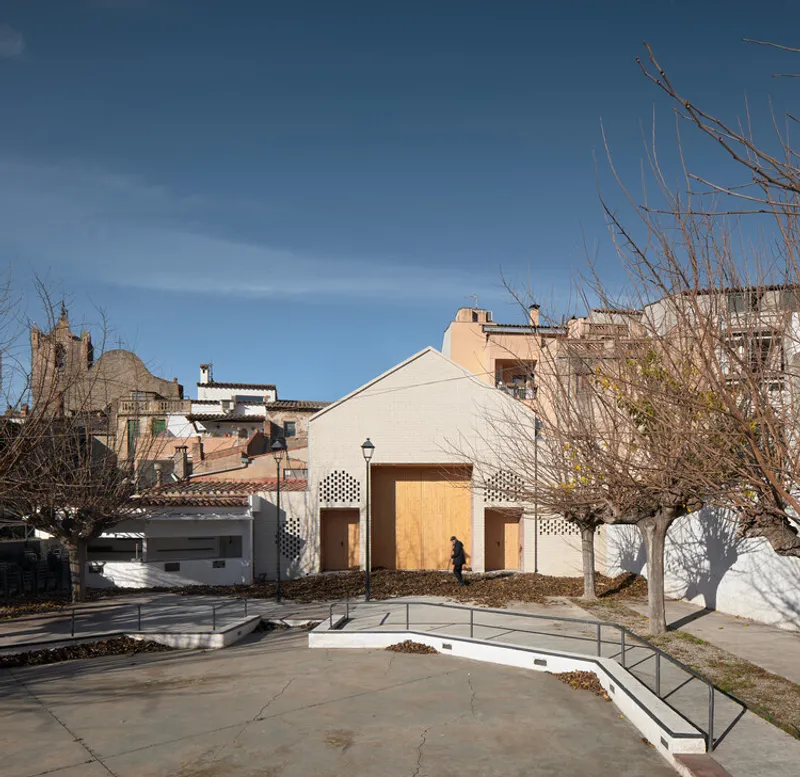
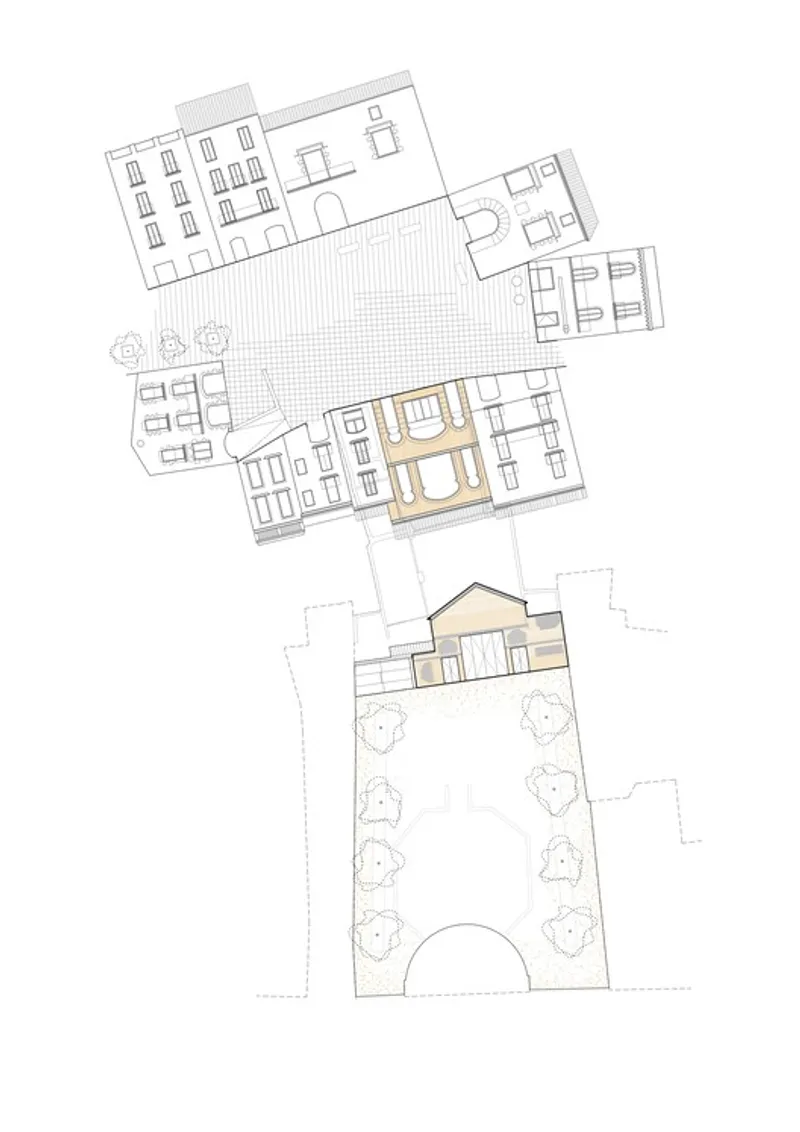
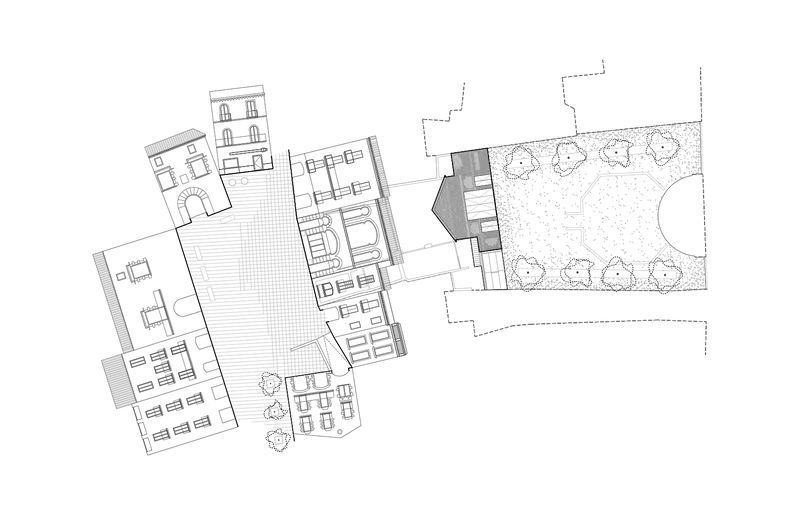
In recent years, the Cercle Calongí organization ceded part of the building to the City Council of Calonge, enabling its transformation into a public cultural facility. The assigned areas include a concert hall and an adjoining courtyard, accessible from a secondary street at the rear. This partial reuse presented both an opportunity and a challenge: how to introduce a new public identity while maintaining continuity with the existing structure.
The Challenge of Access and Public Identity
One of the project’s central challenges was redefining access. Historically, the building’s relationship with the public realm was oriented toward the main square, while the courtyard remained secondary and inward-looking. The architects identified this courtyard as a latent asset—an underused space with the potential to become a new civic interface.
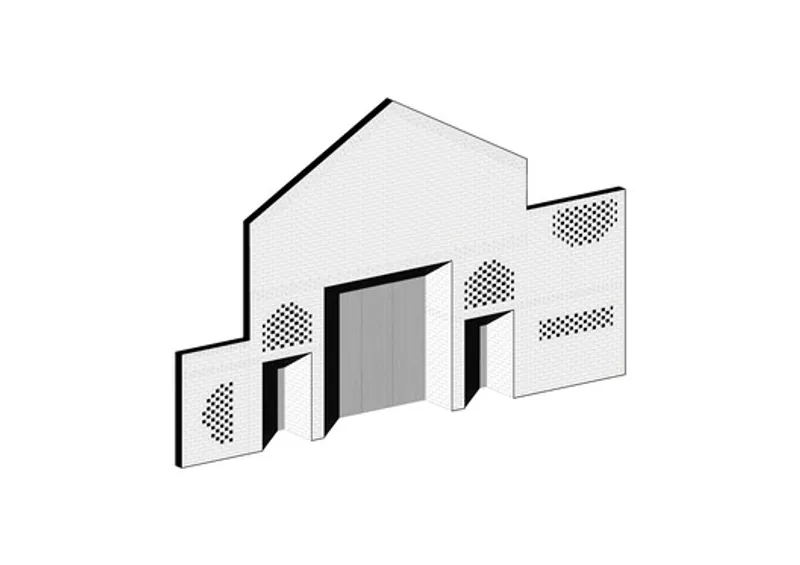
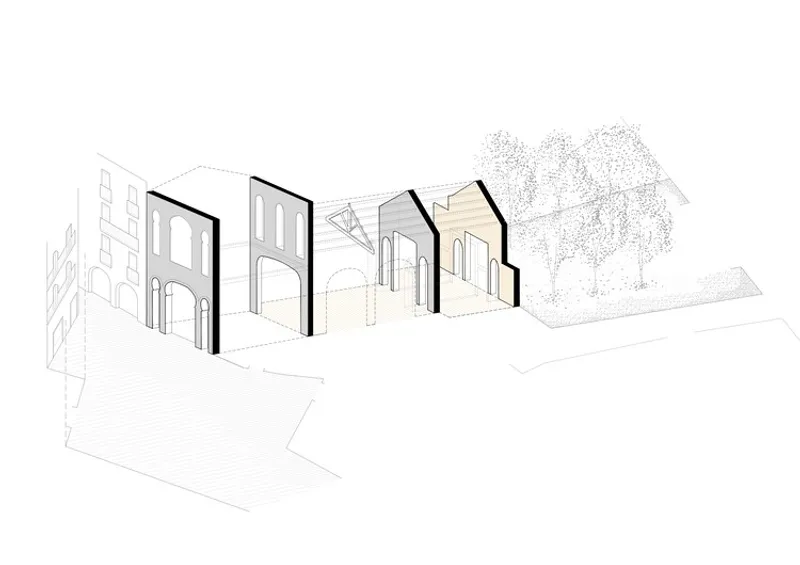
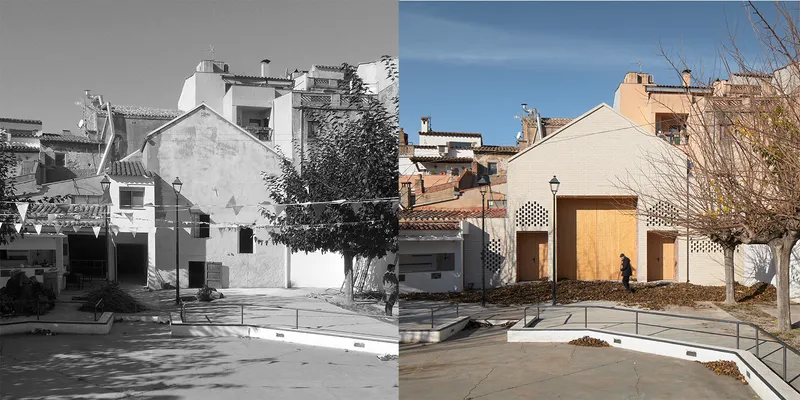
To achieve this transformation, the design introduces a new public entrance through the courtyard, effectively shifting the building’s orientation. This move not only improves accessibility but also establishes a new façade facing a newly activated square. The building now addresses two urban conditions: the historic main square and the emerging public space at the rear.
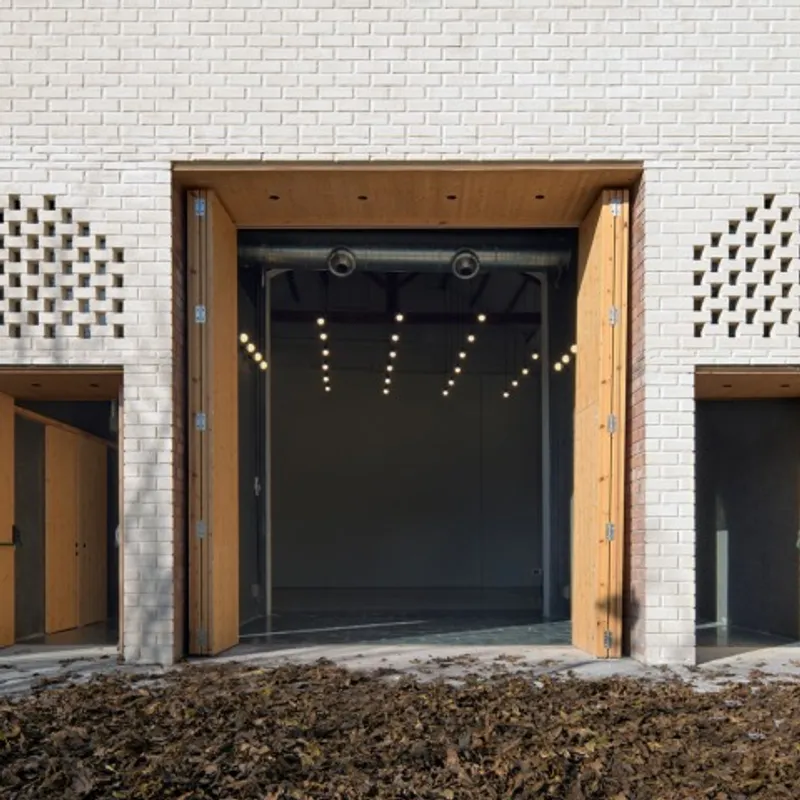
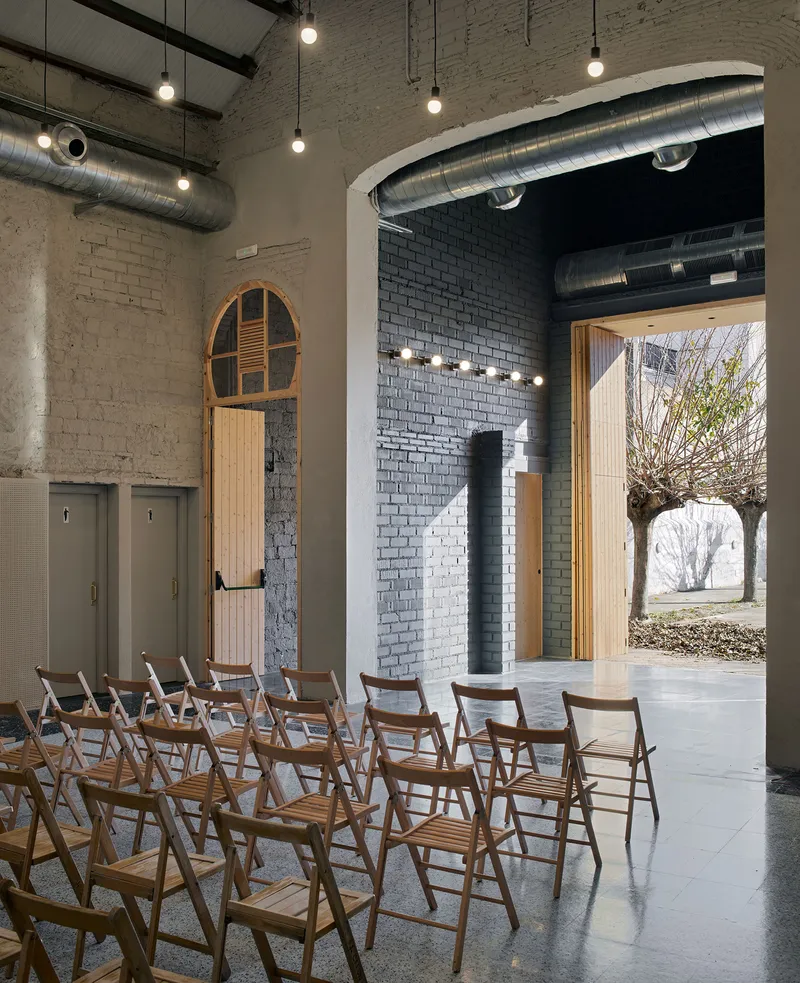
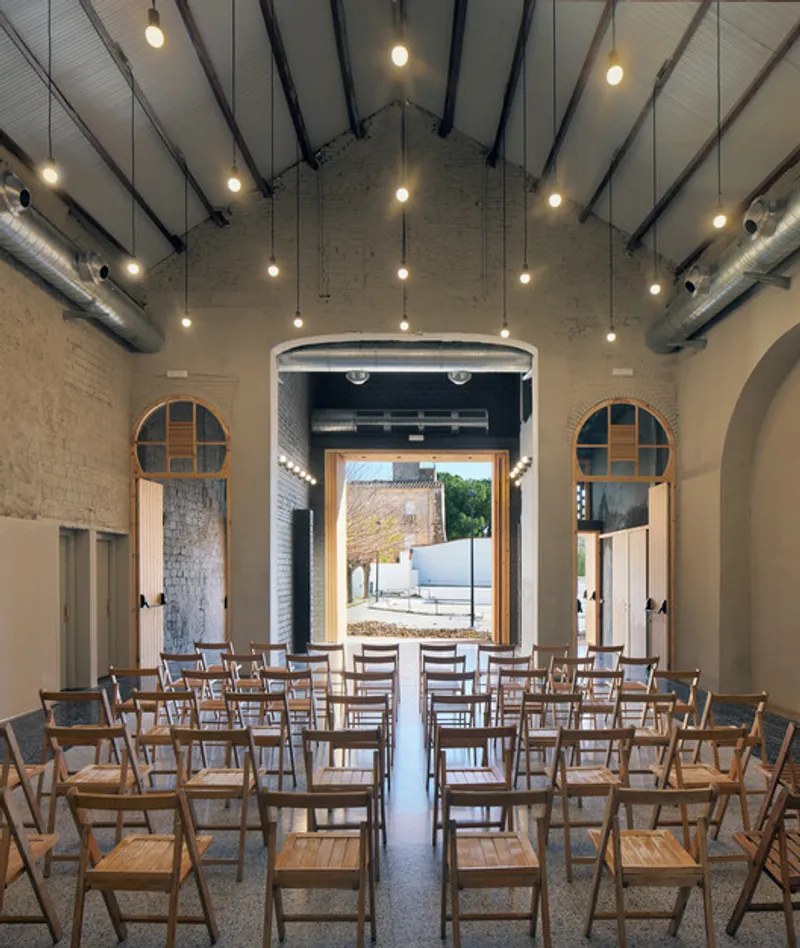
Where the former stage backdrop once stood, the architects inserted a large opening that directly connects the interior hall with the courtyard. This intervention enables events to spill outdoors, dissolving the boundary between inside and outside and increasing the flexibility of the cultural program.
Courtyard as Civic Threshold
The courtyard plays a pivotal role in the renewed identity of the Cercle Calongí Cultural Center. No longer merely a service space, it becomes a civic threshold—a place of arrival, gathering, and transition.
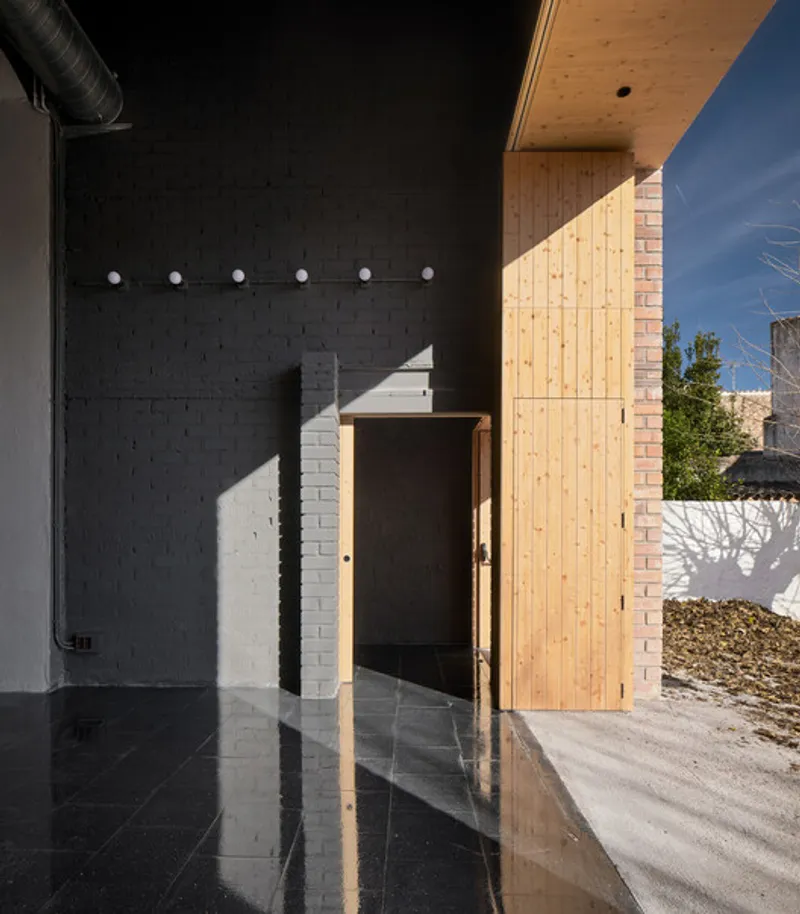
By opening the concert hall directly onto the patio, the architects allow the space to host a wide range of activities, from performances and exhibitions to informal community events. This adaptability is essential for a small cultural center, where versatility ensures long-term relevance.
The courtyard also serves as an intermediary between the building’s historic fabric and its contemporary additions, mediating scale, light, and materiality.
Reinterpreting Heritage Through the New Façade
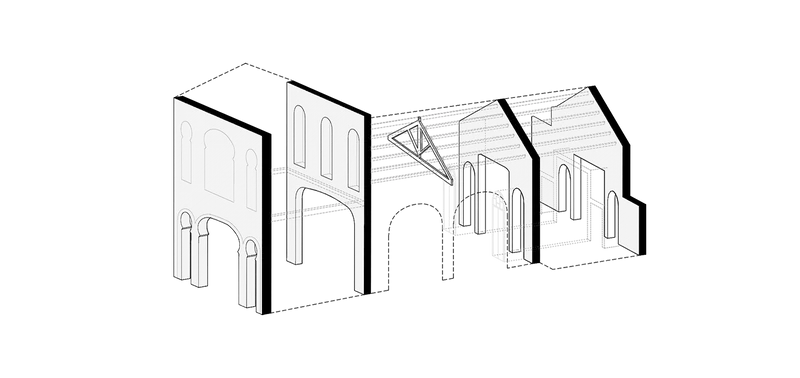
The introduction of a new façade was perhaps the most delicate aspect of the project. The existing building is defined by a succession of ceramic walls articulated through three vertical axes of arcades, a compositional system that gives the structure its distinctive rhythm and depth.
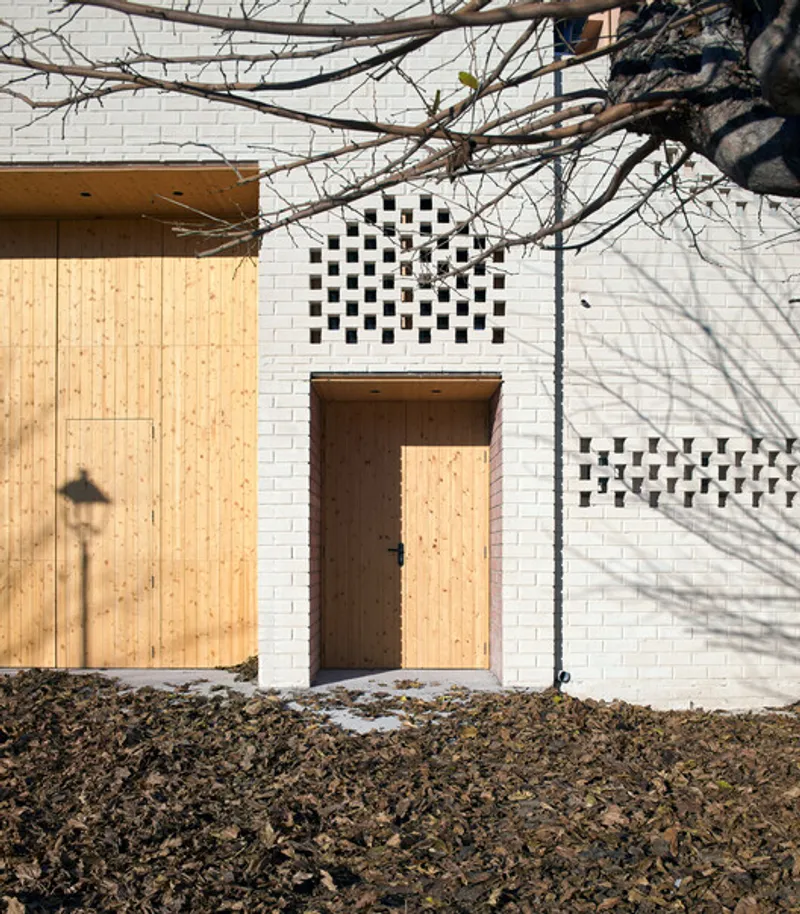
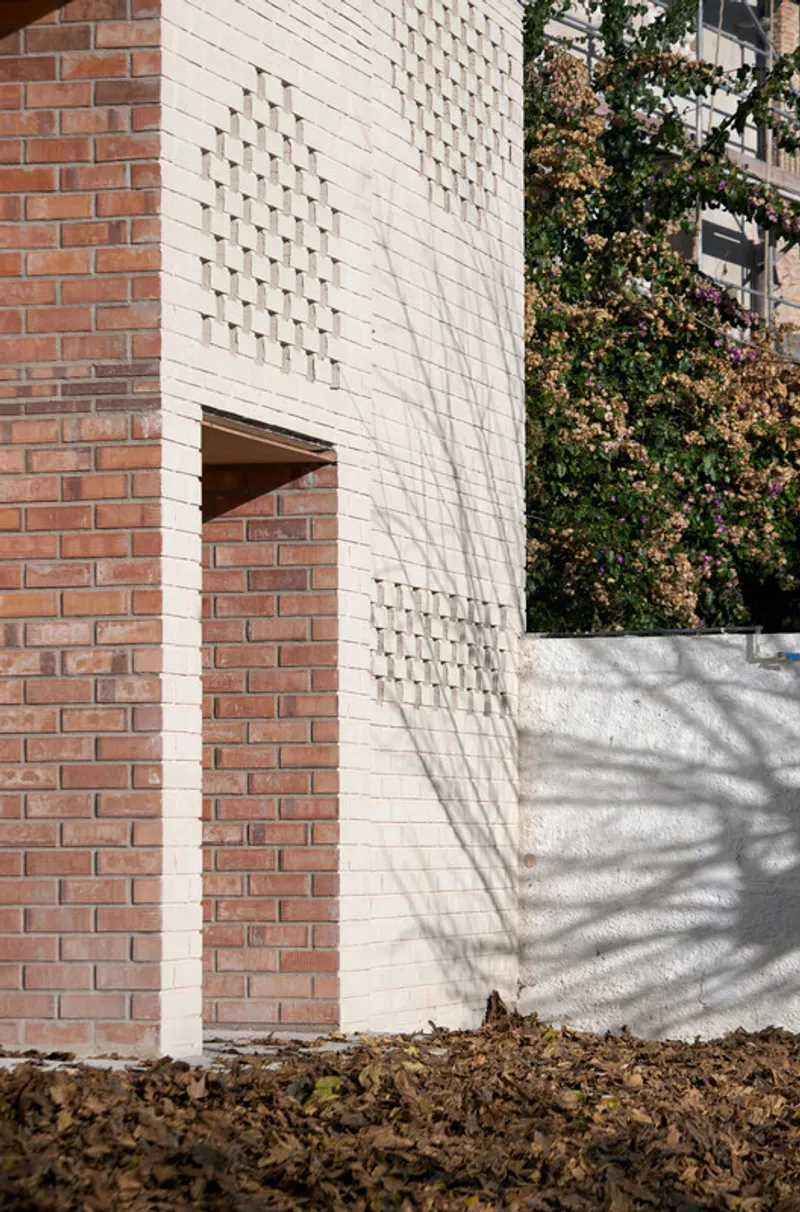
Rather than replicating this language literally, the architects chose to reinterpret it through contemporary means. The new façade employs a combination of perforated and solid brickwork, creating a layered surface that echoes the original arcades while clearly belonging to the present.
Brick lattices define openings, allowing light and air to pass through while maintaining a sense of enclosure. This strategy produces a façade that is both porous and robust, responsive to its civic role and respectful of the historic context.
Material Continuity and Architectural Restraint
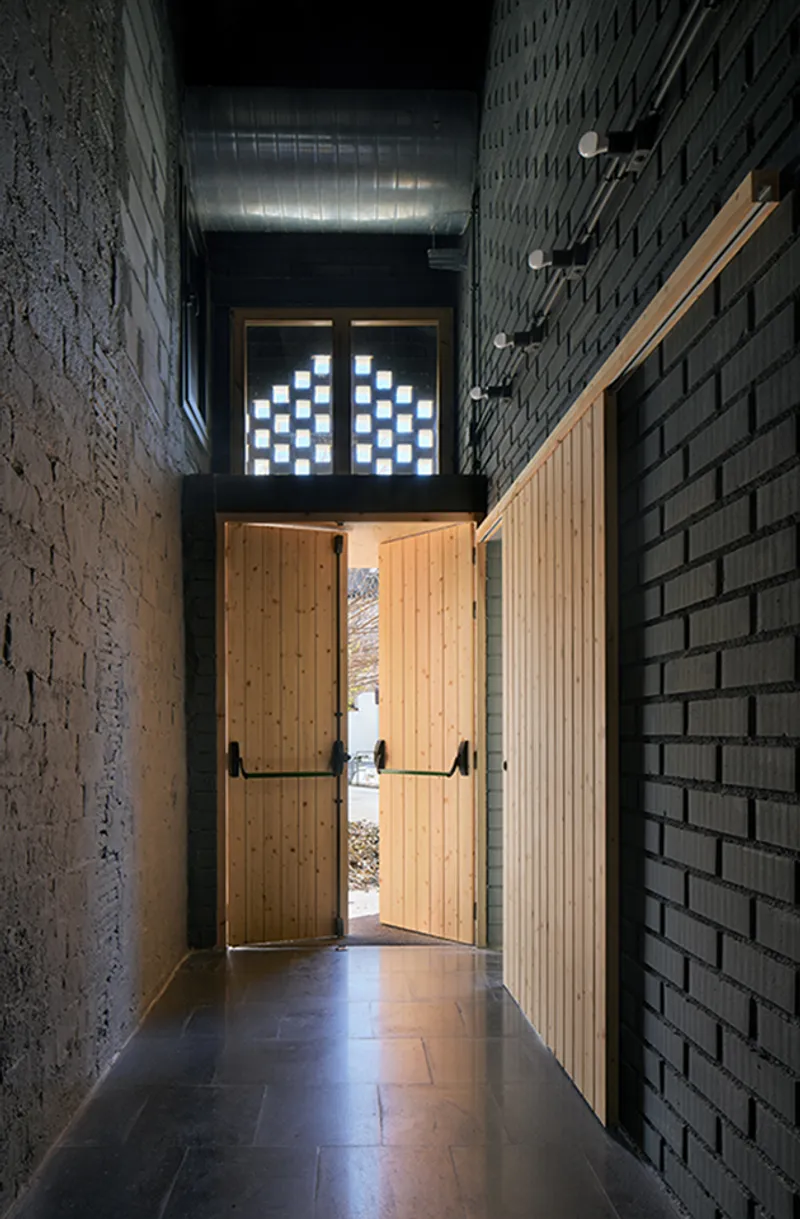
Material choice plays a crucial role in bridging old and new. Brick and concrete are used with restraint, allowing texture, shadow, and proportion to carry architectural expression. The muted palette ensures that the intervention complements the existing building rather than competing with it.
Concrete elements inside the building are left exposed, emphasizing structural clarity and durability. This approach aligns with the ethos of adaptive reuse: revealing what is essential, removing what is superfluous, and allowing the building’s history to remain legible.
The careful balance between solidity and openness reinforces the cultural center’s dual identity as both a protected heritage structure and an active public facility.
Interior Adaptation for Contemporary Use
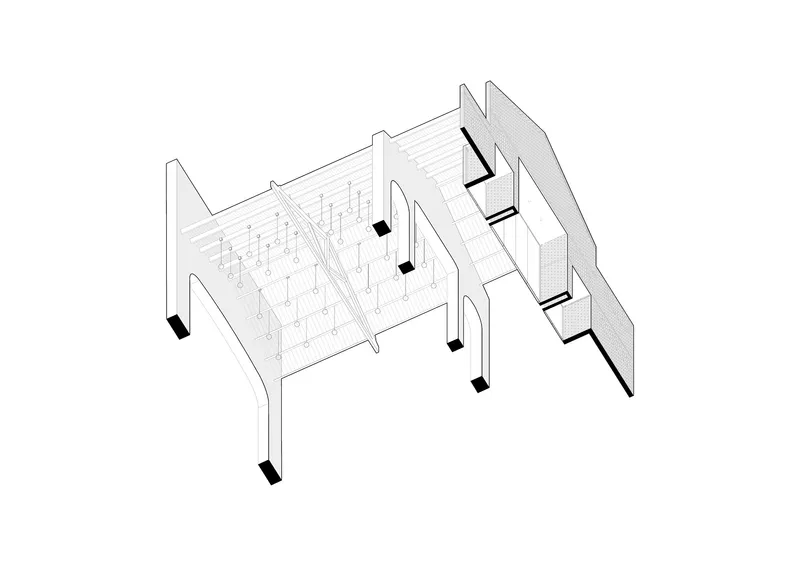
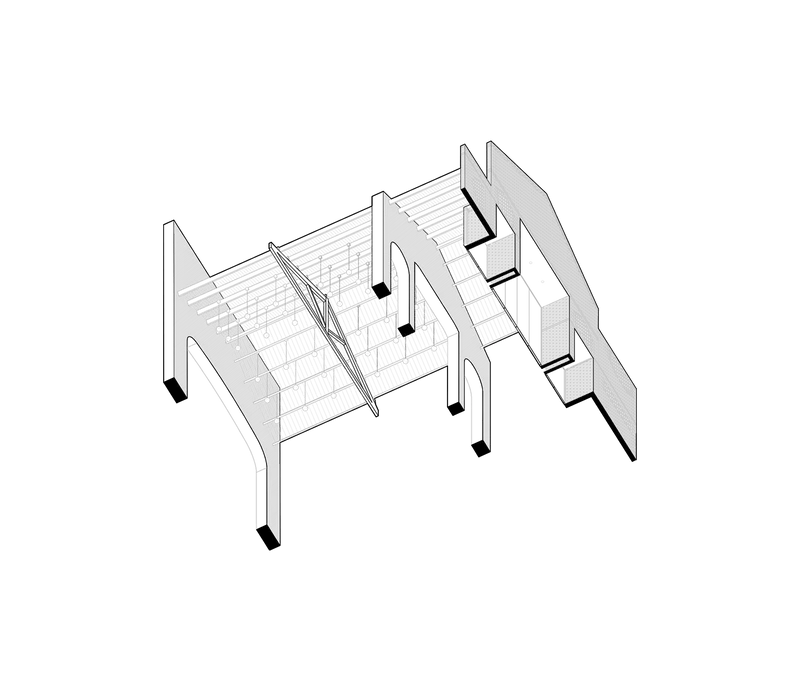
Inside, the intervention focuses on spatial clarity and functional flexibility. The adapted concert hall is conceived as a neutral yet characterful space capable of accommodating different cultural programs, including performances, lectures, screenings, and community gatherings.
Lighting is integrated discreetly, highlighting architectural features without overpowering them. Columns, walls, and ceilings are treated as continuous elements, reinforcing a sense of spatial coherence.
Doors and partitions are designed to support multiple configurations, enabling the space to adapt to changing needs. This adaptability is critical for a small-scale cultural center, where each square meter must serve multiple purposes.
Architecture in Service of Community
At its core, the Cercle Calongí Cultural Center is a project about community. By transforming part of a private social building into a public cultural facility, the project extends the building’s social mission into the present day.
The architects’ approach avoids monumentality in favor of accessibility and inclusiveness. The new entrance, the open courtyard, and the flexible interior all contribute to a welcoming environment that encourages participation from a broad cross-section of residents.
This emphasis on everyday use ensures that the building remains an active part of Calonge’s urban life rather than a static heritage object.
Adaptive Reuse as Cultural Strategy
The project exemplifies how adaptive reuse can function as a cultural strategy rather than a purely technical exercise. By working within the constraints of an existing structure, the architects were able to amplify its latent qualities and extend its relevance.
Instead of erasing traces of the past, the intervention builds upon them, allowing history and contemporary use to coexist. The result is a layered architecture that communicates continuity while embracing change.
In a broader context, the Cercle Calongí Cultural Center demonstrates how small-scale interventions can have a significant impact on urban and social dynamics, particularly in historic town centers.
A New Civic Presence in Calonge
Although modest in size, the project has a strong urban presence. The new façade and reconfigured courtyard give the cultural center a renewed visibility and identity within the town. The building now actively contributes to the life of the square, reinforcing Calonge’s public realm.
By establishing a clear yet respectful architectural language, the project sets a precedent for future interventions in historic settings—showing that contemporary design can enhance, rather than diminish, heritage value.
Continuity Through Transformation
The Cercle Calongí Cultural Center is not a radical transformation, but a careful evolution. Its success lies in the precision of its interventions, the clarity of its spatial strategy, and its deep respect for context.
Through adaptive reuse, the project ensures that a nearly century-old building continues to serve its community, not as a relic of the past, but as a living cultural institution. In doing so, it highlights the enduring relevance of architecture that is grounded in place, history, and collective experience.
All the Photographs are works of Pol Viladoms


Popular Articles
Popular articles from the community


Manzana Morphosis: Stretching Barcelona's Grid into a Living Landscape for 2050
A radical reworking of the Eixample manzana turns density into a tool for generous public space, vertical ecology, and environmental performance.

Opera by the Sea Estonia: Three Shells Dissolving Architecture into Tallinn's Coastline
A winning opera house proposal replaces monumental form with interconnected shells that blur the boundary between building, park and Baltic Sea.
Extended Shell: Retrofitting Kolkata's Balconies as Living Urban Thresholds
A modular retrofit system recovers the social and environmental intelligence of Kolkata's historic verandas for contemporary Park Street residents.

Faces of the Soviet Avant-Garde: Turning Moscow's Street Names into an Open-Air Museum
A network of sculptural installations across a Moscow residential district transforms forgotten architect names into spatial encounters with cultural memor

Similar Reads
You might also enjoy these articles


Hodi-Mandai Geram
Project Function: Preservation and revitalization of the Intangible heritage and socio-spatial identity of the Hodi by Housing, Cultural Memory Center, Sacred Grove, landscape, local tourism economy


Olio Towers: A Mid-Rise for Performers That Fuses Housing, Rehearsal, and Stage
Located blocks from Houston's Theater District, this modular tower stacks living units around a central performance atrium.

Oasis: Modular Green Housing Carved into Dhaka's Urban Fabric
A shortlisted Plugin Housing entry reclaims unauthorized settlements in Dhaka with stepped concrete volumes, green roofs, and ventilation-driven design.

Black Hole: A Floating Megastructure for the Post-Physical Era
Emiliano Mazzarotto envisions a spherical, self-scaling arena where e-sports, digital hotels, and holographic stadiums replace traditional public space.

Explore Cultural Center Competitions
Discover active competitions in this discipline

Challenge to reimagine the Iron Throne

Photograph architecture without architects

Illustrate the lost glory of Angkor Wat - Render Challenge

Bring back Drive In's
Comments (0)
Please login or sign up to add comments
No comments yet. Be the first to comment!