

Céu Bar by Küster Brizola Arquitetos
A renovated 1950s building in Curitiba transformed into a layered nightlife venue with courtyard, listening bar, rooftop terrace, and heritage-rich attic spaces.


Located in the Batel neighborhood of Curitiba, Céu Bar is a layered architectural renovation that transforms a modest 1950s building into a dynamic contemporary venue for nightlife, music, and social interaction. Designed by Küster Brizola Arquitetos and completed in 2024, the project preserves the original façade and urban presence of the historic structure while introducing a sequence of contrasting interior environments that unfold vertically.
Rather than erasing the past, the intervention embraces architectural memory as a foundation for new experiences, allowing heritage and modernity to coexist through material, light, and spatial choreography.
Preserving Memory, Reframing Experience
The starting point of the project was the decision to maintain the building’s original street façade. This gesture anchors Céu Bar within Batel’s urban fabric, reinforcing continuity with the neighborhood’s mid-century character. Behind this familiar exterior, however, a contemporary spatial narrative emerges.
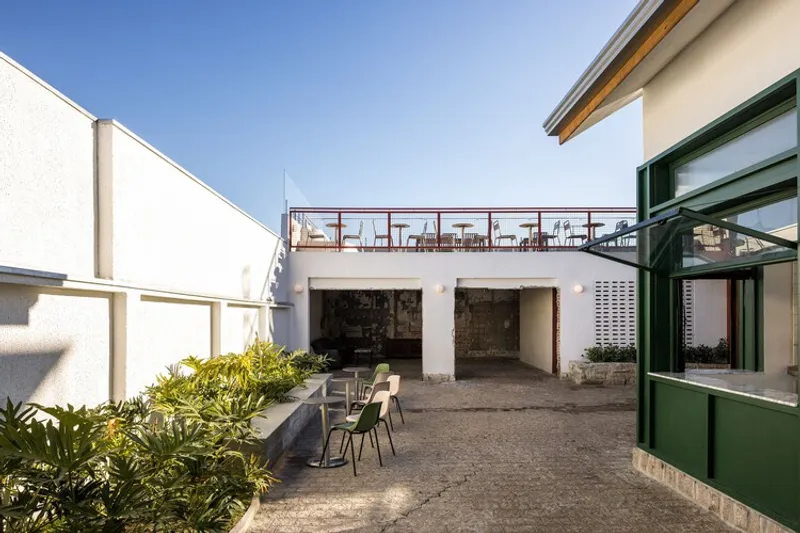
The architects approached the renovation as a process of selective subtraction and reinterpretation. Original elements were retained where possible, while new insertions were clearly articulated, creating a dialogue between eras rather than a seamless fusion.
This strategy allows visitors to move through time as they move through space.
The Ground Floor: Nature and Sociability
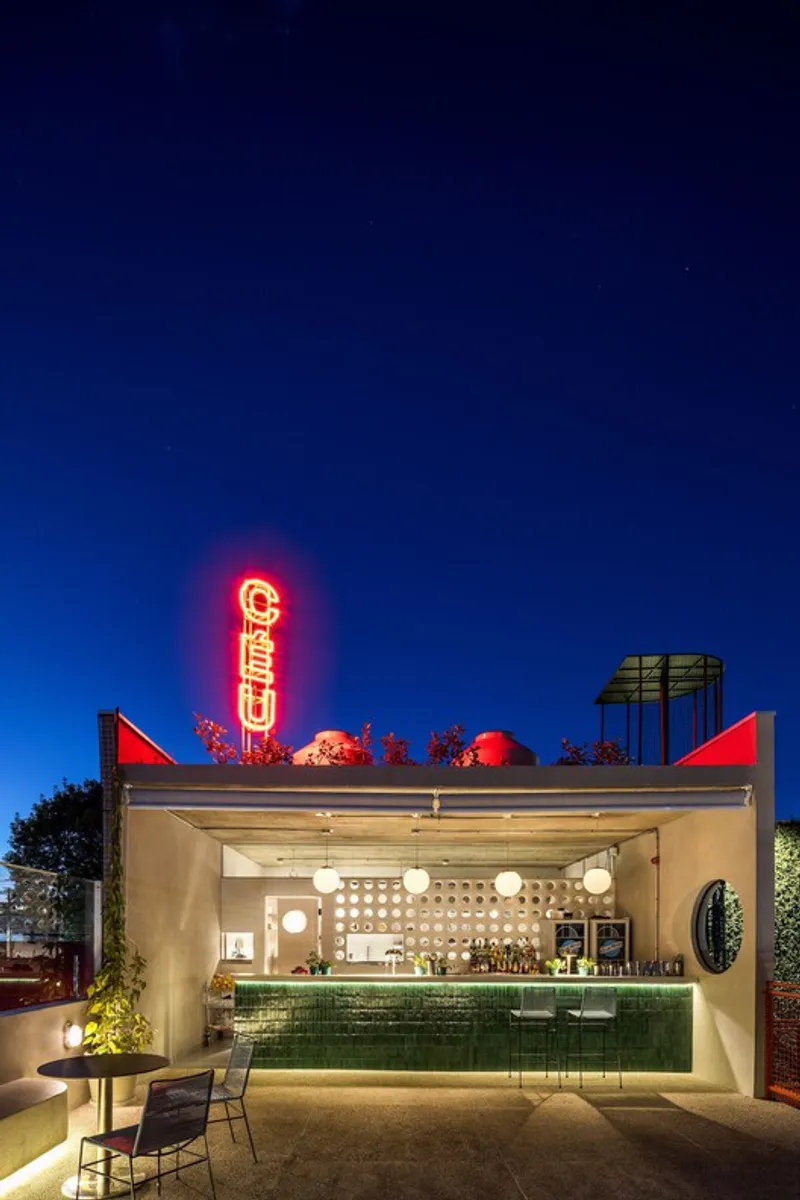
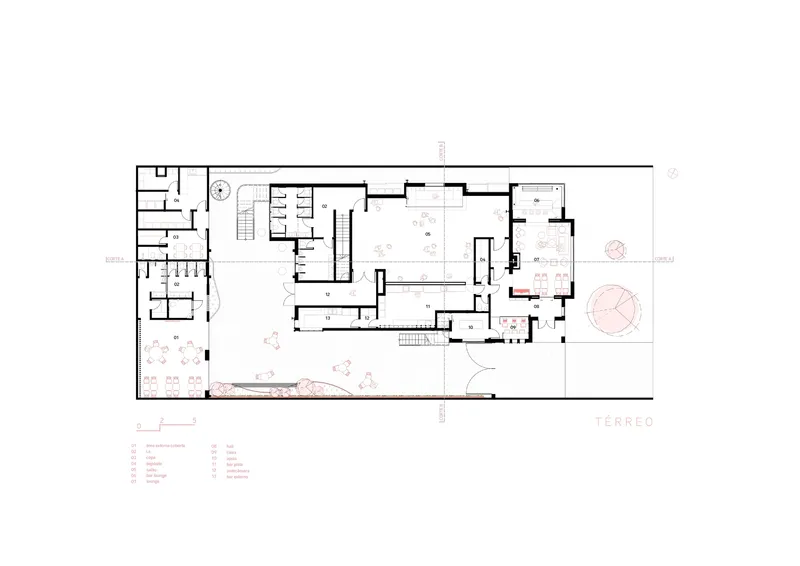
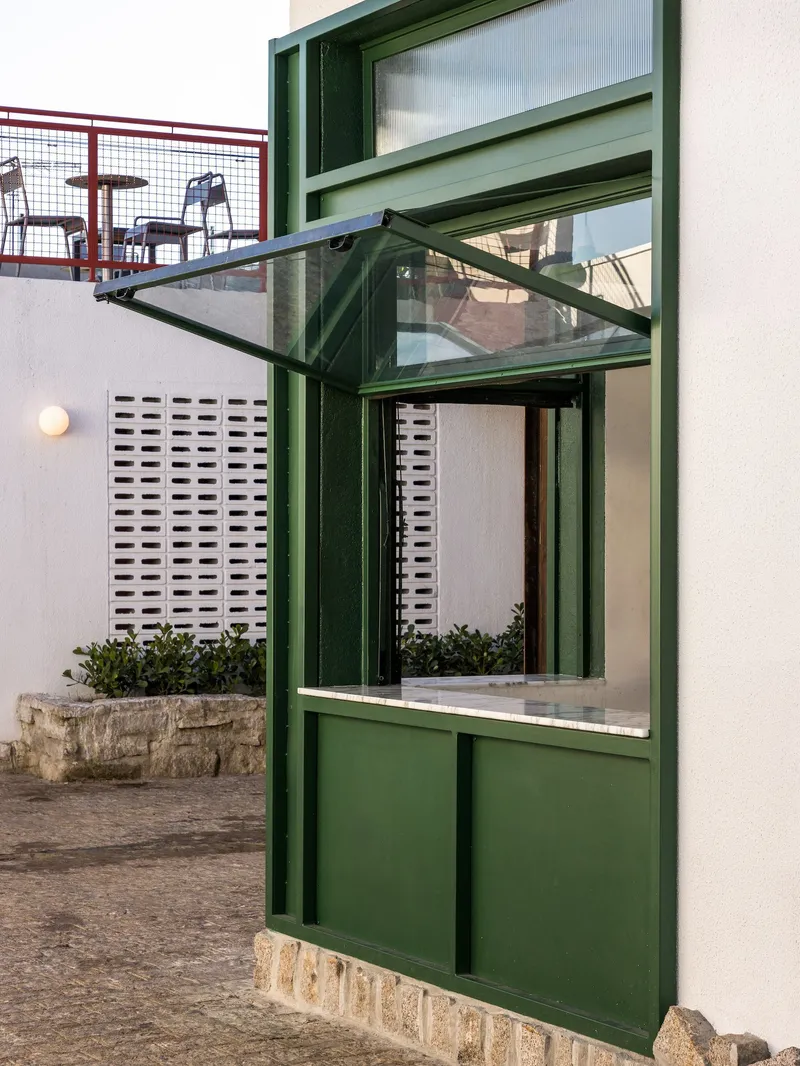
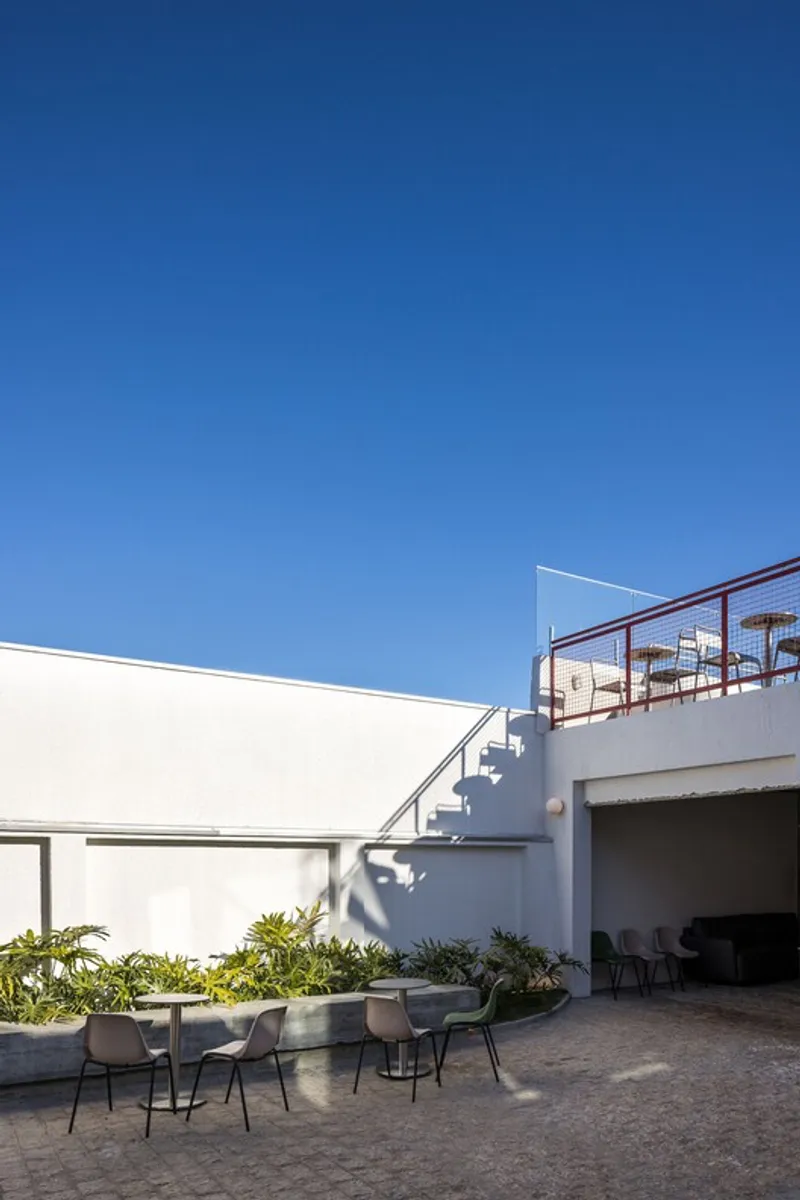
At street level, Céu Bar opens onto a generous outdoor courtyard that functions as a social threshold between city and interior. Framed by greenery and flexible seating, this open-air space encourages informal gathering and sets a relaxed tone.
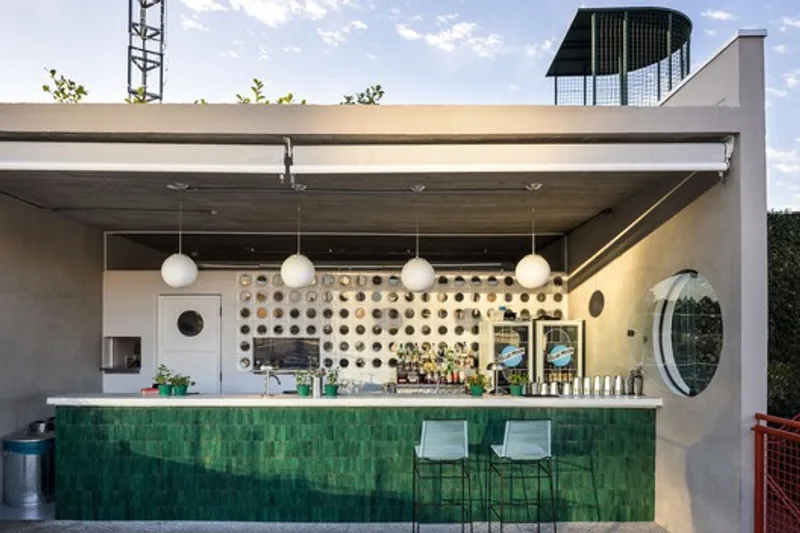
A showcase-style bar supports this area, activating the courtyard both day and night. It operates as a visual and social anchor, drawing people inward while maintaining strong connections to the exterior.
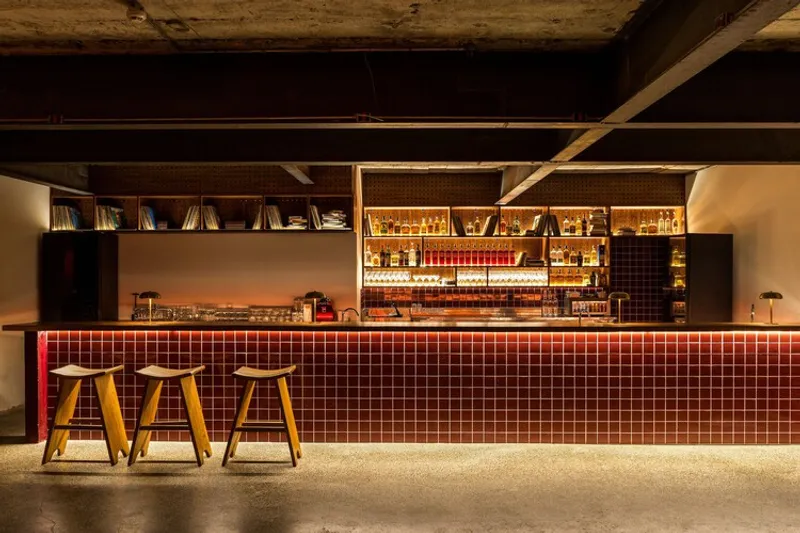
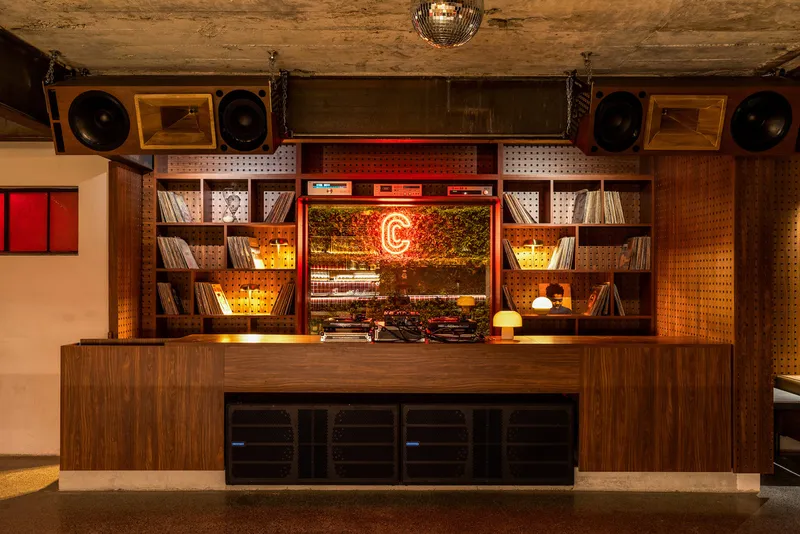
Inside, former partition walls were removed to create a continuous listening bar. This immersive environment is clad in warm wood panels and acoustically tuned to support high-quality music experiences. Here, architecture amplifies sound and atmosphere, transforming listening into a collective ritual.
The bar counter, finished in dark red ceramic tiles, introduces a vibrant focal point. Its color and texture contrast with the surrounding wood, generating visual warmth and inviting prolonged occupation. Guests are encouraged to browse vinyl records while enjoying drinks, reinforcing the space’s cultural dimension.
Vertical Circulation as Architectural Statement
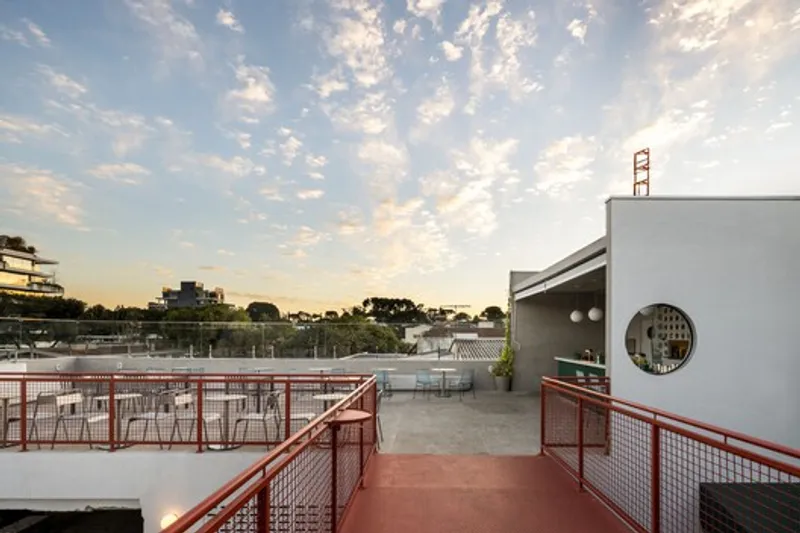
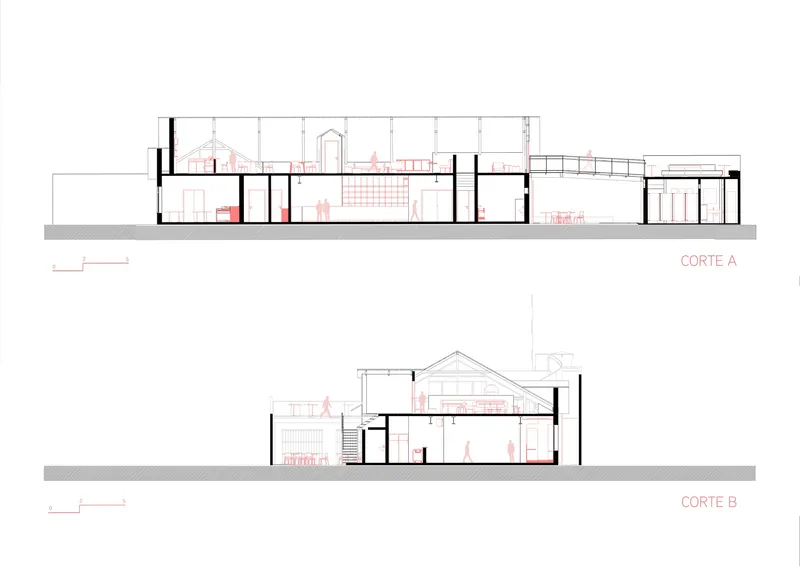
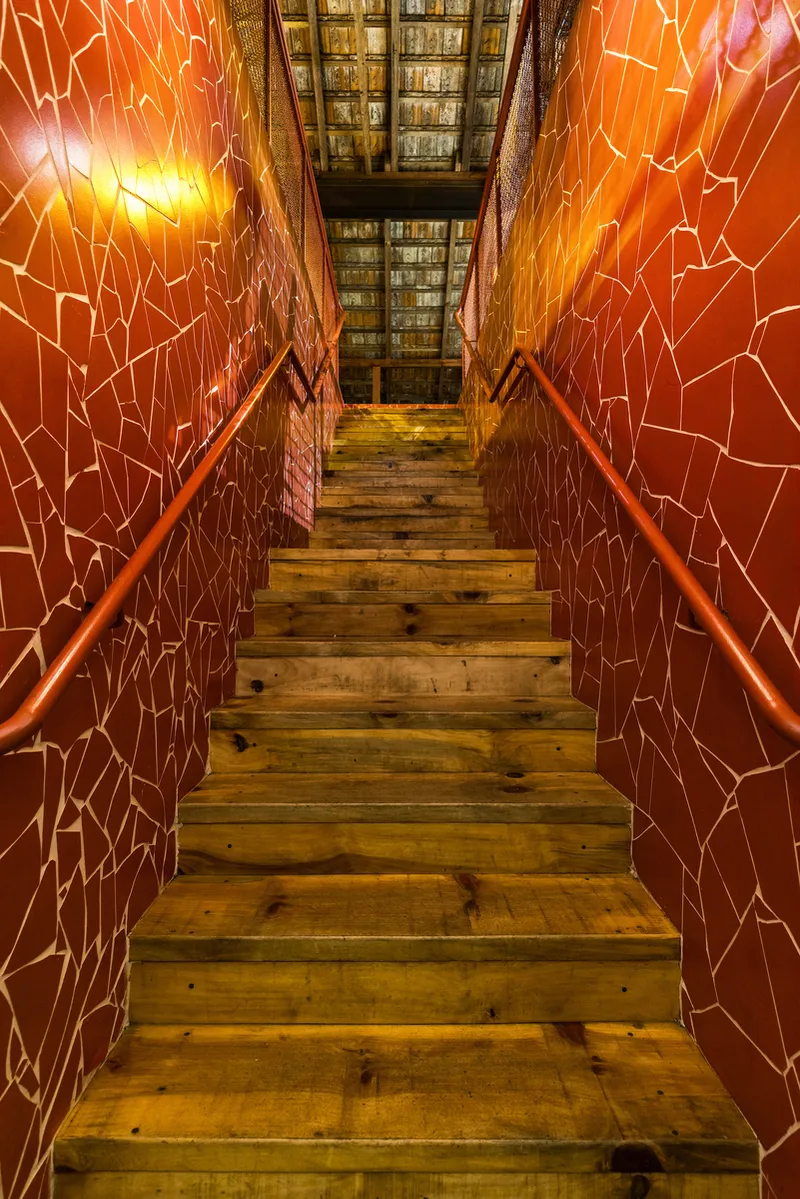
Connecting the different levels is a striking red metal staircase and walkway system. More than a circulation device, this element functions as a sculptural spine that organizes the project.
Visible from multiple vantage points, the staircase introduces a bold chromatic accent against the building’s neutral backdrop. It guides visitors upward while framing views across patios, interiors, and rooftops.
This expressive circulation strategy reinforces the idea of movement as experience, each ascent revealing a new spatial identity.
The Rooftop: Urban Panorama and Nightlife
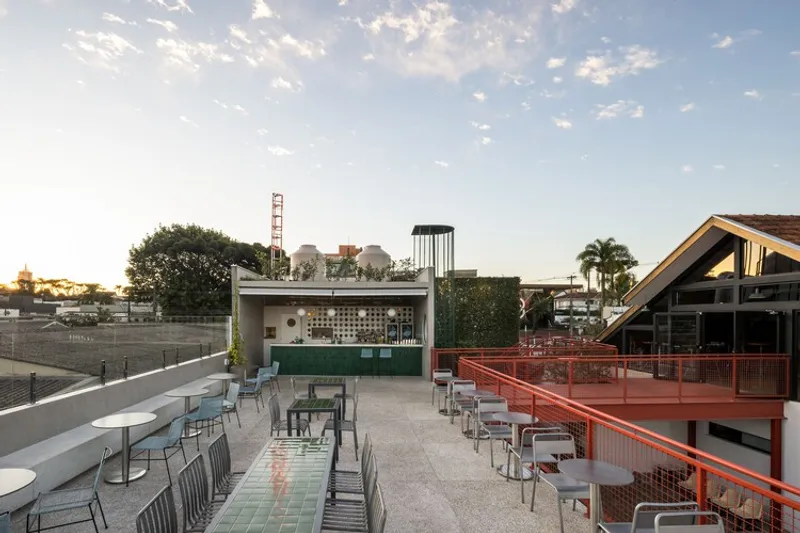
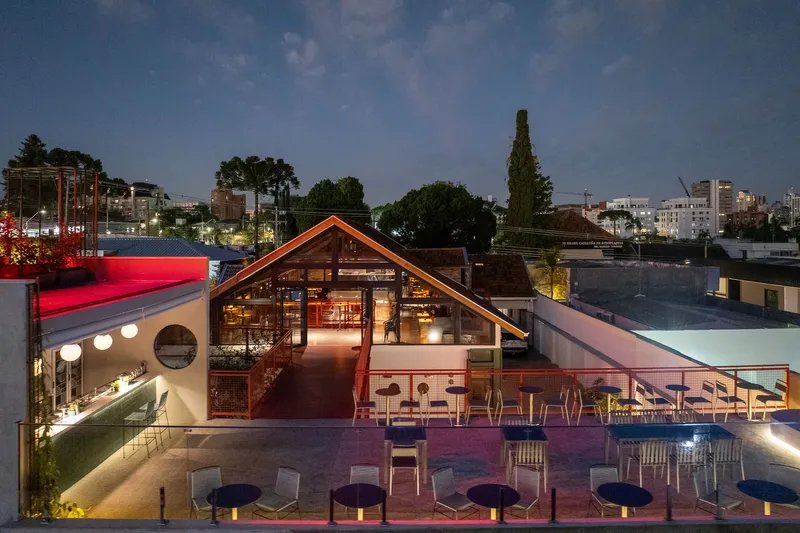
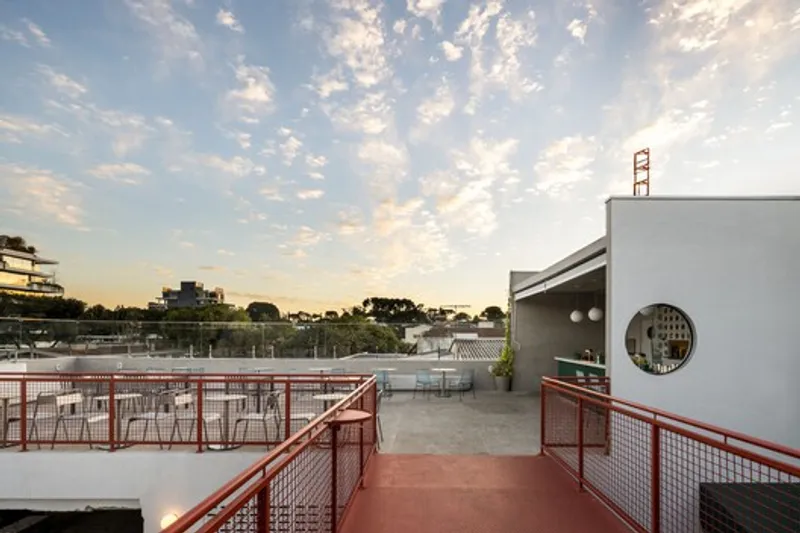
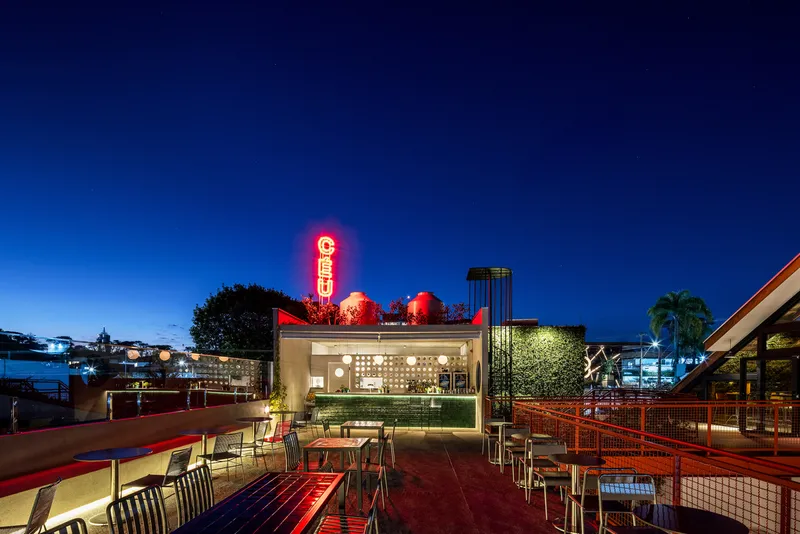
The rooftop terrace represents Céu Bar’s most expansive and extroverted space. Elevated above the surrounding buildings, it offers panoramic views of Curitiba’s skyline and becomes the primary stage for nighttime activity.
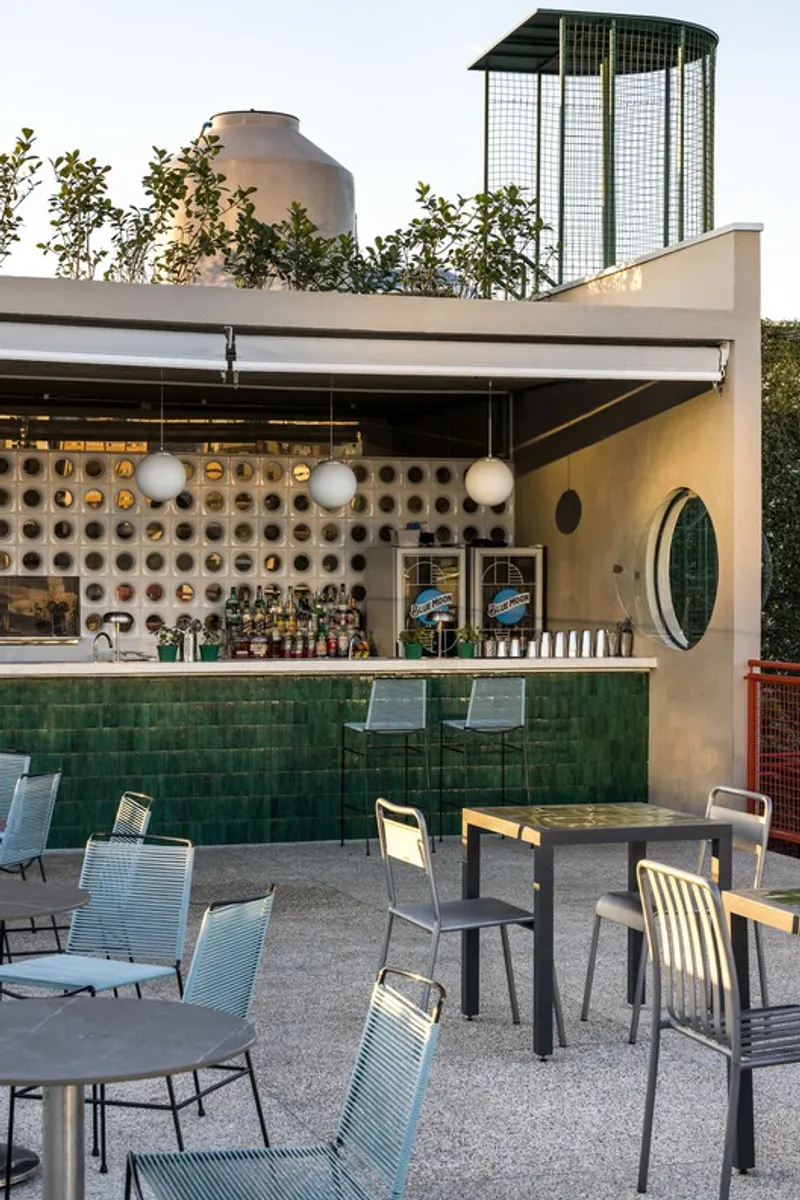
Carefully designed lighting transforms the rooftop after dark, creating a cinematic atmosphere that balances intimacy and spectacle. Furniture arrangements and spatial zoning allow for both social gathering and quieter observation.
From this level, a suspended walkway connects to the attic of the original house, inviting guests to explore more intimate and memory-laden spaces.
The Attic: Intimacy and Heritage
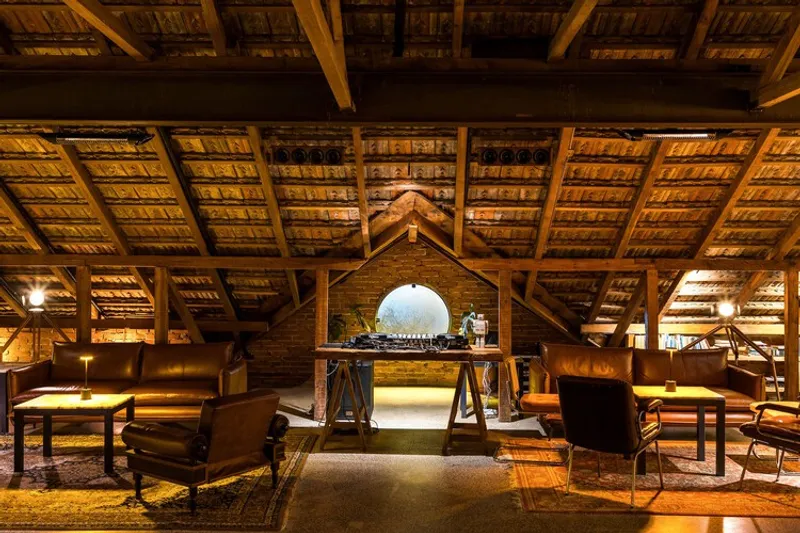
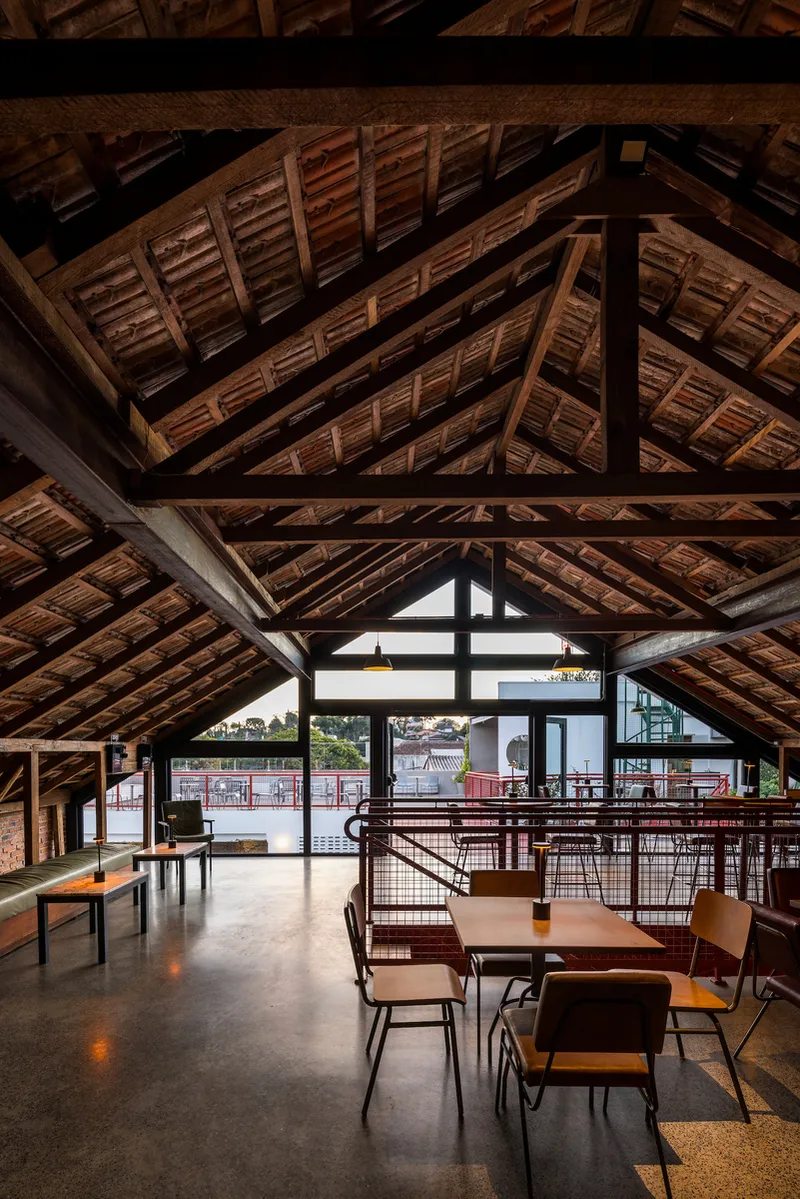
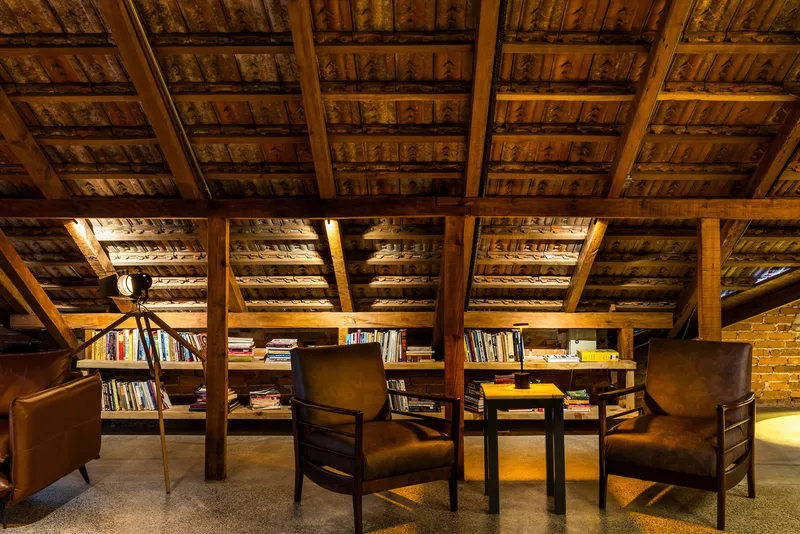
The attic preserves much of the building’s historical character. Original ceramic tiles, exposed brickwork, and structural elements remain visible, reinforcing a sense of continuity.
A former enclosing wall was replaced with a large stained-glass window, introducing colored light and visual permeability between interior and exterior. This intervention reinterprets traditional craftsmanship in a contemporary context.
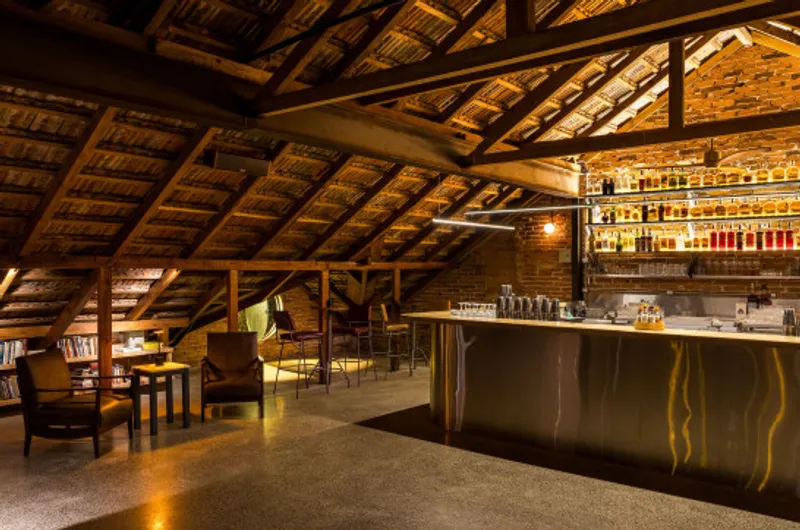
Soft armchairs, sofas, and indirect lighting create a lounge-like atmosphere, contrasting with the more animated rooftop and ground-floor zones. At the center stands a stainless-steel bar, whose reflective surface introduces a modern counterpoint to the nostalgic surroundings.
This space operates as a refuge within the broader nightlife environment: a place for conversation, relaxation, and reflection.
Material Contrast and Spatial Diversity
Across the project, Céu Bar is defined by deliberate material contrasts. Wood, ceramic tiles, stainless steel, stained glass, and exposed brick coexist without hierarchy, each reinforcing the identity of specific zones.
Rather than imposing a uniform aesthetic, the architects embraced multiplicity. Each level and area offers a distinct sensory experience, encouraging exploration and repeated visits.
This diversity supports the venue’s multifaceted program, accommodating casual daytime gatherings, focused listening sessions, and energetic nighttime events.
Architecture for Urban Nightlife
Céu Bar demonstrates how architectural renovation can revitalize existing structures while strengthening urban life. By preserving the façade and reactivating underused spaces, the project contributes to neighborhood continuity and economic vitality.
Its shared indoor-outdoor spaces, accessible rooftop, and varied atmospheres foster inclusivity and adaptability, key qualities in contemporary hospitality design.
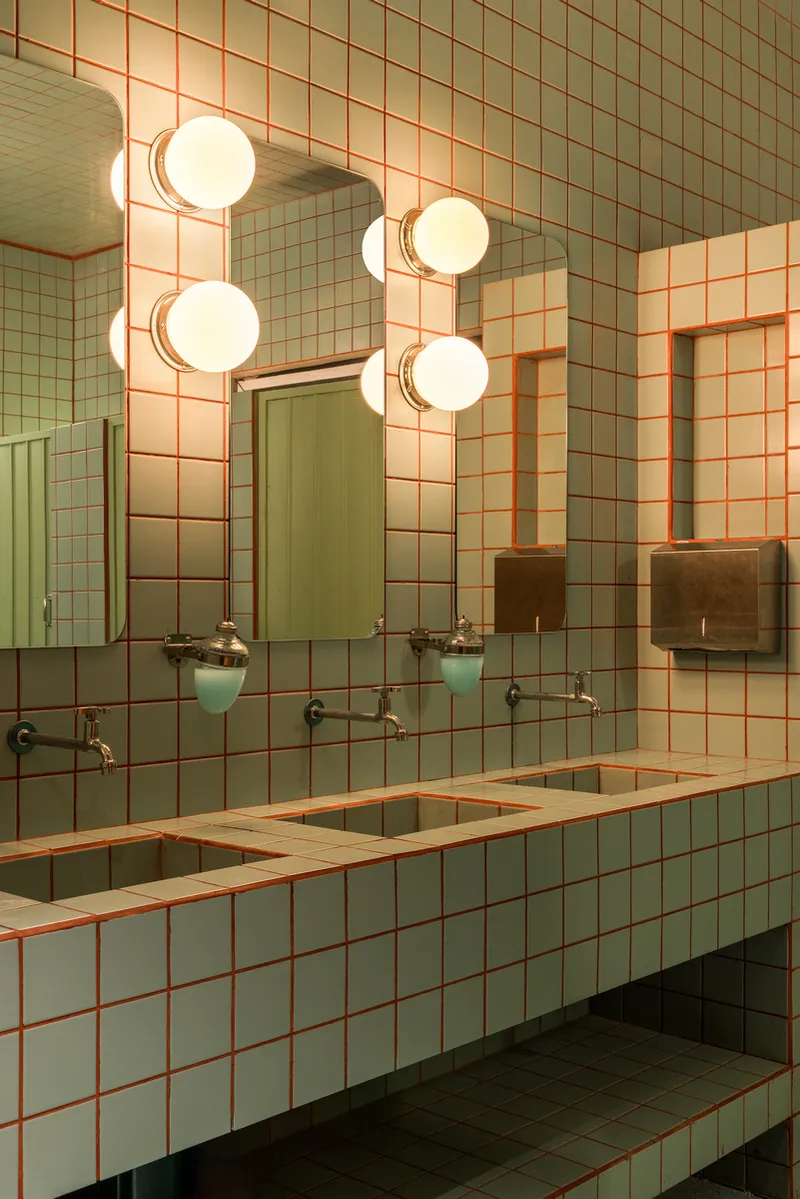
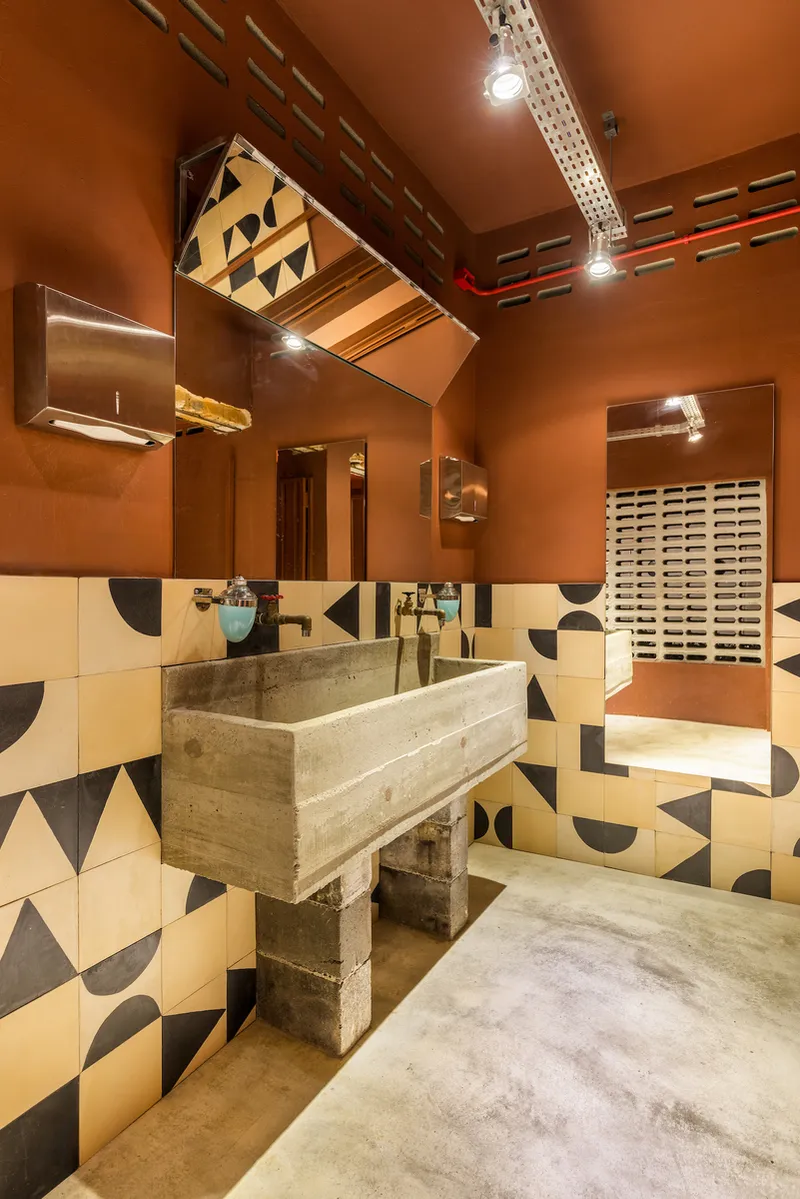
Moreover, the building’s layered organization allows different user groups and activities to coexist without conflict, enhancing operational flexibility.
All the Photographs are works of Eduardo Macarios


Popular Articles
Popular articles from the community


Singing Woman: Contemporary Architecture Inspired by Estonia’s Voice and the Sea
Singing Woman turns Estonia’s song culture into flowing opera house architecture, blending public life, landscape, sea, and national memory.

Tsunami Convergenics: Turning Catastrophic Ocean Forces into Underwater Housing Infrastructure
A speculative underwater settlement off the coast of Onagawa, Japan, treats tsunamis and typhoons as energy sources rather than threats.

Extended Shell: Retrofitting Kolkata's Balconies as Living Urban Thresholds
A modular retrofit system recovers the social and environmental intelligence of Kolkata's historic verandas for contemporary Park Street residents.
Temporary Home for Dogs: A Reversed Zoo Rethinks Animal Shelter Architecture
In Bucharest, a sinuous corridor and freed landscape flip the logic of containment, designing a shelter that works to make itself unnecessary.

Similar Reads
You might also enjoy these articles


Hodi-Mandai Geram
Project Function: Preservation and revitalization of the Intangible heritage and socio-spatial identity of the Hodi by Housing, Cultural Memory Center, Sacred Grove, landscape, local tourism economy


Olio Towers: A Mid-Rise for Performers That Fuses Housing, Rehearsal, and Stage
Located blocks from Houston's Theater District, this modular tower stacks living units around a central performance atrium.

Oasis: Modular Green Housing Carved into Dhaka's Urban Fabric
A shortlisted Plugin Housing entry reclaims unauthorized settlements in Dhaka with stepped concrete volumes, green roofs, and ventilation-driven design.

Black Hole: A Floating Megastructure for the Post-Physical Era
Emiliano Mazzarotto envisions a spherical, self-scaling arena where e-sports, digital hotels, and holographic stadiums replace traditional public space.

Explore Hospitality Building Competitions
Discover active competitions in this discipline

Challenge to reimagine the Iron Throne

Photograph architecture without architects

Illustrate the lost glory of Angkor Wat - Render Challenge

Design challenge to reuse E-waste
Comments (0)
Please login or sign up to add comments
No comments yet. Be the first to comment!