
China Merchants Group History Museum & Weiboshan Park by MENG YAN | URBANUS
China Merchants Group History Museum integrates landscape, history, and architecture, transforming Weiboshan into a living exhibition of Shenzhen’s reform legacy.

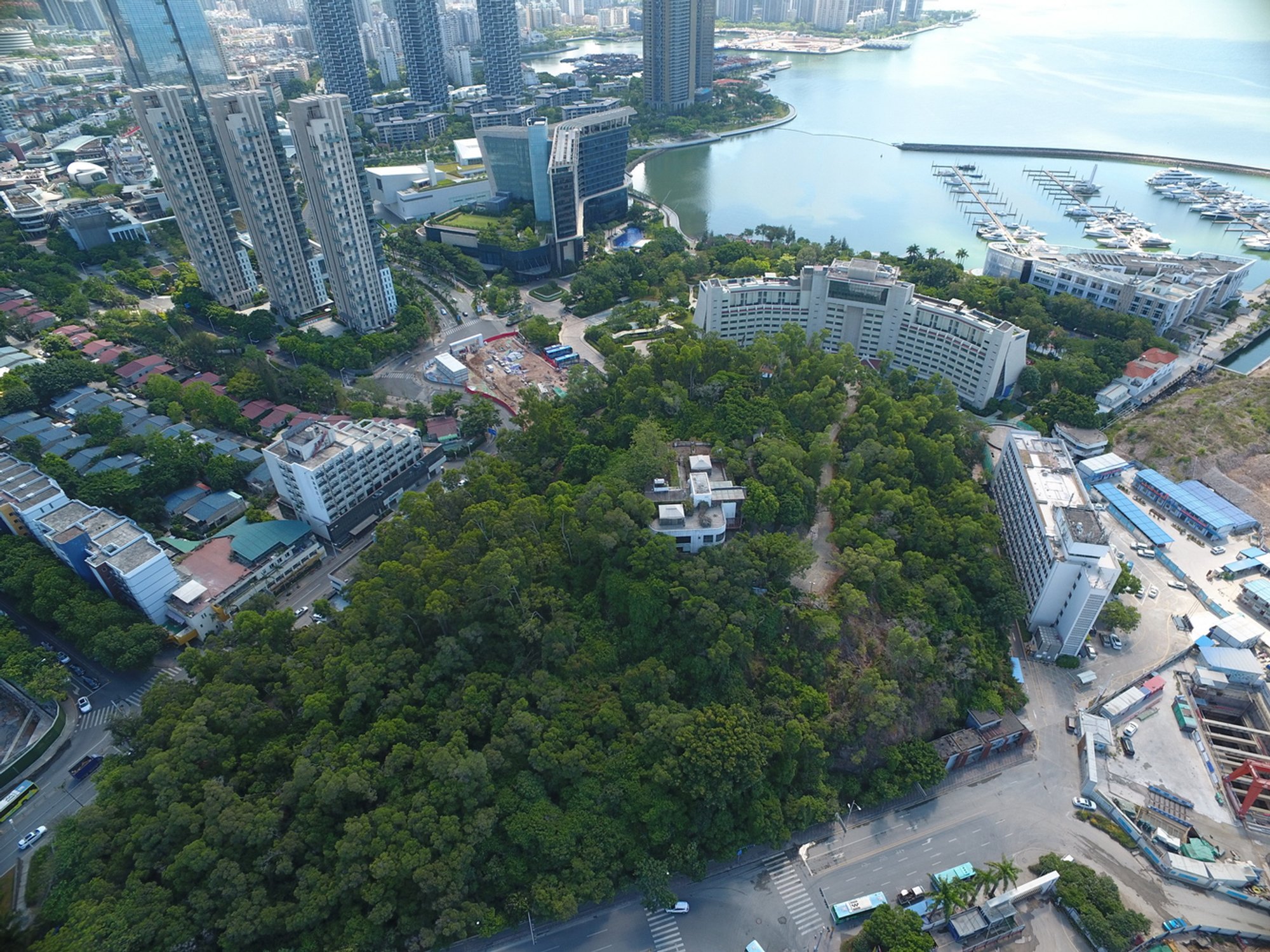
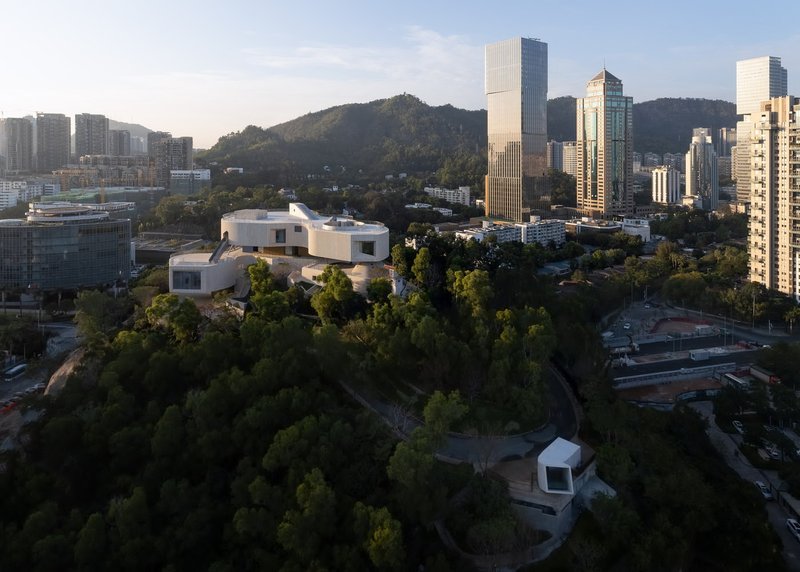
Perched atop Weiboshan overlooking the Shekou Peninsula, the China Merchants Group History Museum and Weiboshan Park form a powerful architectural and cultural landmark that narrates the origins of China’s Reform and Opening-up through space, landscape, and memory. Designed by MENG YAN | URBANUS and completed in 2023, the project commemorates the 150th anniversary of China Merchants Group, an institution founded in 1872 that played a pivotal role in shaping modern China’s economic transformation.
The museum is located in Shenzhen, China’s first Special Economic Zone, where history and urban development intersect. In the late 1970s, China Merchants Group spearheaded the creation of the Shekou Industrial Zone, blasting hills, reclaiming land from the sea, and introducing market-oriented reforms that would later be known as the “Shekou Model.” This bold experiment became a catalyst for China’s rapid modernization, making the site an ideal location for a museum dedicated to industrial heritage, innovation, and national transformation.
URBANUS approached the project with the concept of “the hill as the exhibition venue, and the city as the exhibition.” Rather than isolating the museum as a standalone object, the design integrates the entire Weiboshan Park into a continuous narrative journey. Beginning at the foot of the hill, visitors enter Time Square, a symbolic site marking the explosion that initiated Shekou’s industrial development. At its center stands a monument engraved with Yuan Geng’s iconic phrase, “Time is money, efficiency is life,” a slogan that embodies the entrepreneurial spirit of Shenzhen.
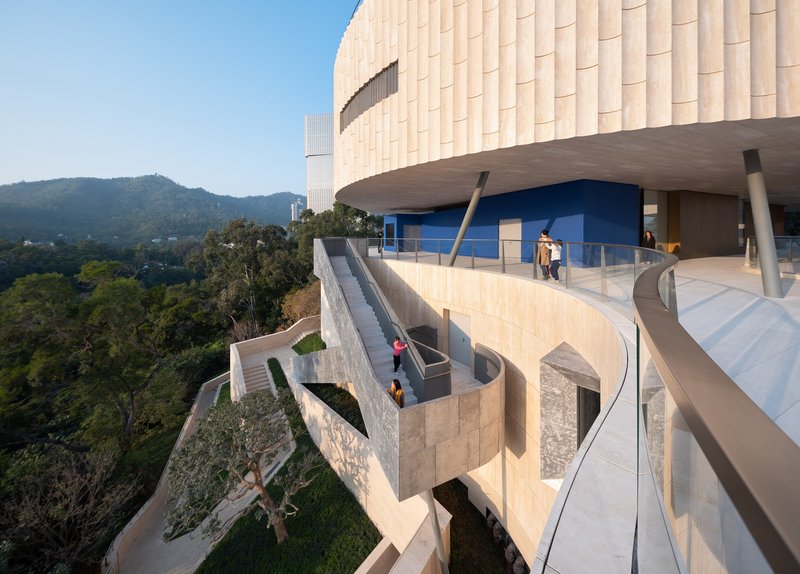
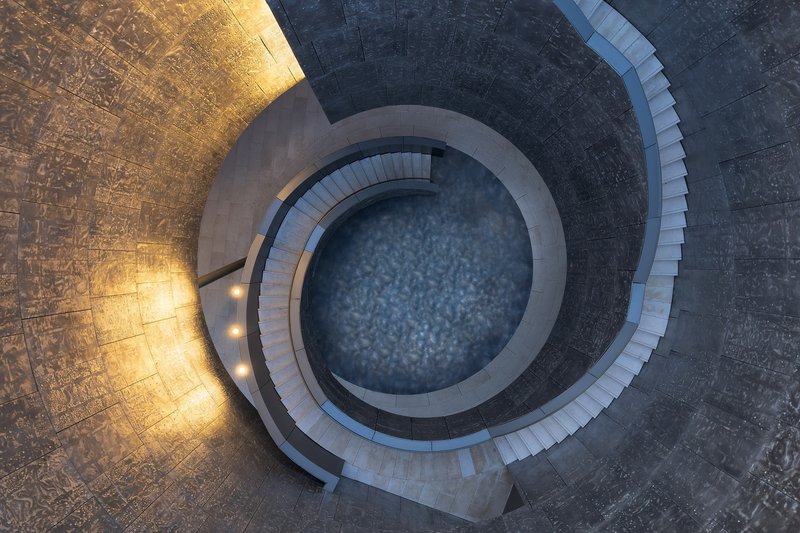
As visitors ascend the hill, a spiraling narrative walkway traces key moments in the history of Reform and Opening-up. Texts, viewpoints, and landscape interventions align with the surrounding cityscape, creating moments where historical memory and contemporary urban life overlap. The act of climbing becomes an experiential exhibition, culminating at the museum at the summit of Weiboshan, where the narrative reaches its climax.
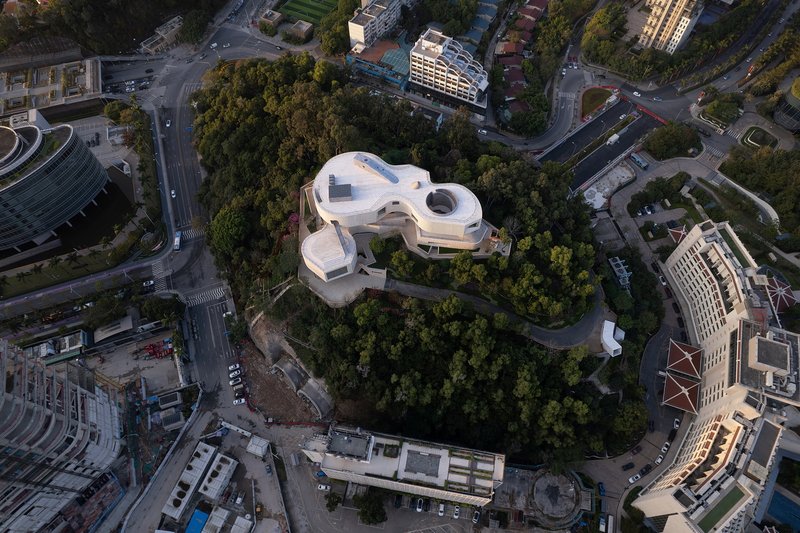
A defining feature of the project is the adaptive reuse of the original terrestrial microwave relay station located on the hilltop. Through archival research and detailed on-site surveys, the architects identified the historic structure embedded within later renovations. By carefully removing added layers and reinforcing the original foundation, the station was restored as a central exhibit, a “ready-made artifact” that anchors the museum in authenticity and material history.
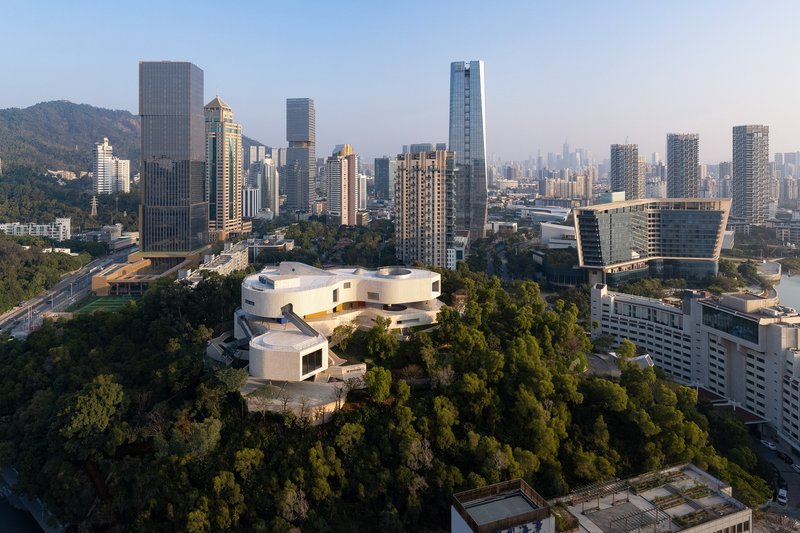
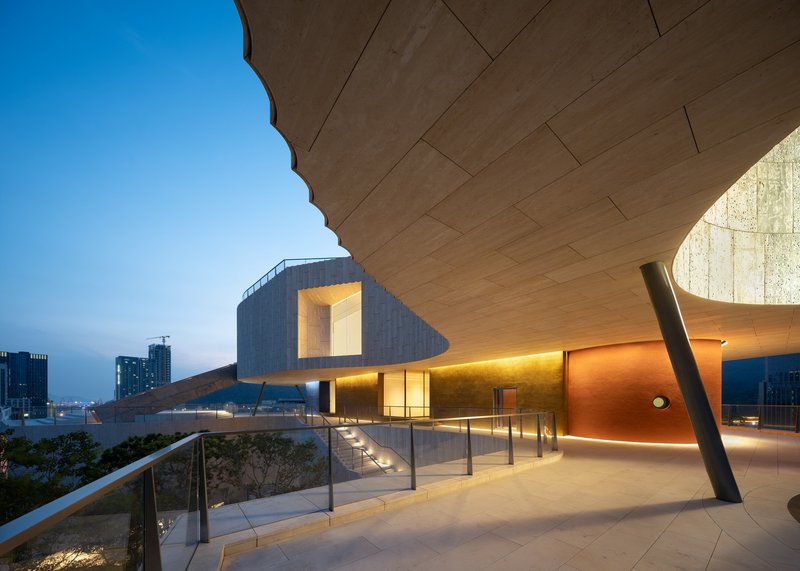
The museum comprises five levels, each offering a distinct spatial and programmatic experience. The semi-basement houses the main entrance, lobby, reception areas, and a multifunctional hall that can operate independently of museum hours. The first and second floors are dedicated to the permanent exhibition, organized around the restored relay station and presenting the 150-year evolution of China Merchants Group. The third floor opens to the public as a viewing platform connected to the hillside trail, featuring a café and event spaces with panoramic views across Shekou, reinforcing the idea of the city itself as a living exhibition.
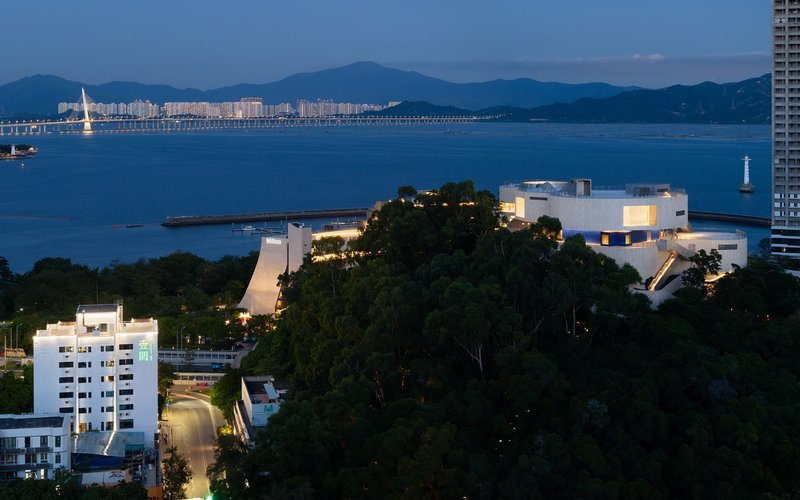
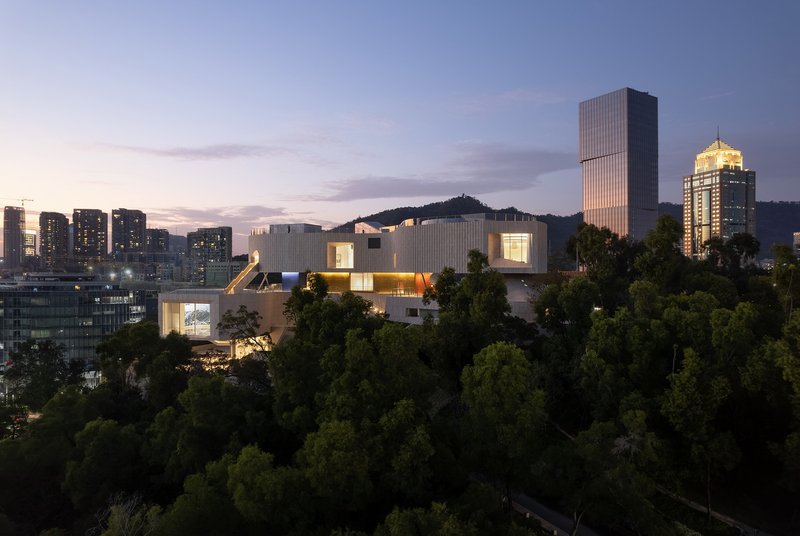
Above, the fourth floor contains a contemporary art gallery housed within a floating structure, designed as a continuous wrap-around exhibition space for temporary shows. Irregularly shaped windows frame fragments of sea, sky, and city, incorporating the changing urban landscape into the exhibition sequence. The roof serves as the highest point of Weiboshan, functioning as an open observation deck and public gathering space for outdoor activities and reflection.
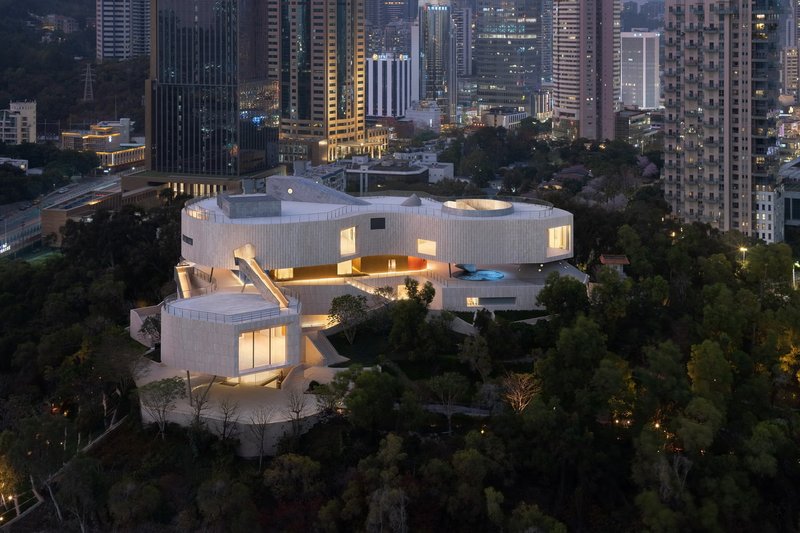
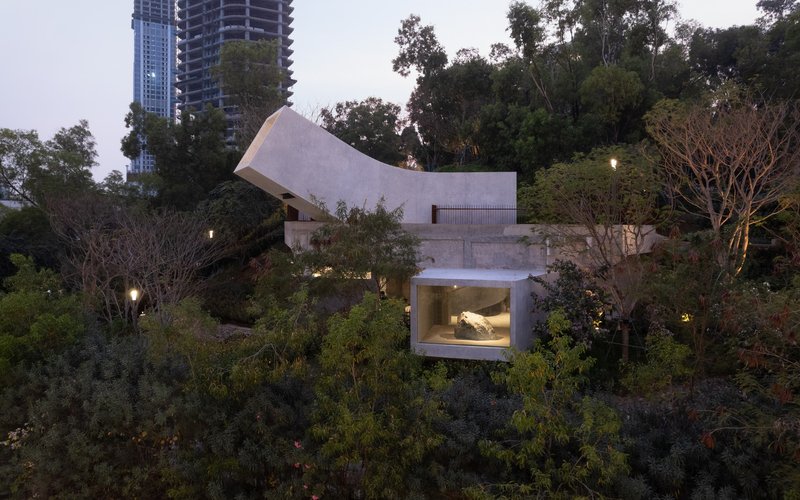
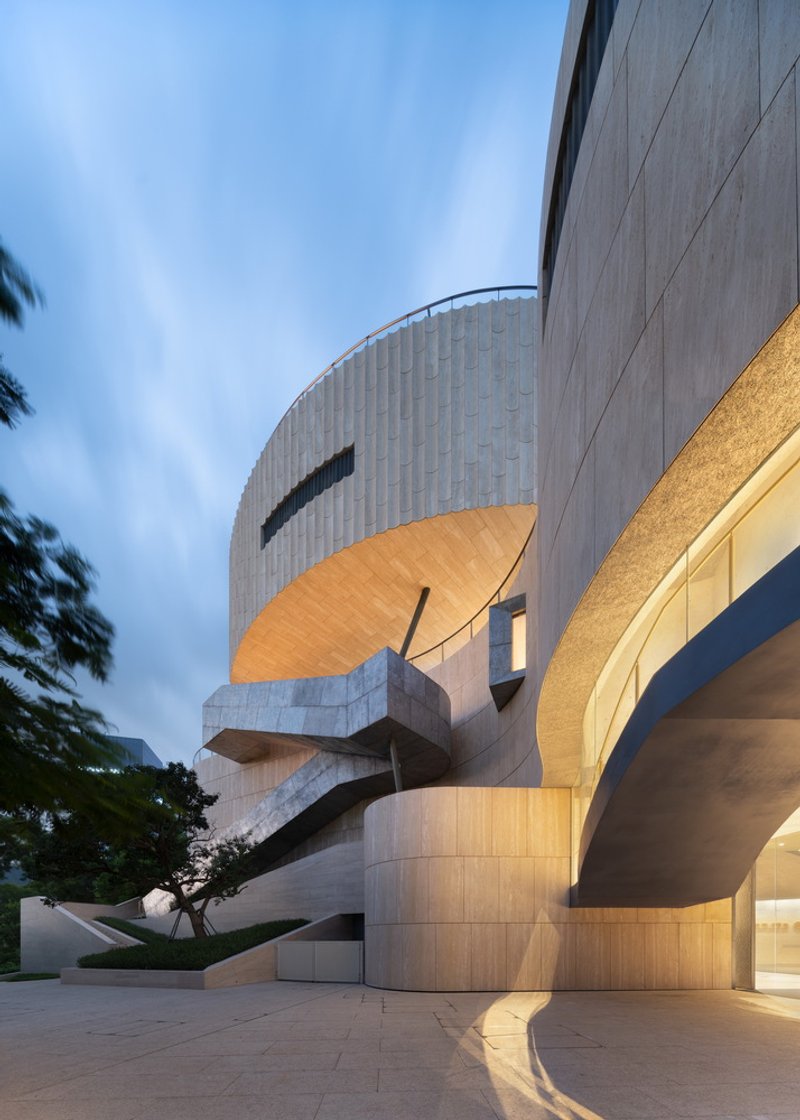
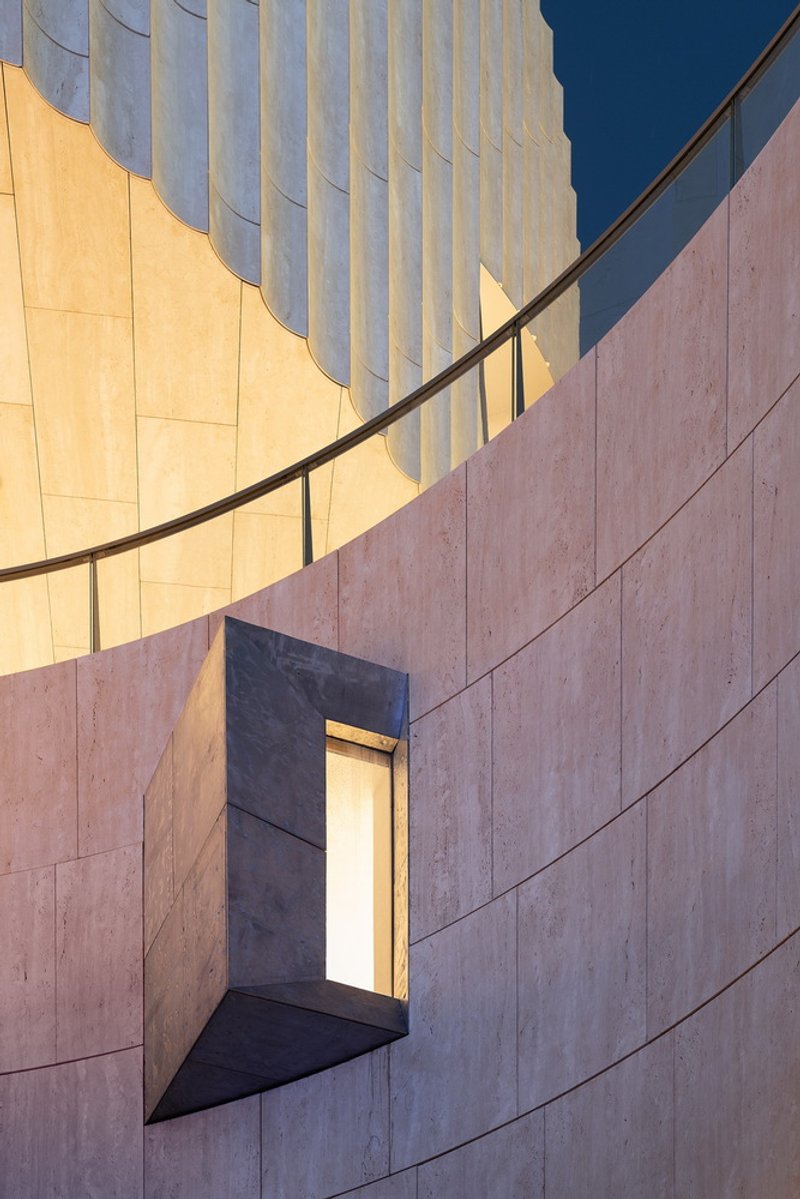
Materiality plays a crucial role in expressing the museum’s identity. The facade is clad in white travertine, allowing the building to visually merge with the hillside and appear as an extension of the natural terrain. Inside, materials such as cast aluminum, steel, copper, and exposed concrete reference the industrial legacy of China Merchants Group. The oversized cast-aluminum entrance door and concrete walls embedded with industrial aggregates reinforce the museum’s connection to production, infrastructure, and labor.
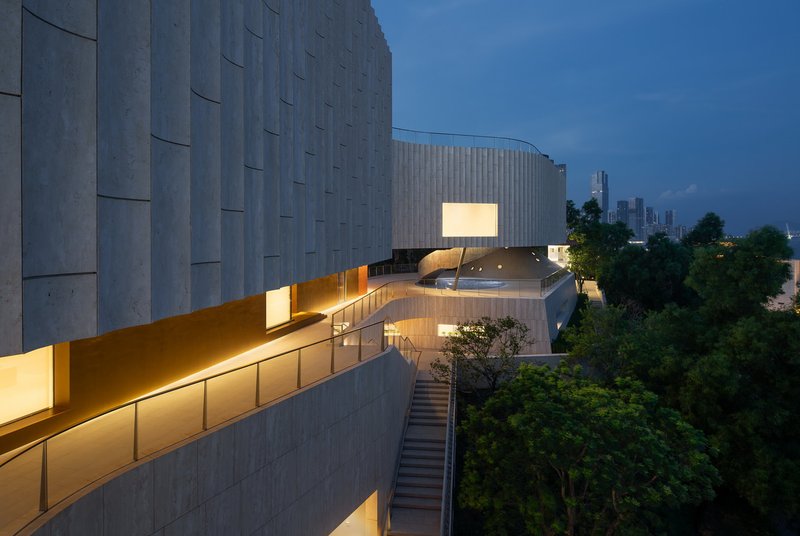
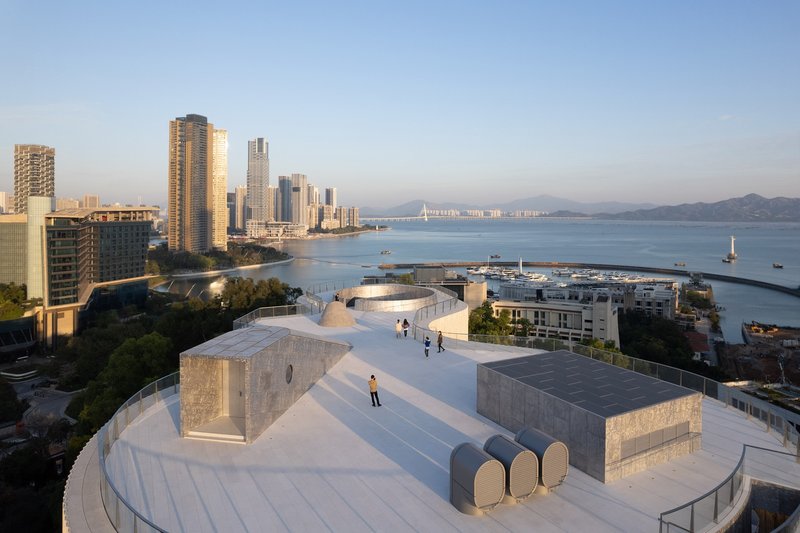
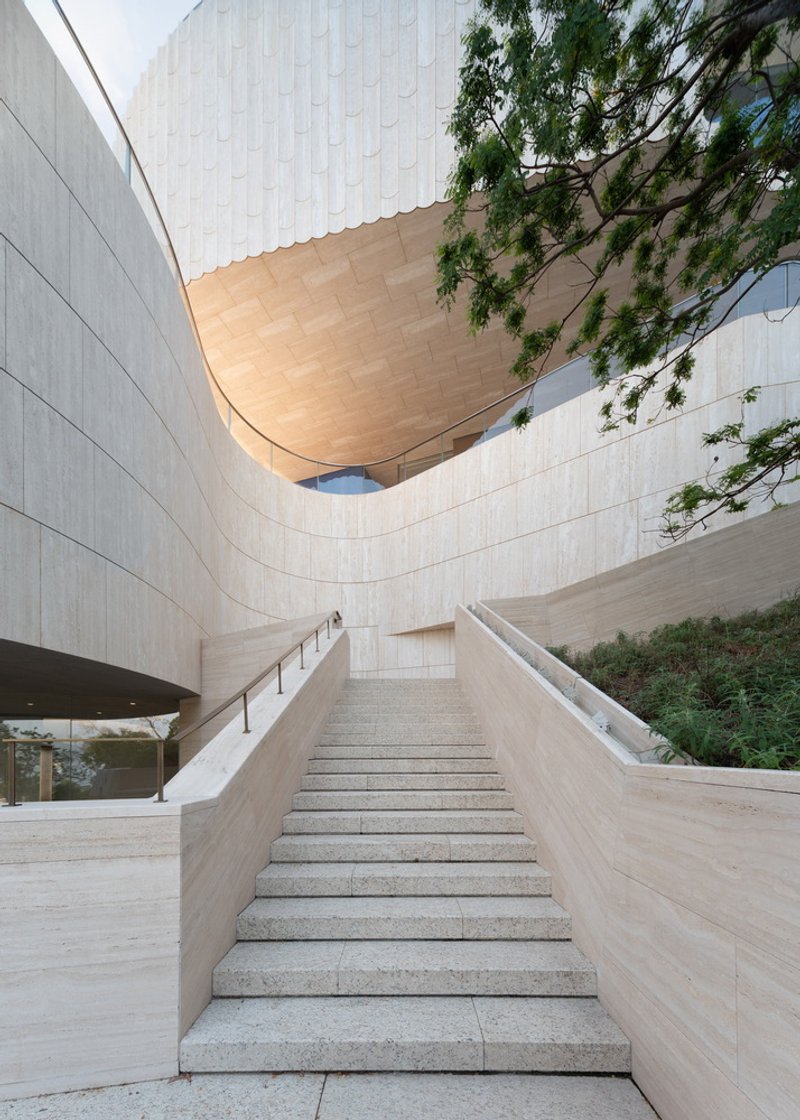
More than a historical archive, the China Merchants Group History Museum is conceived as an urban public space and a contemporary cultural anchor. Open pathways allow citizens to climb the hill even when the museum is closed, ensuring that the site remains active and accessible as part of daily life. By merging architecture, landscape, and historical narrative, the project transforms Weiboshan into a place of remembrance, inspiration, and civic identity.
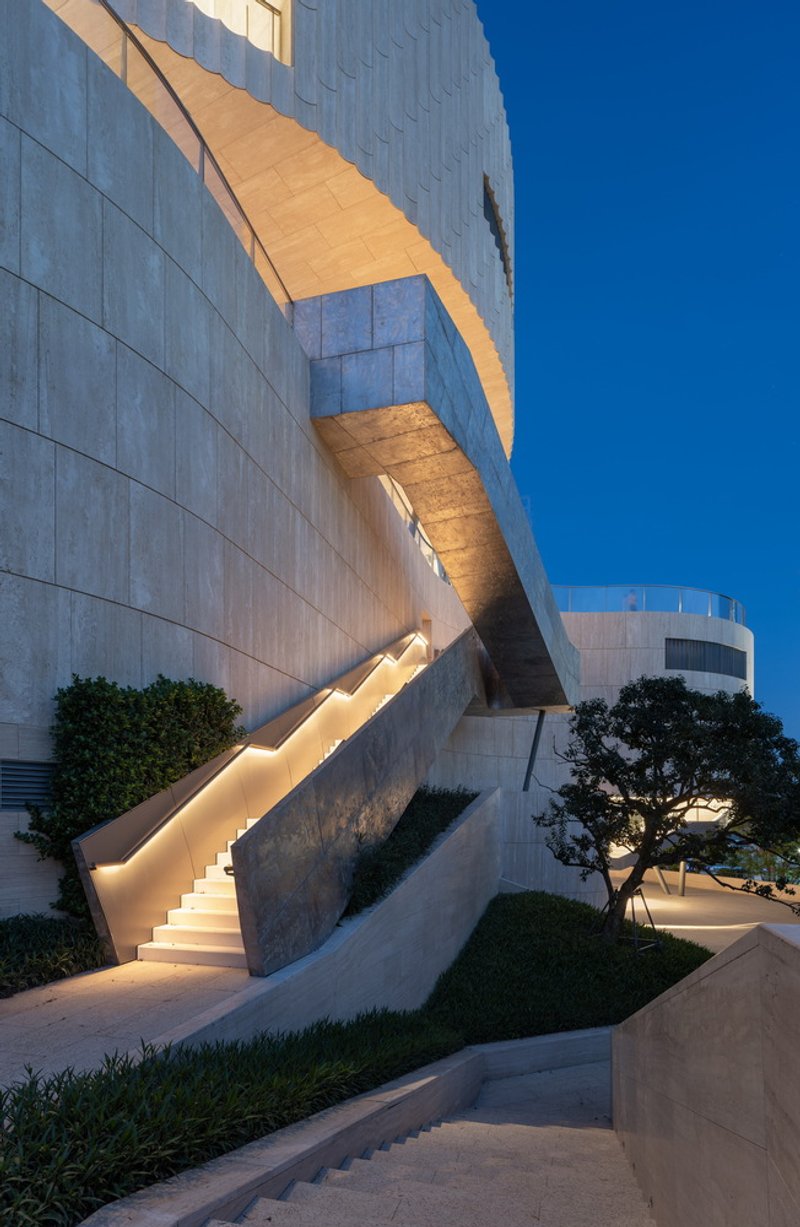
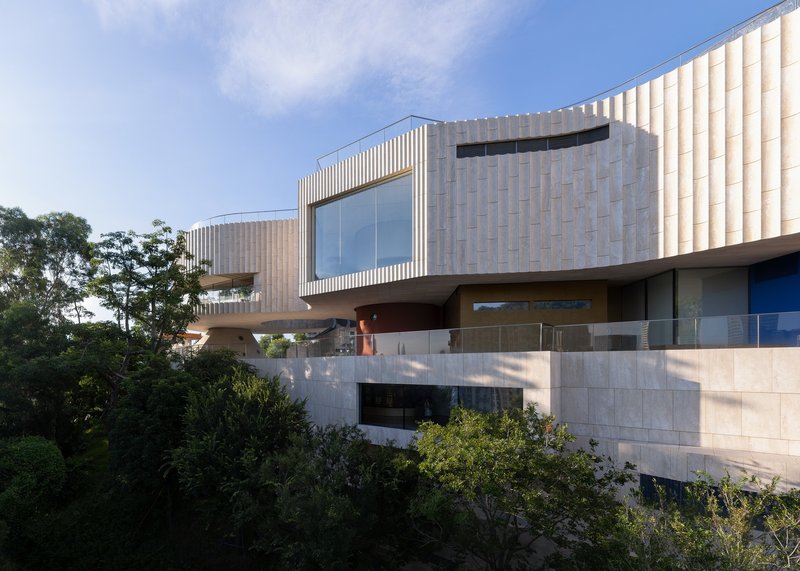
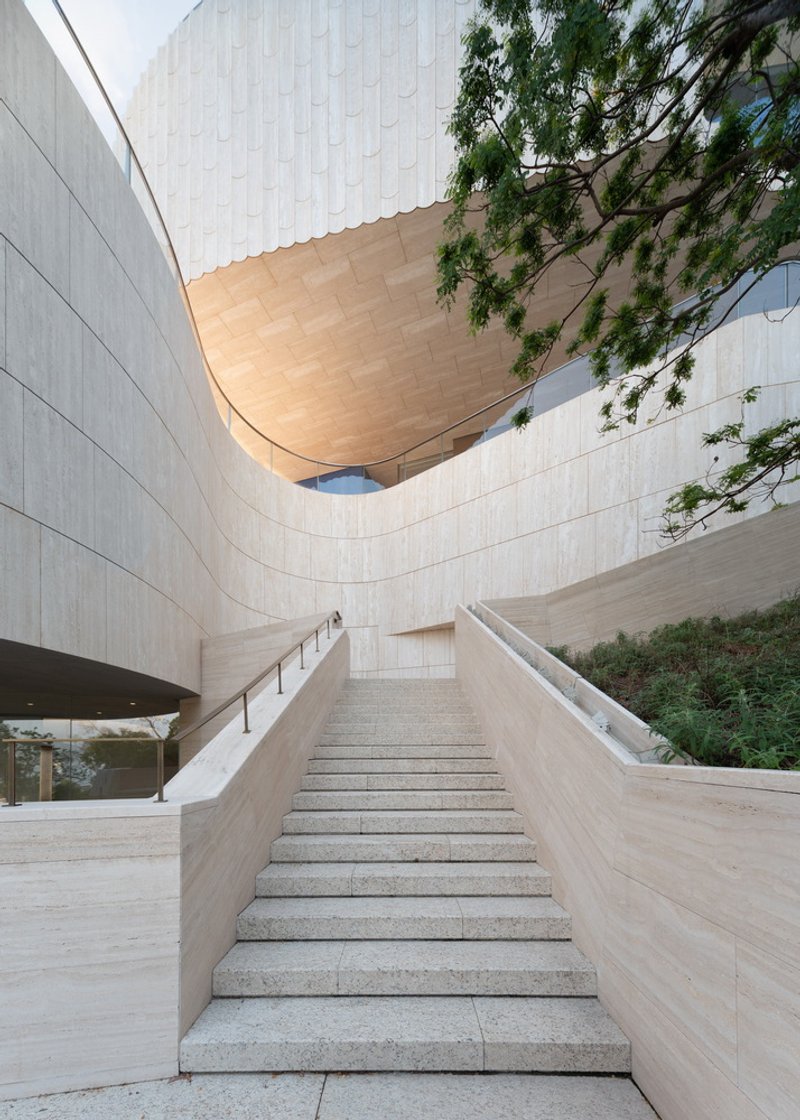
Through this layered spatial experience, the museum honors the pioneers of Reform and Opening-up while engaging future generations. It stands as a landmark of Shenzhen’s urban spirit: where history is not only preserved but lived, viewed, and continuously reinterpreted within the evolving city.
All photographs are works of TAL




Popular Articles
Popular articles from the community

Alton Cliff House: A Harmonious Retreat by f2a Architecture in Lake Country, Canada
Alton Cliff House blends corten steel, prefabrication, and sustainable design, creating a luxurious, energy-efficient retreat perched on Canadian cliffs.
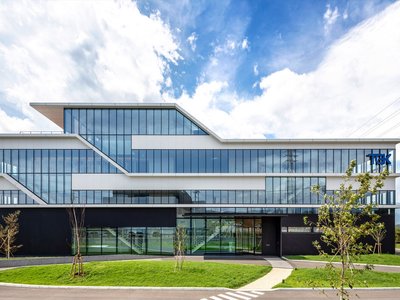
TGK Nirasaki Plant: A Smart Factory Blending Technology, Landscape, and Wellness
Smart factory in Japan blending IoT manufacturing, scenic trail design, natural ventilation, and landscape integration to enhance user experience and sustainability.
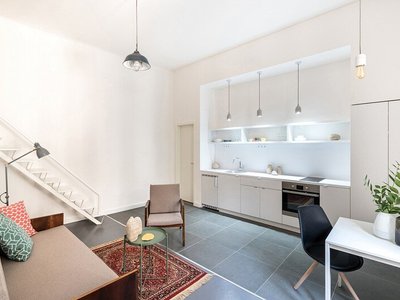
Marvila Apartment Renovation in Lisbon: A Bright Minimalist Attic Transformation by KEMA Studio
Bright attic transformed into minimalist Lisbon apartment with skylights, sustainable materials, open plan layout, and industrial-inspired interior design elements.

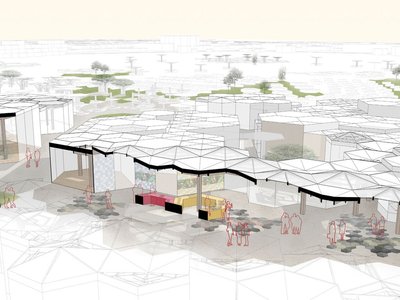
20 Most Popular Commercial Architecture Projects of 2025
From sustainable market concepts to heritage factories, the commercial buildings and proposals that drew the most attention on uni.xyz this year.


Similar Reads
You might also enjoy these articles

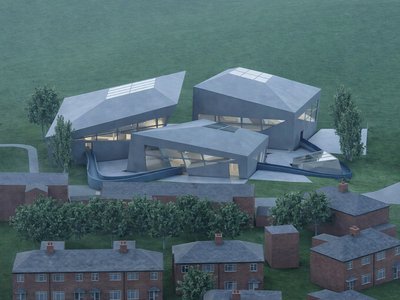
Filtering Space: A Gradual Spatial Experience
From urban intensity to spatial calm.


The Ken Roberts Memorial Delineation Competition (Krob)
As the most senior architectural drawing competition currently in operation anywhere in the world, it draws hundreds of entries each year, awarding the very best submissions in a series of medium-based categories.
Waterfront Redevelopment and Urban Revitalization in Mumbai: Forging a New Dawn for Darukhana
A transformative waterfront redevelopment project reimagining Darukhana’s shipbreaking heritage into an inclusive urban future.

OUT-OF-MAP: A Call for Postcards on Feminist Narratives of Public Space
Rhizoma Design and Research Lab invites artists, designers, architects, researchers, and students to reflect on how feminist perspectives can reshape public space. Selected works will be exhibited in Barcelona, October 2026. Submissions open until 15 April 2026.

Explore Architecture Competitions
Discover active competitions in this discipline




The International Standard for Design Portfolios


The Global Benchmark for Architecture Dissertation Awards


The Global Benchmark for Graduation Excellence


Challenge to reimagine the Iron Throne
Comments (0)
Please login or sign up to add comments
No comments yet. Be the first to comment!