
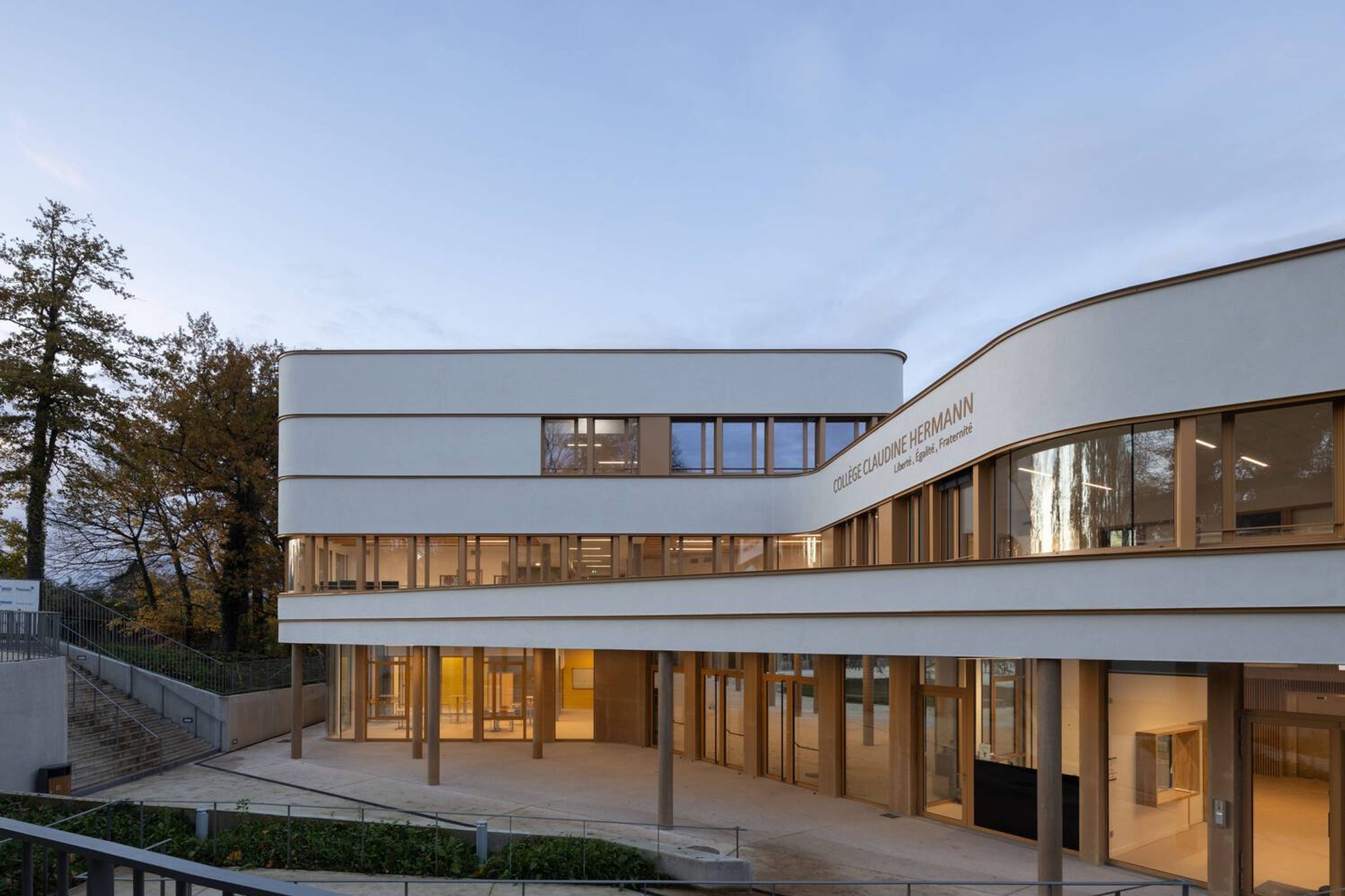
Claudine Hermann Secondary School by Ameller Dubois – Harmonizing Education and Nature in Massy, France
Claudine Hermann Secondary School in Massy blends sustainable timber architecture with landscaped courtyards, preserving woodland heritage while fostering modern educational spaces.

Located on the historic Vilgénis site in Massy, France—formerly home to the Air France Aviation Apprenticeship Training Center—the Claudine Hermann Secondary School is an exemplary model of educational architecture that integrates seamlessly into its lush, partially listed woodland surroundings. Designed by Ameller Dubois the 7,200 m² school was completed in 2024, emphasizing environmental sensitivity, sustainability, and contemporary architectural identity.
Site and Concept
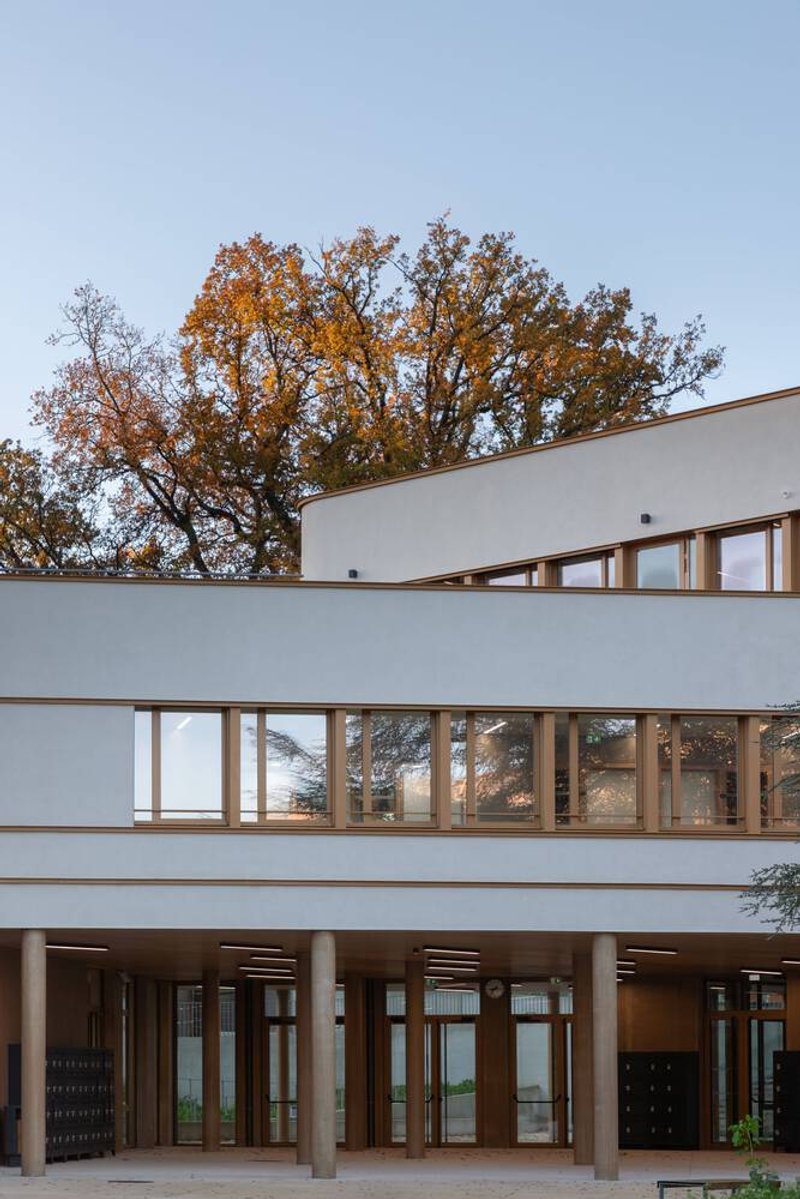
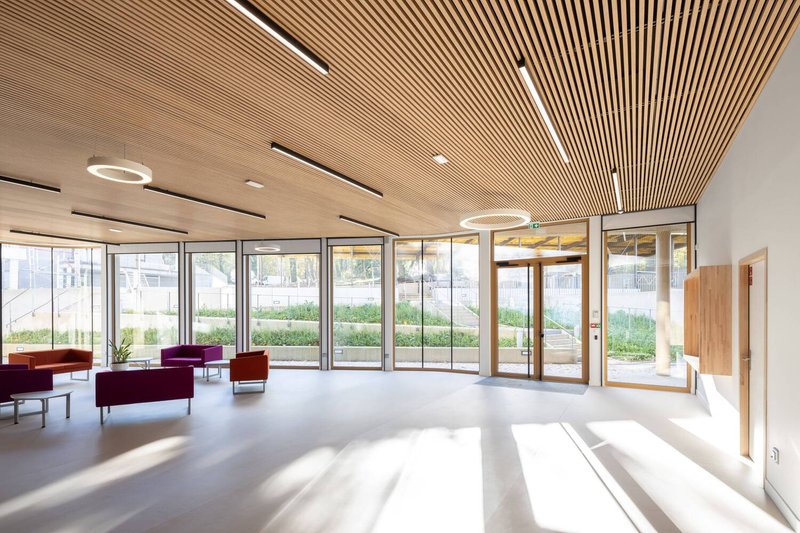
Set across a 22-hectare green landscape, the project prioritizes landscape preservation while accommodating a large-scale educational program. The building’s compact, U-shaped design follows the natural slope of the terrain, reducing its footprint and maintaining the ecological integrity of the site. The school opens toward the surrounding Vilgénis park, offering immersive green views and fostering a deep connection between students and nature.
Architecture and Materials
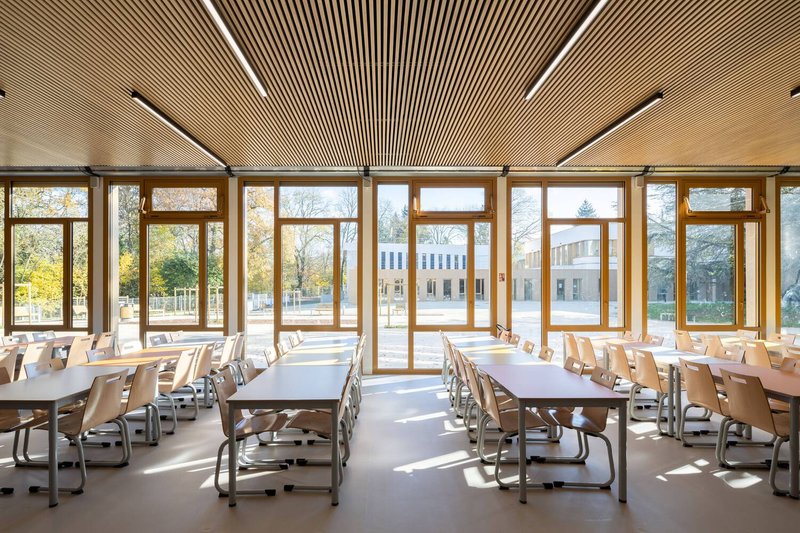
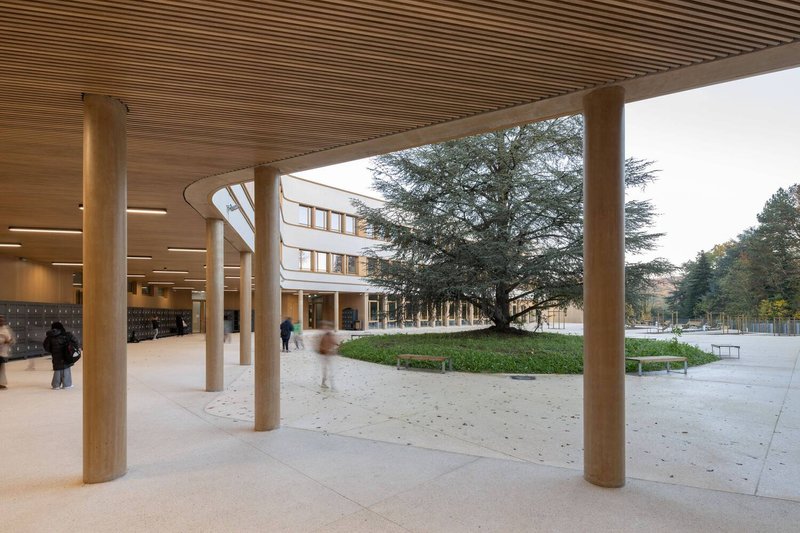
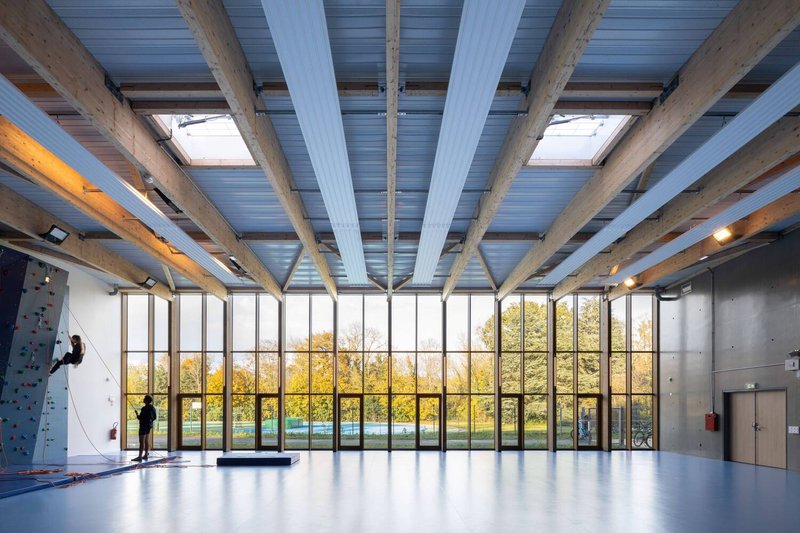
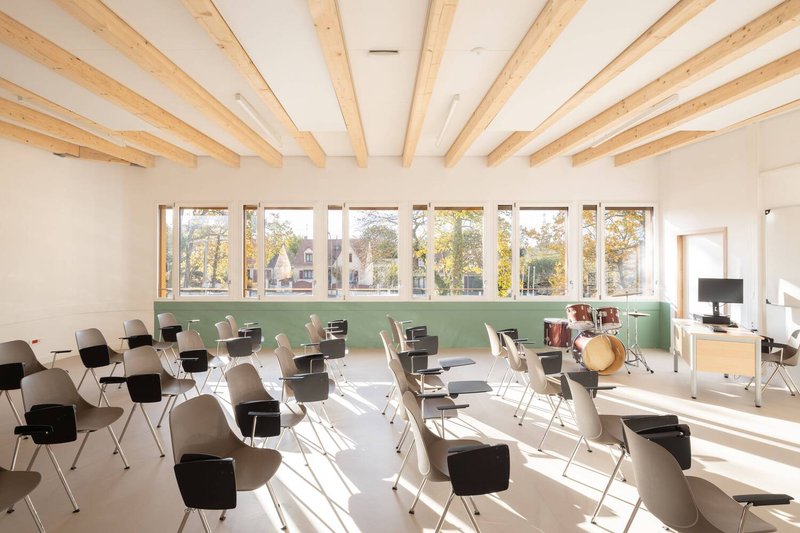
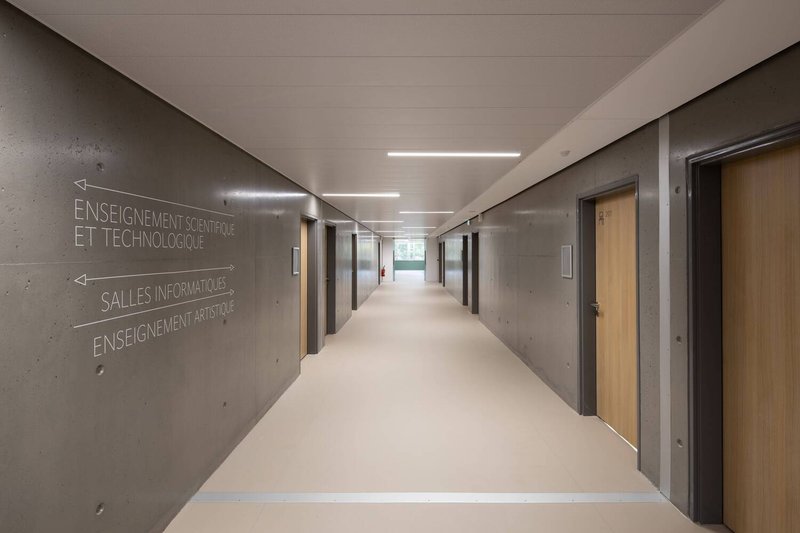
The school’s architecture combines a robust patterned concrete base with timber-framed upper floors, creating a balance between durability and natural warmth. Large glazed surfaces maximize natural light and views toward the woodland, while motorized sunshades provide passive solar control. The bio-based insulation and sustainable construction materials reinforce the school’s eco-conscious design, aligning with modern environmental performance standards.
Adaptive Reuse and Integration
Ameller Dubois preserved two existing structures at the site’s north-eastern edge. The auditorium was carefully restored, ensuring full accessibility and functional integration, while the former restaurant was converted into five staff housing units. These adaptive reuse strategies highlight a commitment to heritage preservation and community-centered design.
Landscape and Outdoor Spaces The school’s outdoor design emphasizes nature-led learning and ecological stewardship. Six distinctive spaces were created to celebrate the site’s natural heritage:
- Forest Forecourt – the main approach through the classified woodland.
- Grass-Covered Hill – pathways and benches embedded within a green topography.
- Majestic Cedar – a central tree encircled by a unifying ring, preserving its prominence.
- Suspended Clearing – a tranquil zone for quiet activities.
- Science Garden – an interactive educational landscape.
- Residential Garden – a series of micro-reserves supporting diverse plant typologies.
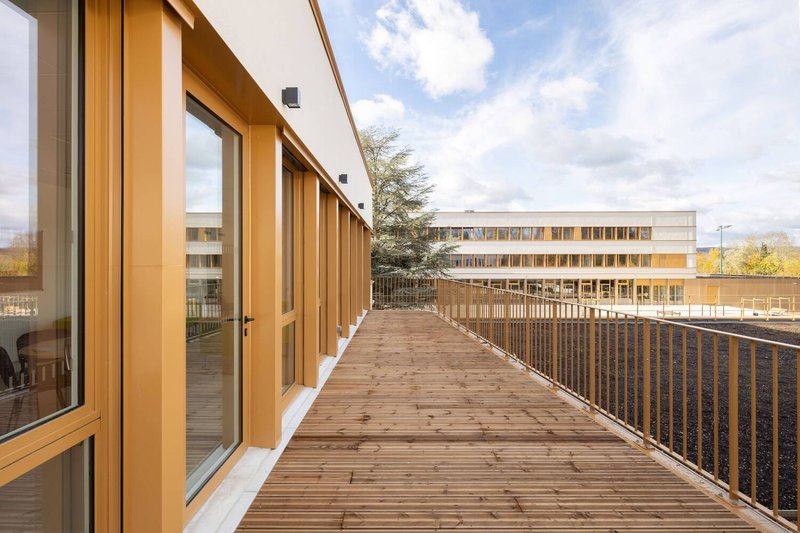
Sustainability and Community Impact By respecting the woodland character and embracing biophilic design principles, the school achieves a contemporary yet non-monumental presence. Its horizontal scale ensures seamless integration into the surrounding neighborhood, while fostering a sense of identity, belonging, and pride among students, staff, and local residents. Claudine Hermann Secondary School exemplifies a modern, sustainable educational facility that is both environmentally responsible and socially meaningful.
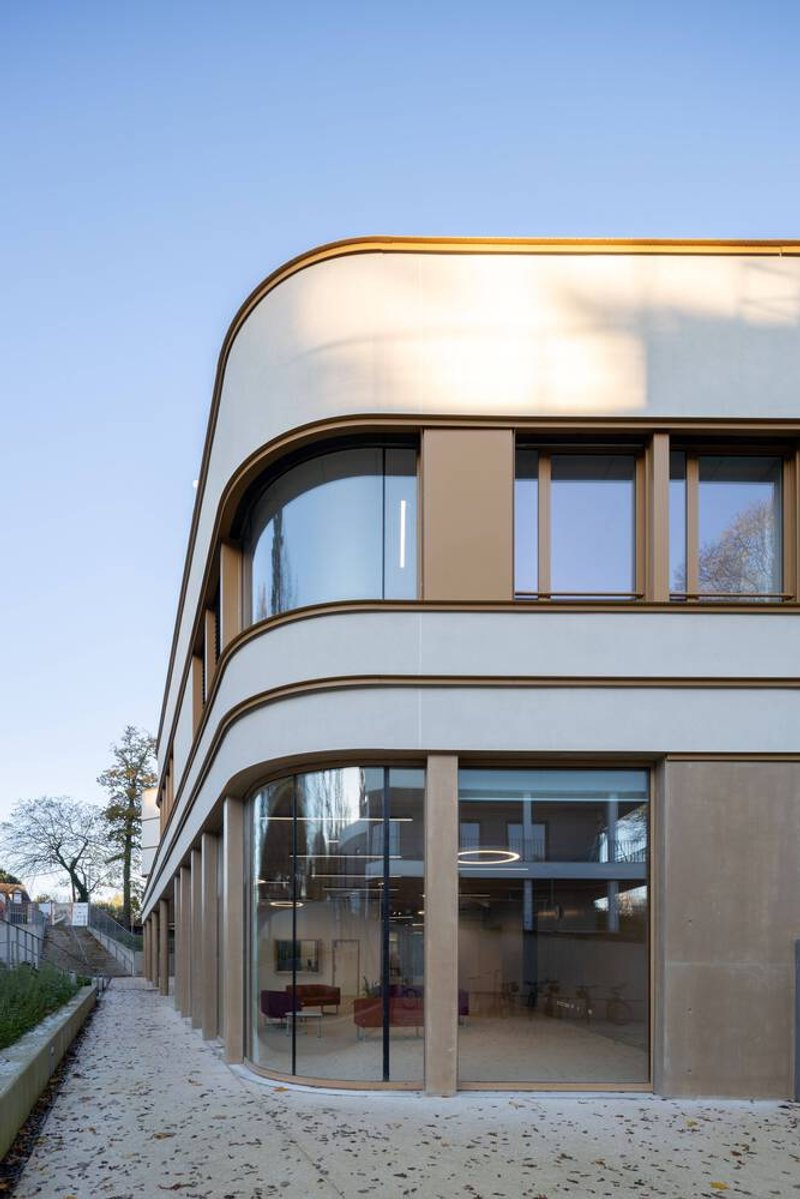
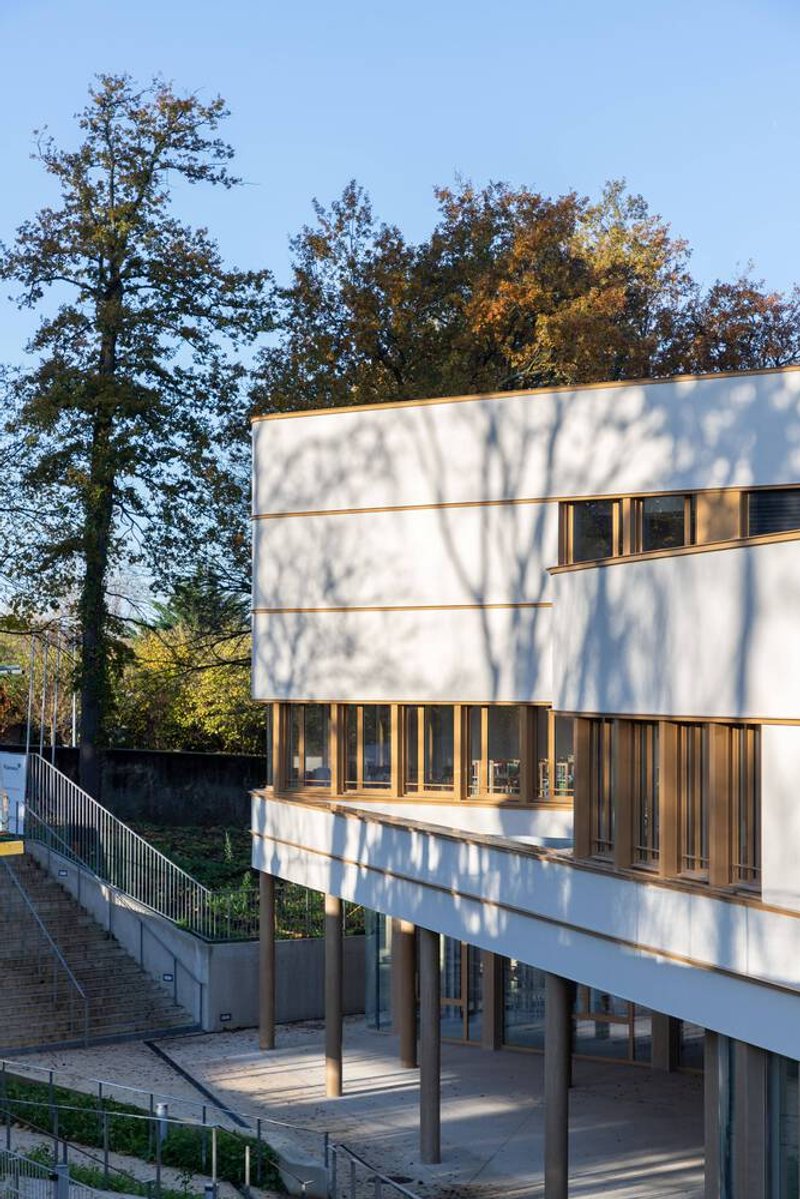
All Photographs are works of Hugo Hébrard




Popular Articles
Popular articles from the community

Three Architects Stitch a Social Center into a Crumbling Galician Hamlet
In Muimenta, Spain, timber and plywood volumes graft onto granite ruins to anchor a rural revitalization effort.
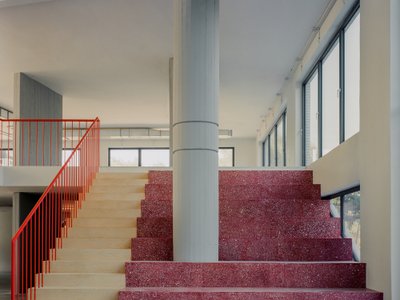
Art 1 Office Strips Athens Back to Its Bones
Neiheiser Argyros transforms a 40-year-old Athens office building into a vivid, materially rich workplace anchored by red steel, exposed concrete, and roof
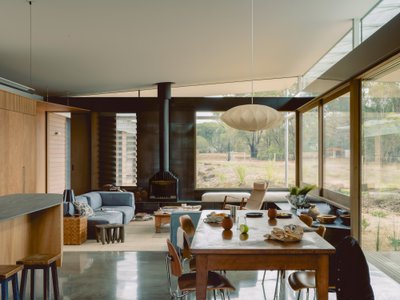
Not All Architecture Grounds a Timber Retreat in Victoria's Coastal Bushland
Ironbark House stretches low beneath eucalyptus canopy, threading a quiet domestic life between courtyard, deck, and landscape.

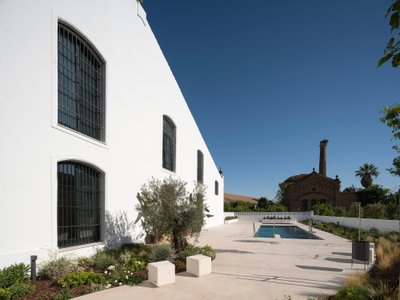
De la Riva Sherry Homes By Juan Vega Arquitectos
De la Riva Sherry Homes transform a historic winery into unique residences, blending industrial heritage, modern comfort, and community-focused courtyard living.


Similar Reads
You might also enjoy these articles

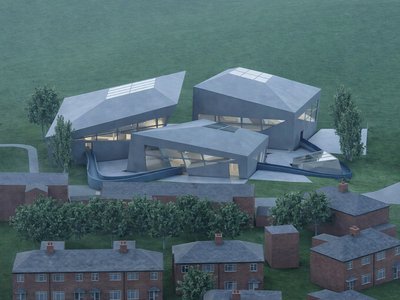
Filtering Space: A Gradual Spatial Experience
From urban intensity to spatial calm.


The Ken Roberts Memorial Delineation Competition (Krob)
As the most senior architectural drawing competition currently in operation anywhere in the world, it draws hundreds of entries each year, awarding the very best submissions in a series of medium-based categories.

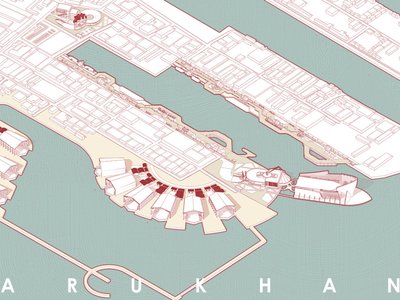
Waterfront Redevelopment and Urban Revitalization in Mumbai: Forging a New Dawn for Darukhana
A transformative waterfront redevelopment project reimagining Darukhana’s shipbreaking heritage into an inclusive urban future.

OUT-OF-MAP: A Call for Postcards on Feminist Narratives of Public Space
Rhizoma Design and Research Lab invites artists, designers, architects, researchers, and students to reflect on how feminist perspectives can reshape public space. Selected works will be exhibited in Barcelona, October 2026. Submissions open until 15 April 2026.


Explore Architecture Competitions
Discover active competitions in this discipline




The International Standard for Design Portfolios


The Global Benchmark for Architecture Dissertation Awards


The Global Benchmark for Graduation Excellence


Challenge to design public laboratory
Comments (0)
Please login or sign up to add comments
No comments yet. Be the first to comment!