

CLIFFSCRAPER
Is it possible to build a cityscraper without constructing a new structure? Is it possible for topography itself to transform into a vertical life?

Today, materials such as steel and concrete, which increases the carbon footprint and harms nature and human life, are used for the construction of most of the skyscrapers. The majority of the topography is laying under the constructed areas. In this world where we are building more structures day by day, we designed a cityscraper without constructing a new structure, without using unsustainable materials and by making the topography a visible part of the design. For us, a sustainable cityscraper, primarily needs to be sustainable in its structure, construction technique and use of materials.
The location of our project is the island of Santorini in Greece, which stands out with its natural aspects with meters of cliffs. In Santorini's vernacular architecture, they built cave houses by carving the topography to be resistant to climatic conditions and earthquakes. Santorini’s architecture uses traditional materials and resources from the region, and it is closely related to its context. Vernacular architecture proves to be a true example of sustainability because they are built on inherently sustainable principles due to resource limitations imposed by economic and natural factors. We design spaces by carving the topography, not by adding extra materials to them. After removing the soil, it is reused in the port of the design and on the island. Moreover, the local builders know how to use the method that is practiced while building the cave houses. By using the construction technique of the place, economic sustainability is also ensured. For a sustainable cityscraper design, we respect natural systems, people and the life cycle, making sure that our actions are compatible with environmental systems, not against them.
Although Santorini is an island with a smaller area compared to cities, it is exposed to millions of tourists, especially as a result of its increasing popularity in social media. Especially in the summer season, the number of tourists increases every year, leaving the island under the effects of overtourism. Santorini must face the problems usually faced by big cities because it tries to meet the needs of more people than an island can handle. The constant structuring of the island to meet the accommodation needs of the tourists, puts large pressure on the mainland. Due to this situation, agricultural areas are gradually decreasing. In cliffscraper , we gather the structures planned to be built on the mainland in a single mass and suggest the cliffs of the island, as potential vertical life lands.This provides the opportunity to protect the remaining agricultural areas on the island. The slit, which is naturally formed in the cliff, creates the design boundaries. Thus, as the architecture emerges from the topography, we aim to minimize the huge gap between a skyscraper and human scale, not to create a level difference in the silhouette.
In Santorini, underground resources have been depleted due to the constant use of them to provide resources for overtourism. In order to find fresh water, they constantly drilled underground, causing the mixing of salt and fresh water. Therefore, they had to transport the fresh water to the island via ferries, which are stored in containers. Since the island consumed non-renewable energy sources, it needs new renewable energy sources. We determine one of the main goals of the cliffscraper as researching and developing renewable energy production. The chosen project land gives us the potential of using the sea itself as an energy source, since the cityscraper will be located on the cliff, the lower level will be at sea level. Thus, we will be able to benefit from wave energy. It is a type of renewable energy that various mechanisms have been invented and continue to be developed. Since it is a predictable renewable energy source (solar and wind energy cannot be predicted, because earth, moon and tide movements can be calculated in the waves), it can obtain more planned energy in a long time. Another advantage of wave energy is that, it can turn salt water into fresh water while generating wave energy. Thus, it eliminates an existing deficiency in agriculture. The cliffscraper itself will primarily meets its own energy-consuming needs through renewable energy production, and thus will be an ecological-sustainable structure. In addition, the cliffscraper not only meets its own needs, but also aims to meet the energy needs of the island by storing and distributing the energy produced to the island. In this way, it also can contribute to the island’s economy.
On the island of Santorini, local people and tourists live a common life. However, this common life also brings some inequalities. Rental prices have increased a lot due to tourists. Local people are compelled to leave their homes as airbnb to them. The two main sectors engaged on the island are agriculture and tourism. However, due to lack of fresh water and better incomes of the tourism sector, those working in the agricultural sector are inevitably forced to switch to the tourism sector. Otherwise, there is income inequality among them. As we want to maintain a common life in the cliffscraper, we aim to design a more equitable life. With the development of wave energy systems, we aim to provide fresh water to agriculture on the island, protect the remaining agricultural areas in mainland, and ensure that agriculture is supported as well as the tourism sector.
It is possible to enter the cliffscraper both from the top and the sea level. From the sea level, people can enter the cliffscraper by boats, using its port. In Santorini, transportation between the top level and sea level is done by riding donkeys on zigzag roads. The cityscraper can also provide easier public vertical circulation by using its core. In this way, the cliffscraper ceases to be a closed volume and becomes available to everyone. It is aimed to invite people of all ages and nationalities, both the tourists and the locals. In this way, users will not only be able to use the transportation between the levels, but will also be able to experience various activities offered by the cliffscraper. The program aims to introduce the culture and history of the island, as well as introducing the renewable energy resources provided by the cliffscraper. Thus, cliffscraper can turn the human density into an opportunity.
To conclude, cliffscraper is a project designed by seeking the answer to the question; is it possible to build a cityscraper without constructing a new structure? The cliffscraper shaped its form, design decisions, and concept in this pursuit and used the topography as the structure itself. It emphasizes the topography by making it the most visible part of the cityscraper, against the day-to-day erasure of topography from the earth by construction.
MODEL
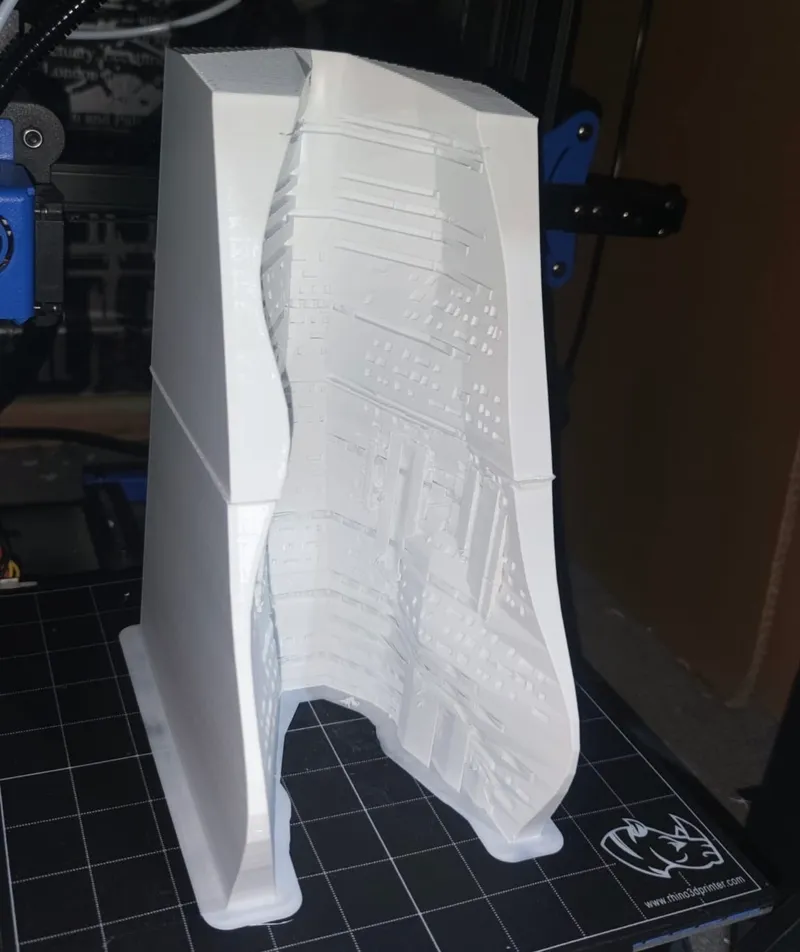

SKETCH
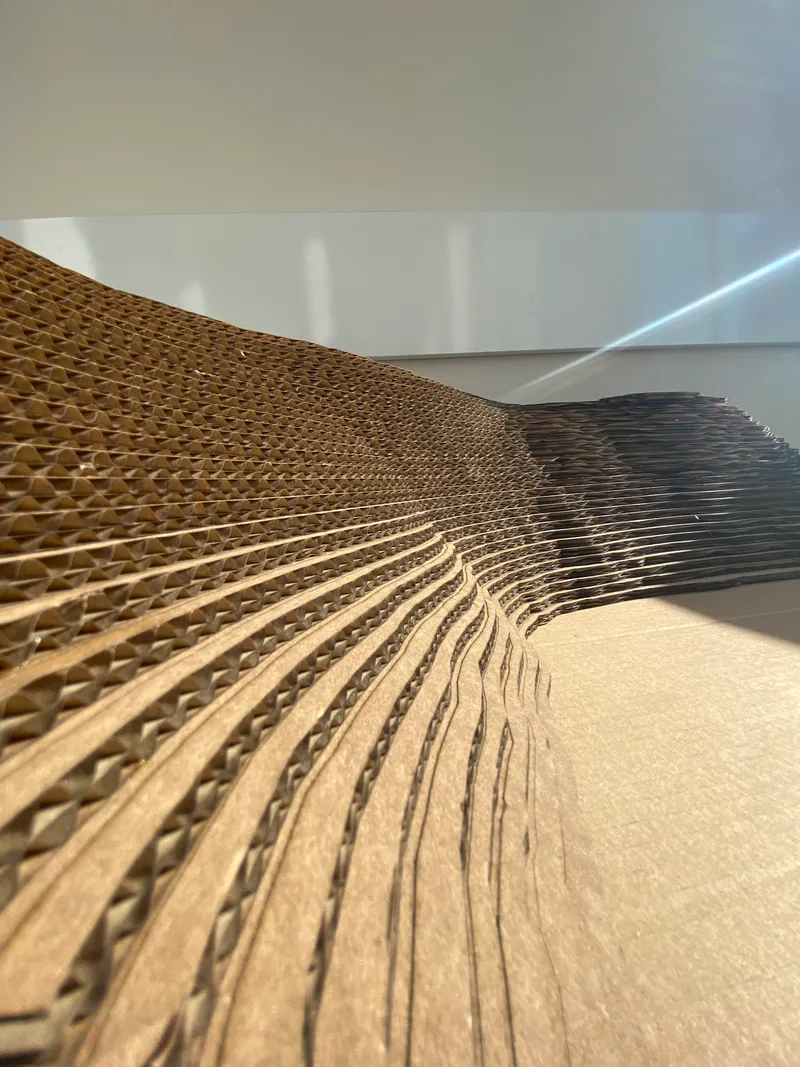
MODEL OF THE TOPOGRAPHY


Popular Articles
Popular articles from the community


Cloaked Colonization: A Mobile Underwater Habitat That Moves Like a Fish
Micah Abaya's shortlisted EHC Pacific entry reimagines ocean settlement as a dispersed network of self-sustaining architectural organisms.

Extended Shell: Retrofitting Kolkata's Balconies as Living Urban Thresholds
A modular retrofit system recovers the social and environmental intelligence of Kolkata's historic verandas for contemporary Park Street residents.

Tsunami Convergenics: Turning Catastrophic Ocean Forces into Underwater Housing Infrastructure
A speculative underwater settlement off the coast of Onagawa, Japan, treats tsunamis and typhoons as energy sources rather than threats.

Temporary Home for Dogs: A Reversed Zoo Rethinks Animal Shelter Architecture
In Bucharest, a sinuous corridor and freed landscape flip the logic of containment, designing a shelter that works to make itself unnecessary.

Similar Reads
You might also enjoy these articles
The Rhythm of Seasons
A Farmers' Market Connecting Nature and the City

More Than a Building-Designing a Living System
More Than a Building-Designing a Living System
Base Beyond
DESERT COMPOUND ARID: TOURISM OF ABSENCE AND ABUNDANCE

Explore Soil Architecture Competitions
Discover active competitions in this discipline


Challenge to reimagine the Iron Throne

Photograph architecture without architects

Illustrate the lost glory of Angkor Wat - Render Challenge

Design challenge to reuse E-waste
Comments (4)
Please login or sign up to add comments
Good job!
Güzel Çalışma
Nice Project 👍🏻
congratulations