
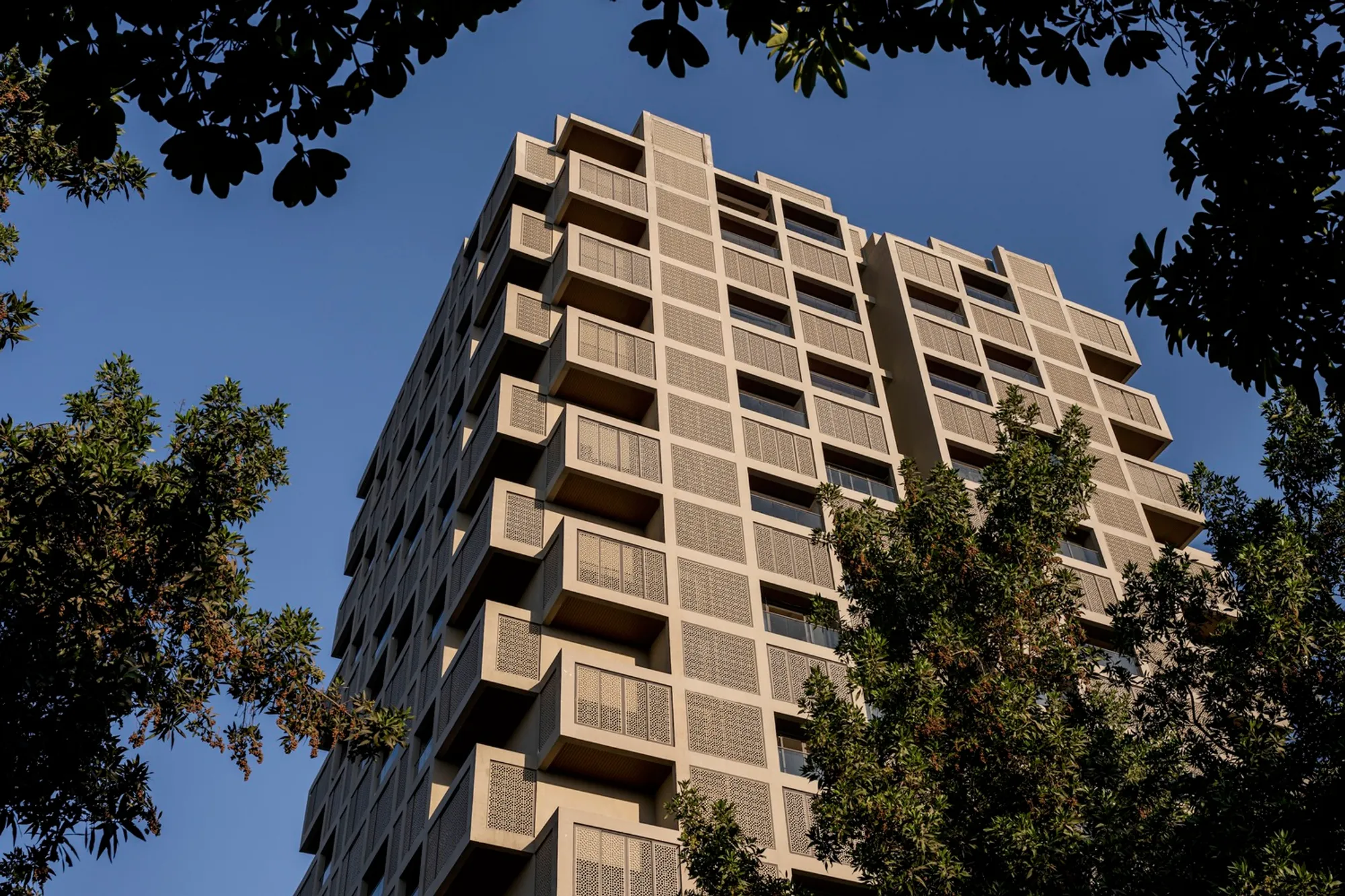
Climate-Responsive Architecture: SCREEN 504 by Sanjay Puri Architects
SCREEN 504 exemplifies climate-responsive architecture, integrating traditional Rajasthani elements with modern passive cooling techniques for sustainable, energy-efficient urban living.


Climate-responsive architecture is a sustainable design approach that integrates local climatic conditions to enhance energy efficiency and occupant comfort. SCREEN 504, a 21-story residential tower in Udaipur, India, by Sanjay Puri Architects, exemplifies this principle by drawing inspiration from the region’s traditional architecture while integrating modern innovations. Designed to combat the extreme summer heat of Rajasthan, the building incorporates screened balconies, passive cooling techniques, and energy-efficient materials, making it a benchmark in contemporary climate-adaptive residential design.
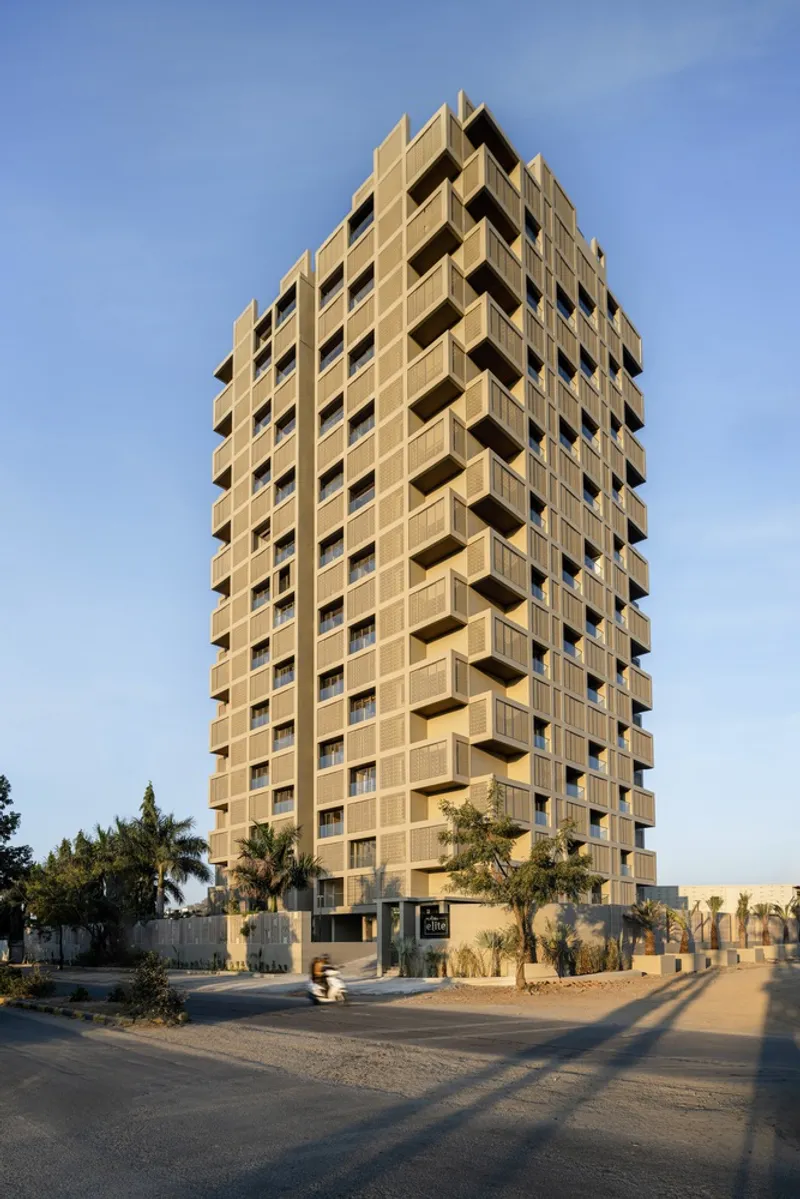
Contextual Design Rooted in Tradition
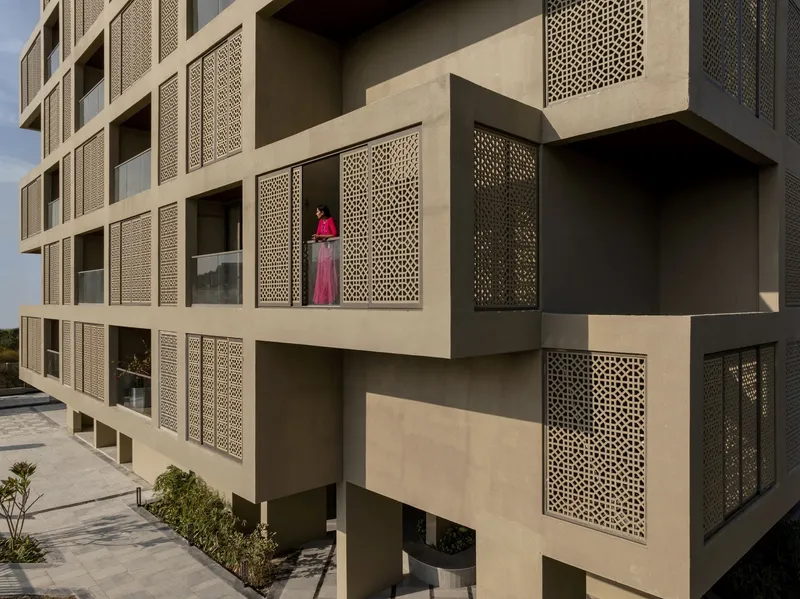
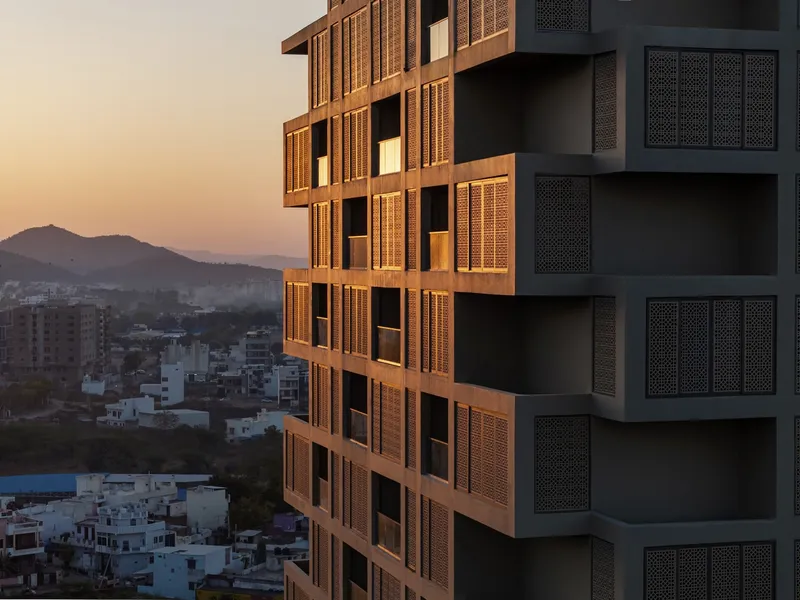
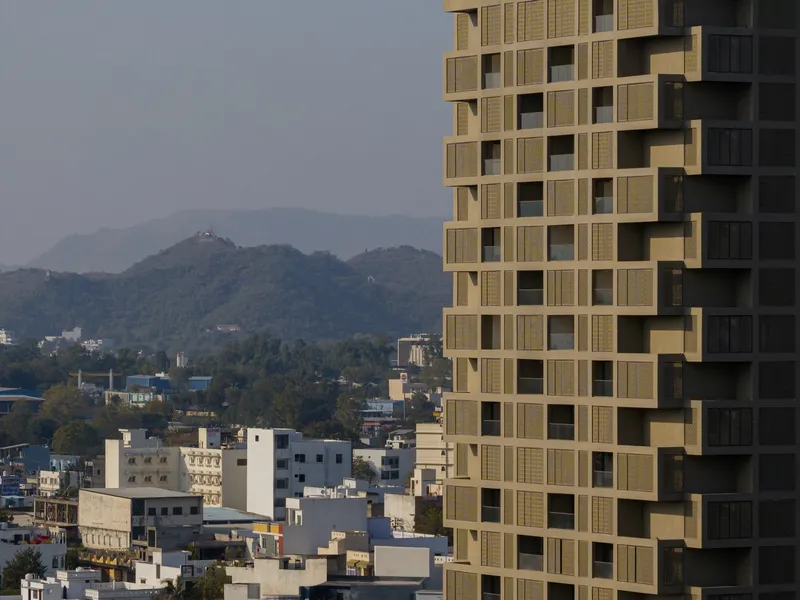
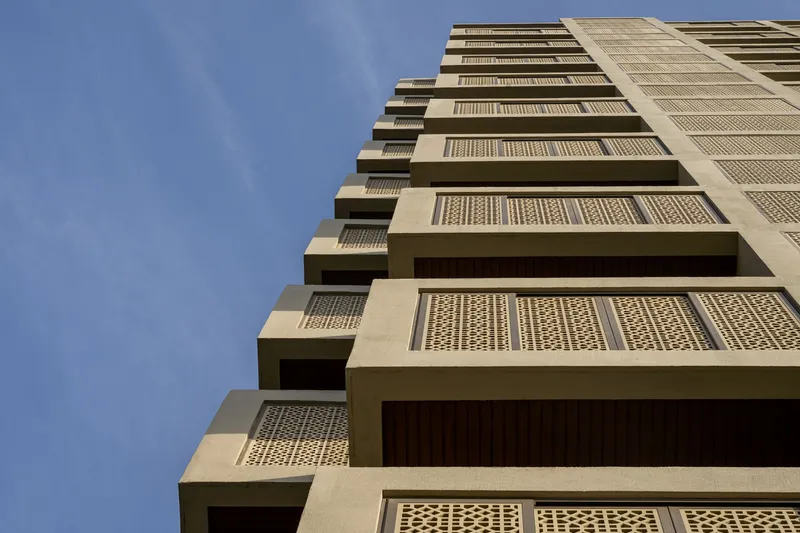
Udaipur’s architectural history, dating back to the 16th and 17th centuries, features intricate screen-covered balconies that provide shade while allowing airflow. SCREEN 504 reinterprets this traditional element by incorporating a mix of screened and open deck spaces for each apartment. These transitional spaces serve as thermal buffers, reducing direct heat gain while maintaining visual connectivity with the scenic hills surrounding the site.
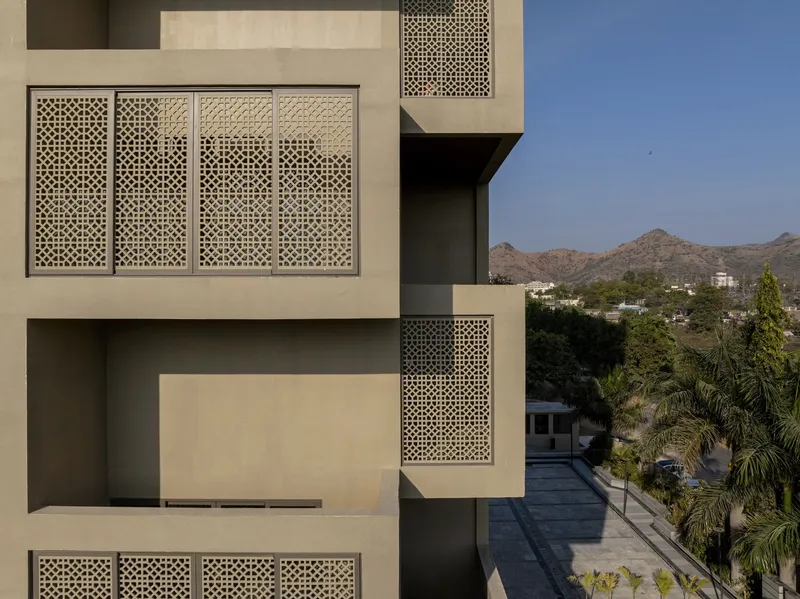
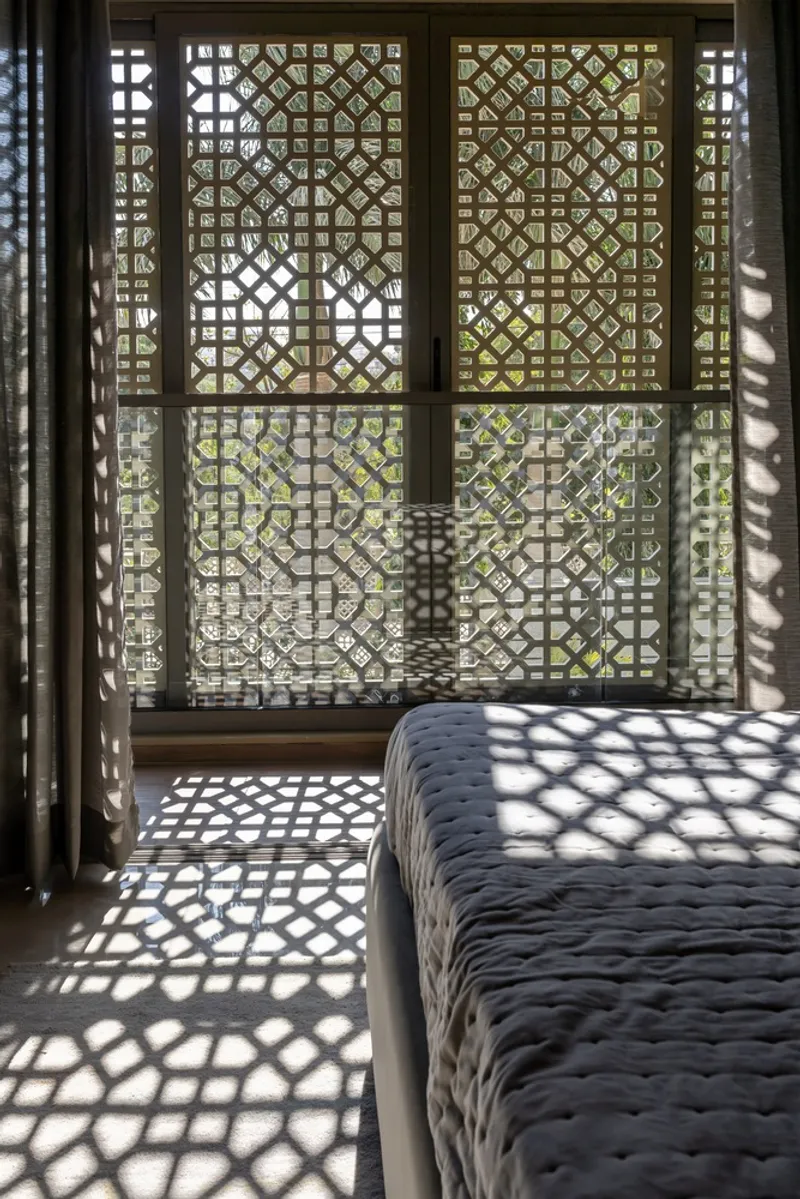
Each of the 78 apartments is designed to optimize natural ventilation and daylight, with all rooms offering dual-aspect views. The integration of operable sliding screens, perforated with traditional patterns, allows residents to control the amount of light and ventilation entering their homes. This adaptability enhances indoor comfort, reducing reliance on artificial cooling systems.
Passive Cooling and Energy Efficiency
The strategic placement of balconies and the use of high-performance materials contribute to SCREEN 504’s energy efficiency. Five balcony spaces are incorporated into each apartment, with varying heights of up to 20 feet. These outdoor spaces, which can be fully open, partially enclosed, or completely screened, provide shading and cross-ventilation, significantly reducing internal heat buildup.
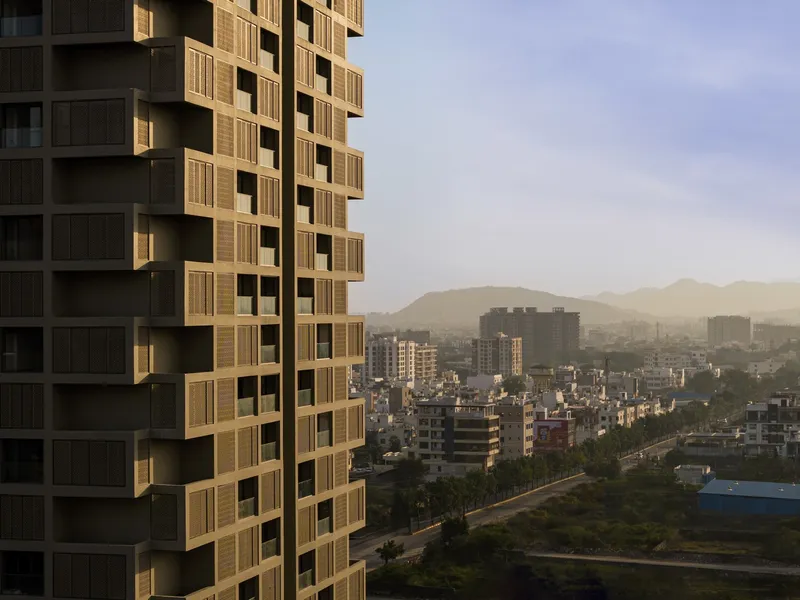
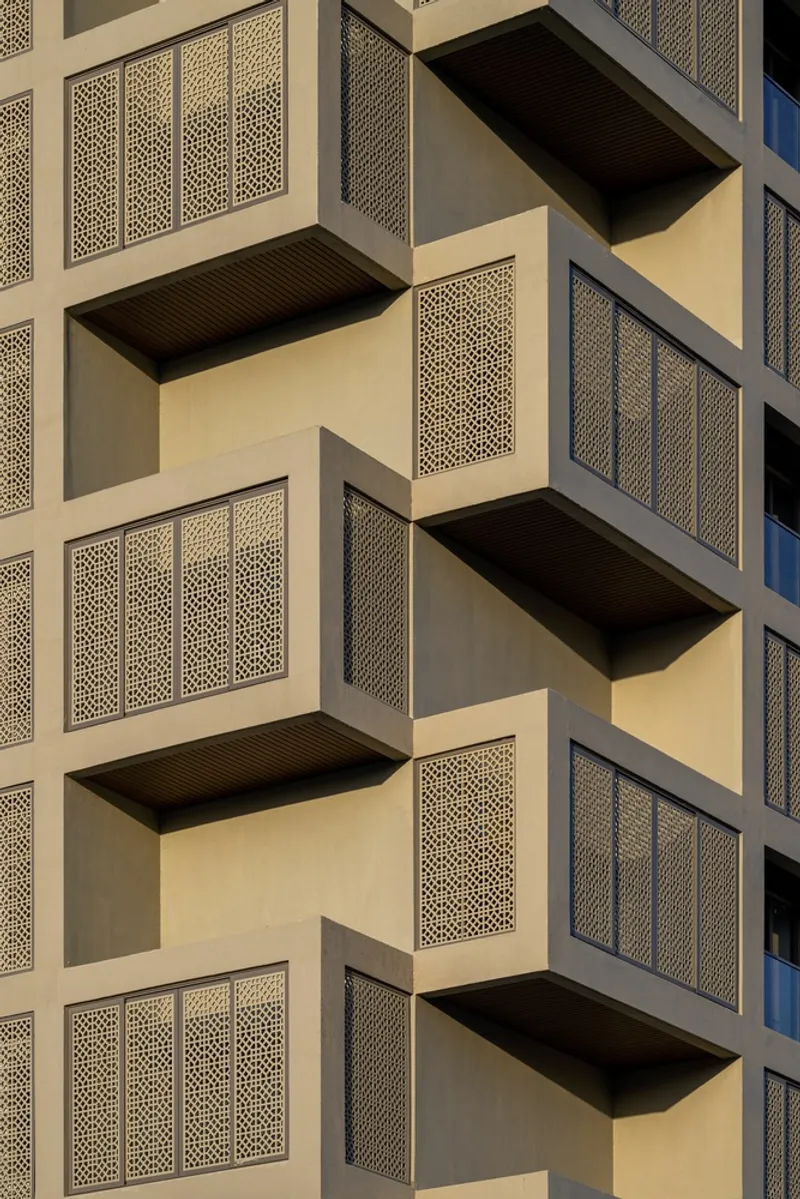
Beyond individual residences, the building employs passive cooling strategies through its overall form and material selection. Locally sourced sandstone, used for perimeter walls and landscaped areas, enhances thermal insulation while promoting sustainability. Fly ash bricks, known for their eco-friendly properties, are used for internal partitions, further reducing the building’s carbon footprint.
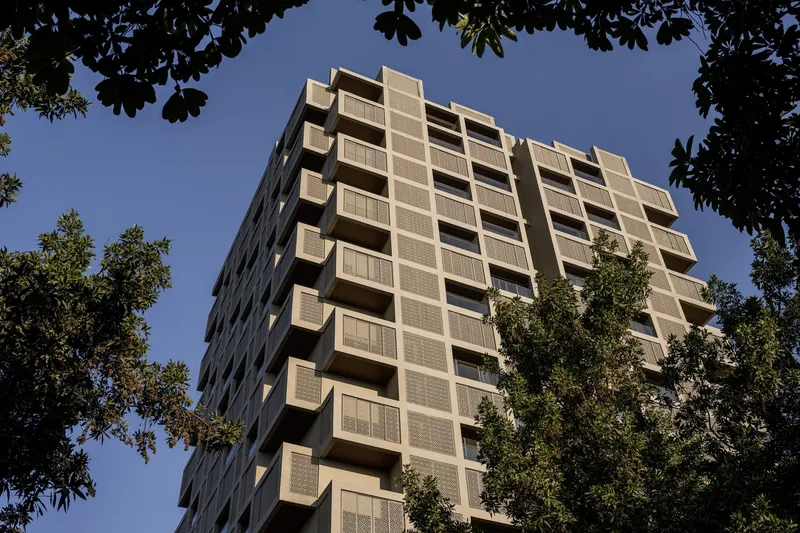
Sustainable Water Management and Community Spaces
Sustainability extends beyond architectural form, with water conservation playing a crucial role in SCREEN 504’s design. The rooftop terraces and balcony perimeters are designed to channel rainwater into a harvesting system, reducing dependency on external water sources. Additionally, wastewater is treated and recycled for landscape irrigation, reinforcing the building’s commitment to resource efficiency.

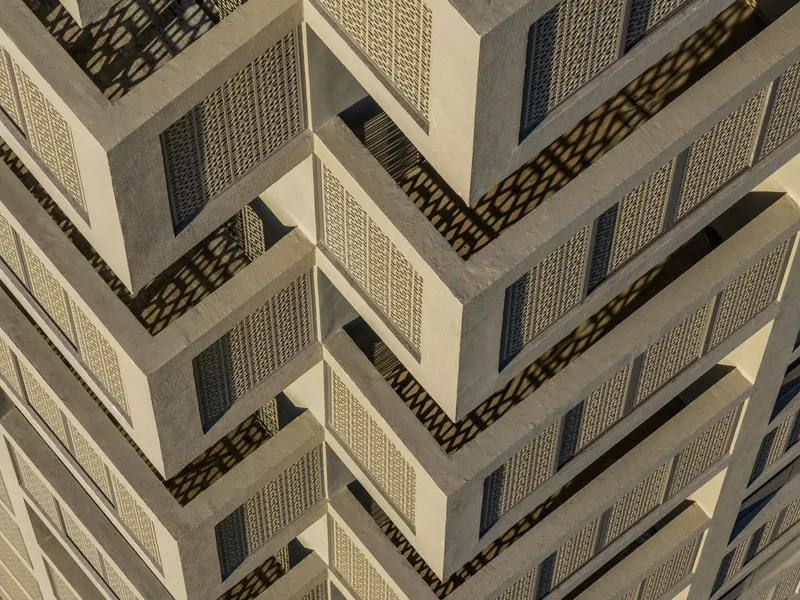
Community-centric spaces are seamlessly integrated within the development, fostering a holistic living experience. A gym, swimming pool, community hall, and games room are located at the ground level, while a rooftop garden provides residents with an elevated green retreat. Parking facilities are efficiently managed in a single basement, maximizing the available ground space for landscaping and communal activities.
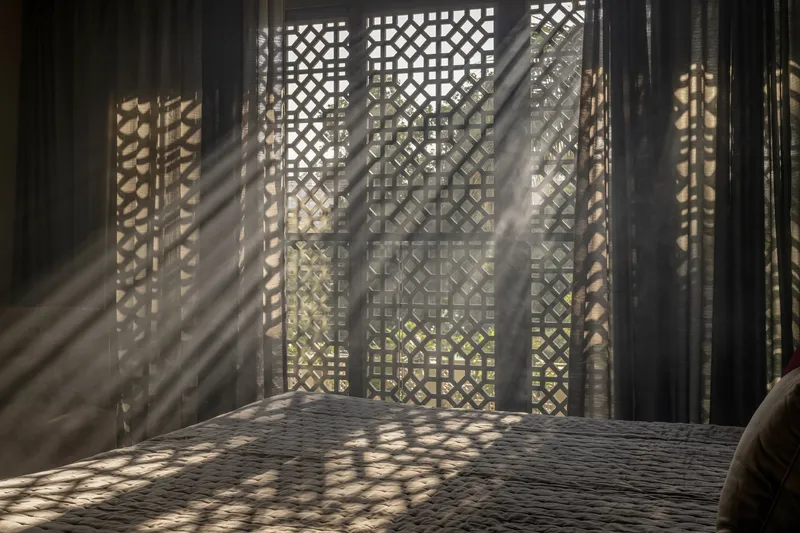
A Model for Future Climate-Responsive Architecture
SCREEN 504 stands as a pioneering example of climate-responsive architecture in urban residential development. By blending traditional Rajasthani design principles with modern sustainability strategies, the project demonstrates how high-density living can be both environmentally conscious and contextually relevant.
As cities across the globe face increasing climate challenges, projects like SCREEN 504 highlight the importance of designing buildings that respond to their environment. The integration of passive cooling, sustainable materials, and adaptive outdoor spaces ensures long-term energy efficiency and occupant well-being. This project sets a precedent for future developments seeking to merge cultural heritage with contemporary architectural solutions.
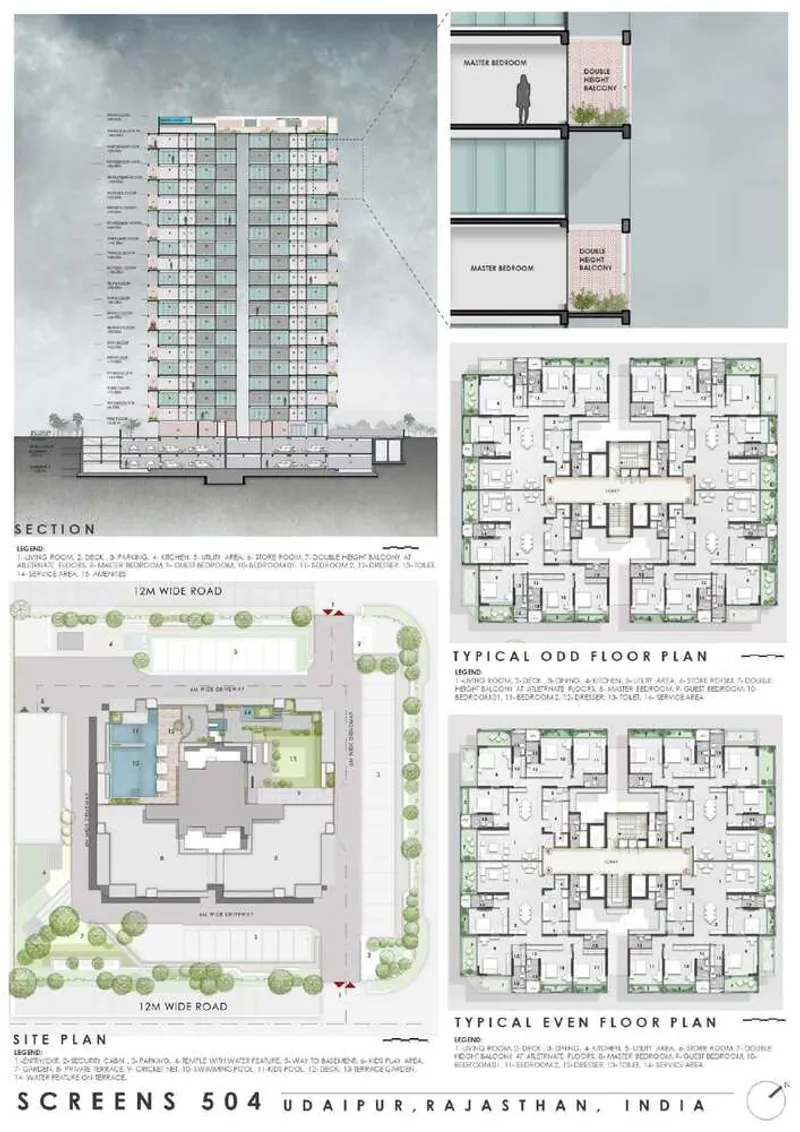
All Photographs are works of Vinay Panjwani




Popular Articles
Popular articles from the community

FAMM Arquitectura Organizes Ten Villas Around Courtyards and Jungle in Nosara, Costa Rica
El Molino pairs two elongated volumes with deep overhangs and timber louvers to build a compact coastal community five minutes from the beach.

A Reinforced Cocoon: Vernacular Architecture for Security, Healing and Community in Qandahar
A Reinforced Cocoon reimagines Afghan vernacular architecture as secure community space for widowed women, families, healing and resilience.
EW PARK: Sustainable Architecture Reimagines the Future of Urban Parking
EW PARK reimagines city parking as a modular wooden tower combining automation, solar energy, electric mobility, and adaptable urban design.
REBIRTH: Sustainable Architecture Shaped by Community, Resilience and Renewal
REBIRTH uses sustainable architecture, circular design, local materials and shared spaces to restore community, dignity and hope for widows.


Similar Reads
You might also enjoy these articles

Bamboo Housing Challenge 2026: Design Affordable, Sustainable Homes Using Bamboo
An international design competition by Bamboo U and IBUKU inviting architects and designers to reimagine affordable housing using bamboo — with the winning design built full-scale in Bali.

Computational Design & Education: Beegraphy Design Awards Introduces 7th Category (Featuring Jiyun's Innovative Approach)
Dive into Beegraphy’s 7th Design Awards category, where computational design meets education to create immersive, interactive learning tools, inspired by Jiyun’s work.

From Parametric Lighting to Urban Furniture: Join the 2nd Workshop in Beegraphy’s Computational Design Series
Dive into Cutting-Edge Design Techniques and Practical Applications with Industry Experts

Last Call: Unleash Your Architectural Genius in SHAK's Kindergarten Design Competition
Urgent call for architects to join SHAK's kindergarten design competition before the looming deadline


Explore Solar Responsive Competitions
Discover active competitions in this discipline



The International Standard for Design Portfolios


The Global Benchmark for Architecture Dissertation Awards

The Global Benchmark for Graduation Excellence


Challenge to reimagine the Iron Throne
Comments (0)
Please login or sign up to add comments
No comments yet. Be the first to comment!