
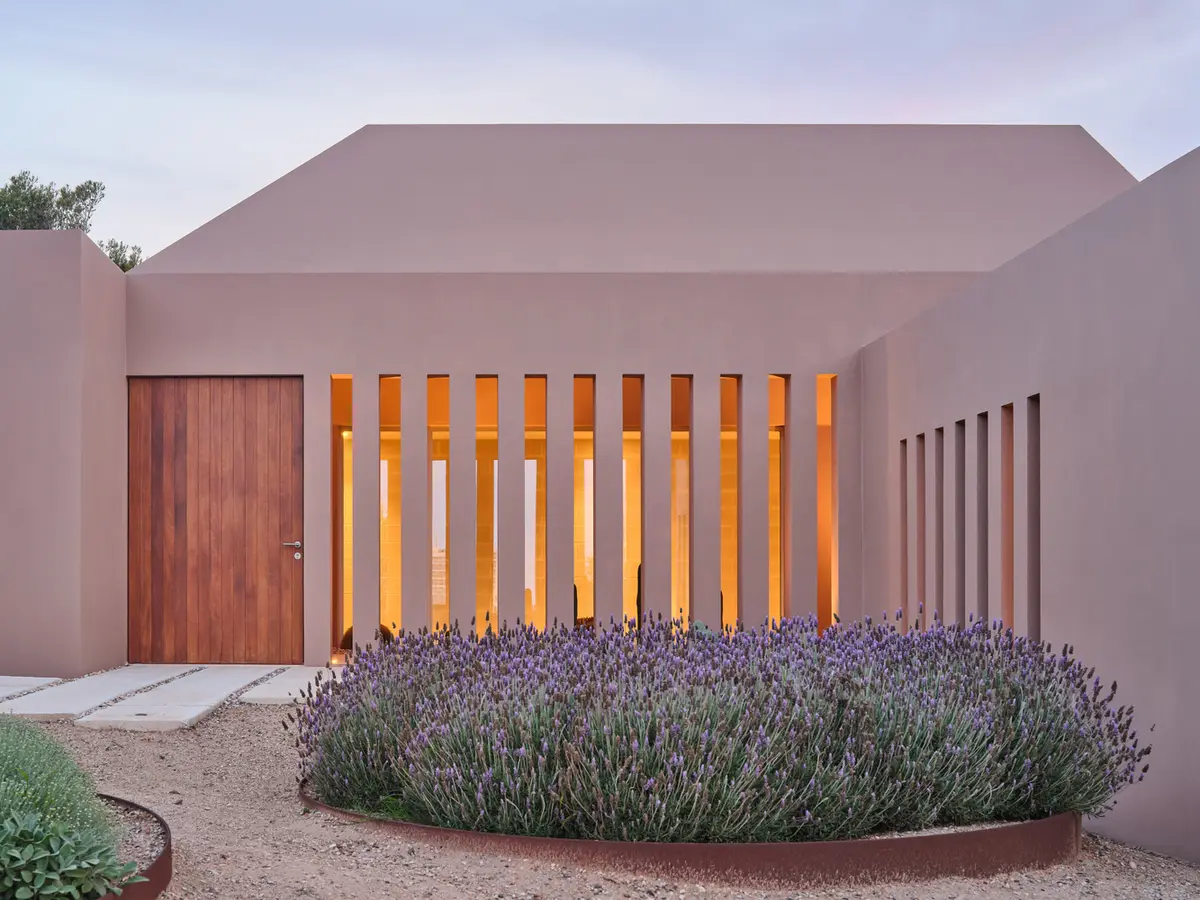
Coastal House Design in Menorca: Zenith House by NOMO STUDIO
An eco-conscious coastal house in Menorca by NOMO STUDIO that blends modular design, natural materials, and landscape integration.


A Harmonious Dialogue with the Landscape
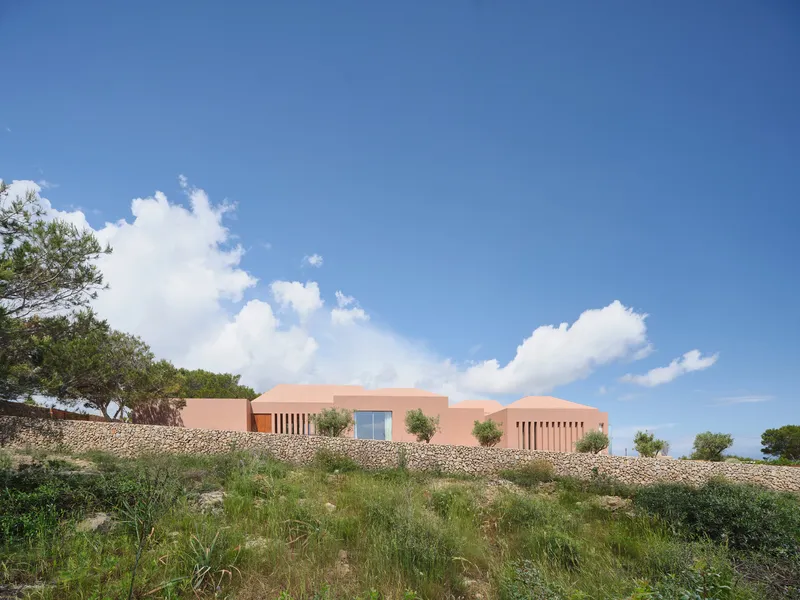
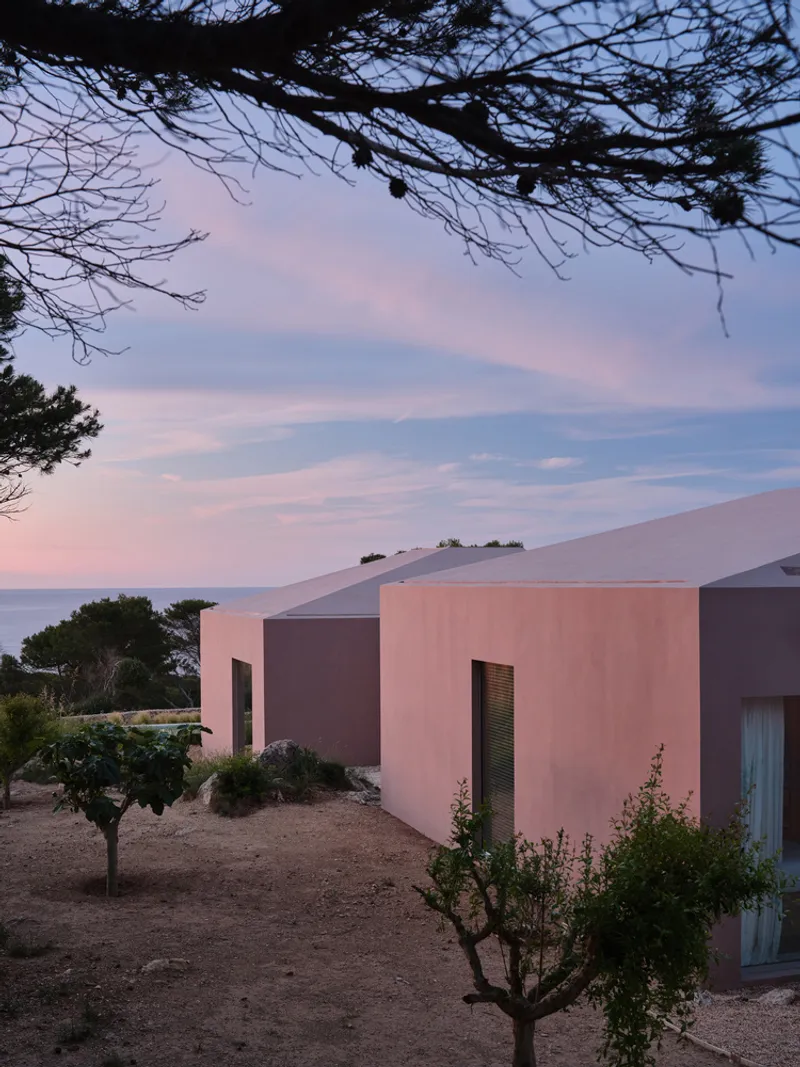
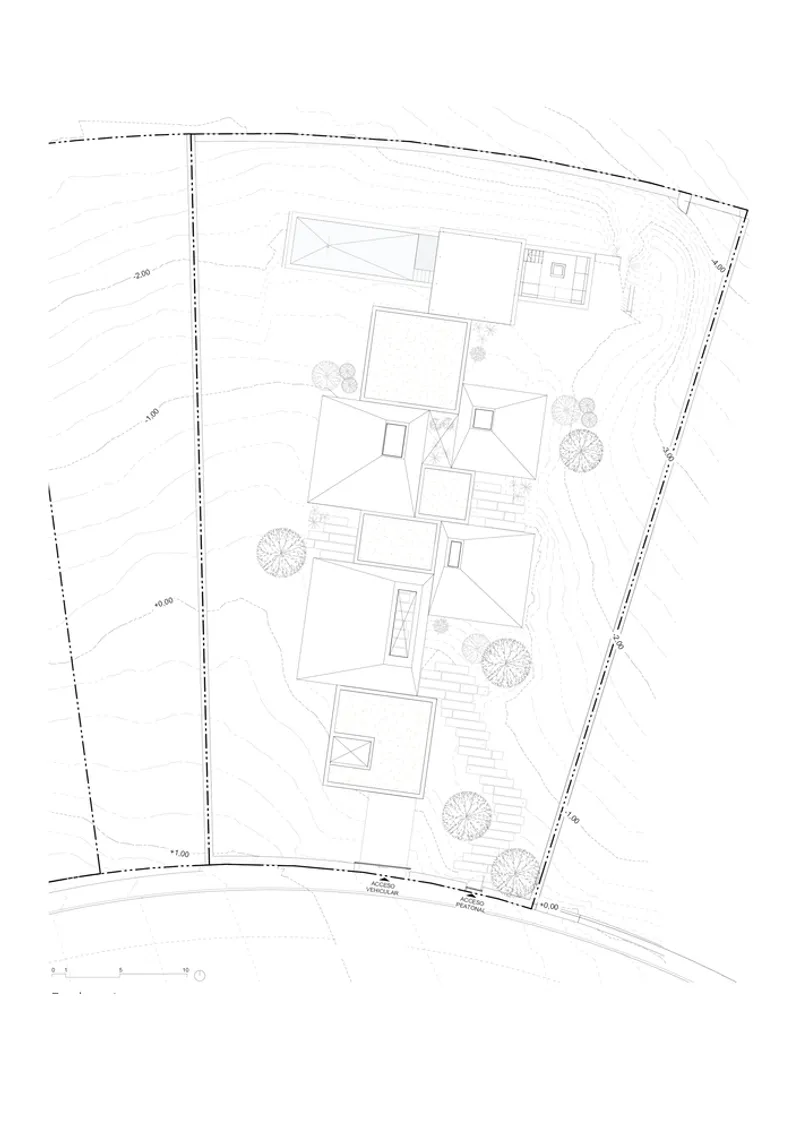
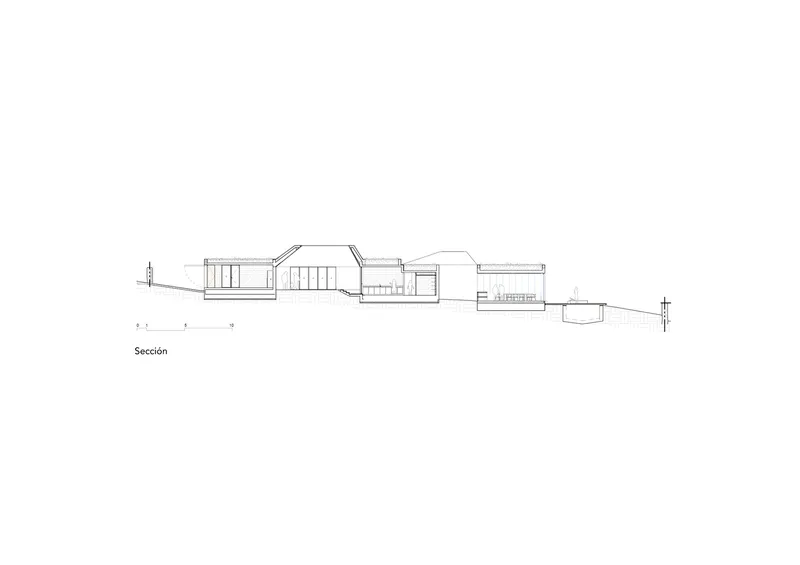
Perched on the serene Menorcan coast, Zenith House by NOMO STUDIO exemplifies a thoughtful and climate-conscious approach to coastal house design in Menorca. This single-story residence integrates seamlessly into the natural topography, embracing the surrounding pine forest and indigenous vegetation. Through its subtle stepping and folding into the landscape, the house preserves natural water runoff and supports ecological resilience, addressing increasing concerns over extreme weather events and terrain disruption.
Modular Design Inspired by Natural Permeability
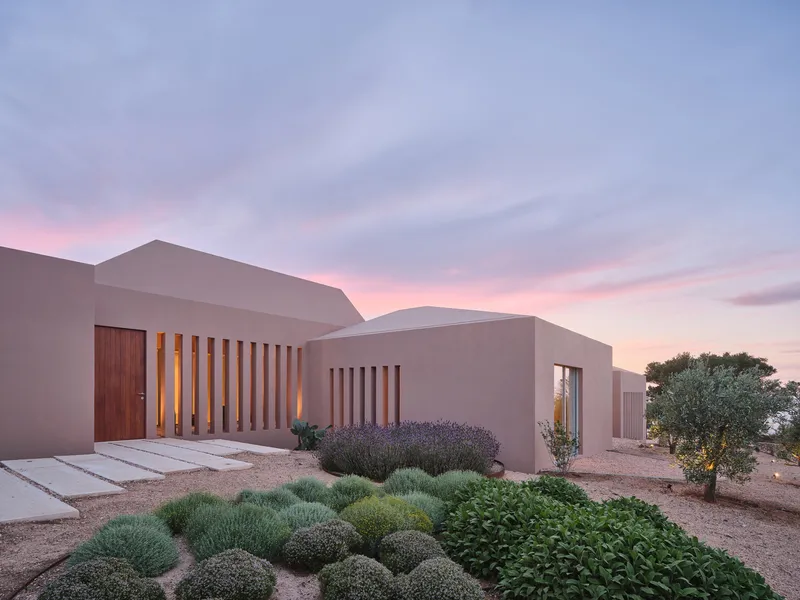
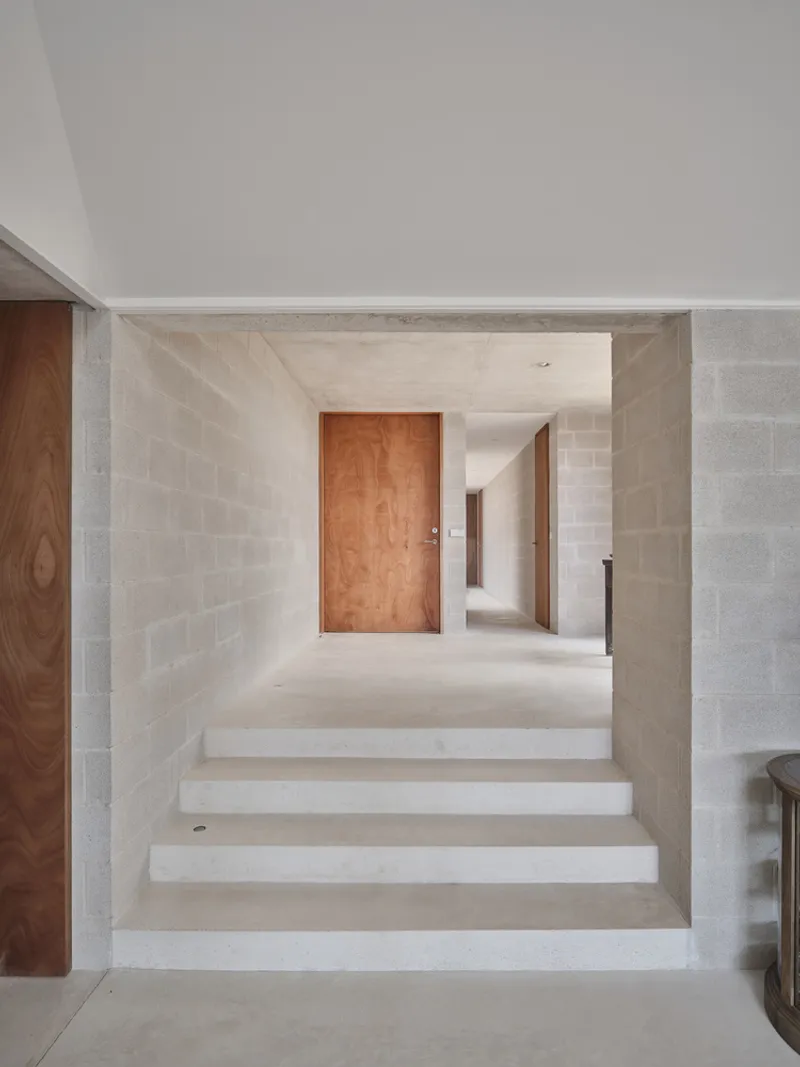
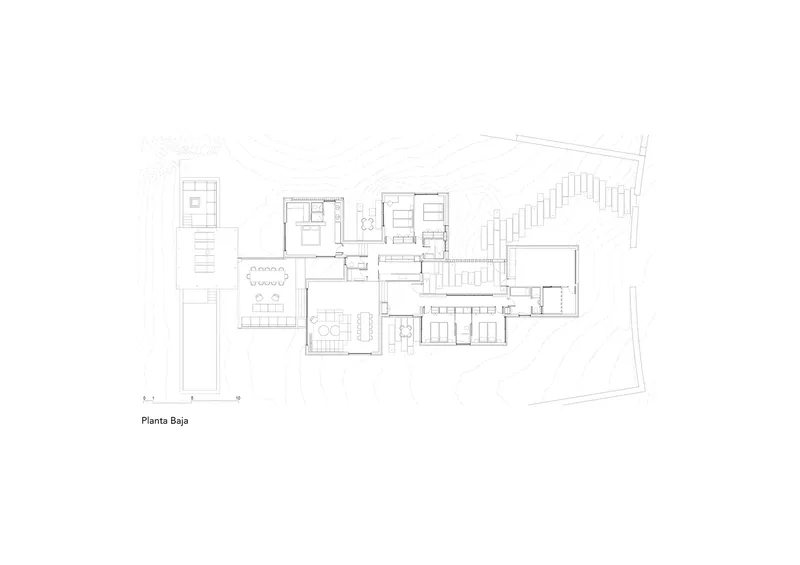
The formal concept of Zenith House is built around the geometric aggregation of eight tangent square modules. This modular composition results in a dynamic balance of solid and void, forming a rhythmic sequence of interior spaces punctuated by patios and sheltered gardens. These voids foster moments of intimacy and transparency, while the linear circulation route orchestrates a journey of shifting vistas that culminate in a framed view of the Mediterranean horizon.
Architectural Language of Light and Volume
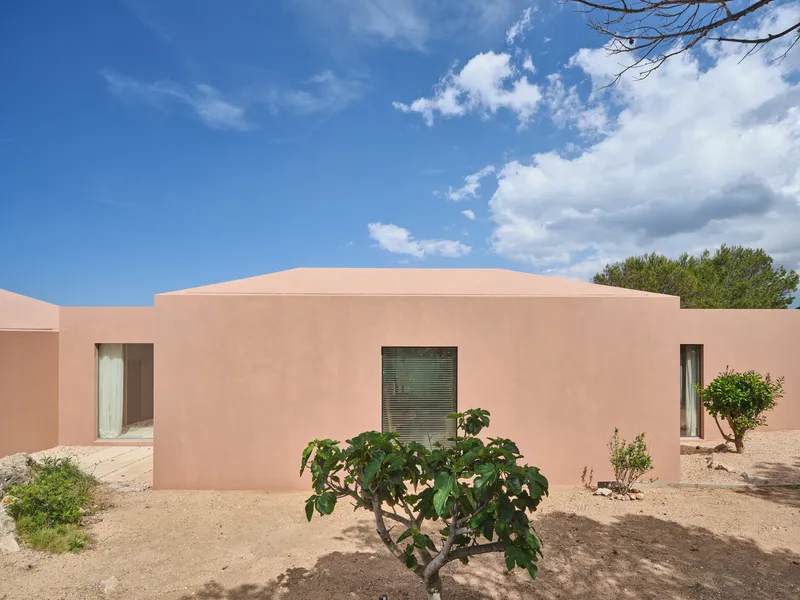
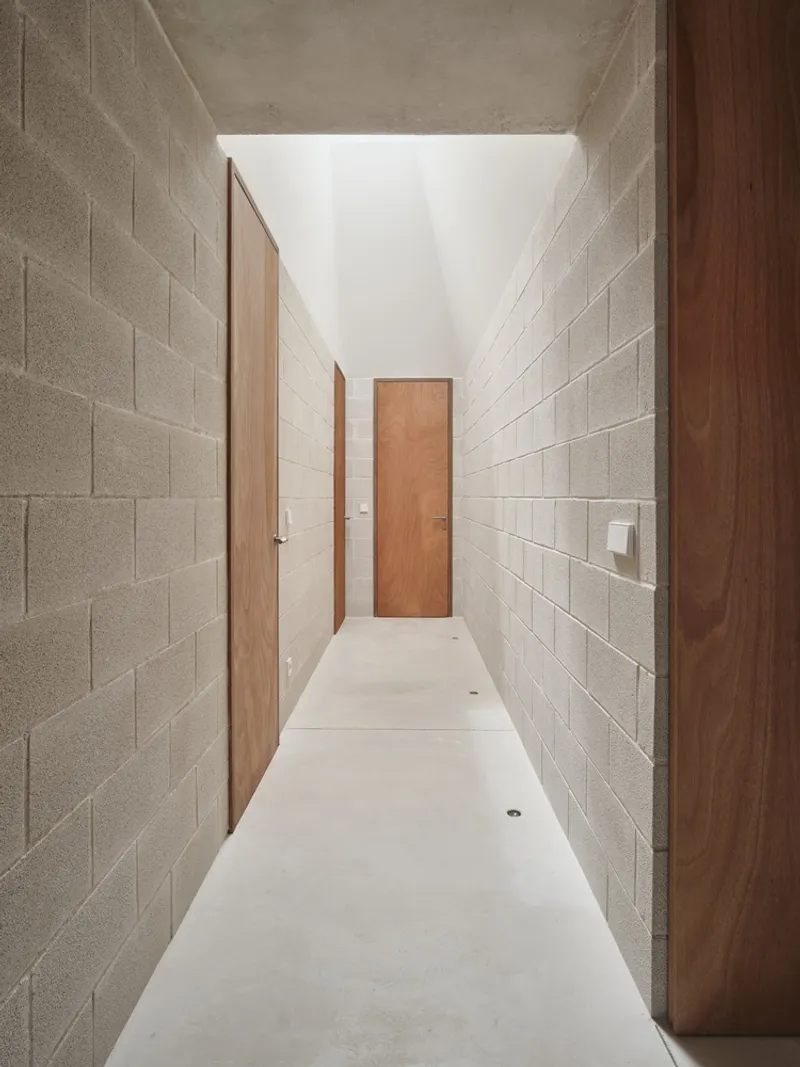
The structure’s roofscape alternates between horizontal planes and four-sided pitched roofs, creating spatial rhythms that enhance perception. Integrated skylights introduce daylight from above, accentuating transitions between compression and expansion within the interiors. These architectural gestures elevate spatial hierarchy, turning the act of moving through the house into a sensory experience attuned to scale, light, and geometry.
Light, Shade, and Climatic Performance
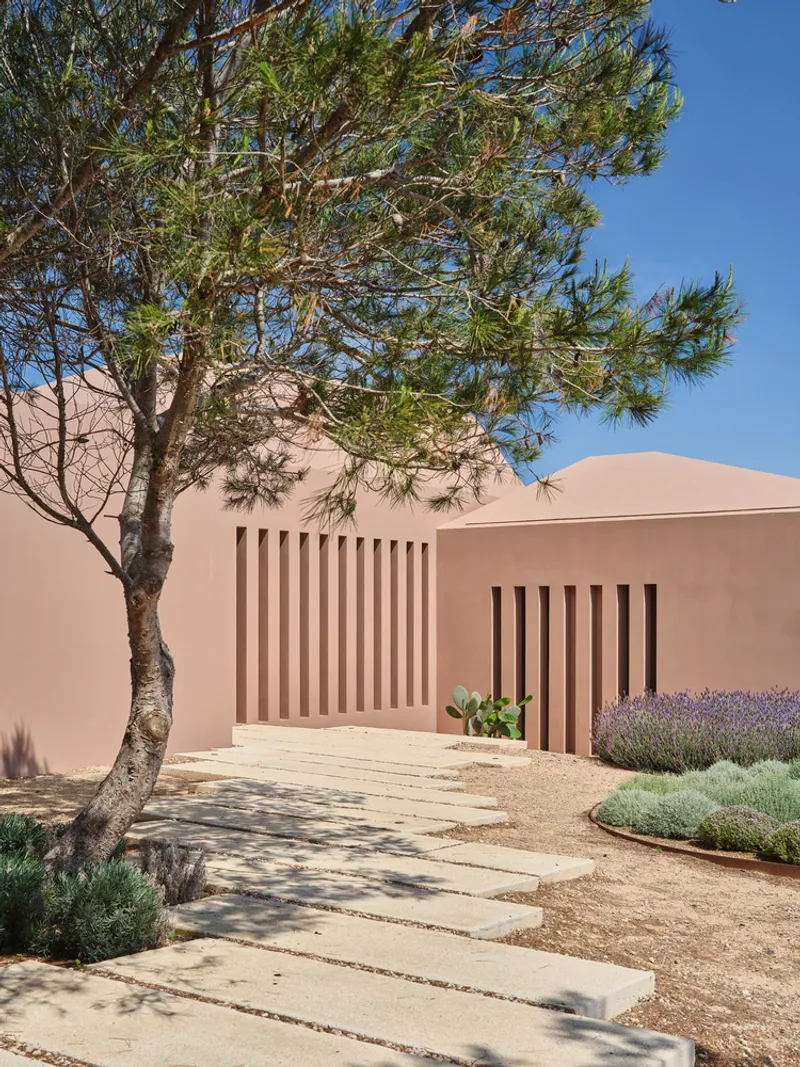
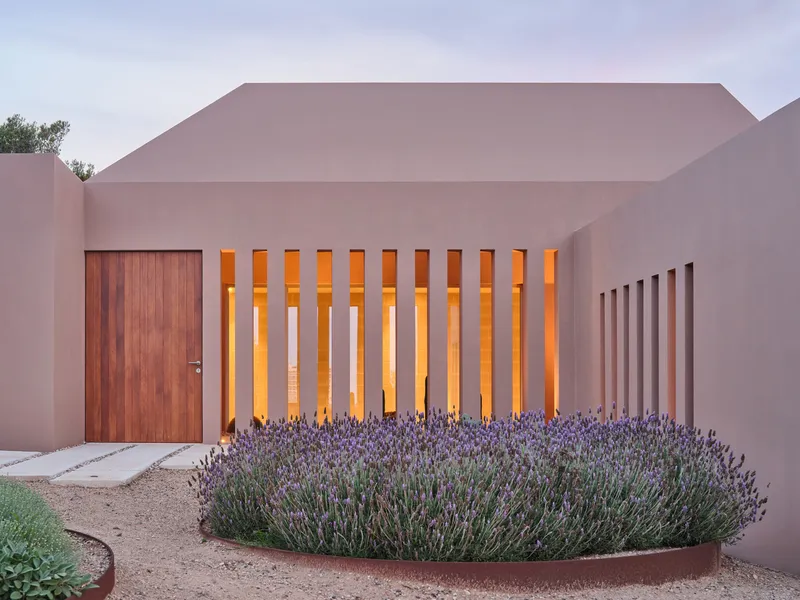
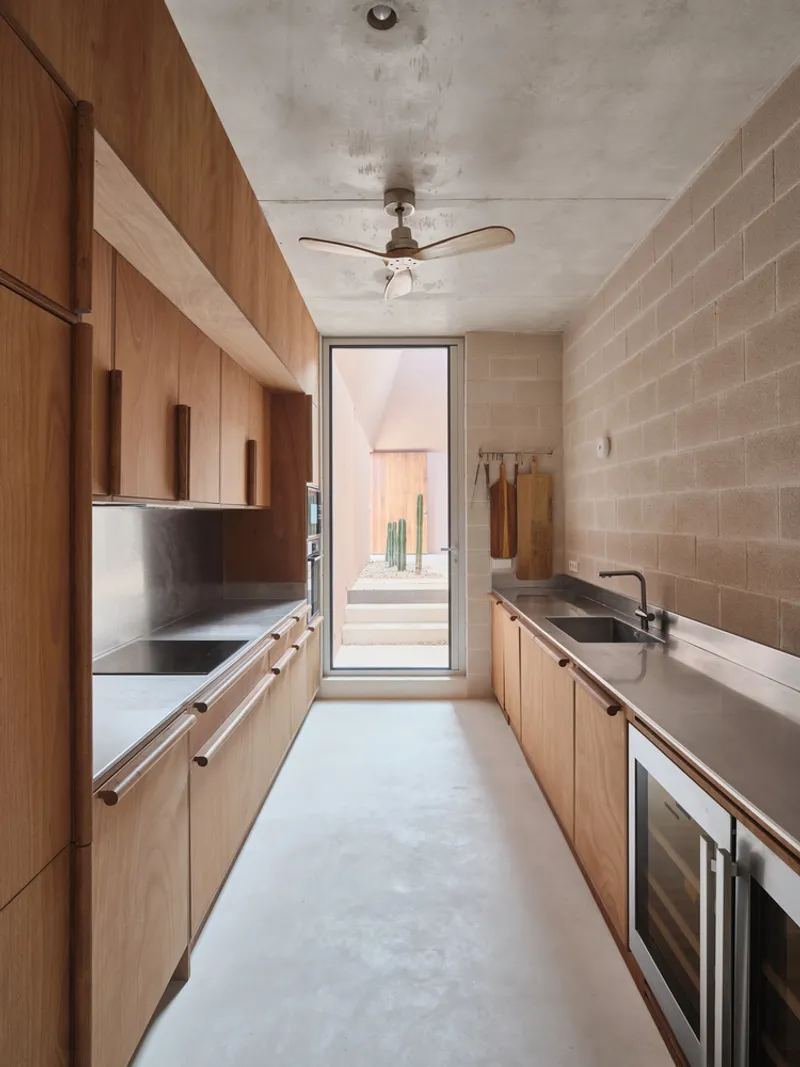
The envelope of Zenith House embraces high thermal mass and an overall opacity, pierced strategically by calibrated openings that function as both light catchers and privacy filters. These carefully placed apertures, paired with the skylights, ensure an even, atmospheric illumination that adapts to the rhythm of the day. With a surface area of 300 m², the plan accommodates five bedrooms, a communal living-dining area, a semi-open kitchen, and a porch that acts as a bioclimatic interface—mediating between interior comforts and outdoor exposure.
Spatial Transition and Privacy Layers
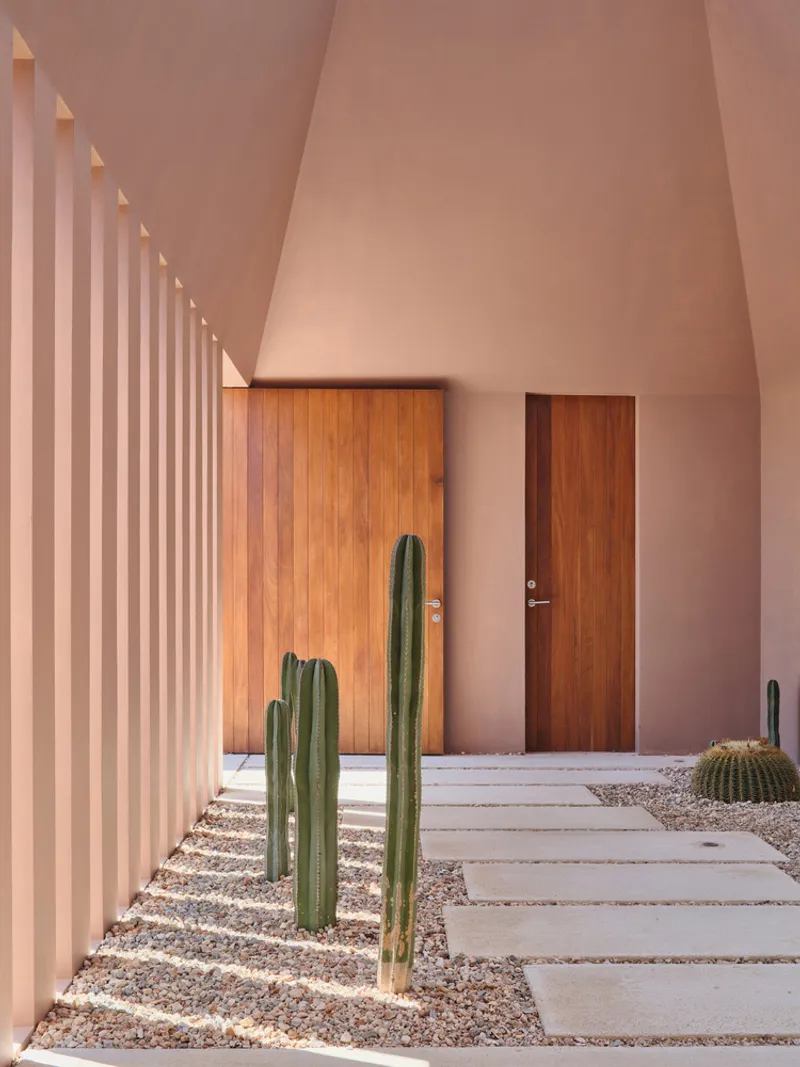
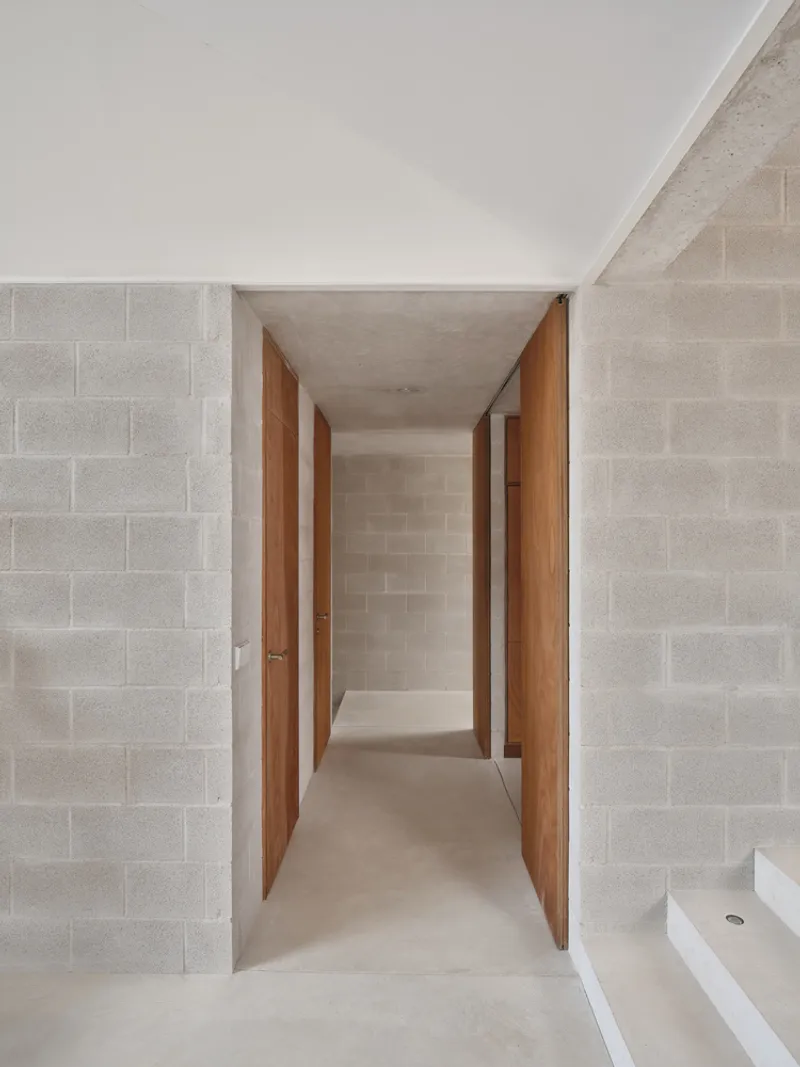
Circulation within the house is designed to reflect a gradient of privacy, with connective zones acting as semi-transparent membranes between social and private realms. The entrance route is deliberately indirect, guiding visitors along a peripheral path that leads to a shaded entry courtyard. This vestibular space—covered by a pyramidal roof and bordered by native vegetation—prepares one for the spatial calm within, offering a moment of transition and reflection.
Integration of Nature through Interior Courtyards
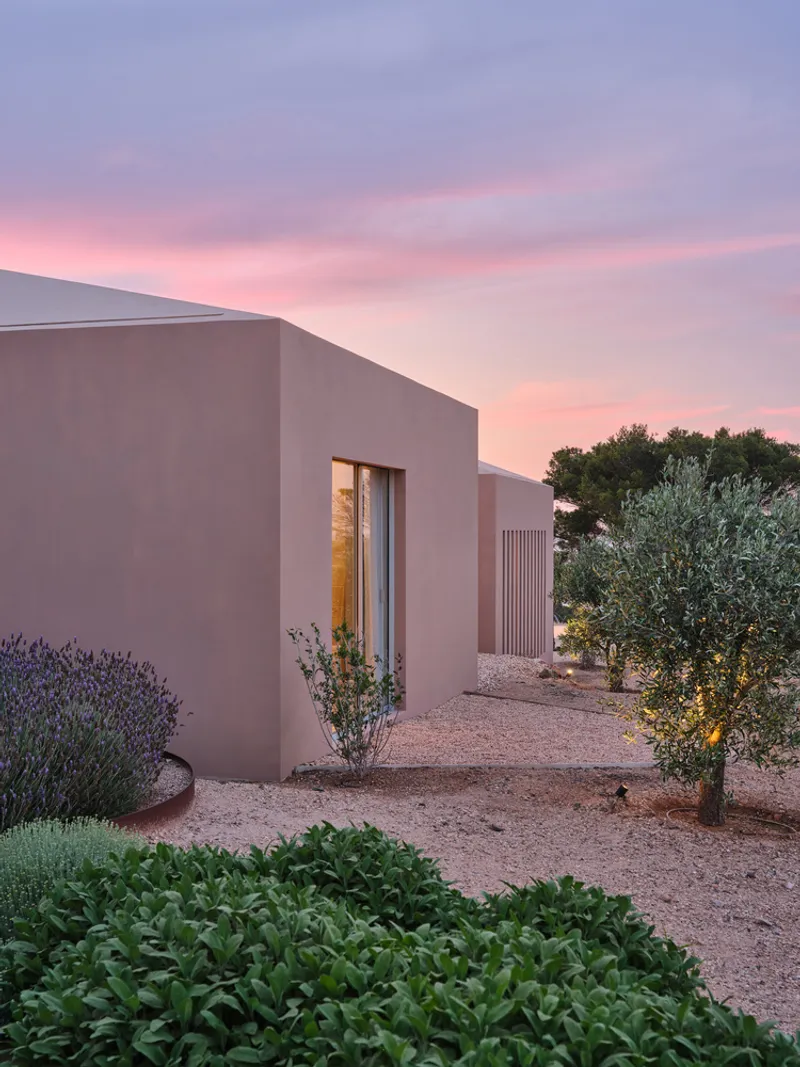
The house incorporates three significant voids into its volumetric composition: an entrance courtyard, a xerophytic garden adjacent to the master suite, and a service courtyard linked to utility spaces. These landscaped voids not only structure the interior circulation but also foster a continual visual and ecological relationship between the built environment and nature.
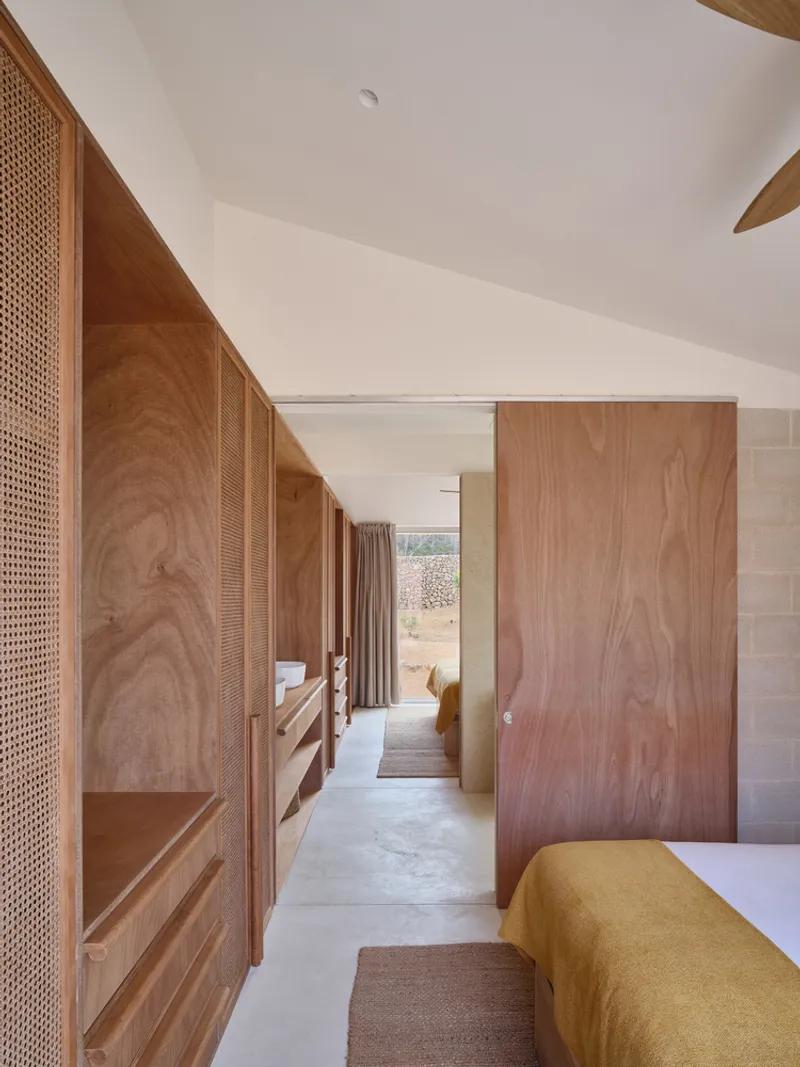
Tactile Material Palette Rooted in Place
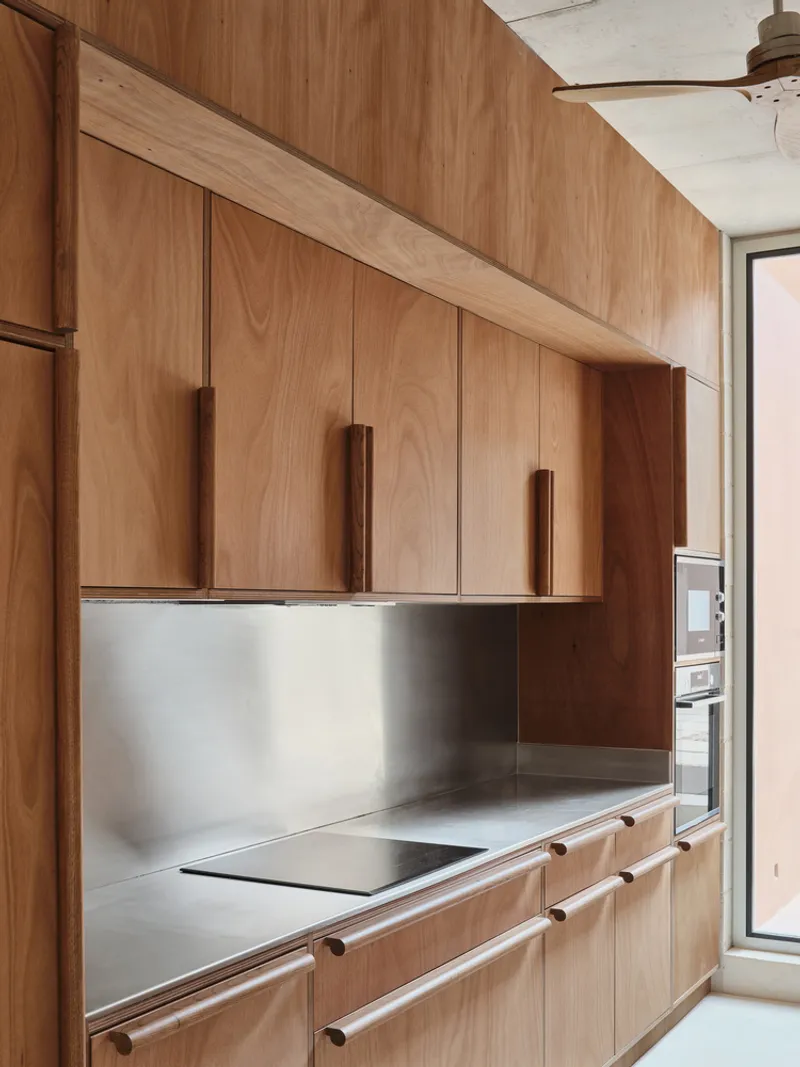
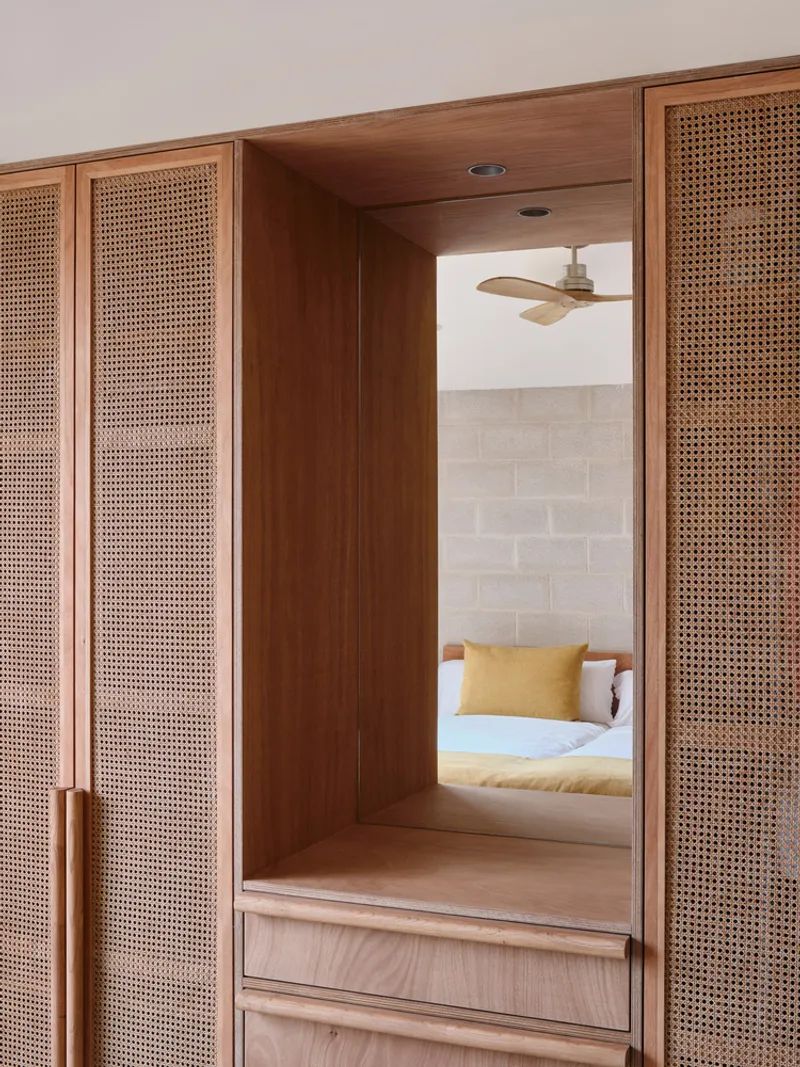
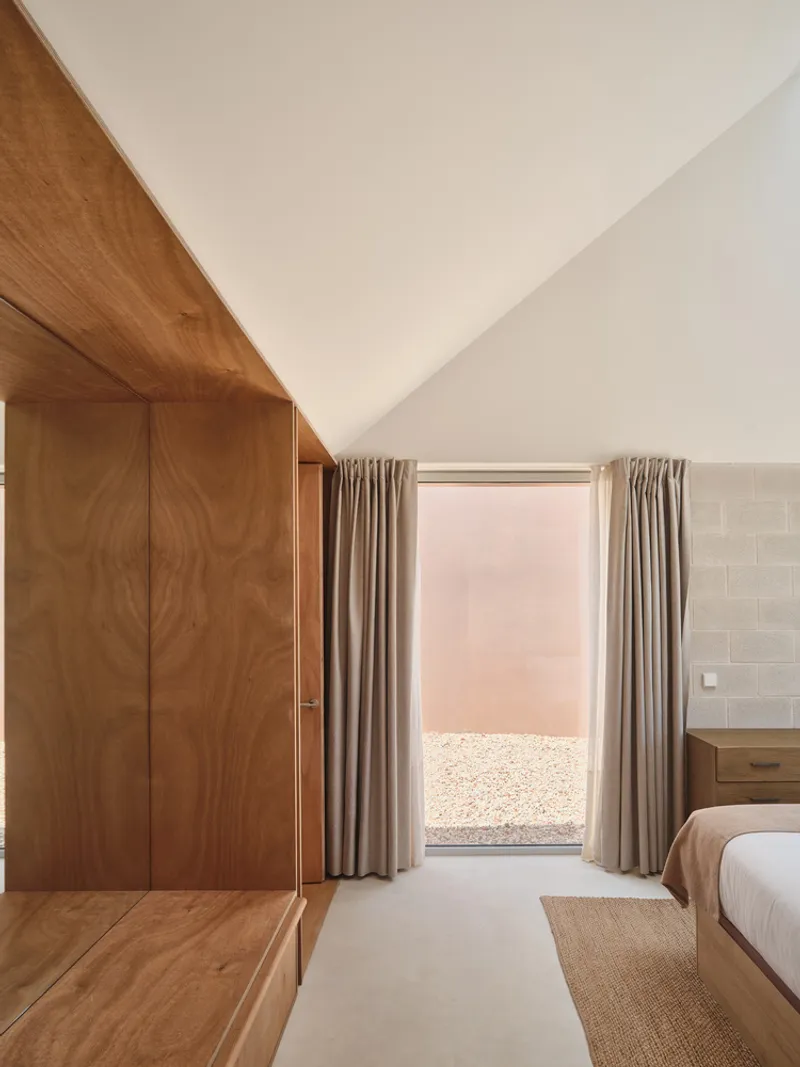
The material expression of Zenith House reinforces its connection to the Menorcan context. Earth-toned pigmented mortars in terracotta hues, soft off-white masonry, sandy limestone flooring, and warm okoume woodwork establish a palette that harmonizes with the landscape. Finishes are kept raw and textural, encouraging an immersive sensory experience that evokes the qualities of a tectonic refuge.
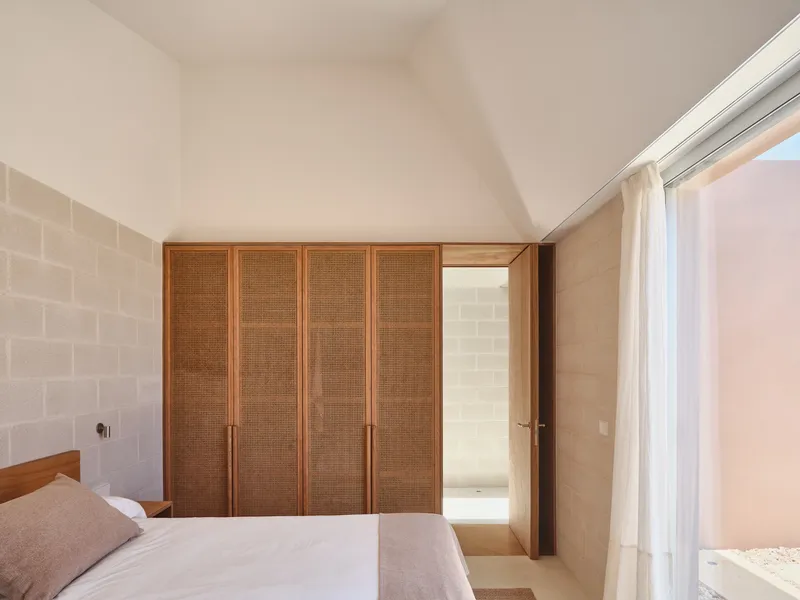
A Contemplative Threshold by the Sea
The design culminates in a tranquil water feature that stretches toward the sea, forming a contemplative platform carved into the terrain. Here, the landscape is not only viewed but felt—framed at a human scale and enhanced by material continuity. This final spatial gesture underscores the house’s fundamental aim: to create a serene, responsive retreat that fuses architecture, climate, and place.
All Photographs are works of Adrià Goula


Popular Articles
Popular articles from the community


GROUP A Strips a 1969 Rotterdam Harbor Headquarters to Its Frame and Wraps It in Timber Louvers
In Rotterdam's M4H harbor district, Ferro Offices reuses a 1969 frame, adds one timber storey and reaches BREEAM-NL Outstanding.

LT2A and OPEN Architectes Thread a Brick and Glass High School Through a Wooded Belgian Campus
In Braine-l'Alleud, a 3,000 m² wing for Collège Cardinal Mercier pairs pale brick with a glazed colonnade, deferring to a small chapel and a dense wood.

David Ortega Stacks a Two-Story Mexico City Penthouse Around a Steel Stair and a Pergola-Shaded Roof Terrace
In Colonia Roma, a 300 m² penthouse uses oak joinery, a planted steel stair and a slatted roof pergola to make a new-build apartment feel like a house.

Cube Design Draws an Ecological Corridor Between Two Shenzhen Hills with the Nankai Building
Beside Shenzhen's container docks, the Nankai Building pairs stacked balconies with a climbing green screen to connect two hillsides across its height.

Similar Reads
You might also enjoy these articles

Bamboo Housing Challenge 2026: Design Affordable, Sustainable Homes Using Bamboo
An international design competition by Bamboo U and IBUKU inviting architects and designers to reimagine affordable housing using bamboo — with the winning design built full-scale in Bali.

Computational Design & Education: Beegraphy Design Awards Introduces 7th Category (Featuring Jiyun's Innovative Approach)
Dive into Beegraphy’s 7th Design Awards category, where computational design meets education to create immersive, interactive learning tools, inspired by Jiyun’s work.

From Parametric Lighting to Urban Furniture: Join the 2nd Workshop in Beegraphy’s Computational Design Series
Dive into Cutting-Edge Design Techniques and Practical Applications with Industry Experts

Last Call: Unleash Your Architectural Genius in SHAK's Kindergarten Design Competition
Urgent call for architects to join SHAK's kindergarten design competition before the looming deadline

Explore Architecture Competitions
Discover active competitions in this discipline

Challenge to reimagine the Iron Throne

Photograph architecture without architects

Illustrate the lost glory of Angkor Wat - Render Challenge

Design challenge to reuse E-waste
Comments (0)
Please login or sign up to add comments
No comments yet. Be the first to comment!