

Concrete House Design in Montreal: Maison-Jardin BEAU by Alexandre Bernier Architecte
A monolithic yet light-filled concrete house in Montreal that redefines urban living through materiality, openness, and sustainable thermal design.


In the post-industrial neighborhood of St-Henri, Montreal, Maison-Jardin BEAU by Alexandre Bernier Architecte redefines the residential typology through a bold concrete house design that merges mass with lightness, permanence with transparency, and urban density with the poetry of nature. This single-family residence is a striking exploration of materiality, spatial fluidity, and the dialogue between architecture and landscape.
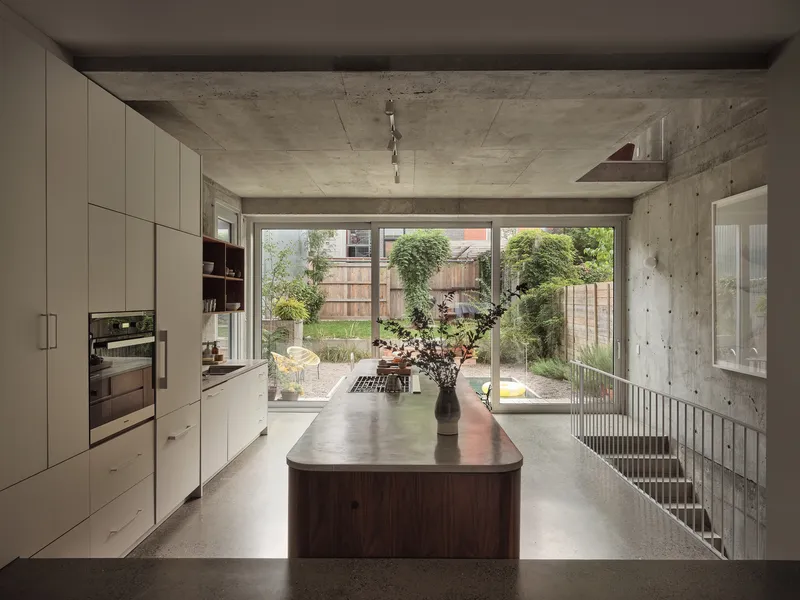

Urban Context and Architectural Presence
St-Henri is a dense, historically working-class district of Montreal undergoing significant transformation. Amid this evolving urban fabric, Maison-Jardin BEAU asserts itself with quiet confidence. Its vertical form and raw concrete skin stand in subtle contrast to the surrounding brick duplexes and traditional wood-framed homes. Rather than mimic its neighbors, the house challenges established norms by introducing a contemporary, mono-material approach rooted in architectural honesty and environmental responsiveness.

Reimagining Domestic Space through Concrete
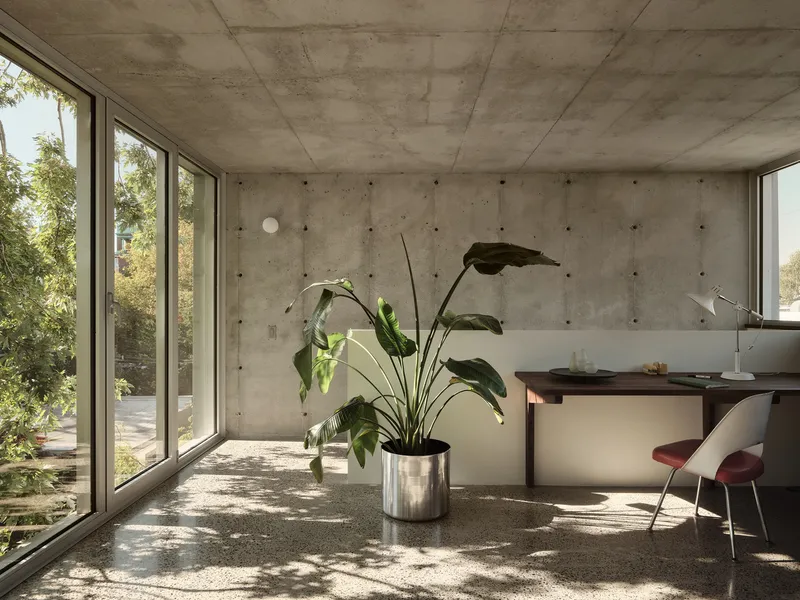
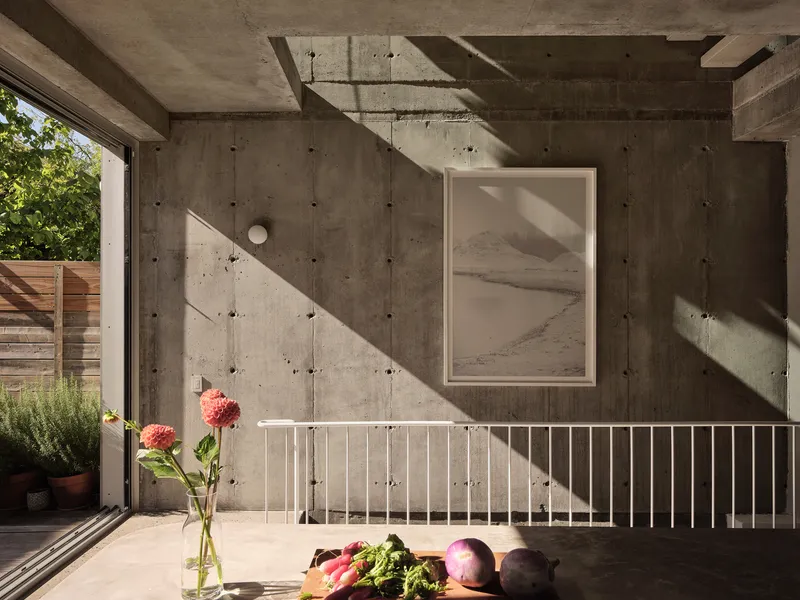
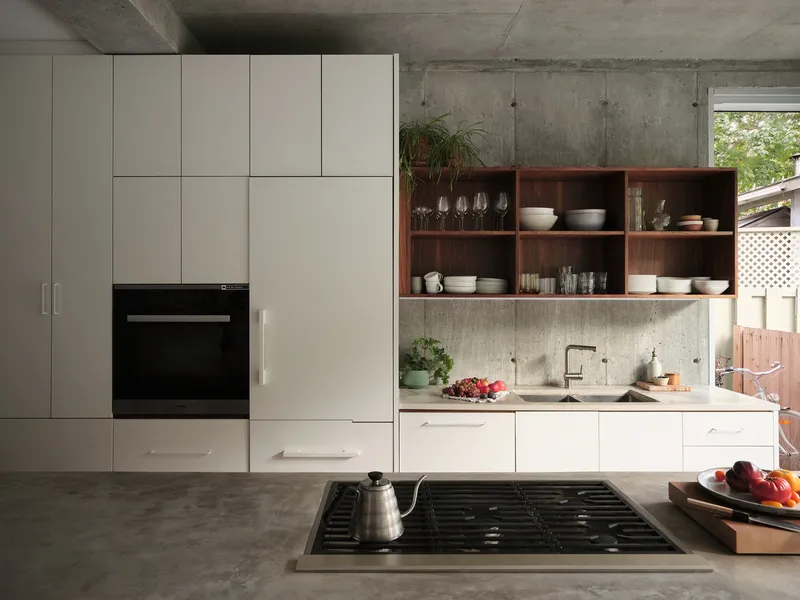
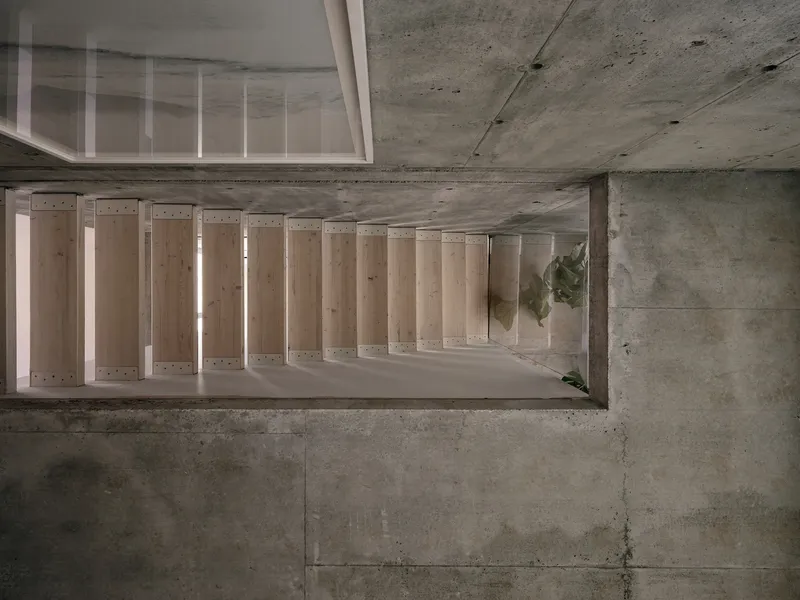
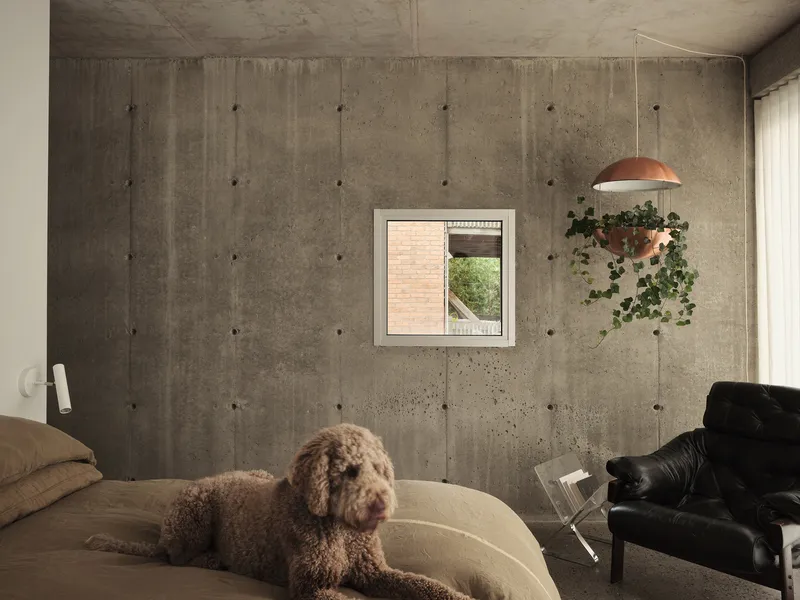
What sets this house apart is its exclusive use of concrete for nearly all structural and finish applications—floors, ceilings, walls, and even furnishings. Traditionally, Montreal homes are built of wood or masonry. Here, concrete becomes both the structure and the aesthetic, offering a timeless, sculptural presence. The design strips away ornamentation to express the fundamental nature of the material: its weight, texture, and thermal properties.


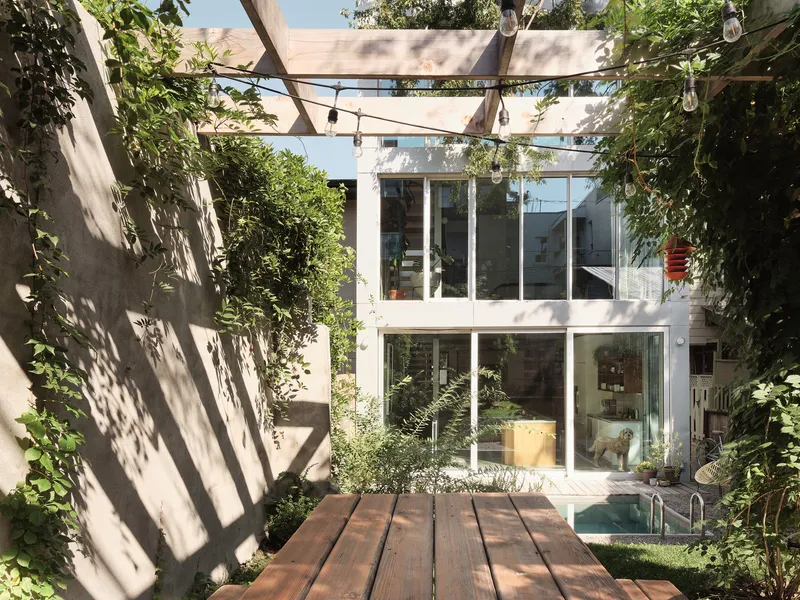
This concrete house design in Montreal does more than just shift materials; it reconfigures domestic space. Free of interior structural constraints, the residence unfolds through open and stacked floor plates, encouraging flexibility and spatial openness. Light penetrates deeply from the garden-facing façade, turning heavy mass into a luminous canvas for shadows and reflections.
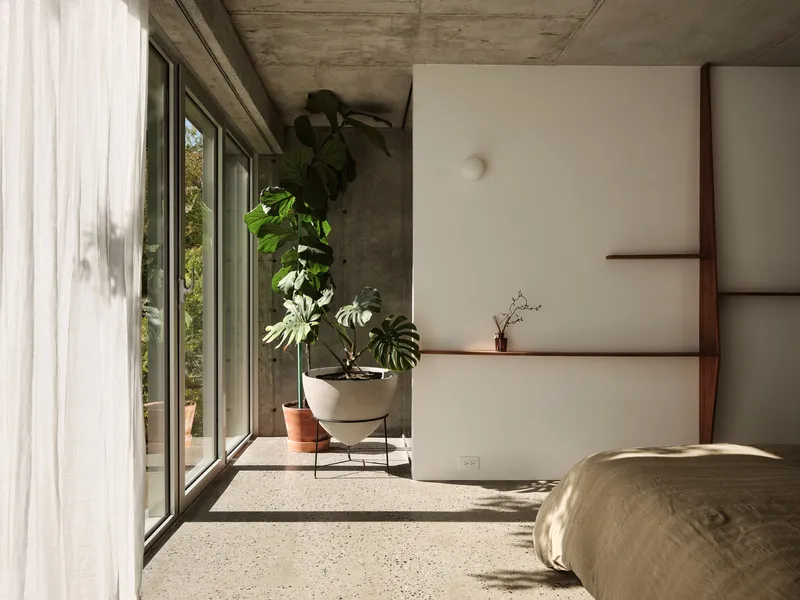

Lightness and Transparency within a Mineral Envelope
Despite its monolithic appearance, the house opens generously to its environment. The ground-floor façade disappears entirely via a large sliding glass wall, merging the interior with the garden. A shallow reflecting pool enhances the experience of transparency and fluidity, casting light across textured concrete surfaces and drawing the outside in. The pool is not decorative alone—it is part of the home’s sensory strategy, cooling the space and amplifying light through movement and reflection.
The result is a striking contrast between the solidity of the material and the openness of the spatial experience. The architecture becomes both shelter and extension of the landscape.

Textures, Details, and Sensory Depth
The tactile richness of the concrete is central to the experience of the house. Each surface tells a story—polished terrazzo floors reveal embedded aggregates, while vertical walls retain the impressions of formwork ties. These textures preserve the memory of the building process, grounding the home in its method of construction.

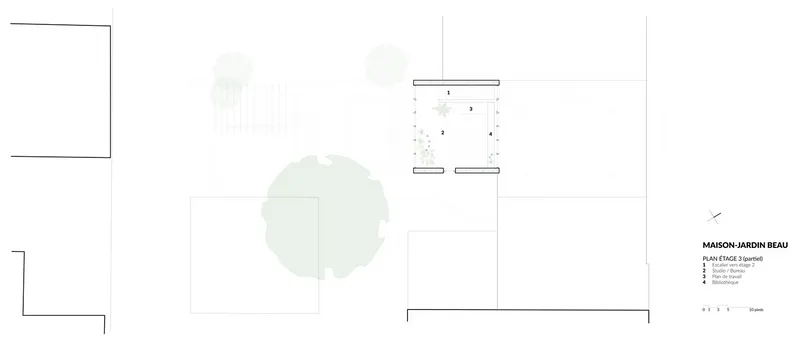
Concrete is also used in the kitchen, including a dramatic 14-foot-long island with curved edges that softens the visual mass. This continuous materiality blurs the boundaries between structure and furniture, function and form, rawness and refinement.

Thermal Mass and Passive Performance
Beyond aesthetics, the choice of concrete supports sustainable design principles. The material’s high thermal inertia acts as a passive energy system, absorbing and releasing heat as needed. Combined with radiant floor heating, the house functions like a thermal battery, reducing the need for mechanical conditioning. This strategy is particularly effective in Montreal’s climate, where temperature extremes demand efficient and responsive thermal design.
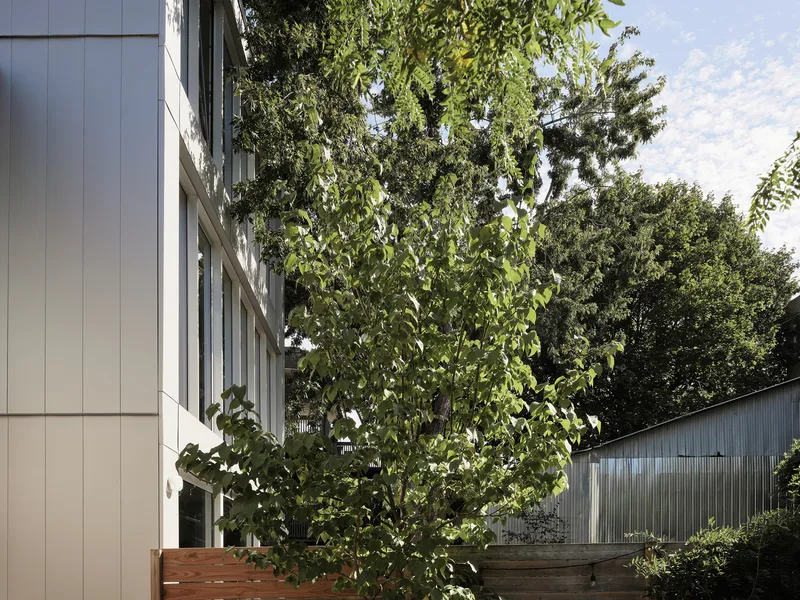
Because concrete carries the structure, façades are freed from bracing and instead become light, transparent skins tailored to solar orientation. This architectural freedom allows for large windows and thoughtful connections between interior space and the garden outside.

A New Urban Living Model
Maison-Jardin BEAU proposes a radical reinterpretation of what it means to live in the city. It offers a concrete house design in Montreal that is not brutal, but refined. Not enclosed, but porous. The project reimagines the city home as both refuge and lens—where the density of material meets the openness of nature.

Alexandre Bernier Architecte presents a home that stands apart in its clarity and intention. It is a house of contrasts: mineral and vegetal, compact and expansive, stoic and alive. The architecture speaks softly, with precision and purpose, proposing a new way of inhabiting the urban environment—rooted in material honesty and deep spatial sensitivity.

All Photographs are works of Maxime Brouillet


Popular Articles
Popular articles from the community


Opera on the Sea: Driftwood Logic Shapes a Timber Opera House on Estonia's Coast
Trevor Orgill's opera house translates the entangled drift of floating timber into a civic building where wood, water, and music converge.


David Ortega Stacks a Two-Story Mexico City Penthouse Around a Steel Stair and a Pergola-Shaded Roof Terrace
In Colonia Roma, a 300 m² penthouse uses oak joinery, a planted steel stair and a slatted roof pergola to make a new-build apartment feel like a house.

Cube Design Draws an Ecological Corridor Between Two Shenzhen Hills with the Nankai Building
Beside Shenzhen's container docks, the Nankai Building pairs stacked balconies with a climbing green screen to connect two hillsides across its height.

The Amber Palace Opera: A Geological Fiction Surfaces on Tallinn's Baltic Waterfront
Pierre Brillard reimagines a Baltic legend as a public landscape, opera house, and waterfront promenade rooted in Tallinn's coastal identity.

Similar Reads
You might also enjoy these articles

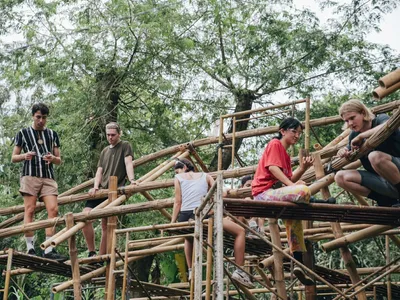
Bamboo Housing Challenge 2026: Design Affordable, Sustainable Homes Using Bamboo
An international design competition by Bamboo U and IBUKU inviting architects and designers to reimagine affordable housing using bamboo — with the winning design built full-scale in Bali.

Computational Design & Education: Beegraphy Design Awards Introduces 7th Category (Featuring Jiyun's Innovative Approach)
Dive into Beegraphy’s 7th Design Awards category, where computational design meets education to create immersive, interactive learning tools, inspired by Jiyun’s work.
From Parametric Lighting to Urban Furniture: Join the 2nd Workshop in Beegraphy’s Computational Design Series
Dive into Cutting-Edge Design Techniques and Practical Applications with Industry Experts

Last Call: Unleash Your Architectural Genius in SHAK's Kindergarten Design Competition
Urgent call for architects to join SHAK's kindergarten design competition before the looming deadline

Explore Eco-concrete Competitions
Discover active competitions in this discipline

Challenge to reimagine the Iron Throne

Photograph architecture without architects

Illustrate the lost glory of Angkor Wat - Render Challenge

Design challenge to reuse E-waste
Comments (0)
Please login or sign up to add comments
No comments yet. Be the first to comment!