

Container city - designing a modular lifestyle
Project description

SITE
The site that has been chosen for this project is an area in the outskirts of central Stockholm in Sweden. This location is in the middle of the forest and is overlooking the campus from a hill. In the area several hotspots can be found. To the west we have the lake of Brunnsviken which is a very popular bathing spot during the summer. To the north we have the Swedish natural history museum and the botanical garden of Bergianska, which houses plants and trees from all over the world. Worth to mention is that the museum has a special cinema that is shown in a 360 degree angle. This cinema is only showing natural documentaries and is the largest cinema in the Northern part of Europe. East of the site we find the subway,the bus stations and the university of Stockholm. This university is the largest in Stockholm and has around 80.000 students. In the summer several student events are happening in the large central park. These events include musical festivals, job fairs and many more different events. In the close vicinity of the site several allotment houses can be found. The closeness to the largest university, the forest, the water and the previously mentioned hotspots have been imperative when choosing this site.
CONCEPT
The concept has been to create a building that is playful and that will try to harmonize with the forest. This project has also taken a lot of inspiration from this cozy feeling you get from a cabin in the woods. The elevation of the site means that you get a very nice view over the surrounding area and that you will always have nice natural light coming in. The building is placed in a direction that all of the apartments are facing the sun path in a nice position. In total the building has two floors, with an exception of a subfloor along the steeper slope at the northern part of the building. The building has no corridors, but relies on a lightweight construction with pergola to move through the different parts of the building. These lightweight paths work like a cross between balconies and a loft aisle. No elevators have been installed, which means that people with special needs are priorities to the first floor. The reason for not installing elevators is because the building should be easy to assemble and be able to perform like a permanent/ non-permanent platform. This means that the only way to get to the second floor is through three spiral stairs. One thing that also has been important is what happens between the container units. The apartments have therefore been placed in a way that creates several small courtyards. At these courtyards small interventions have been implemented, like benches or bushes. In the southern part of the building a metal pavilion has been installed to create a nice spot for relaxation. This is also the place that gets the best view of the campus.
APARTMENT
The container unit is divided into several smaller areas. The sleeping area has a bed and a TV. The bed is made multifunctional by implementing draw-boxes under the bed area. From the sleeping area a student can traverse to either the kitchen or to the small private balcony. This little hub where the student will be sleeping can be sealed off by a sliding door from the rest of the container unit. The kitchen area is the main area of the apartment. This is where the student will enter the apartment, cook food and do his/ hers studies. This is also the area that houses the window facade. The use of large windows along the facade gives this area a sense of space, which is one of the biggest problems that container houses are facing. This means that the middle area of the apartment feels bigger than it really is. From the kitchen area the student can enter to his relaxation area, where a small sofa can be found along with two bookcases. Under the sofa, some draw-boxes can be used to store stuff in. The toilet area is made luxurious with a small bath and a laundry pillar.

Popular Articles
Popular articles from the community


The Amber Palace Opera: A Geological Fiction Surfaces on Tallinn's Baltic Waterfront
Pierre Brillard reimagines a Baltic legend as a public landscape, opera house, and waterfront promenade rooted in Tallinn's coastal identity.
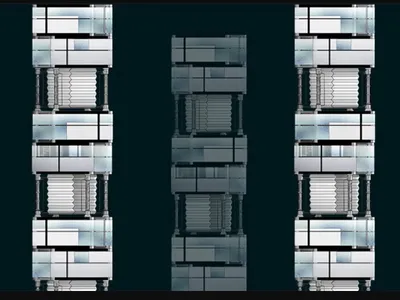
Tsunami Convergenics: Turning Catastrophic Ocean Forces into Underwater Housing Infrastructure
A speculative underwater settlement off the coast of Onagawa, Japan, treats tsunamis and typhoons as energy sources rather than threats.
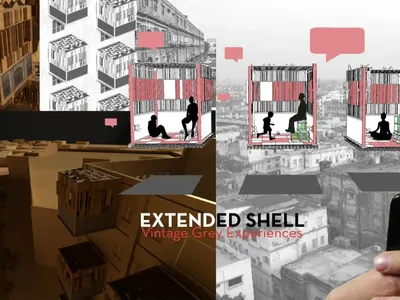
Extended Shell: Retrofitting Kolkata's Balconies as Living Urban Thresholds
A modular retrofit system recovers the social and environmental intelligence of Kolkata's historic verandas for contemporary Park Street residents.

Opera on the Sea: Driftwood Logic Shapes a Timber Opera House on Estonia's Coast
Trevor Orgill's opera house translates the entangled drift of floating timber into a civic building where wood, water, and music converge.

Similar Reads
You might also enjoy these articles

Day and Night Park: A Time-Based Urban Newsstand in Beijing
A temporary urban newsstand in Beijing blending travel, light, and reading through poetic colors, compact form, and community-focused design.

Modernist Patio Renovation in El Masnou, Barcelona by Oliver Segura Arquitectura + Cebrià Arquitectura
Modernist patio renovation blending tradition and innovation with a movable pool, leveled floors, and Catalan materials in El Masnou.

Alto Residencial Coop: Cooperative Housing Development in Santiago de Compostela by Carbajo Barrios Arquitectos
A linear cooperative housing complex blending white volumes and perforated metal façades, enhancing community living, natural light, privacy, and urban integration.
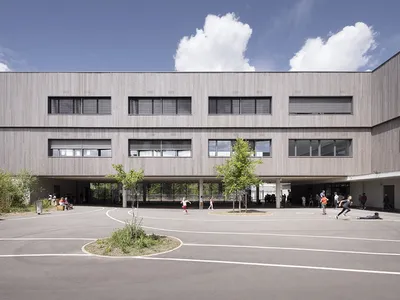
Vil Genis School by BPA ARCHITECTURE – Massy, France
Vil Genis School in Massy, France, features sustainable design, south-facing classrooms, community integration, accessible spaces, and modern educational architecture.

Comments (0)
Please login or sign up to add comments
No comments yet. Be the first to comment!