

Contemporary Adobe House Design in the Andes: Florencia House by Taller MACAA
A climate-responsive adobe house in Peru’s Sacred Valley redefines Andean architecture with sustainability, tradition, and spatial poetry.


A Harmonious Fusion of Andean Tradition and Modern Living
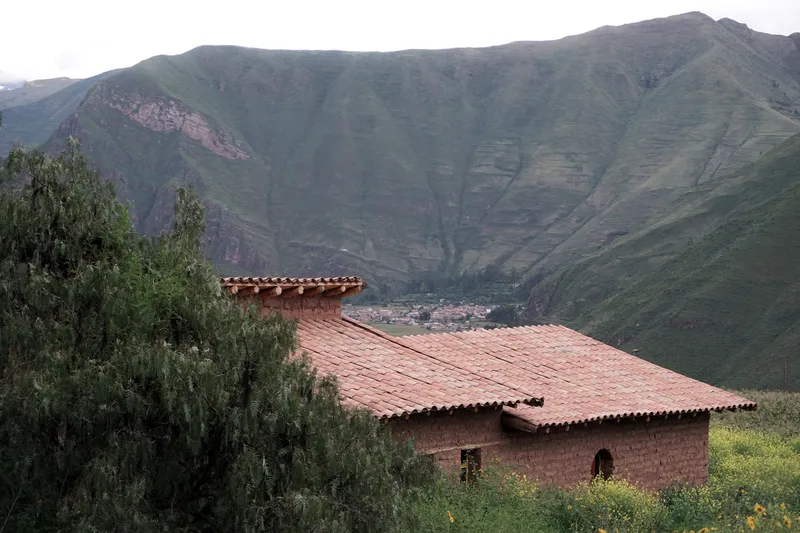
Nestled in the Sacred Valley of Cusco, Florencia House by Taller MACAA (Misión de Arquitectura, Construcción y Arte en los Andes) is a standout example of contemporary adobe house design in the Andes. Located in Taray, Peru, and completed in 2025, the 85-square-meter residence is part of the KUSKA initiative—a community dedicated to shared living, creativity, and environmental harmony. This architectural intervention not only reinterprets traditional Andean techniques but also embodies a deep respect for landscape, climate, and self-sufficiency.
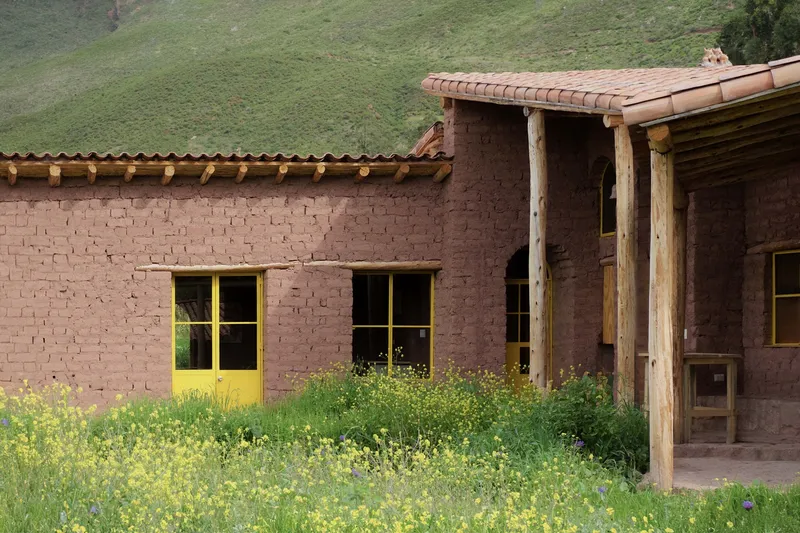
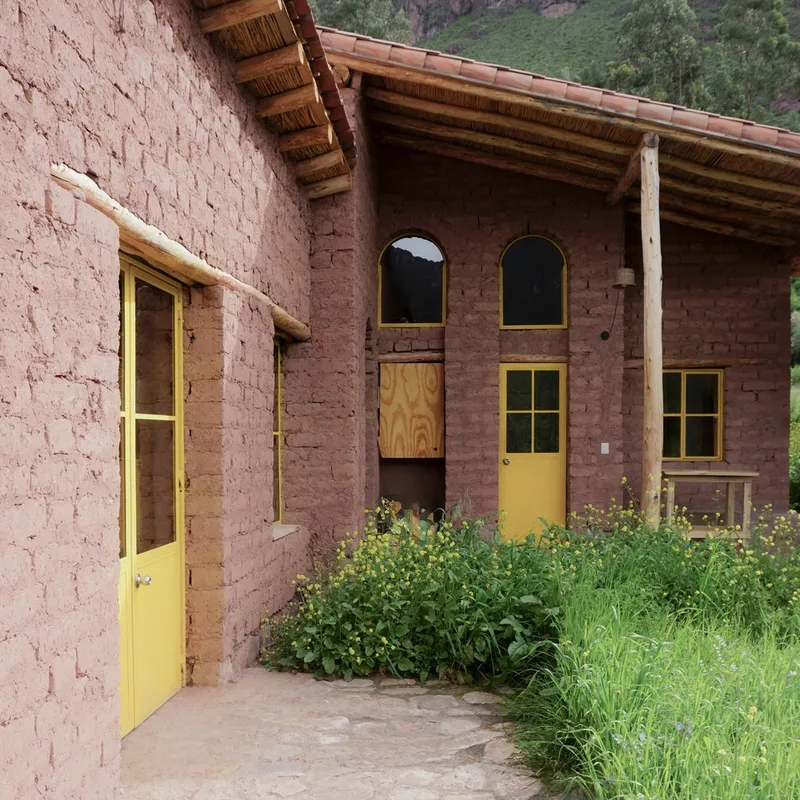
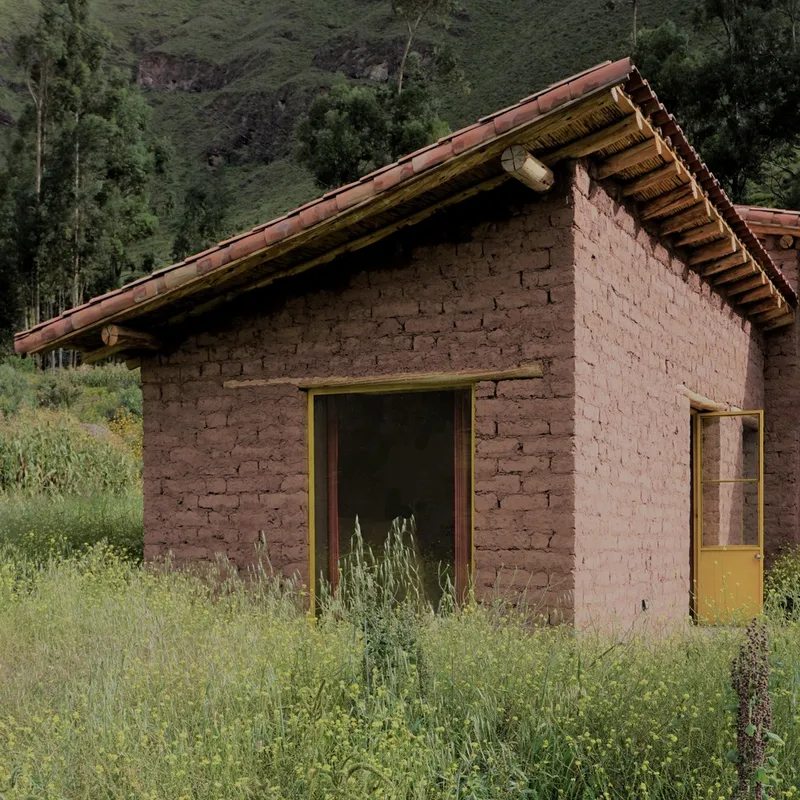
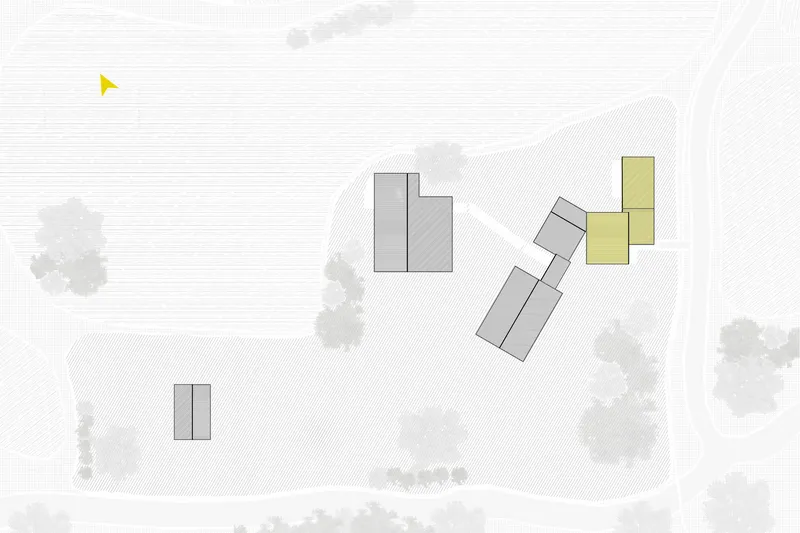
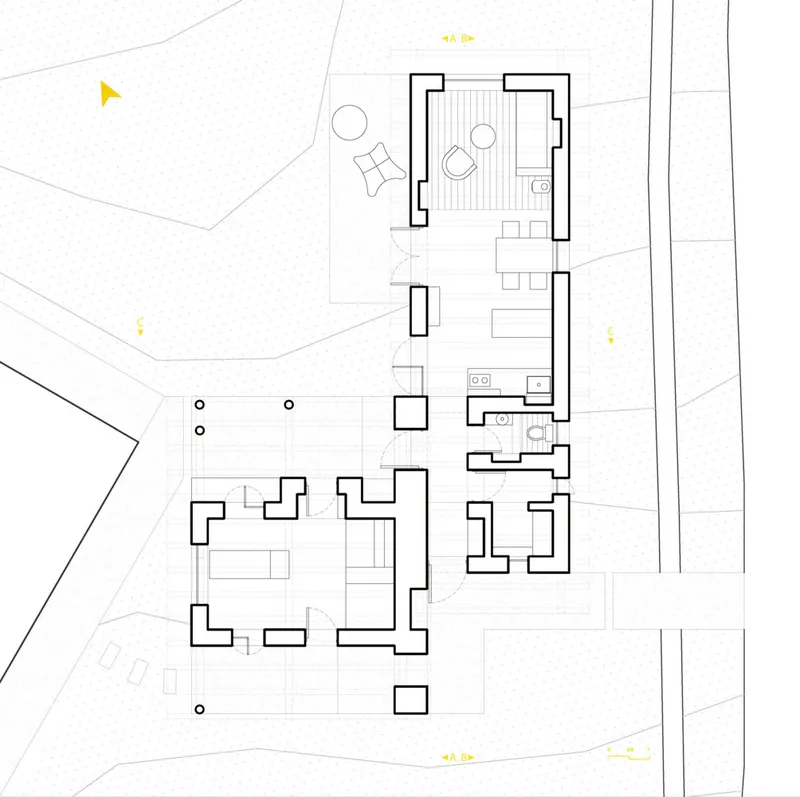
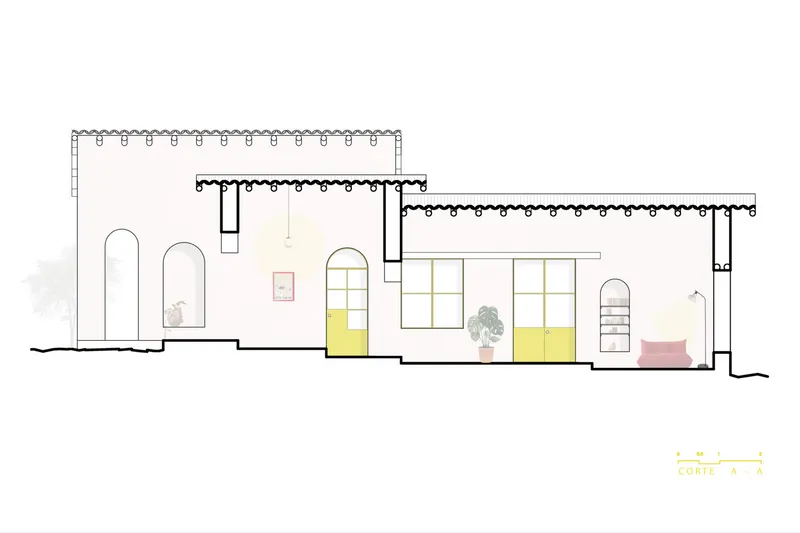
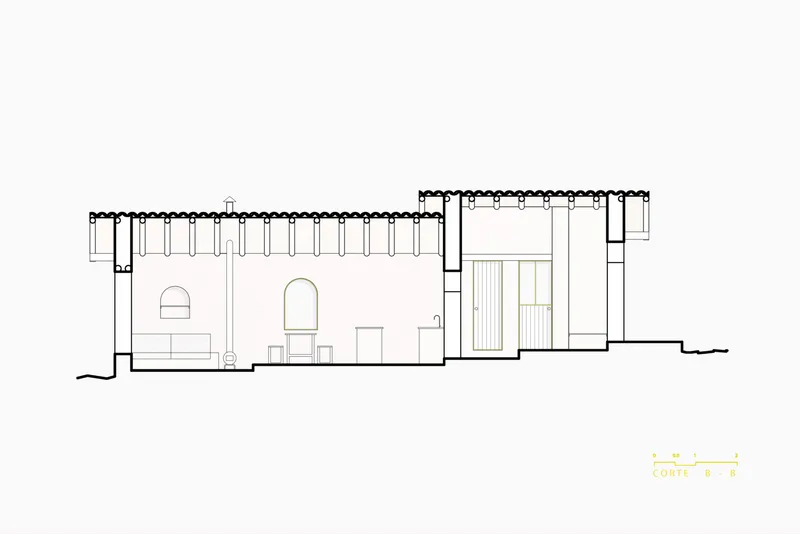
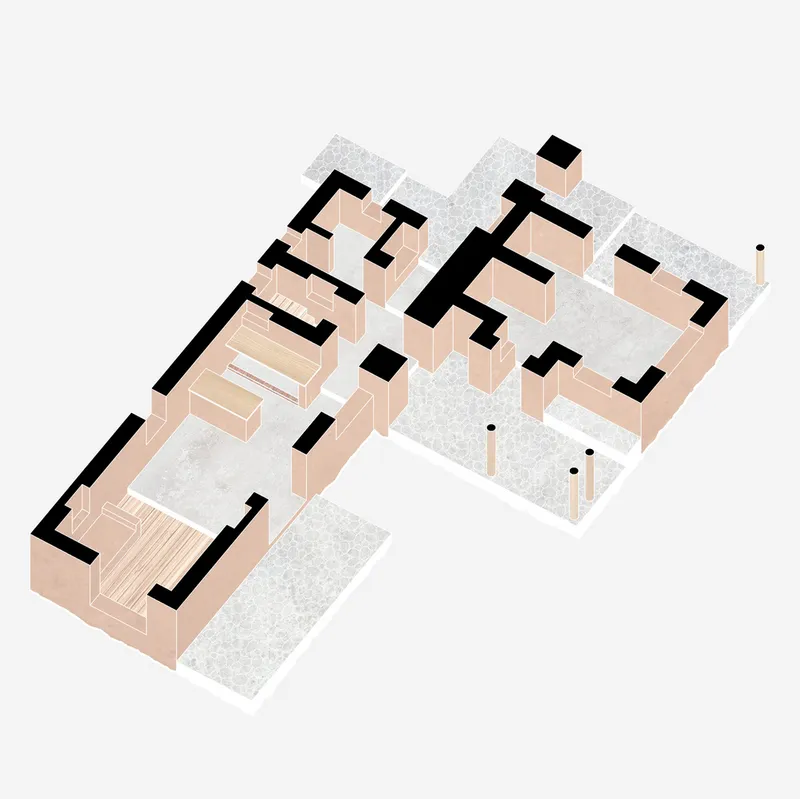
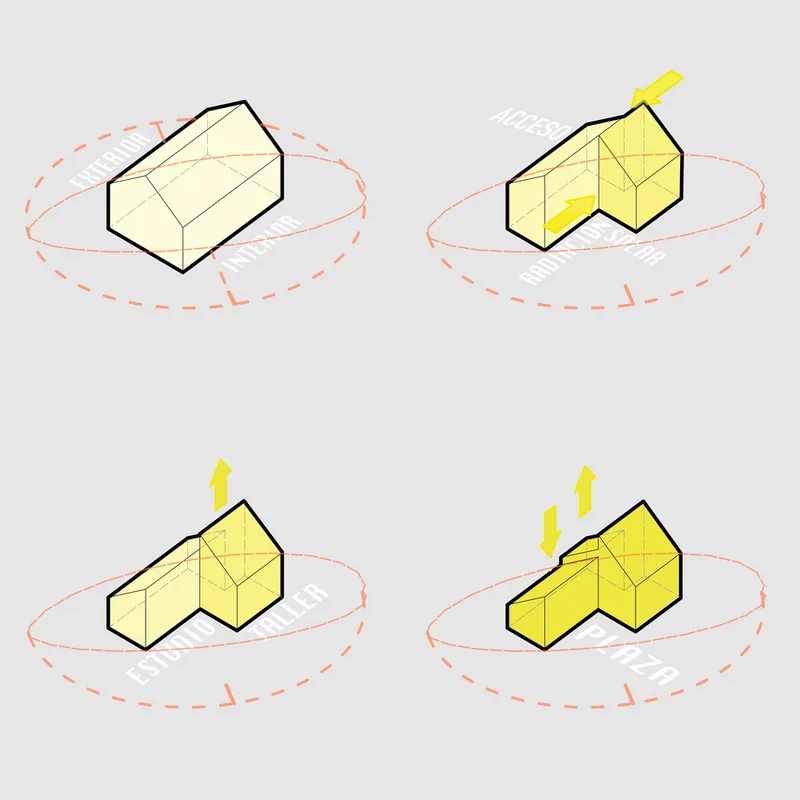
The project’s spatial logic unfolds in an L-shaped configuration composed of two main areas: the Studio and the Workshop. Each section operates independently yet is materially and spiritually interconnected through shared walls, open courtyards, and visual continuity. This spatial strategy enhances both the environmental performance of the home and the sense of communal interaction central to KUSKA’s ethos.
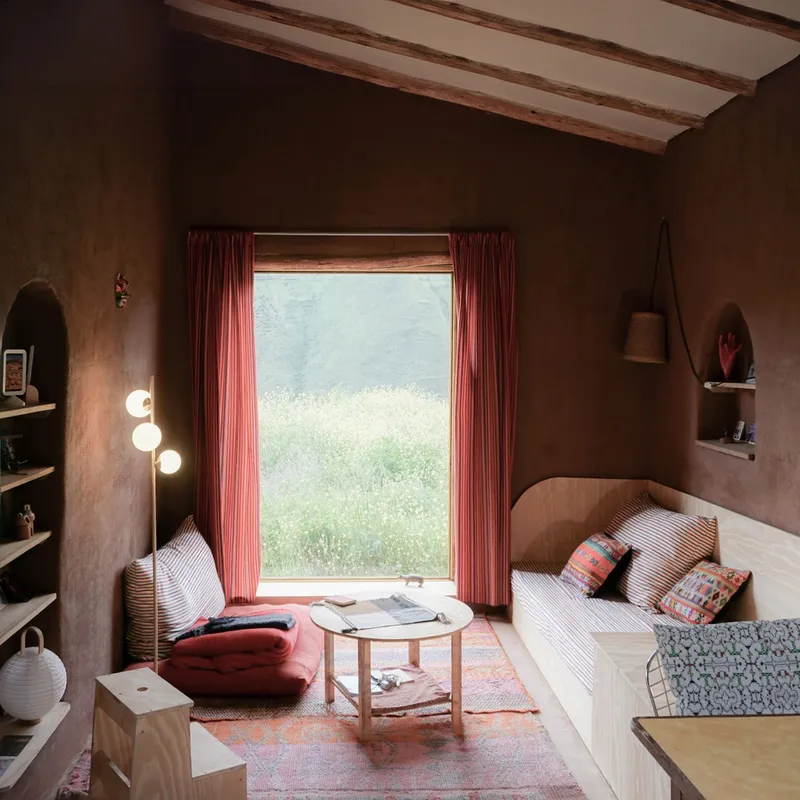

Climate-Responsive Form and Function
Responding to the temperate Andean climate—marked by rainy summers and dry, cool winters—Florencia House was designed with thermal efficiency at its core. The adobe wall system, 40 cm thick and resting on a stone foundation, offers natural insulation and humidity regulation. Passive solar principles inform the layout: the western-facing adobe wall is widened to absorb and store solar heat during the day, while carefully positioned doors and windows ensure natural ventilation and daylighting.
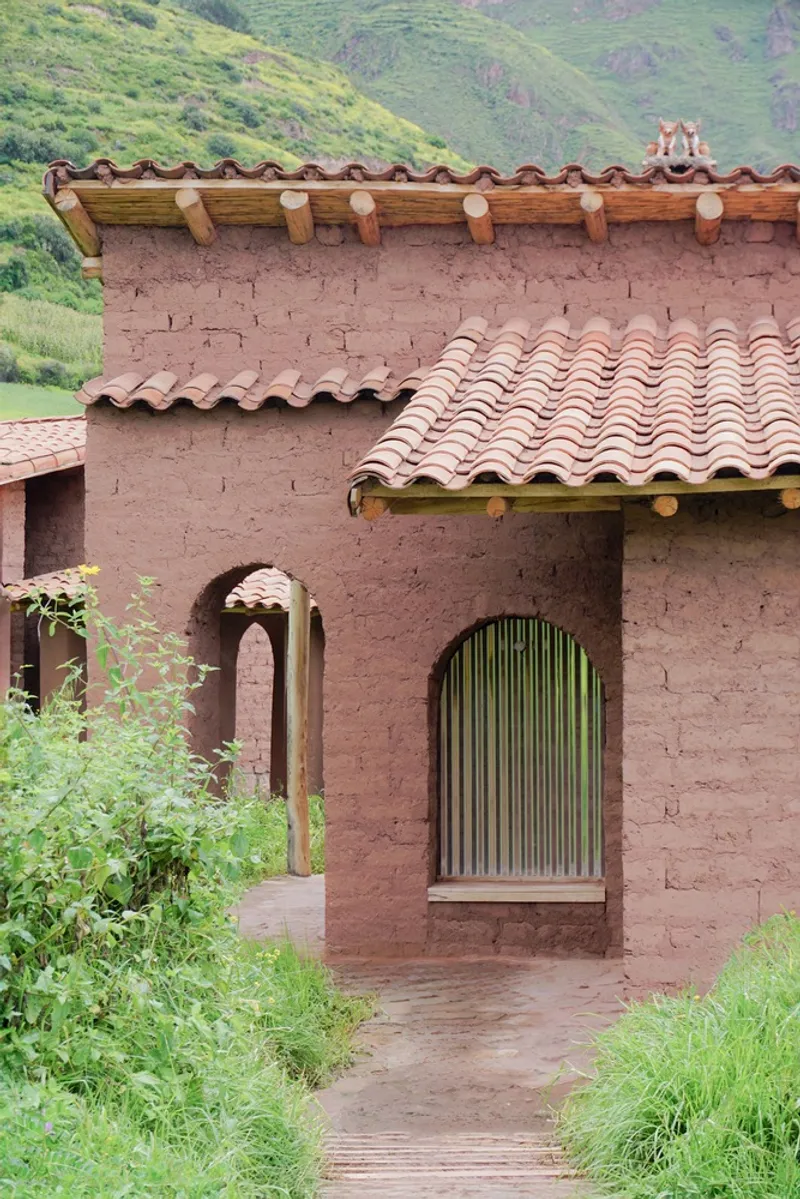
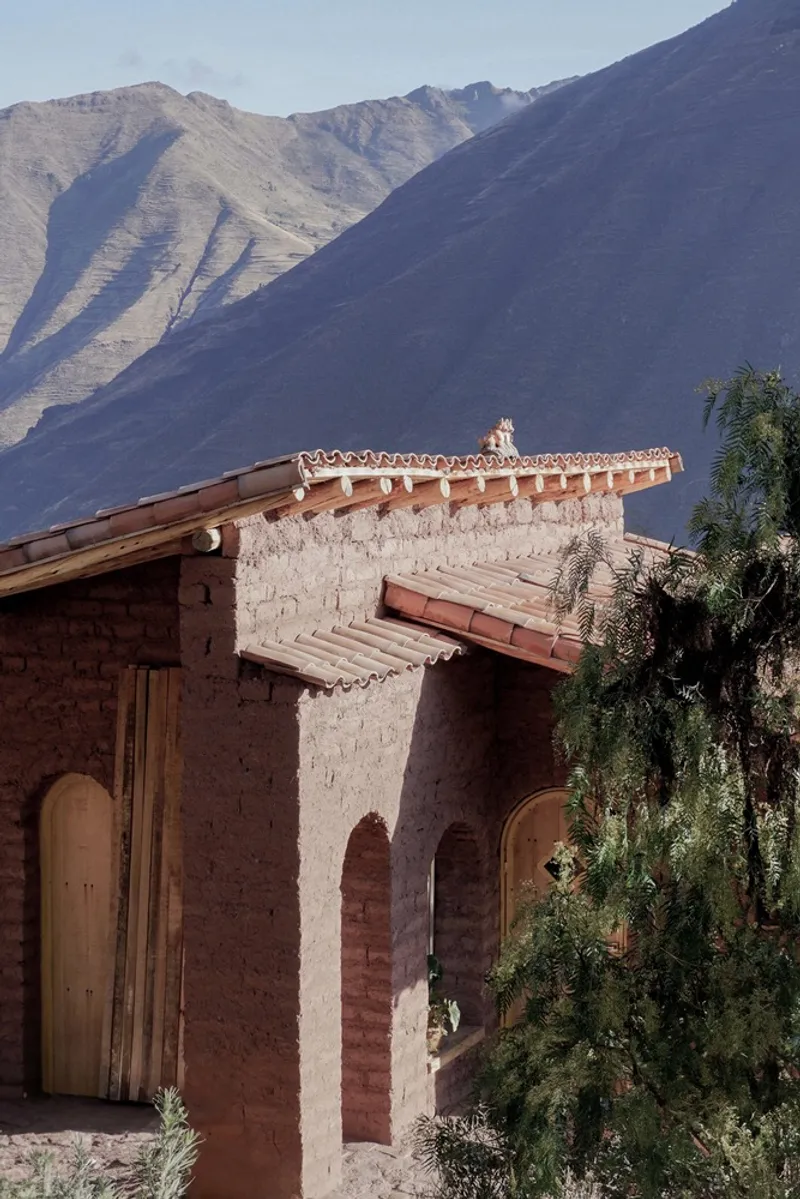
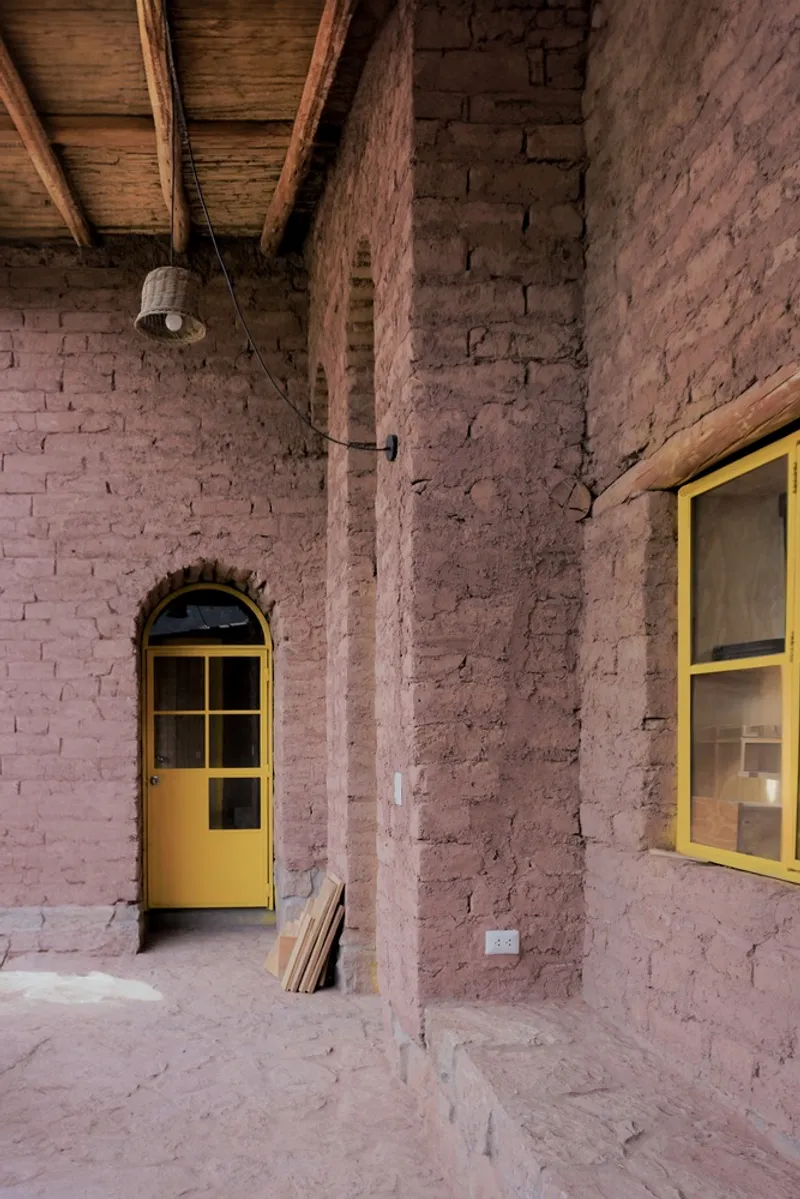
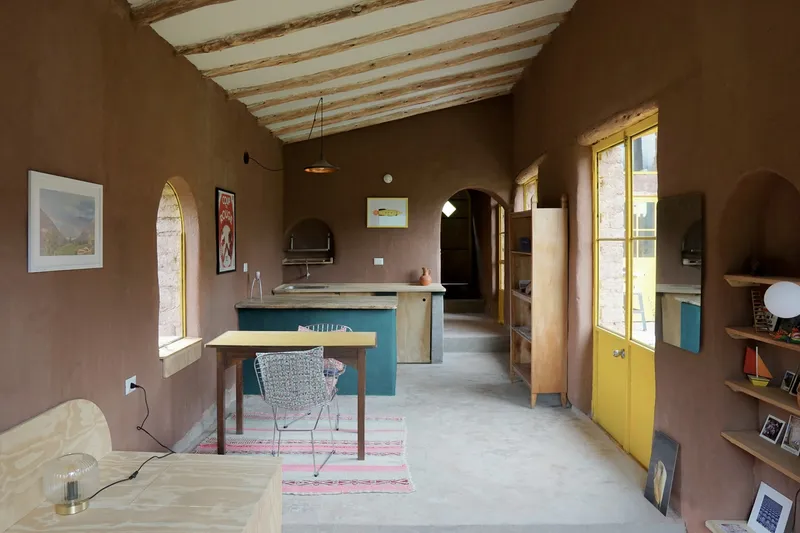
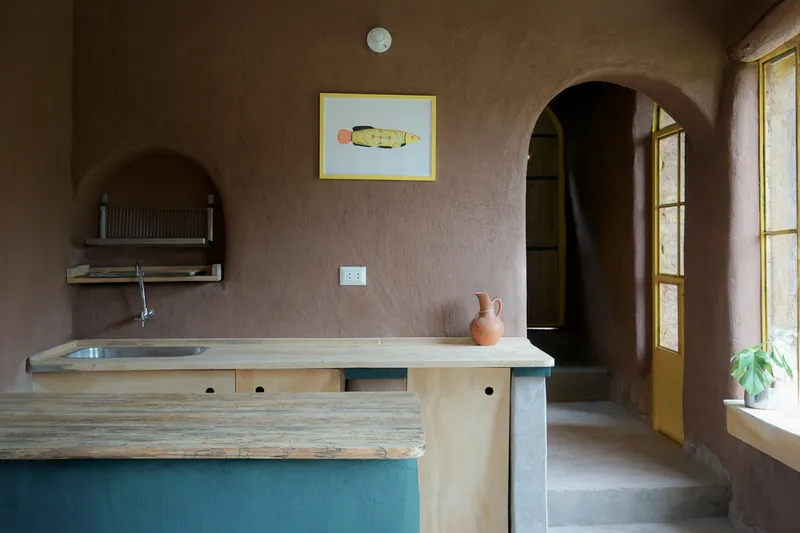
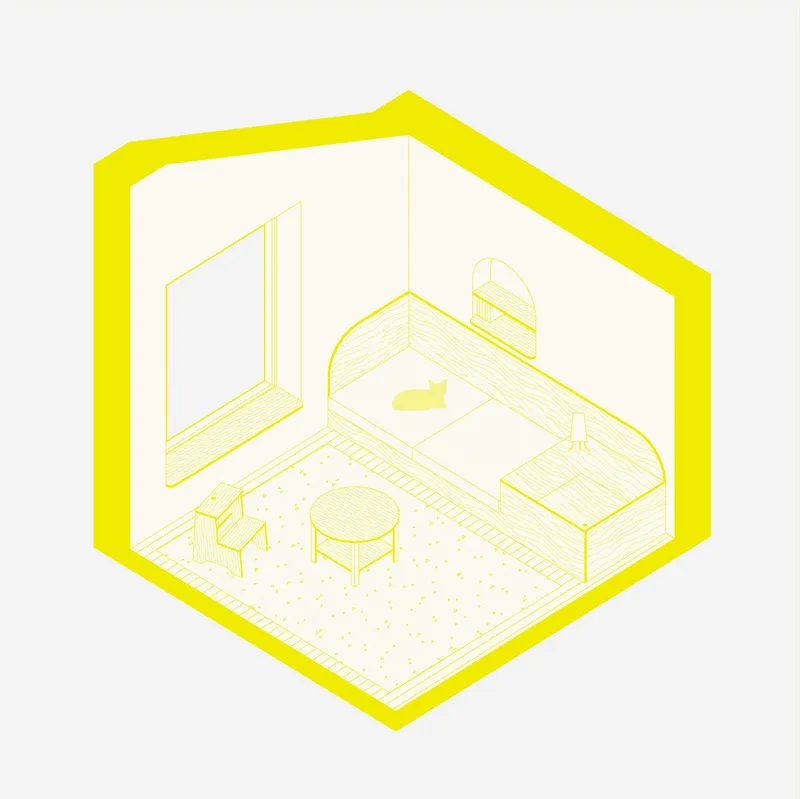
Strategically split by the site’s gentle slope, the Studio is arranged across two sublevels. The upper level houses an entrance, pantry, and composting toilet, while the main level below contains an open-plan kitchen, dining, and living area—all organized around an internal patio. Large openings create seamless visual lines, enhancing spatial flow and offering framed views of the sacred Andean landscape.
An Architectural Dialogue Between Studio and Workshop
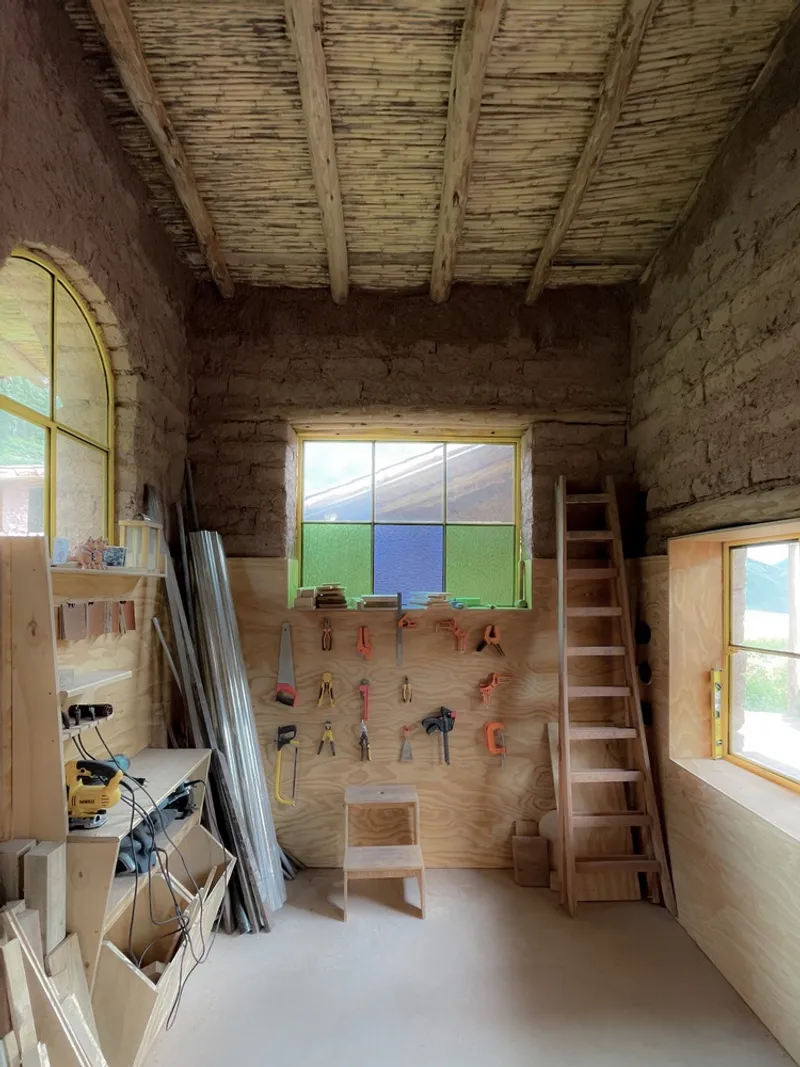
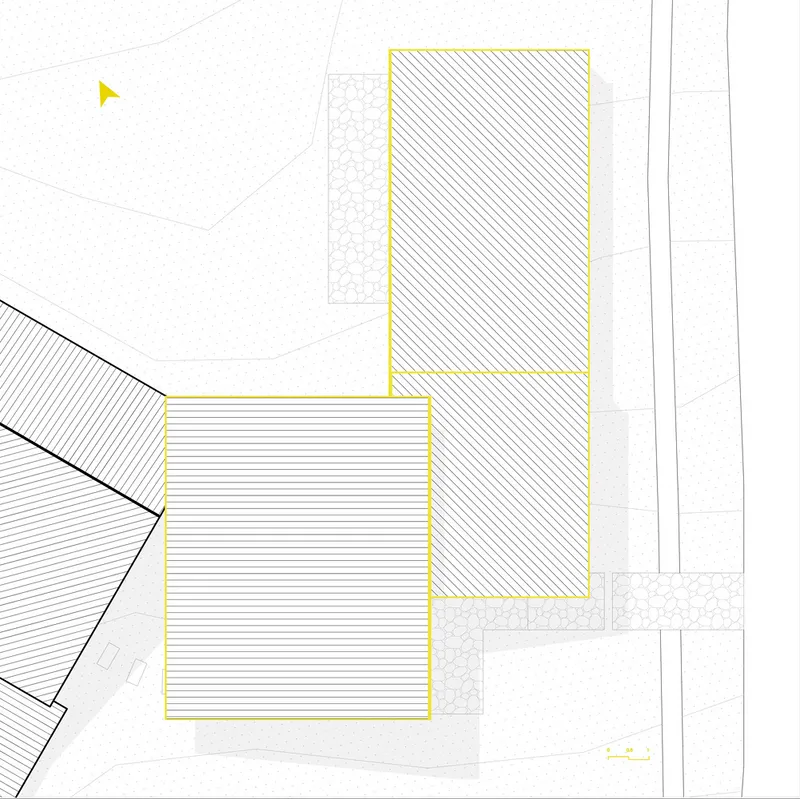
Connected through elegant adobe arches, the Workshop is a double-height volume designed for hands-on creativity. Every piece of furniture within the house was crafted here. It features stone terraces to the north and south, which function as outdoor workshops and semi-open corridors, blending inside and outside space.
This pairing of Studio and Workshop is not just functional—it’s symbolic. Together, they represent the intersection of dwelling and making, of tradition and reinvention. A robust 80 cm-thick adobe wall unifies the two volumes structurally and visually, anchoring ridge beams aligned with the route to the nearby Vilcanota River.
Materials of Place: Building with Earth and Memory
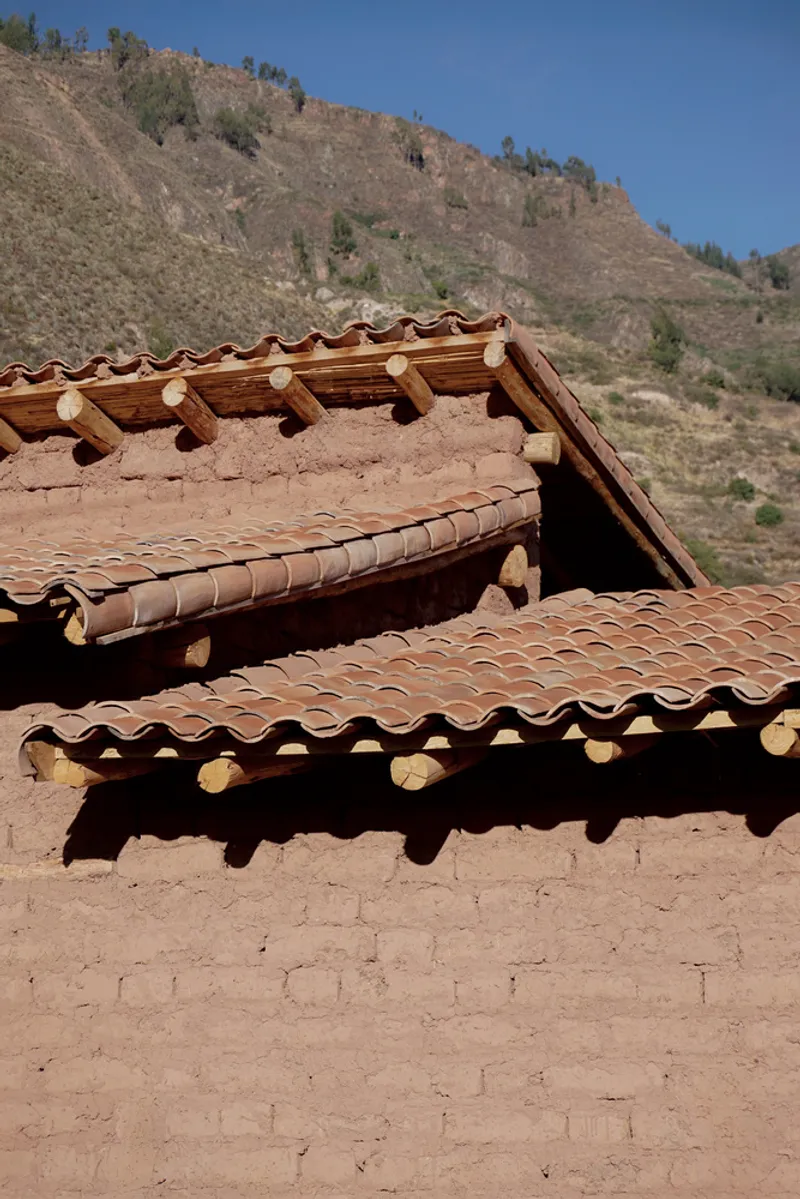
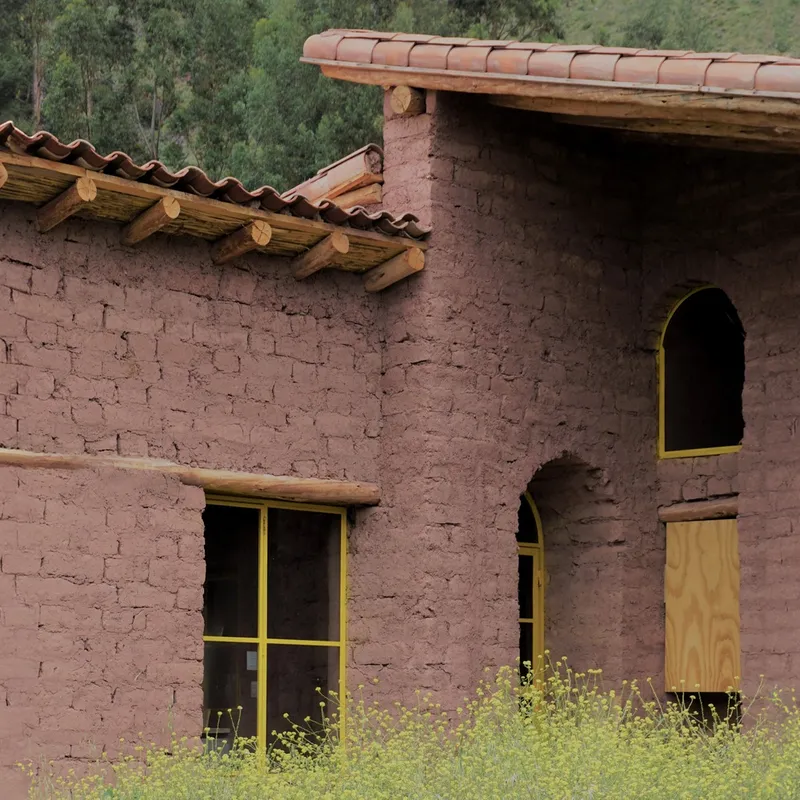
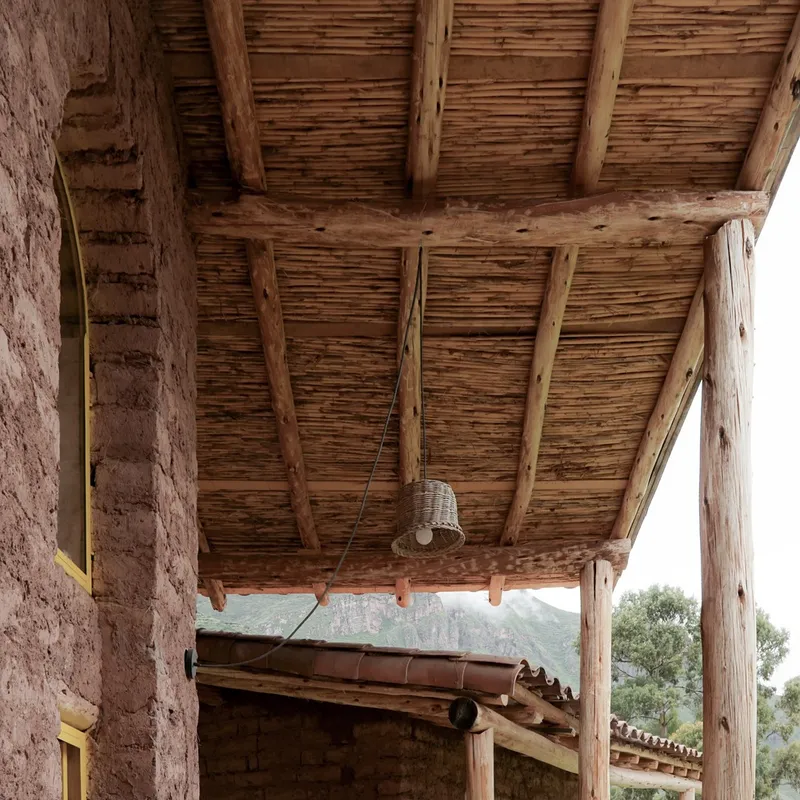
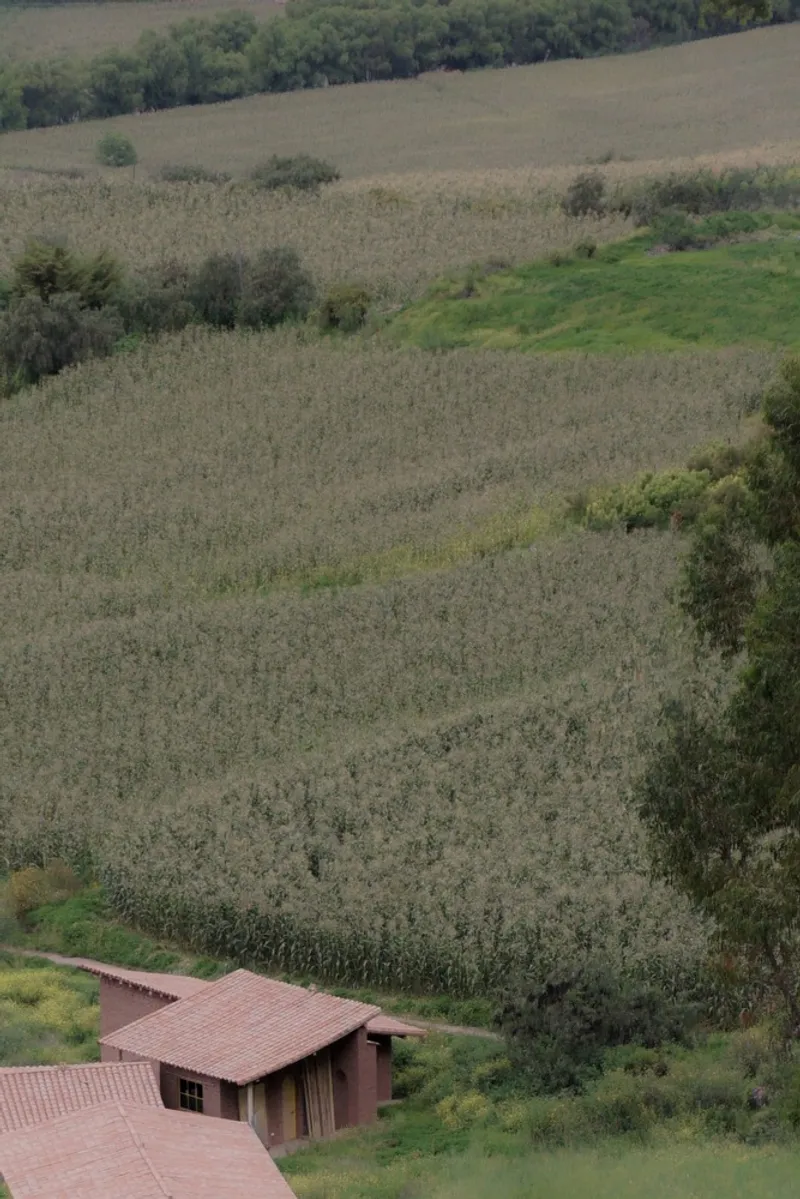
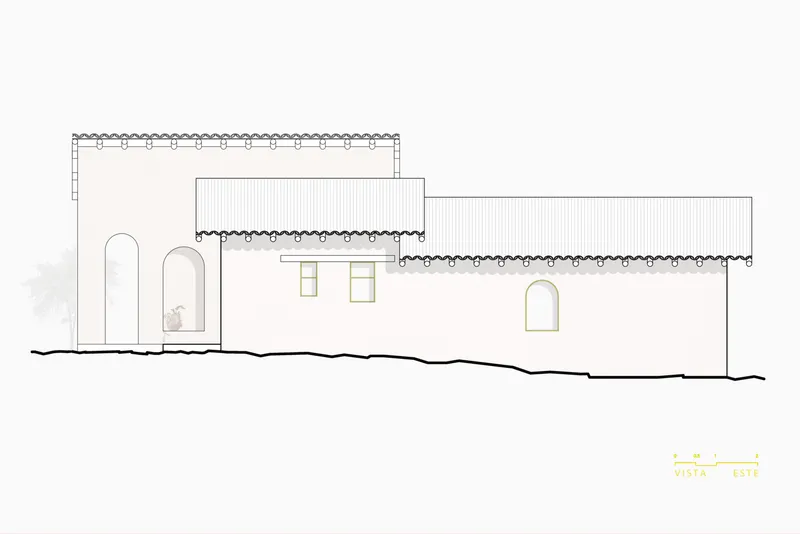
Florencia House honors the region’s vernacular construction traditions through its honest use of local materials: adobe, river stone, wood, cane, and red clay tiles. These elements are thoughtfully paired with yellow-painted iron frames and doors—a bold detail that echoes the hues of native retama flowers and ripening cornfields.
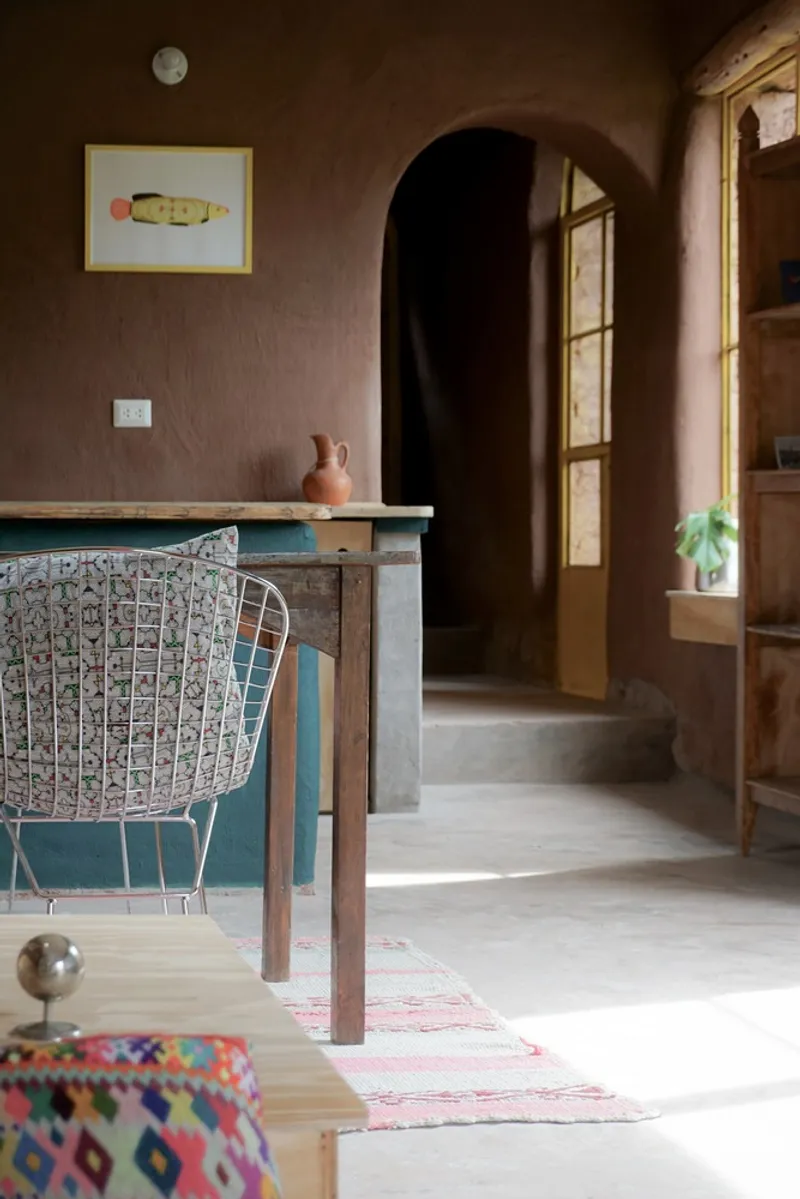
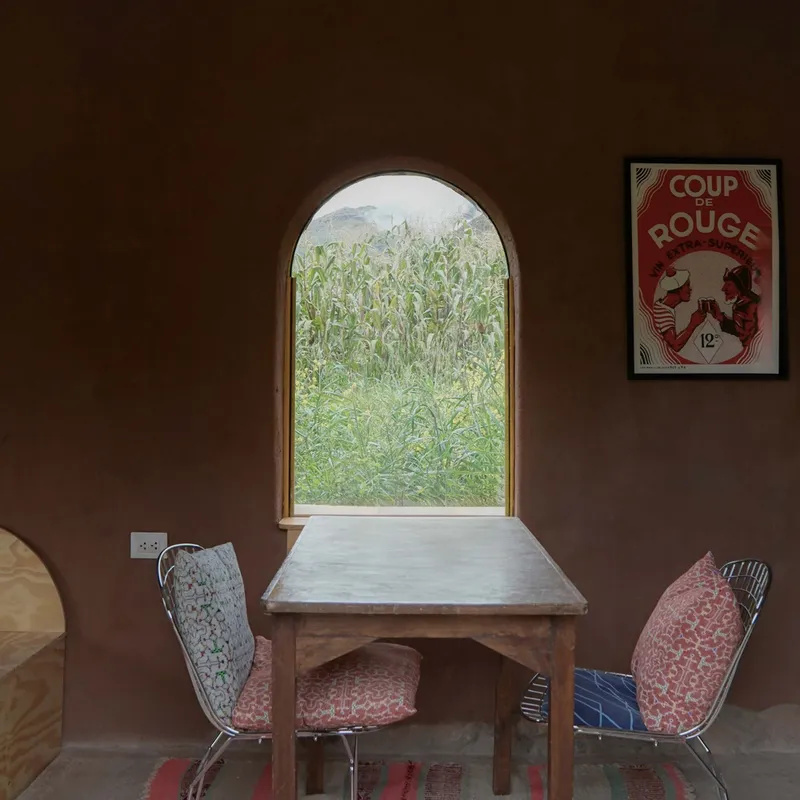
The steep, dual-sloped roofs evoke the silhouette of traditional Andean homes while accommodating varied interior volumes. This reinterpretation avoids nostalgia by updating form and function for contemporary use. The addition of expansive glazing brings the outside in—natural light pours into each room, while views of the surrounding mountains and cultivated terraces are constantly present.
A Modular and Intimate Settlement
More than a single home, Florencia House is envisioned as a modular unit within a greater collective. The L-shaped layout embraces a central open plaza, establishing a semi-private core that encourages community interaction among permanent KUSKA residents. This organization fosters a sense of place, identity, and belonging, reinforcing the project’s social ambitions alongside its environmental ones.
The architectural language is one of restraint and resonance. It speaks fluently in the grammar of local materials, ancestral knowledge, and landscape integration—yet does so in a contemporary voice. Every wall, beam, and window was designed to serve both a practical and poetic purpose.

Rethinking Contemporary Adobe House Design in the Andes
Florencia House sets a new benchmark for contemporary adobe house design in the Andes by merging cultural continuity with sustainable innovation. It is not merely a home—it is a living artifact that teaches us how to build with empathy, tradition, and care for the environment.
Through its grounded materiality, climate consciousness, and adaptive form, the project presents a compelling alternative to mainstream housing models. It demonstrates that rootedness and modernity are not opposites, but partners in the creation of meaningful architecture.
All Photographs are works of Rafael Ortiz Santos


Popular Articles
Popular articles from the community


longwave studio Reorganizes a 112 m² Tainan Apartment Around the Daily Routines of a Family and Two Cats
In Tainan, Taiwan, birch plywood, rust-red furniture and a freestanding plaster wall link arrival, storage, work and family life in one apartment.

David Ortega Stacks a Two-Story Mexico City Penthouse Around a Steel Stair and a Pergola-Shaded Roof Terrace
In Colonia Roma, a 300 m² penthouse uses oak joinery, a planted steel stair and a slatted roof pergola to make a new-build apartment feel like a house.

GROUP A Strips a 1969 Rotterdam Harbor Headquarters to Its Frame and Wraps It in Timber Louvers
In Rotterdam's M4H harbor district, Ferro Offices reuses a 1969 frame, adds one timber storey and reaches BREEAM-NL Outstanding.

Cube Design Draws an Ecological Corridor Between Two Shenzhen Hills with the Nankai Building
Beside Shenzhen's container docks, the Nankai Building pairs stacked balconies with a climbing green screen to connect two hillsides across its height.

Similar Reads
You might also enjoy these articles

Bamboo Housing Challenge 2026: Design Affordable, Sustainable Homes Using Bamboo
An international design competition by Bamboo U and IBUKU inviting architects and designers to reimagine affordable housing using bamboo — with the winning design built full-scale in Bali.

Computational Design & Education: Beegraphy Design Awards Introduces 7th Category (Featuring Jiyun's Innovative Approach)
Dive into Beegraphy’s 7th Design Awards category, where computational design meets education to create immersive, interactive learning tools, inspired by Jiyun’s work.
From Parametric Lighting to Urban Furniture: Join the 2nd Workshop in Beegraphy’s Computational Design Series
Dive into Cutting-Edge Design Techniques and Practical Applications with Industry Experts

Last Call: Unleash Your Architectural Genius in SHAK's Kindergarten Design Competition
Urgent call for architects to join SHAK's kindergarten design competition before the looming deadline

Explore Architecture Competitions
Discover active competitions in this discipline

Challenge to reimagine the Iron Throne

Photograph architecture without architects

Illustrate the lost glory of Angkor Wat - Render Challenge

Design challenge to reuse E-waste
Comments (0)
Please login or sign up to add comments
No comments yet. Be the first to comment!