

Creating an identity for cities
Break the generic


Overview
The 21st century is known for the age of globalization. The process of urbanization in cities, the interaction between people and integration among businesses & society are no longer driven just by local forces. It’s a well-known fact that data-driven technologies are playing a major role in shaping us and the kind of cities we live in today.
These forces of technology, for all the good they are doing well to us on one hand and are powerfully speeding up the homogenization of culture in the other.
Cities have been seen as an incubator for creative ideas and human evolution in the past. However, with our technological evolution, the question one must seek is retaining this distinct identity of a city as an incubator of creative ideas in the next century. If skylines around the world are looking too much the same, is this because the new and important buildings are done by the big names (designers) from far away and not by the locals or the opposite is true? Not only skyscrapers but, museums, civic centres, concert halls, bridges, libraries, opera houses all give cities part of their identity. This makes us ponder, how do we reclaim our cities to stand out from each other in the next centuries. What are the urban programs that can be useful to the inhabitants and can architecture be an icon instead of an object?
Competition
X-Plor by Uni launched one of a kind Tri Competition Series based in Tokyo, Los Angeles, and Shanghai to challenge designers and architects in discovering the potential of making cities di-generic for the coming century.
The jury for the competition consisted of esteemed designers, professionals and academicians from around the world. The Lead Jurors for the competitions were as follows:
Tetsuya Matsumoto, Head Architect Designer, KTX Archi LAB, Japan
Dirk U. Moench, Architect, INUCE • Dirk U. Moench, China
Waleed Arafa, Founder & Principal, Dar Arafa Architecture, United Kingdom
Walid Ghantous, Architect, BLANKPAGE Architects, Lebanon
Juanjo López De La Cruz, Founding Partner, Estudio Sol89, Spain
Tim Rowley, Associate Director, Walters & Cohen Architects, United Kingdom
Rafael Alejandro Plascencia Garcia, Director General, 3Arquitectura y Asociados, Mexico
Zoltan Tima, Deputy CEO, KOZTI, Hungary
Ales Znidarsic, Principal Architect, Multiplan arhitekti, Slovenia
Chris Baribeau, Principal Architect, modus studio, United States


Some of the best projects from the competition are as follows:
Joint Winning Project: Bank of Shanghainese
Linguatheque, Shanghai
By: Ruijun Li and Jishi pan

 Description: This project proposes a bank of Shanghainese language, a bank of Shanghai memory. The philosophy of this design is to create an urban strategy that reacts to the ever-losing local vitality and identity under the background of highly developed communication technology and restores Shanghai's generic trends. We are interested in exploring how to learn from the past, and reform the existing urban condition, rather than draw a total imaginary new project on a blank paper. The Shanghai slums inspire us by their great variety of typologies and the thriving vitality of street lives. In there, streets can be a kitchen, parking, a shop, a playground, and actually, it can be anything but a street. The purpose of this project is to bring the street back to the community and re-active its vitality.
-----------------
Winning Project: SPHERE
Celebration of faith, Tokyo
By: Kutlu Bal & Hakan Evkaya

 Description: The sphere is like the sacred and divine form of space. It is the final stage in the transformation of energy that follows a divine purpose. The sphere is the most efficient form to store and spread energy. All planets and stars follow the same as if they have a shared code of consciousness. This transformation is a manifestation of common destiny. Concept: Originating from one same root, all religions state the same messages just like everything else- connected and synchronised. The sphere is a primary cosmic form that can watch and witness.
---------------------
Winning Project: Millieu
Global Entertainment Nucleus, Los Angeles
By: Antonio Carbajal, Michel Horan & Joey Ali

 Description: Atmospheric membranes are articulated above the sunken island forming an enclosure that protects, purifies and heals the environment. The milieu is a GLOBAL ENTERTAINMENT NUCLEUS and is the epitome of entertainment, a cultural icon, a sports hub, an attraction, a celebration of cinema, an interminable show.
-------------
People’s Choice: MOUNTAIN
Linguatheque, Shanghai
By: Suoao Wang
 Description: Only when the buildings are integrated with cultural consensus will they be resonant and touching. Therefore, temperature occurs only when the soul of the building touches the soul of the people. Shanghai, a young city, serving as the centre of China's economy, bears the impact of many cultures. Modern and contemporary western culture can be seen everywhere. You will find that if you walk on the street, you will not know that this is a Chinese city. As China's gate facing the world, Shanghai should carry the important task of publicizing Chinese culture. Mountains carry too much of ancient Chinese culture, while poems and paintings are the most inseparable elements of the mountain cultural carriers. Therefore, mountains, especially magnificent mountains, have become a universal cultural consensus. Therefore, I think the future architecture of Shanghai should return to history and culture, making it become a carrier of people's feelings and culture, instead of the culture itself. Culture is invisible, only some kinds of carriers can foil the culture. So from big cities to small buildings, they all should become the carrier of culture rather than culture itself.
-----------------
People’s Choice: Spiritual Journey to Oneness
Celebration of faith, Tokyo
By: Yoshie Takeo
 Description: The building is a sacred place for people of all faiths, religions or backgrounds to connect with the Divine and their higher self (the real self, awakened aspects of oneself, assessing deeper truths and knowledge). It is designed beyond experience with a series of spaces that allows visitors to experience the process of spirituality. The concept behind the design is based on spirituality. We are all spiritual beings, where everything in existence is connected and we are one. There is no prejudice, judgment or duality. We incarnated to planet Earth in our physical form to express our divine self (union of masculine and feminine energies) through human experience. When we activate the channel from within, known as Christ or Unity consciousness (state of awareness of our own Divine power and enlightenment) we open up a direct connection and become a conduit to the Divine, where we experience the Oneness of the Universe. Through this spiritual link, we learn to tap into our own power to co-create our own reality and attain unconditional love, peace, support and guidance from the Divine. The design is to celebrate this understanding and to help everyone raise their vibration and consciousness in the process of experiencing the space.
--------------------
People’s Choice: Trinity
Global Entertainment Nucleus, Tokyo
By: Hsiao Chiao Peng
 Description: The TRINITY utilizes hydro-bionic and magnetic power, self-generating a free-form G.E.N. (Global Entertainment Nucleus) in the ocean. With this future stadium, we focus on how to use architecture to fuse the worlds and experiences of both the physical and the virtual.
--------------
Editorial Choice: Ctrl+Scroll
Global Entertainment Nucleus, Tokyo
By: Boon Hau, Ke Zhou, and Hao Li
 Description: The project challenges the concepts of generic and iconic but imagining one in the realm of the other. It understands how external factors such as culture, nature, etc. helps in creating iconic architecture out of generic forms.
We delve into the process of 'Japanization' here, and position it where its inherent definition changes in the face of immigration.
-------------
Editorial Choice: Transcendence
Global Entertainment Nucleus, Tokyo
By: Ahd El Din

 Description: Transcendence... It is an attempt to capture the city from an alternative perspective, or a set of perspectives. following the narrative of three characters, moving from the perception of the city to the transformative experience of the building reaching for the final conclusion of each of the three characters in their search for transcendence.
------------------
Editorial Choice: hashtag#trash#ShanghaiCarnival
Linguatheque, Shanghai
By: Wanting Dong and Shi Chen

 Description: In this future of Industry4.0, we experimentally explore how Shanghai can respond to our needs for the awareness of trash sorting and recycling, which is a recent local policy that is contextualized by the global trend of eco-cities. We create a complex infrastructure that incorporates the function of a trash facility and the culture of a local amusement park.
Discover the full results here: https://uni.xyz/competitions/di-generic-cities/entries
Discover the design brief here: https://uni.xyz/competitions/di-generic-cities/info/about
Follow us on social media: Facebook | Instagram | LinkedIn | Twitter | Youtube
Discover other design competitions to participate here: https://uni.xyz/competitions


Popular Articles
Popular articles from the community

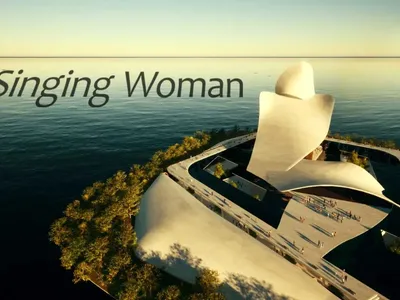
Singing Woman: An Opera House That Performs Before the Curtain Rises
Ovidiu Cristian Pavel's conceptual opera house translates Estonia's choral identity into a sculpted waterfront landmark facing the Baltic Sea.
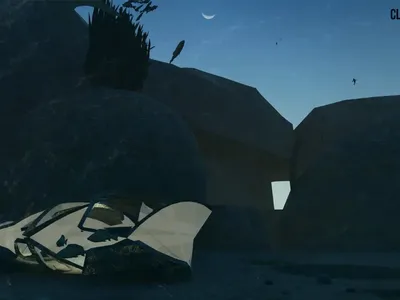
Cloaked Colonization: A Mobile Underwater Habitat That Moves Like a Fish
Micah Abaya's shortlisted EHC Pacific entry reimagines ocean settlement as a dispersed network of self-sustaining architectural organisms.
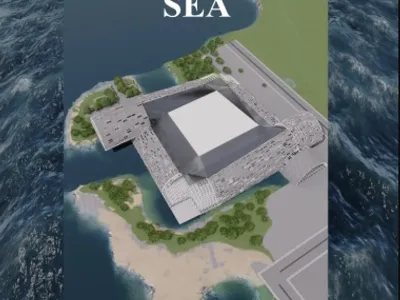
Opera on the Sea: Driftwood Logic Shapes a Timber Opera House on Estonia's Coast
Trevor Orgill's opera house translates the entangled drift of floating timber into a civic building where wood, water, and music converge.
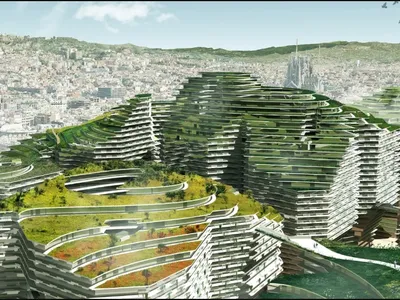
Manzana Morphosis: Stretching Barcelona's Grid into a Living Landscape for 2050
A radical reworking of the Eixample manzana turns density into a tool for generous public space, vertical ecology, and environmental performance.

Similar Reads
You might also enjoy these articles

Play: Fragments of Their World: Remembered Architecture Rebuilt as a Modular Playground for Refugee Camps
Tom Gardner abstracts domes, arches and towers from the homelands of displaced families into a kit of child-scaled play parts for camp settlements.
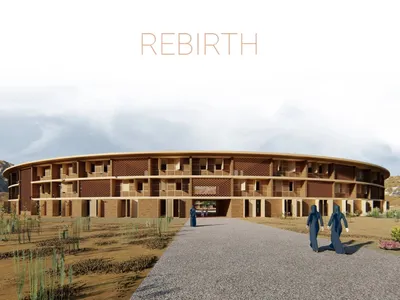
REBIRTH: A Circular Settlement Where Afghan Widows and Their Children Rebuild Life Together
A shortlisted Resile entry turns the circle into a protective ring of timber and brick, gathering homes, classrooms and gardens around a shared landscape.
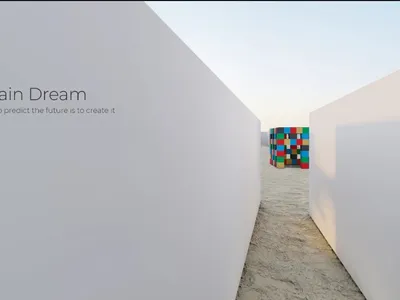
The Main Dream: A Recycled Plastic Kit That Lets Refugee Children Build Their Own Playground
Thirty-centimetre interlocking cubes that connect on three axes turn play into construction, letting children author the spaces they occupy.
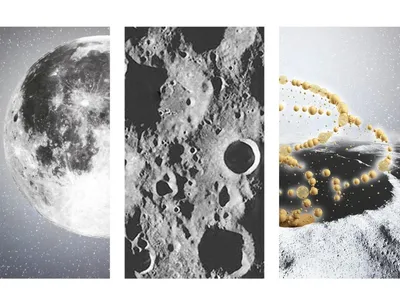
Lunar Spiral: A Fibonacci-Driven Moon Settlement Rising from Shackleton Crater
Golden-spiral geometry organises buried infrastructure and orbiting habitable spheres into a lunar base designed to grow as life on the Moon expands.

Comments (0)
Please login or sign up to add comments
No comments yet. Be the first to comment!