
Dan and Hila Israelevitz Lay a Concrete and Timber House into an Israeli Hillside
A linear 800-square-meter residence emerges from folded terrain near a nature reserve, organized around water, voids, and circular skylights.


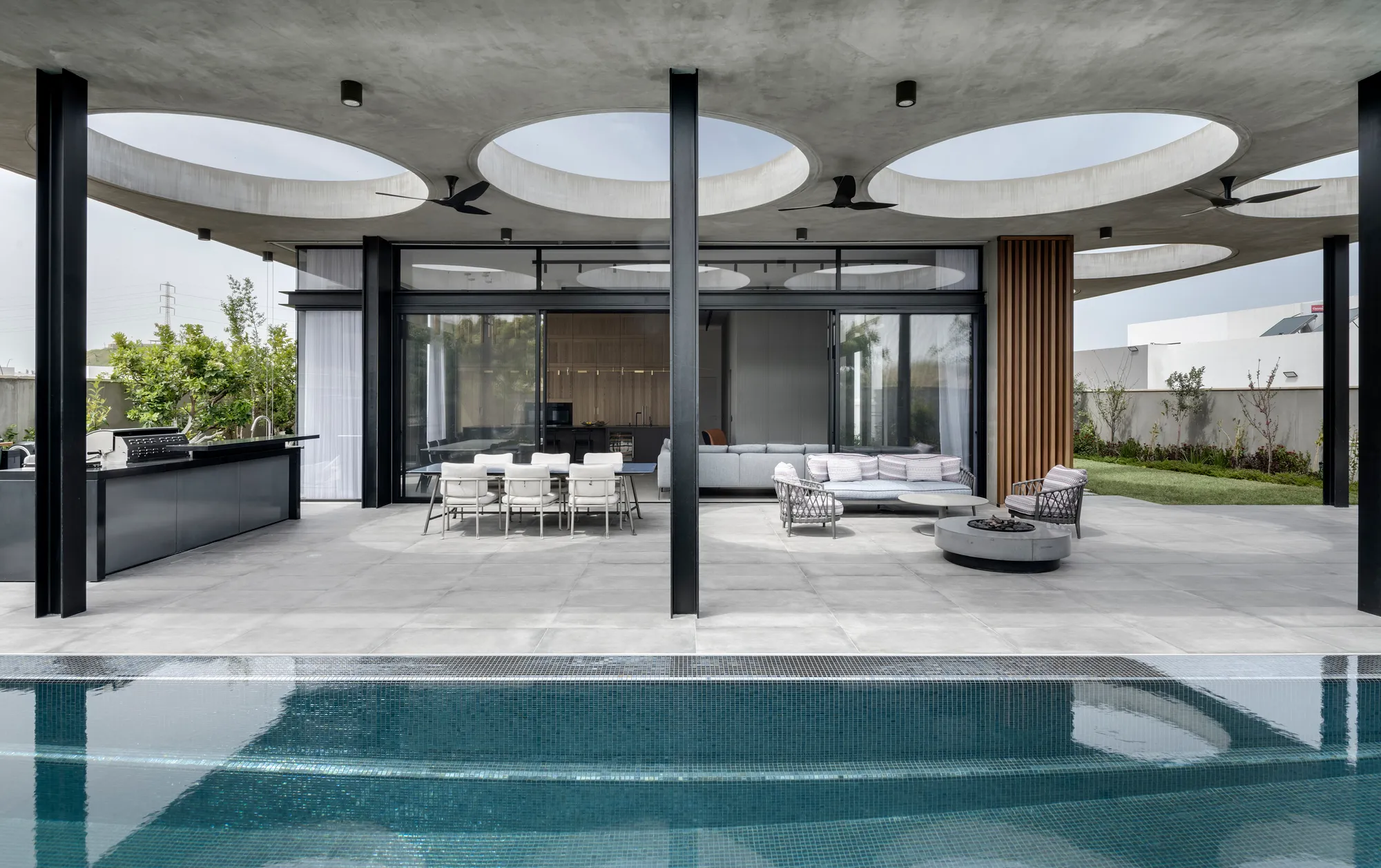
Some houses sit on the land. Others push into it. Laid House, designed by Dan and Hila Israelevitz Architects, does something more deliberate: it lays itself along the grade of a hillside in a pastoral Israeli settlement, matching the slope crease for crease. At 800 square meters, the residence is large, but its posture is horizontal, stretched, and low enough to read as a topographic extension rather than an imposition. The primary materials, concrete and timber, reinforce that reading. A heavy concrete base anchors the lower level into the earth while a lighter volume, wrapped in vertical timber slats, hovers above.
What makes the project genuinely interesting is how it choreographs arrival and experience around water and circular voids. You enter from below, crossing reflecting pools on concrete stepping stones, and then move upward into living spaces that open onto terraces punctured by large circular skylights. Those roof openings are not decorative gestures; they are the organizational logic of the plan, pulling light deep into covered outdoor rooms and establishing a rhythmic counterpoint to the house's strict linearity. The result is a residence that feels excavated rather than erected, its interior life calibrated to the slope, the sky, and the nature reserve it overlooks.
Entering from Below
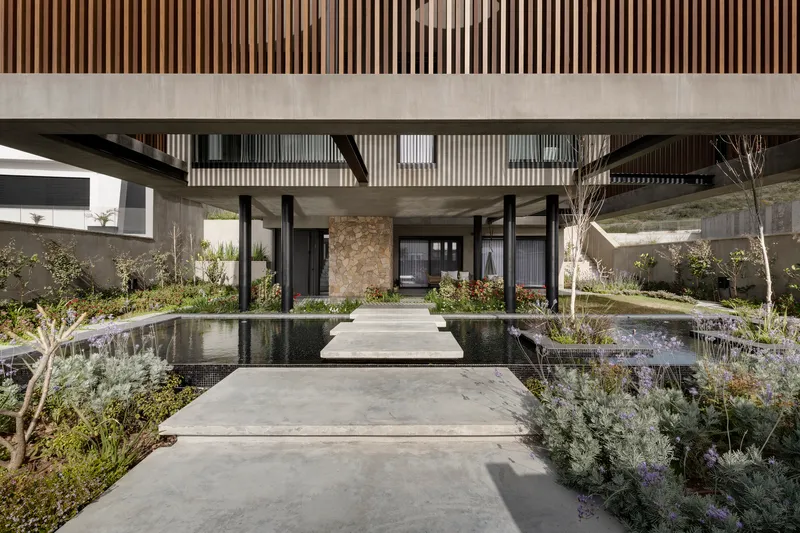
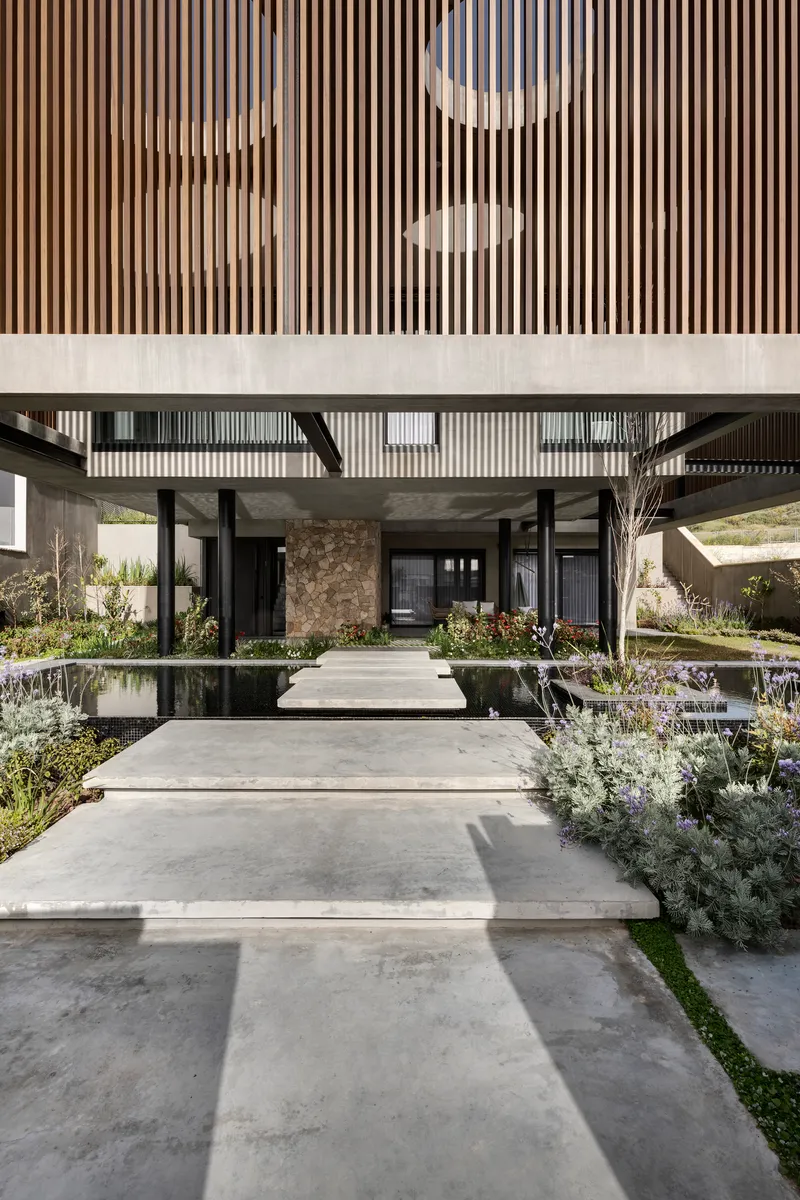
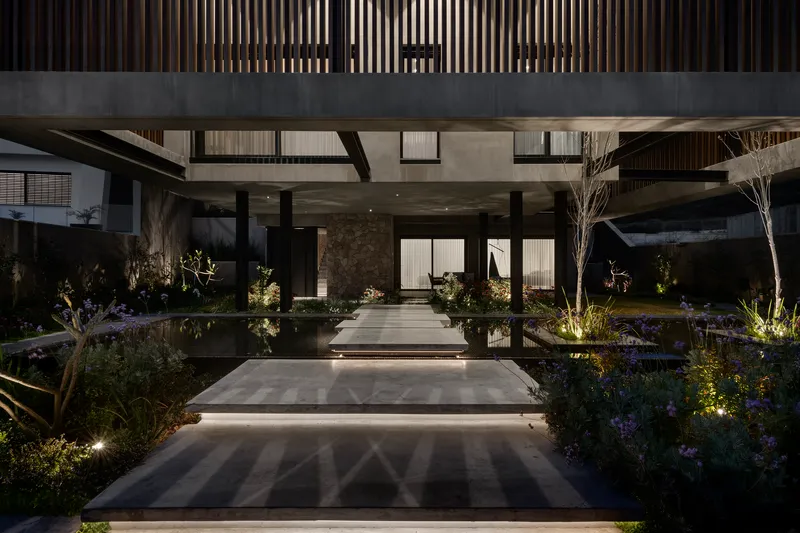
The entry sequence is the house's strongest architectural move. Rather than arriving at a front door at grade, you descend into a sunken courtyard and cross a series of reflecting pools on concrete pavers. The timber-clad upper volume cantilevers overhead, compressing the space vertically. Vertical slats filter daylight into shifting stripe patterns while the still water below doubles everything. The experience is immersive before you reach a single interior wall.
At dusk the sequence intensifies. Uplighting transforms the reflecting pools into luminous planes, and the cantilevered soffit overhead becomes a shadow grid. It is a rare entry that works equally well in daylight and darkness, each condition revealing a different spatial register.
The Timber Screen and Its Concrete Base
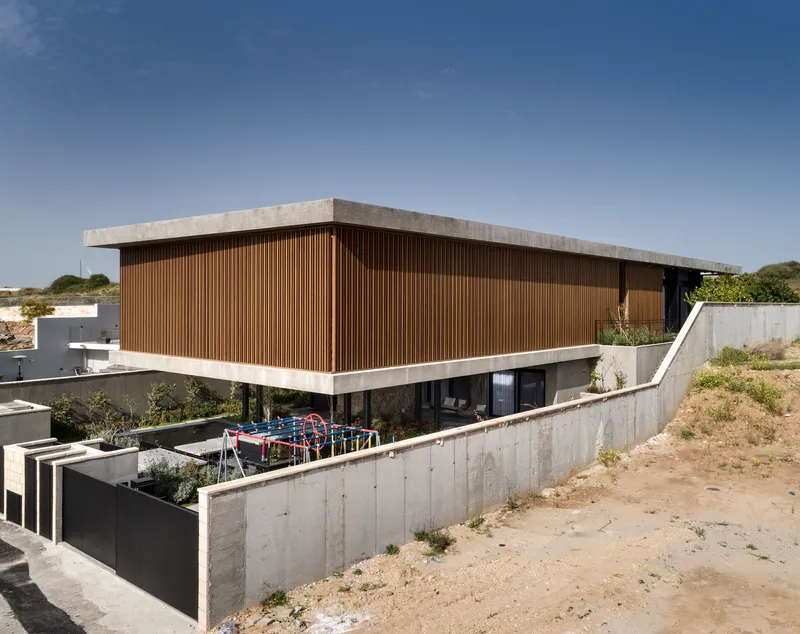
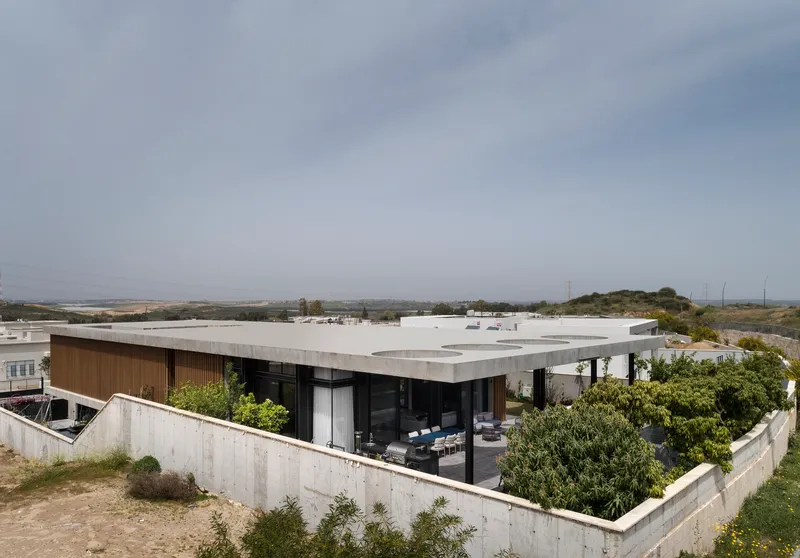
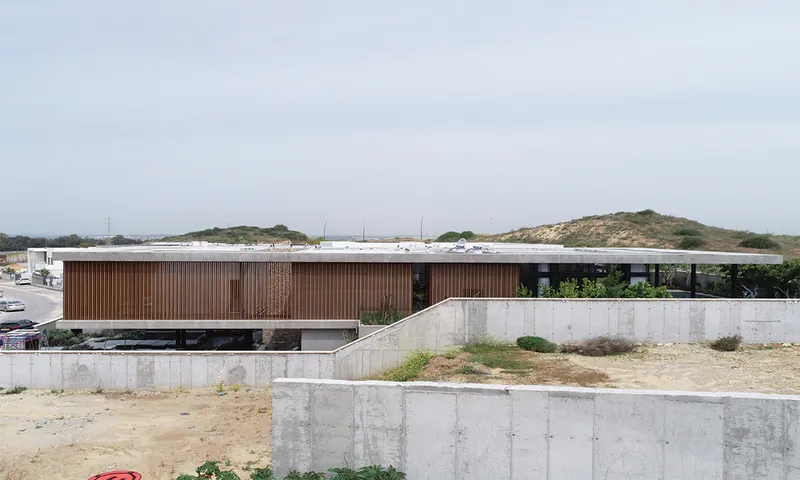
Seen from the slope below, Laid House reads as two distinct registers. The lower portion is board-formed concrete, stepped into terraced retaining walls that negotiate the terrain change. It is unapologetically heavy, expressing the effort of holding earth in place. Above it, the timber-clad volume seems almost buoyant, its vertical slats creating a permeable screen that mediates between privacy and openness.
The material contrast is not arbitrary. Concrete belongs to the ground, resisting moisture and lateral pressure. Timber belongs to the air, warm and directional, catching light and casting shadow. By splitting the house into these two material logics, Israelevitz gives the building a legible sectional argument: gravity below, lightness above.
Circular Voids as Spatial Strategy
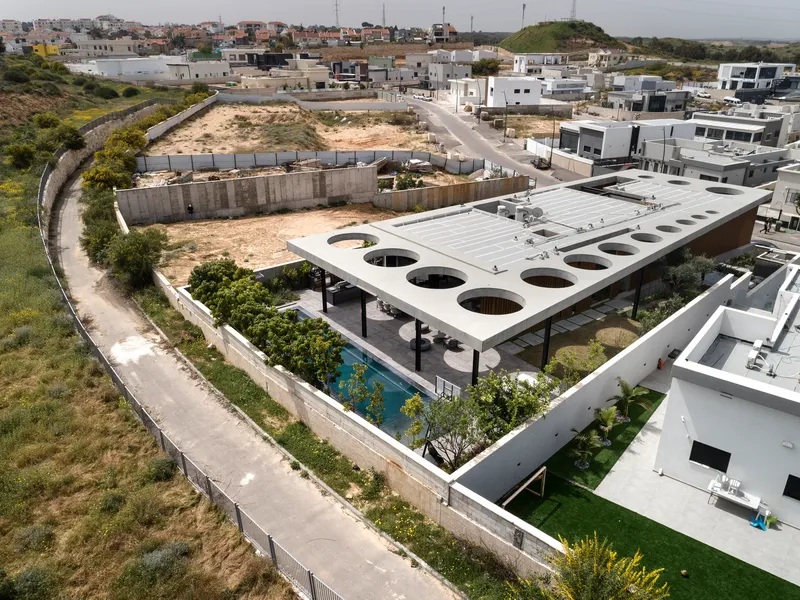
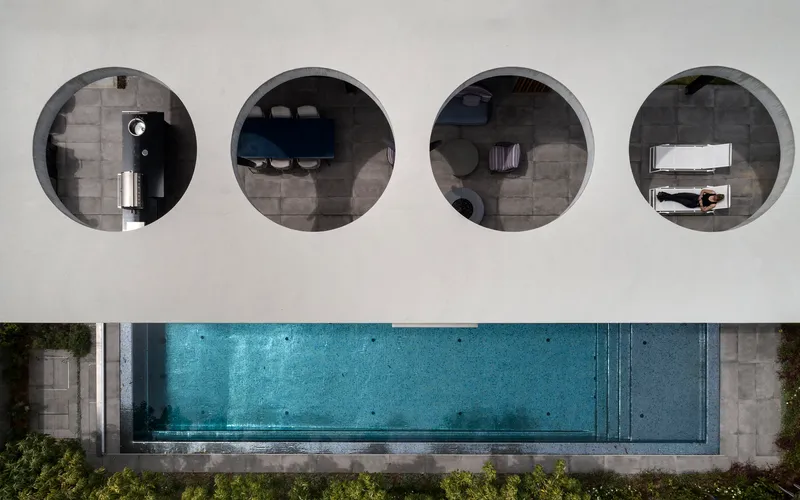
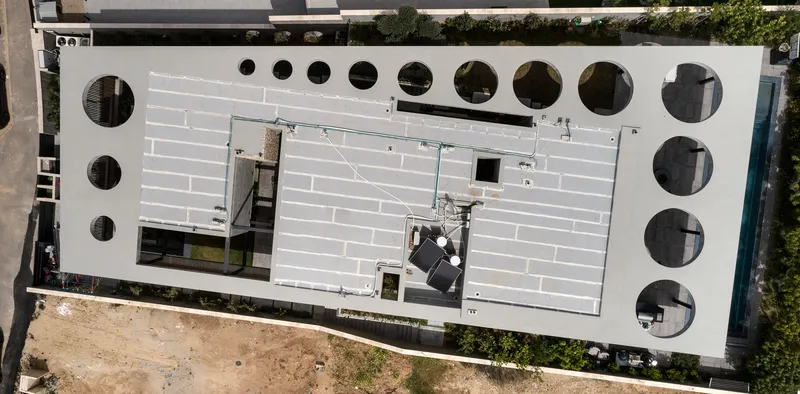
From the air, the roof is the most arresting element of the house: a white concrete plane punctured by circular openings of varying diameters. These are not punched randomly. They correspond to courtyards, planting beds, and terraces below, each void calibrated to deliver a specific quality of light to the space it serves. Seen from above, the house resembles a geological formation with erosion holes, which aligns with its ambition to appear as an extension of the terrain.
From below, the effect is entirely different. The circles become overhead skylights that frame discs of sky, and the concrete ceiling around them reads as a sheltering canopy rather than an enclosure. It is a clever inversion: what looks like subtraction from above functions as addition from below, giving each terrace its own relationship to the open air without sacrificing shade.
Courtyards, Water, and the Poolside Terrace
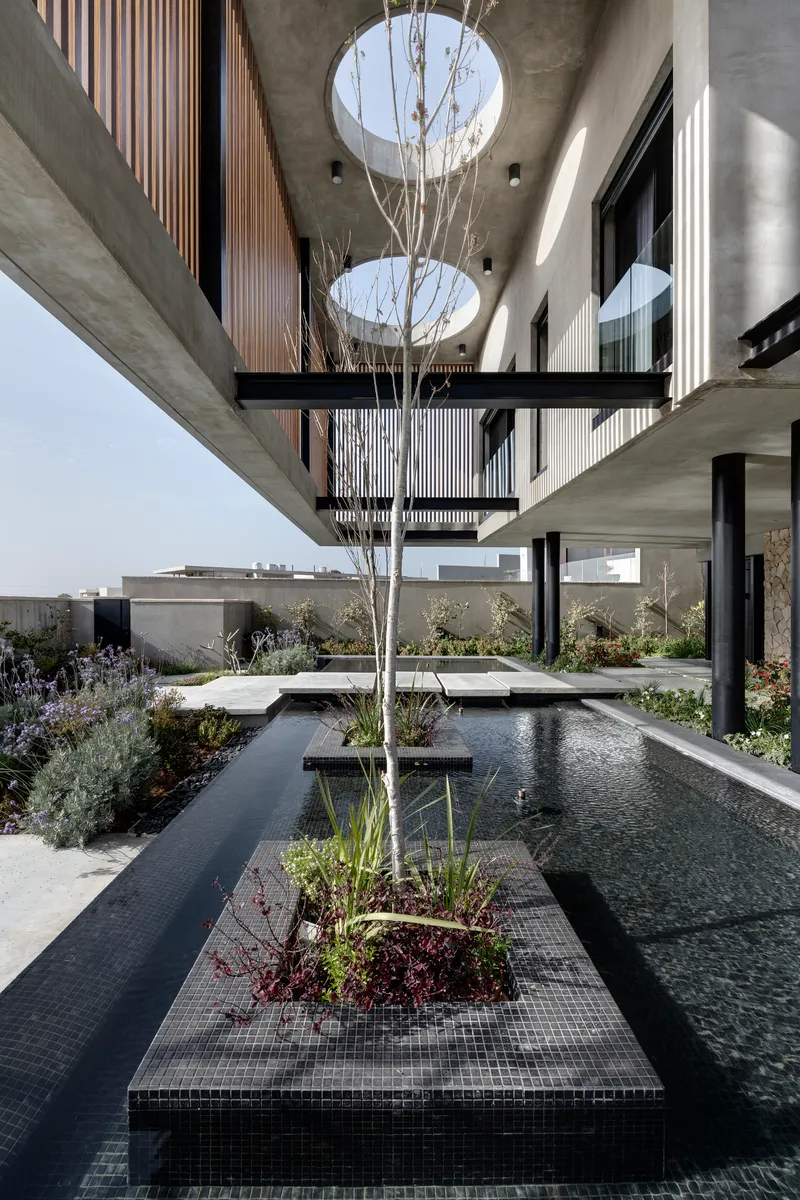
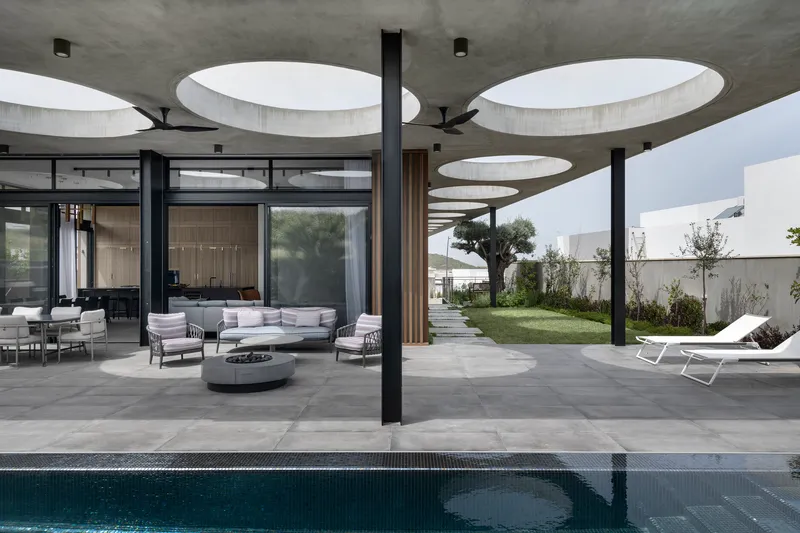
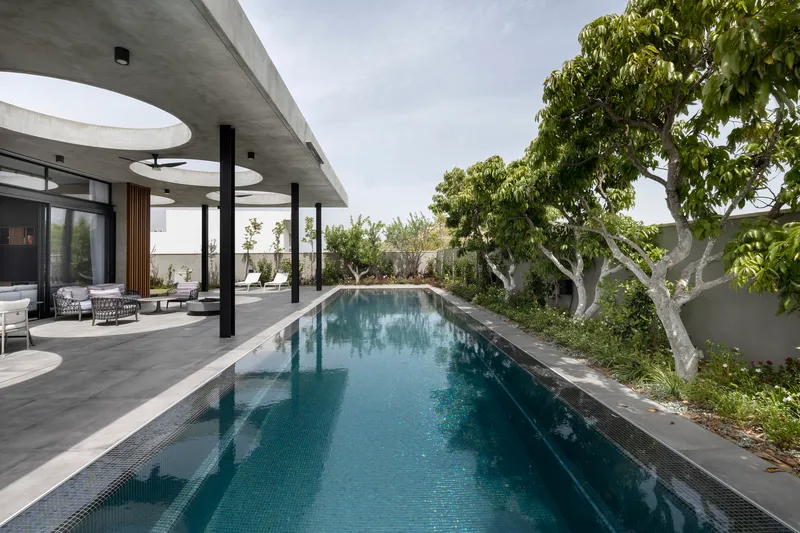
Water runs through this house like a circulatory system. Beyond the entry pools, an interior courtyard holds a tiled planting island surrounded by shallow water, a young tree rising through one of the circular roof voids above. The lap pool on the upper terrace stretches beneath a concrete canopy perforated by the same round openings, so that swimmers look up through circles of sky while the dappled light from timber screens traces slow arcs across the water's surface.
The poolside terrace is the house's most generous social space, framed by black steel columns and the repeating rhythm of circular voids overhead. Mature trees, including established olives, root the space in the landscape beyond the property's edge. It is outdoor living that feels architecturally specific rather than simply pleasant.
Interior Spaces: Restraint and Texture
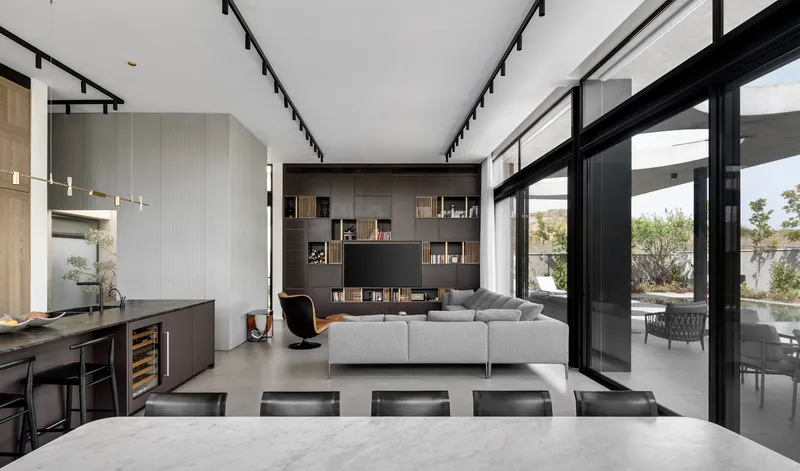
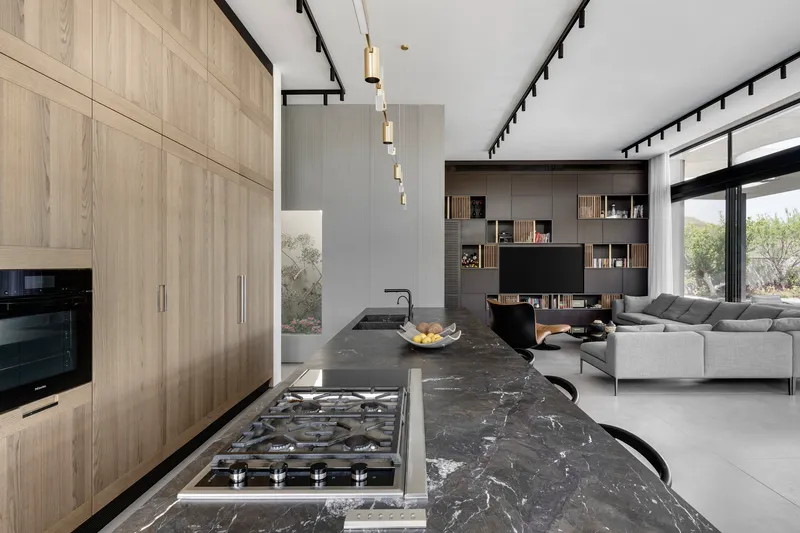
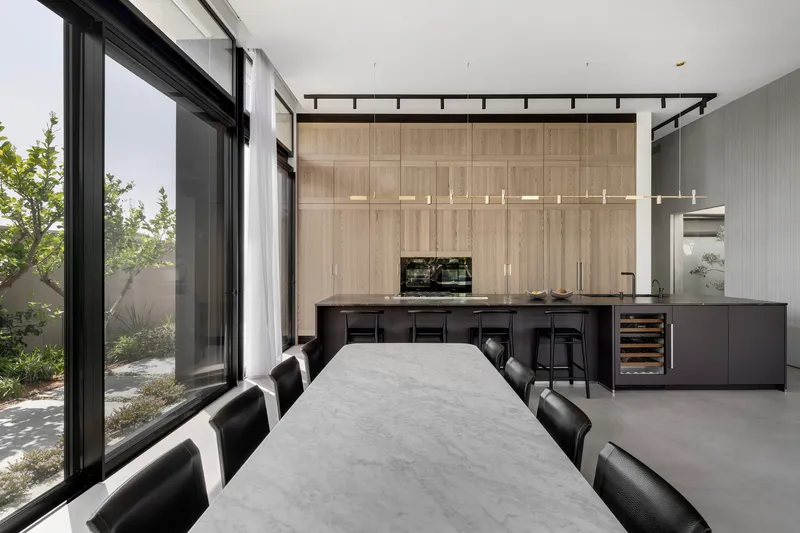
Inside, the palette stays tight: polished concrete, dark-veined stone countertops, black steel beams, and floor-to-ceiling glazing. The open-plan living and kitchen area faces a planted courtyard through full-height glass, collapsing the boundary between inside and out. A kitchen island topped with dark stone anchors the middle ground, while built-in shelving and sliding glass panels maintain a clean horizon line throughout.
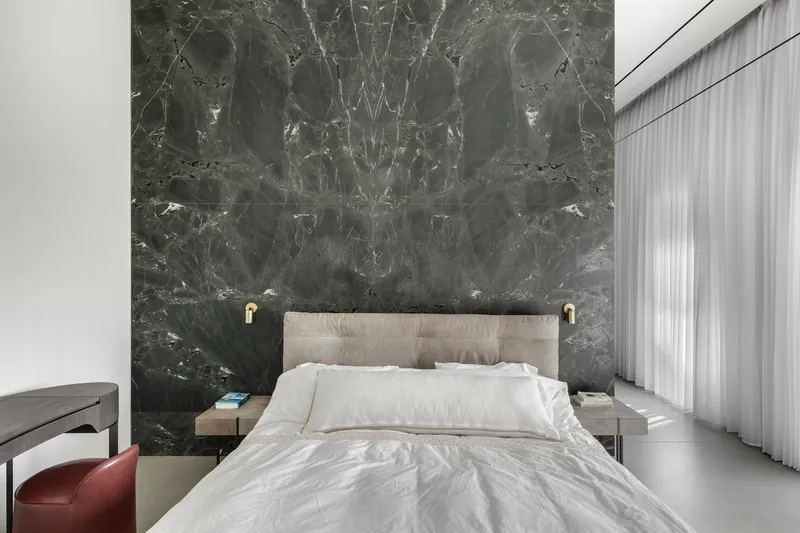
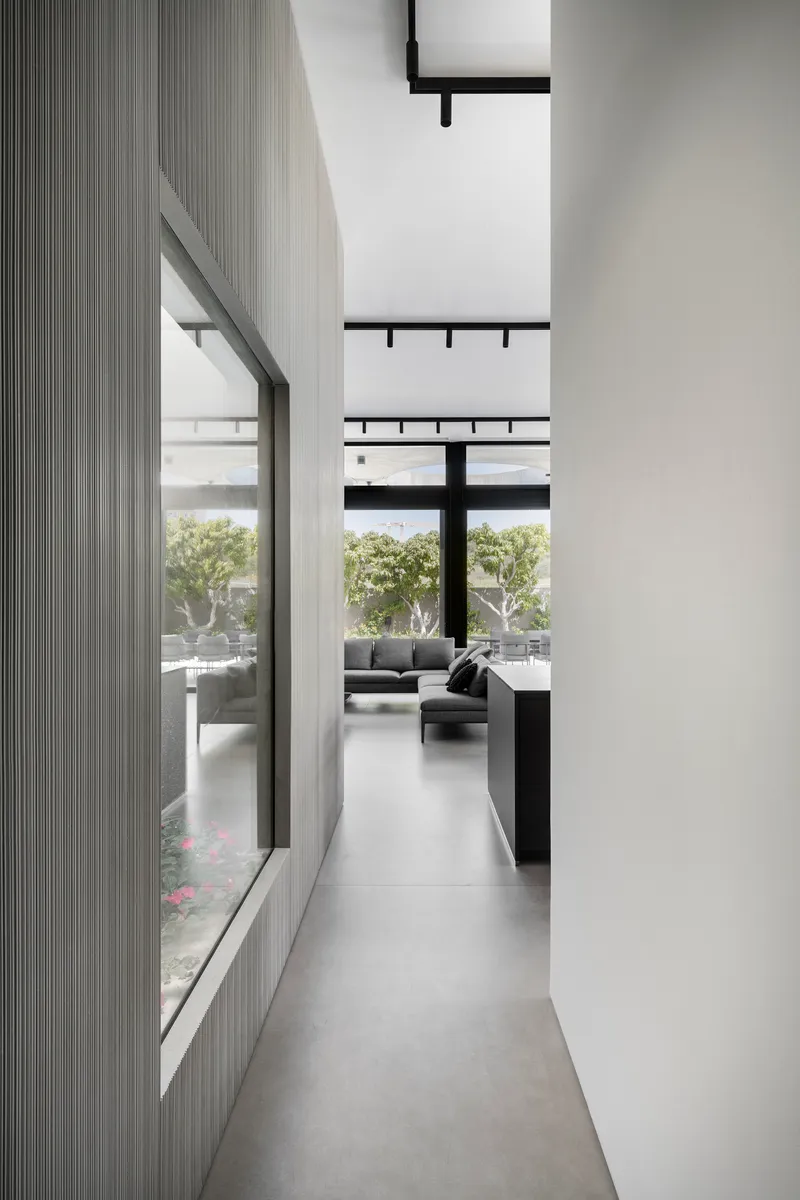
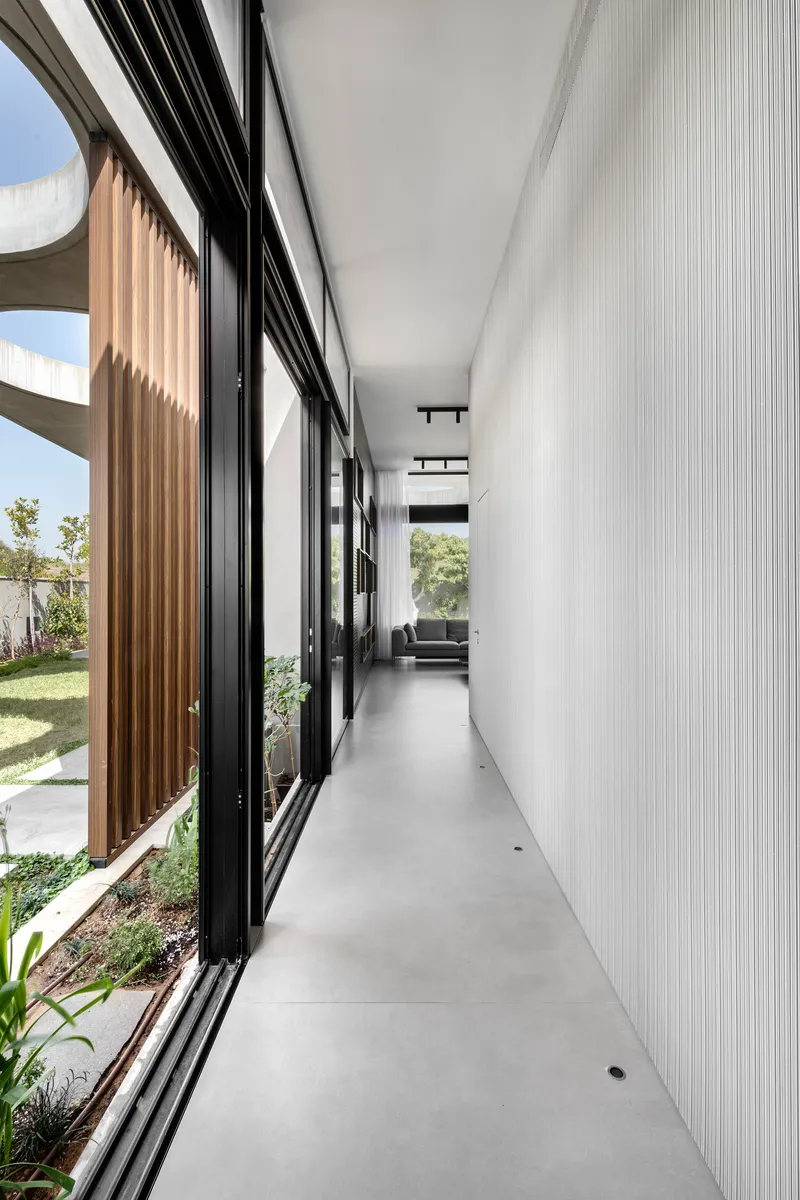
The bedrooms and corridors operate at a quieter register. Bookmatched grey marble forms the headboard wall in the primary bedroom, a luxurious gesture that is kept in check by the room's simplicity elsewhere. Corridors use fluted wall panels and clerestory windows to create compressed passages that amplify the release when you step into a courtyard or living room. These transitions are carefully managed, giving the house a cinematic quality as you move through it.
Stairs as Material Junctions
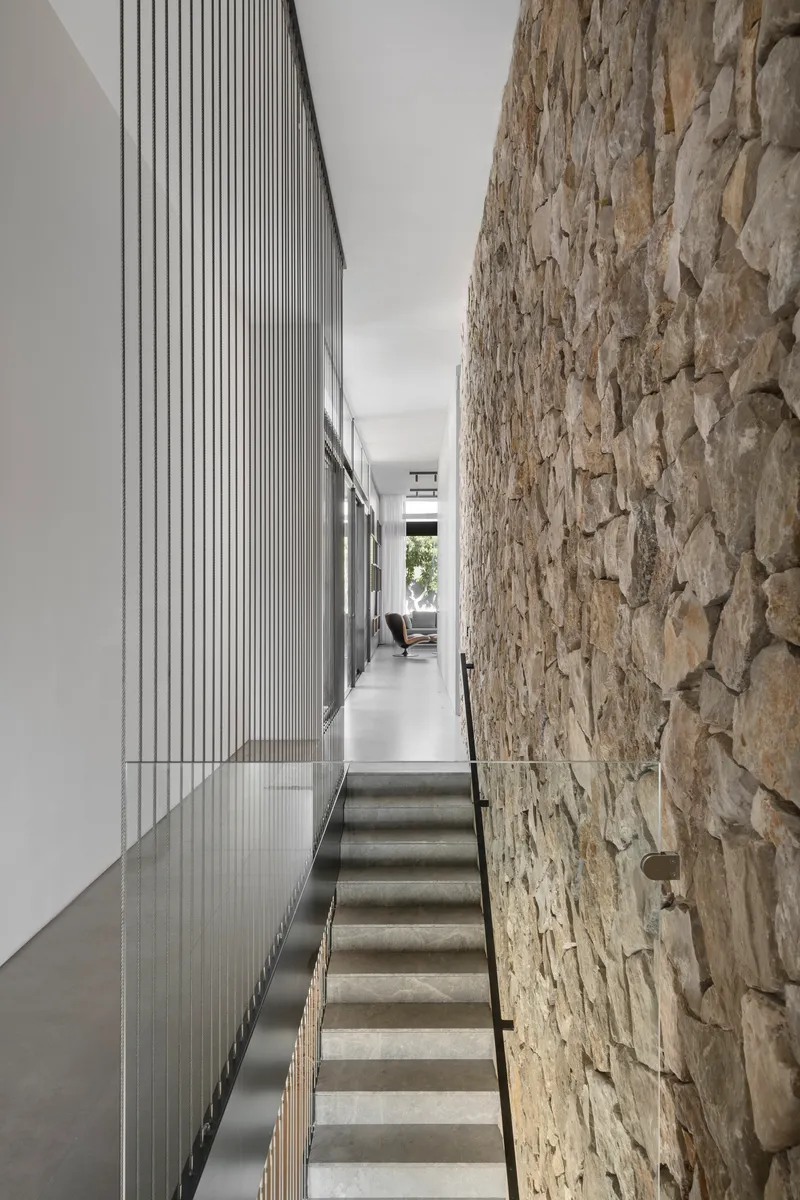
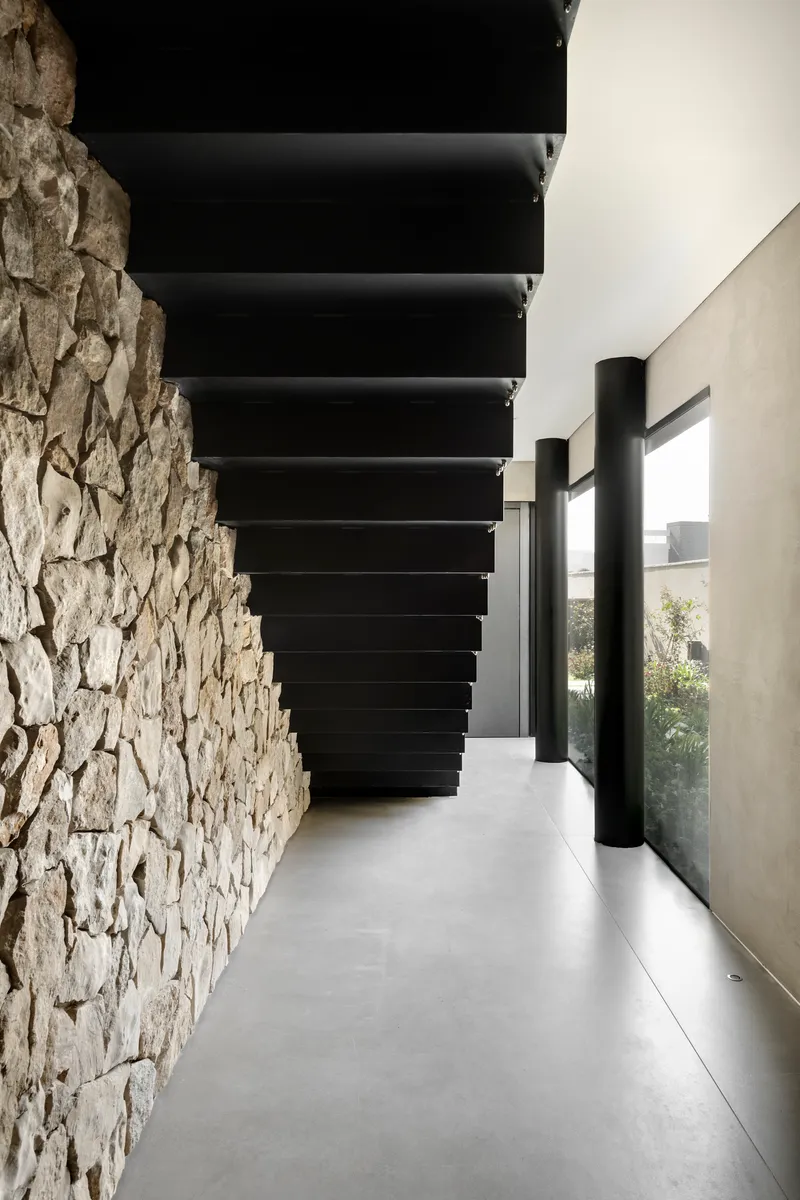
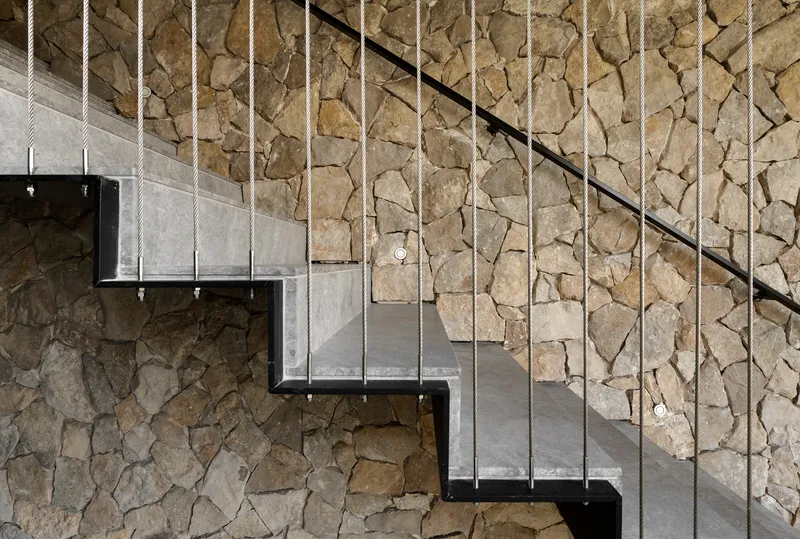
The staircases reveal how Israelevitz handles the split-level condition forced by the slope. Rough stacked stone walls, likely sourced locally, run alongside cantilevered concrete treads supported by black steel brackets. The material collision is intentional: dressed concrete meets raw stone, and steel cable railings hover against masonry that predates any manufactured product. Natural light washes down from glazed openings above, keeping the vertical circulation from feeling buried despite being partially below grade.
These stair halls are the literal hinges of the plan, connecting the sunken entry level to the main living floor and terrace above. The architects resist the temptation to smooth the transition. Instead, they let the raw stone announce the terrain that the house is embedded in, a reminder of the geological fact beneath the polished surfaces.
Light, Shadow, and the Slatted Ceiling
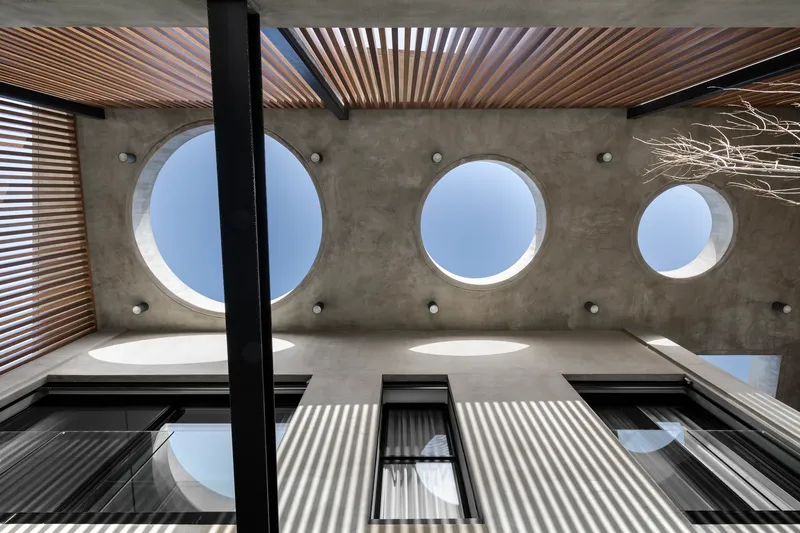
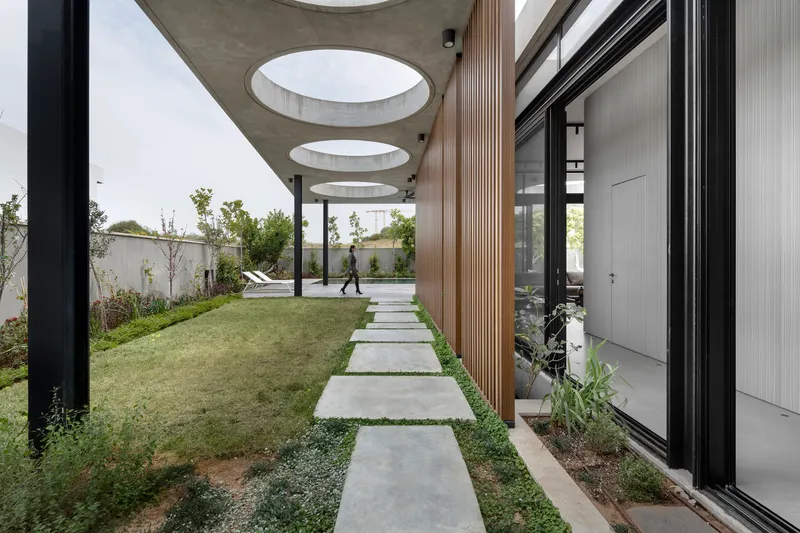
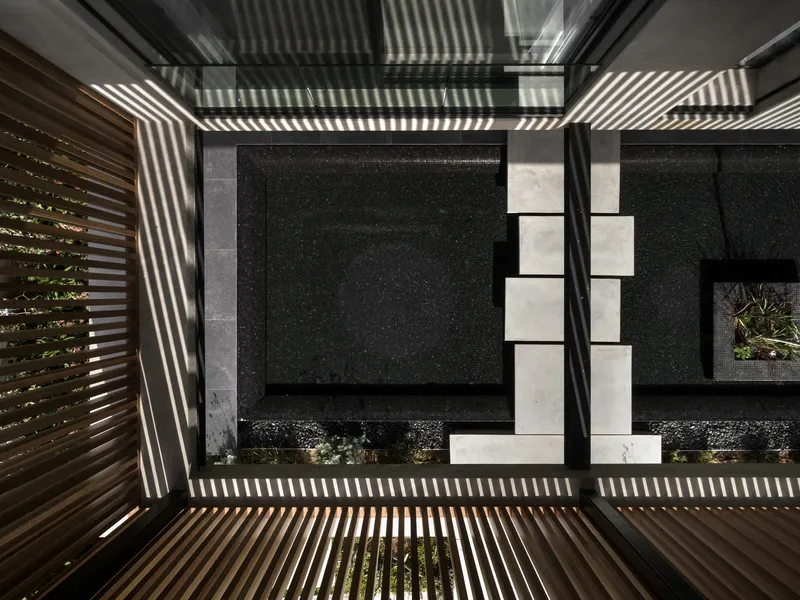
The interplay of timber slats and circular skylights generates a shadow environment that shifts continuously through the day. Looking up, the concrete ceiling becomes a graphic field: bright circles of open sky surrounded by ruled lines of shadow cast by overhead louvers. At noon the pattern is tight and geometric. In the late afternoon it stretches and softens. The house is essentially a sundial, its covered walkways and terraces tracking the hours in shadow bands and light pools.
For a house that communicates solidity through its concrete mass, this ephemeral layer of patterned light provides essential counterbalance. It is what keeps the architecture from feeling heavy or static. Israelevitz clearly understands that in the Israeli climate, the quality of shade matters as much as the quality of structure.
Plans and Drawings
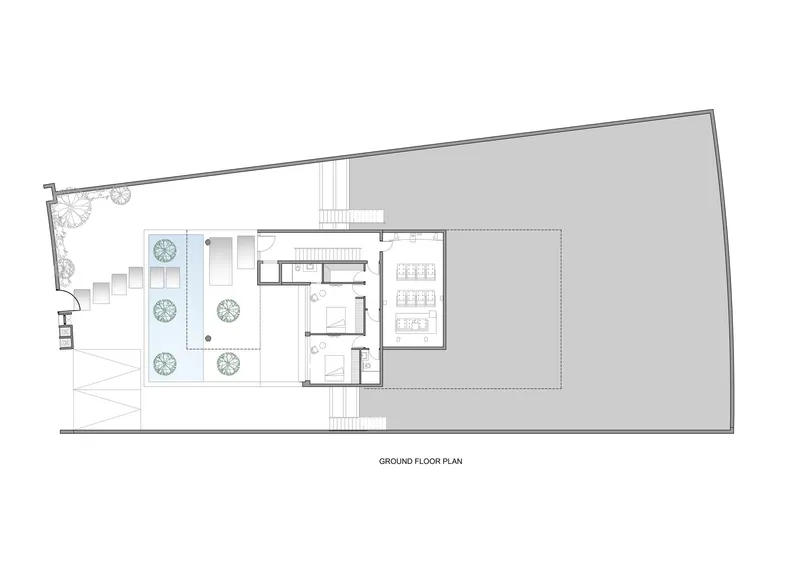
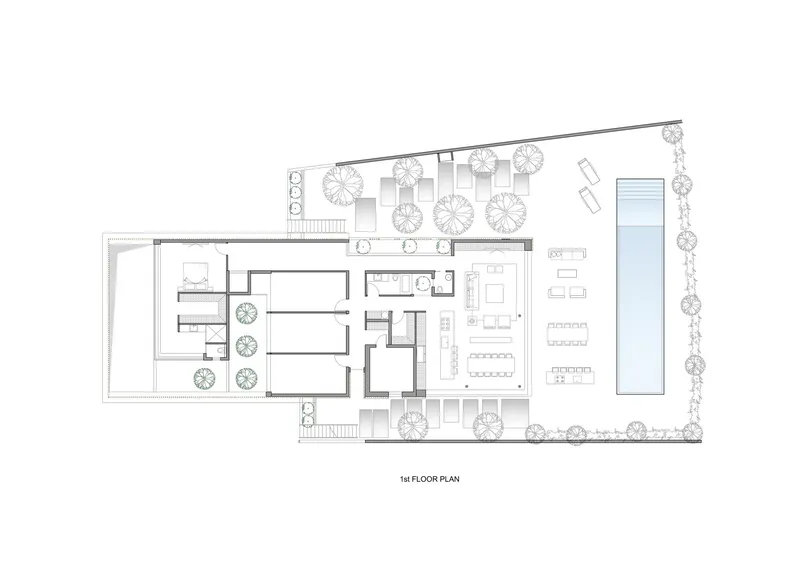
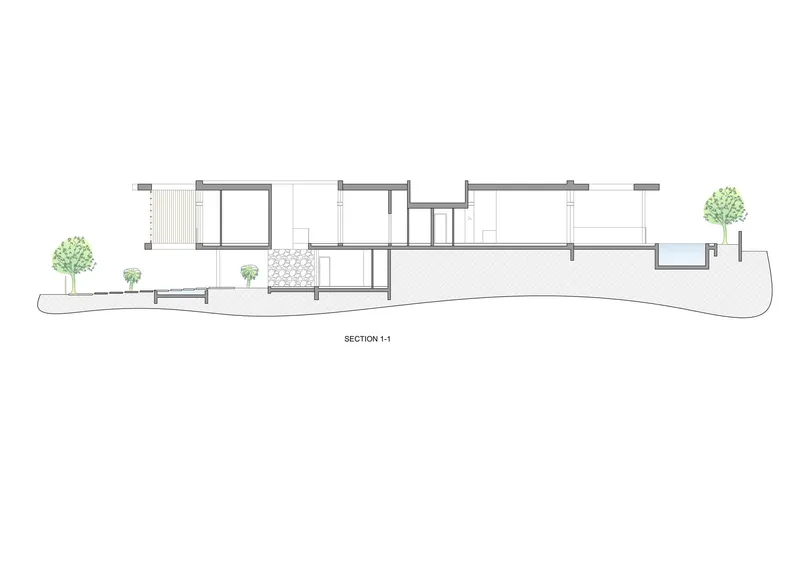
The ground floor plan reveals the entry courtyard with its reflecting pool as the organizational anchor, with rooms arranged linearly along the slope. The first floor plan shows how the stair hall connects to the main living spaces and the pool terrace beyond. The section confirms the split-level strategy: volumes step down with the terrain, allowing each level to have direct ground contact on at least one side.
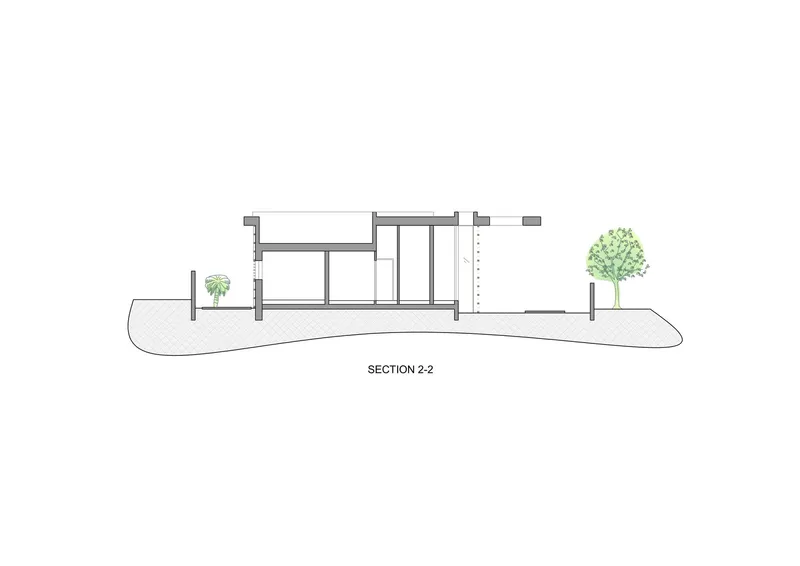
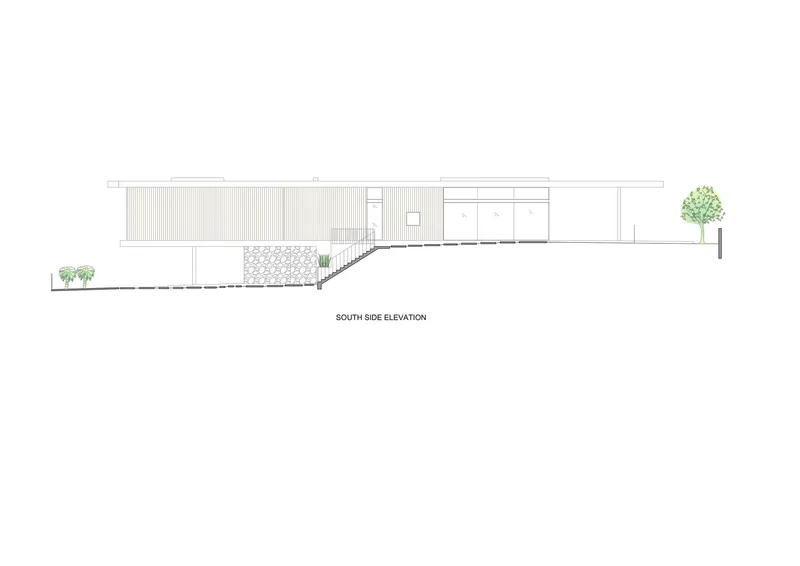
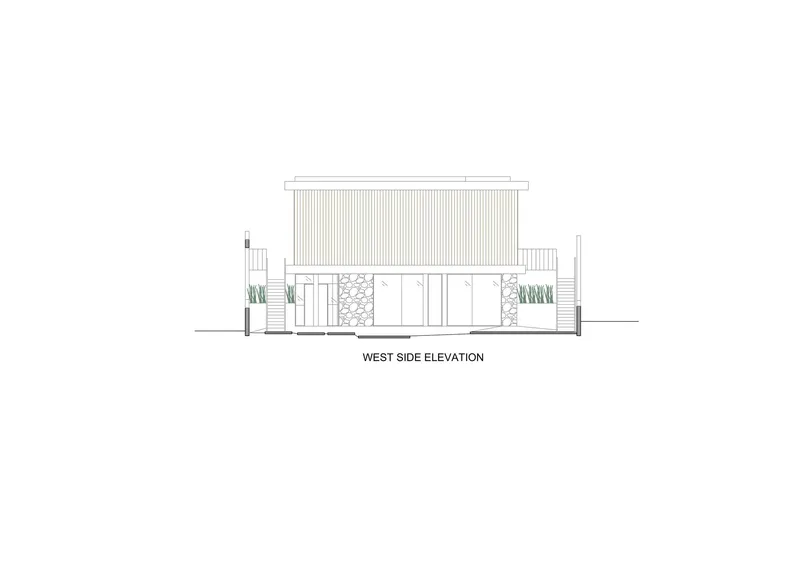
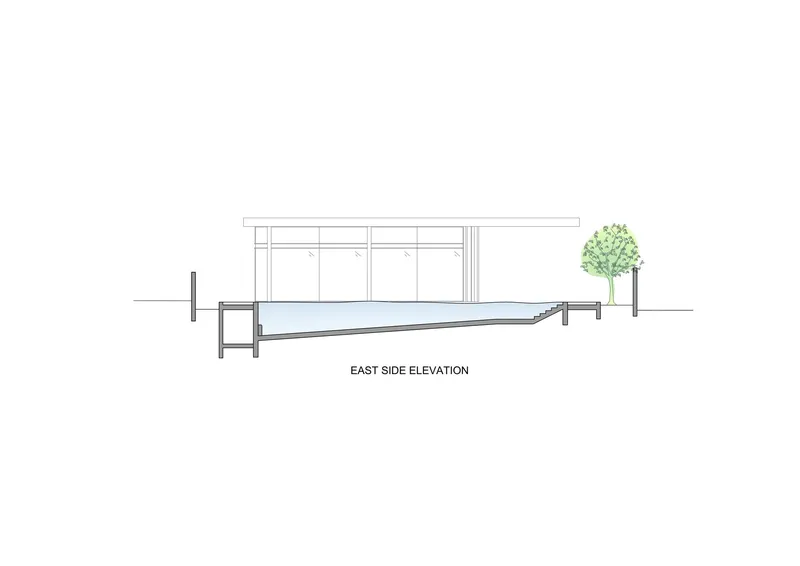
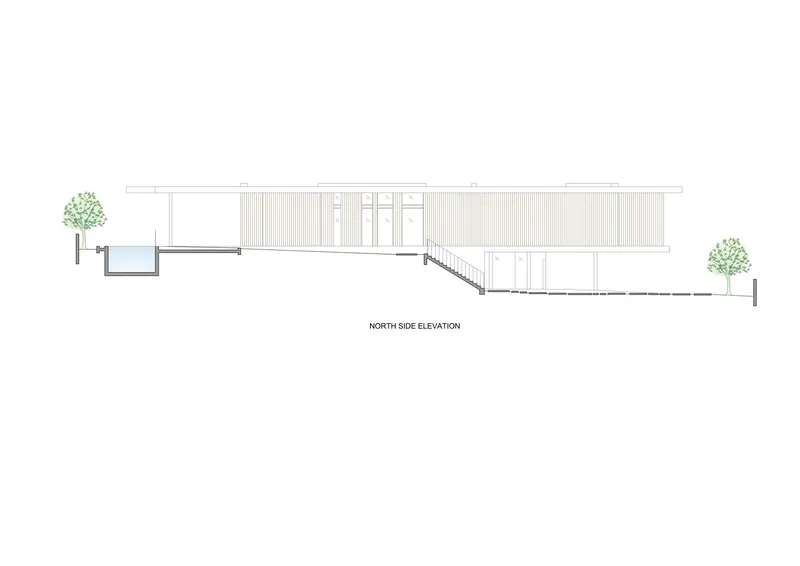
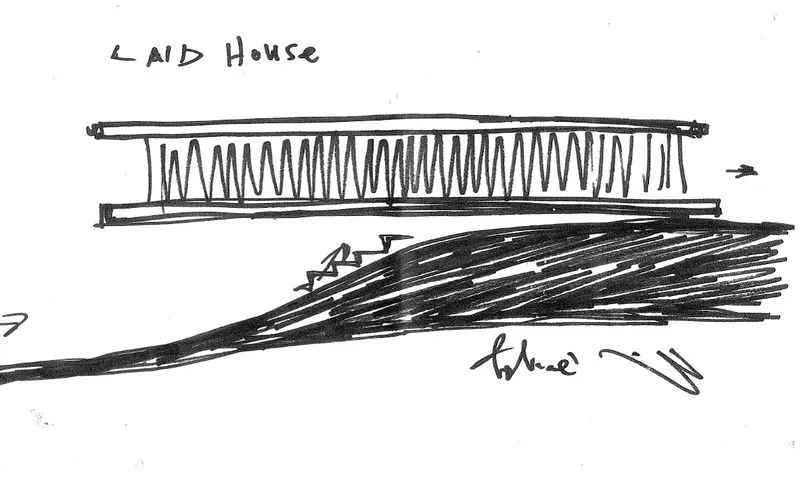
The elevations reinforce the house's horizontal posture. From the south, the timber screen reads as a continuous band floating above the planted slope. From the east, the exposed lower level reveals just how deeply the house is set into the hillside. The early sketch at the end of the series is worth noting: a ribbed roof structure over a sloping section that clarifies the design intention from the project's earliest stages. The circular voids, the cantilevered canopy, the layered section are all legible in that initial drawing.
Why This Project Matters
Laid House is a convincing argument for site-specific residential design in a market where hillside houses often default to retaining walls and elevated platforms that ignore the slope. Israelevitz's approach is the opposite: the building follows the fold, enters from below, and distributes its program across levels that each touch the ground differently. The circular roof voids are the project's signature, but they succeed because they are integrated into a broader strategy of light, shade, and sectional variety rather than applied as decoration.
At 800 square meters, there is a risk that a house of this size feels sprawling or indulgent. What prevents that here is the discipline of the plan and the compression and release built into the circulation. You are never simply moving through space; you are crossing water, passing beneath a canopy, ascending alongside rough stone, stepping into a courtyard. Each transition is marked. The house is large, but it earns its scale by making every square meter of covered outdoor space work as hard as the rooms themselves.
Laid House by Dan and Hila Israelevitz Architects, Israel. 800 m². Completed 2022. Photography by Oded Smadar.
About the Studio
Share Your Own Work on uni.xyz
If projects like this are the kind of work you want to make, uni.xyz is a place to publish your own, find collaborators, and enter design competitions.




Popular Articles
Popular articles from the community


Lunar Spiral: Space Architecture Shaped by the Mathematics of the Universe
Lunar Spiral reimagines space architecture through Fibonacci geometry, lunar regolith, levitating habitats, and self-sustaining Moon living.

Conexión: Biophilic Design Reimagines High-Rise Living in Hong Kong
Conexión reimagines high-rise living in Hong Kong through biophilic design, green facades, shared spaces, daylight, water and nature within.

Co-Life: Senior Housing Design That Reconnects Older Adults With the City
Co-Life reimagines senior housing design through healing gardens, shared streets, workshops, and a sustainable community across generations.

Co-life: Sustainable Architecture for Age-Friendly Community Living
Co-life reimagines sustainable architecture for seniors through courtyards, rammed earth, shared gardens, and spaces designed for belonging.


Similar Reads
You might also enjoy these articles

Bao Huynh Watercolor Atelier: A Serene Art Retreat in Hội An
Bao Huynh Watercolor Atelier in Hội An blends multifunctional art spaces, sustainable design, local materials, and family-friendly living in a serene environment.

Atelier Macri Concept Store Interior Design by CASE-REAL
Atelier Macri store features a "ko" counter, walnut wood details, cork displays, blending retail, gallery, and seamless customer experiences.

Manuel Vargas Izquierdo Stadium and High-Performance Sports Center: Architectural Excellence in Jalpa de Méndez
The Manuel Vargas Izquierdo Stadium blends sustainable design, inclusive sports facilities, and cultural-inspired architecture, revitalizing Jalpa de Méndez’s public spaces.

KAKR Buluh Awar Hall: Revitalizing Community and Ecology Through Bamboo Architecture
Community built bamboo hall revitalizes Buluh Awar village, empowering youth, restoring ecology, celebrating vernacular craftsmanship through sustainable architecture and culture.


Explore Ai Generated Competitions
Discover active competitions in this discipline


Challenge to design mud housing for contemporary communities


Challenge to reimagine the Iron Throne


Photograph architecture without architects


Illustrate the lost glory of Angkor Wat - Render Challenge
Comments (0)
Please login or sign up to add comments
No comments yet. Be the first to comment!