

De Achtertuin Restaurant by Kumiki: Adaptive Reuse and Spatial Flexibility in a Former Industrial Landmark
Adaptive reuse transforms a former industrial hall into a flexible restaurant, blending preserved concrete structure, tangram geometry, daylight, and lighting.


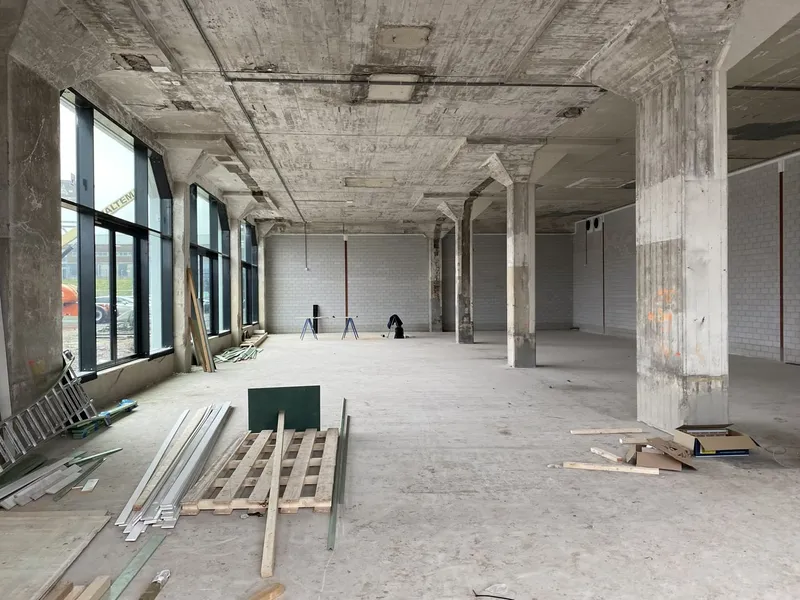
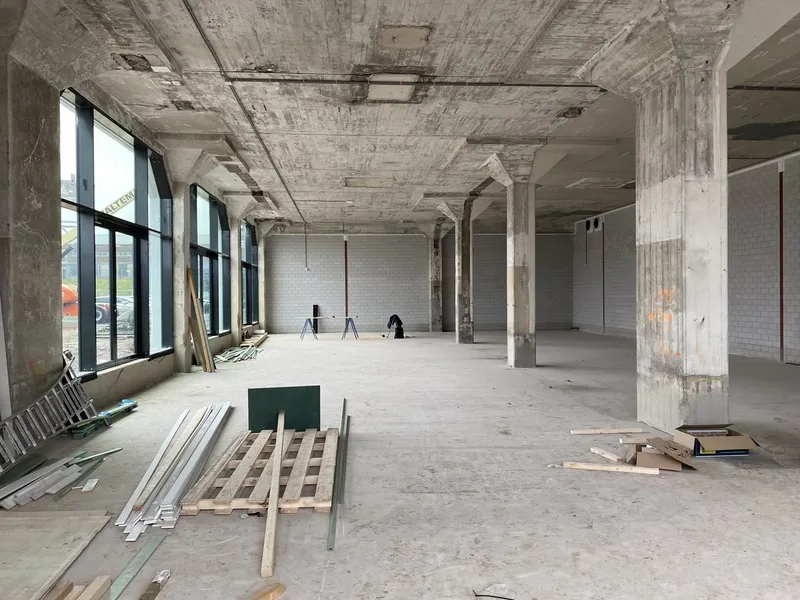
Located within the historic De Vasim complex in Nijmegen, De Achtertuin Restaurant by Kumiki exemplifies contemporary adaptive reuse through a sensitive yet bold interior transformation. Occupying 600 square meters inside a former art silk spinning mill originally designed by architect Zandstra in 1948, the project reimagines an industrial shell as a vibrant restaurant, bar, and social venue rooted in flexibility, atmosphere, and cultural continuity.
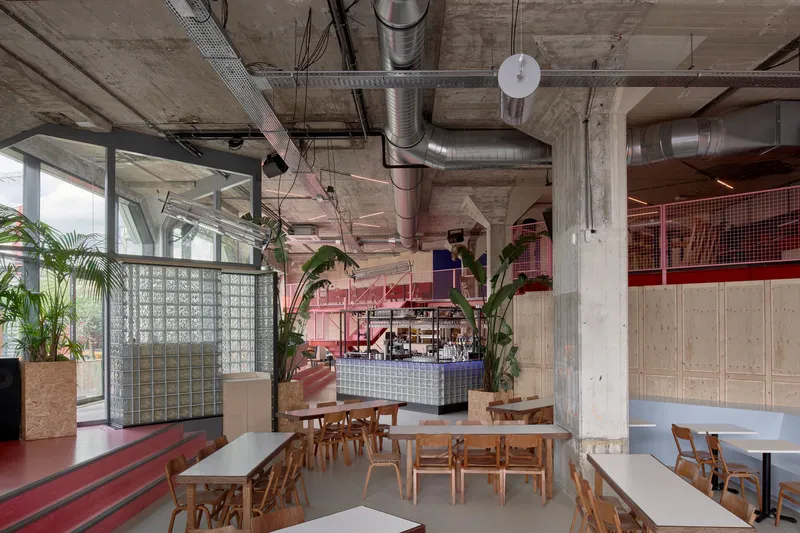
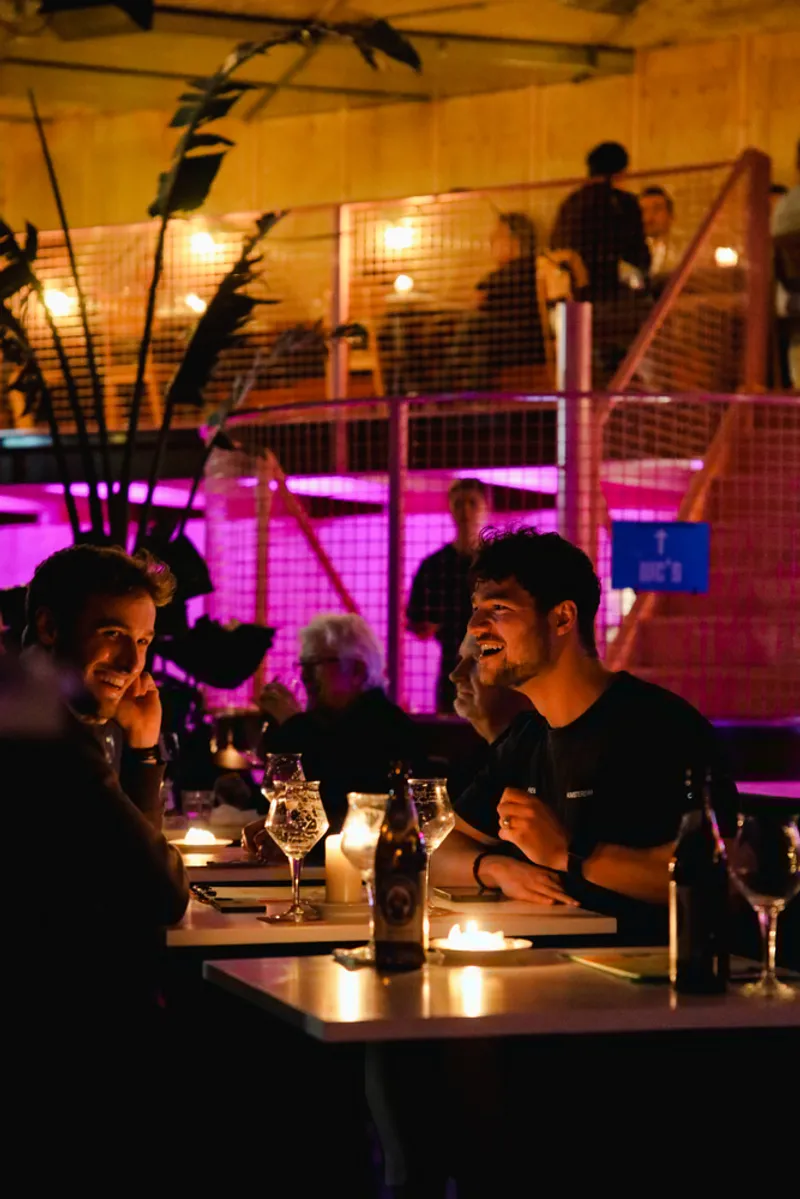
The Nyma factory building carries decades of layered history, shifting from industrial production to cultural and creative uses. In 2021, the monumental structure was redeveloped into a multifunctional hub accommodating workspaces, hospitality, sports, and cultural programs. Within this context, De Achtertuin emerged as a permanent indoor extension of a temporary outdoor gathering space that originated during the COVID-19 pandemic, transforming an improvised meeting place into a lasting urban oasis.
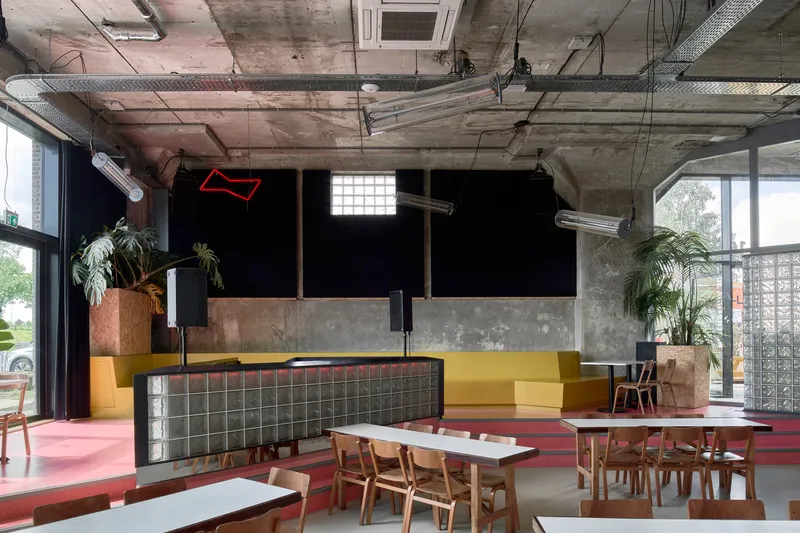
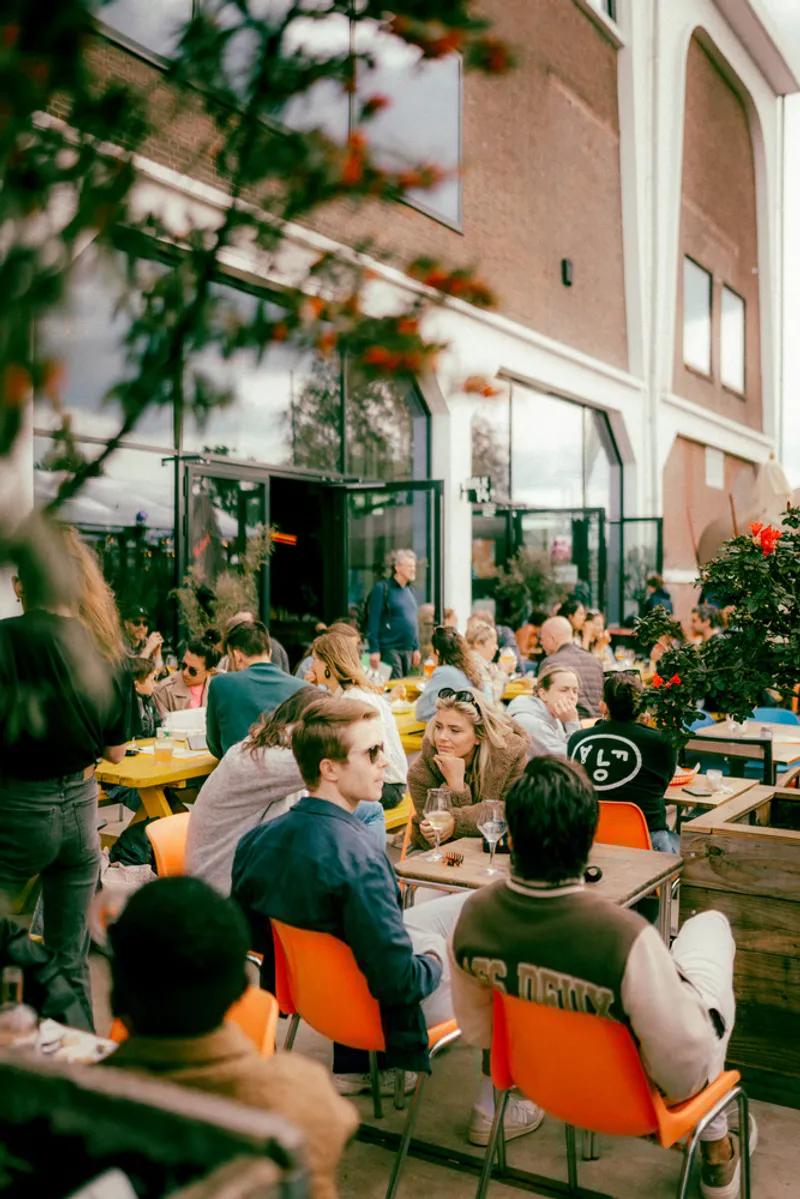
One of the central architectural challenges was integrating multiple functions within the expansive raw shell while maintaining spatial coherence. The interior needed to support a fluid transition from afternoon drinks to dinner service and late-night dancing, with atmospheres that evolve gradually rather than shift abruptly. Kumiki approached this challenge by prioritizing spatial adaptability, layered circulation, and atmospheric modulation through form, material, and light.
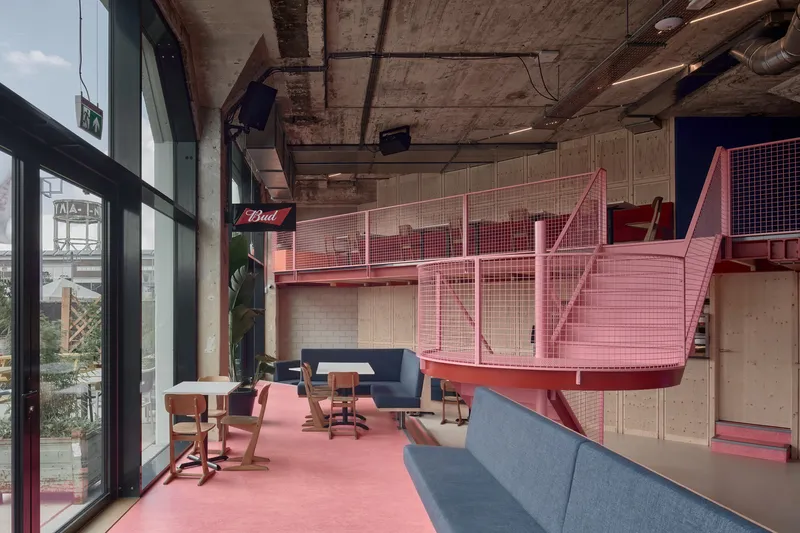
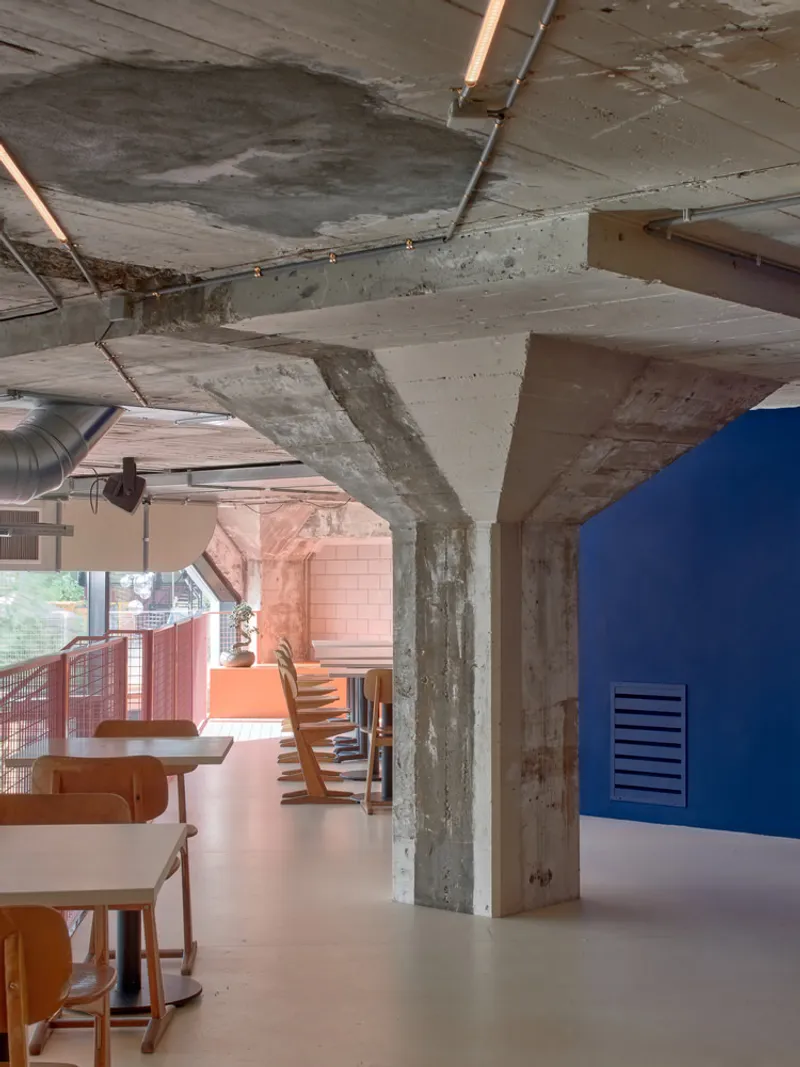
Key elements of the original structure, including the exposed concrete ceiling and distinctive mushroom columns, were carefully preserved, reinforcing the industrial character of the space. In contrast, newly introduced architectural interventions are organized on a 45-degree rotated grid, deliberately set against the orthogonal logic of the existing structure. This strategy generates a dynamic spatial tension while clearly distinguishing old from new.
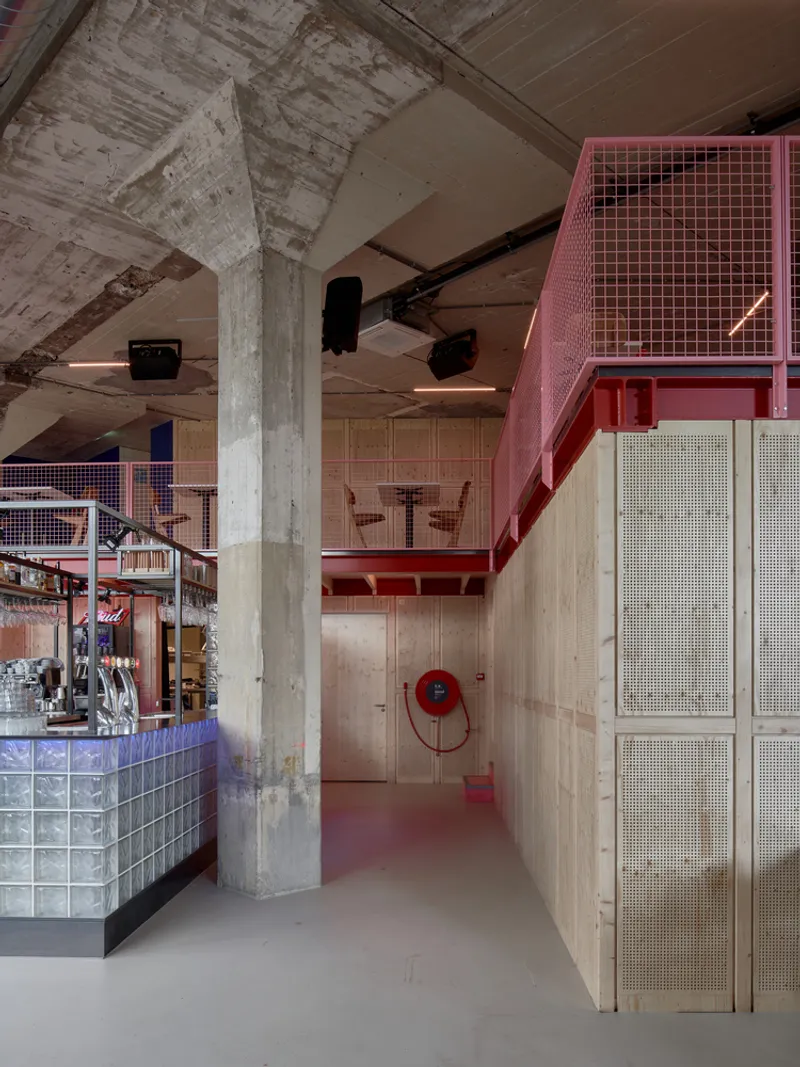
Triangular architectural components: including a mezzanine, acoustic wooden wall, draft portal, and glass brick installations, collectively form a three-dimensional Tangram-like composition. These elements shape sightlines, define zones, and enhance spatial depth while optimizing the penetration of natural daylight deep into the interior. The result is a continuously unfolding spatial experience that shifts as visitors move through the restaurant.
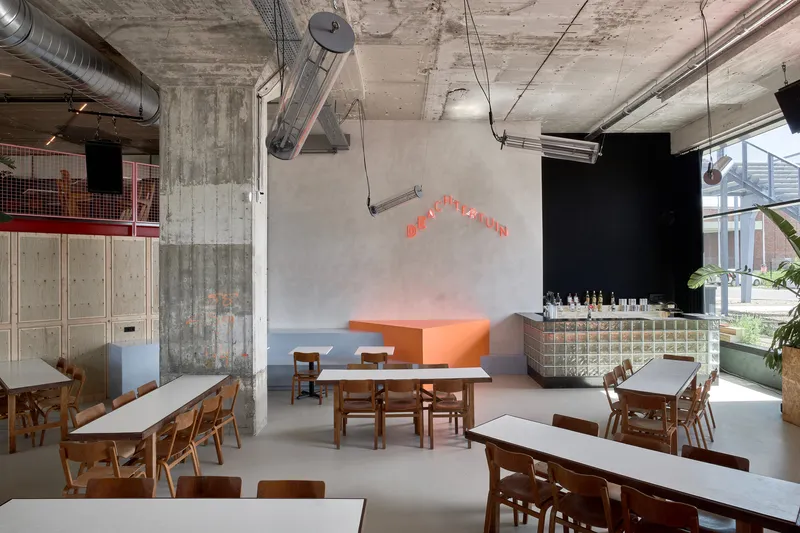
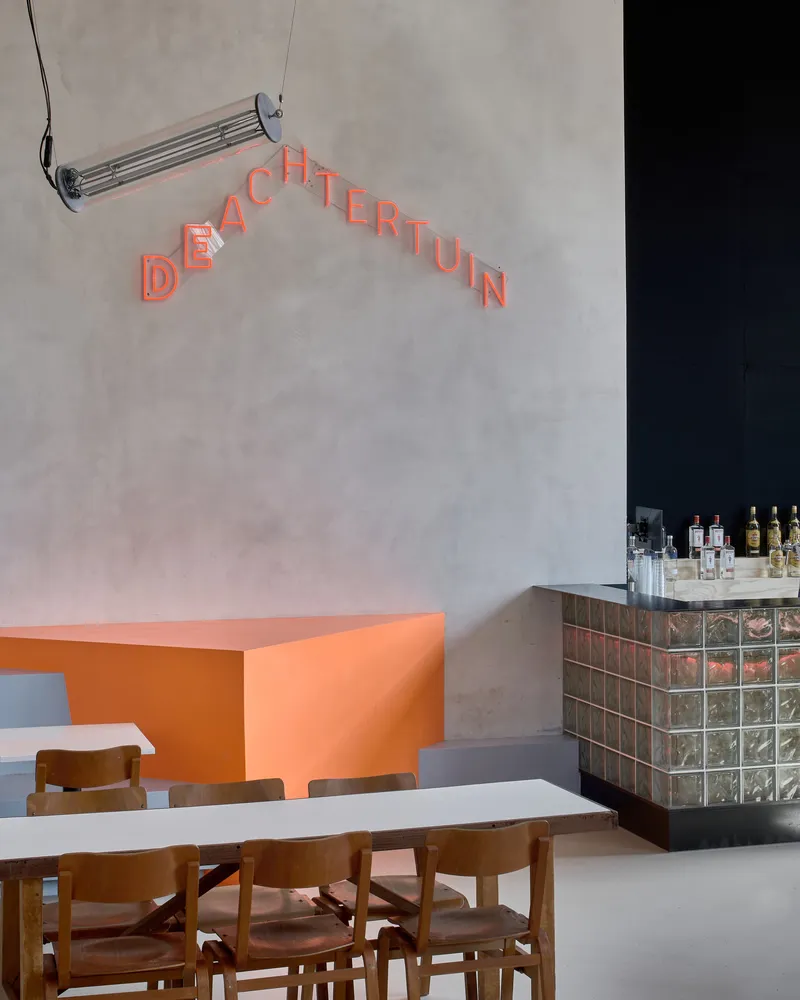
Each zone within De Achtertuin is characterized by its own atmosphere, achieved through careful manipulation of scale, proportion, materiality, and lighting design. Developed in close collaboration with lighting artist Nick Mansveld, the lighting concept supports a smooth temporal transition throughout the day, subtly transforming the mood from daylight dining to evening socializing. Integrated lighting elements allow the space to adapt without physical reconfiguration.
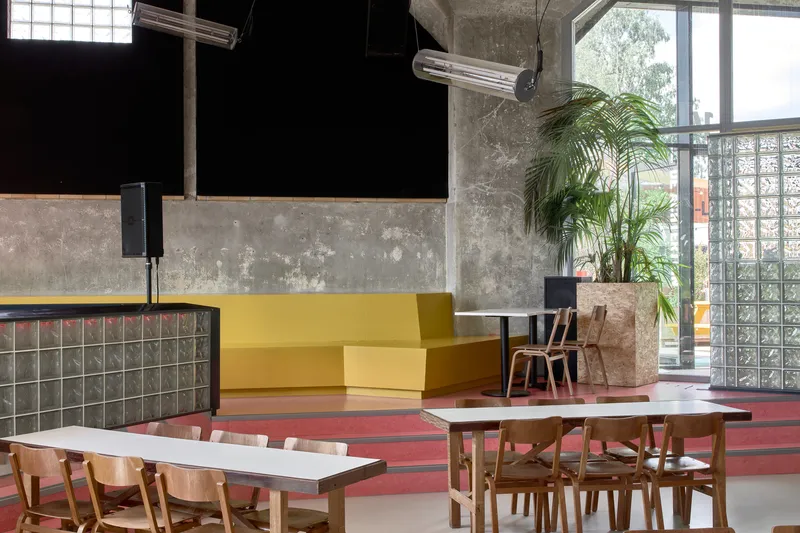
Custom built-in furniture made from glass building blocks references the original factory façade, reinforcing material continuity between past and present. At night, colored LED strips embedded behind the glass blocks activate the interior with a soft glow, adding a performative layer to the architecture. A raised podium at the entrance strengthens the connection between indoor and outdoor spaces, while lowered steps create sufficient free height to accommodate an additional floor.
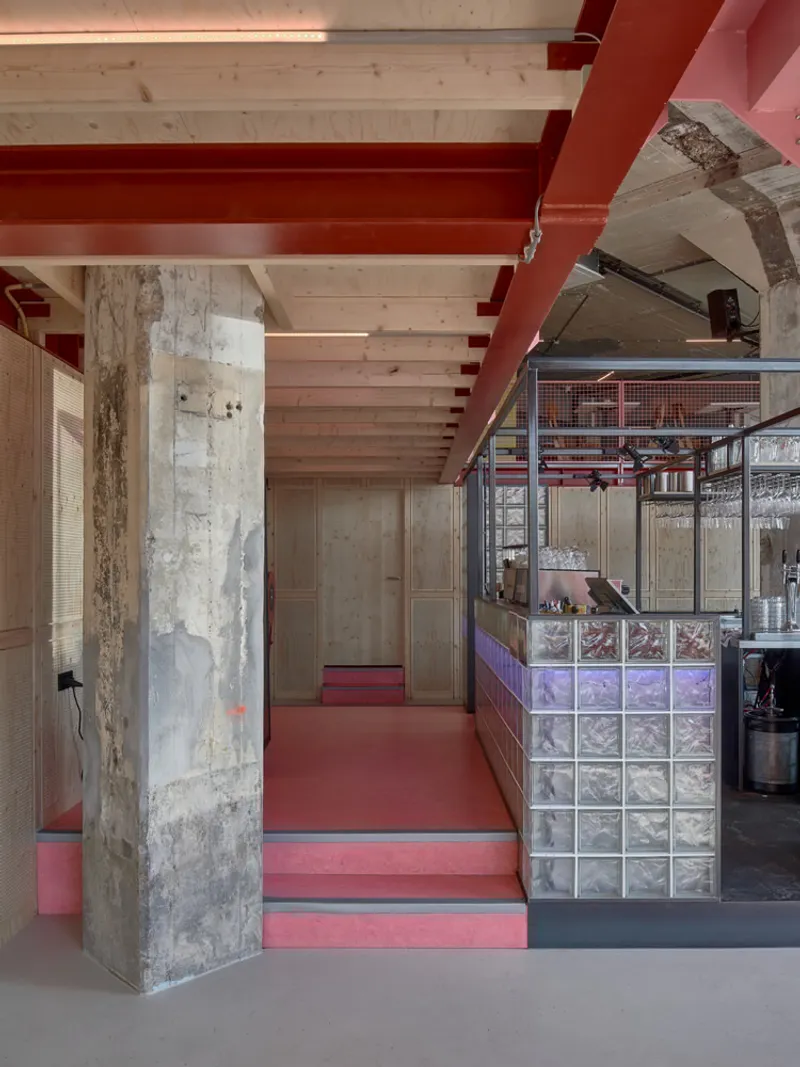
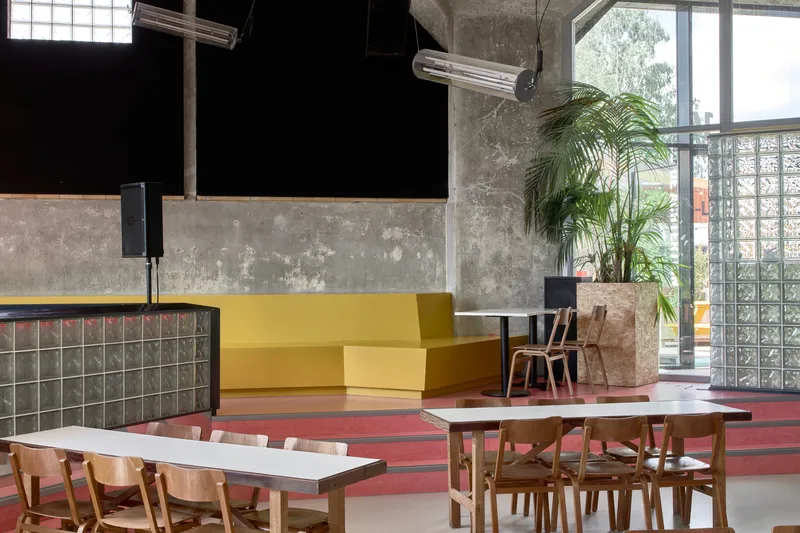
Behind a full-height sloping wall, service functions are discreetly integrated. The kitchen and storage areas are located on the ground floor, while staff facilities and restrooms occupy the upper level. This efficient spatial organization allows public areas to remain open, flexible, and visually uncluttered.
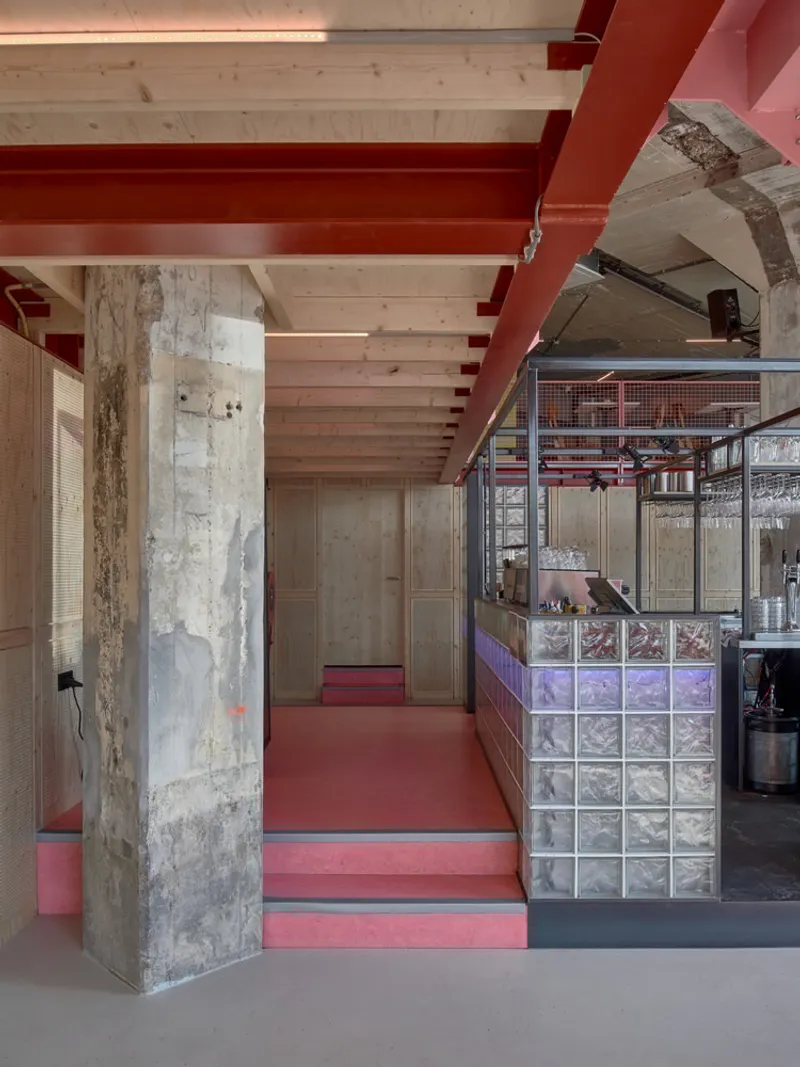
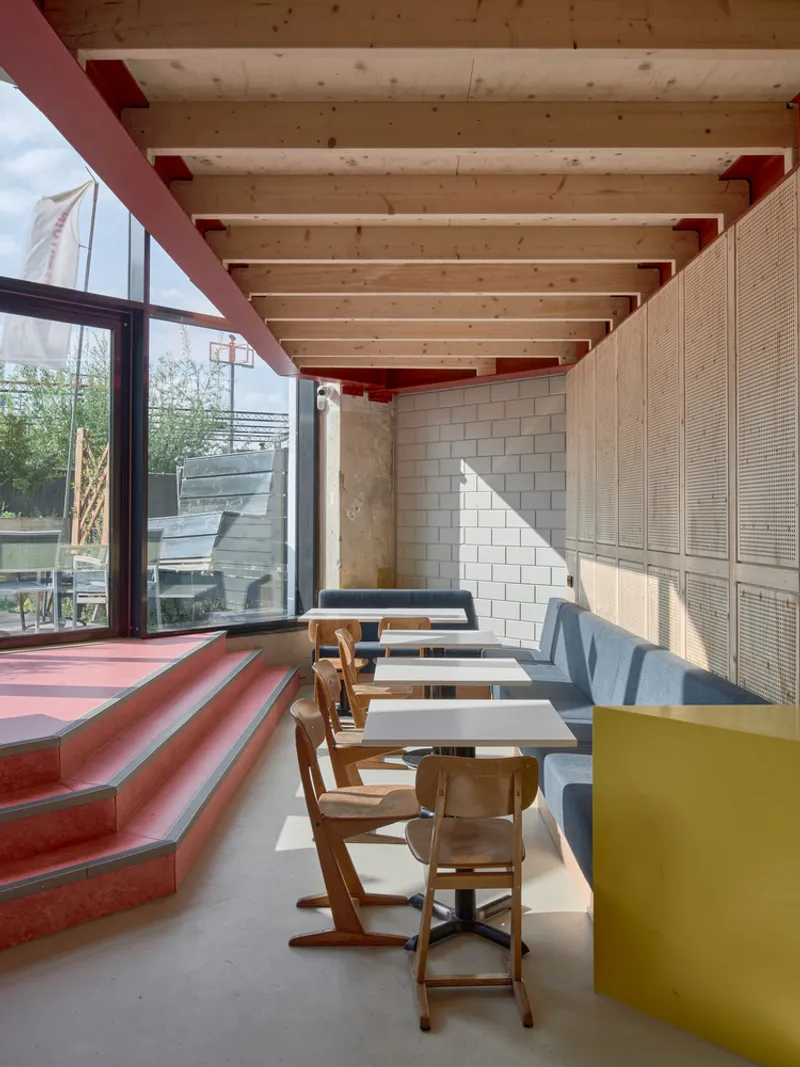
Through its layered design strategy, De Achtertuin Restaurant successfully merges industrial heritage with contemporary hospitality design. By embracing flexibility, adaptive reuse, and spatial experimentation, Kumiki has created a dynamic social environment where past and present converge: an interior architecture that supports meeting, movement, and celebration both now and in the future.
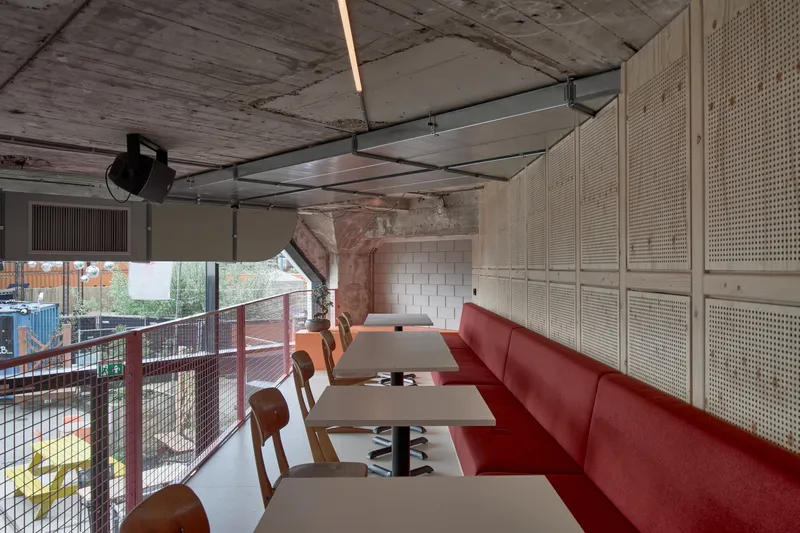
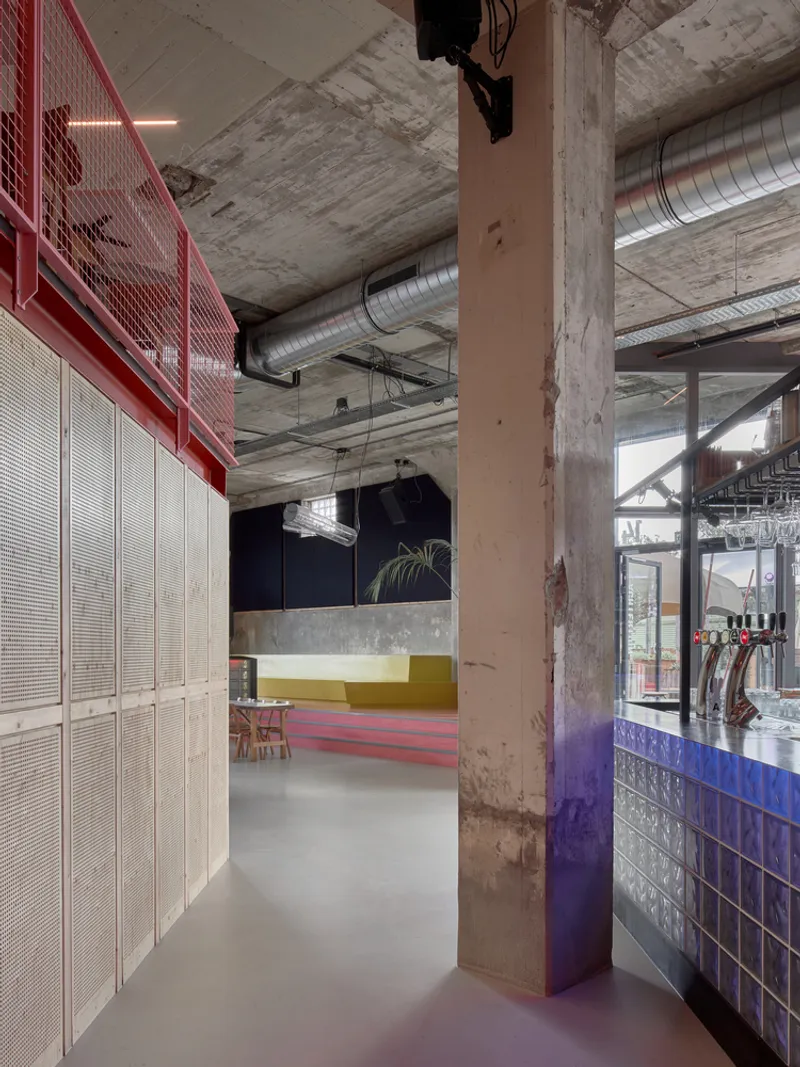
All photographs are works of MWA Hart Nibbrig


Popular Articles
Popular articles from the community

Tsunami Convergenics: Turning Catastrophic Ocean Forces into Underwater Housing Infrastructure
A speculative underwater settlement off the coast of Onagawa, Japan, treats tsunamis and typhoons as energy sources rather than threats.
Extended Shell: Retrofitting Kolkata's Balconies as Living Urban Thresholds
A modular retrofit system recovers the social and environmental intelligence of Kolkata's historic verandas for contemporary Park Street residents.

Opera on the Sea: Driftwood Logic Shapes a Timber Opera House on Estonia's Coast
Trevor Orgill's opera house translates the entangled drift of floating timber into a civic building where wood, water, and music converge.

Manzana Morphosis: Stretching Barcelona's Grid into a Living Landscape for 2050
A radical reworking of the Eixample manzana turns density into a tool for generous public space, vertical ecology, and environmental performance.

Similar Reads
You might also enjoy these articles


Hodi-Mandai Geram
Project Function: Preservation and revitalization of the Intangible heritage and socio-spatial identity of the Hodi by Housing, Cultural Memory Center, Sacred Grove, landscape, local tourism economy


Olio Towers: A Mid-Rise for Performers That Fuses Housing, Rehearsal, and Stage
Located blocks from Houston's Theater District, this modular tower stacks living units around a central performance atrium.

Oasis: Modular Green Housing Carved into Dhaka's Urban Fabric
A shortlisted Plugin Housing entry reclaims unauthorized settlements in Dhaka with stepped concrete volumes, green roofs, and ventilation-driven design.

Black Hole: A Floating Megastructure for the Post-Physical Era
Emiliano Mazzarotto envisions a spherical, self-scaling arena where e-sports, digital hotels, and holographic stadiums replace traditional public space.

Explore Architecture Competitions
Discover active competitions in this discipline

Challenge to reimagine the Iron Throne

Photograph architecture without architects

Illustrate the lost glory of Angkor Wat - Render Challenge

Design challenge to reuse E-waste
Comments (0)
Please login or sign up to add comments
No comments yet. Be the first to comment!