

Deauville Terminal by Ferrier Marchetti Studio: Redefining Sustainable Airport Terminal Architecture in France
Deauville Terminal redefines sustainable airport architecture through timber design, energy innovation, and a net-positive carbon footprint strategy.


A New Vision for Sustainable Air Travel Infrastructure
As global air traffic continues to increase despite rising environmental concerns, Deauville Terminal in Saint-Gatien-des-Bois presents a pioneering model for sustainable airport terminal architecture. Designed by Ferrier Marchetti Studio, the terminal responds to the urgent need for carbon-conscious infrastructure with a deep commitment to bio-based materials, renewable energy integration, and human-centered design. Located in the Normandy countryside, the project marks a critical shift toward climate-positive aviation architecture.
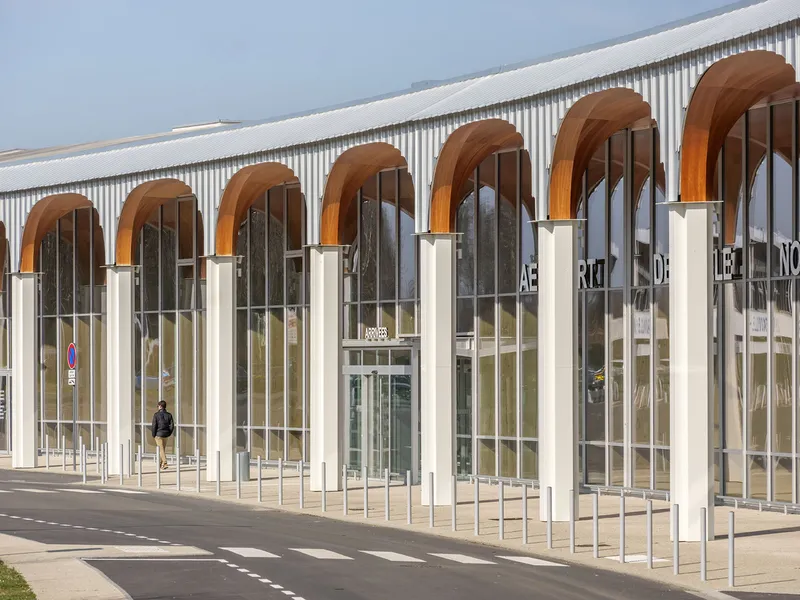
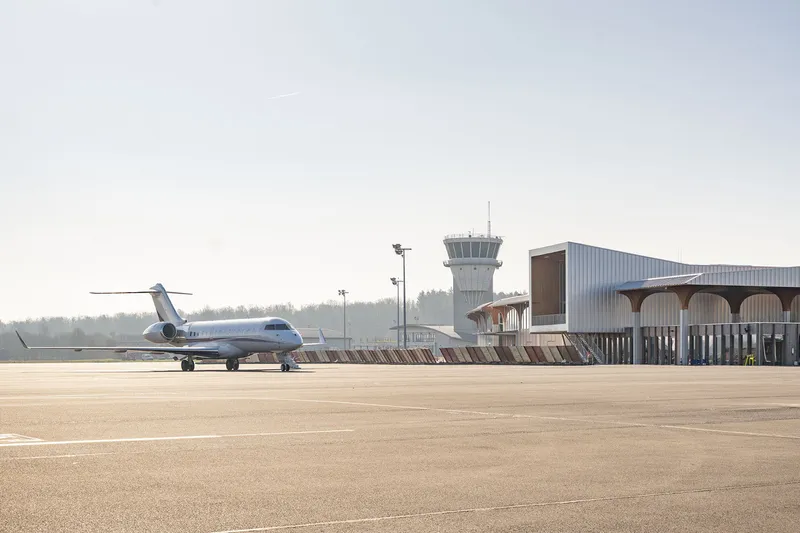
Prioritizing Timber and Bio-Based Materials
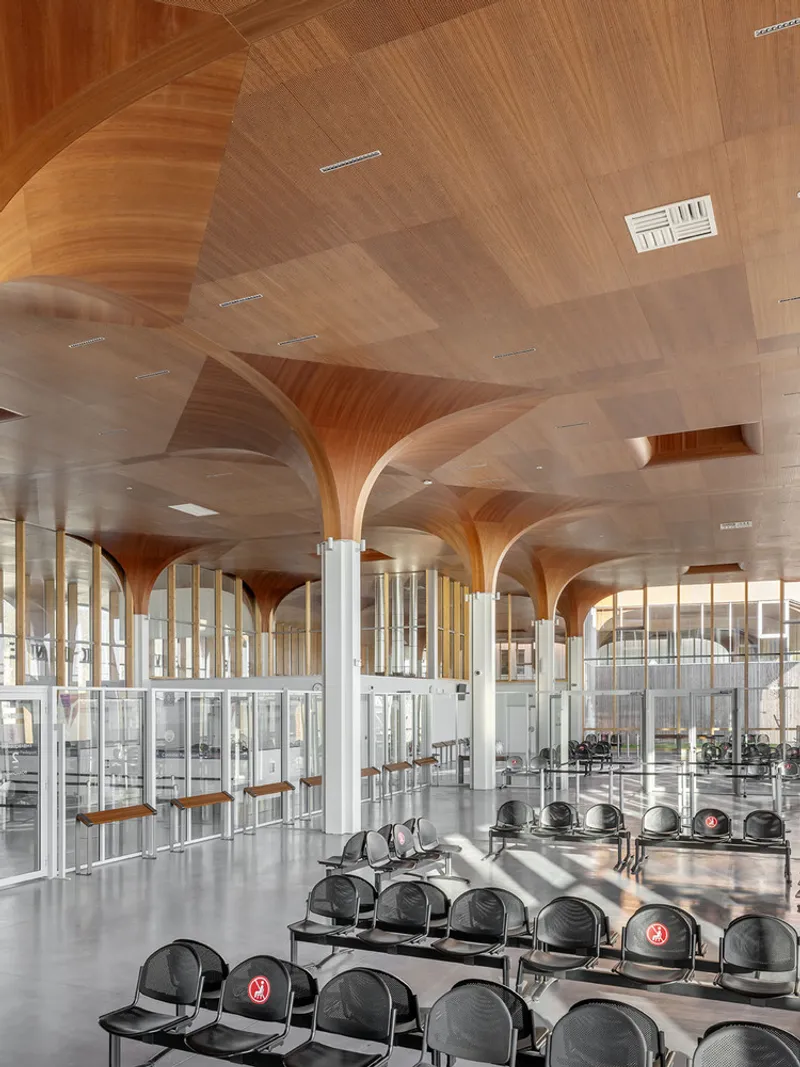
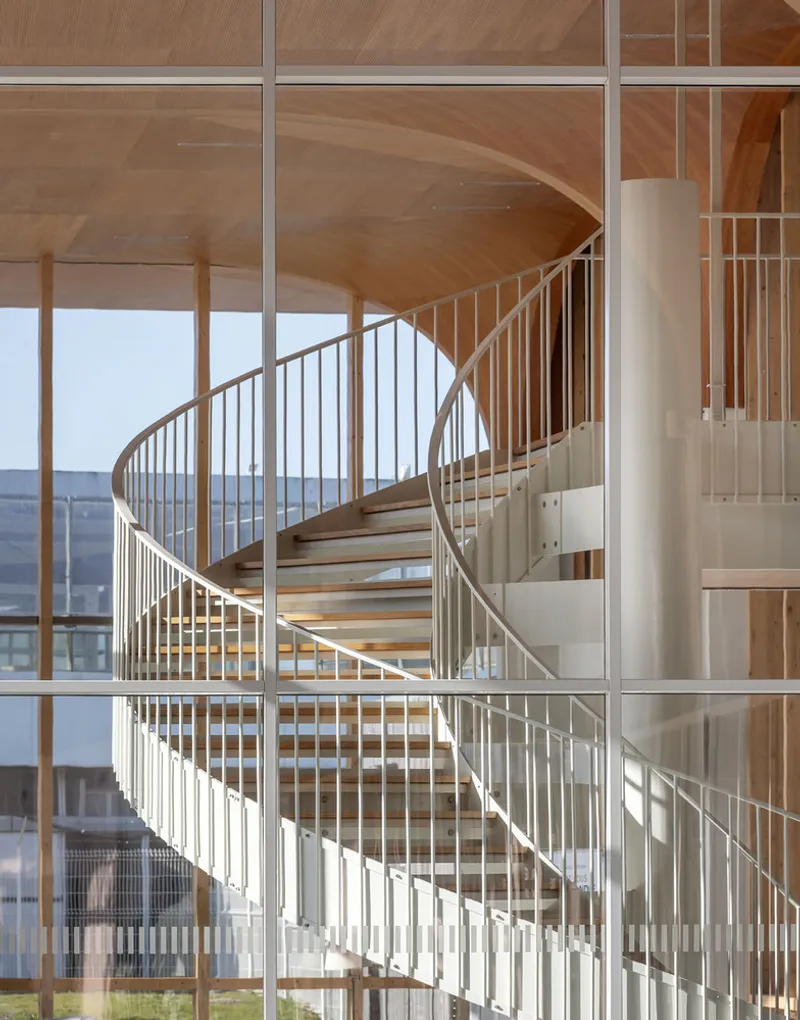
At the core of the Deauville Terminal’s sustainability strategy is its emphasis on timber construction and bio-based materials. Both the outer shell and interior finishes rely on responsibly sourced wood, minimizing embodied carbon and offering a warm, tactile atmosphere for passengers. The material palette blends seamlessly with the surrounding Norman landscape, fostering a sense of regional identity and ecological harmony.
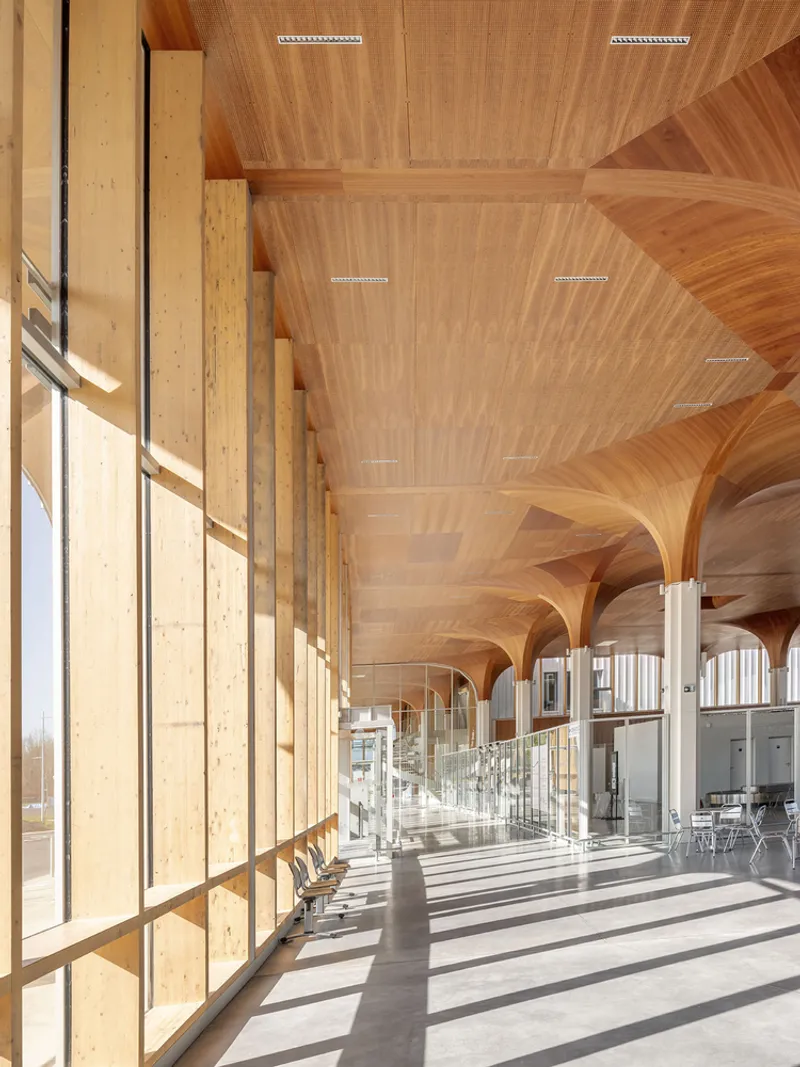
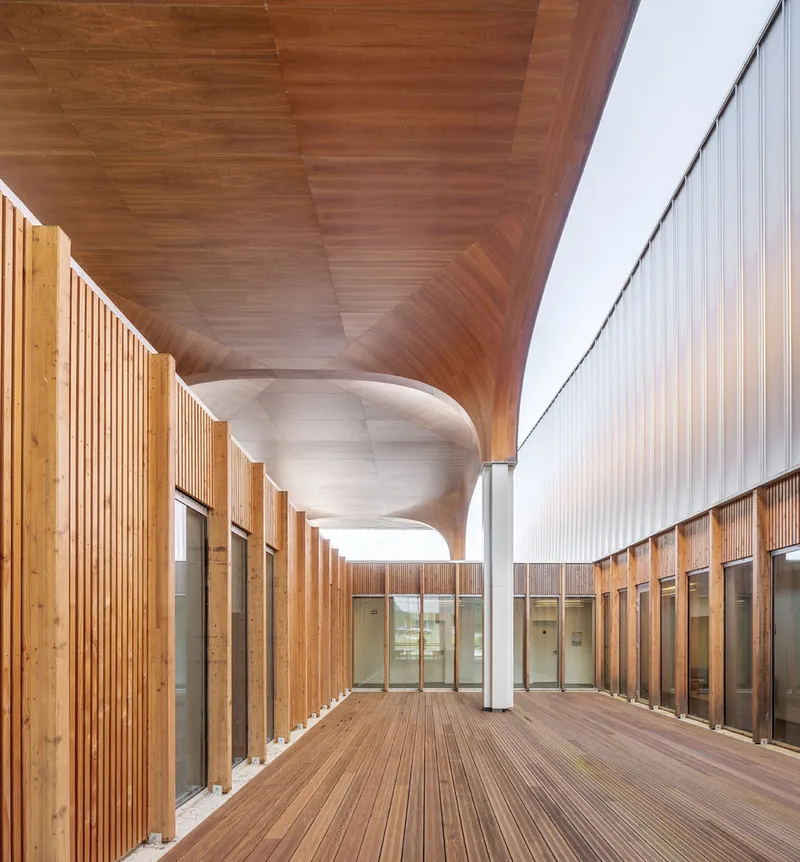
Low-Tech, High-Impact Design Strategy
Rather than relying on energy-intensive systems, the terminal adopts a strategy of technical frugality. Its energy management system is calibrated to respond in real time to actual user occupancy, drastically reducing energy waste. Natural ventilation, passive cooling, and minimal mechanical systems are combined with thoughtful spatial design to support energy-efficient terminal operations.
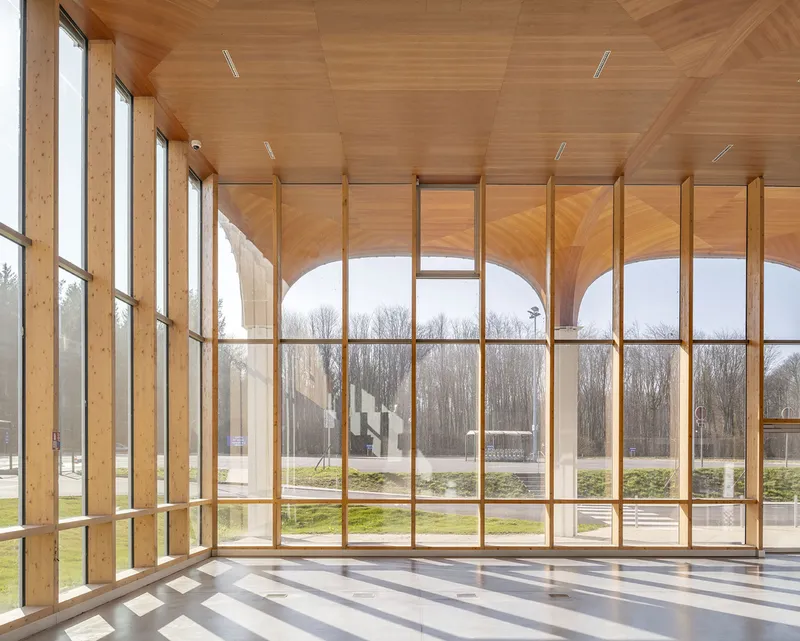
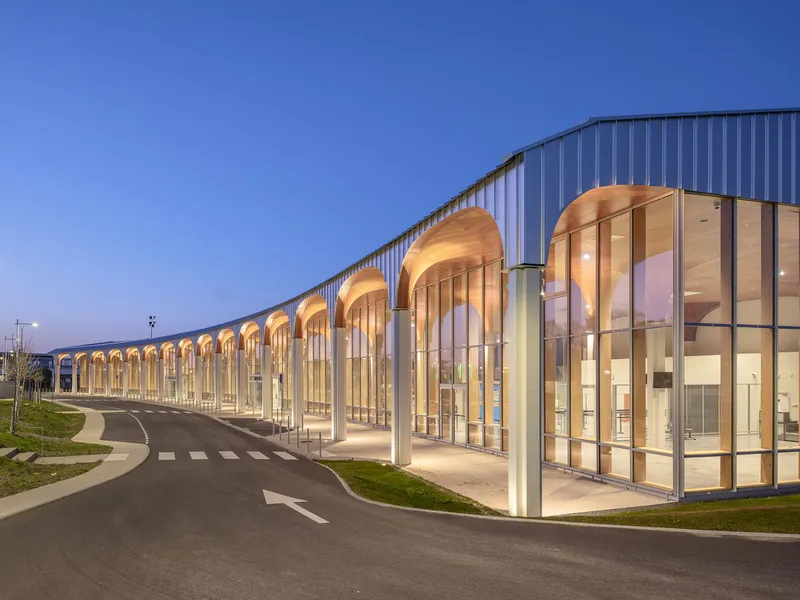
A Ground-Level Passenger Experience
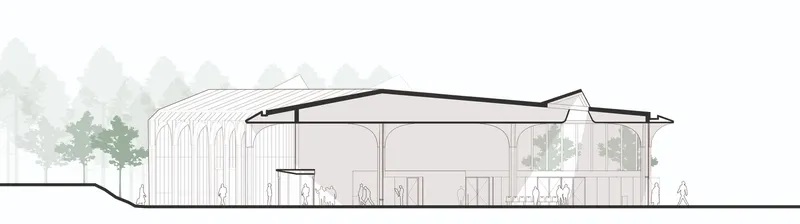
Inspired by the simplicity of early aviation infrastructure, the Deauville Terminal brings passengers and aircraft back to the same ground level. This spatial decision enhances circulation intuitiveness, eases navigation, and simplifies boarding and disembarkation procedures. It creates a more fluid, human-scaled experience that reflects the terminal’s commitment to accessibility and user comfort.
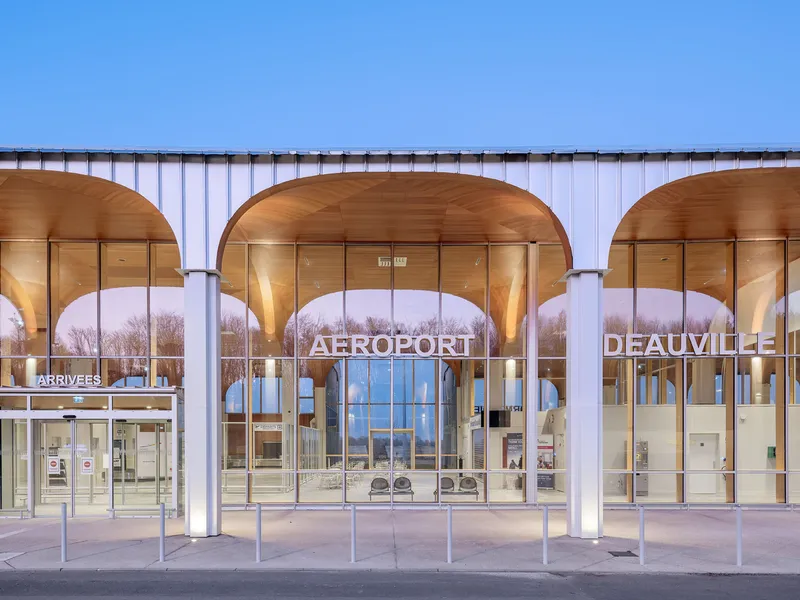
Architectural Form as Environmental Gesture
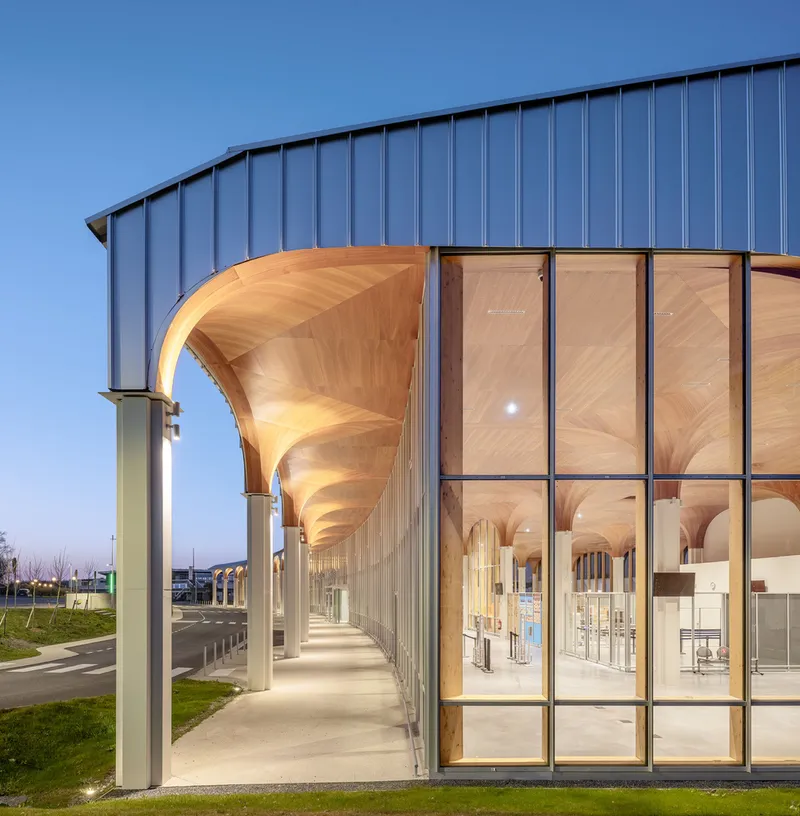
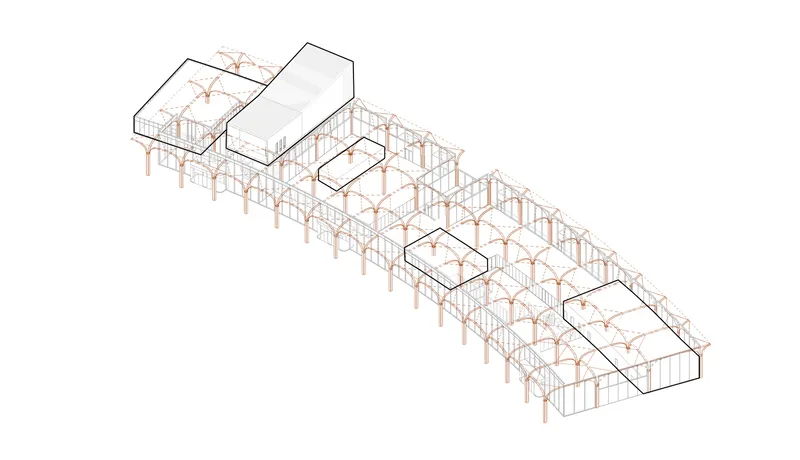
The building is expressed through large timber canopies, sheltering circulation routes and waiting areas under gentle, organic forms. These canopies are not only expressive of local vernacular architecture but also serve to control solar gain, channel airflow, and protect the terminal from seasonal weather conditions. They allow the terminal to sit lightly on the land while offering thermal and visual comfort.
Integrating Clean Energy on a Regional Scale
Deauville Terminal is the first phase of a wider environmental masterplan. Adjacent to the building, a massive 45-hectare photovoltaic park is under development, with the capacity to generate over 60 megawatts of solar power. This initiative positions Deauville Airport as one of the first to aim for a net-positive carbon footprint, setting a new benchmark for energy-integrated aviation design in Europe and beyond.
Towards the Future of Airport Terminal Design
This project underscores Ferrier Marchetti Studio’s holistic approach, combining architectural innovation with environmental responsibility. Deauville Terminal isn't merely a node of transportation—it is a climate-resilient architectural prototype. By rethinking how airport buildings can function in symbiosis with nature, it offers a replicable framework for the next generation of sustainable airport terminal architecture around the world.
All photographs are works of Luc Boegly


Popular Articles
Popular articles from the community


Opera by the Sea Estonia: Three Shells Dissolving Architecture into Tallinn's Coastline
A winning opera house proposal replaces monumental form with interconnected shells that blur the boundary between building, park and Baltic Sea.

Temporary Home for Dogs: A Reversed Zoo Rethinks Animal Shelter Architecture
In Bucharest, a sinuous corridor and freed landscape flip the logic of containment, designing a shelter that works to make itself unnecessary.
Extended Shell: Retrofitting Kolkata's Balconies as Living Urban Thresholds
A modular retrofit system recovers the social and environmental intelligence of Kolkata's historic verandas for contemporary Park Street residents.

Cloaked Colonization: A Mobile Underwater Habitat That Moves Like a Fish
Micah Abaya's shortlisted EHC Pacific entry reimagines ocean settlement as a dispersed network of self-sustaining architectural organisms.

Similar Reads
You might also enjoy these articles

Bamboo Housing Challenge 2026: Design Affordable, Sustainable Homes Using Bamboo
An international design competition by Bamboo U and IBUKU inviting architects and designers to reimagine affordable housing using bamboo — with the winning design built full-scale in Bali.

Computational Design & Education: Beegraphy Design Awards Introduces 7th Category (Featuring Jiyun's Innovative Approach)
Dive into Beegraphy’s 7th Design Awards category, where computational design meets education to create immersive, interactive learning tools, inspired by Jiyun’s work.

From Parametric Lighting to Urban Furniture: Join the 2nd Workshop in Beegraphy’s Computational Design Series
Dive into Cutting-Edge Design Techniques and Practical Applications with Industry Experts

Last Call: Unleash Your Architectural Genius in SHAK's Kindergarten Design Competition
Urgent call for architects to join SHAK's kindergarten design competition before the looming deadline

Explore Airport Design Competitions
Discover active competitions in this discipline

Challenge to reimagine the Iron Throne

Photograph architecture without architects

Illustrate the lost glory of Angkor Wat - Render Challenge

Design challenge to reuse E-waste
Comments (0)
Please login or sign up to add comments
No comments yet. Be the first to comment!