
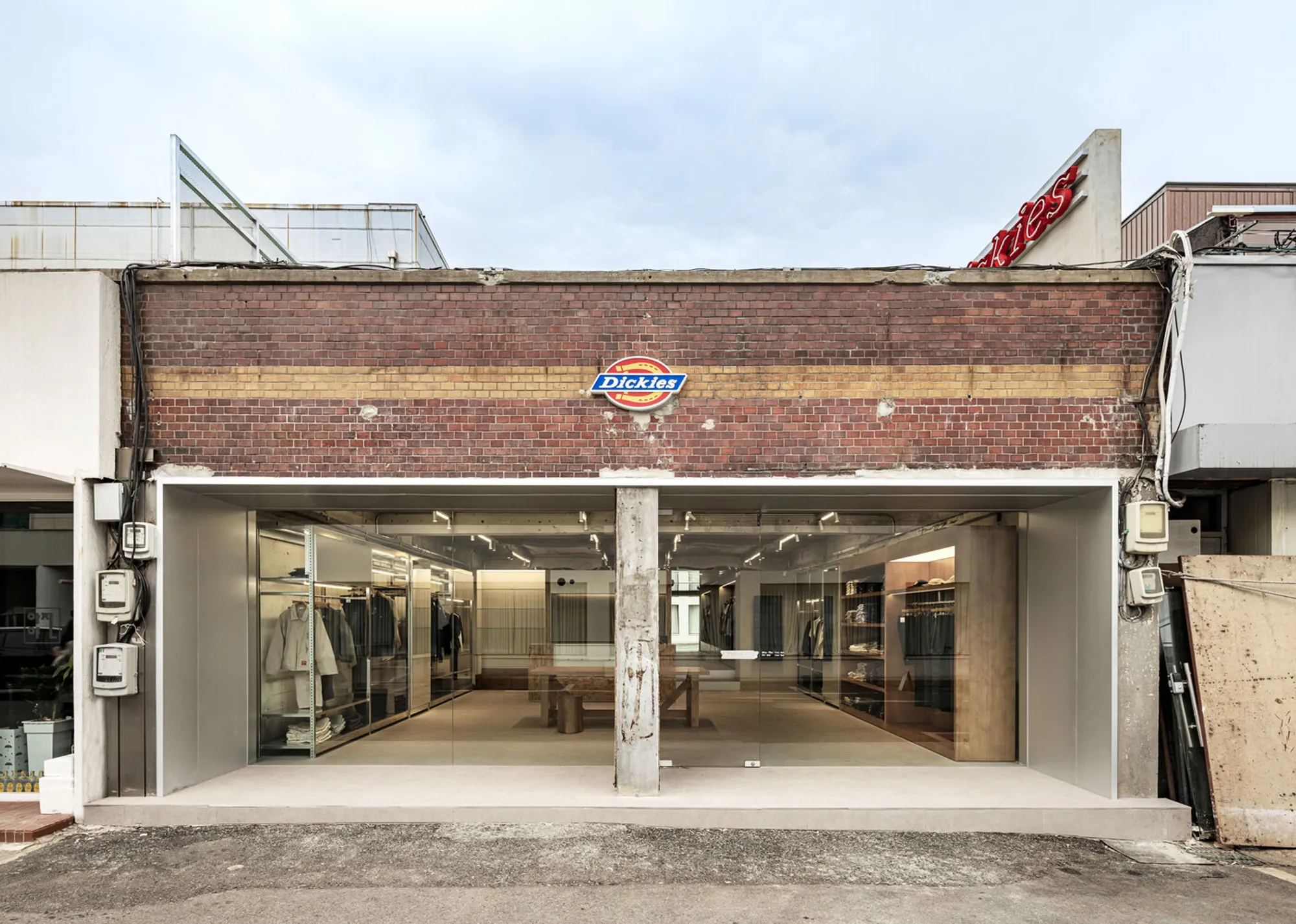
Dickies Flagship Store by oftn studio, Seoul
Dickies’ Seongsu flagship by oftn studio reimagines an aged brick building into a material-driven retail space blending heritage, durability, and modern identity.


The Dickies Flagship Store in Seongsu, Seoul, marks the iconic American workwear brand’s first dedicated flagship presence in South Korea. Designed by oftn studio, the 65-square-meter retail interior occupies a 40-year-old building previously used as a leather goods store. Commissioned by Musinsa, the project reflects a strategic effort to reposition Dickies within the Korean market while remaining firmly rooted in the brand’s longstanding values of durability, authenticity, and workwear heritage.

Located in Seongdong-gu, an area widely recognized for its industrial legacy and evolving creative culture, the project embraces the existing architectural character of its context. The original red brick exterior, visibly aged and weathered, was deliberately preserved. Rather than erasing signs of time, the design reinforces them, aligning the building’s natural patina with Dickies’ identity as a brand shaped by labor, endurance, and longevity. The restrained approach to the facade introduces large openings that visually connect the street to the interior, inviting passersby into the space while maintaining a modest street presence through minimal signage.
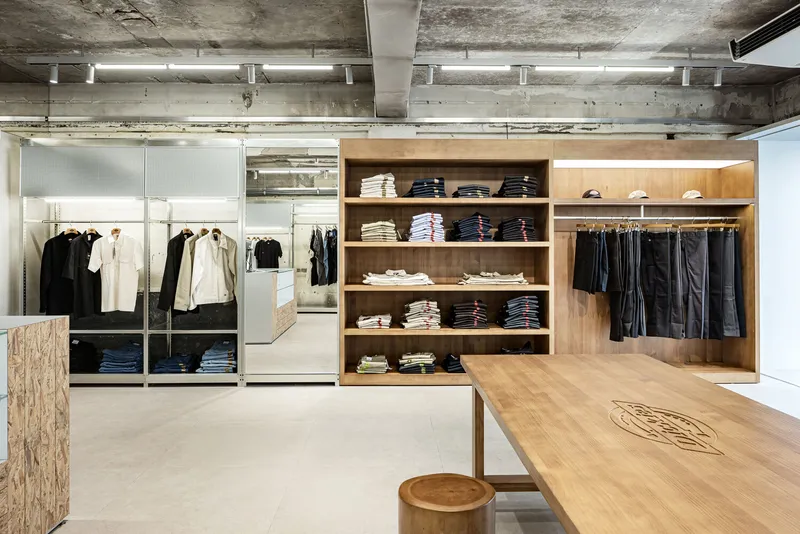
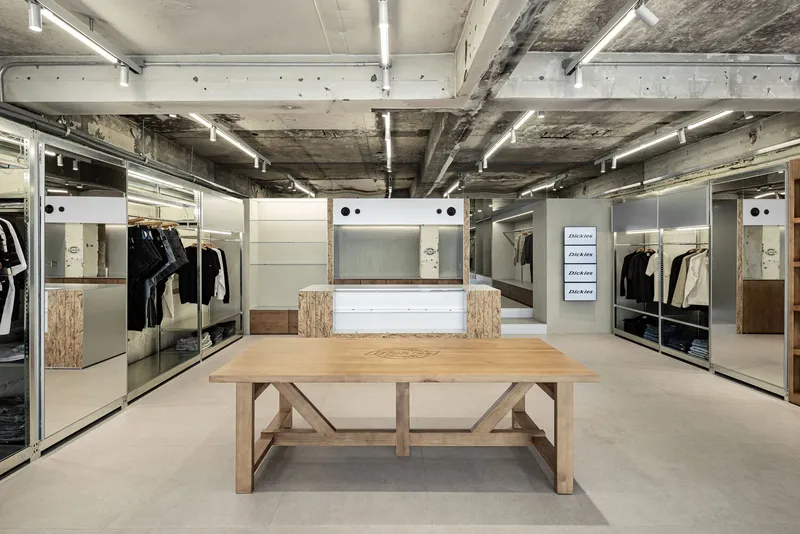
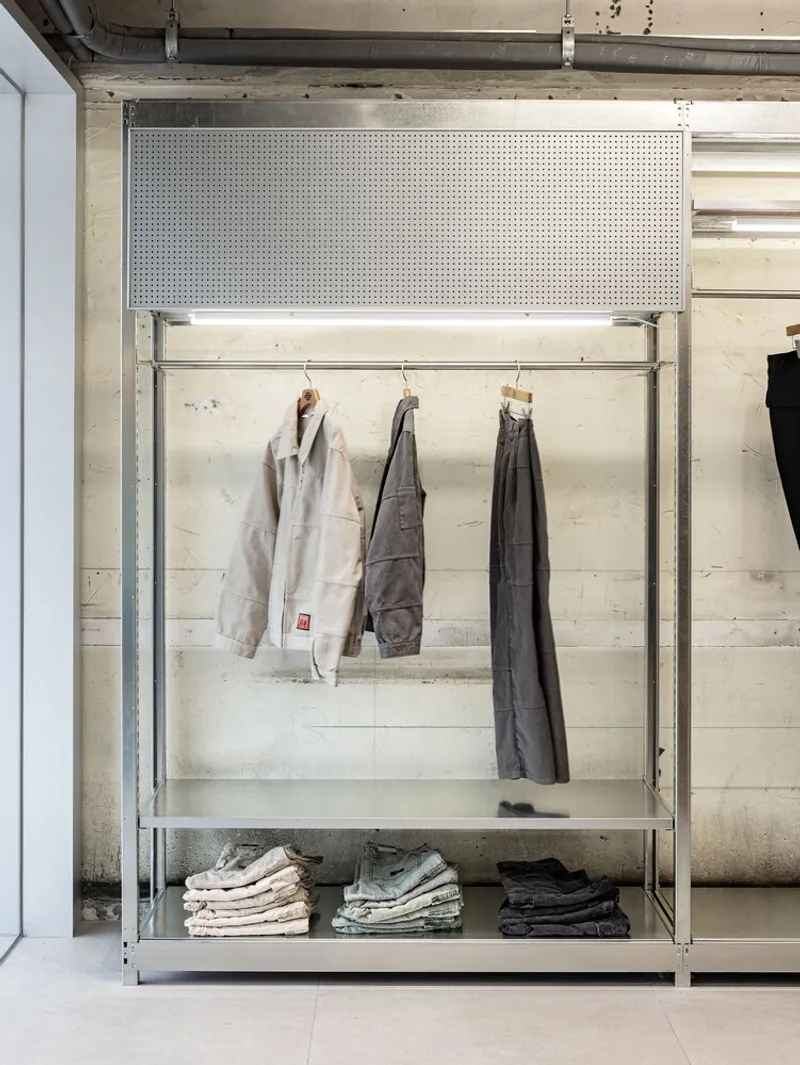
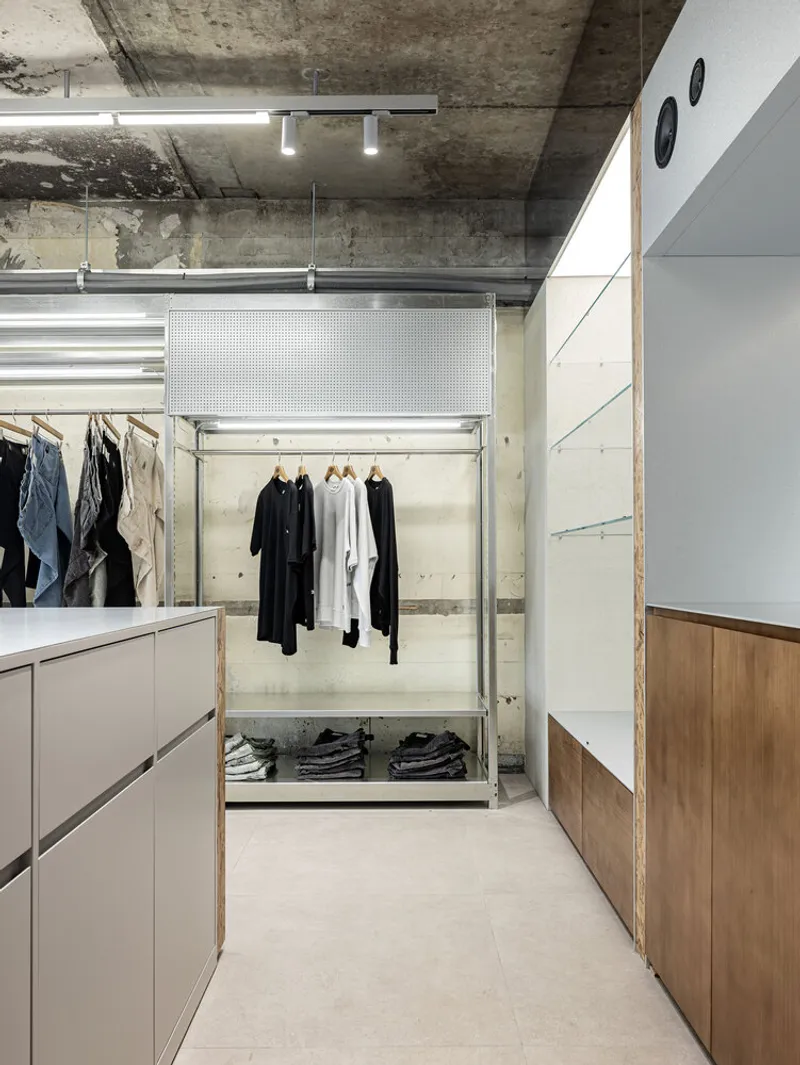
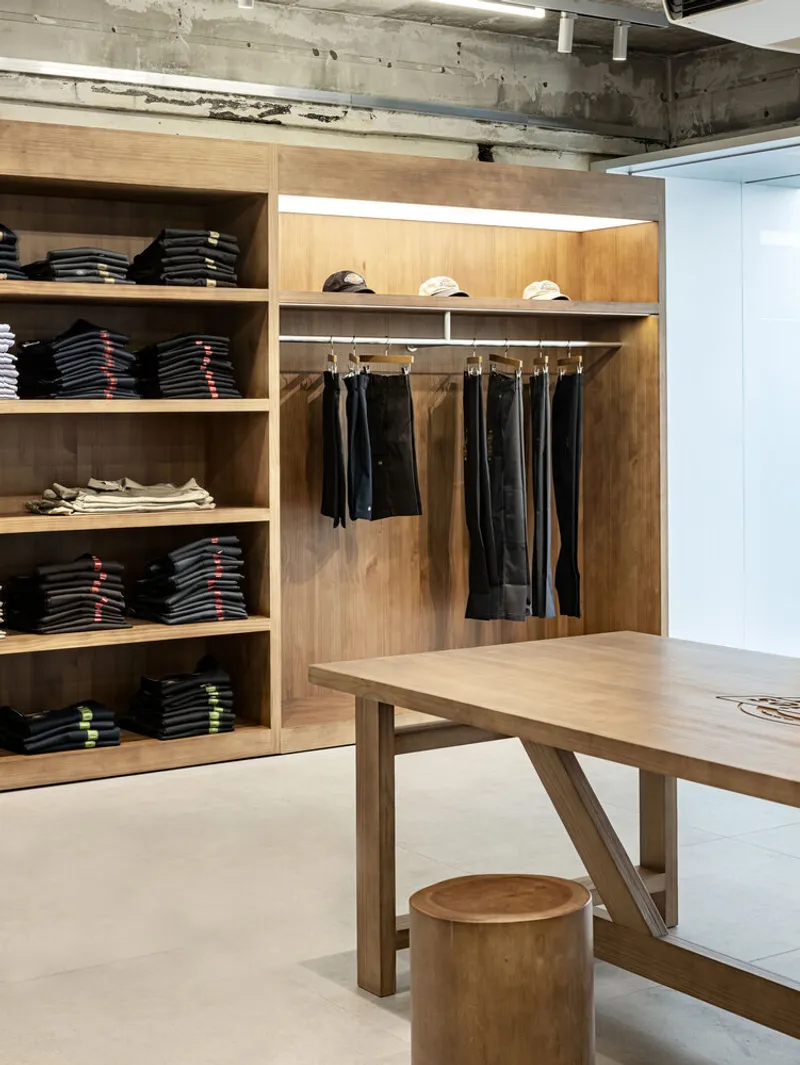
Inside, the flagship store unfolds as a carefully zoned retail environment that balances commercial clarity with spatial storytelling. The layout is structured to guide visitors intuitively through different product categories, enhancing both customer experience and sales performance. Steel and wood elements are used selectively throughout the interior, reinforcing the material language associated with industrial workwear while differentiating product zones through subtle shifts in texture and tone.
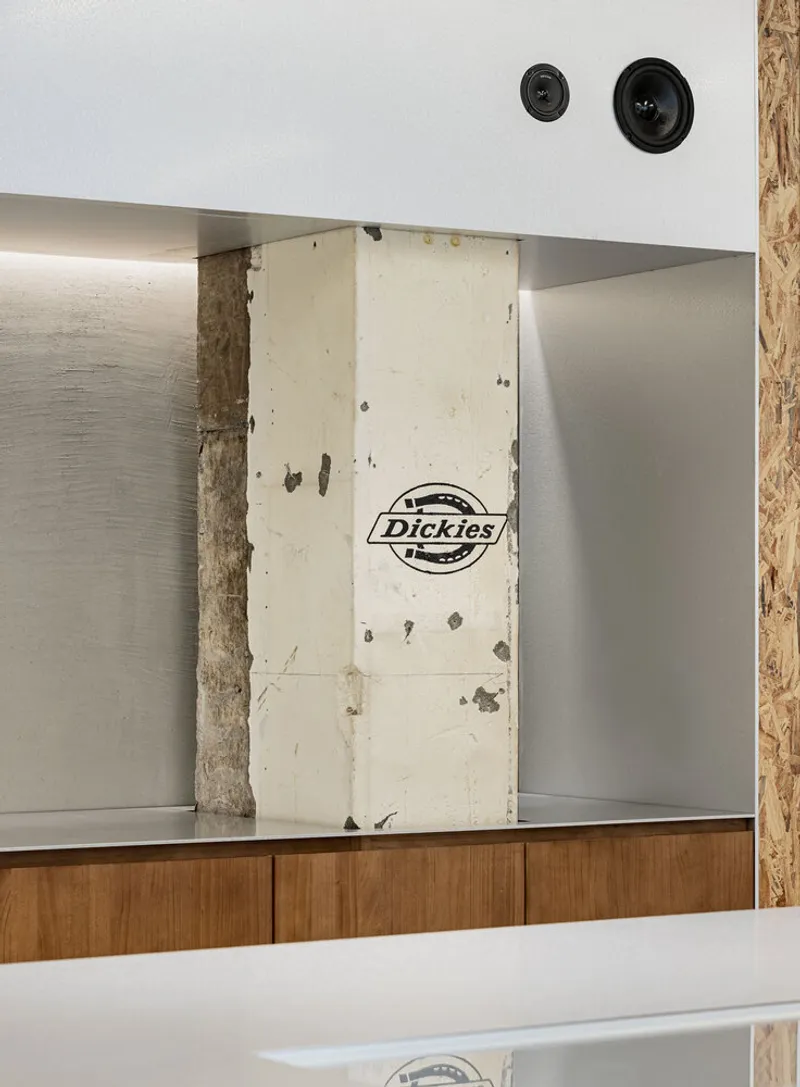
A dedicated collaboration area stands out as a focal point within the store, providing a flexible platform for seasonal partnerships and limited-edition collections. This zone introduces a more contemporary expression, contrasting with the raw, unrefined surfaces found elsewhere in the space. The original walls and ceilings were left largely untouched, preserving visible traces of aging and construction that anchor the interior in its past. This decision reinforces a narrative of continuity, where the history of the building becomes inseparable from the brand’s philosophy of resilience and long-term use.

Material choices play a central role in shaping the store’s identity over time. Wood and metal were selected not only for their visual resonance with Dickies’ core materials but also for their capacity to age gracefully. As the store evolves, wear and patina are expected to enrich rather than diminish the spatial character. In contrast, areas such as fitting rooms and storage spaces adopt a more refined, contemporary language, emphasizing the adaptability and functional diversity of the interior.
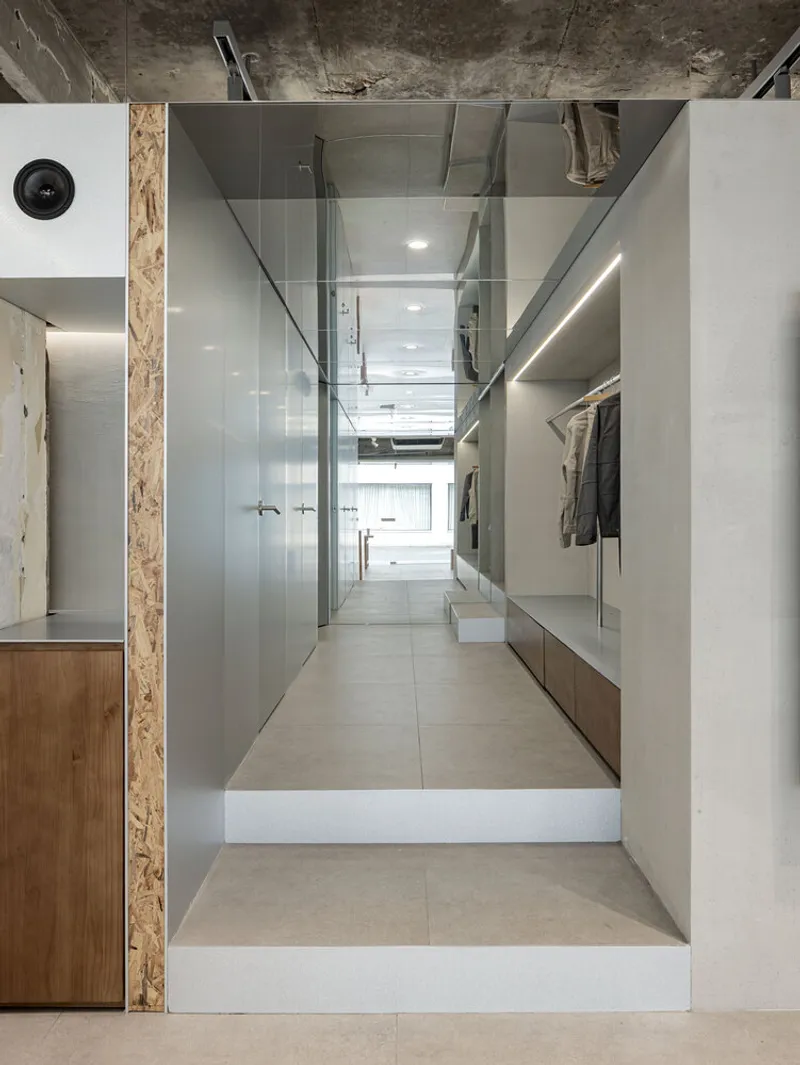
Vertical circulation introduces another layer of spatial experience. The staircase connects different zones while showcasing past collaboration items near the fitting rooms, allowing visitors to engage with the brand’s evolving history. This integration of archival and current collections creates a fluid dialogue between past and present, reinforcing Dickies’ long-standing relevance within contemporary fashion culture.

The rooftop extends the store’s multifunctional approach through modular furniture elements. Benches designed from wood and metal can be stacked or reconfigured into display shelving, embodying Dickies’ emphasis on practicality, adaptability, and material honesty. This flexible setup transforms the rooftop into both a social and retail extension of the interior, supporting events, displays, and informal gatherings.
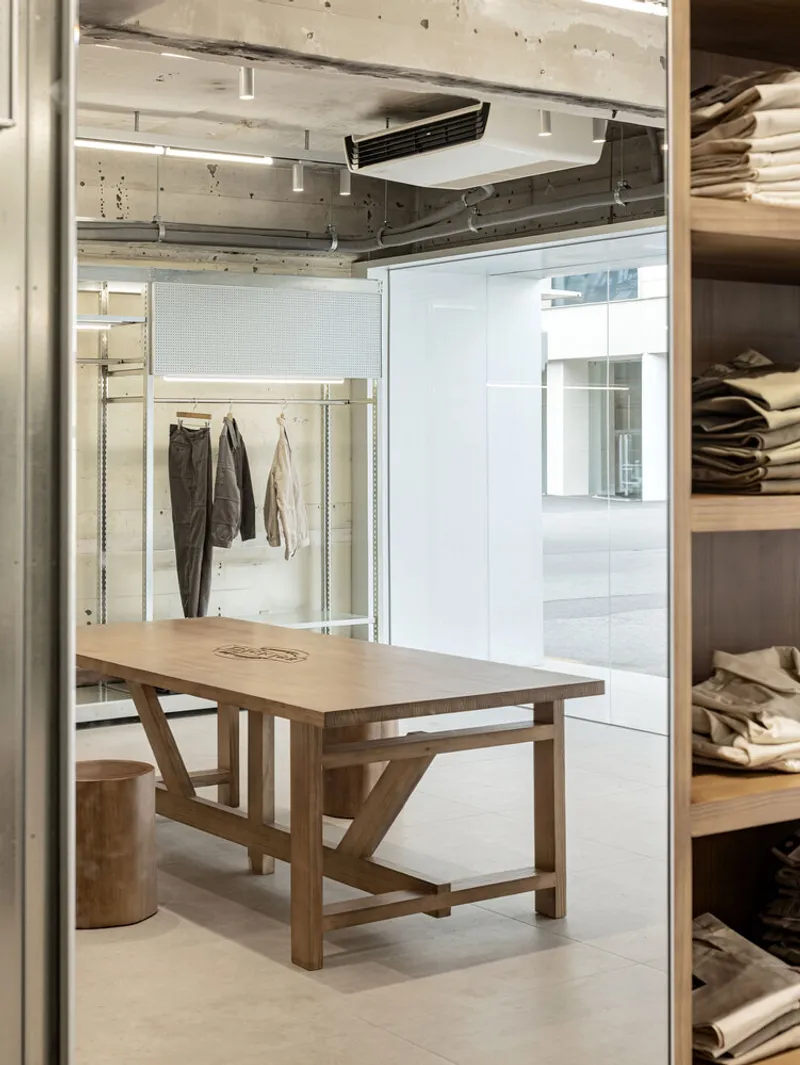
All photographs are works of Yong-joon Choi




Popular Articles
Popular articles from the community


EW PARK: Sustainable Architecture Reimagines the Future of Urban Parking
EW PARK reimagines city parking as a modular wooden tower combining automation, solar energy, electric mobility, and adaptable urban design.

Hill & Cross Opera: Sculptural Opera House Architecture Shaped by Tallinn’s Landscape and Identity
Hill & Cross Opera reimagines opera house architecture in Tallinn through its sculptural hill, civic plaza, glass wave and a luminous cross.

The Musturak Paradise: Senior Living Architecture for a Connected Future in Temara, Morocco
The Musturak Paradise reimagines senior living architecture in Temara via private homes, social spaces, culture, community, and shared care.

The Ocean Hive: Sustainable Architecture for a Self-Sufficient Civilization at Sea
The Ocean Hive imagines sustainable architecture at sea, where modular habitats, algae, wave power and ocean waste sustain a growing colony.


Similar Reads
You might also enjoy these articles


Hodi-Mandai Geram
Project Function: Preservation and revitalization of the Intangible heritage and socio-spatial identity of the Hodi by Housing, Cultural Memory Center, Sacred Grove, landscape, local tourism economy


Olio Towers: A Mid-Rise for Performers That Fuses Housing, Rehearsal, and Stage
Located blocks from Houston's Theater District, this modular tower stacks living units around a central performance atrium.

Oasis: Modular Green Housing Carved into Dhaka's Urban Fabric
A shortlisted Plugin Housing entry reclaims unauthorized settlements in Dhaka with stepped concrete volumes, green roofs, and ventilation-driven design.

Black Hole: A Floating Megastructure for the Post-Physical Era
Emiliano Mazzarotto envisions a spherical, self-scaling arena where e-sports, digital hotels, and holographic stadiums replace traditional public space.

Explore Interior Design Competitions
Discover active competitions in this discipline


Challenge to design luxury tourism on rails


Challenge to reimagine the Iron Throne


Photograph architecture without architects


VR headsets Storefront design competition
Comments (0)
Please login or sign up to add comments
No comments yet. Be the first to comment!